
The Green Bank Observatory National Radio Astronomy Observatory
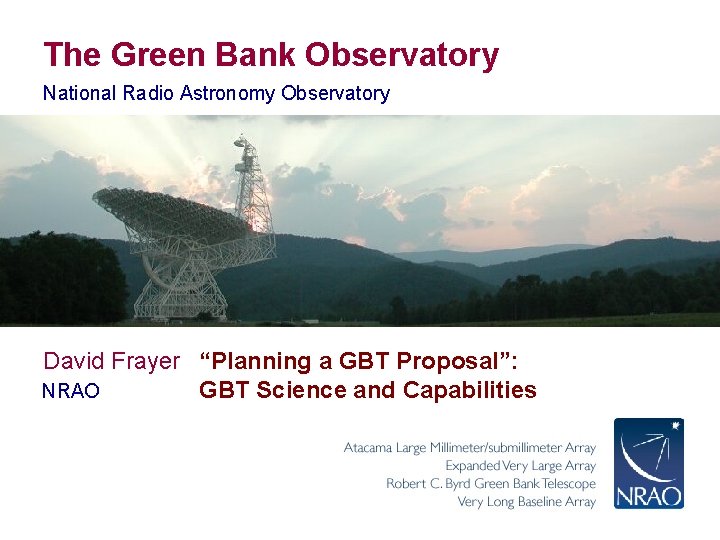
The Green Bank Observatory National Radio Astronomy Observatory David Frayer “Planning a GBT Proposal”: GBT Science and Capabilities NRAO
Outline: Ø Green Bank and GBT background Ø GBT Science Ø GBT Capabilities Ø GBT Proposal Process and Planning Tools 2
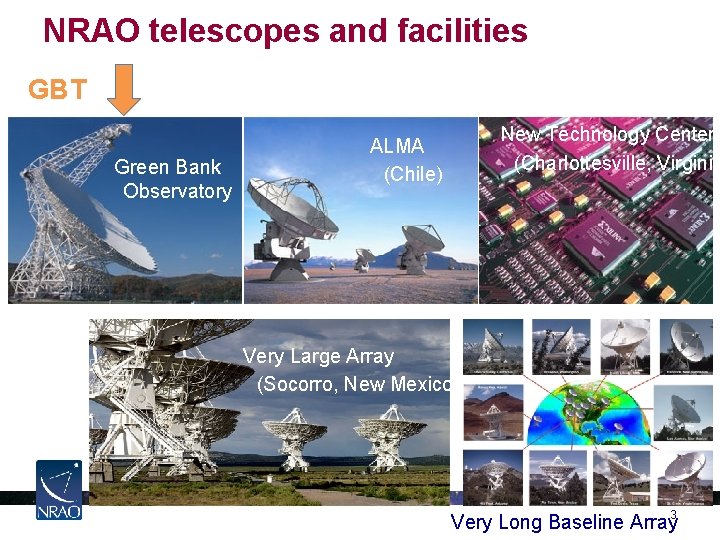
NRAO telescopes and facilities GBT Green Bank Observatory New Technology Center (Charlottesville, Virginia ALMA (Chile) Very Large Array (Socorro, New Mexico) Very Long Baseline Array 3
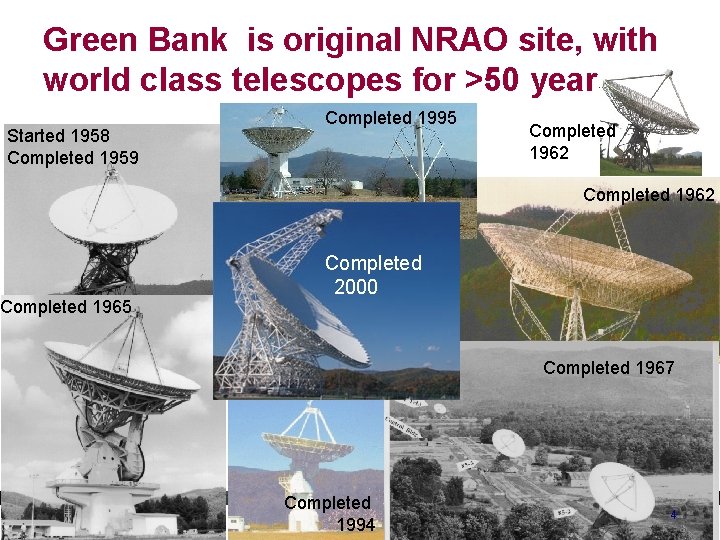
Green Bank is original NRAO site, with world class telescopes for >50 years Started 1958 Completed 1959 Completed 1965 Completed 1995 Completed 1962 Completed 2000 Completed 1967 Completed 1994 4

WV Radio Astronomy Zone National Radio Quiet Zone Established by the West Virginia Legislature (1956) Established by the FCC and NTIA (1957) Protection within ten miles of the Observatory 13, 000 Square Miles 5
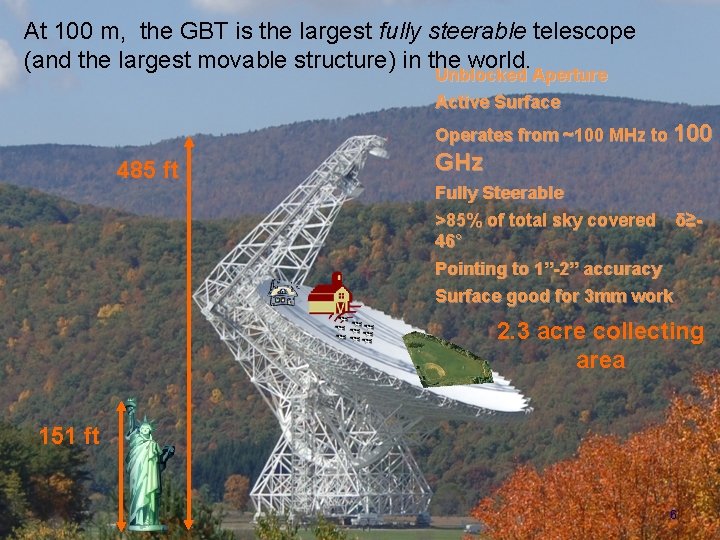
At 100 m, the GBT is the largest fully steerable telescope (and the largest movable structure) in the world. Unblocked Aperture Active Surface Operates from ~100 MHz to 100 485 ft GHz Fully Steerable >85% of total sky covered δ≥ 46° Pointing to 1”-2” accuracy Surface good for 3 mm work 2. 3 acre collecting area 151 ft 6
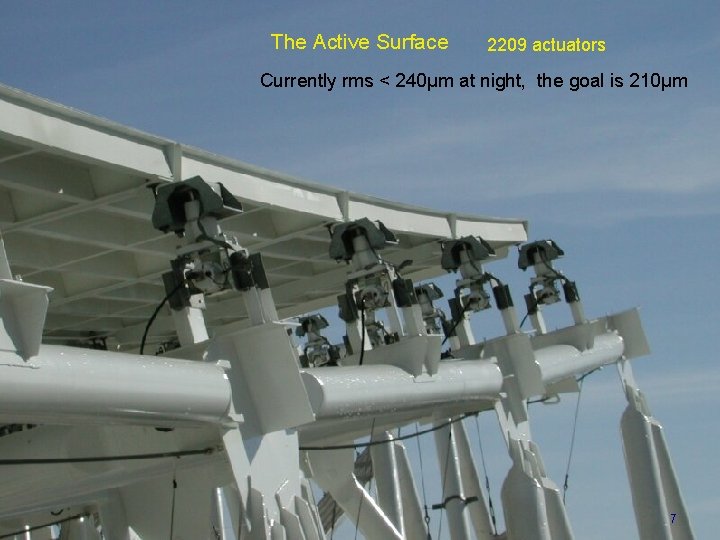
The Active Surface 2209 actuators Currently rms < 240μm at night, the goal is 210μm University of Georgia, Sept 2011 77
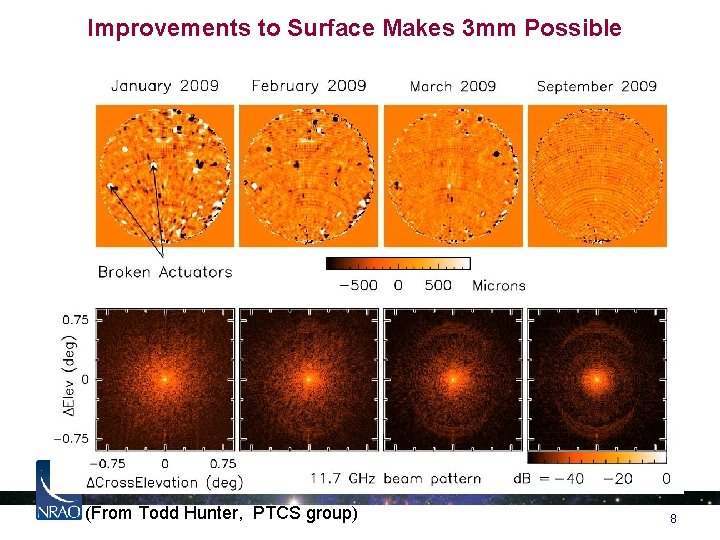
Improvements to Surface Makes 3 mm Possible (From Todd Hunter, PTCS group) 8
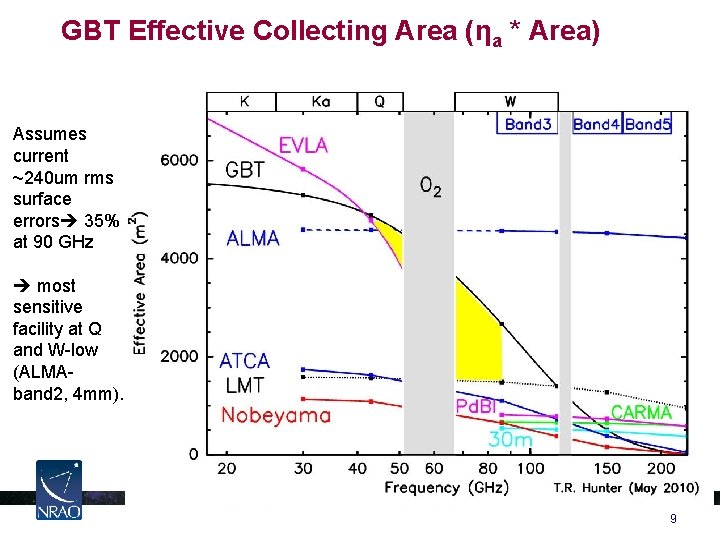
GBT Effective Collecting Area (ηa * Area) Assumes current ~240 um rms surface errors 35% at 90 GHz most sensitive facility at Q and W-low (ALMAband 2, 4 mm). 9
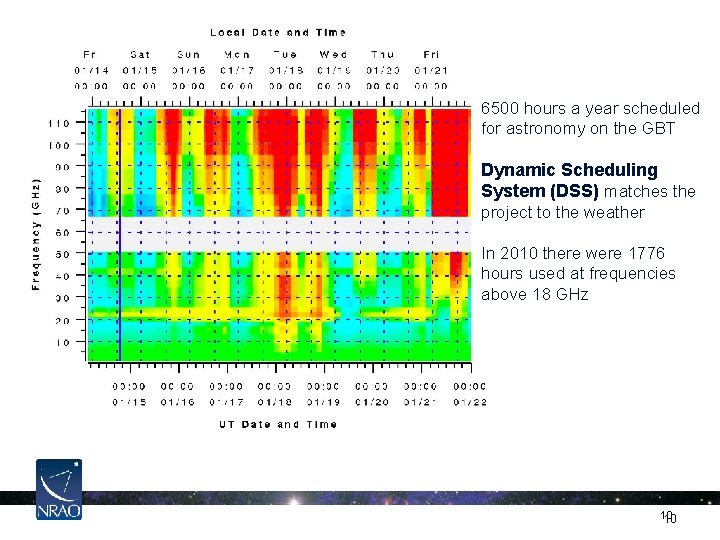
6500 hours a year scheduled for astronomy on the GBT Dynamic Scheduling System (DSS) matches the project to the weather In 2010 there were 1776 hours used at frequencies above 18 GHz 10 10
Outline: Ø Green Bank and GBT background ØGBT Science Ø GBT Capabilities Ø GBT Proposal Process and Planning Tools 11
Some Key GBT Science Areas: • (~30%) Pulsars: Discovery of new pulsars, the most massive pulsar, search for gravitational radiation • (~30%) Neutral Hydrogen HI: Gas masses of local galaxies, Kinematics of galaxy and local group/dark matter, HI intensity mapping at high-redshift • (~30%) High-frequency science: o 90 GHz imaging with Mustang o CO at redshift (K/Ka{+Zpectrometer}/Q) o Interstellar Organic Molecules & Astro-chemistry o Masers: black hole masses, distances via proper motions o Star Formation: NH 3 mapping (KFPA) • Solar system astronomy (radar mapping) 12 12
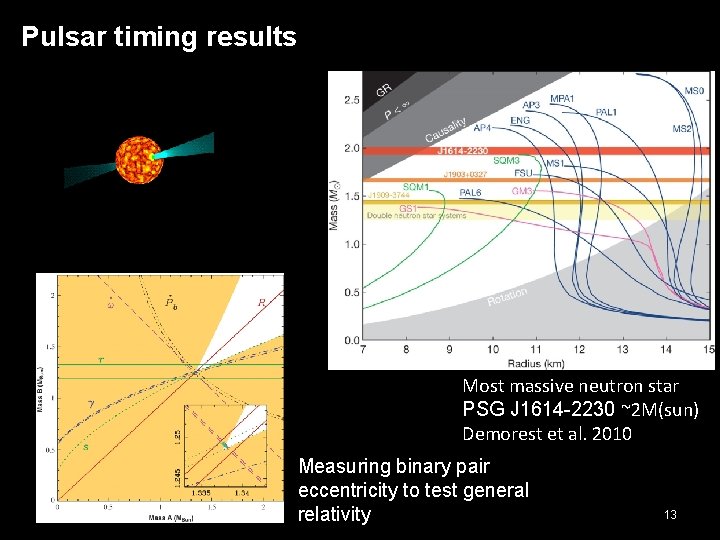
Pulsar timing results Most massive neutron star PSG J 1614 -2230 ~2 M(sun) Demorest et al. 2010 Measuring binary pair eccentricity to test general relativity 13
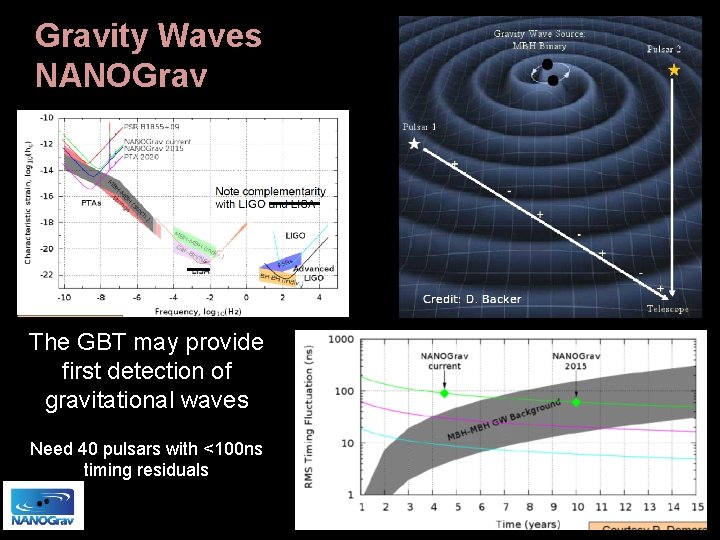
Gravity Waves NANOGrav The GBT may provide first detection of gravitational waves Need 40 pulsars with <100 ns timing residuals 14
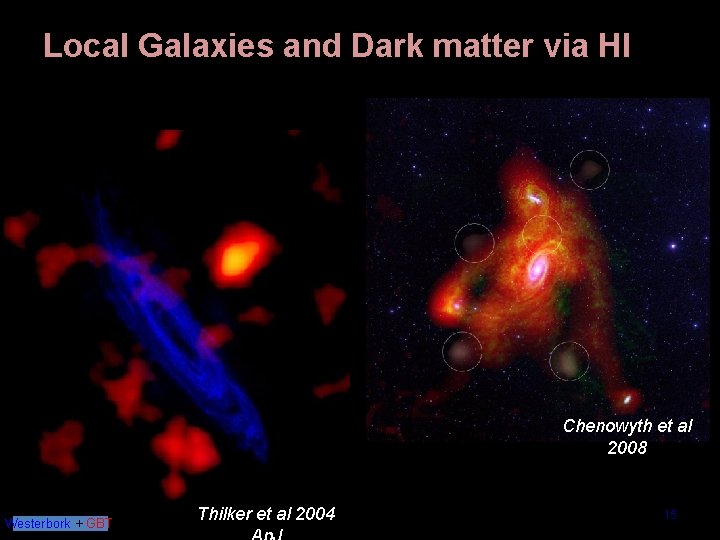
Local Galaxies and Dark matter via HI Chenowyth et al 2008 Westerbork + GBT Thilker et al 2004 15
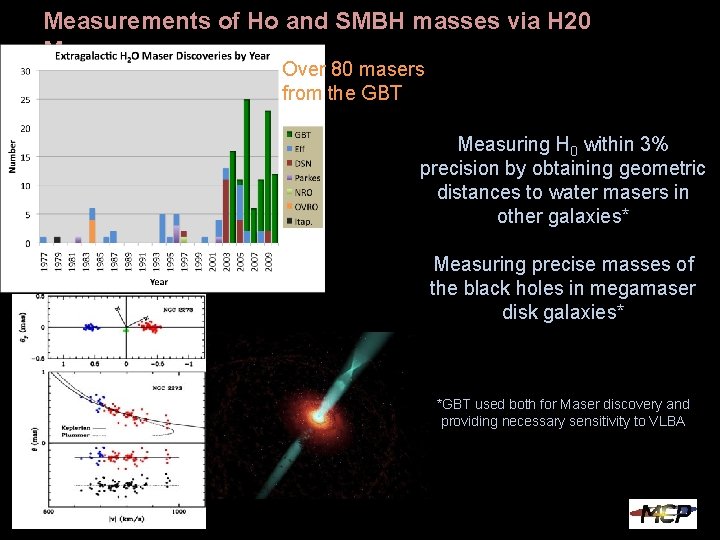
Measurements of Ho and SMBH masses via H 20 Masers Over 80 masers from the GBT Measuring H 0 within 3% precision by obtaining geometric distances to water masers in other galaxies* Measuring precise masses of the black holes in megamaser disk galaxies* *GBT used both for Maser discovery and providing necessary sensitivity to VLBA 16
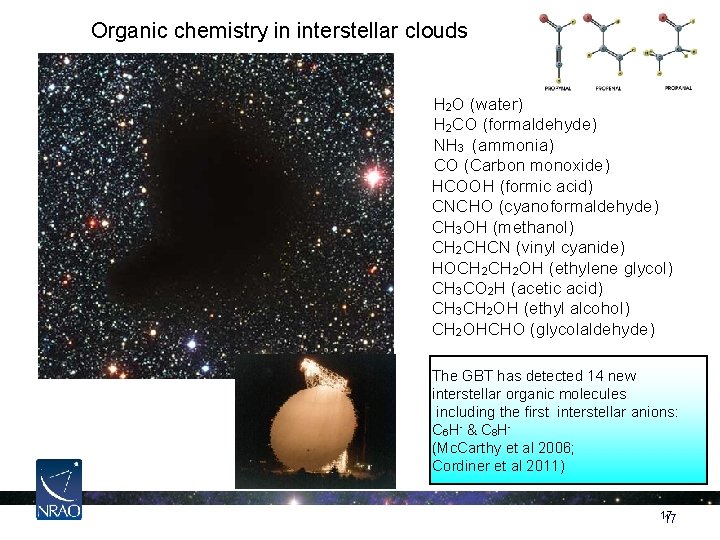
Organic chemistry in interstellar clouds H 2 O (water) H 2 CO (formaldehyde) NH 3 (ammonia) CO (Carbon monoxide) HCOOH (formic acid) CNCHO (cyanoformaldehyde) CH 3 OH (methanol) CH 2 CHCN (vinyl cyanide) HOCH 2 OH (ethylene glycol) CH 3 CO 2 H (acetic acid) CH 3 CH 2 OH (ethyl alcohol) CH 2 OHCHO (glycolaldehyde) The GBT has detected 14 new interstellar organic molecules including the first interstellar anions: C 6 H- & C 8 H(Mc. Carthy et al 2006; Cordiner et al 2011) 17 17
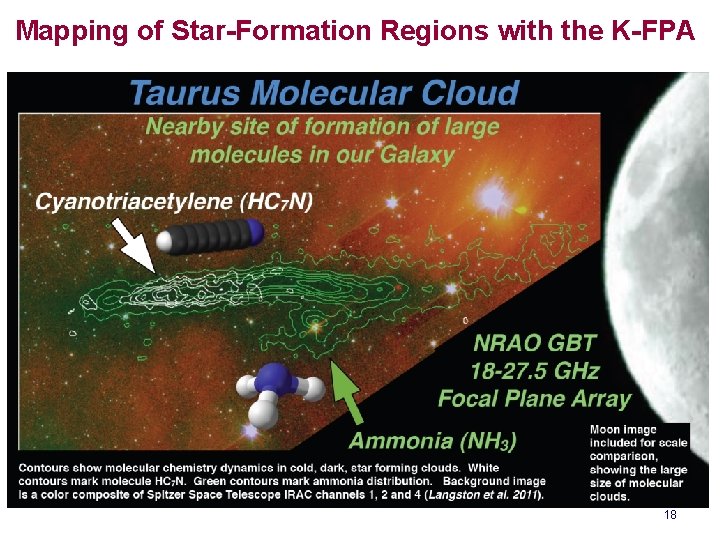
Mapping of Star-Formation Regions with the K-FPA 18
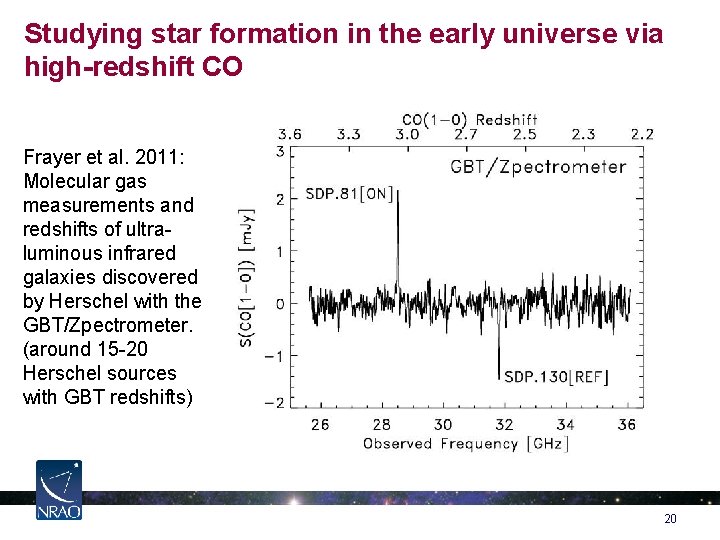
Studying star formation in the early universe via high-redshift CO Frayer et al. 2011: Molecular gas measurements and redshifts of ultraluminous infrared galaxies discovered by Herschel with the GBT/Zpectrometer. (around 15 -20 Herschel sources with GBT redshifts) 20
Outline: Ø Green Bank and GBT background Ø GBT Science ØGBT Capabilities Ø GBT Proposal Process and Planning Tools 21
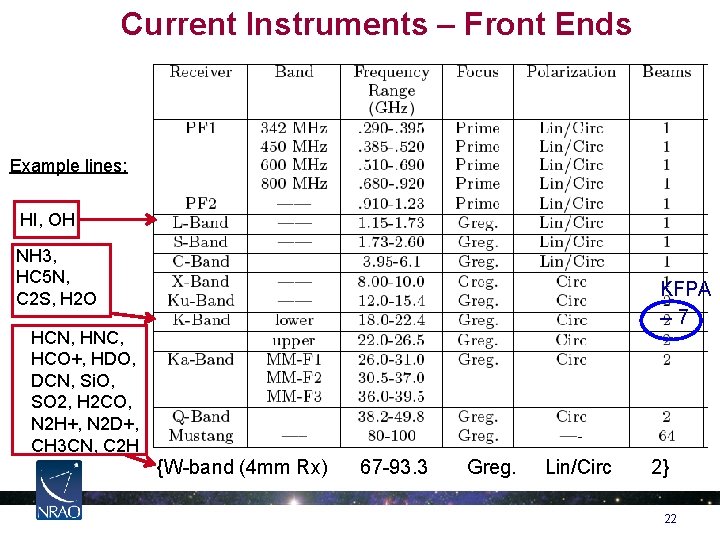
Current Instruments – Front Ends Example lines: HI, OH NH 3, HC 5 N, C 2 S, H 2 O KFPA -- 7 HCN, HNC, HCO+, HDO, DCN, Si. O, SO 2, H 2 CO, N 2 H+, N 2 D+, CH 3 CN, C 2 H {W-band (4 mm Rx) 67 -93. 3 Greg. Lin/Circ 2} 22
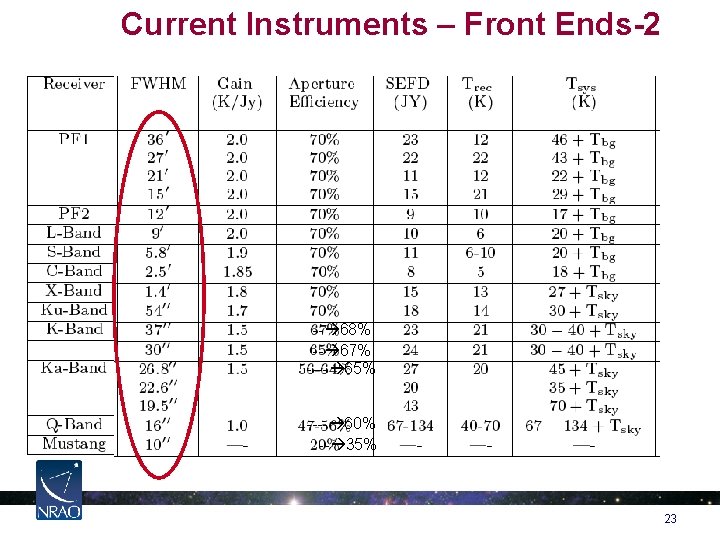
Current Instruments – Front Ends-2 -- 68% -- 67% ---- 65% ---- 60% -- 35% 23
Backends/Spectrometers • Spectrometer with bandwidths: 800, 200, 50, 12. 5 MHz. Maximum resolution is 49 Hz with 12. 5 MHz bandwidth. Minimum integration times 1 -2 sec. • Spectral Processor (FFT spectrometer) for high-time resolution data (useful at low freq where RFI is an issue). • Continuum with DCR (digital continuum receiver) for most bands, CCB used for continuum at Ka, and Mustang for continuum at 90 GHz. • GUPPI used for Pulsar Observations • VEGAS (VErsitile GBT Astronomical Spectrometer) is the new replacement for the Spectrometer available in 2012 (FPGA based). 24
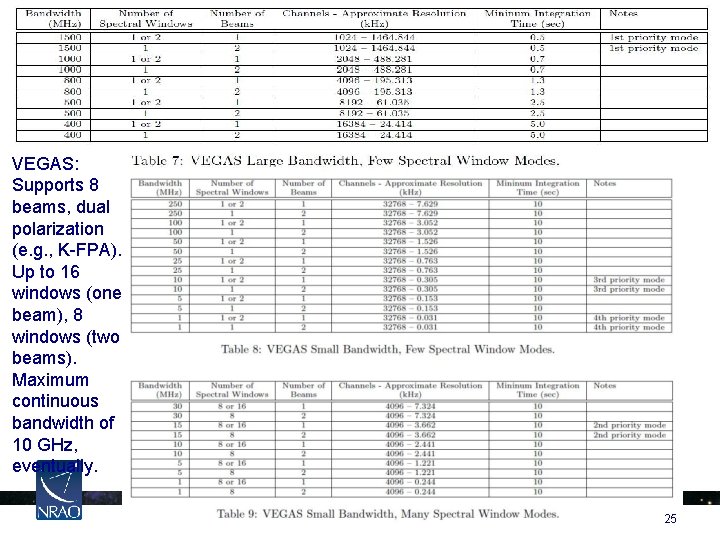
VEGAS: Supports 8 beams, dual polarization (e. g. , K-FPA). Up to 16 windows (one beam), 8 windows (two beams). Maximum continuous bandwidth of 10 GHz, eventually. 25
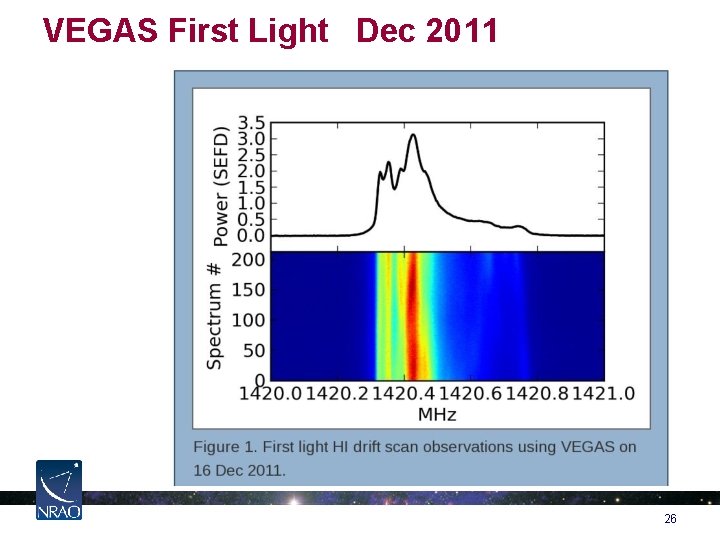
VEGAS First Light Dec 2011 26
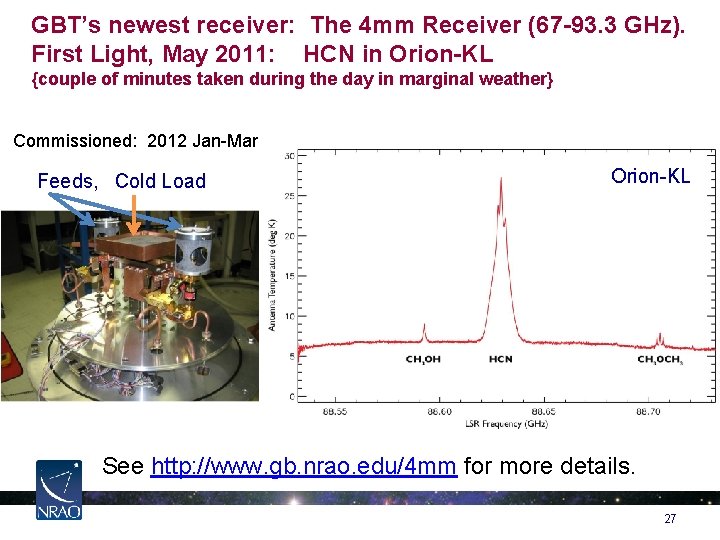
GBT’s newest receiver: The 4 mm Receiver (67 -93. 3 GHz). First Light, May 2011: HCN in Orion-KL {couple of minutes taken during the day in marginal weather} Commissioned: 2012 Jan-Mar Feeds, Cold Load Orion-KL See http: //www. gb. nrao. edu/4 mm for more details. 27
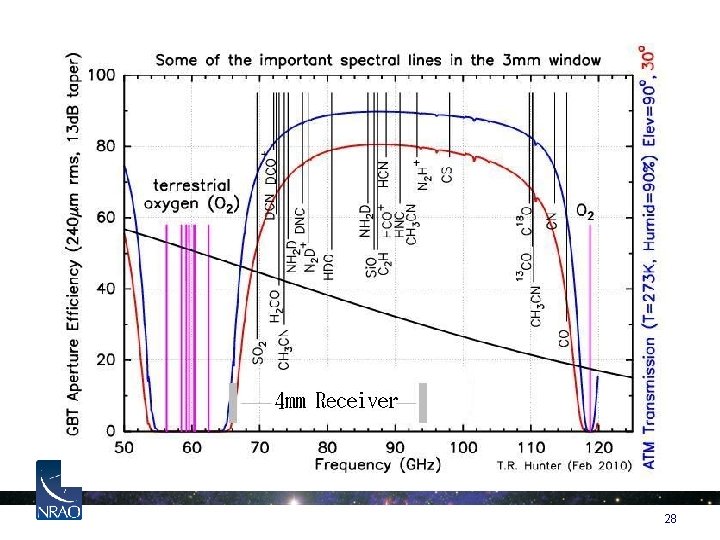
28
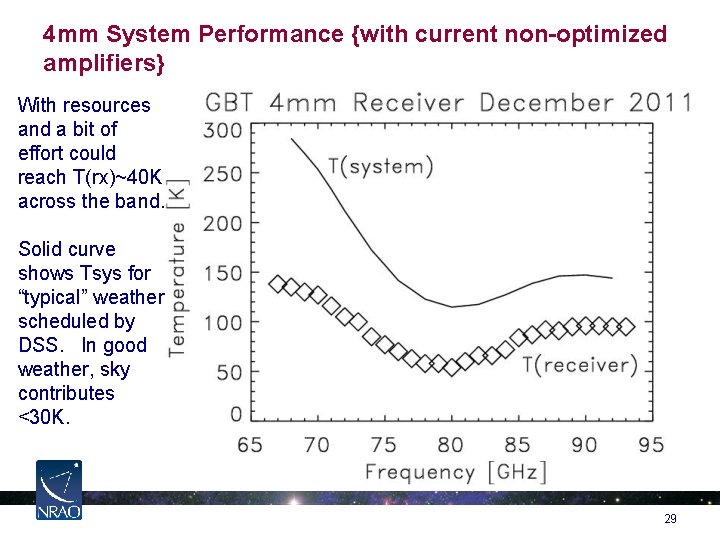
4 mm System Performance {with current non-optimized amplifiers} With resources and a bit of effort could reach T(rx)~40 K across the band. Solid curve shows Tsys for “typical” weather scheduled by DSS. In good weather, sky contributes <30 K. 29
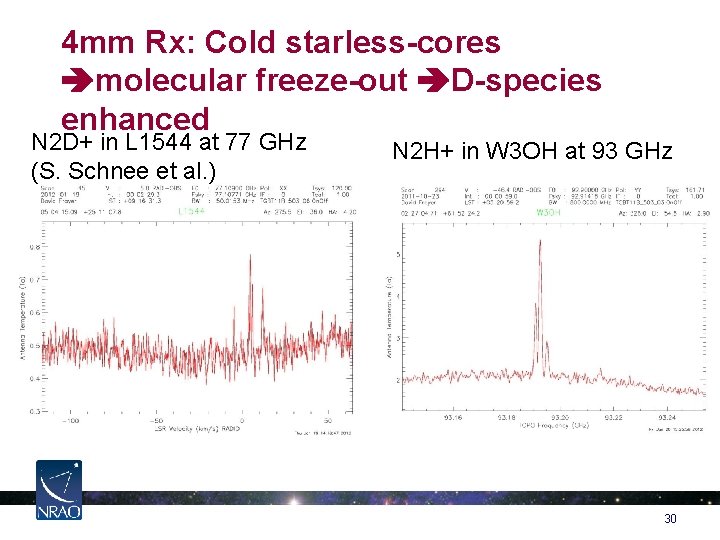
4 mm Rx: Cold starless-cores molecular freeze-out D-species enhanced N 2 D+ in L 1544 at 77 GHz (S. Schnee et al. ) N 2 H+ in W 3 OH at 93 GHz 30
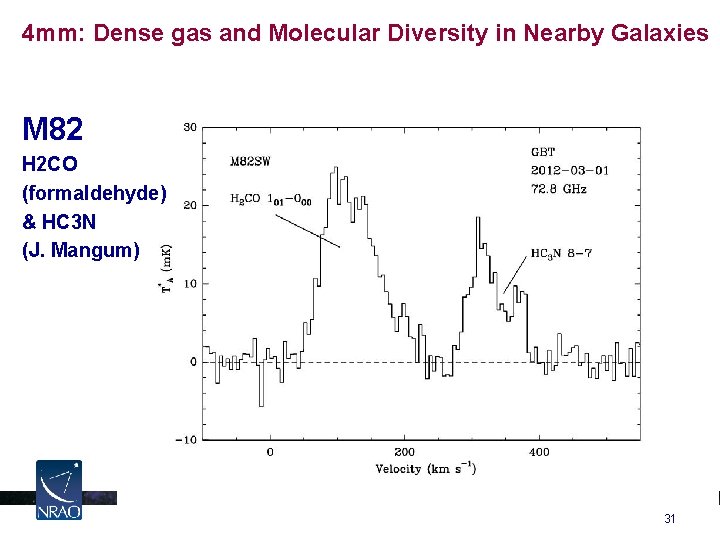
4 mm: Dense gas and Molecular Diversity in Nearby Galaxies M 82 H 2 CO (formaldehyde) & HC 3 N (J. Mangum) 31
Outline: Ø Green Bank and GBT background Ø GBT Science Ø GBT Capabilities ØGBT Proposal Process and Planning Tools 32
NRAO Semester 2013 A Call for Proposals Ø The NRAO Semester 2013 A Call for Proposals for the Green Bank Telescope, Jansky Very Large Array, and Very Long Baseline Array/High Sensitivity Array will be published as a special issue of the NRAO e. News on Monday, 9 Jul 2012. Ø The 2013 A proposal submission deadline will be Wed, 1 Aug 2012, at 5 p. m. EDT. 33
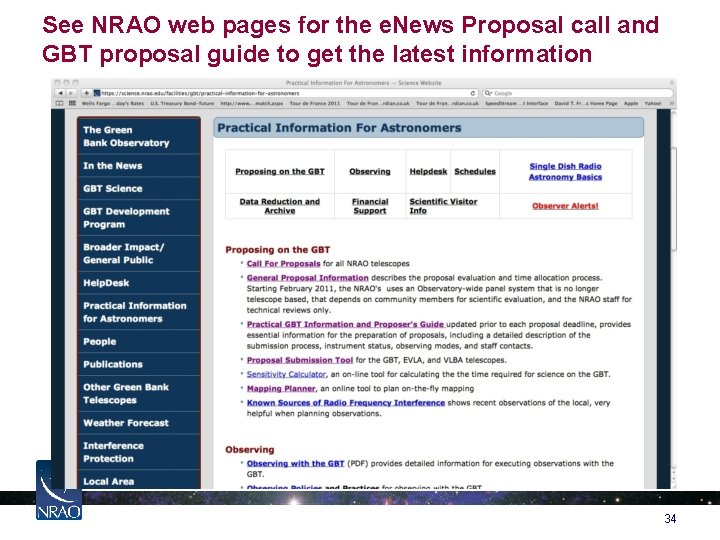
See NRAO web pages for the e. News Proposal call and GBT proposal guide to get the latest information 34
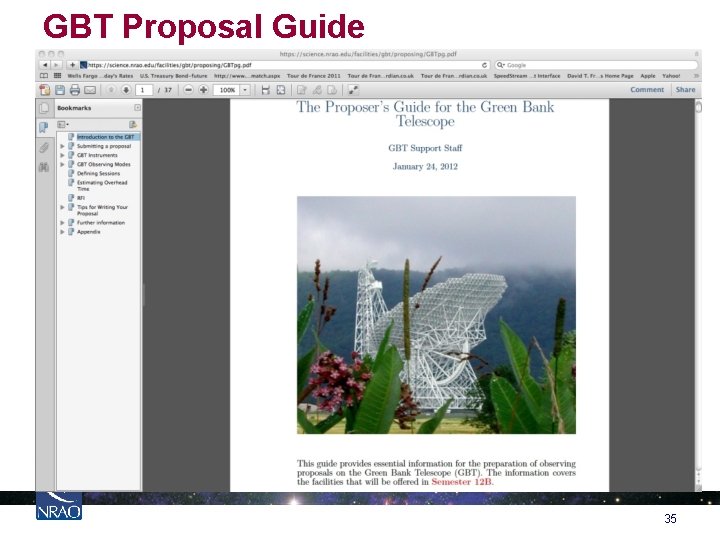
GBT Proposal Guide 35
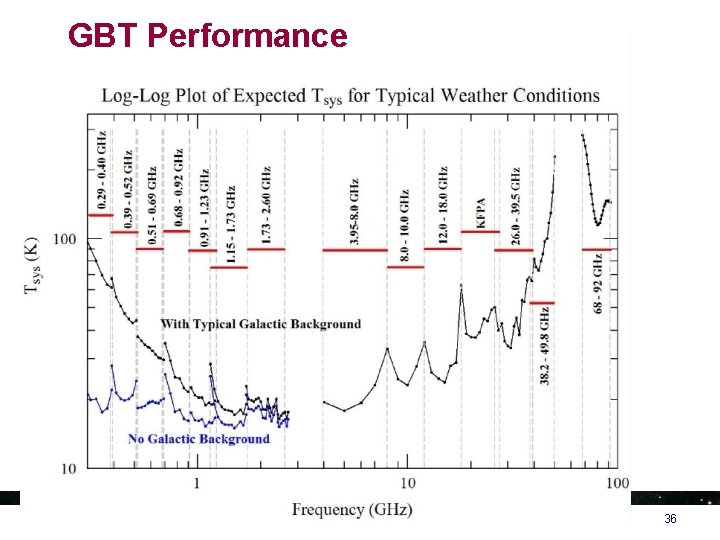
GBT Performance 36
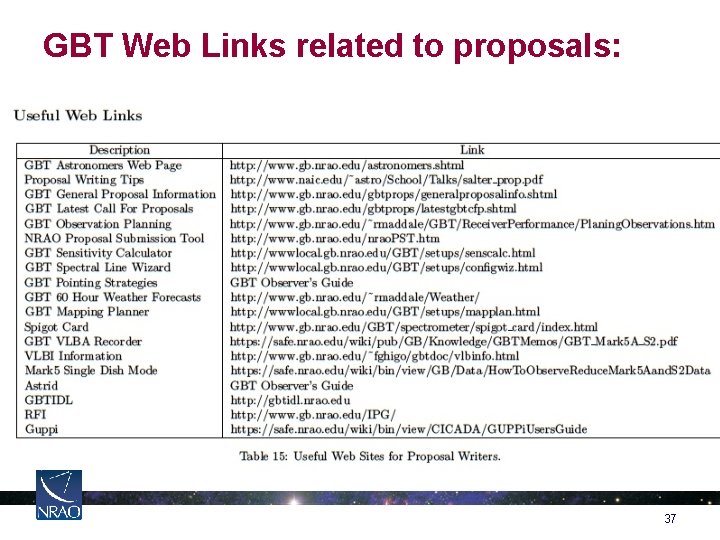
GBT Web Links related to proposals: 37
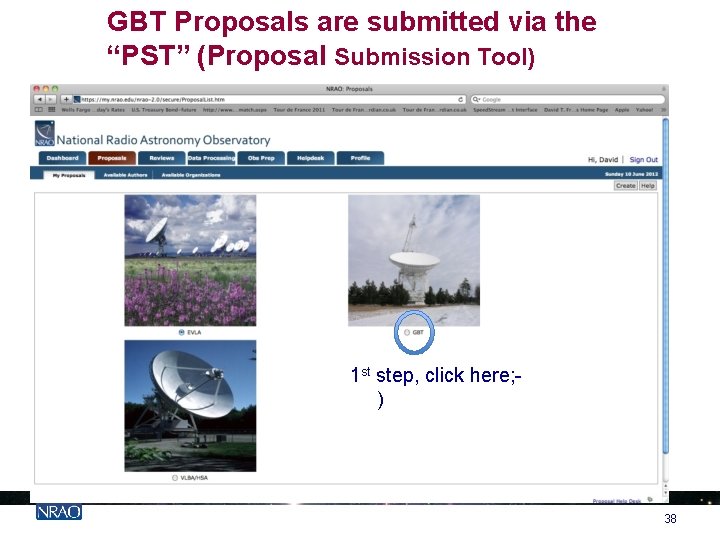
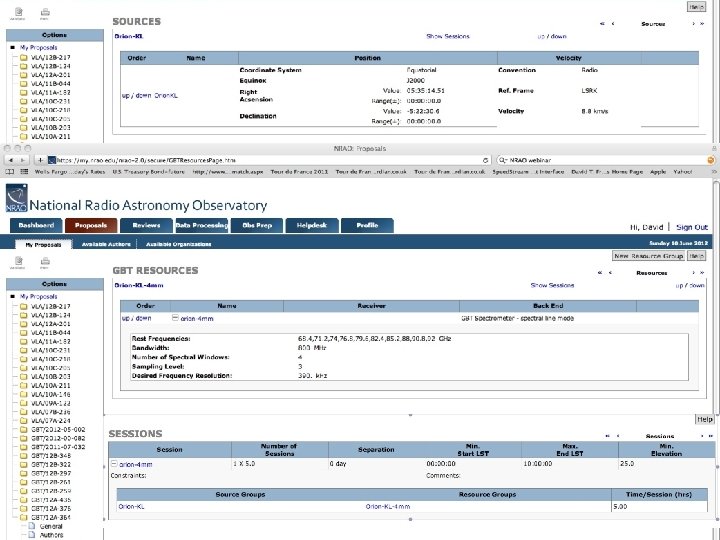
GBT Proposals are submitted via the “PST” (Proposal Submission Tool) 1 st step, click here; ) 38
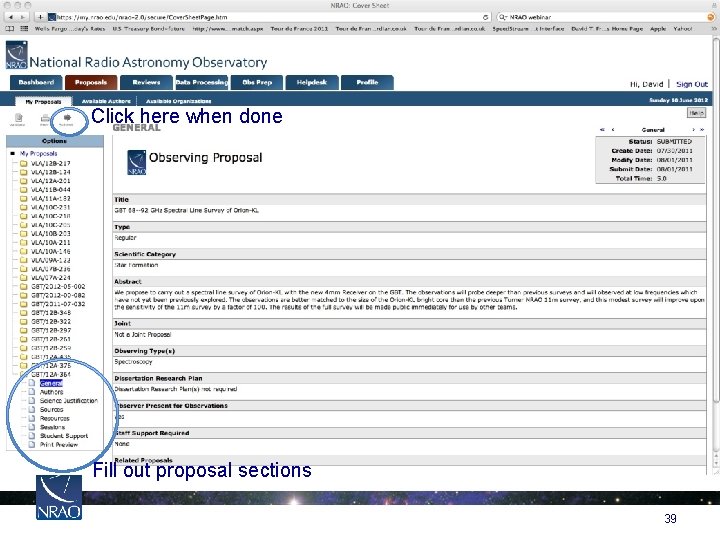
Click here when done Fill out proposal sections 39
40
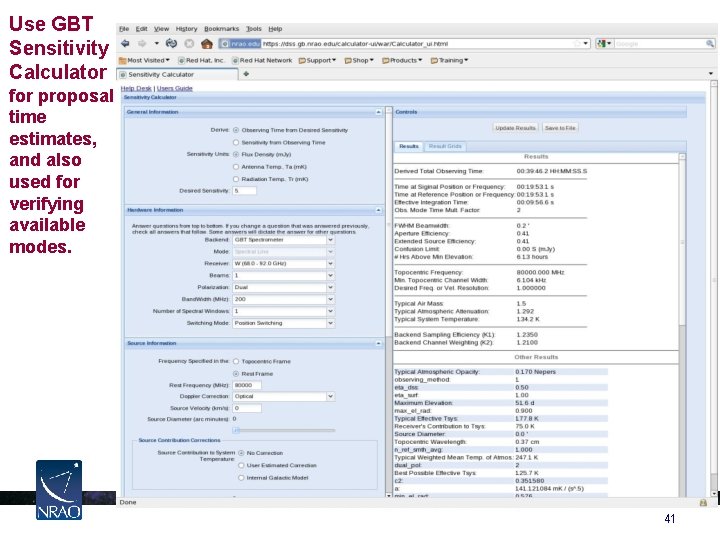
Use GBT Sensitivity Calculator for proposal time estimates, and also used for verifying available modes. 41
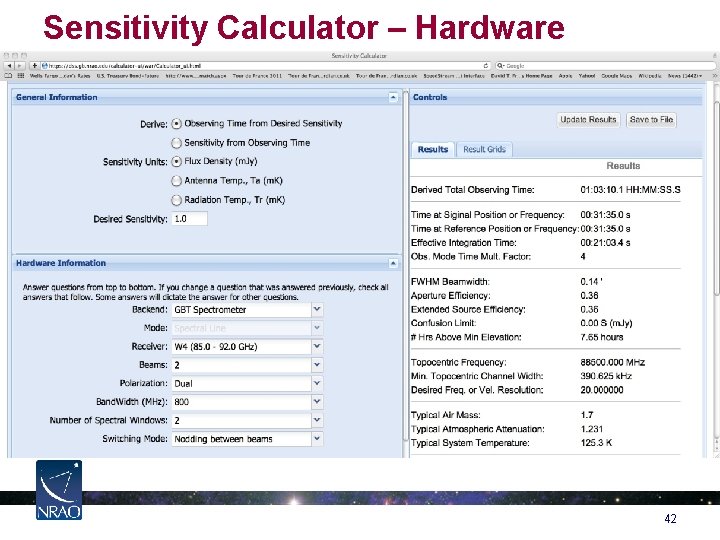
Sensitivity Calculator – Hardware modes 42
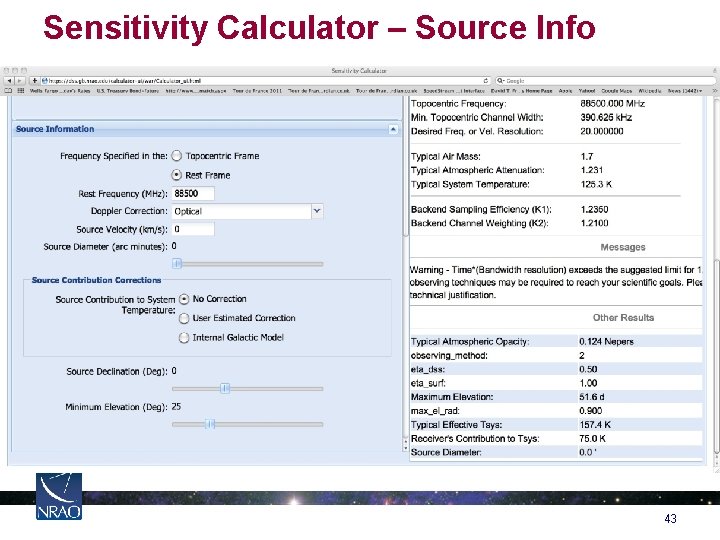
Sensitivity Calculator – Source Info 43
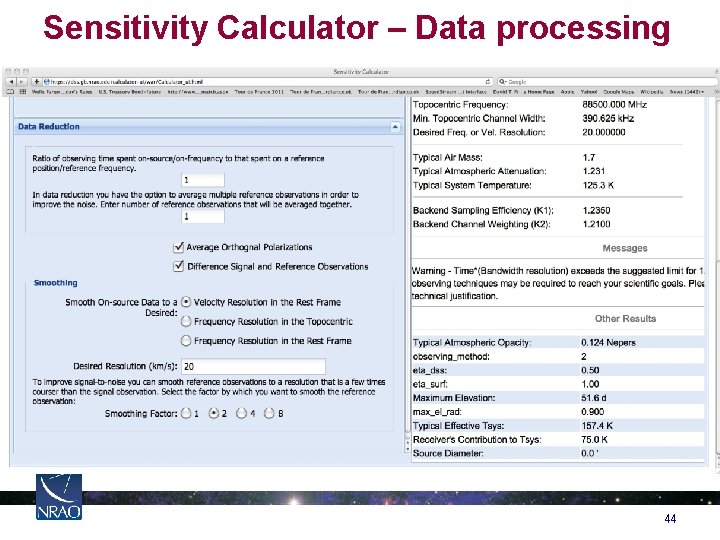
Sensitivity Calculator – Data processing 44
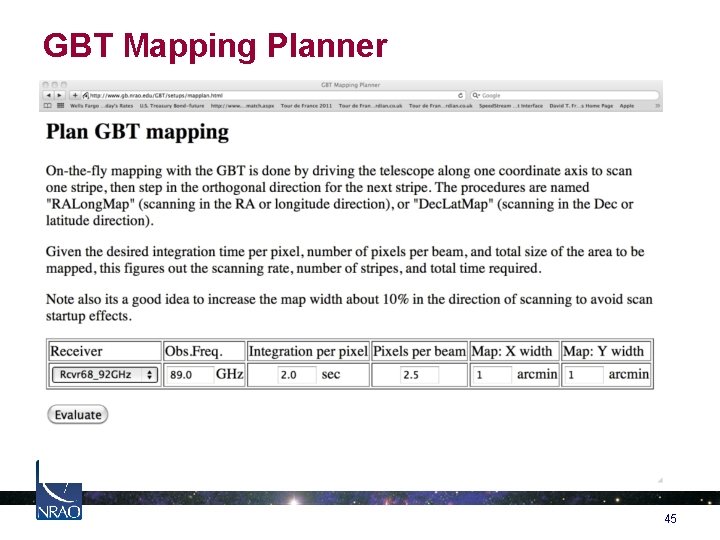
GBT Mapping Planner 45
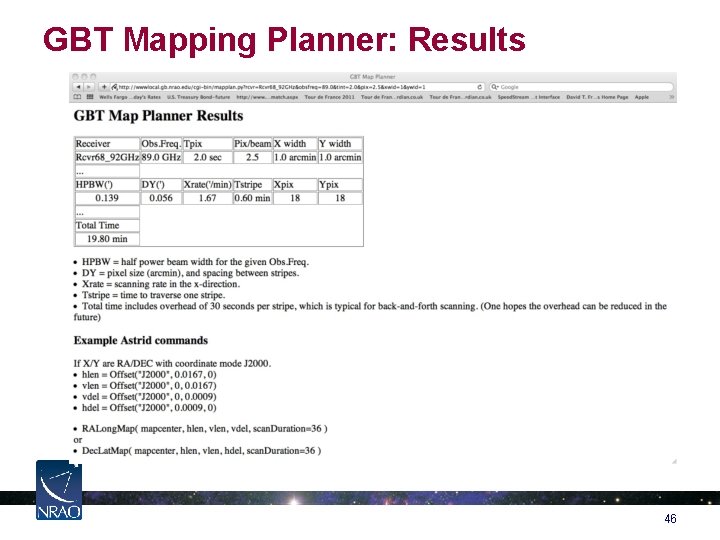
GBT Mapping Planner: Results 46
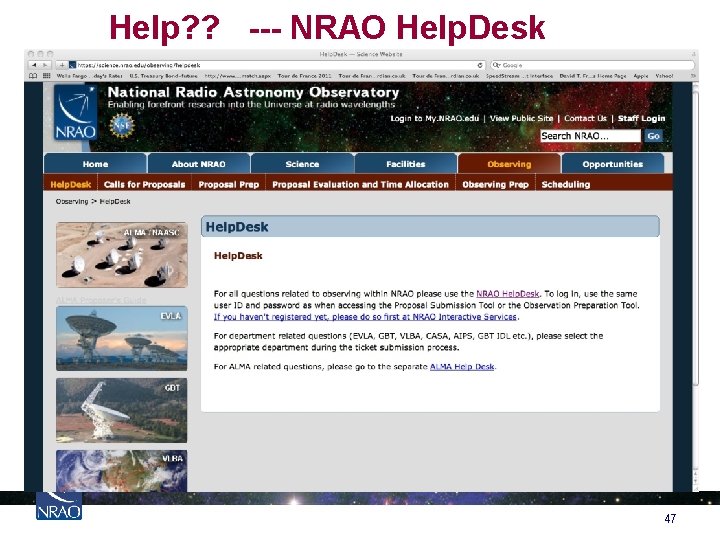
Help? ? --- NRAO Help. Desk 47
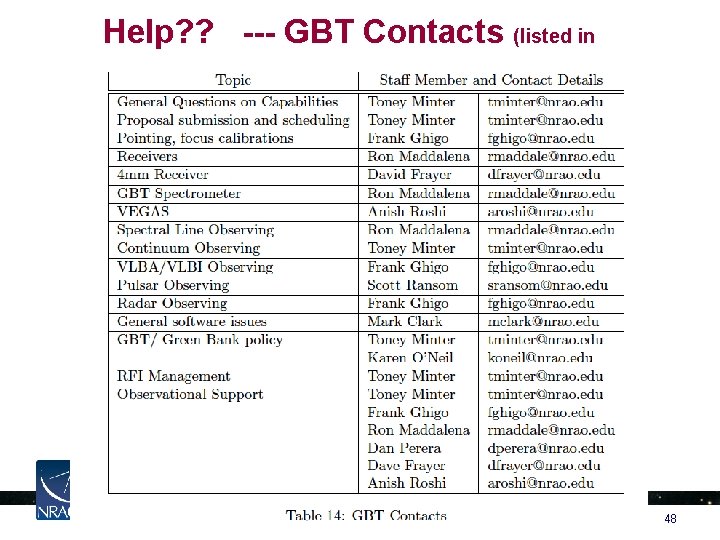
Help? ? --- GBT Contacts (listed in GBTpg) 48
Summary • The GBT is a powerful instrument – single-dish flexibility, large collecting area, wide-frequency coverage • Diverse science • Development ongoing (higher frequency, multipixel/feeds frontends, flexible backends) to enhanced capabilities Ø The 2013 A proposal submission deadline will be Wed, 1 Aug 2012, at 5 p. m 49
- Slides: 48