
The Greeks Crucible of civilisation First of aseries
The Greeks: Crucible of civilisation. First of aseries of 5 narrated by Liam Neeson (9: 30)
IN THIS UNIT, YOU WILL… Learn about the history of Greek civilisation Learn about the main social, economic and cultural characteristics of Ancient Greece Identify the main features of Greek art Learn about the Greek contribution to western civilisation Discuss the origin of democracy
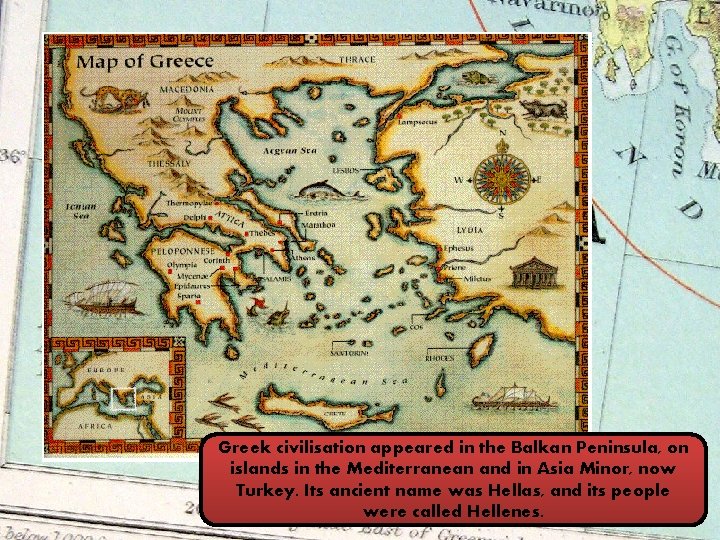
Greek civilisation appeared in the Balkan Peninsula, on islands in the Mediterranean and in Asia Minor, now Turkey. Its ancient name was Hellas, and its people were called Hellenes.
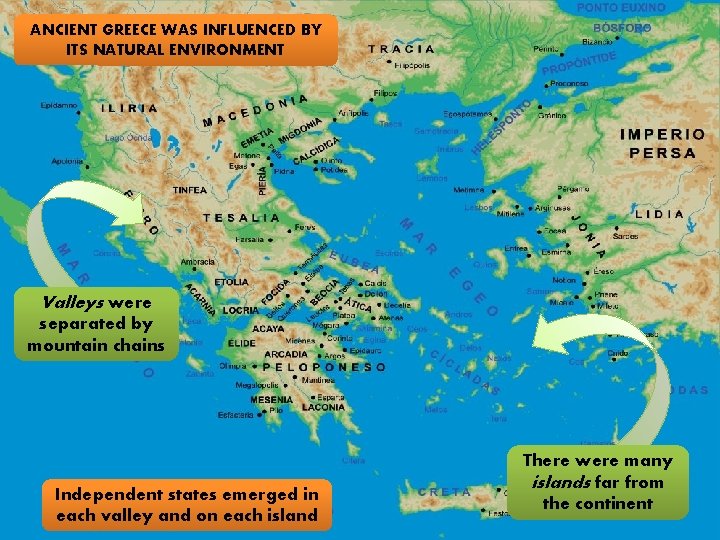
ANCIENT GREECE WAS INFLUENCED BY ITS NATURAL ENVIRONMENT Valleys were separated by mountain chains Independent states emerged in each valley and on each island There were many islands far from the continent
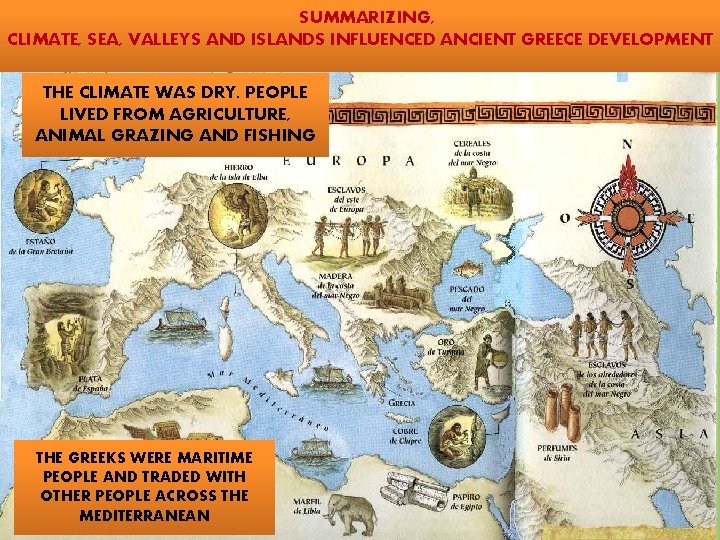
SUMMARIZING, CLIMATE, SEA, VALLEYS AND ISLANDS INFLUENCED ANCIENT GREECE DEVELOPMENT THE CLIMATE WAS DRY. PEOPLE LIVED FROM AGRICULTURE, ANIMAL GRAZING AND FISHING THE GREEKS WERE MARITIME PEOPLE AND TRADED WITH OTHER PEOPLE ACROSS THE MEDITERRANEAN
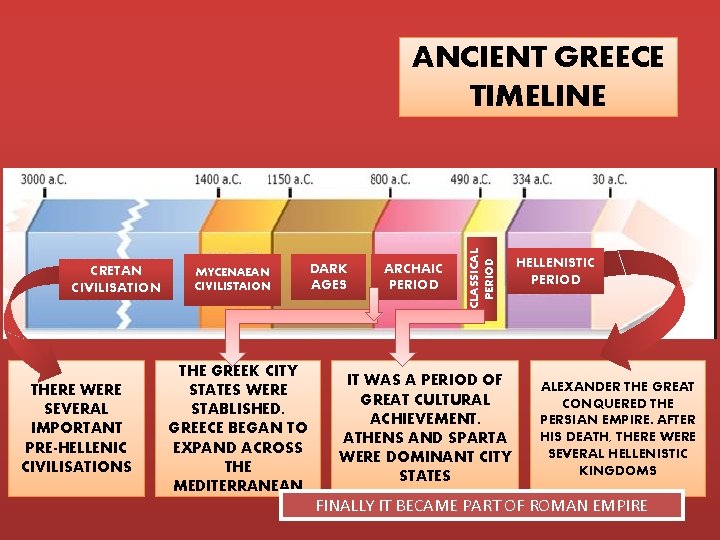
CRETAN CIVILISATION THERE WERE SEVERAL IMPORTANT PRE-HELLENIC CIVILISATIONS MYCENAEAN CIVILISTAION THE GREEK CITY STATES WERE STABLISHED. GREECE BEGAN TO EXPAND ACROSS THE MEDITERRANEAN DARK AGES ARCHAIC PERIOD CLASSICAL PERIOD ANCIENT GREECE TIMELINE IT WAS A PERIOD OF GREAT CULTURAL ACHIEVEMENT. ATHENS AND SPARTA WERE DOMINANT CITY STATES HELLENISTIC PERIOD ALEXANDER THE GREAT CONQUERED THE PERSIAN EMPIRE. AFTER HIS DEATH, THERE WERE SEVERAL HELLENISTIC KINGDOMS FINALLY IT BECAME PART OF ROMAN EMPIRE
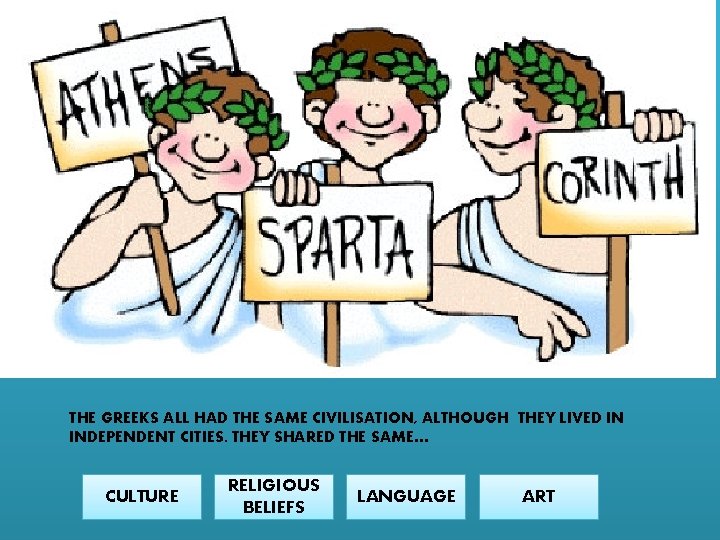
THE GREEKS ALL HAD THE SAME CIVILISATION, ALTHOUGH THEY LIVED IN INDEPENDENT CITIES. THEY SHARED THE SAME… CULTURE RELIGIOUS BELIEFS LANGUAGE ART
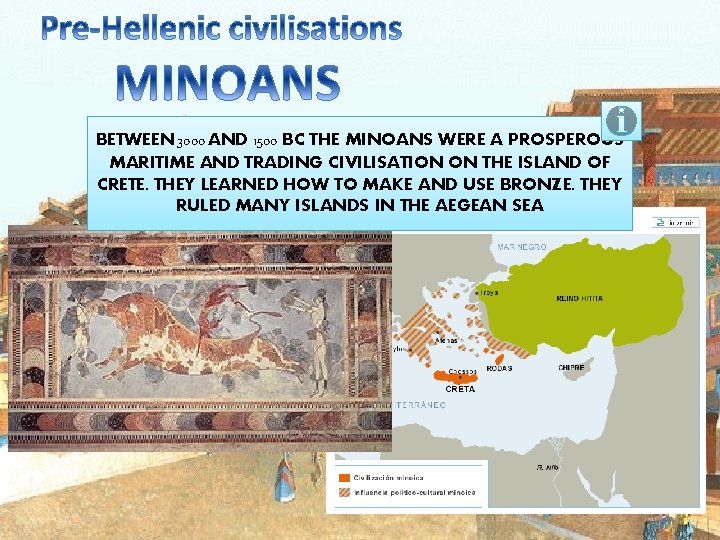
BETWEEN 3000 AND 1500 BC THE MINOANS WERE A PROSPEROUS MARITIME AND TRADING CIVILISATION ON THE ISLAND OF CRETE. THEY LEARNED HOW TO MAKE AND USE BRONZE. THEY RULED MANY ISLANDS IN THE AEGEAN SEA

Pre-Hellenic civilisations MYCENAEANS BETWEEN 1600 AND 1200 BC THE MYCENAEANS CONTROLLED MOST OF MAINLAND GREECE. MYCENAEANS SOCIETY WAS LED BY A WARRIOR ARISTOCRACY. ACCORDING TO GREEK LEGENDS, THESE WARRIORS FOUGHT THE TROJAN WAR
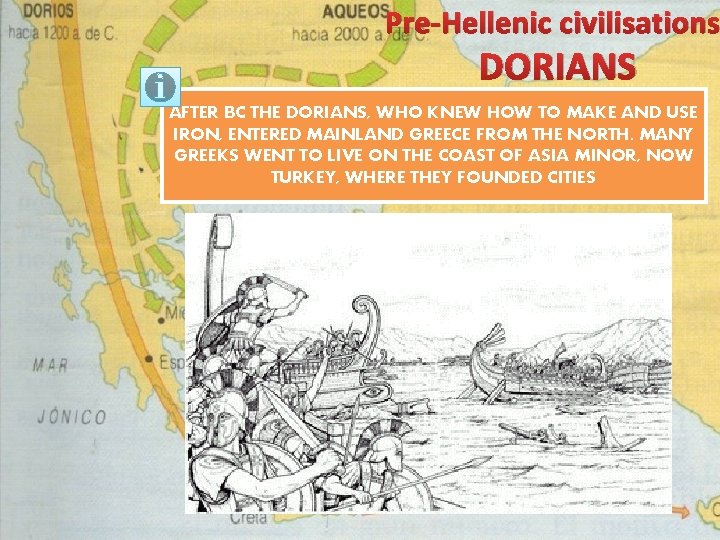
Pre-Hellenic civilisations DORIANS AFTER BC THE DORIANS, WHO KNEW HOW TO MAKE AND USE IRON, ENTERED MAINLAND GREECE FROM THE NORTH. MANY GREEKS WENT TO LIVE ON THE COAST OF ASIA MINOR, NOW TURKEY, WHERE THEY FOUNDED CITIES
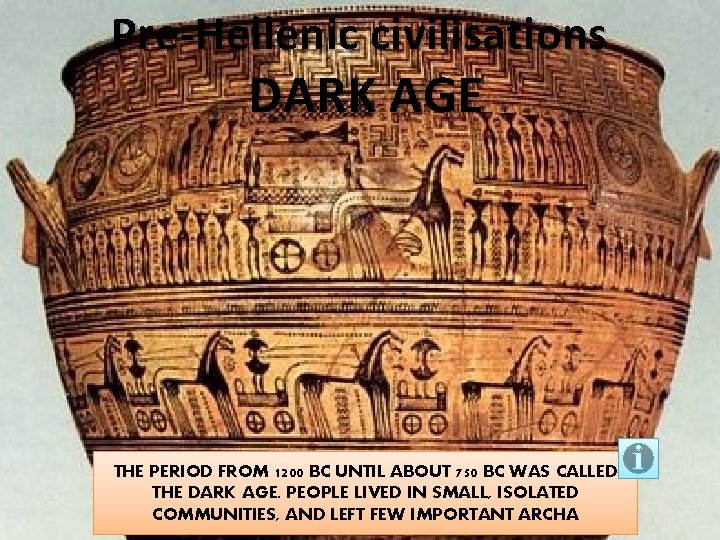
Pre-Hellenic civilisations DARK AGE THE PERIOD FROM 1200 BC UNTIL ABOUT 750 BC WAS CALLED THE DARK AGE. PEOPLE LIVED IN SMALL, ISOLATED COMMUNITIES, AND LEFT FEW IMPORTANT ARCHA
THE ARCHAIC AGE THE POLIS DEVELOPED BETWEEN THE 8 TH AND THE 6 TH CENTURY The polis was formed of the main city and the farming land forests around it. It had its own government army, laws and currency. But all the poleis shared the same culture, religion and language. THEY ALSO HAD IN COMMON: • The AGORA, or main square, where political activity and trading took place. • The ACROPOLIS, on high land above the city , where temples were located
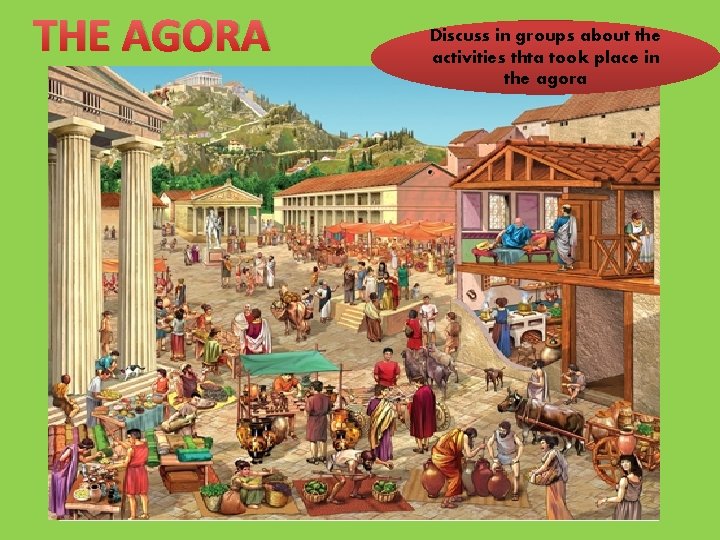
THE AGORA Discuss in groups about the activities thta took place in the agora
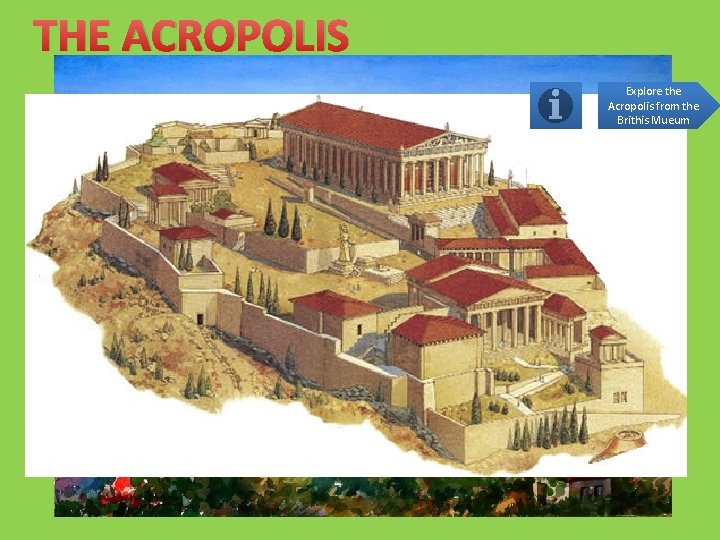
THE ACROPOLIS Explore the Acropolis from the Brithis Mueum
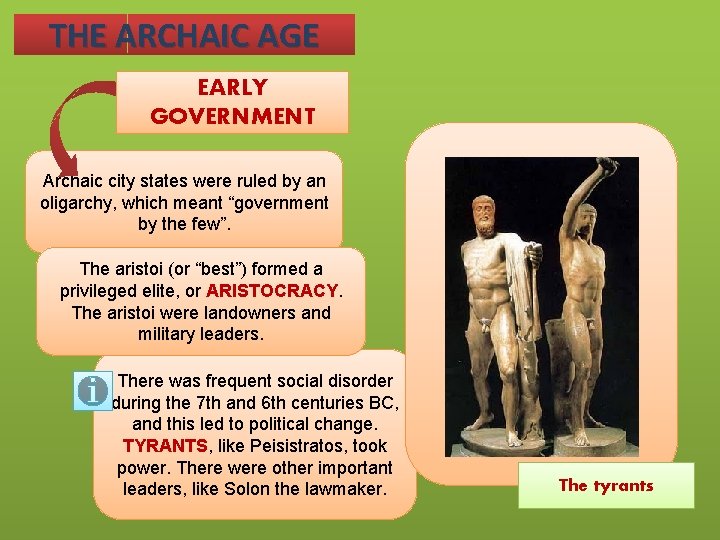
THE ARCHAIC AGE EARLY GOVERNMENT Archaic city states were ruled by an oligarchy, which meant “government by the few”. The aristoi (or “best”) formed a privileged elite, or ARISTOCRACY. The aristoi were landowners and military leaders. There was frequent social disorder during the 7 th and 6 th centuries BC, and this led to political change. TYRANTS, like Peisistratos, took power. There were other important leaders, like Solon the lawmaker. The tyrants
THE ARCHAIC AGE THE GREEK COLONISATION DEVELOPED BETWEEN THE 8 TH AND THE 6 TH CENTURY Greek expansion led to the creation of COLONIES across the Mediterranean and the Black Sea. there were many cities or colonies such as Syracuse, in Sicily, and Emporion on the Iberian Peninsula CAUSES OF GREEK COLONISATION • Land was scarce, and it was held unequally • Population growth made it necessary to find new places for the extra people • Colonies created new trading possibilities CONSEQUENCES • economic activity increased greatly in both city states and their colonies. • Greek culture spread into new regions. • Some social groups became wealthier. There were social changes, and democracy emerged in the poleis
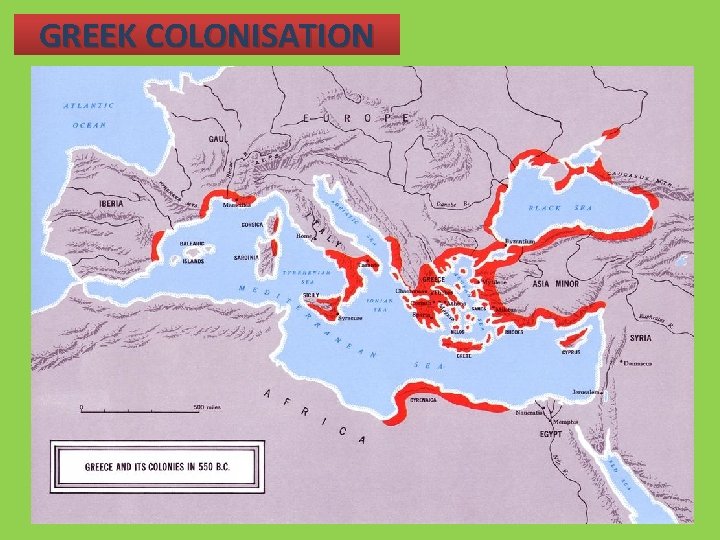
GREEK COLONISATION

THE CLASSICAL PERIOD Peloponnesian War and Thucydides (12: 00) Pericles and the Delian League (9: 00) The classical period was the gratest period for the Greek poleis. Sparta and Athens were the most important There were also a number of conflicts. The most significant were: THE GRECO-PERSIAN WARS (MEDIAN WARS) THE PELOPONESIAN WARS (431 -404 BC) They were the conflicts between They were at the beginning of the Greek poleis. The dominant fifth century BC when the Persians position of Athens threatened tried to gain control of the Greek other poleis and led to wars poleis of Asia Minor and between them. Sparta was against continental Greece. Athens control of the Delian The army of the Athenian polis League and after years of war was essential in defeating the Sparta dominated over the rest of Persians at the battles of the poleis. Marathon (490) and Salamina While the poleis were fighting (480). Athens became the most n League a i l De each other, King Philip II of powerful polis. ted a e r c s wa Macedon organised a great army
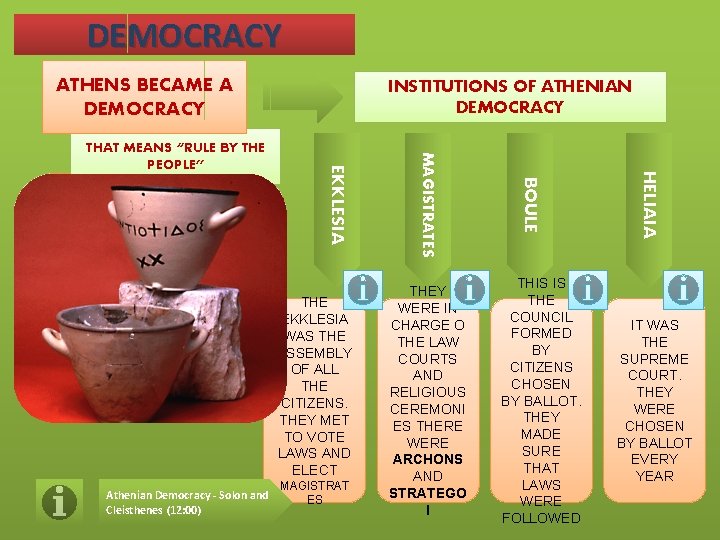
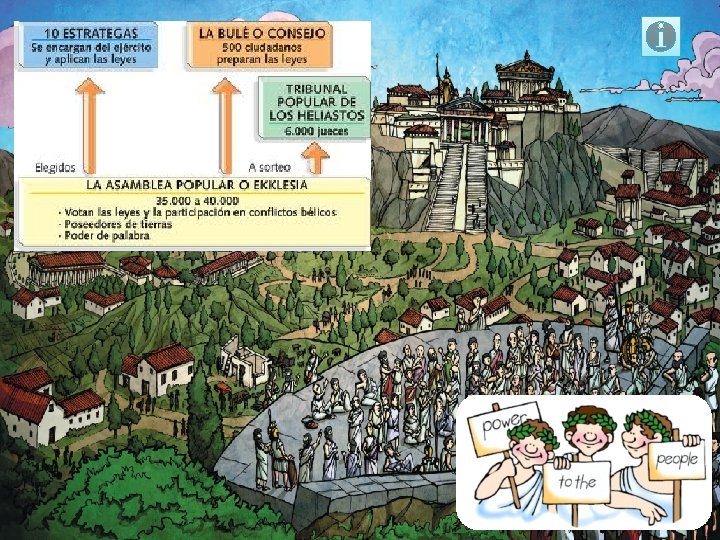
DEMOCRACY ATHENS BECAME A DEMOCRACY THIS IS THE COUNCIL FORMED BY CITIZENS CHOSEN BY BALLOT. THEY MADE SURE THAT LAWS WERE FOLLOWED HELIAIA MAGISTRAT ES THEY WERE IN CHARGE O THE LAW COURTS AND RELIGIOUS CEREMONI ES THERE WERE ARCHONS AND STRATEGO I BOULE Athenian Democracy - Solon and Cleisthenes (12: 00) THE EKKLESIA WAS THE ASSEMBLY OF ALL THE CITIZENS. THEY MET TO VOTE LAWS AND ELECT MAGISTRATES IN THIS SYSTEM, ADULT MALE CITIZENS PARTICIPATED IN GOVERNMENT. BUT WOMEN, METICS (FOREIGNERS), SLAVES AND FREED SLAVES WERE NOT CONSIDERED CITIZENS EKKLESIA THAT MEANS “RULE BY THE PEOPLE” INSTITUTIONS OF ATHENIAN DEMOCRACY IT WAS THE SUPREME COURT. THEY WERE CHOSEN BY BALLOT EVERY YEAR
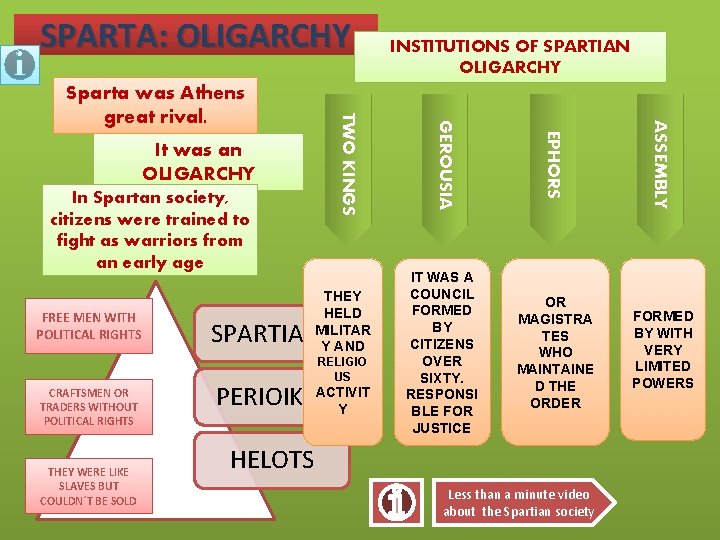
SPARTA: OLIGARCHY FREE MEN WITH POLITICAL RIGHTS THEY HELD MILITAR Y AND SPARTIANS RELIGIO US CRAFTSMEN OR TRADERS WITHOUT POLITICAL RIGHTS THEY WERE LIKE SLAVES BUT COULDN´T BE SOLD PERIOIKOIACTIVIT Y ASSEMBLY In Spartan society, citizens were trained to fight as warriors from an early age EPHORS It was an OLIGARCHY GEROUSIA TWO KINGS Sparta was Athens great rival. INSTITUTIONS OF SPARTIAN OLIGARCHY IT WAS A COUNCIL FORMED BY CITIZENS OVER SIXTY. RESPONSI BLE FOR JUSTICE OR MAGISTRA TES WHO MAINTAINE D THE ORDER FORMED BY WITH VERY LIMITED POWERS HELOTS Less than a minute video about the Spartian society
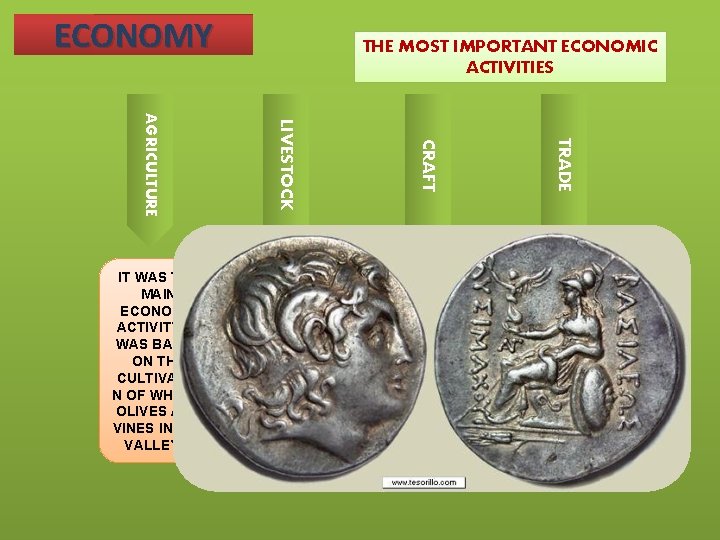
ECONOMY CRAFT WORK WAS DONE IN SMALL WORKSHOP S. THEY MADE TEXTILES, POTTERY, WEAPONS AND FARM TOOLS TRADE IT WAS IMPORTANT IN THE MOUNTAINS. THEY KEPT SHEEP, GOATS, PIGS AND HORSES CRAFT LIVESTOCK AGRICULTURE IT WAS THE MAIN ECONOMIC ACTIVITY. IT WAS BASED ON THE CULTIVATIO N OF WHEAT, OLIVES AND VINES IN THE VALLEYS. THE MOST IMPORTANT ECONOMIC ACTIVITIES IT BECAME IPORTANT, ESPECIALLY AROUND THE MEDITERRAN EAN. THEY TRADED EACH OTHER ACROSS THE AEGEAN AND ALSO WITH EGYPT AND ITALY
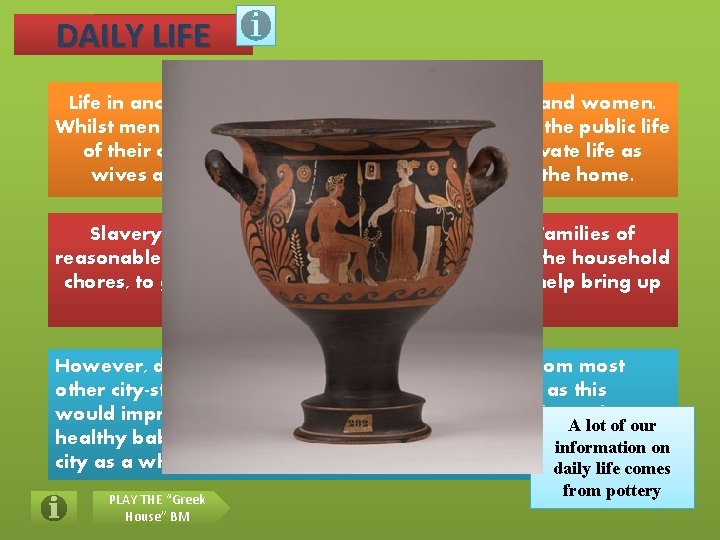
DAILY LIFE Life in ancient Greece was quite different for men and women. Whilst men were expected to take an active part in the public life of their city, women were expected to lead a private life as wives and mothers. Their lives were centred on the home. Slavery was a central feature of life in Greece. Families of reasonable would was have slaves to carry out the household Life inwealth ancient Greece quite different for men and chores, women. to go Whilst shopping at the markettoand to help men were expected take even an active part inbring up the public life of their city, children. women were expected to lead a private life as wives and mothers. Their lives were centred on the home. However, daily life in Sparta was rather different from most other city-states. Here women led more active lives, as this would improve their physical strength and their ability to have A lot of our healthy babies. Sparta also had slaves but these belonged to the information on city as a whole, rather than to individual families. daily life comes PLAY THE “Greek House” BM from pottery
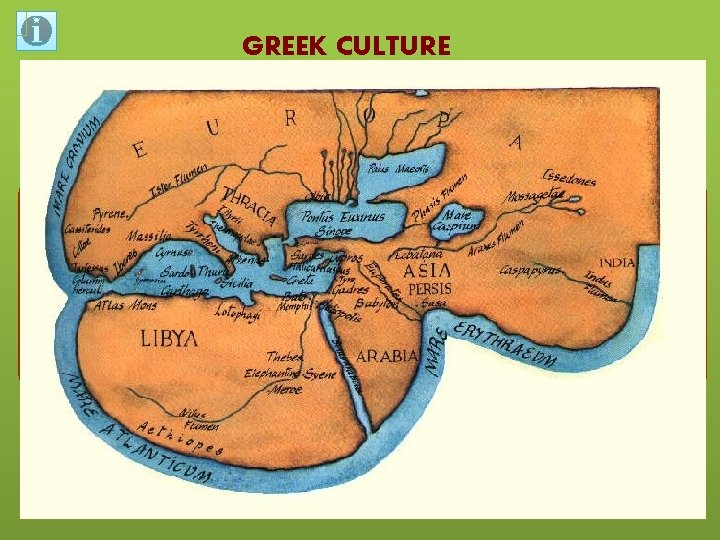
GREEK CULTURE HAD A GREAT INFLUENCE BOTH IN ANCIENT TIMES AND LATER PERIODS. IT IS OFTEN CONSIDERED THE FOUNDATION OF THE WESTERN CIVILISATION PHILOSOPHY Greeks were the first to use the reason to examine the nature of human beings and the world around them SOCRATES, PLATO AND ARISTOLES SCIENCE They developed Mathematics, Physics and Medice HIPPOCRATES, PYTHAGORAS, ARCHIMEDES GEOGRAPY AND HISTORY They calculated the circumference of the Earth. They were the first in writing History. ERATOSTHENE S HERODOTUS THUCYDIDES LITERATURE Epic poems like the Iliad and the Odyssey (700 BC) Theatre devoloped from religious ceremonies: tragedies and comedies HOMER, AESCHYLUS, SOPH OCLES, EURIPIDES
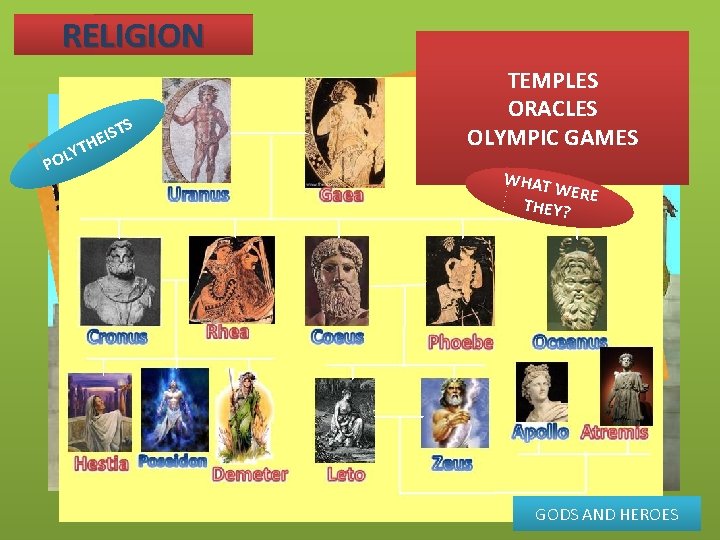
RELIGION TS S I E P TH Y L O TEMPLES ORACLES OLYMPIC GAMES WHAT WERE THEY? GODS AND HEROES
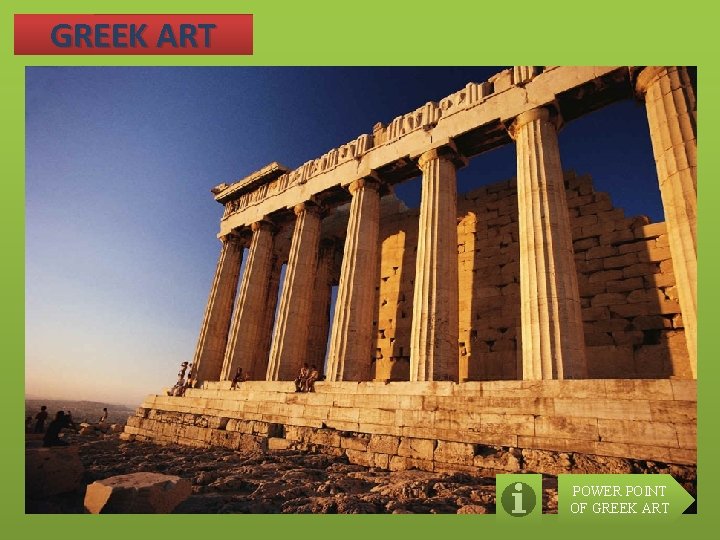
GREEK ART THE GREEKS TRIED TO ACHIEVE PROPORTION AND HARMONY IN THEIR ART. THEY CONSTRUCTED BUILDINGS AND STATUES ON A HUMAN SCALE POWER POINT OF GREEK ART
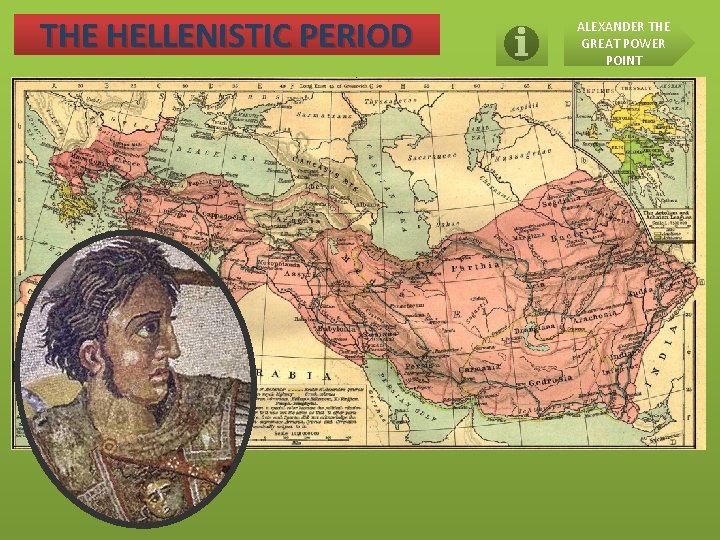
THE HELLENISTIC PERIOD ALEXANDER THE GREAT POWER POINT
- Slides: 27