
The Greek CityStates The Polis Acropolis of Athens
- Slides: 14
The Greek City-States
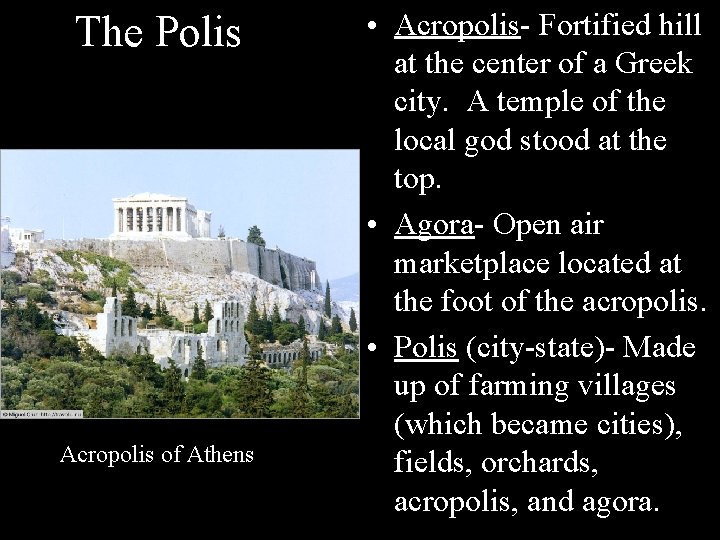
The Polis Acropolis of Athens • Acropolis- Fortified hill at the center of a Greek city. A temple of the local god stood at the top. • Agora- Open air marketplace located at the foot of the acropolis. • Polis (city-state)- Made up of farming villages (which became cities), fields, orchards, acropolis, and agora.
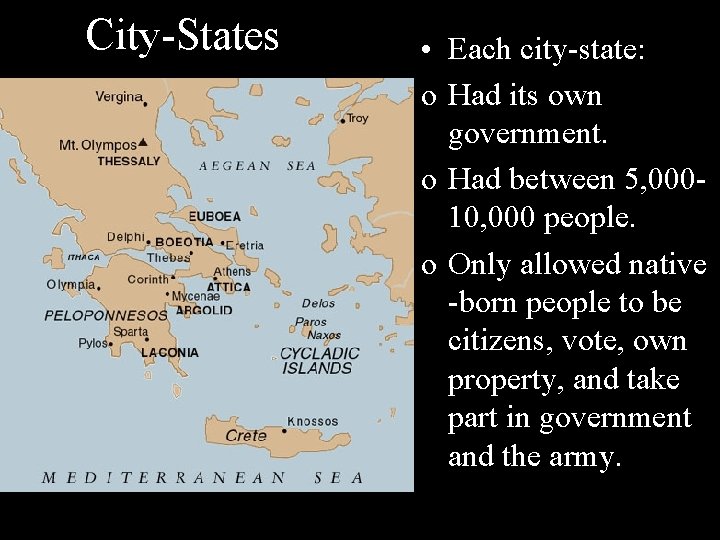
City-States • Each city-state: o Had its own government. o Had between 5, 00010, 000 people. o Only allowed native -born people to be citizens, vote, own property, and take part in government and the army.
Sparta • In south-central Greece, area known as the Peloponnesus. • First ruled by a king. • Aristocrats (nobles)- People with privileges based on heredity (born into them). • Aristocrats took over the government around 800 B. C. E.
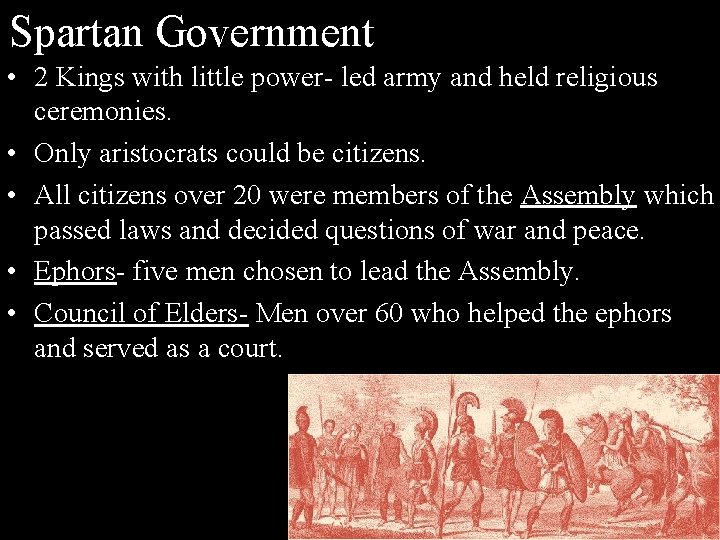
Spartan Government • 2 Kings with little power- led army and held religious ceremonies. • Only aristocrats could be citizens. • All citizens over 20 were members of the Assembly which passed laws and decided questions of war and peace. • Ephors- five men chosen to lead the Assembly. • Council of Elders- Men over 60 who helped the ephors and served as a court.
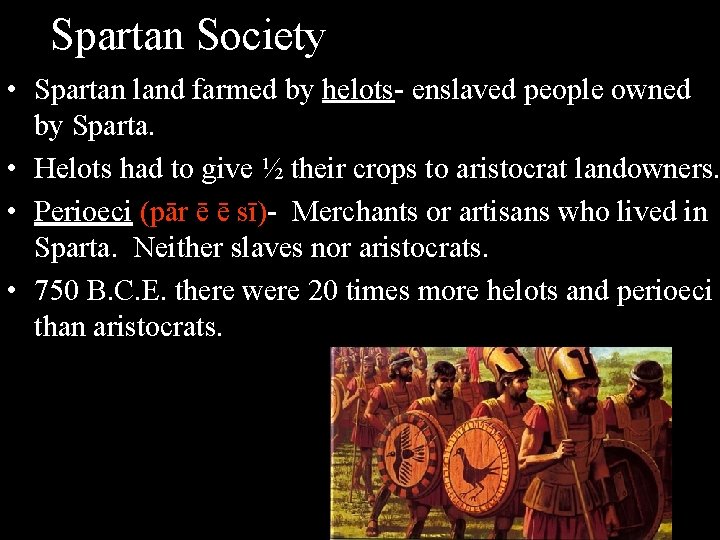
Spartan Society • Spartan land farmed by helots- enslaved people owned by Sparta. • Helots had to give ½ their crops to aristocrat landowners. • Perioeci (pār ē ē sī)- Merchants or artisans who lived in Sparta. Neither slaves nor aristocrats. • 750 B. C. E. there were 20 times more helots and perioeci than aristocrats.
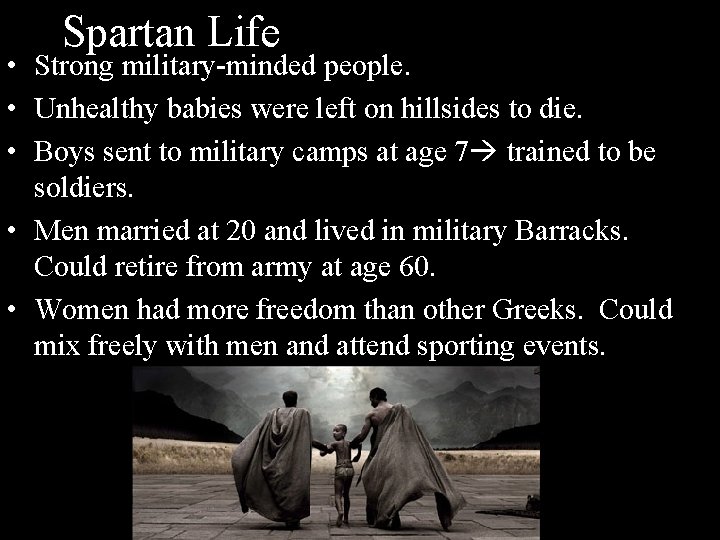
Spartan Life • Strong military-minded people. • Unhealthy babies were left on hillsides to die. • Boys sent to military camps at age 7 trained to be soldiers. • Men married at 20 and lived in military Barracks. Could retire from army at age 60. • Women had more freedom than other Greeks. Could mix freely with men and attend sporting events.
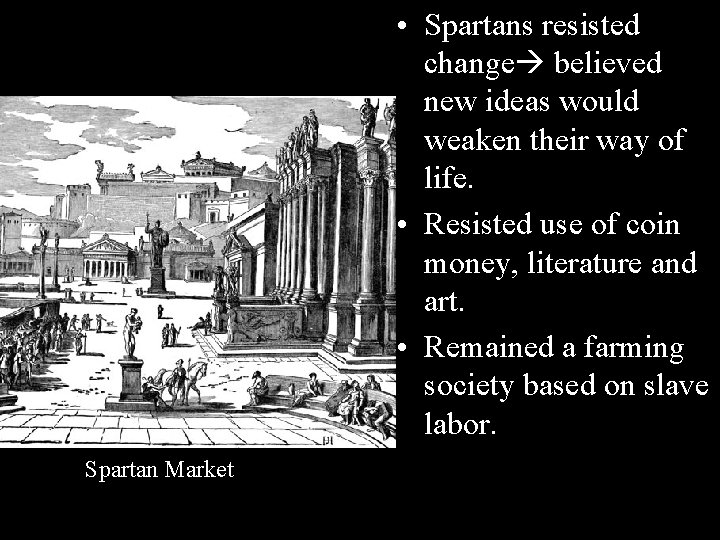
• Spartans resisted change believed new ideas would weaken their way of life. • Resisted use of coin money, literature and art. • Remained a farming society based on slave labor. Spartan Market
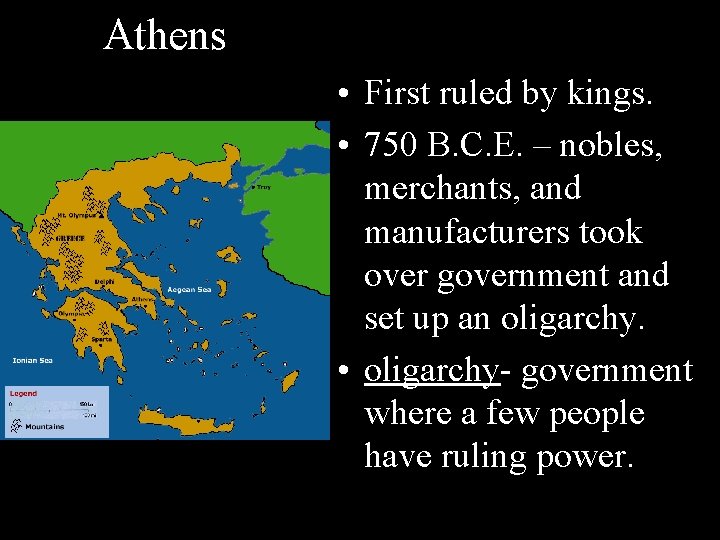
Athens • First ruled by kings. • 750 B. C. E. – nobles, merchants, and manufacturers took over government and set up an oligarchy. • oligarchy- government where a few people have ruling power.
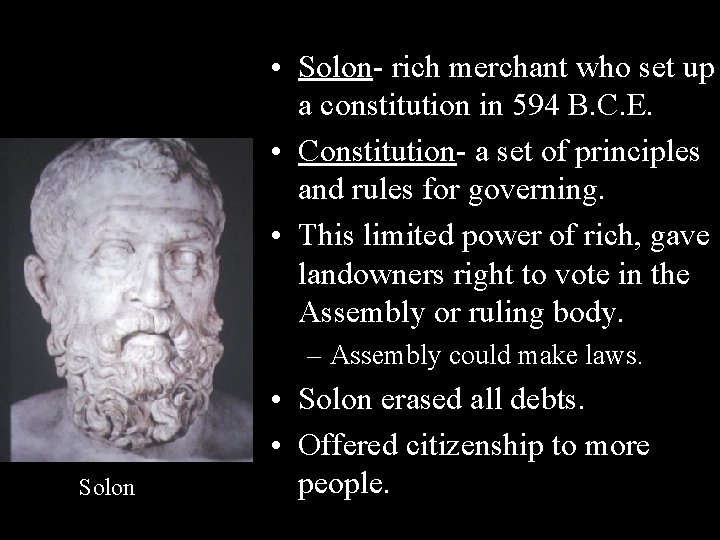
• Solon- rich merchant who set up a constitution in 594 B. C. E. • Constitution- a set of principles and rules for governing. • This limited power of rich, gave landowners right to vote in the Assembly or ruling body. – Assembly could make laws. Solon • Solon erased all debts. • Offered citizenship to more people.
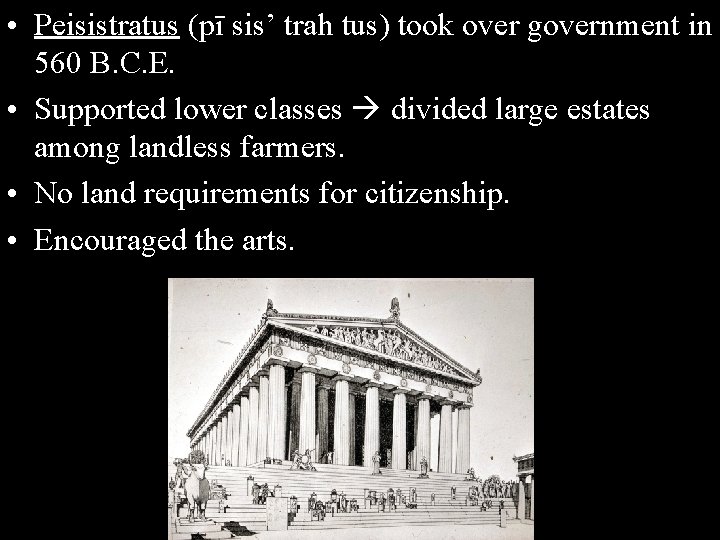
• Peisistratus (pī sis’ trah tus) took over government in 560 B. C. E. • Supported lower classes divided large estates among landless farmers. • No land requirements for citizenship. • Encouraged the arts.
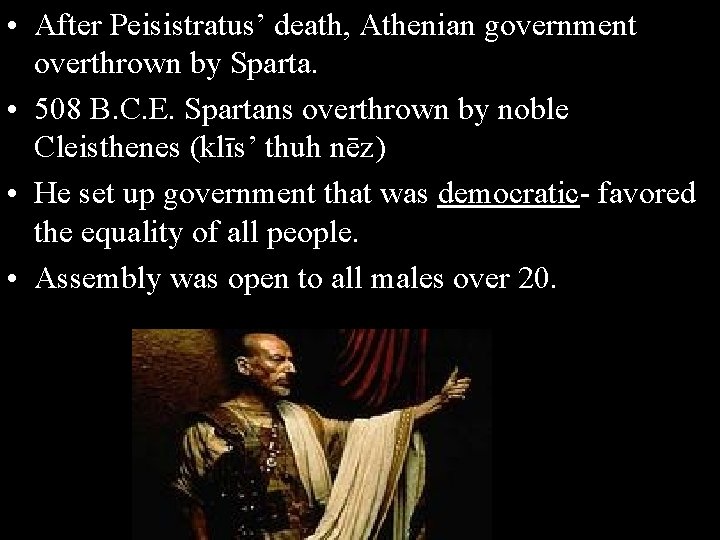
• After Peisistratus’ death, Athenian government overthrown by Sparta. • 508 B. C. E. Spartans overthrown by noble Cleisthenes (klīs’ thuh nēz) • He set up government that was democratic- favored the equality of all people. • Assembly was open to all males over 20.
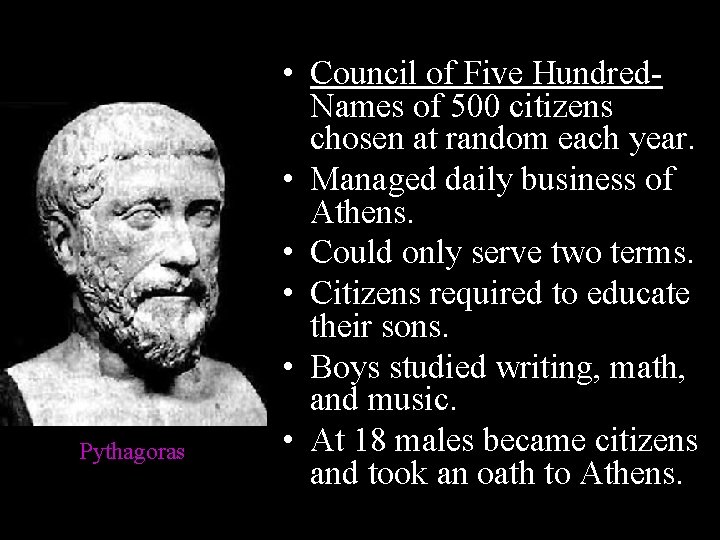
Pythagoras • Council of Five Hundred. Names of 500 citizens chosen at random each year. • Managed daily business of Athens. • Could only serve two terms. • Citizens required to educate their sons. • Boys studied writing, math, and music. • At 18 males became citizens and took an oath to Athens.
Oath Taken by All Athenian Men • I will never disgrace my sacred arms nor desert my comrades in the ranks. • I will fight for temples and for public property, whether alone or with my fellows. • I will leave my country not less, but greater and better than I found it. • I will obey the magistrates and observe the existing laws, and those the people may hereafter make. • If anyone tries to overthrow or disobey the laws I will resist him in their defense, whether alone or with my fellows. • I will honor the temples and religion of my forefathers.