
The Great Society Chapter 28 Section 3 LBJ
The Great Society Chapter 28 Section 3
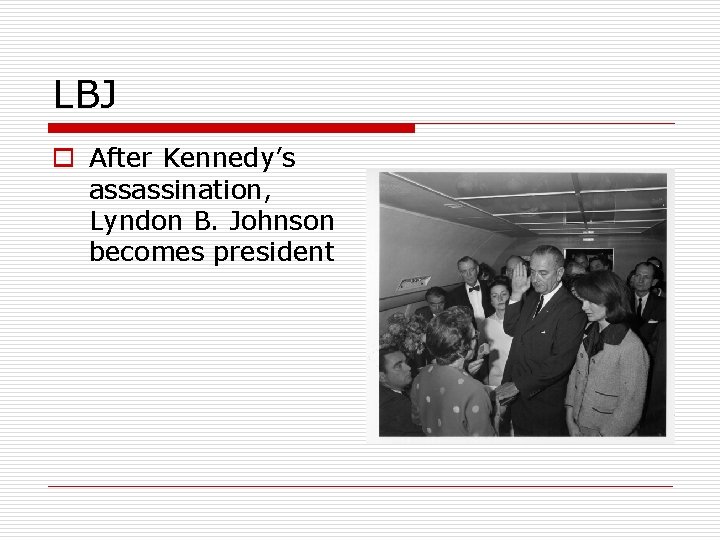
LBJ o After Kennedy’s assassination, Lyndon B. Johnson becomes president
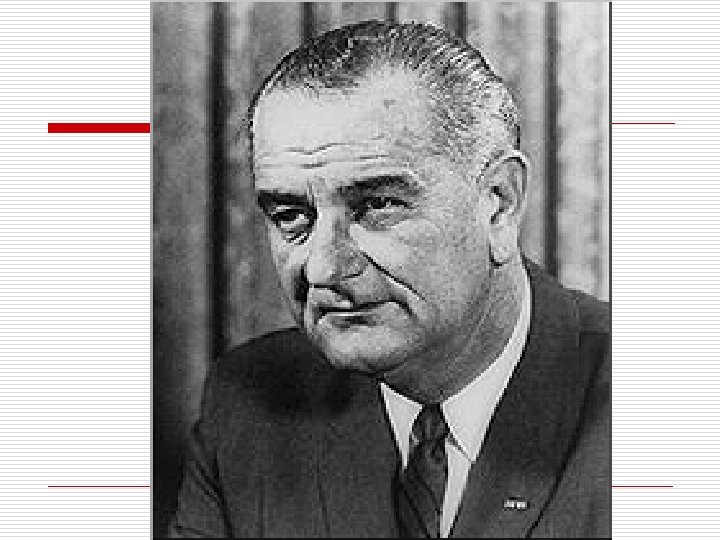
Who was Johnson? A long-time politician from Texas. Tutored by FDR. Former Majority Leader in Congress. Helped pass Civil Rights legislation.
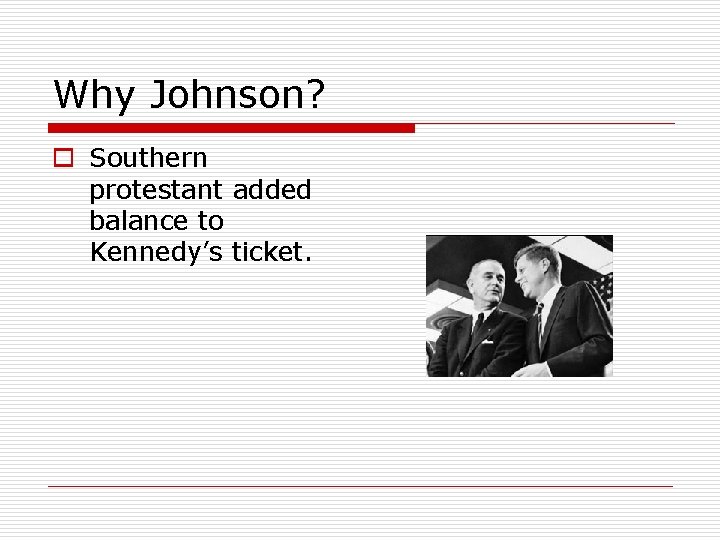
Why Johnson? o Southern protestant added balance to Kennedy’s ticket.
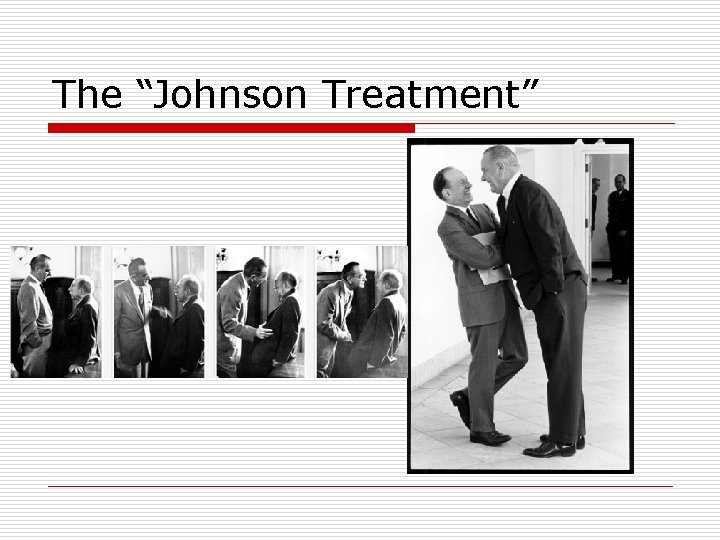
The “Johnson Treatment”
LBJ encourages Congress to keep up Kennedy’s work o Tax-cut bill n Sparked increase in jobs, consumer spending, and long period of economic expansion in the cities o Civil Rights Act of 1964
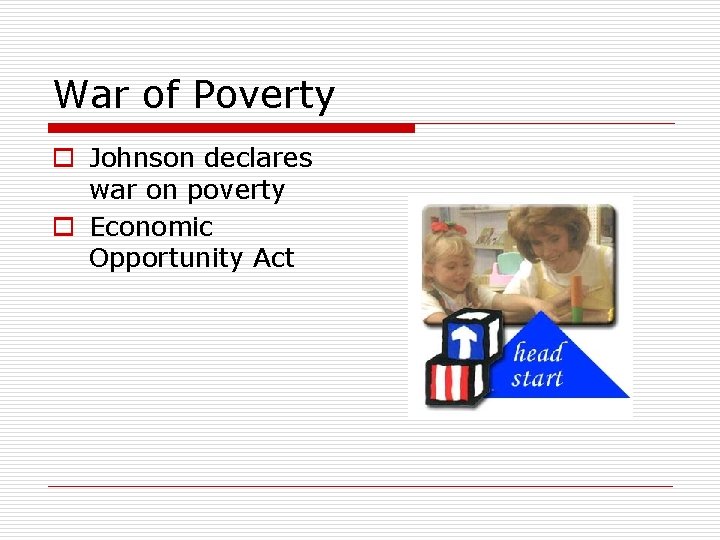
War of Poverty o Johnson declares war on poverty o Economic Opportunity Act
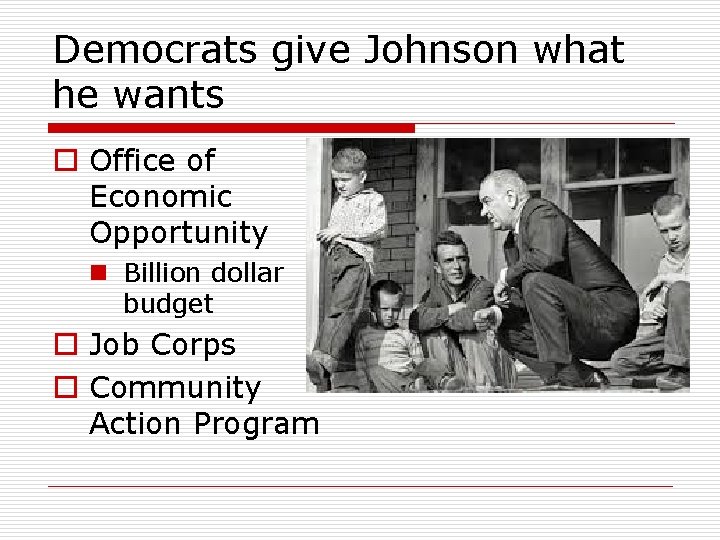
Democrats give Johnson what he wants o Office of Economic Opportunity n Billion dollar budget o Job Corps o Community Action Program
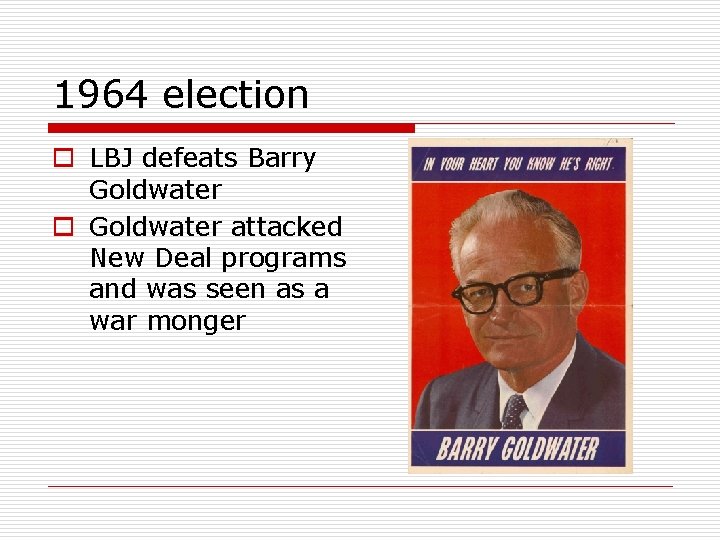
1964 election o LBJ defeats Barry Goldwater o Goldwater attacked New Deal programs and was seen as a war monger
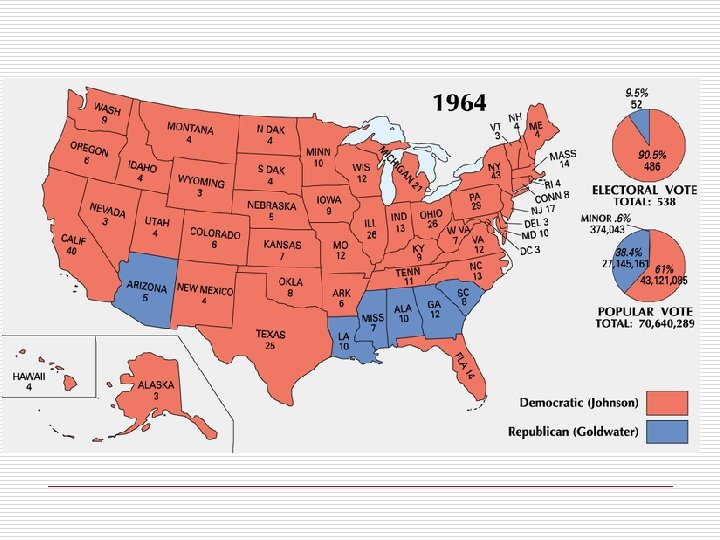
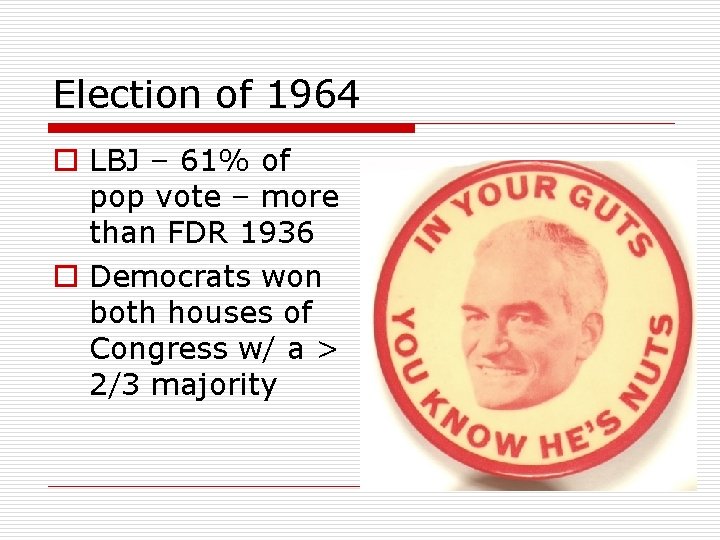
Election of 1964 o LBJ – 61% of pop vote – more than FDR 1936 o Democrats won both houses of Congress w/ a > 2/3 majority
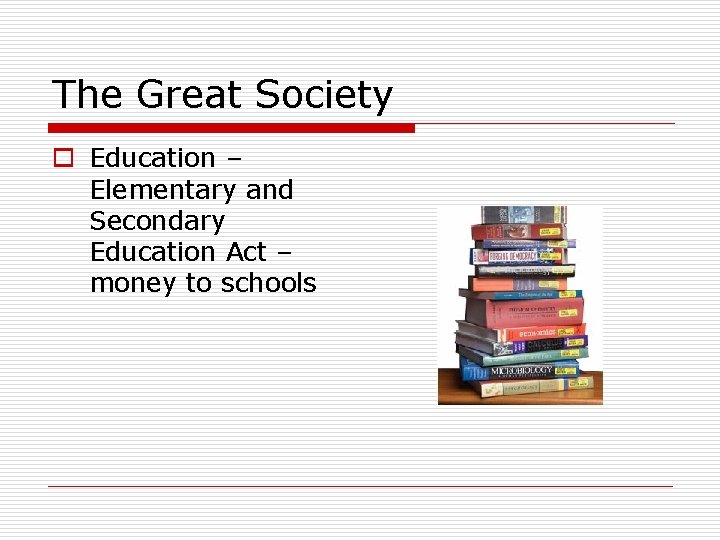
The Great Society o Education – Elementary and Secondary Education Act – money to schools
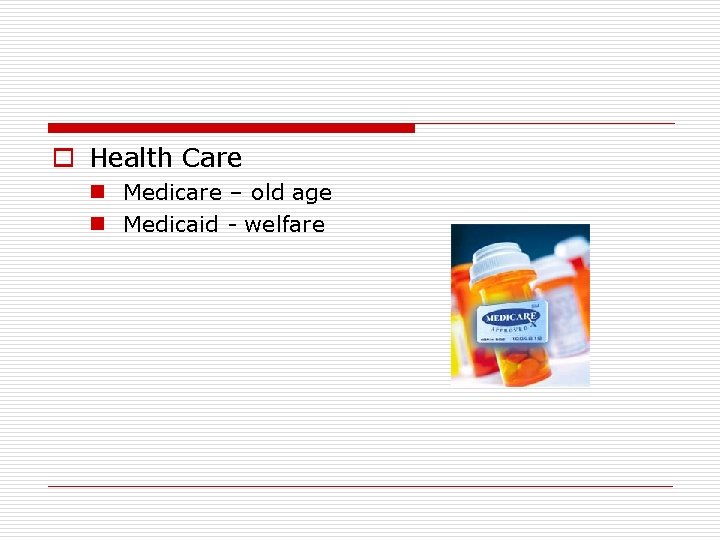
o Health Care n Medicare – old age n Medicaid - welfare
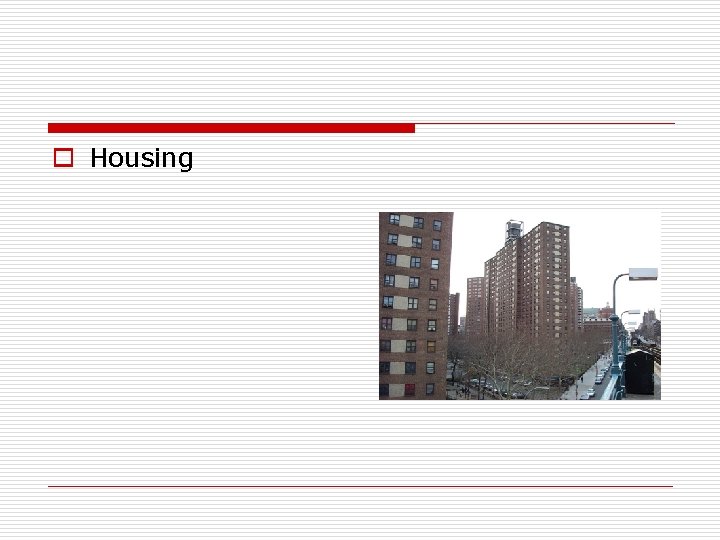
o Housing
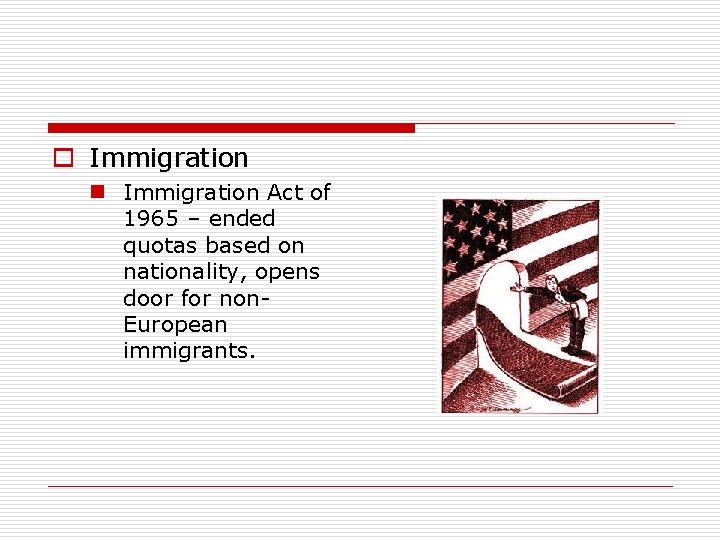
o Immigration n Immigration Act of 1965 – ended quotas based on nationality, opens door for non. European immigrants.
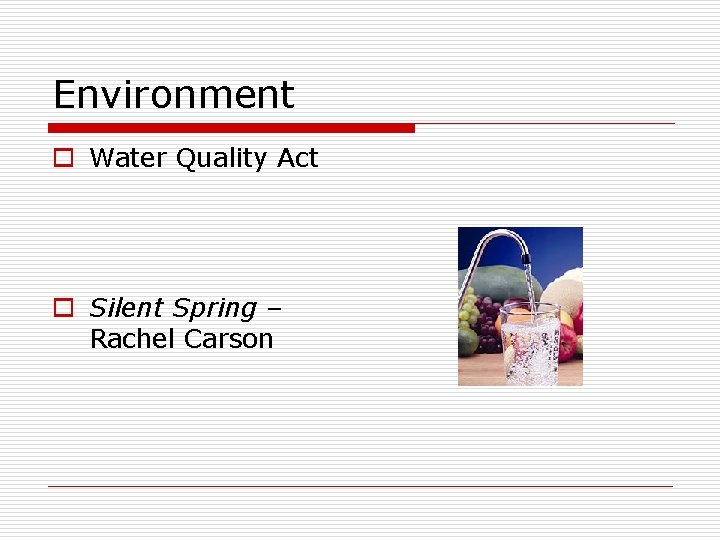
Environment o Water Quality Act o Silent Spring – Rachel Carson
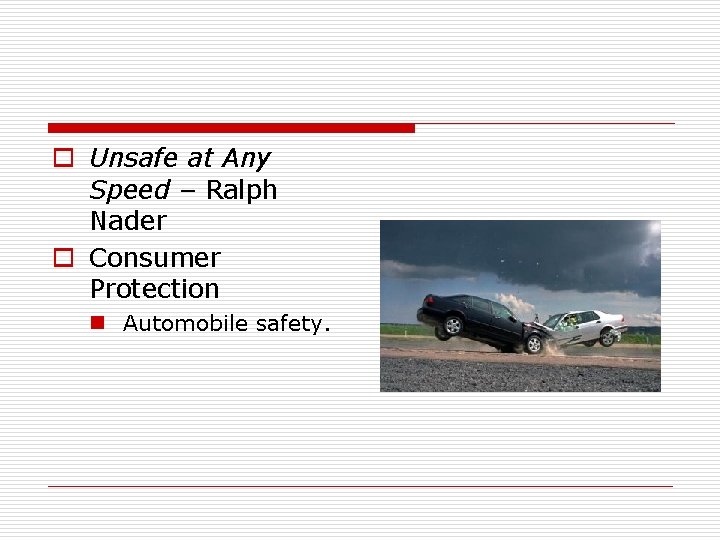
o Unsafe at Any Speed – Ralph Nader o Consumer Protection n Automobile safety.
Warren Court o Under Chief Justice Earl Warren, the Supreme Court became more of an activist court
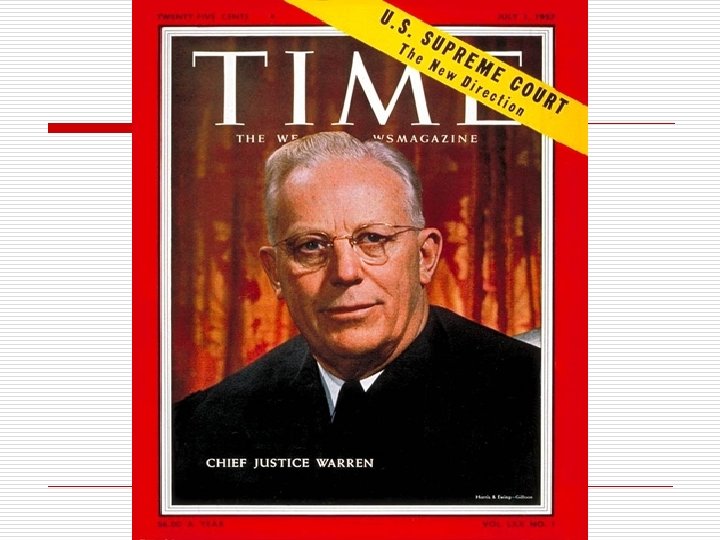
Warren Court (continued) o Reapportionment (the way states draw election districts) n One person, one vote
Warren Court (continued) o Gideon v. Wainwright – right to free legal counsel o Escobedo v. Illinois – lawyer present during questioning o Miranda v. Arizona – suspects must be read their rights
Warren Court and LBJ’s Great Society o Both extended the power of the federal government o War on poverty helped o Had supporters and opponents
- Slides: 23