
The Great Depression The New Deal Stock Market
- Slides: 29
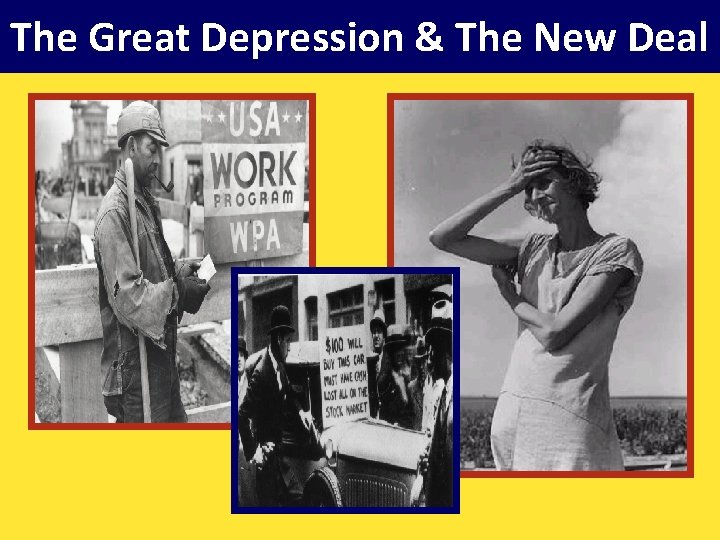
The Great Depression & The New Deal
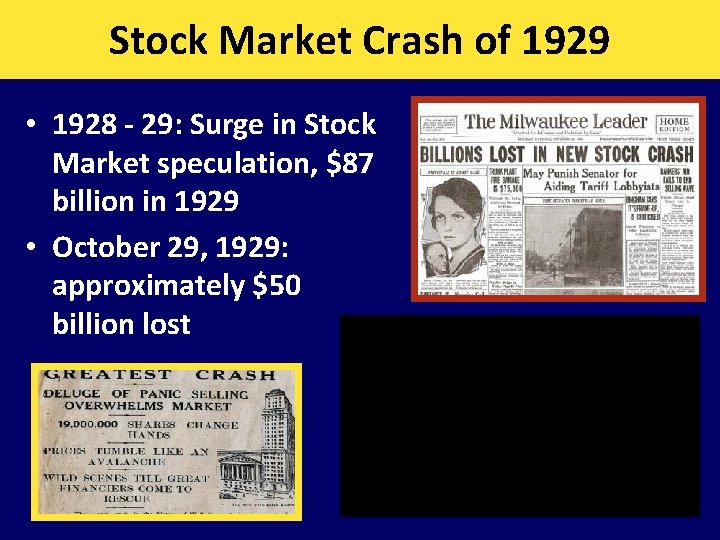
Stock Market Crash of 1929 • 1928 - 29: Surge in Stock Market speculation, $87 billion in 1929 • October 29, 1929: approximately $50 billion lost
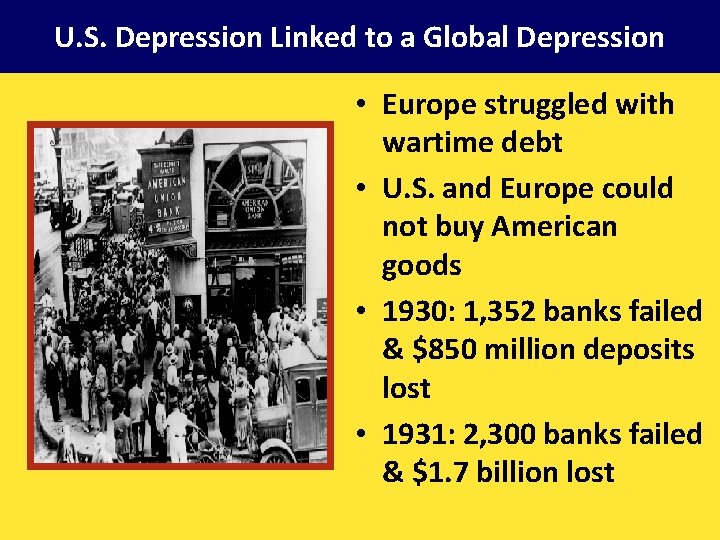
U. S. Depression Linked to a Global Depression • Europe struggled with wartime debt • U. S. and Europe could not buy American goods • 1930: 1, 352 banks failed & $850 million deposits lost • 1931: 2, 300 banks failed & $1. 7 billion lost
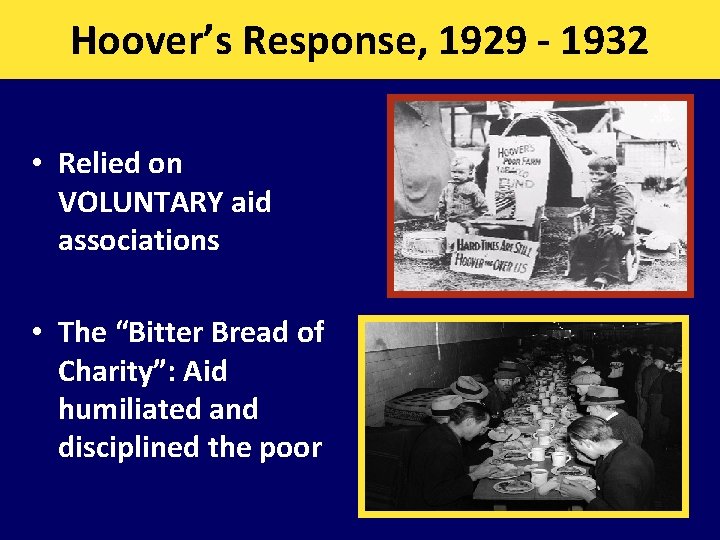
Hoover’s Response, 1929 - 1932 • Relied on VOLUNTARY aid associations • The “Bitter Bread of Charity”: Aid humiliated and disciplined the poor
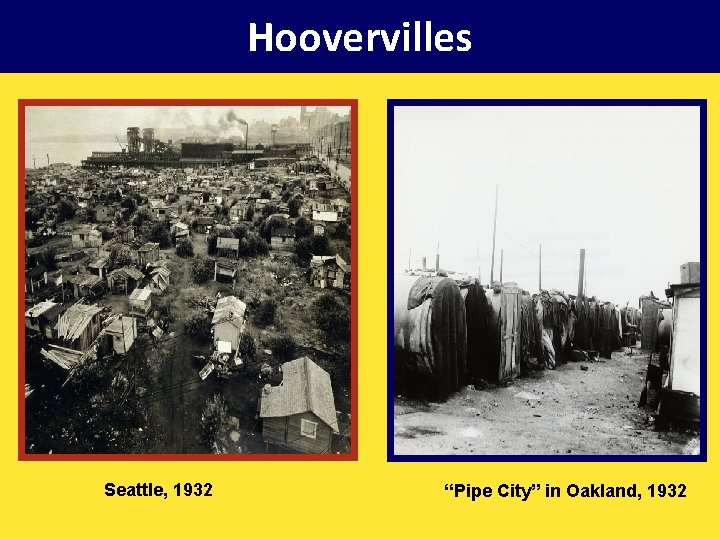
Hoovervilles Seattle, 1932 “Pipe City” in Oakland, 1932
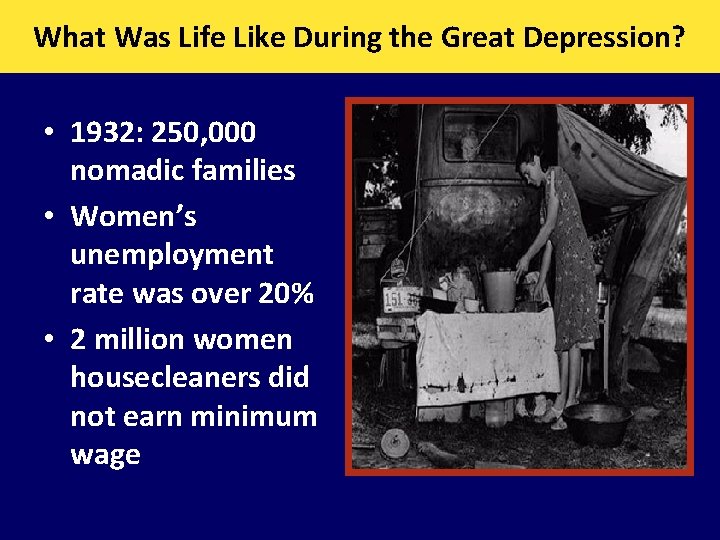
What Was Life Like During the Great Depression? • 1932: 250, 000 nomadic families • Women’s unemployment rate was over 20% • 2 million women housecleaners did not earn minimum wage
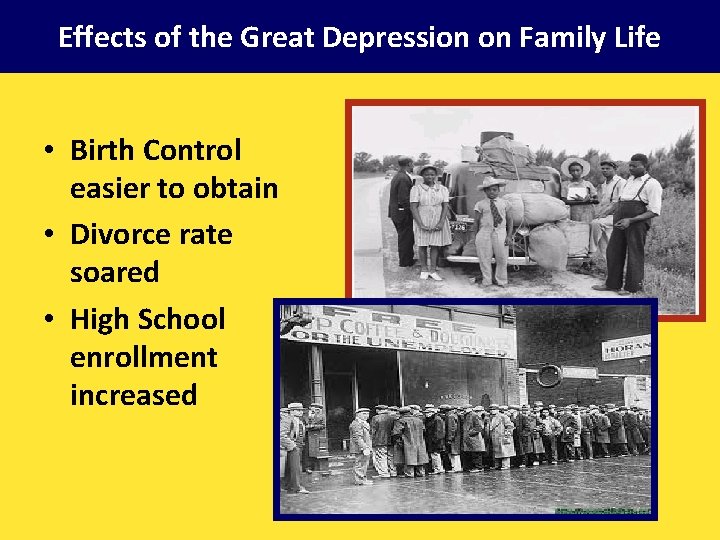
Effects of the Great Depression on Family Life • Birth Control easier to obtain • Divorce rate soared • High School enrollment increased
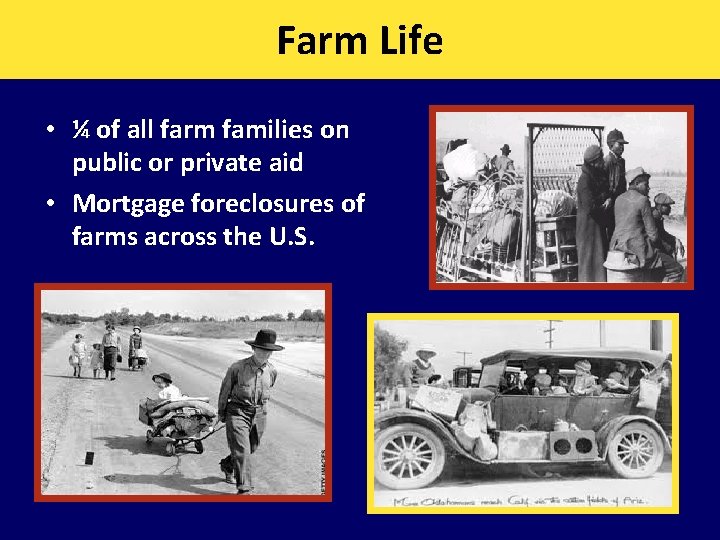
Farm Life • ¼ of all farm families on public or private aid • Mortgage foreclosures of farms across the U. S.
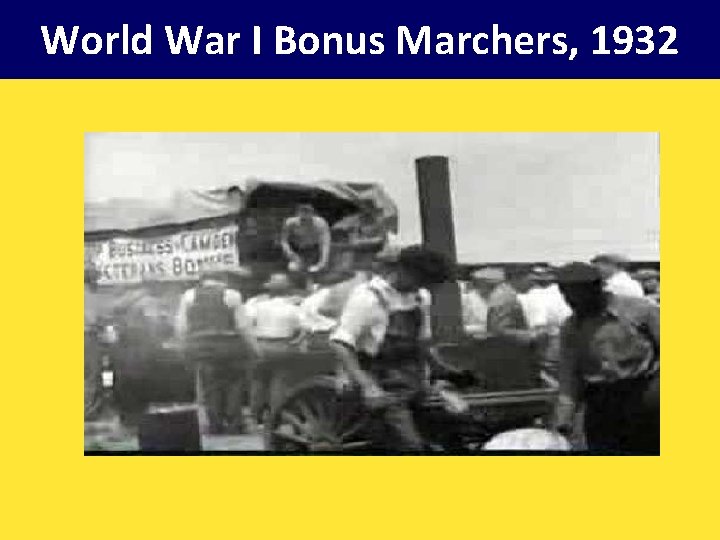
World War I Bonus Marchers, 1932
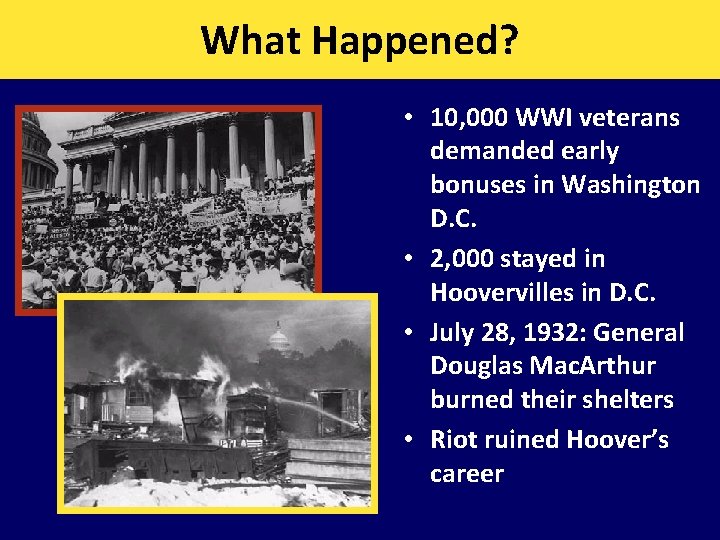
What Happened? • 10, 000 WWI veterans demanded early bonuses in Washington D. C. • 2, 000 stayed in Hoovervilles in D. C. • July 28, 1932: General Douglas Mac. Arthur burned their shelters • Riot ruined Hoover’s career
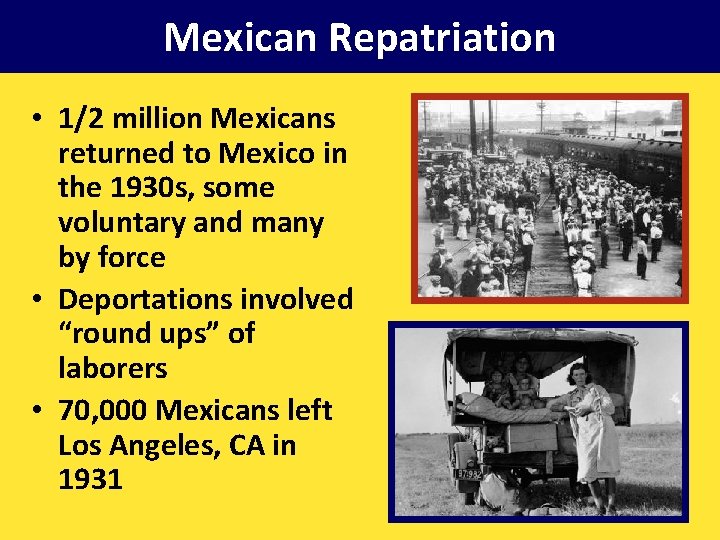
Mexican Repatriation • 1/2 million Mexicans returned to Mexico in the 1930 s, some voluntary and many by force • Deportations involved “round ups” of laborers • 70, 000 Mexicans left Los Angeles, CA in 1931
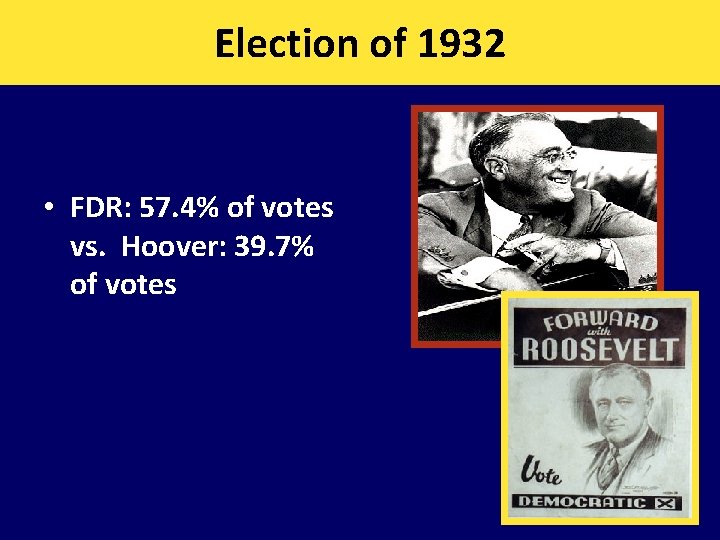
Election of 1932 • FDR: 57. 4% of votes vs. Hoover: 39. 7% of votes
FDR’s Inaugural Address
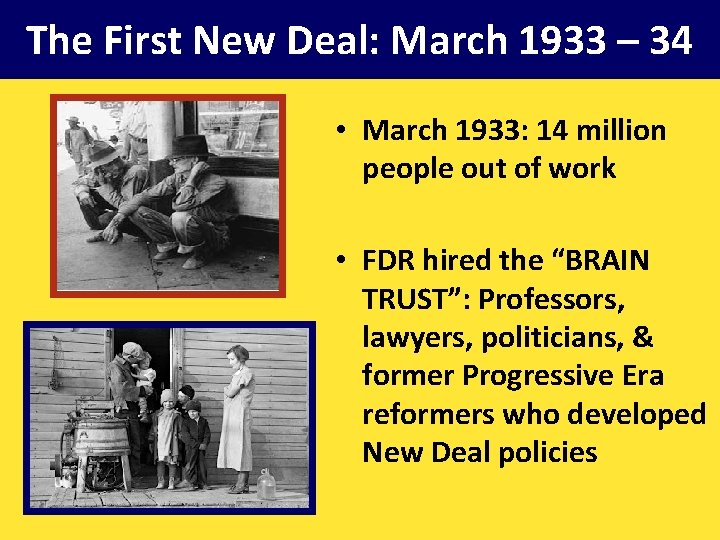
The First New Deal: March 1933 – 34 • March 1933: 14 million people out of work • FDR hired the “BRAIN TRUST”: Professors, lawyers, politicians, & former Progressive Era reformers who developed New Deal policies
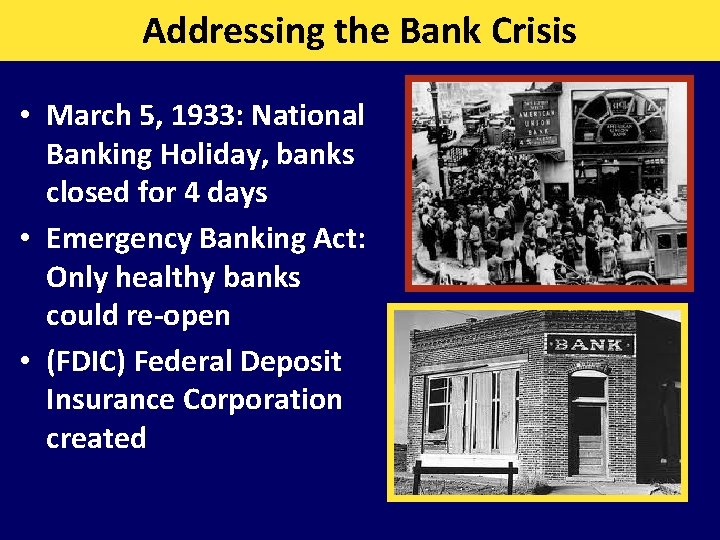
Addressing the Bank Crisis • March 5, 1933: National Banking Holiday, banks closed for 4 days • Emergency Banking Act: Only healthy banks could re-open • (FDIC) Federal Deposit Insurance Corporation created
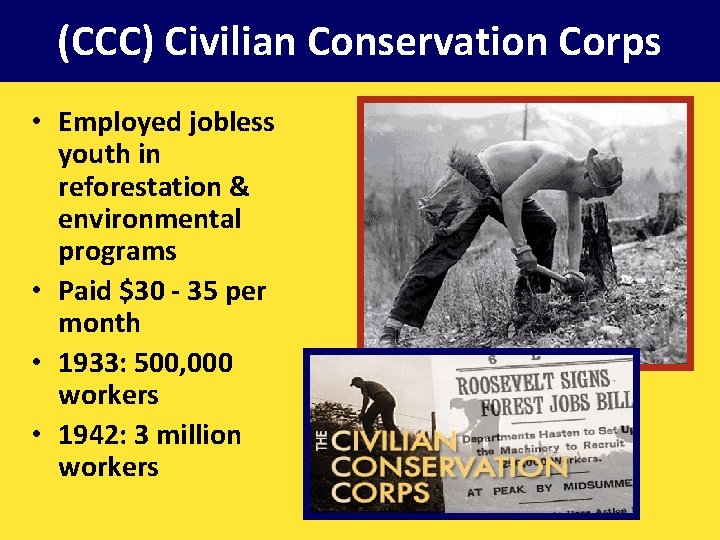
(CCC) Civilian Conservation Corps • Employed jobless youth in reforestation & environmental programs • Paid $30 - 35 per month • 1933: 500, 000 workers • 1942: 3 million workers
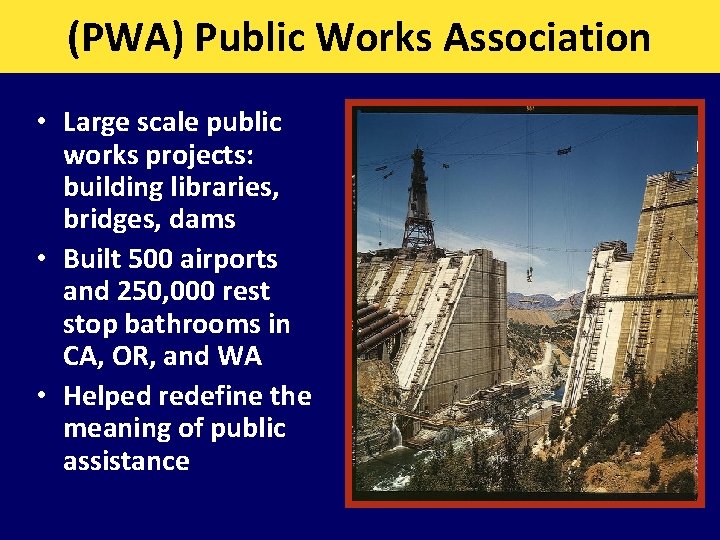
(PWA) Public Works Association • Large scale public works projects: building libraries, bridges, dams • Built 500 airports and 250, 000 rest stop bathrooms in CA, OR, and WA • Helped redefine the meaning of public assistance
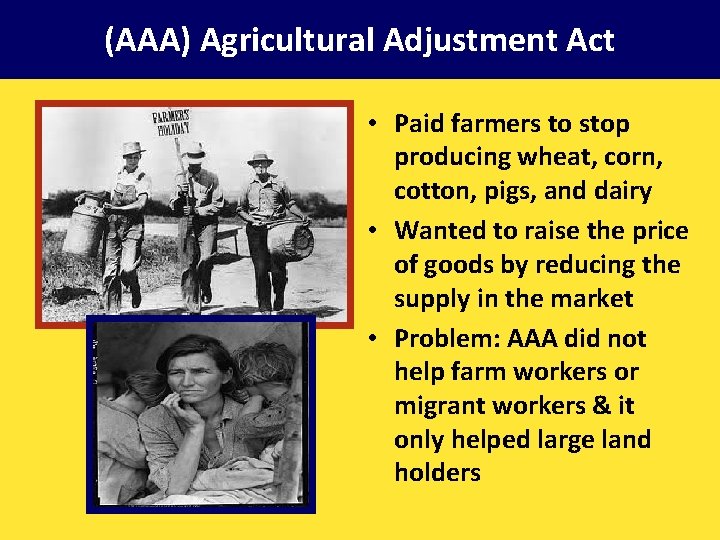
(AAA) Agricultural Adjustment Act • Paid farmers to stop producing wheat, corn, cotton, pigs, and dairy • Wanted to raise the price of goods by reducing the supply in the market • Problem: AAA did not help farm workers or migrant workers & it only helped large land holders
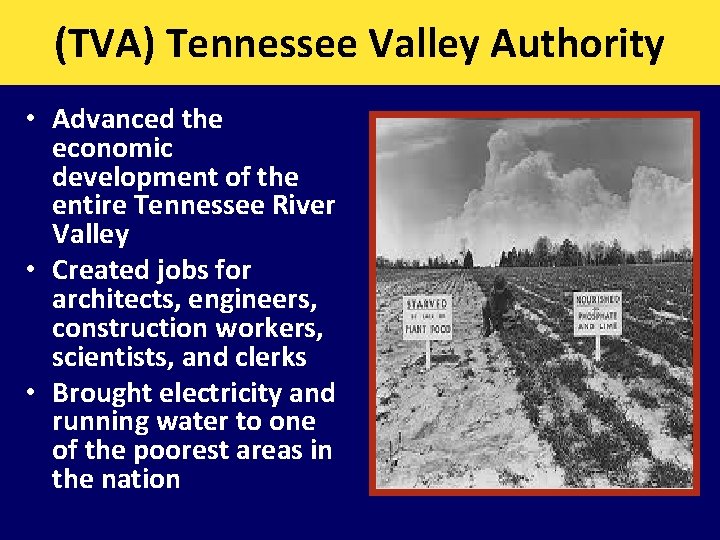
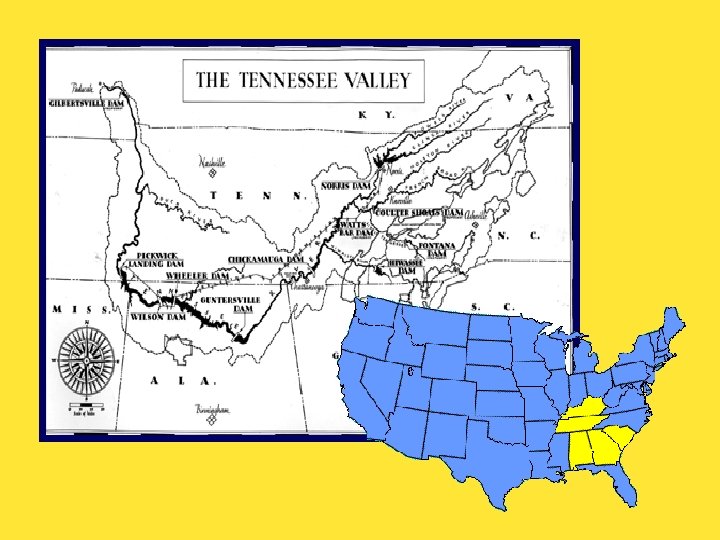
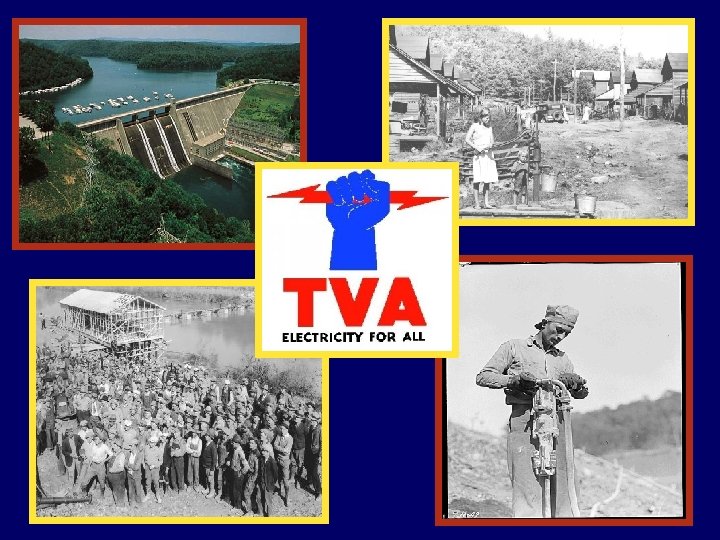
(TVA) Tennessee Valley Authority • Advanced the economic development of the entire Tennessee River Valley • Created jobs for architects, engineers, construction workers, scientists, and clerks • Brought electricity and running water to one of the poorest areas in the nation
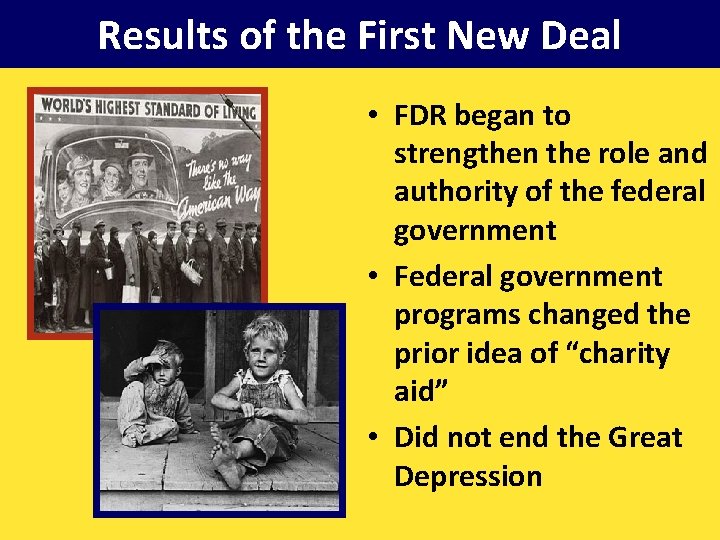
Results of the First New Deal • FDR began to strengthen the role and authority of the federal government • Federal government programs changed the prior idea of “charity aid” • Did not end the Great Depression
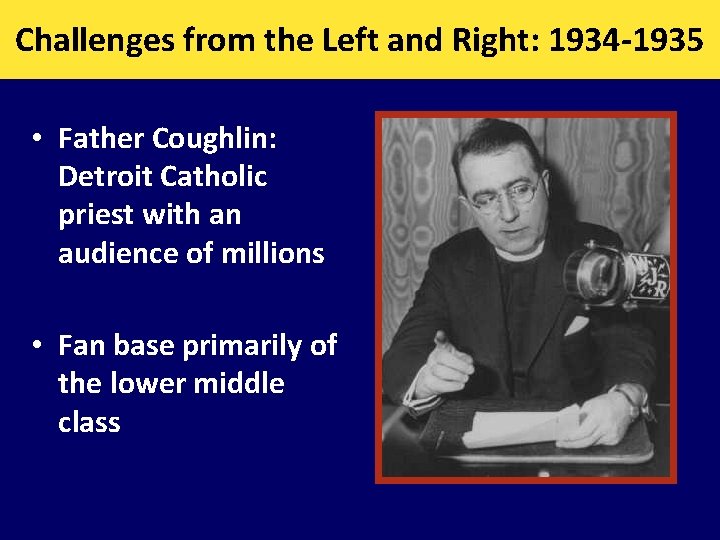
Challenges from the Left and Right: 1934 -1935 • Father Coughlin: Detroit Catholic priest with an audience of millions • Fan base primarily of the lower middle class
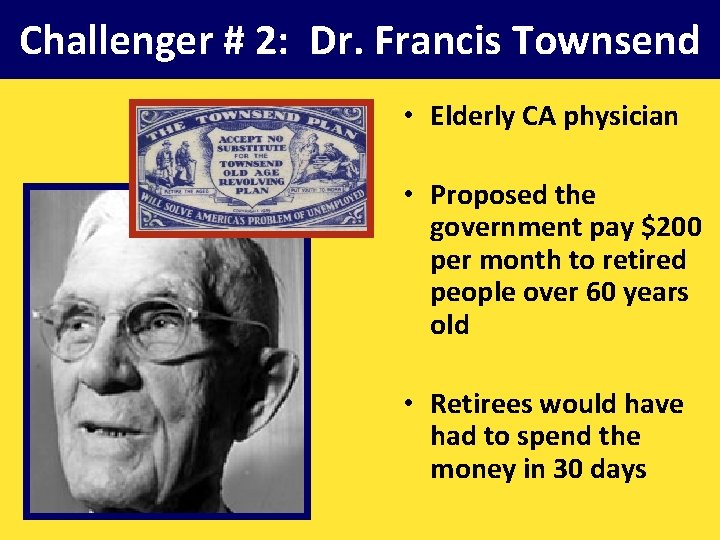
Challenger # 2: Dr. Francis Townsend • Elderly CA physician • Proposed the government pay $200 per month to retired people over 60 years old • Retirees would have had to spend the money in 30 days
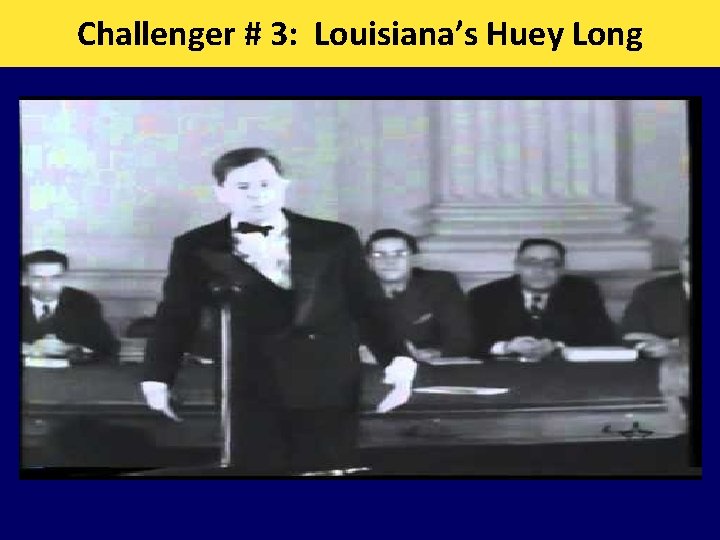
Challenger # 3: Louisiana’s Huey Long
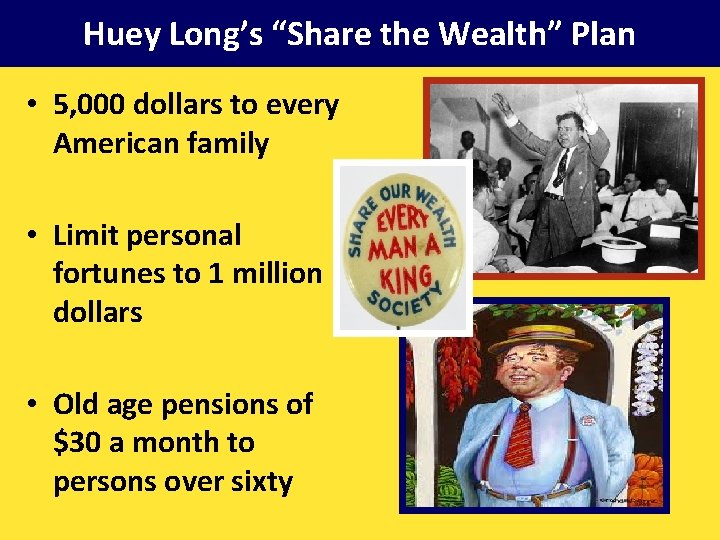
Huey Long’s “Share the Wealth” Plan • 5, 000 dollars to every American family • Limit personal fortunes to 1 million dollars • Old age pensions of $30 a month to persons over sixty
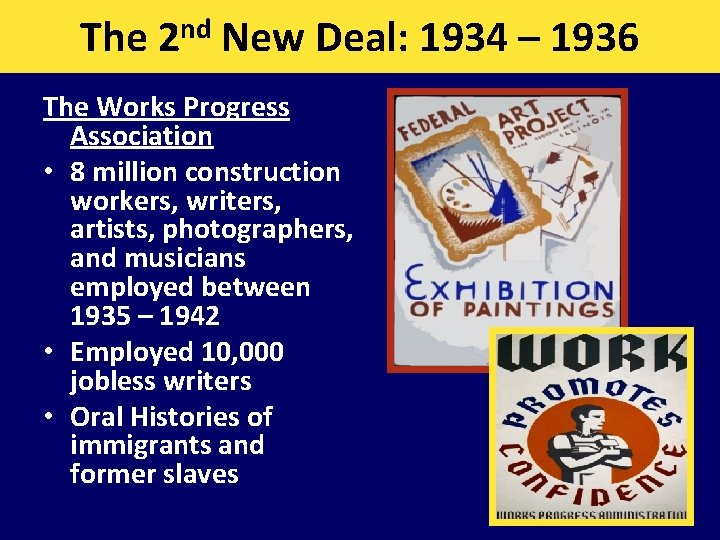
The 2 nd New Deal: 1934 – 1936 The Works Progress Association • 8 million construction workers, writers, artists, photographers, and musicians employed between 1935 – 1942 • Employed 10, 000 jobless writers • Oral Histories of immigrants and former slaves
Who did the 2 nd New Deal Target? • Directly addressed the needs of workers, the elderly, and the poor • The federal government became the source of stability and security • Fair Labor Standards Act of 1938 sets minimum wage of 40 cents per hour • Brain Trust placed higher taxes on corporations and the wealthy out of the fear of the influence of Coughlin, Long, and Townsend
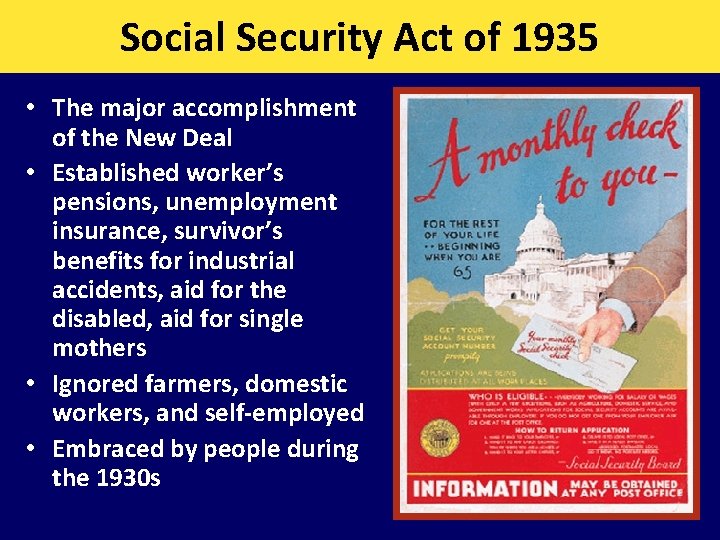
Social Security Act of 1935 • The major accomplishment of the New Deal • Established worker’s pensions, unemployment insurance, survivor’s benefits for industrial accidents, aid for the disabled, aid for single mothers • Ignored farmers, domestic workers, and self-employed • Embraced by people during the 1930 s