
The Great Depression Recession When your neighbor loses
The Great Depression Recession: When your neighbor loses his or her job. Depression: When you lose your job.
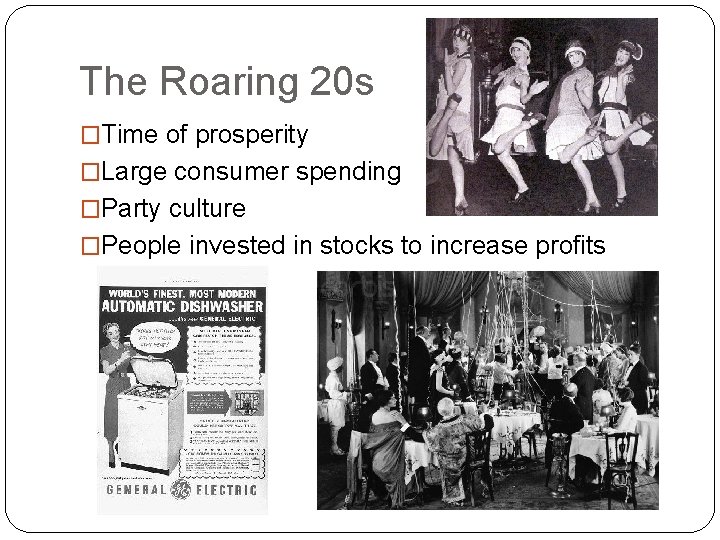
The Roaring 20 s �Time of prosperity �Large consumer spending �Party culture �People invested in stocks to increase profits
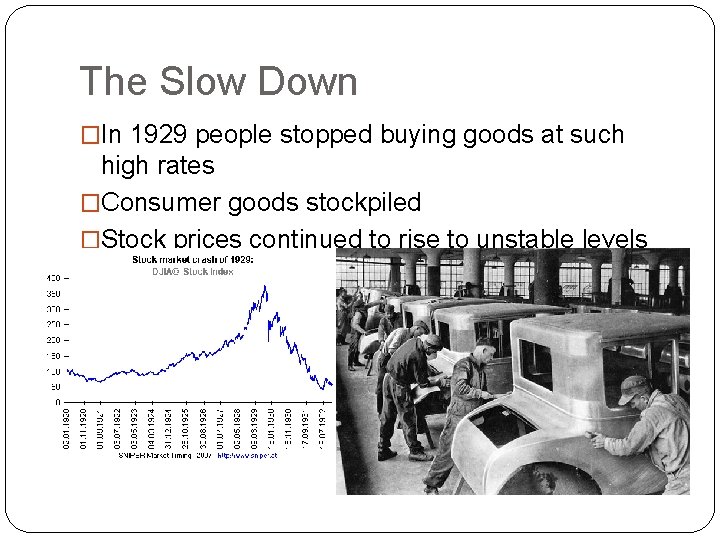
The Slow Down �In 1929 people stopped buying goods at such high rates �Consumer goods stockpiled �Stock prices continued to rise to unstable levels
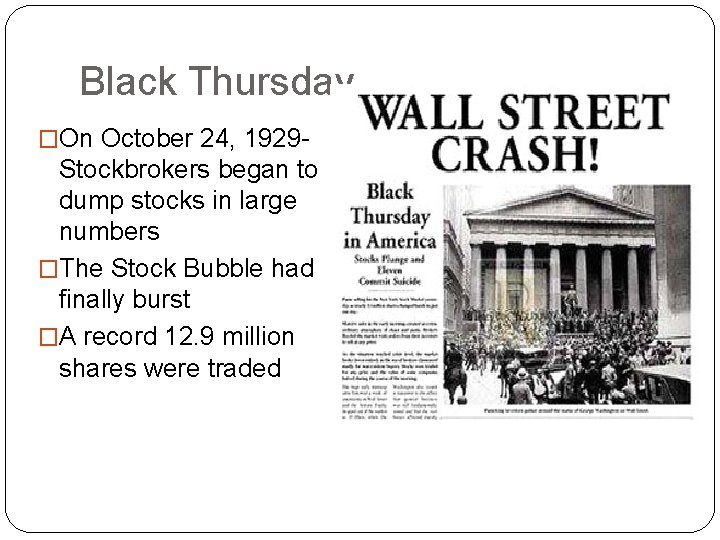
Black Thursday �On October 24, 1929 - Stockbrokers began to dump stocks in large numbers �The Stock Bubble had finally burst �A record 12. 9 million shares were traded
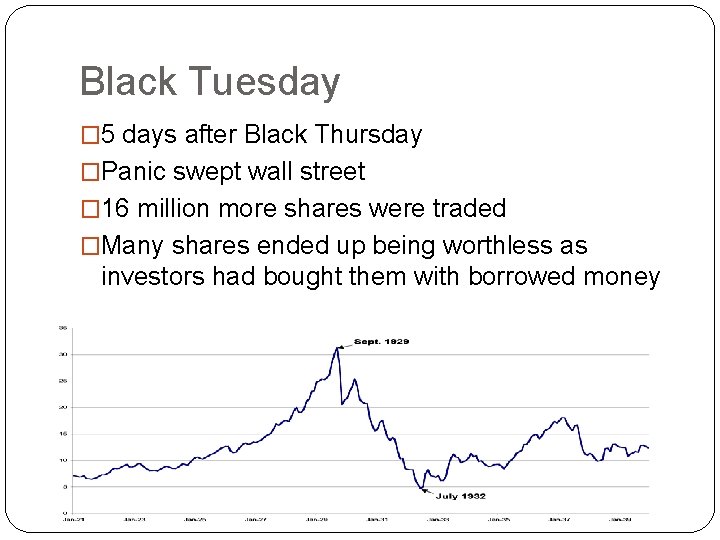
Black Tuesday � 5 days after Black Thursday �Panic swept wall street � 16 million more shares were traded �Many shares ended up being worthless as investors had bought them with borrowed money
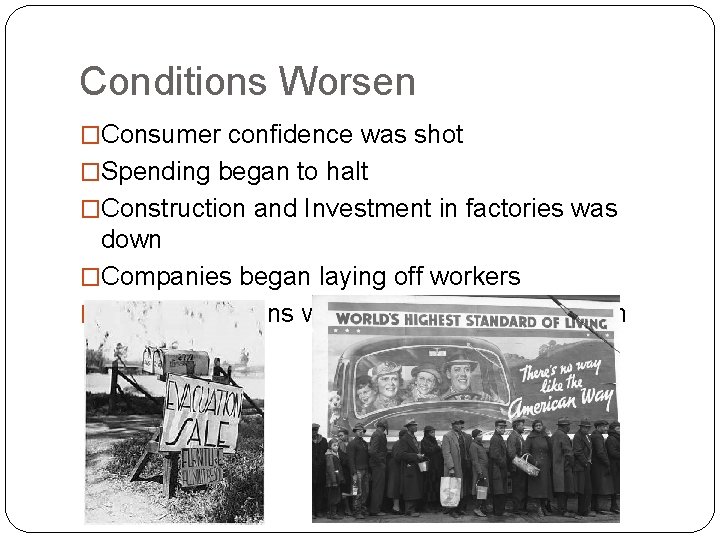
Conditions Worsen �Consumer confidence was shot �Spending began to halt �Construction and Investment in factories was down �Companies began laying off workers �Many Americans were forced to buy things on credit
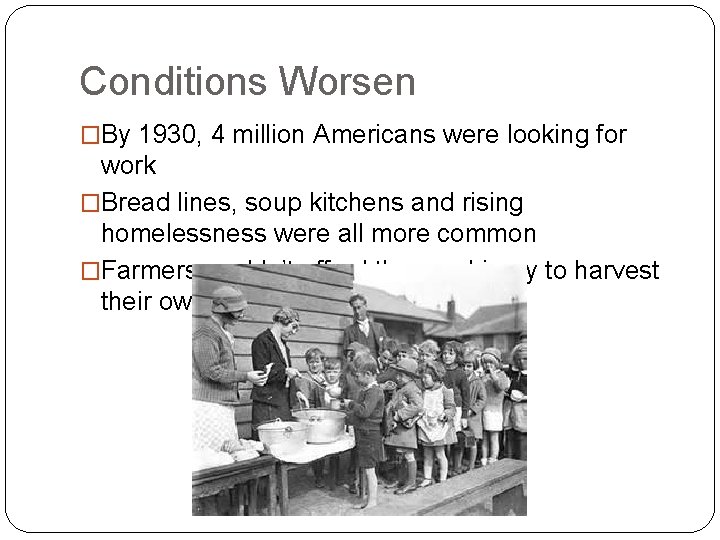
Conditions Worsen �By 1930, 4 million Americans were looking for work �Bread lines, soup kitchens and rising homelessness were all more common �Farmers couldn’t afford the machinery to harvest their own crops
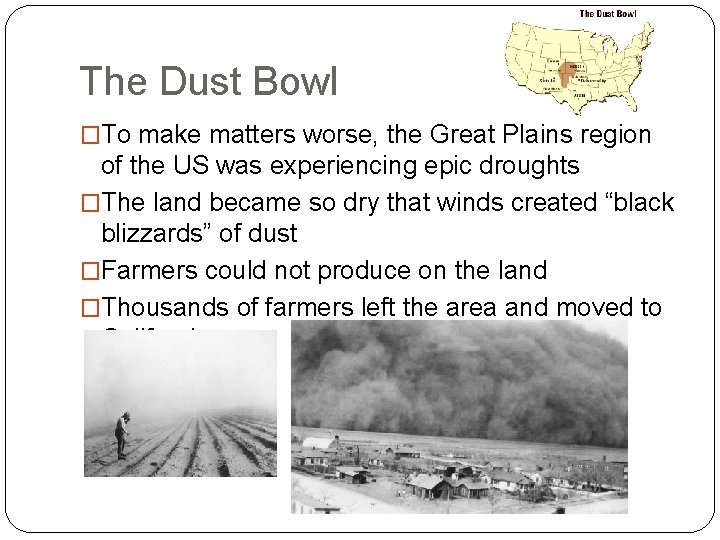
The Dust Bowl �To make matters worse, the Great Plains region of the US was experiencing epic droughts �The land became so dry that winds created “black blizzards” of dust �Farmers could not produce on the land �Thousands of farmers left the area and moved to California
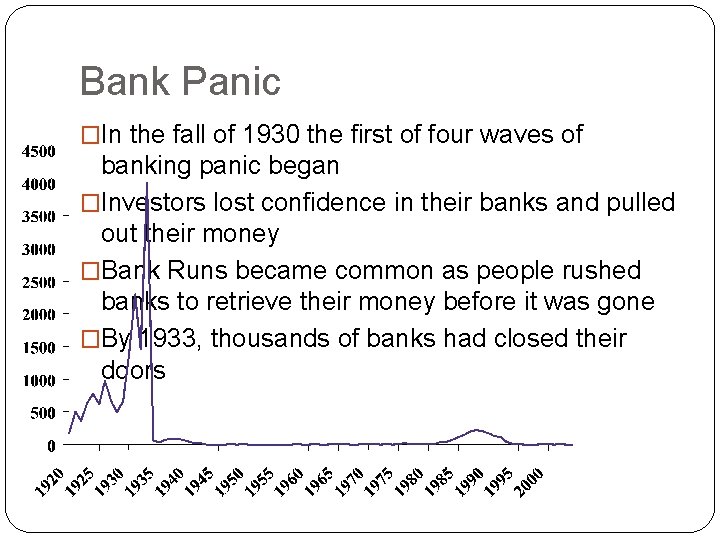
Bank Panic �In the fall of 1930 the first of four waves of banking panic began �Investors lost confidence in their banks and pulled out their money �Bank Runs became common as people rushed banks to retrieve their money before it was gone �By 1933, thousands of banks had closed their doors
By the end of the depression �½ banks had failed �Unemployment was at 25% �GDP fell 29% � 25 million people had lost their jobs
- Slides: 11