
The Great Depression Part One The End of
- Slides: 47
The Great Depression Part One: The End of Prosperity
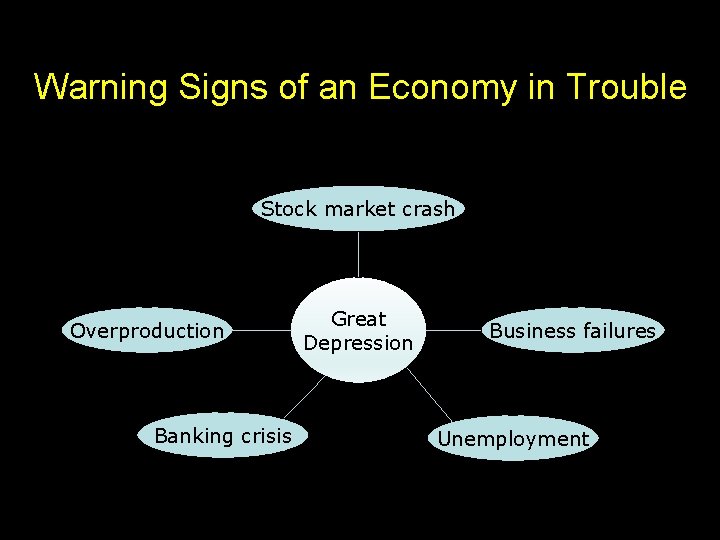
Warning Signs of an Economy in Trouble Stock market crash Overproduction Banking crisis Great Depression Business failures Unemployment
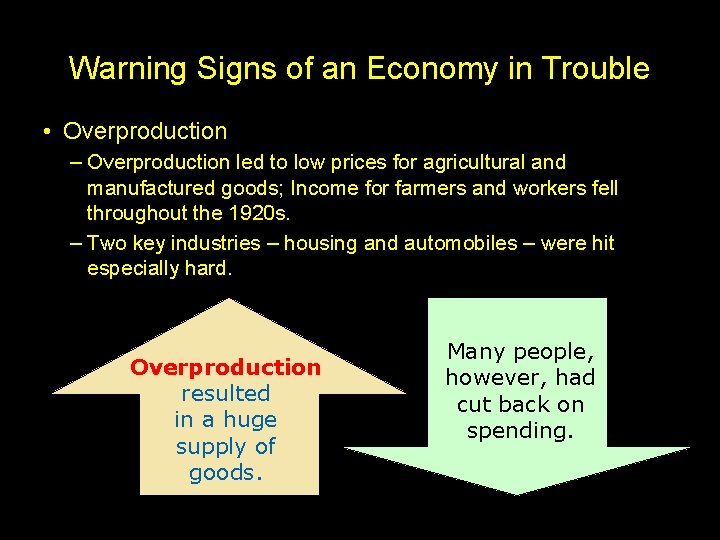
Warning Signs of an Economy in Trouble • Overproduction – Overproduction led to low prices for agricultural and manufactured goods; Income for farmers and workers fell throughout the 1920 s. – Two key industries – housing and automobiles – were hit especially hard. Overproduction resulted in a huge supply of goods. Many people, however, had cut back on spending.
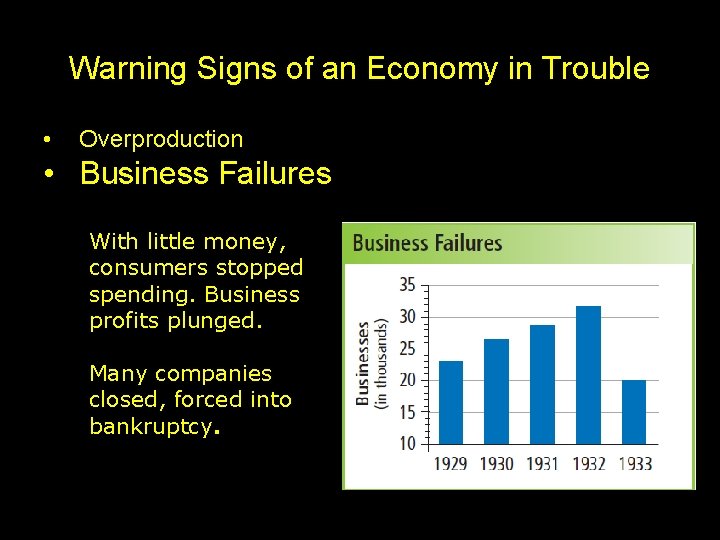
Warning Signs of an Economy in Trouble • Overproduction • Business Failures With little money, consumers stopped spending. Business profits plunged. Many companies closed, forced into bankruptcy.
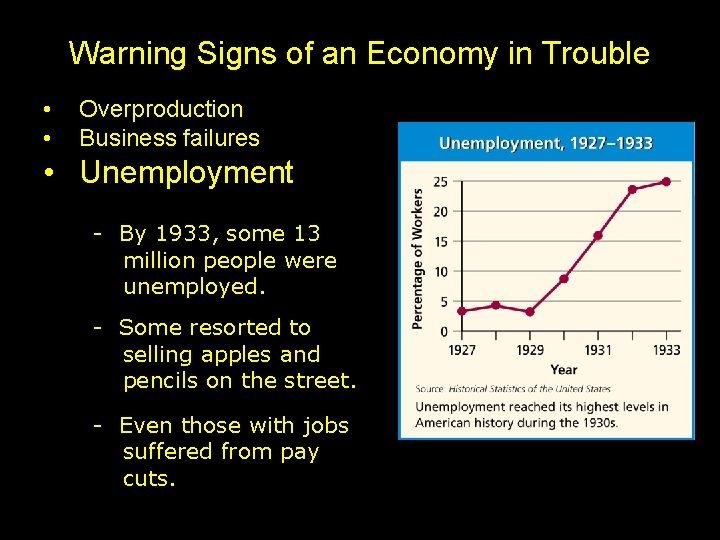
Warning Signs of an Economy in Trouble • • Overproduction Business failures • Unemployment - By 1933, some 13 million people were unemployed. - Some resorted to selling apples and pencils on the street. - Even those with jobs suffered from pay cuts.
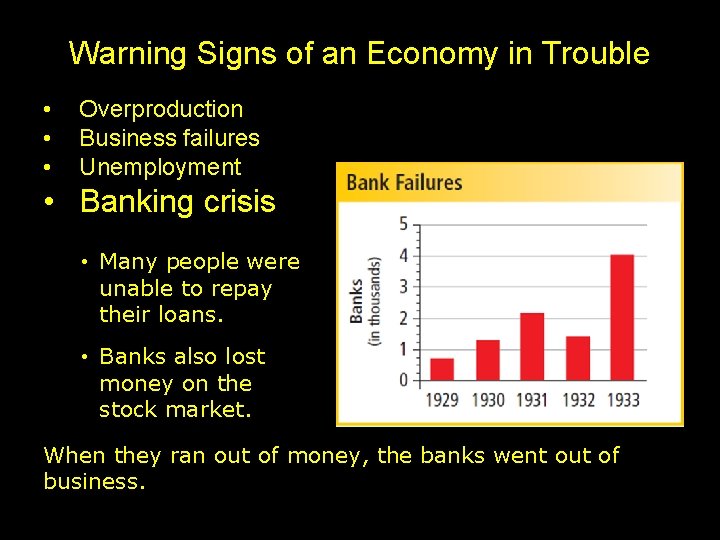
Warning Signs of an Economy in Trouble • • • Overproduction Business failures Unemployment • Banking crisis • Many people were unable to repay their loans. • Banks also lost money on the stock market. When they ran out of money, the banks went out of business.
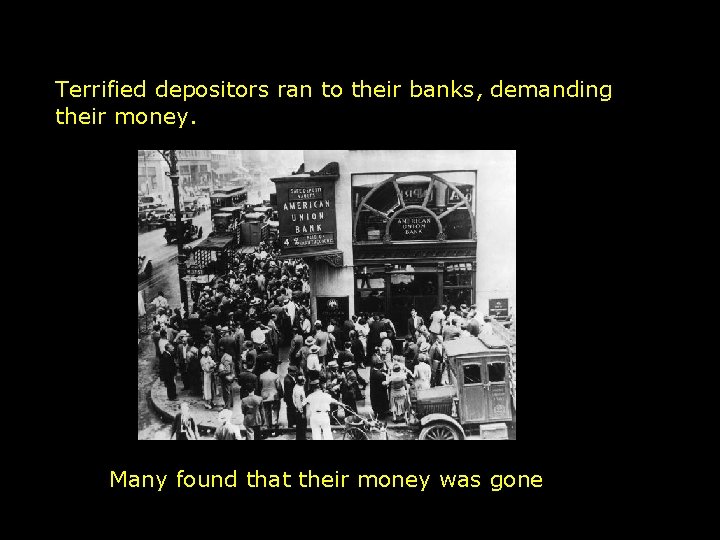
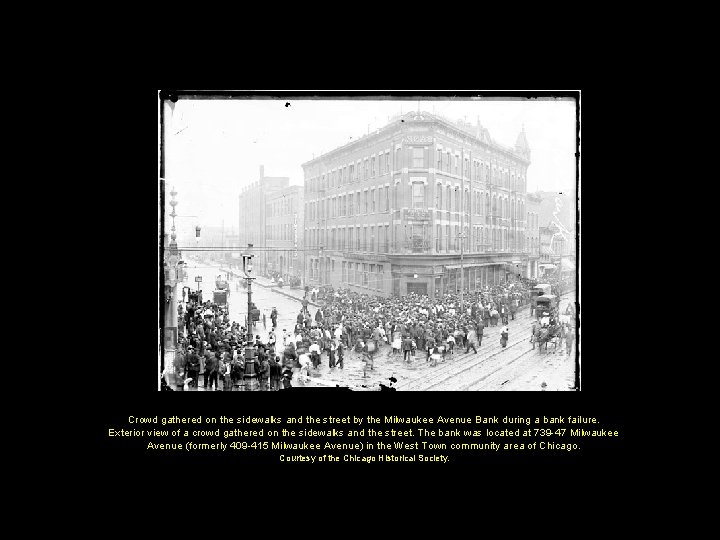
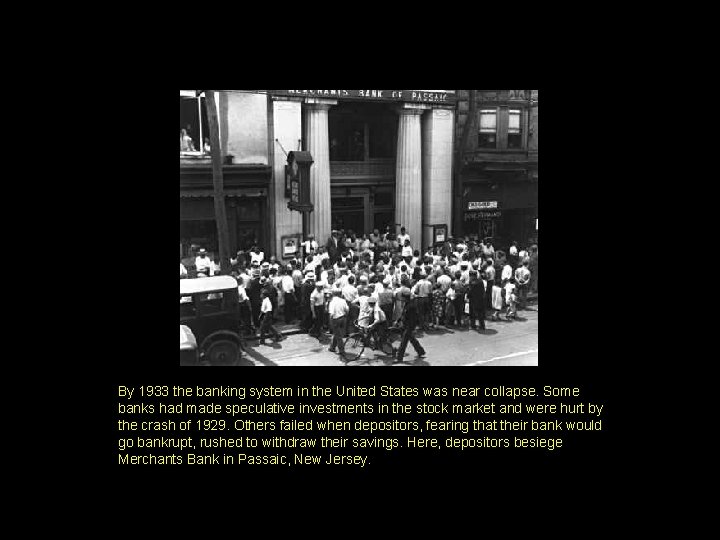
Terrified depositors ran to their banks, demanding their money. Many found that their money was gone.
Crowd gathered on the sidewalks and the street by the Milwaukee Avenue Bank during a bank failure. Exterior view of a crowd gathered on the sidewalks and the street. The bank was located at 739 -47 Milwaukee Avenue (formerly 409 -415 Milwaukee Avenue) in the West Town community area of Chicago. Courtesy of the Chicago Historical Society.
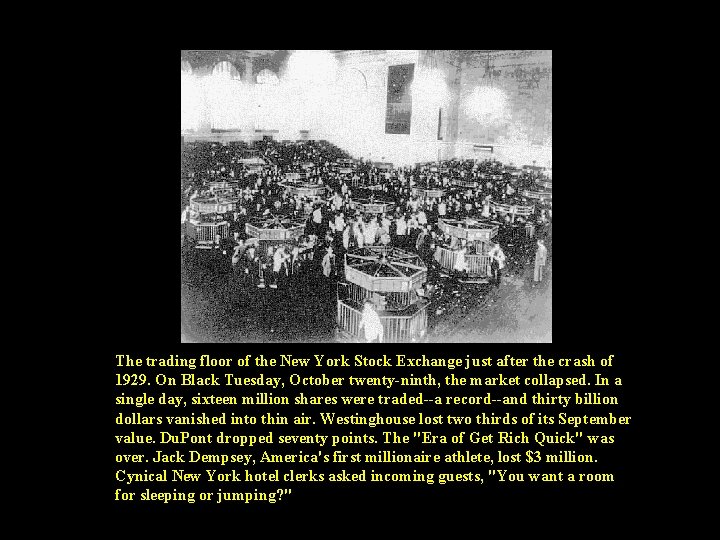
The trading floor of the New York Stock Exchange just after the crash of 1929. On Black Tuesday, October twenty-ninth, the market collapsed. In a single day, sixteen million shares were traded--a record--and thirty billion dollars vanished into thin air. Westinghouse lost two thirds of its September value. Du. Pont dropped seventy points. The "Era of Get Rich Quick" was over. Jack Dempsey, America's first millionaire athlete, lost $3 million. Cynical New York hotel clerks asked incoming guests, "You want a room for sleeping or jumping? "
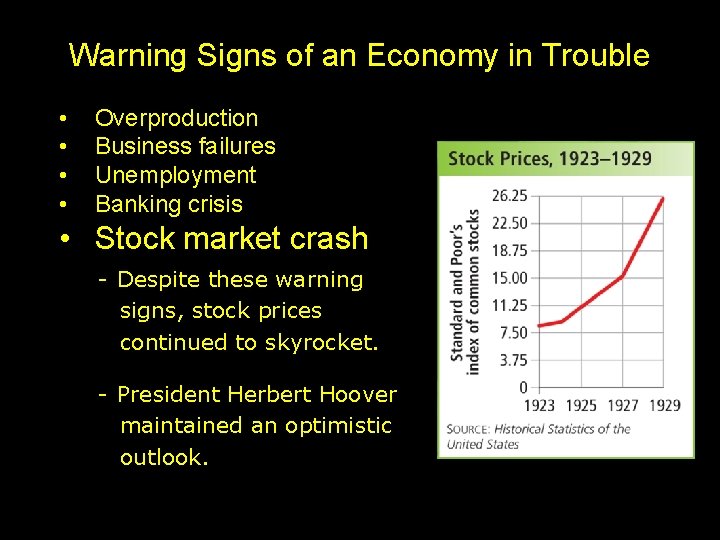
Warning Signs of an Economy in Trouble • • Overproduction Business failures Unemployment Banking crisis • Stock market crash - Despite these warning signs, stock prices continued to skyrocket. . - President Herbert Hoover maintained an optimistic outlook.
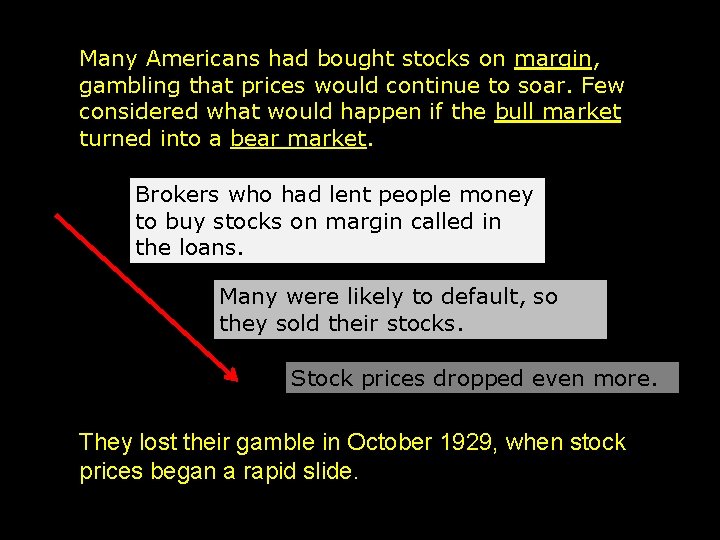
Many Americans had bought stocks on margin, gambling that prices would continue to soar. Few considered what would happen if the bull market turned into a bear market. Brokers who had lent people money to buy stocks on margin called in the loans. Many were likely to default, so they sold their stocks. Stock prices dropped even more. They lost their gamble in October 1929, when stock prices began a rapid slide.
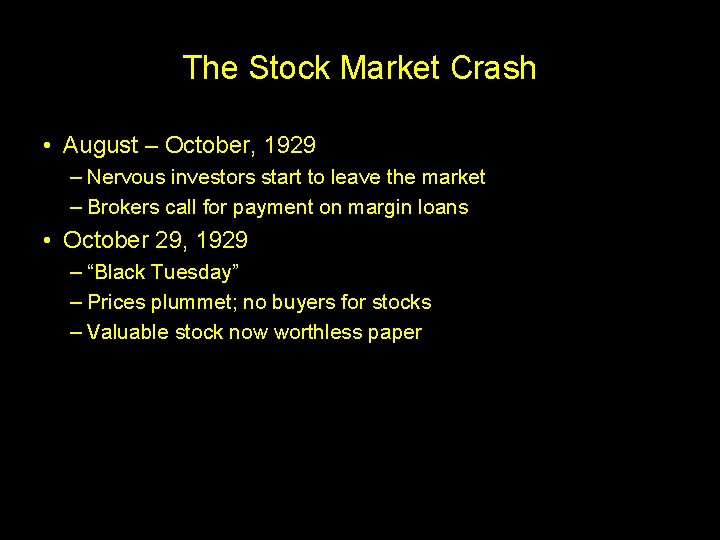
The Stock Market Crash • August – October, 1929 – Nervous investors start to leave the market – Brokers call for payment on margin loans • October 29, 1929 – “Black Tuesday” – Prices plummet; no buyers for stocks – Valuable stock now worthless paper
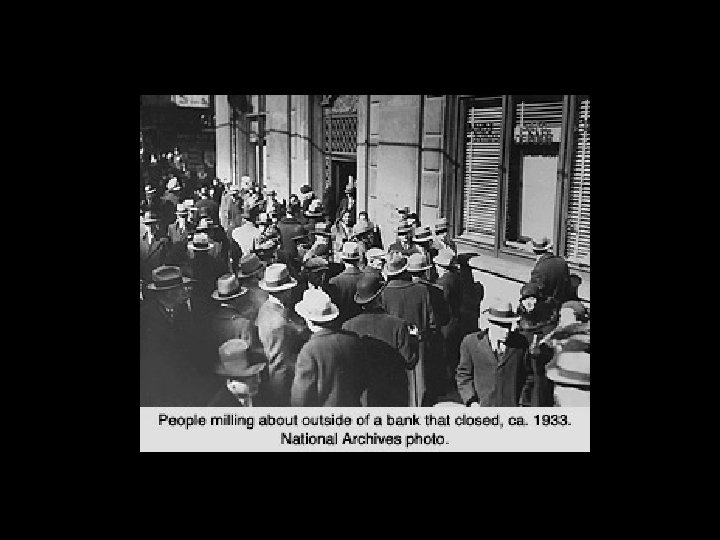
By 1933 the banking system in the United States was near collapse. Some banks had made speculative investments in the stock market and were hurt by the crash of 1929. Others failed when depositors, fearing that their bank would go bankrupt, rushed to withdraw their savings. Here, depositors besiege Merchants Bank in Passaic, New Jersey.
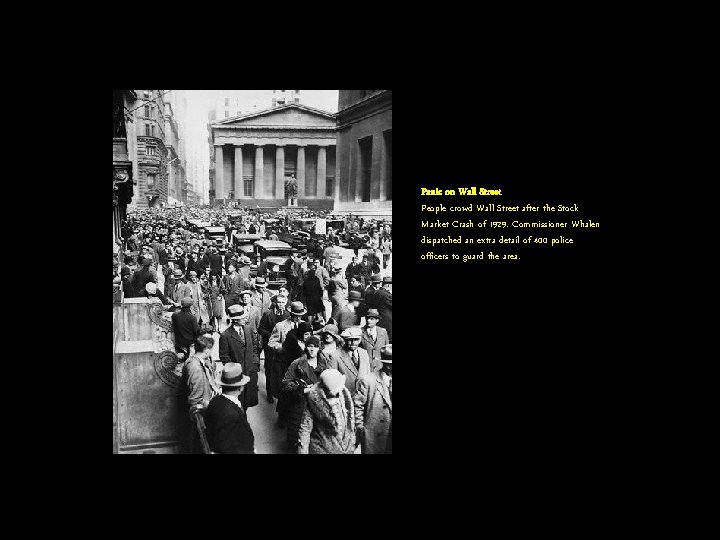
Panic on Wall Street People crowd Wall Street after the Stock Market Crash of 1929. Commissioner Whalen dispatched an extra detail of 400 police officers to guard the area.
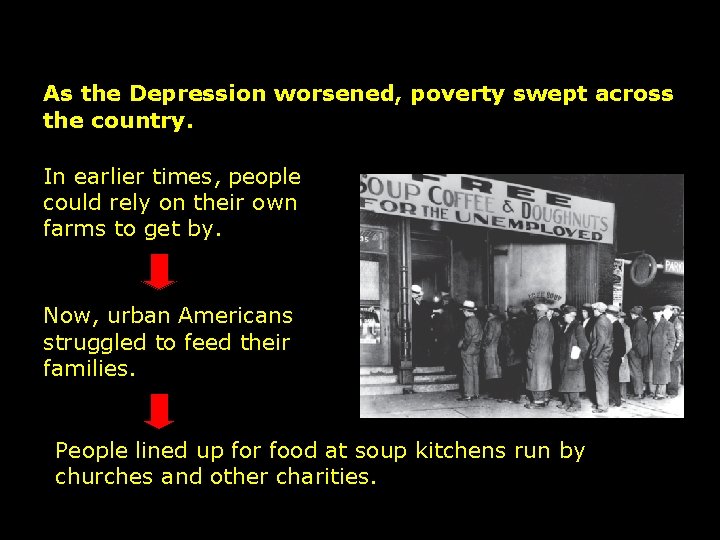
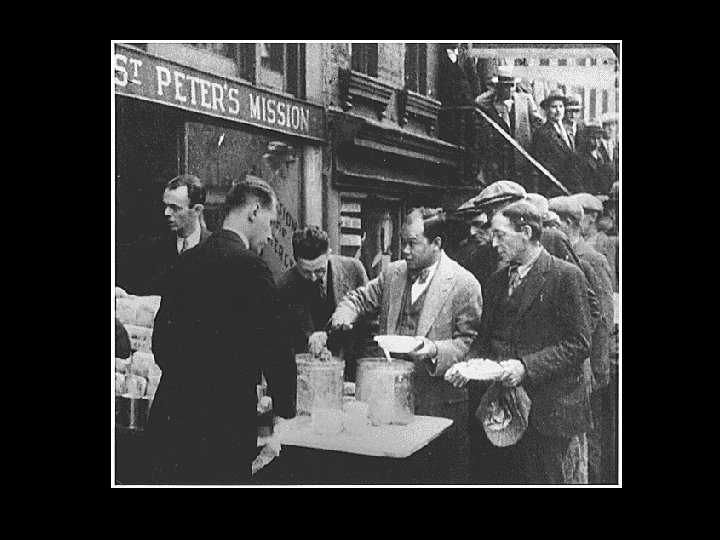
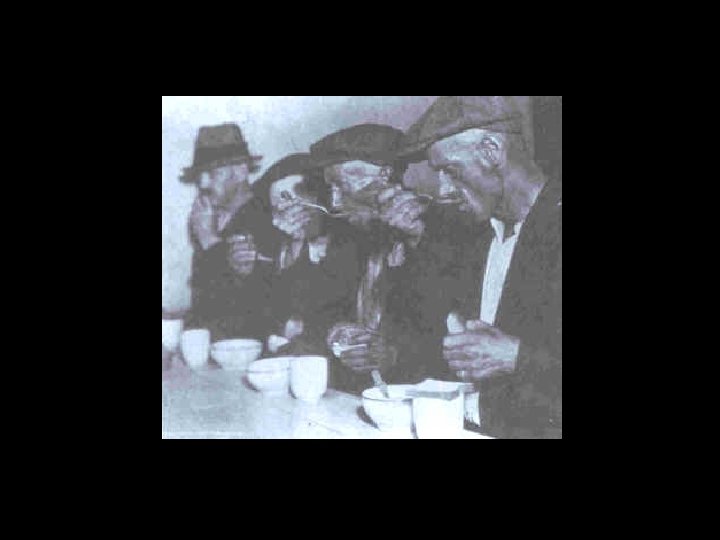
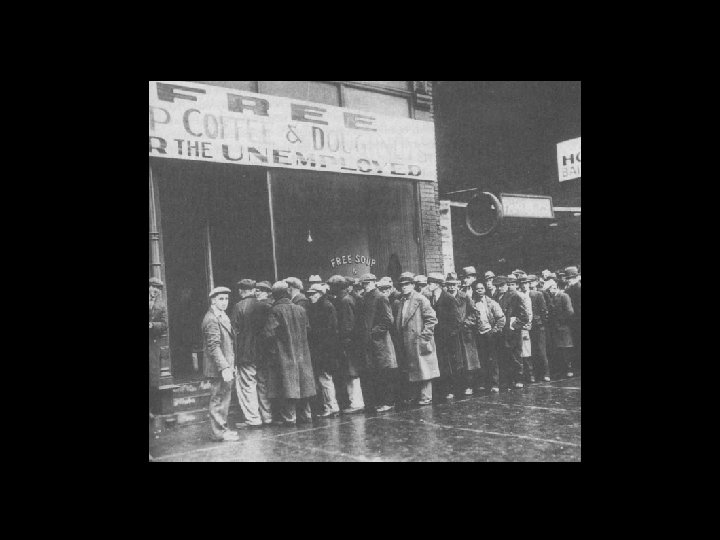
As the Depression worsened, poverty swept across the country. In earlier times, people could rely on their own farms to get by. Now, urban Americans struggled to feed their families. People lined up for food at soup kitchens run by churches and other charities.
Hoover Takes Action • Did not think the gov’t should get directly involved in helping business – Felt business should correct their own problems and end the downslide – Believed it was up to private individuals and institutions to provide aid • Opposed relief programs at first – Relief: giving help to the needy – Urged business to keep workers employed – Called on private charities to help
Private Charities Do What they Can • Churches, YMCA, other charities open soup kitchens • Ethnic community leaders organize their own relief programs
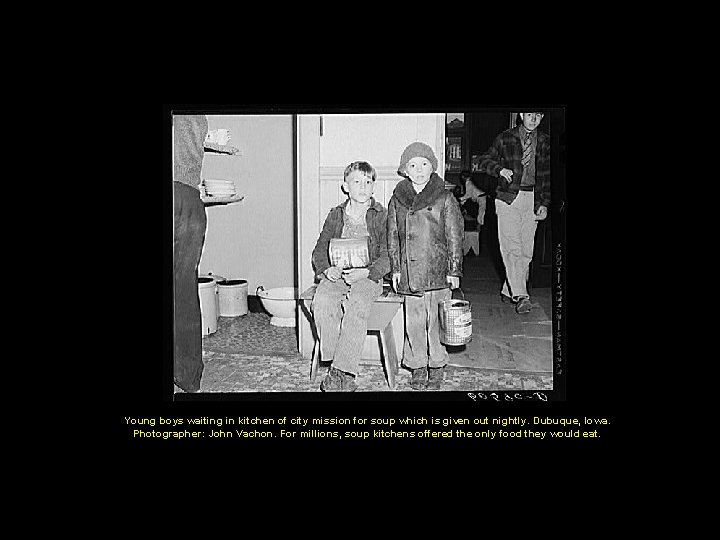
Young boys waiting in kitchen of city mission for soup which is given out nightly. Dubuque, Iowa. Photographer: John Vachon. For millions, soup kitchens offered the only food they would eat.
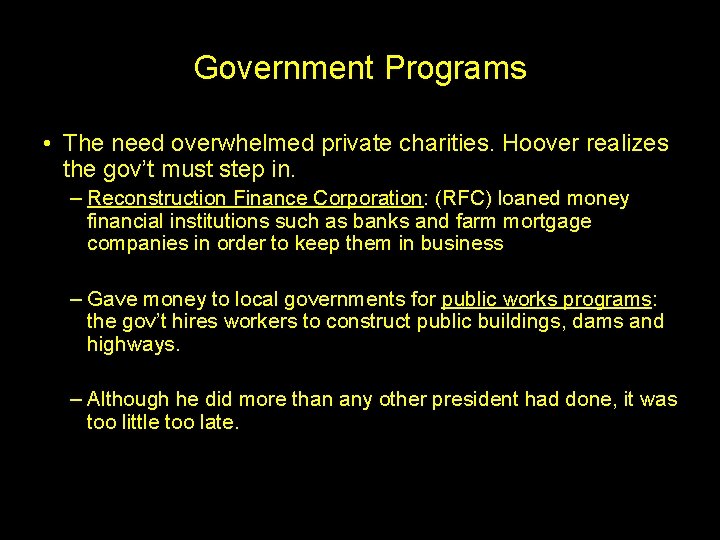
Government Programs • The need overwhelmed private charities. Hoover realizes the gov’t must step in. – Reconstruction Finance Corporation: (RFC) loaned money financial institutions such as banks and farm mortgage companies in order to keep them in business – Gave money to local governments for public works programs: the gov’t hires workers to construct public buildings, dams and highways. – Although he did more than any other president had done, it was too little too late.
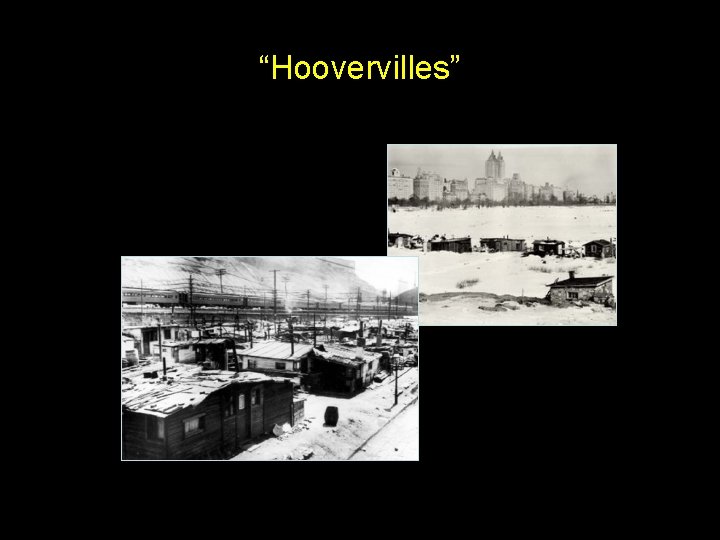
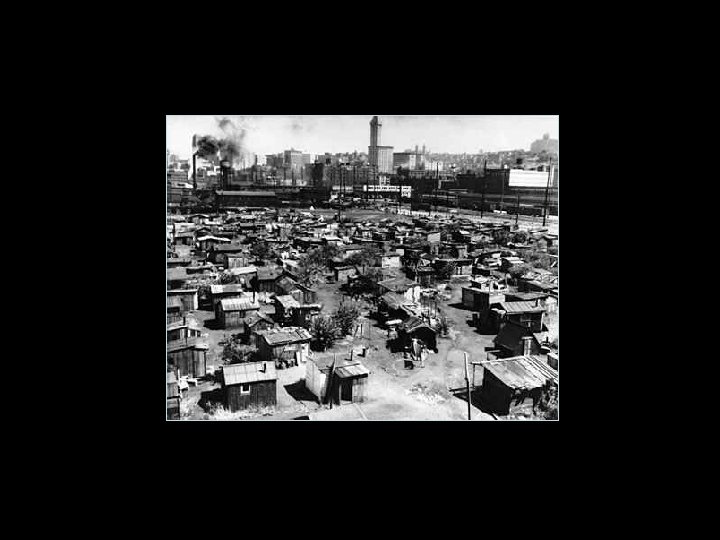
“Hoovervilles”
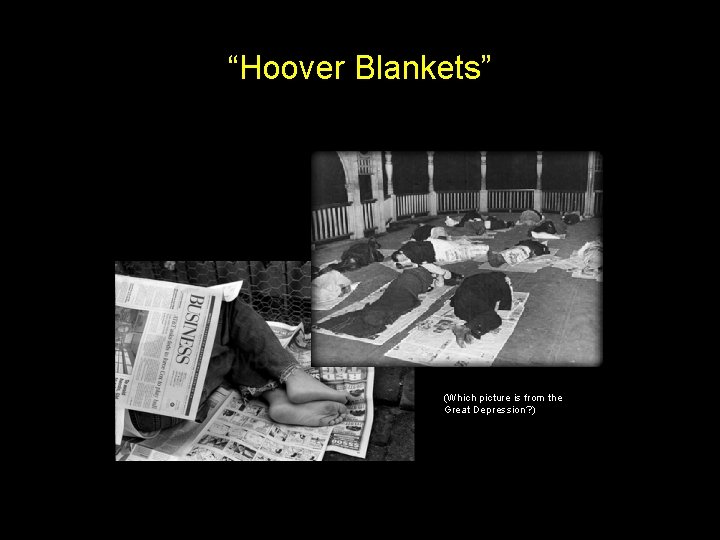
“Hoover Blankets” (Which picture is from the Great Depression? )
Hoover was blamed for everything! (Was that fair? ) Hoovervilles = shantytowns Hoover blankets = newspapers Hoover flags = pockets pulled inside out (no money!) Hoover tourists = young people traveling the country by rail Hoover leather = cardboard used to line shoes with holes in the soles Hoover wagon = cars pulled by horses Hoover hogs = wild rabbits that country people caught for food
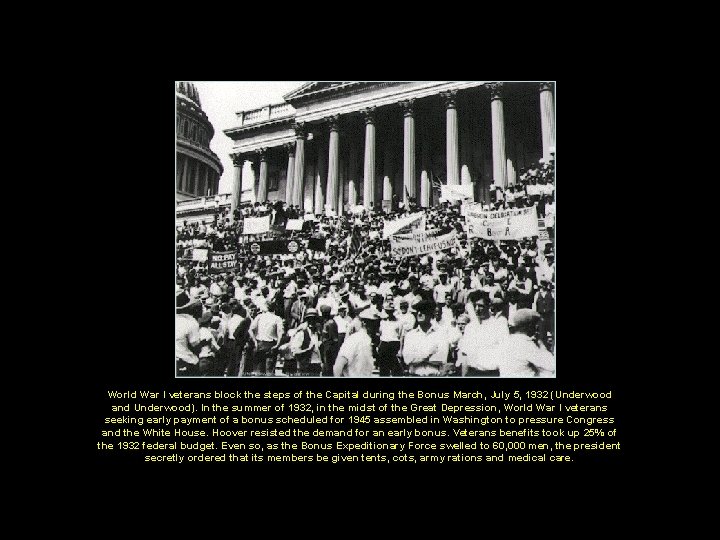
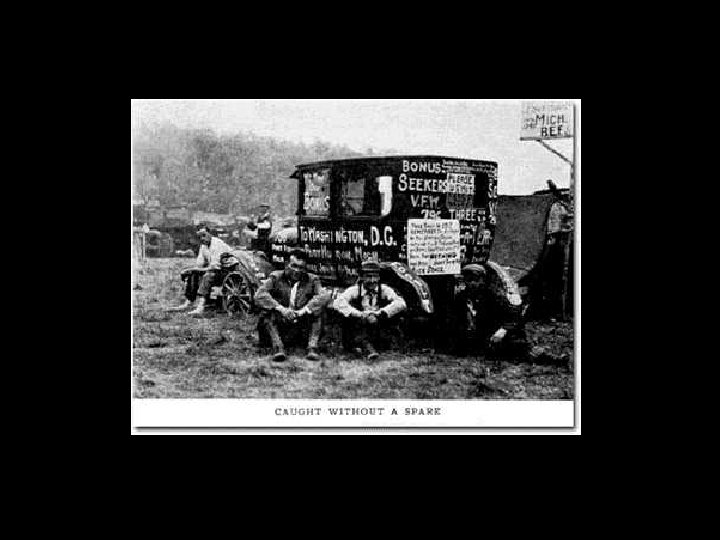
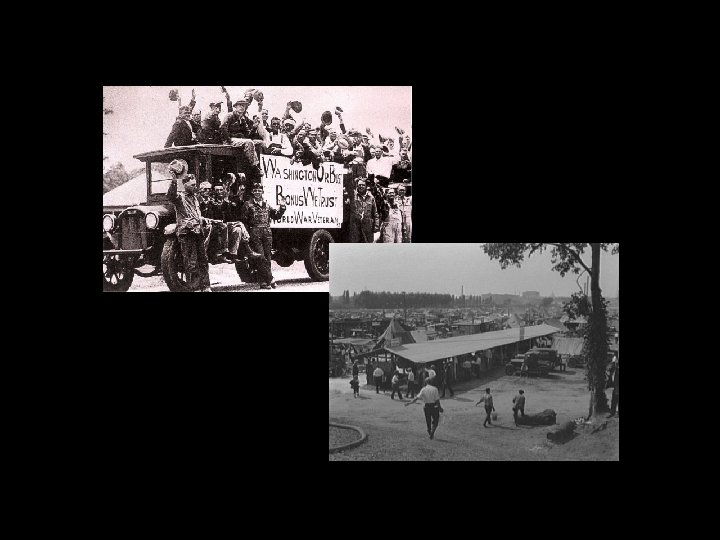
Hoover’s Reaction The Bonus Army • WWI veterans had been promised a bonus (sum of money) in 1945. • 20, 000 jobless vets march on Washington in 1932. – Some brought their wives and children – Camped along the Potomac for two months. • The Senate rejected a bill to pay them the bonus early. Most of the veterans head home, but 2000 remain.
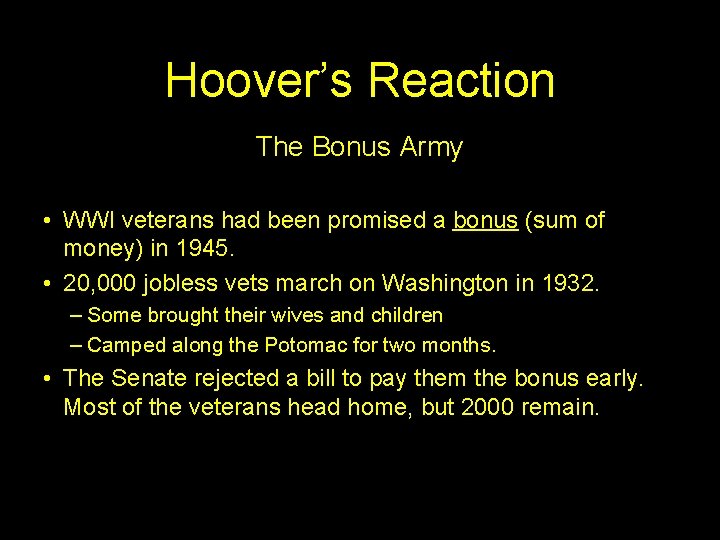
World War I veterans block the steps of the Capital during the Bonus March, July 5, 1932 (Underwood and Underwood). In the summer of 1932, in the midst of the Great Depression, World War I veterans seeking early payment of a bonus scheduled for 1945 assembled in Washington to pressure Congress and the White House. Hoover resisted the demand for an early bonus. Veterans benefits took up 25% of the 1932 federal budget. Even so, as the Bonus Expeditionary Force swelled to 60, 000 men, the president secretly ordered that its members be given tents, cots, army rations and medical care.
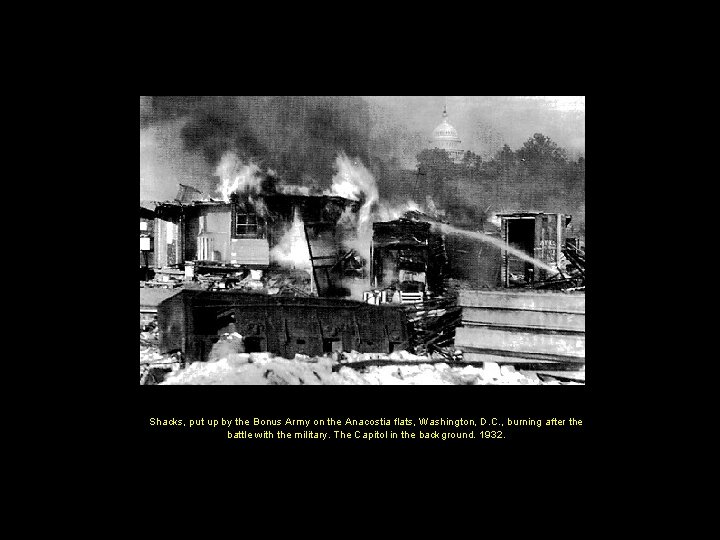
Shacks, put up by the Bonus Army on the Anacostia flats, Washington, D. C. , burning after the battle with the military. The Capitol in the background. 1932.
Hoover’s Reaction Bonus Army • Local police try to force the veterans to leave – Four veterans die in the conflict • Hoover orders General Douglas Mac. Arthur to clear out the veterans – Mac. Arthur uses machine guns, tear gas, and tanks – Burns the camp to the ground • The President loses what little support he has. An election is coming.
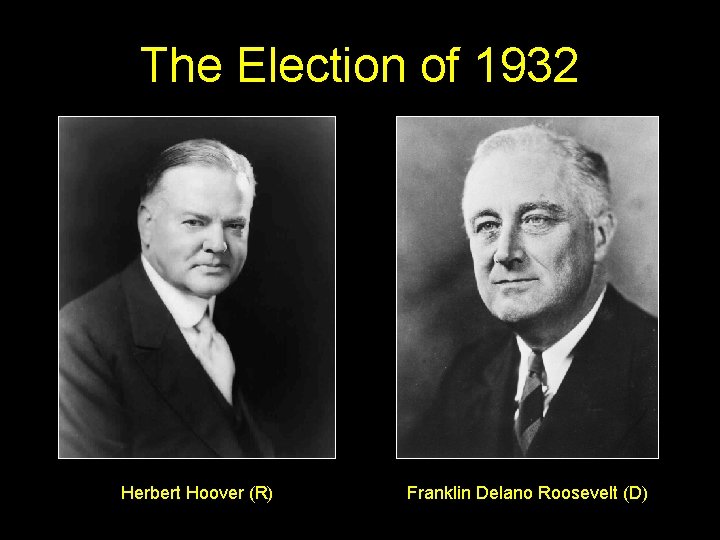
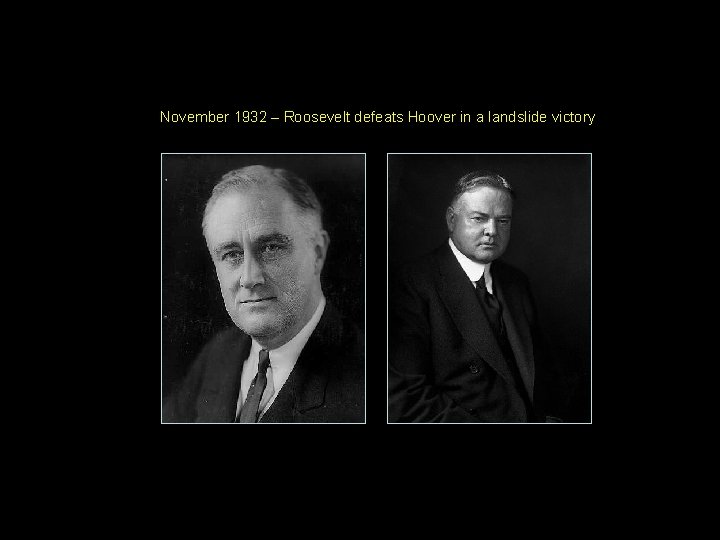
The Election of 1932 Herbert Hoover (R) Franklin Delano Roosevelt (D)
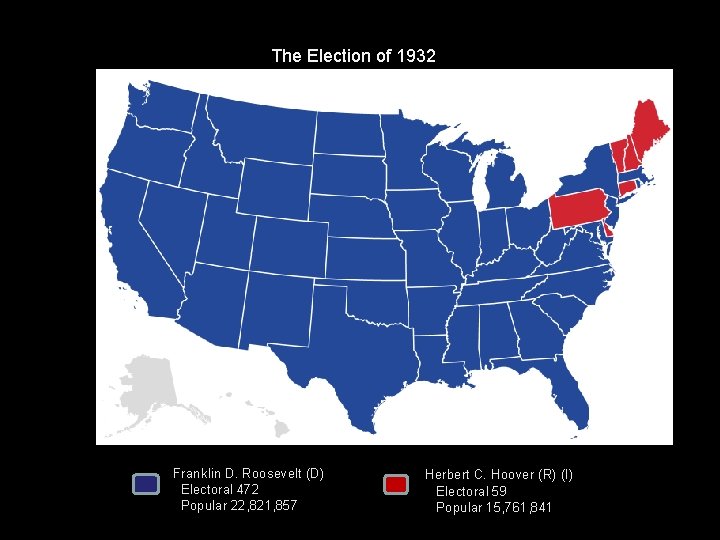
The Election of 1932 Hoover called the election “a contest between two philosophies of government. ” He believed that government aid programs would weaken Americans’ spirit of individualism and self-reliance. Americans had lost confidence in President Hoover, however, and elected Franklin Roosevelt, the former governor of New York.
November 1932 – Roosevelt defeats Hoover in a landslide victory
The Election of 1932 Franklin D. Roosevelt (D) Electoral 472 Popular 22, 821, 857 Herbert C. Hoover (R) (I) Electoral 59 Popular 15, 761, 841
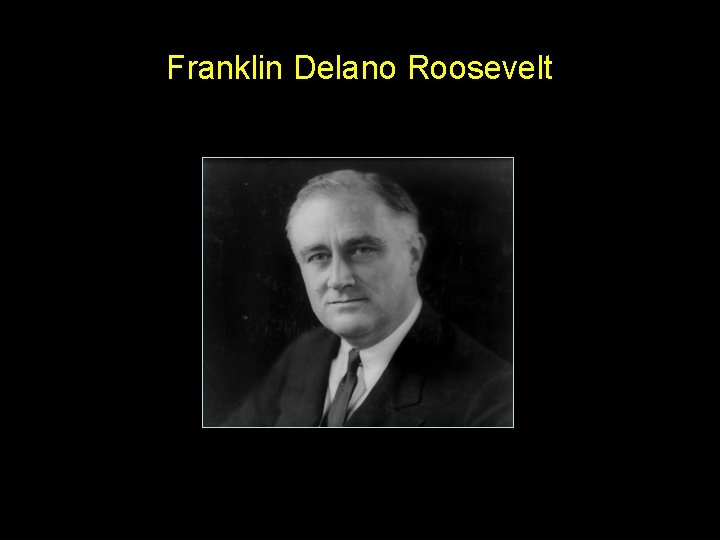
Franklin Delano Roosevelt
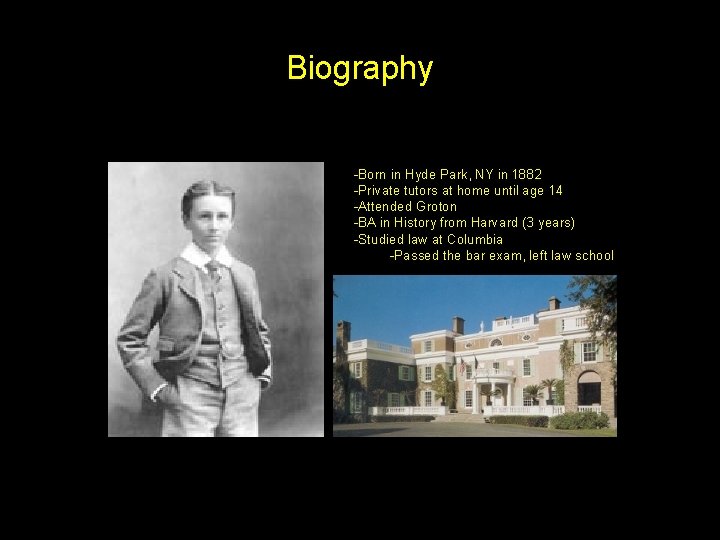
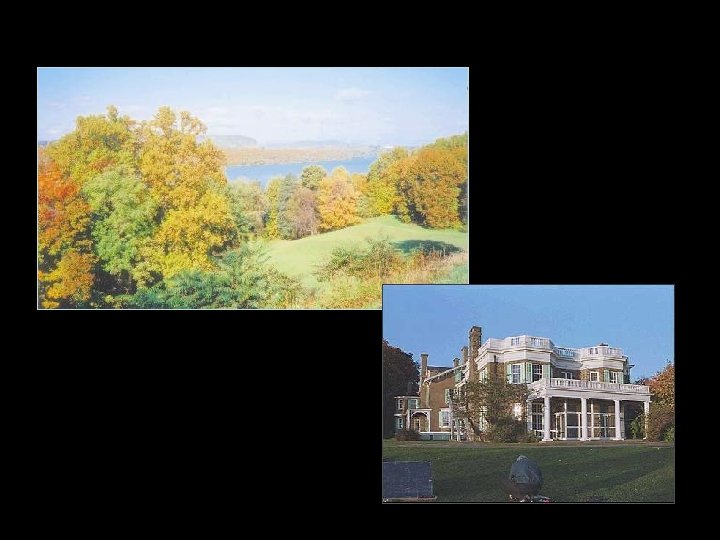
Biography -Born in Hyde Park, NY in 1882 -Private tutors at home until age 14 -Attended Groton -BA in History from Harvard (3 years) -Studied law at Columbia -Passed the bar exam, left law school
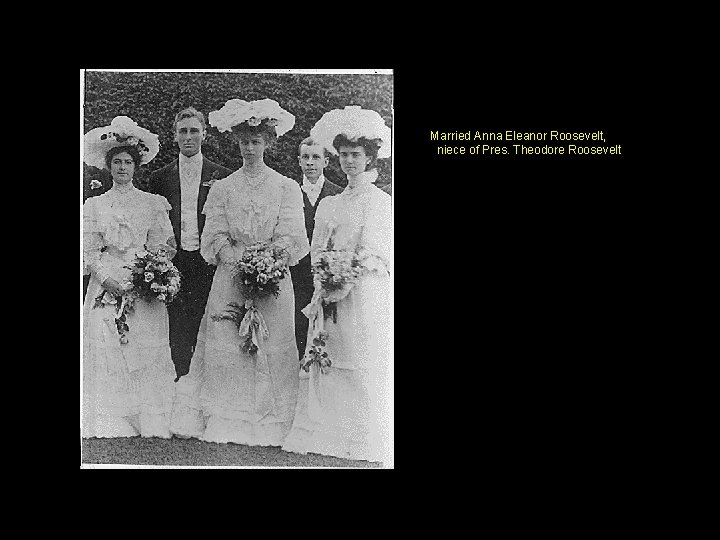
Married Anna Eleanor Roosevelt, niece of Pres. Theodore Roosevelt
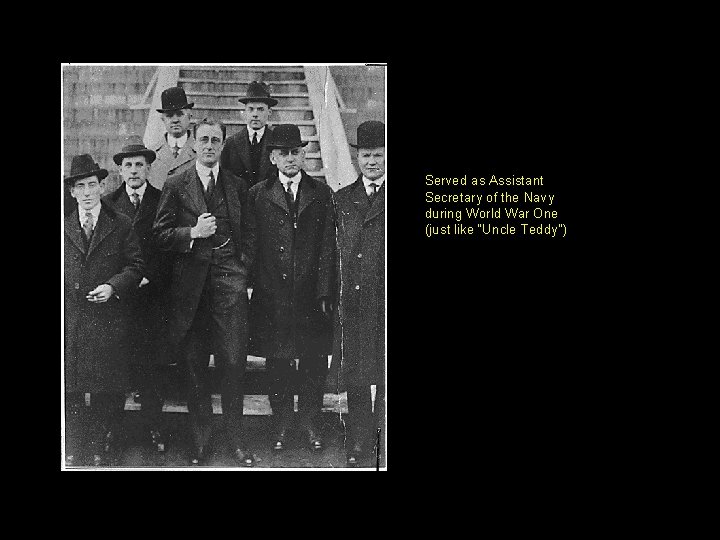
Served as Assistant Secretary of the Navy during World War One (just like “Uncle Teddy”)
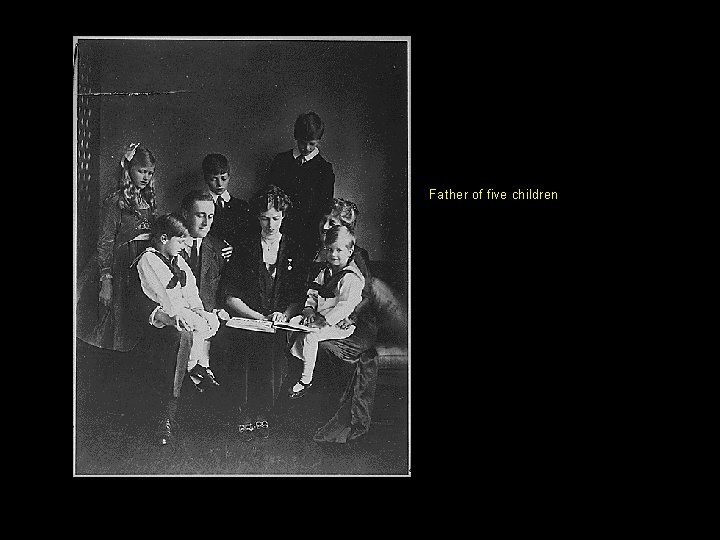
Father of five children
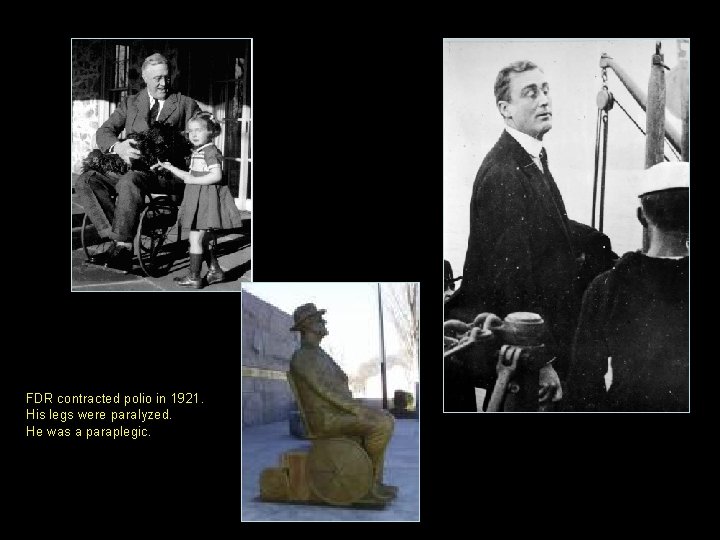
FDR contracted polio in 1921. His legs were paralyzed. He was a paraplegic.
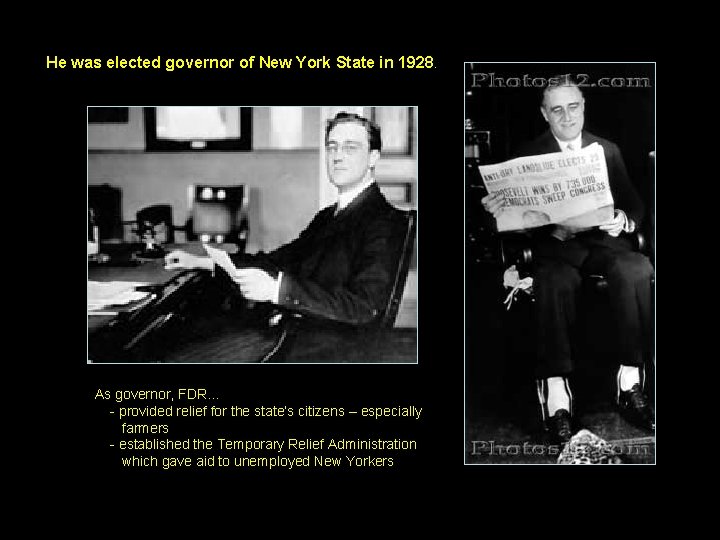
He was elected governor of New York State in 1928. As governor, FDR… - provided relief for the state’s citizens – especially farmers - established the Temporary Relief Administration which gave aid to unemployed New Yorkers
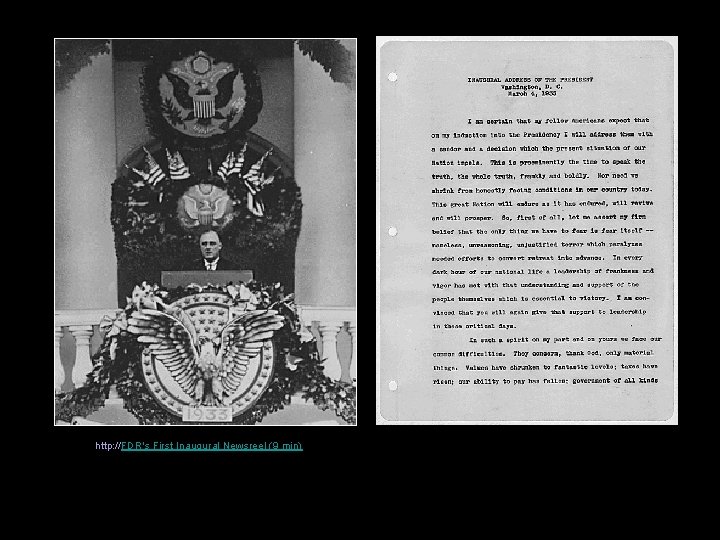
http: //FDR's First Inaugural Newsreel (9 min)