
The Great Depression Dorothea Langes Migrant Mother Photo






- Slides: 32
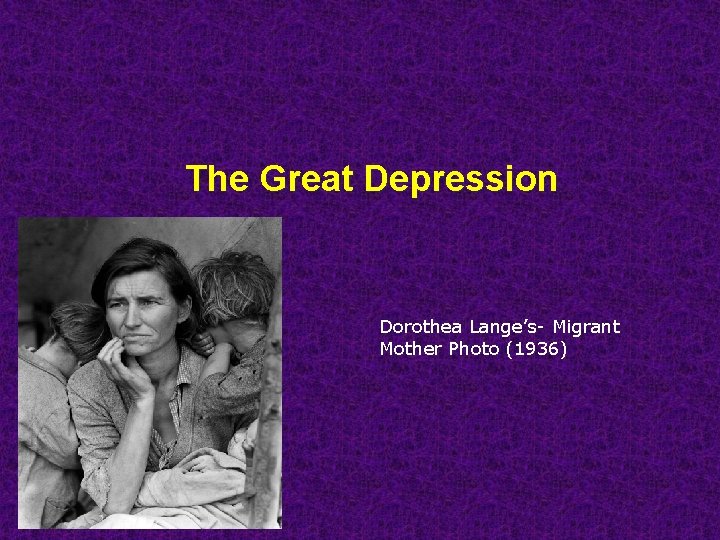
The Great Depression Dorothea Lange’s- Migrant Mother Photo (1936)
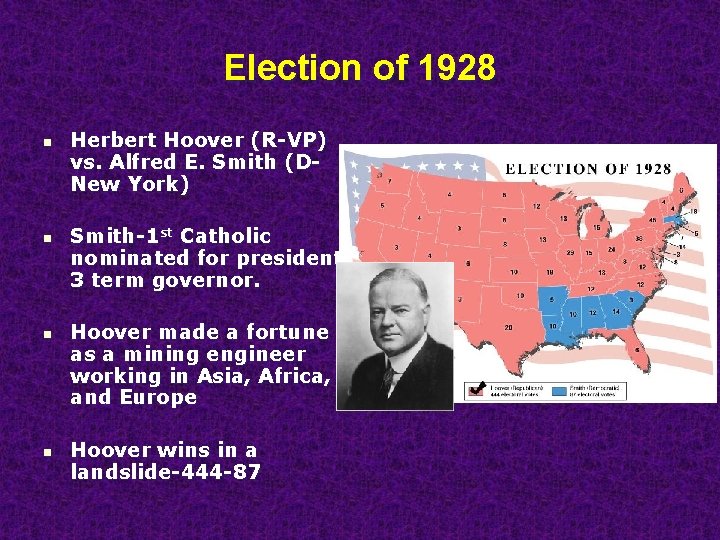
Election of 1928 n n Herbert Hoover (R-VP) vs. Alfred E. Smith (DNew York) Smith-1 st Catholic nominated for president. 3 term governor. Hoover made a fortune as a mining engineer working in Asia, Africa, and Europe Hoover wins in a landslide-444 -87
Causes of the Great Depression n Uneven distribution of wealth Overproduction of goods by business and agriculture Lower demand for consumer goods n n n Buying stock on margin Failure of Germany to make war reparation payments to France and Britain and France in turn could not repay their debts to the U. S.
Depression hits the U. S n n n Paper money vs. the gold standard Bank Failure New Federal Reserve System fails to act Stock Market Crash of October 24, 1929 Hawley-Smoot Tariff-1930 -Highest level to date of a U. S. tariff
“Bonus Marchers” n n In July 1932, WWI veterans protest in Washington D. C. demanding a bonus due to them in 1945 President Hoover sends in the federal troops to put down march
Hoover’s Response n n n Government had never faced a crisis this bad Unemployment rate-25 -30 percent No official figure for those who gave up looking for a job Most government officials believed the normal business cycles would eventually allow economy to recover Government aid to unemployed was uncommon during this time
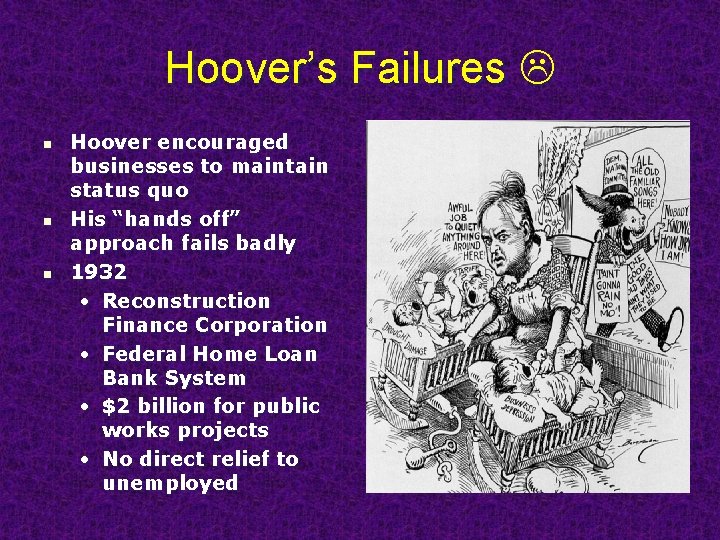
Hoover’s Failures n n n Hoover encouraged businesses to maintain status quo His “hands off” approach fails badly 1932 • Reconstruction Finance Corporation • Federal Home Loan Bank System • $2 billion for public works projects • No direct relief to unemployed
Did the Great Depression signal the possible end of democracy in the U. S. ? n n End of democratic governments in Italy and Germany Communism popular in Italy and Germany FDR’s future “Brain Trust” traveled to Soviet Union to see Soviet factories What did Italy, Germany (after Hitler comes to power), and Soviet Union have in common? • • • State run economies Full employment to all able bodied adults Rewards for quotas met
FDR & The New Deal
FDR- Background n FDR’s background • Came from a wealthy family in Hyde Park • Fifth cousin of TR • Graduated from Harvard in 1904 • Undersecretary of the Navy during WWI
More on FDR • Ran for VP in 1920 • 1921 -Contracts polio on vacation in Campobello, Maine • Elected governor of New York in 1928 • Wins the election in a landslide (472 -59) • Promised America a “New Deal” • “Only thing we have to fear is fear itself”
Election of 1932 • Franklin D. Roosevelt vs. Herbert Hoover • Wins the election in a landslide (472 -59) • Promised America a “New Deal” • “Only thing we have to fear is fear itself”
n n http: //www. youtube. com/watch? v=g qs. T 4 xn. KZPg http: //www. youtube. com/watch? v=L m 3 Bntsp 2 ck
n n Was the New Deal an attempt to save democracy? FDR sought advice on how to carry out New Deal from his “brain trust”
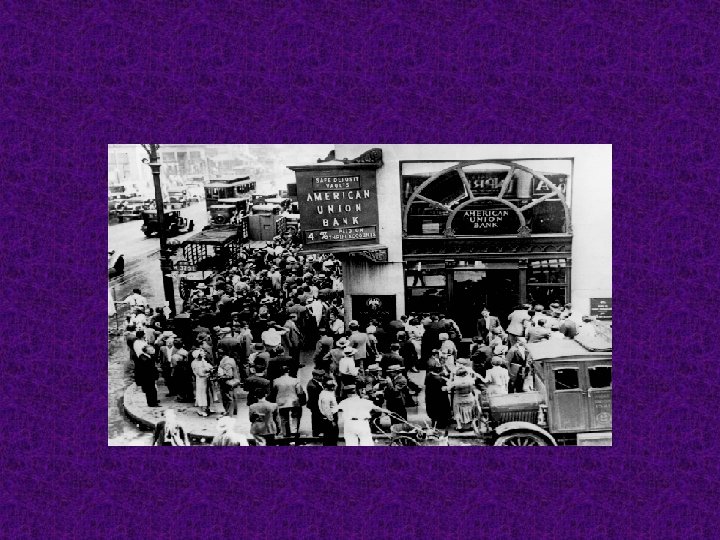
Banking Crisis n n n FDR takes office on March 4, 1933 FDR’s First Hundred Days 5, 000 banks failed between 1929 and 1933 Before leaving office, Hoover repeatedly asked for FDR’s help with this issue. FDR refused On March 5 th, FDR declares a “bank holiday”
n http: //www. youtube. com/watch? v=z 9 CBpbu. V 3 ok
n n n Some of Hoover’s officials worked with FDR’s men to solve crisis FDR calls Congress into special session March 9 th-Emergency Banking Act. Funds to help threatened banks Glass-Steagall Act-Barred banks from buying stock on margain Federal Deposit Insurance Corporation (FDIC)-insured individual accounts up to $250, 000
n n FDR took country off gold standard Idea was increased supply of money leads to increased spending
Hundred Days n n n FDR won a passage of many laws Expansion of federal government Expanded role of government in people’s lives
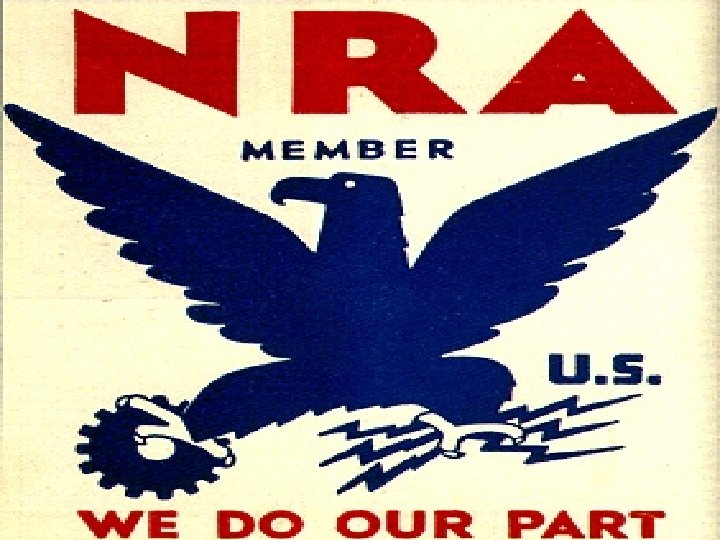
“Alphabet Soup” n n n n National Industrial Recovery Act (1933) Established NRA (National Recovery Administration) Gov’t worked with business leaders to establish codes for output, prices, and working conditions Goal was end “cutthroat” competition and establish fair competition Problem: Takes market forces out of economy Schechter Poultry v. United States- “Sick Chickens Case” Declared unconstitutional by Supreme Court
n n Civilian Conservation Corps (19331942) Unemployed young men to work on projects 3 million men between 1933 and 1942 Government wage of $30 per month
n n n Public Works Administration (June 1933) Secretary of Interior Harold Ickes Built roads, schools, hospitals, public facilities RFK Bridge (Triborough Bridge) and Lincoln Tunnel “Priming the Pump”
Agricultural Adjustment Act n n n n President Coolidge-Rejects Farm Subsidies Dust Bowl in Kansas, Oklahoma, Texas, Colorado, and New Mexico Drought, poor farming techniques, and high winds http: //www. weru. ksu. edu/new_weru/multi media/dustbowlpics. html Agricultural Adjustment Act (1933) Raise farm prices by setting quotas for major crops Fed government paid farmers not to plant more AAA declared unconstitutional in 1936
n n Tennessee Valley Authority (May 1933) Use the Tennessee River to provide electricity to homes and factories in a seven state region
n n Other agencies created included the Federal Communications Commission (FCC) and the Securities and Exchange Commission (SEC) By 1934, 10 million people remained unemployed-20% of population
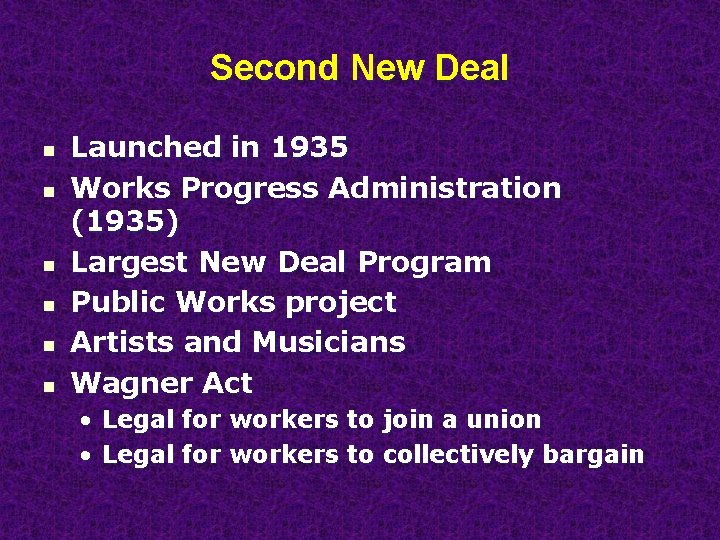
Second New Deal n n n Launched in 1935 Works Progress Administration (1935) Largest New Deal Program Public Works project Artists and Musicians Wagner Act • Legal for workers to join a union • Legal for workers to collectively bargain
n Social Security Act of 1935 • • European programs for the elderly Huey Long-Share Our Wealth Townshend Movement Francis Perkins-Secretary of Labor Social Security Payroll Deduction Eligible for payments when you reached 65 years of age • First payments issued in 1940 • Discriminatory?
n n n Court Packing FDR-wanted to add up to 6 judges for every judge over 70 years old FDR-angry Supreme Court has ruled some New Deal Legislation unconstitutional
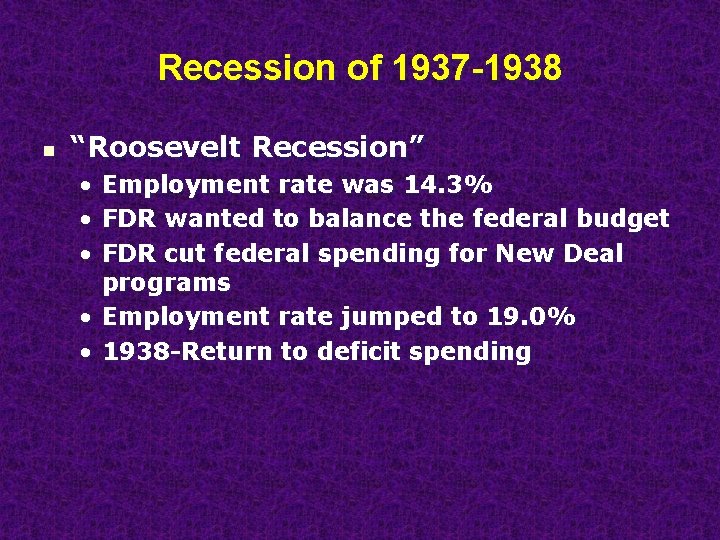
Recession of 1937 -1938 n “Roosevelt Recession” • • • Employment rate was 14. 3% FDR wanted to balance the federal budget FDR cut federal spending for New Deal programs • Employment rate jumped to 19. 0% • 1938 -Return to deficit spending