
THE GREAT DEPRESSION BEGINS Objective Analyze the steps
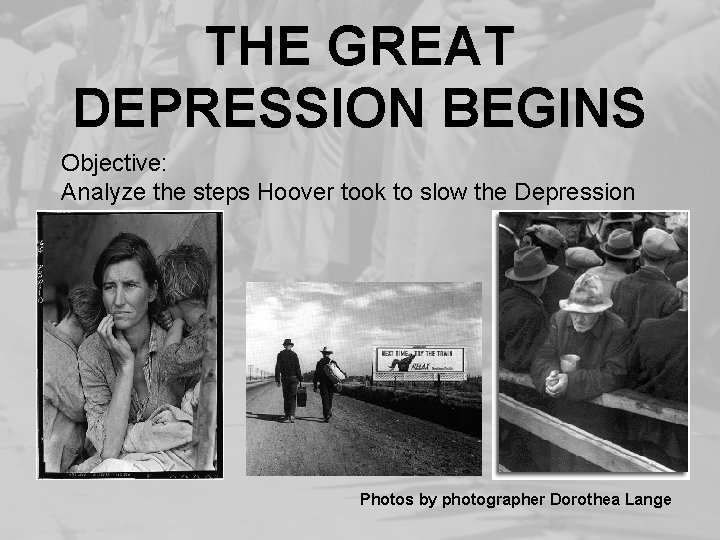
THE GREAT DEPRESSION BEGINS Objective: Analyze the steps Hoover took to slow the Depression Photos by photographer Dorothea Lange
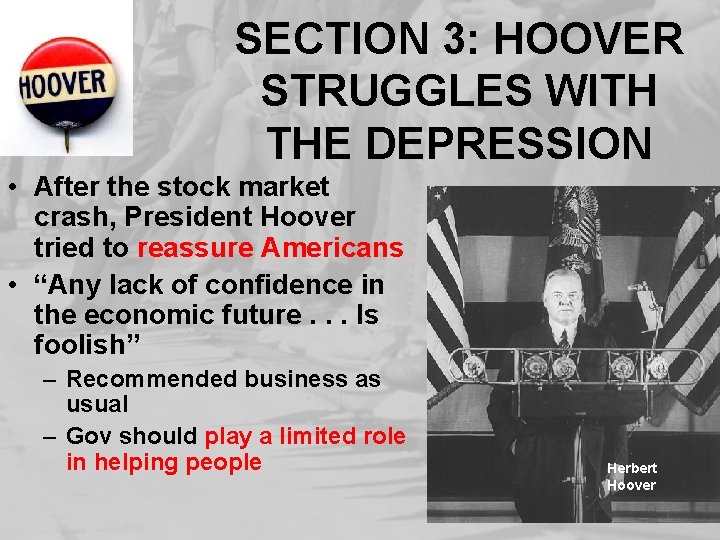
SECTION 3: HOOVER STRUGGLES WITH THE DEPRESSION • After the stock market crash, President Hoover tried to reassure Americans • “Any lack of confidence in the economic future. . . Is foolish” – Recommended business as usual – Gov should play a limited role in helping people Herbert Hoover
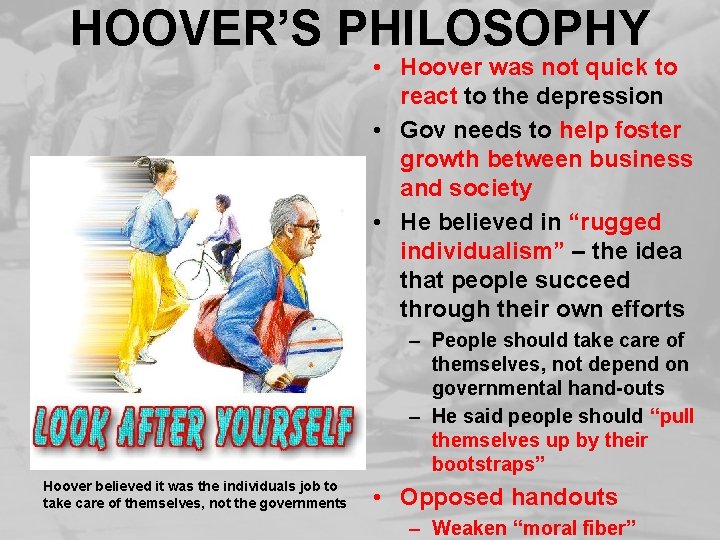
HOOVER’S PHILOSOPHY • Hoover was not quick to react to the depression • Gov needs to help foster growth between business and society • He believed in “rugged individualism” – the idea that people succeed through their own efforts – People should take care of themselves, not depend on governmental hand-outs – He said people should “pull themselves up by their bootstraps” Hoover believed it was the individuals job to take care of themselves, not the governments • Opposed handouts – Weaken “moral fiber”
Hoover’s Philosophy • Wanted charities and local gov to help needy • Federal Gov would direct methods • A year after stock market crash it didn’t get better
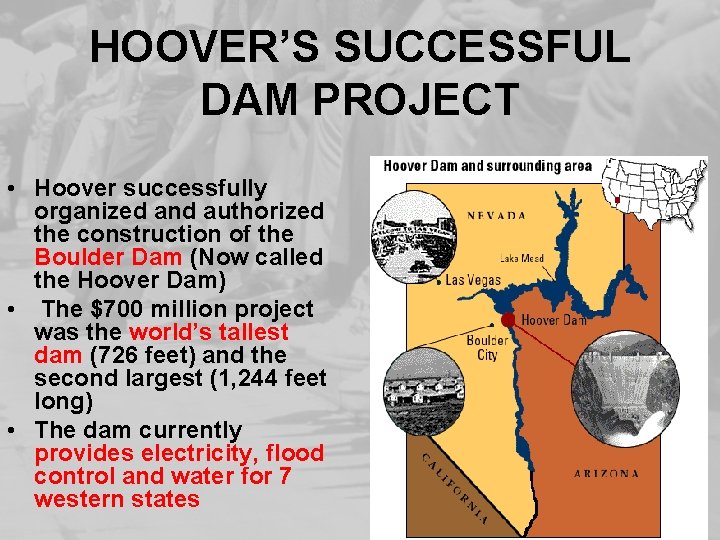
HOOVER’S SUCCESSFUL DAM PROJECT • Hoover successfully organized and authorized the construction of the Boulder Dam (Now called the Hoover Dam) • The $700 million project was the world’s tallest dam (726 feet) and the second largest (1, 244 feet long) • The dam currently provides electricity, flood control and water for 7 western states

Any dam questions?
HOOVER TAKES ACTION: TOO LITTLE TOO LATE • Hoover gradually softened his position on government intervention in the economy • He created the Federal Farm Board to help farmers – Help raise crop prices by holding crops from market • He also created the National Credit Organization – Loaned money to smaller banks Hoover’s flurry of activity came too late to save the economy or his job • His Federal Home Loan Bank Act and Reconstruction Finance Corp – two measures enacted to protect people’s homes and businesses – Money would trickle down to poor
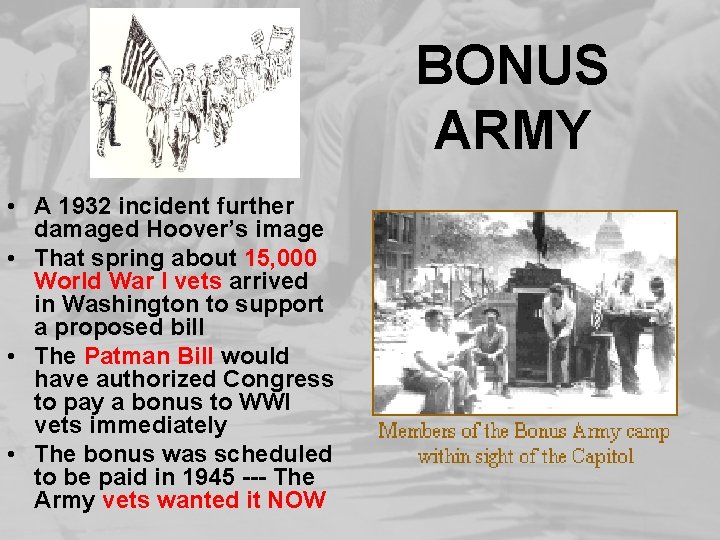
BONUS ARMY • A 1932 incident further damaged Hoover’s image • That spring about 15, 000 World War I vets arrived in Washington to support a proposed bill • The Patman Bill would have authorized Congress to pay a bonus to WWI vets immediately • The bonus was scheduled to be paid in 1945 --- The Army vets wanted it NOW
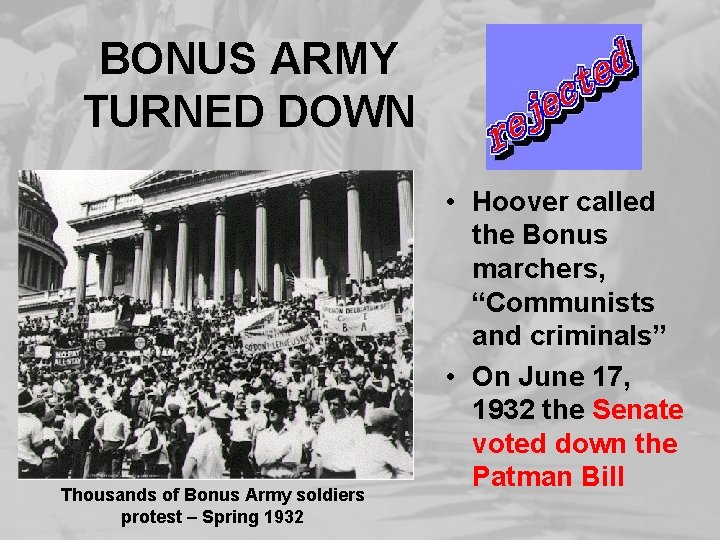
BONUS ARMY TURNED DOWN Thousands of Bonus Army soldiers protest – Spring 1932 • Hoover called the Bonus marchers, “Communists and criminals” • On June 17, 1932 the Senate voted down the Patman Bill
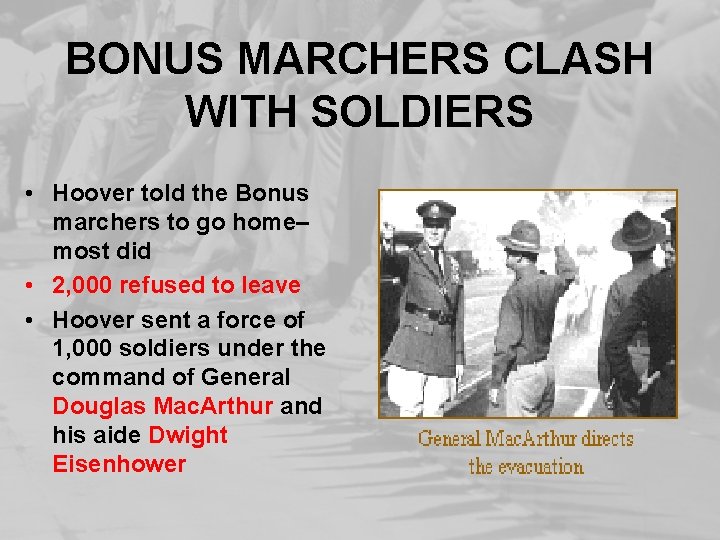
BONUS MARCHERS CLASH WITH SOLDIERS • Hoover told the Bonus marchers to go home– most did • 2, 000 refused to leave • Hoover sent a force of 1, 000 soldiers under the command of General Douglas Mac. Arthur and his aide Dwight Eisenhower
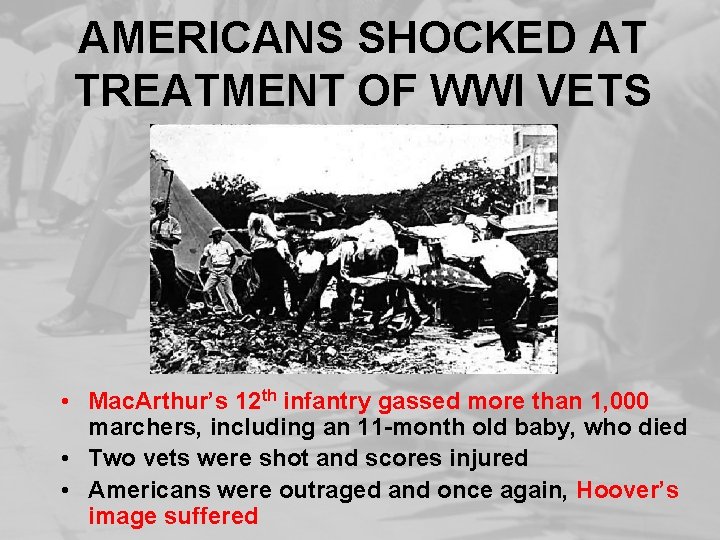
AMERICANS SHOCKED AT TREATMENT OF WWI VETS • Mac. Arthur’s 12 th infantry gassed more than 1, 000 marchers, including an 11 -month old baby, who died • Two vets were shot and scores injured • Americans were outraged and once again, Hoover’s image suffered
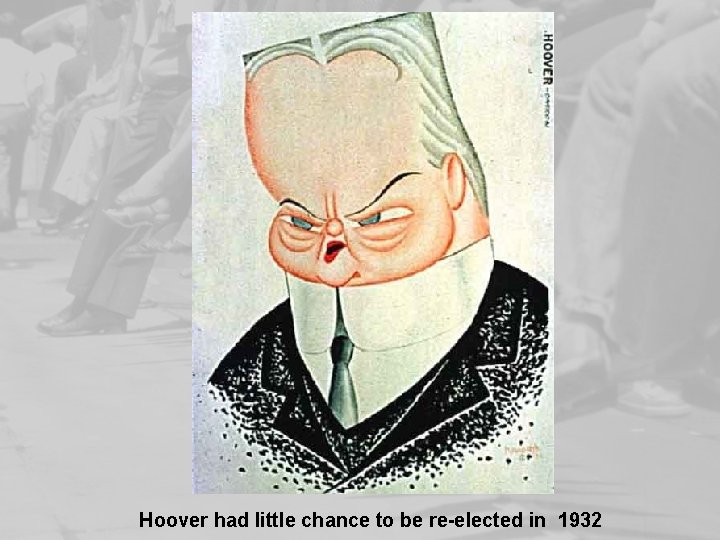
Hoover had little chance to be re-elected in 1932
- Slides: 12