
THE GREAT DEPRESSION BEGINS Objective Analyze the causes
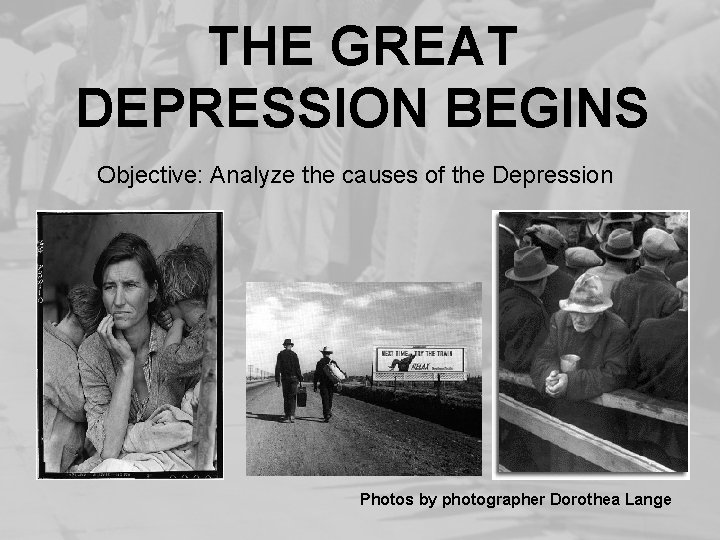
THE GREAT DEPRESSION BEGINS Objective: Analyze the causes of the Depression Photos by photographer Dorothea Lange
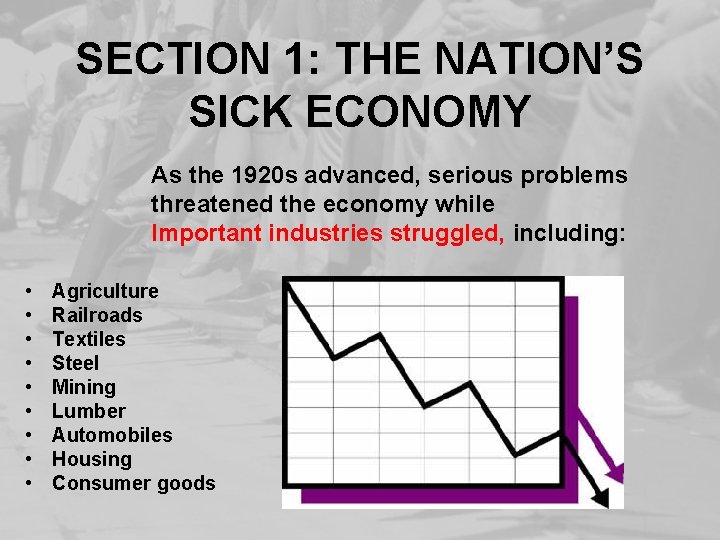
SECTION 1: THE NATION’S SICK ECONOMY As the 1920 s advanced, serious problems threatened the economy while Important industries struggled, including: • • • Agriculture Railroads Textiles Steel Mining Lumber Automobiles Housing Consumer goods
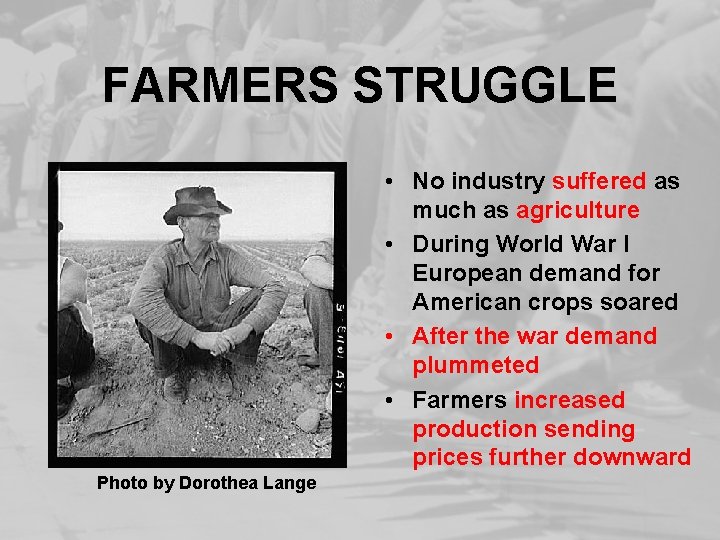
FARMERS STRUGGLE • No industry suffered as much as agriculture • During World War I European demand for American crops soared • After the war demand plummeted • Farmers increased production sending prices further downward Photo by Dorothea Lange
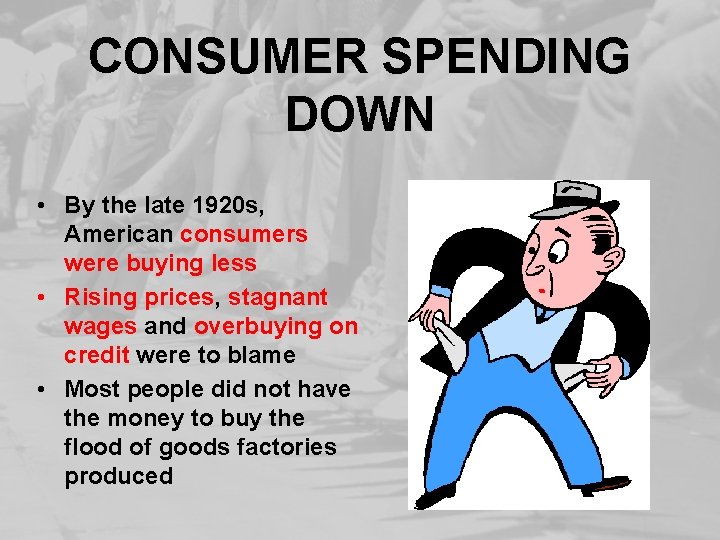
CONSUMER SPENDING DOWN • By the late 1920 s, American consumers were buying less • Rising prices, stagnant wages and overbuying on credit were to blame • Most people did not have the money to buy the flood of goods factories produced
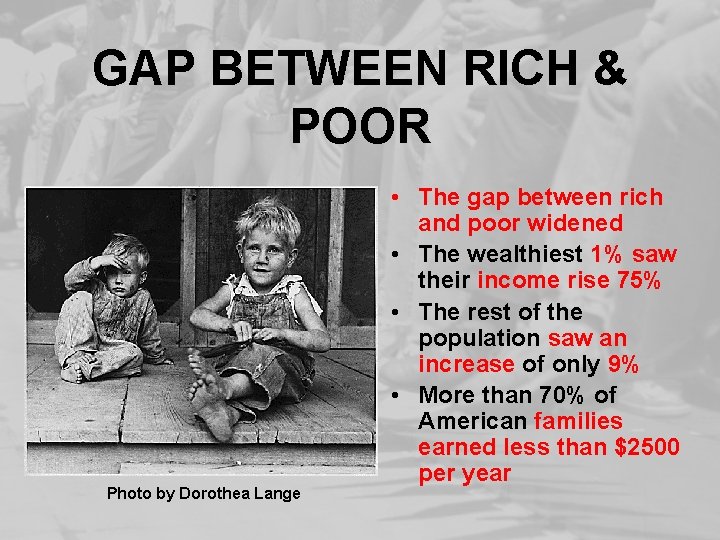
GAP BETWEEN RICH & POOR Photo by Dorothea Lange • The gap between rich and poor widened • The wealthiest 1% saw their income rise 75% • The rest of the population saw an increase of only 9% • More than 70% of American families earned less than $2500 per year
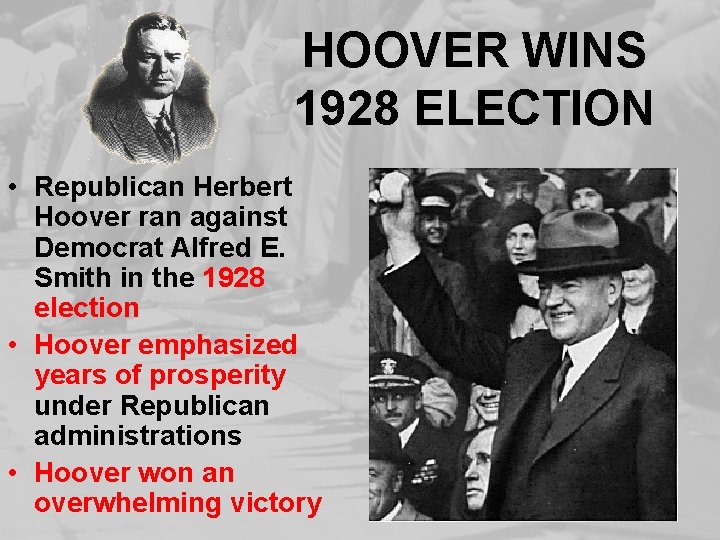
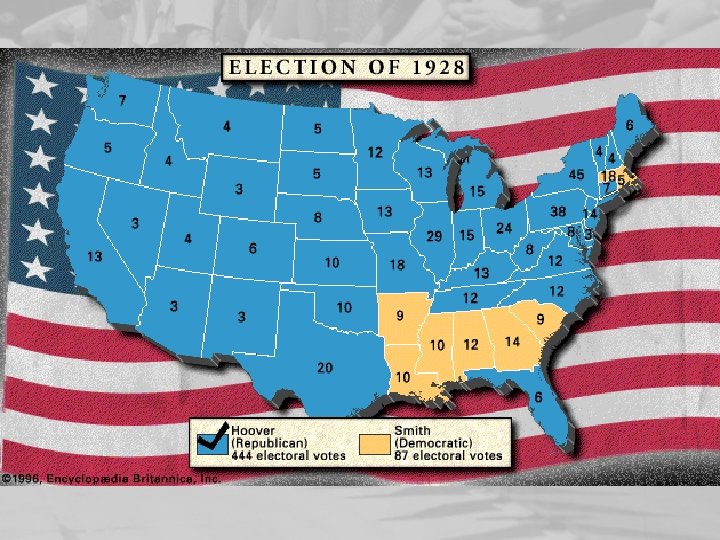
HOOVER WINS 1928 ELECTION • Republican Herbert Hoover ran against Democrat Alfred E. Smith in the 1928 election • Hoover emphasized years of prosperity under Republican administrations • Hoover won an overwhelming victory
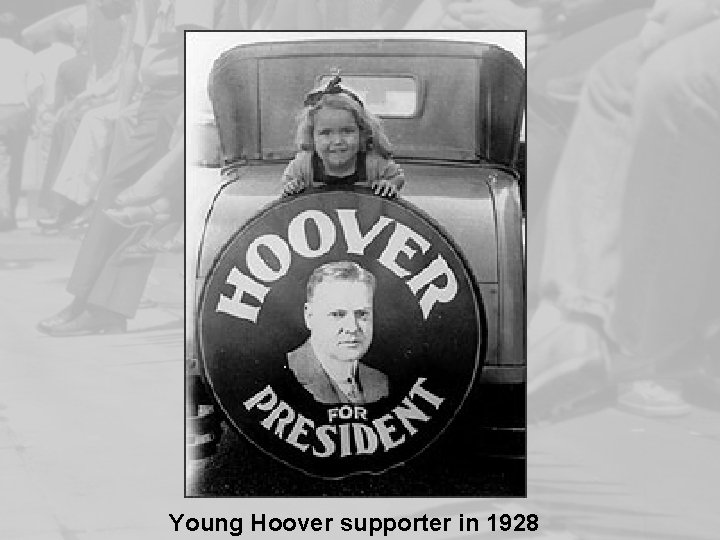
Young Hoover supporter in 1928
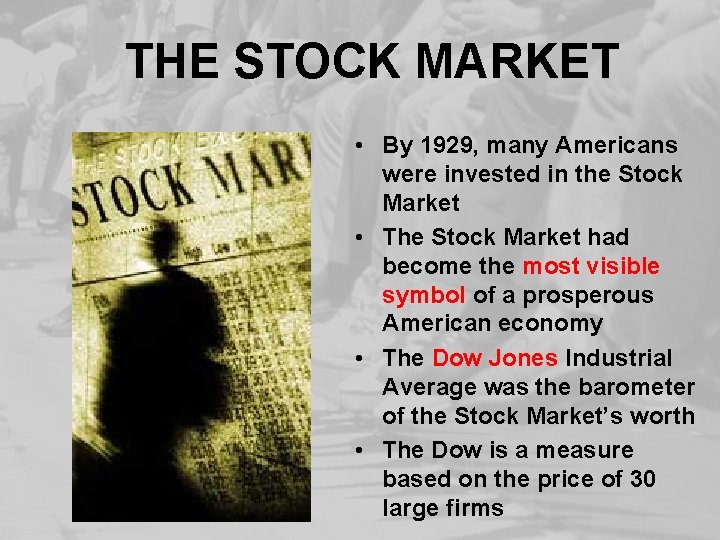
THE STOCK MARKET • By 1929, many Americans were invested in the Stock Market • The Stock Market had become the most visible symbol of a prosperous American economy • The Dow Jones Industrial Average was the barometer of the Stock Market’s worth • The Dow is a measure based on the price of 30 large firms
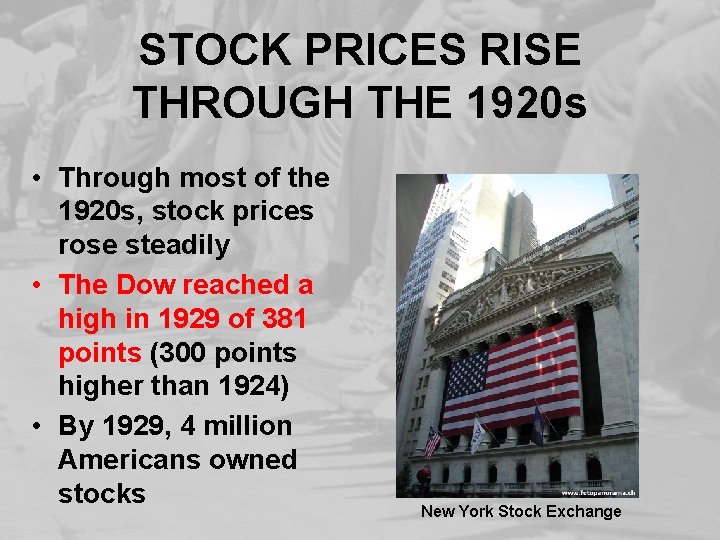
STOCK PRICES RISE THROUGH THE 1920 s • Through most of the 1920 s, stock prices rose steadily • The Dow reached a high in 1929 of 381 points (300 points higher than 1924) • By 1929, 4 million Americans owned stocks New York Stock Exchange
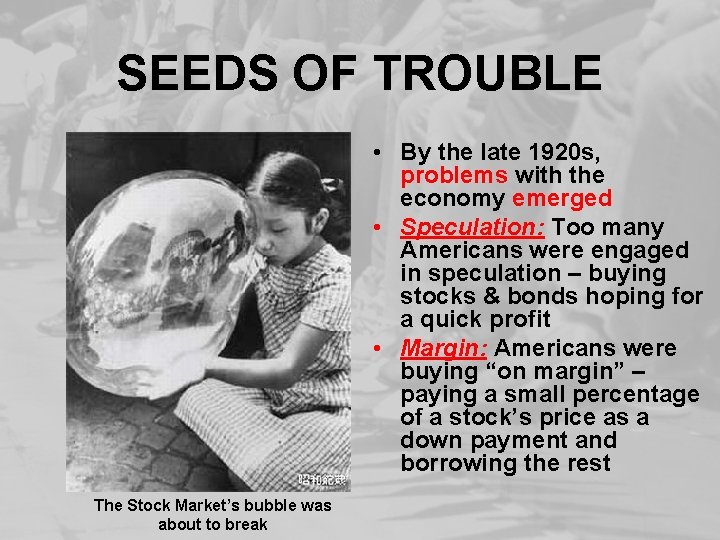
SEEDS OF TROUBLE • By the late 1920 s, problems with the economy emerged • Speculation: Too many Americans were engaged in speculation – buying stocks & bonds hoping for a quick profit • Margin: Americans were buying “on margin” – paying a small percentage of a stock’s price as a down payment and borrowing the rest The Stock Market’s bubble was about to break
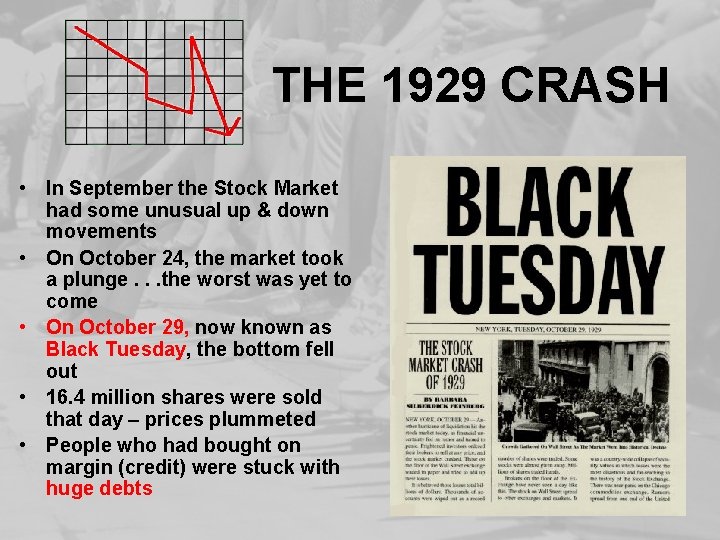
THE 1929 CRASH • In September the Stock Market had some unusual up & down movements • On October 24, the market took a plunge. . . the worst was yet to come • On October 29, now known as Black Tuesday, the bottom fell out • 16. 4 million shares were sold that day – prices plummeted • People who had bought on margin (credit) were stuck with huge debts
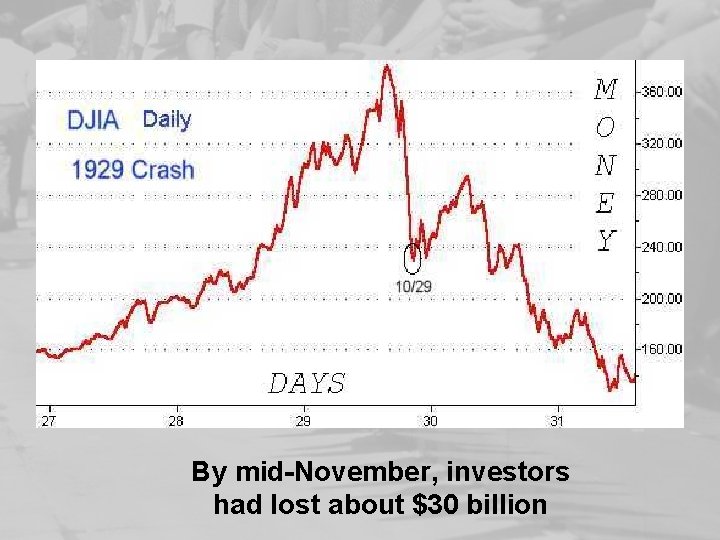
By mid-November, investors had lost about $30 billion

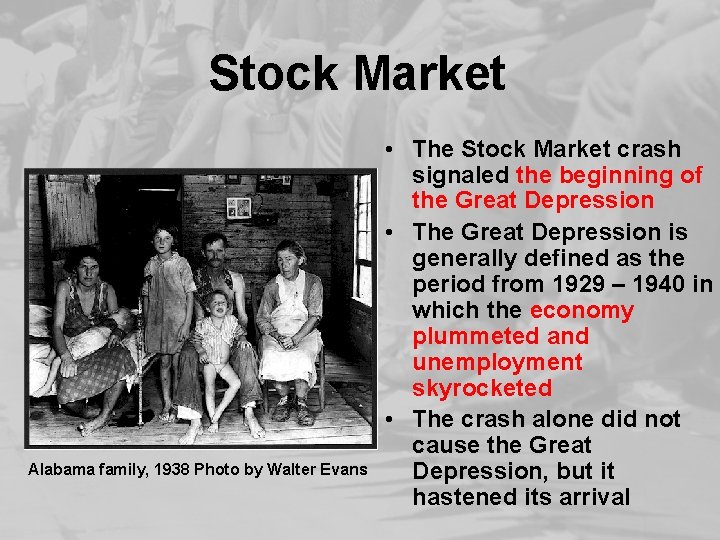
Stock Market Alabama family, 1938 Photo by Walter Evans • The Stock Market crash signaled the beginning of the Great Depression • The Great Depression is generally defined as the period from 1929 – 1940 in which the economy plummeted and unemployment skyrocketed • The crash alone did not cause the Great Depression, but it hastened its arrival
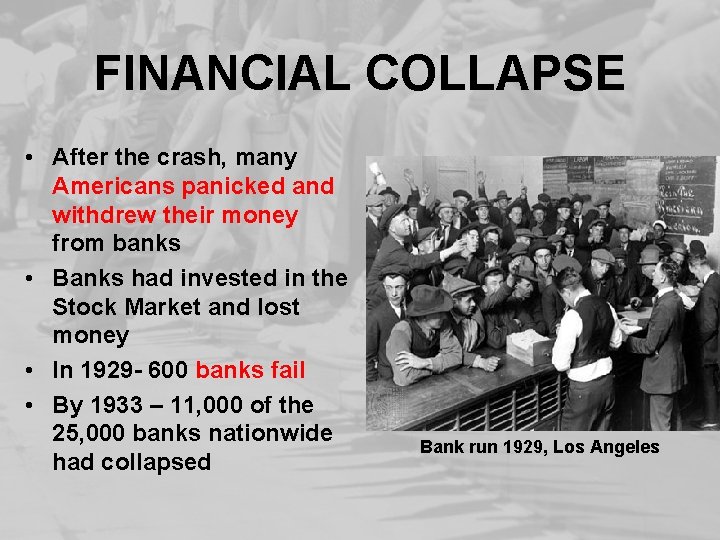
FINANCIAL COLLAPSE • After the crash, many Americans panicked and withdrew their money from banks • Banks had invested in the Stock Market and lost money • In 1929 - 600 banks fail • By 1933 – 11, 000 of the 25, 000 banks nationwide had collapsed Bank run 1929, Los Angeles
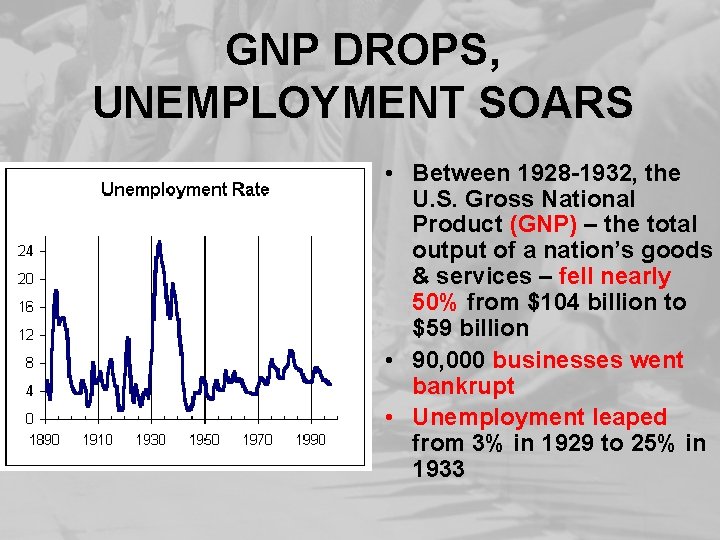
GNP DROPS, UNEMPLOYMENT SOARS • Between 1928 -1932, the U. S. Gross National Product (GNP) – the total output of a nation’s goods & services – fell nearly 50% from $104 billion to $59 billion • 90, 000 businesses went bankrupt • Unemployment leaped from 3% in 1929 to 25% in 1933
• The U. S. was not the only country gripped by the Great Depression • Much of Europe suffered throughout the 1920 s • In 1930, Congress passed the toughest tariff in U. S. history called the Hawley. Smoot Tariff • It was meant to protect U. S. industry yet had the opposite effect • Other countries enacted their own tariffs and soon world trade fell 40% HAWLEYSMOOT TARIFF
CAUSES OF THE GREAT DEPRESSION • Tariffs & war debt policies • U. S. demand low, despite factories producing more • Farm sector crisis • Easy credit • Unequal distribution of income
- Slides: 19