
THE GREAT DEPRESSION AND WORLD WAR II REVIEW


- Slides: 32
THE GREAT DEPRESSION AND WORLD WAR II- REVIEW
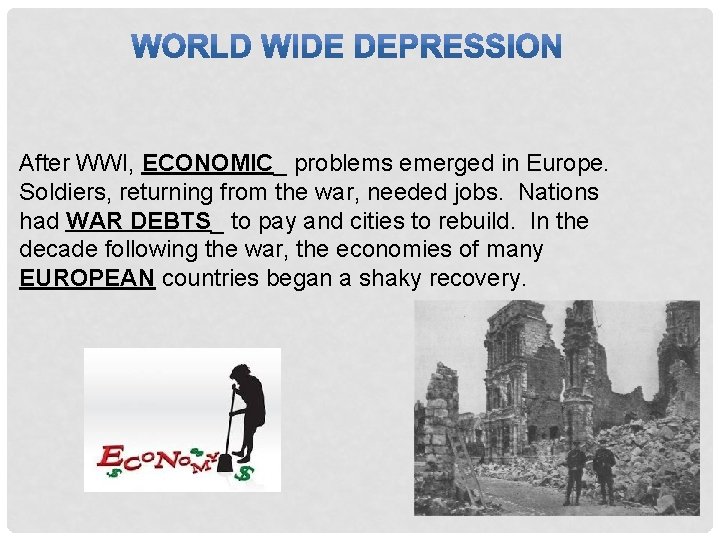
After WWI, ECONOMIC_ problems emerged in Europe. Soldiers, returning from the war, needed jobs. Nations had WAR DEBTS_ to pay and cities to rebuild. In the decade following the war, the economies of many EUROPEAN countries began a shaky recovery.
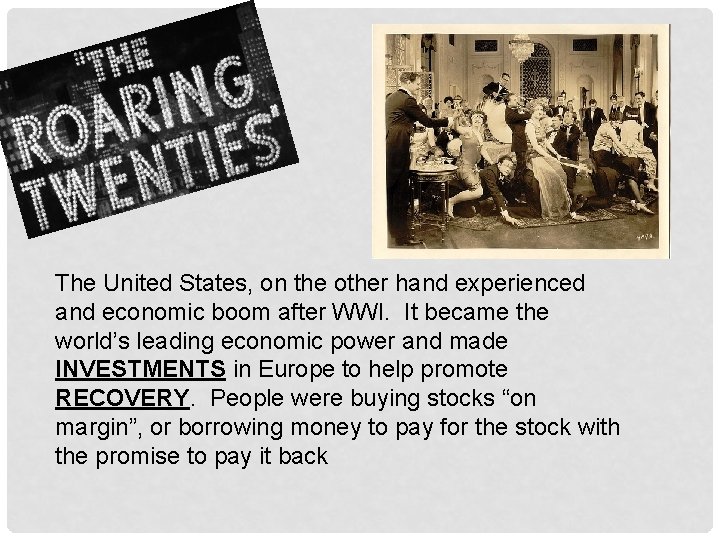
The United States, on the other hand experienced and economic boom after WWI. It became the world’s leading economic power and made INVESTMENTS in Europe to help promote RECOVERY. People were buying stocks “on margin”, or borrowing money to pay for the stock with the promise to pay it back
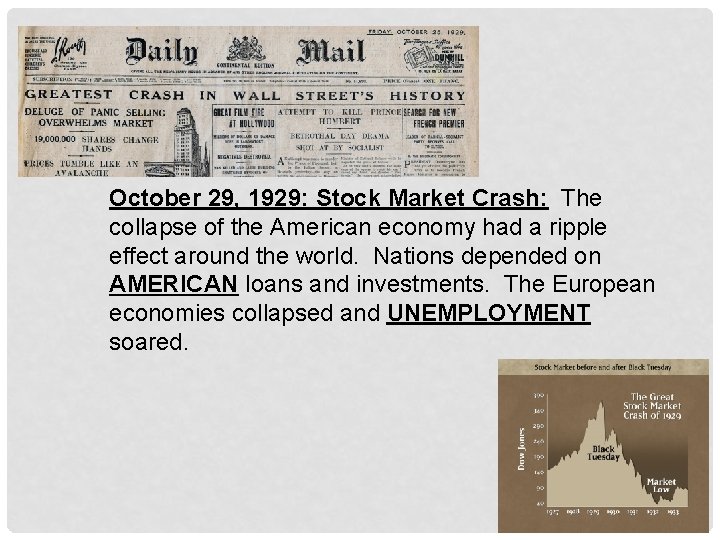
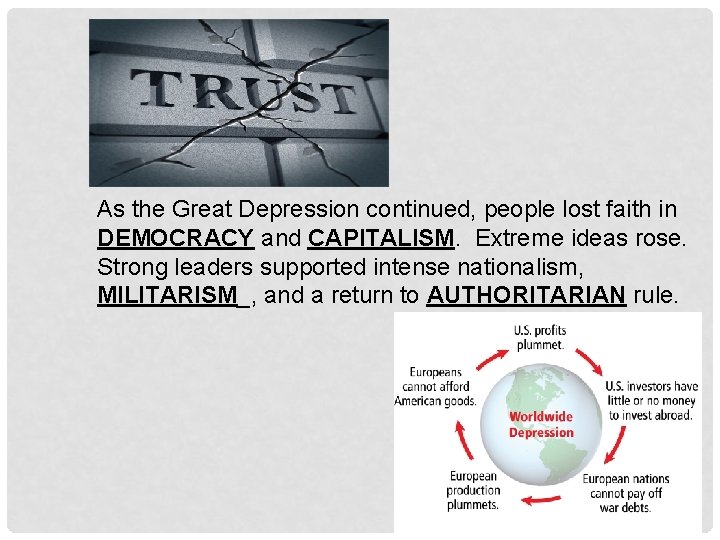
October 29, 1929: Stock Market Crash: The collapse of the American economy had a ripple effect around the world. Nations depended on AMERICAN loans and investments. The European economies collapsed and UNEMPLOYMENT soared.
As the Great Depression continued, people lost faith in DEMOCRACY and CAPITALISM. Extreme ideas rose. Strong leaders supported intense nationalism, MILITARISM_, and a return to AUTHORITARIAN rule.
The Rise of Fascism Widespread economic despair paved the way for the rise of dictators. Strong leaders in Italy and Germany promised solutions. Fascism is… Rule of a people by dictatorial government that is nationalistic & imperialistic
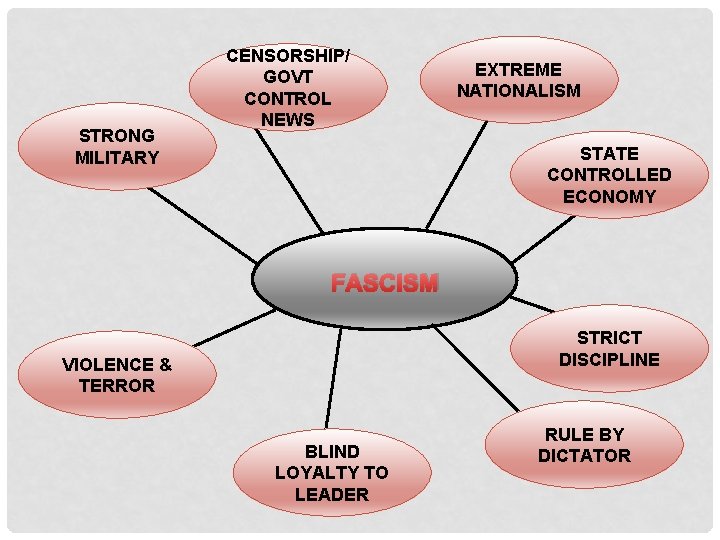
STRONG MILITARY CENSORSHIP/ GOVT CONTROL NEWS EXTREME NATIONALISM STATE CONTROLLED ECONOMY FASCISM STRICT DISCIPLINE VIOLENCE & TERROR BLIND LOYALTY TO LEADER RULE BY DICTATOR
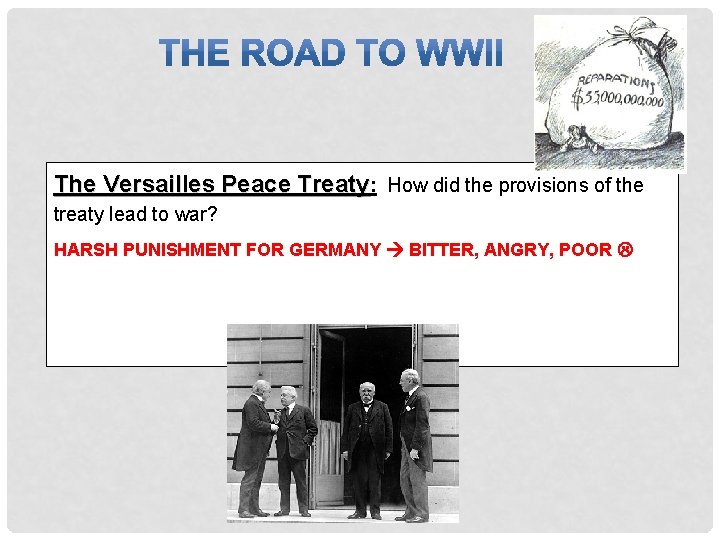
The Versailles Peace Treaty: How did the provisions of the treaty lead to war? HARSH PUNISHMENT FOR GERMANY BITTER, ANGRY, POOR
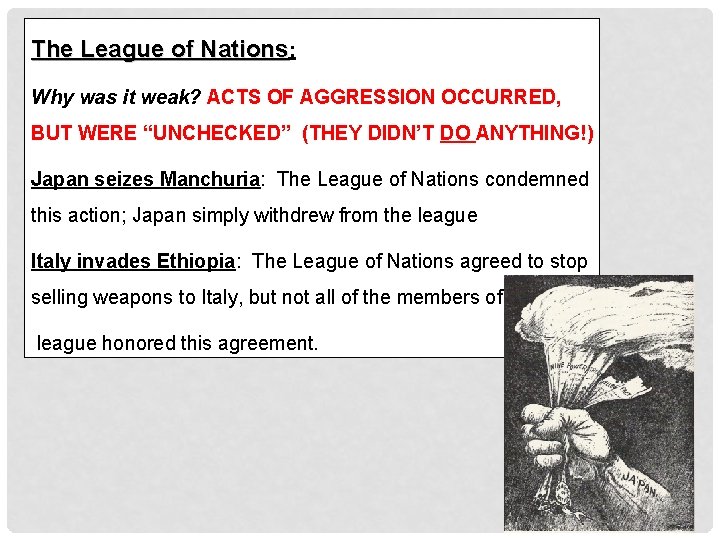
The League of Nations: Why was it weak? ACTS OF AGGRESSION OCCURRED, BUT WERE “UNCHECKED” (THEY DIDN’T DO ANYTHING!) Japan seizes Manchuria: The League of Nations condemned this action; Japan simply withdrew from the league Italy invades Ethiopia: The League of Nations agreed to stop selling weapons to Italy, but not all of the members of the league honored this agreement.
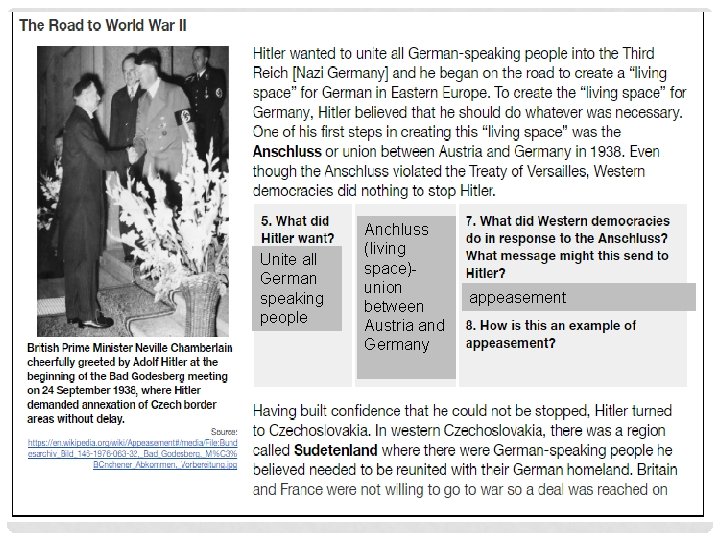
German Aggression in Europe: “Today Germany! Tomorrow, the World!” Hitler rebuilt the Army violation of the Treaty of Versailles! 1936: TROOPS TO RHINELAND (GERMAN/FRENCH BORDER) 1938 - Austria: MADE AUSTRIA PART OF GERMAN EMPIRE (ANSCHLUS) 1938 Czechoslovakia: FORCED CZECH. TO GIVE GERMANY A BORDER AREA CALLED “SUDETENLAND”
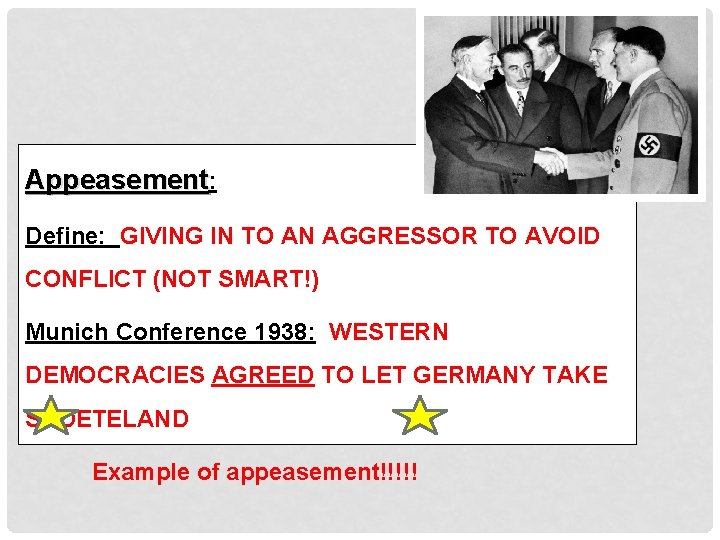
Appeasement: Define: GIVING IN TO AN AGGRESSOR TO AVOID CONFLICT (NOT SMART!) Munich Conference 1938: WESTERN DEMOCRACIES AGREED TO LET GERMANY TAKE SUDETELAND Example of appeasement!!!!!
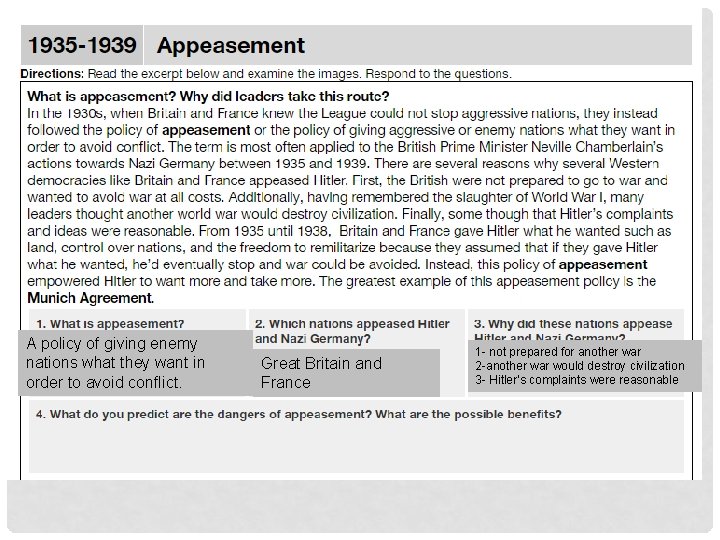
A policy of giving enemy nations what they want in order to avoid conflict. Great Britain and France 1 - not prepared for another war 2 -another war would destroy civilization 3 - Hitler’s complaints were reasonable
Unite all German speaking people Anchluss (living space)union between Austria and Germany appeasement
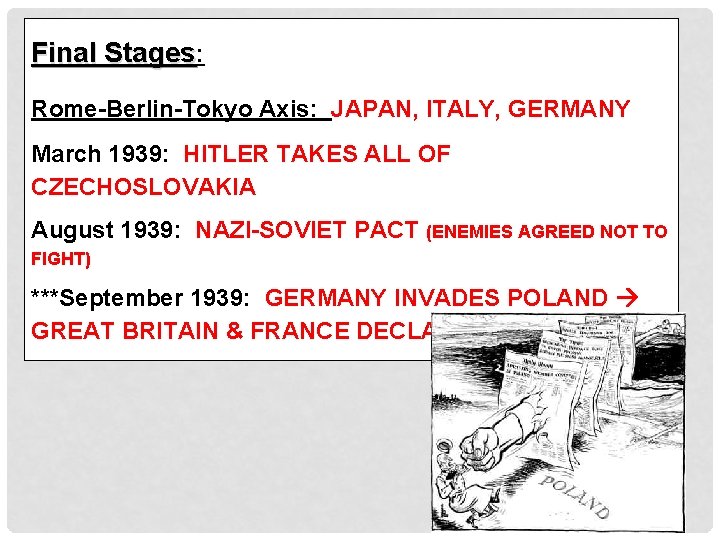
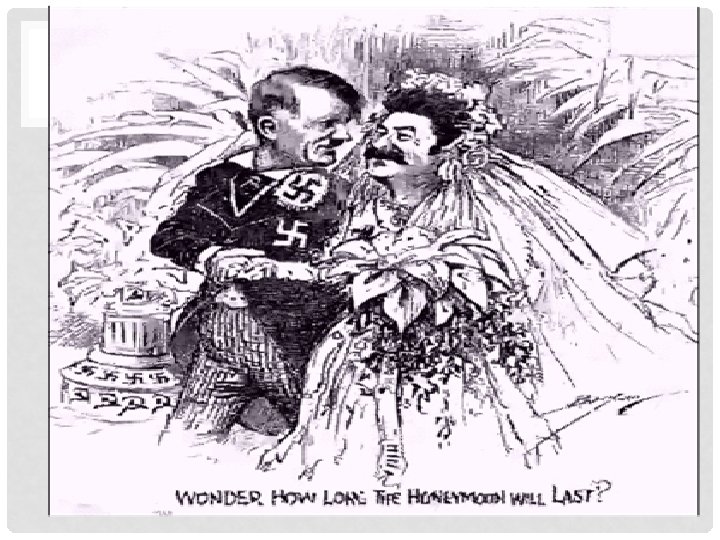
Final Stages: Rome-Berlin-Tokyo Axis: JAPAN, ITALY, GERMANY March 1939: HITLER TAKES ALL OF CZECHOSLOVAKIA August 1939: NAZI-SOVIET PACT (ENEMIES AGREED NOT TO FIGHT) ***September 1939: GERMANY INVADES POLAND GREAT BRITAIN & FRANCE DECLARE WAR
So what was event that symbolizes the START of WW 2? ? ? !! INVASION OF POLAND
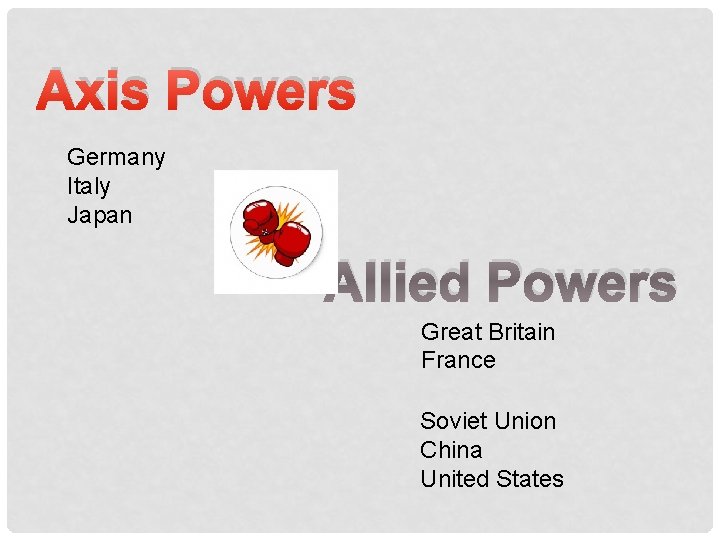
Axis Powers Germany Italy Japan Allied Powers Great Britain France Soviet Union China United States
FAILURE TO STOP AGGRESSION A. United States turns to isolationism B. Hitler wanted to add Austria and Czechoslovakia to the third Reich C. Anschluss (union between Austria and Germany) annexed Austria D. Czech. refused to join in the German union E. Munich Conference- Czechs not invited. Appeasement. Lost Sudetenland F. Non-Aggression Pact I. Britain and France asked Soviet Union for help a. Hitler and Stalin made a secret alliance
WORLD AGGRESSION A. German Blitzkrieg against Poland September 1. 1939 B. France and Great Britain declare war on Germany September 3, 1939 C. Hitler annexed (added on) Western Poland D. Soviets annexed Eastern Poland
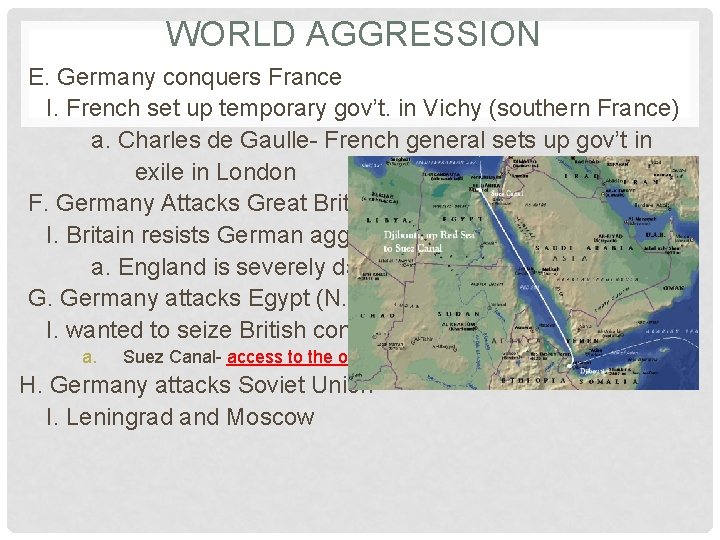
WORLD AGGRESSION E. Germany conquers France I. French set up temporary gov’t. in Vichy (southern France) a. Charles de Gaulle- French general sets up gov’t in exile in London F. Germany Attacks Great Britain I. Britain resists German aggression a. England is severely damaged but defeats Germans G. Germany attacks Egypt (N. Africa) I. wanted to seize British controlled Suez Canal a. Suez Canal- access to the oil fields of the Middle East H. Germany attacks Soviet Union I. Leningrad and Moscow
WORLD AGGRESSION I. Japan I. Pearl Harbor- December 7, 1941 a. 2, 400 people b. FDR declares asked Congress to declare war on Japan J. United States I. D-day June 6, 1944 a. Invasion of Normandy 1944 1. Allies freed France from German control
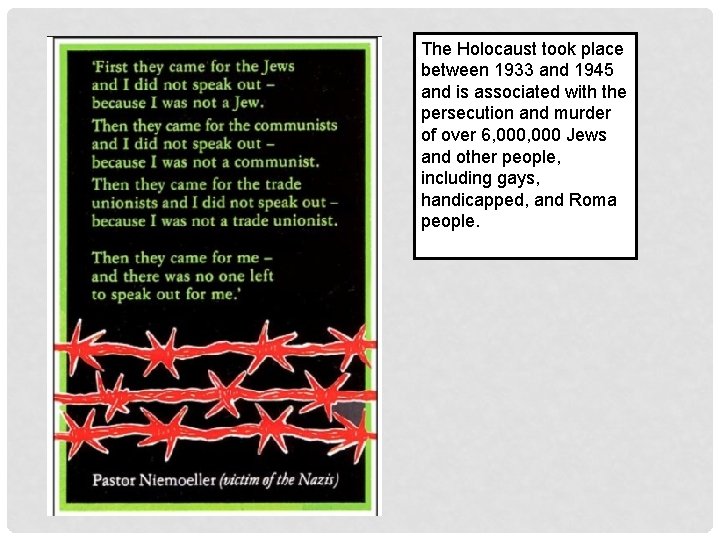
The Holocaust took place between 1933 and 1945 and is associated with the persecution and murder of over 6, 000 Jews and other people, including gays, handicapped, and Roma people.
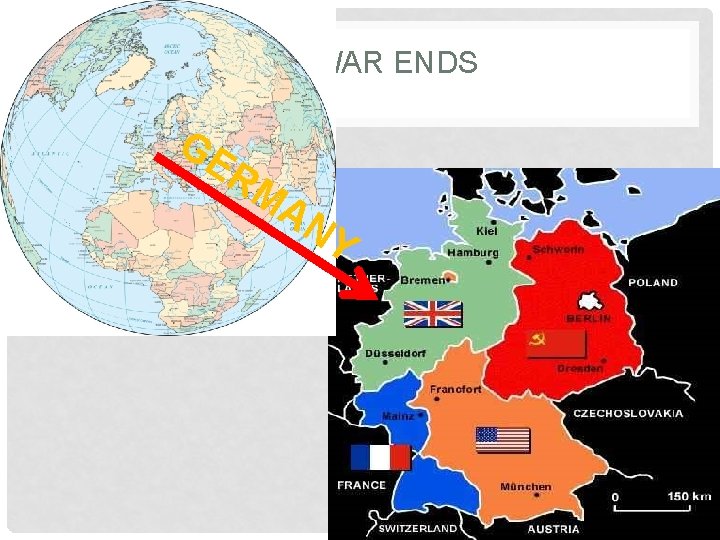
THE WAR ENDS GE R A. Yalta Conference I. 1945 a. Roosevelt, Churchill and Stalin b. temporarily divided Germany into zones MA N Y
THE WAR ENDS B. Hiroshima and Nagasaki 1945 a. Hiroshima- 70, 000 people b. Nagasaki- 40, 000 people c. Japan surrenders September 2, 1945
ATOMIC BOMBS—The Potsdam Proclamation: in July, 1945 the allied powers warn Japan of “utter devastation of the Japanese homeland” unless Japan surrenders unconditionally. Japan does not respond. On August 6, 1945 at 8: 16 am, the Enola Gay drops the atomic bomb on Hiroshima, a city on the inland coast of Honshu. More than half the city was destroyed in a flash. Over 80, 000 people were killed. Japan still does not surrender. A second atomic bomb is dropped on Nagasaki, a city on the western coast of Kyushu. The bomb exploded at 11: 02 am on August 9, 1945, killing over 40, 000 people. Japan surrenders on August 14, 1945.
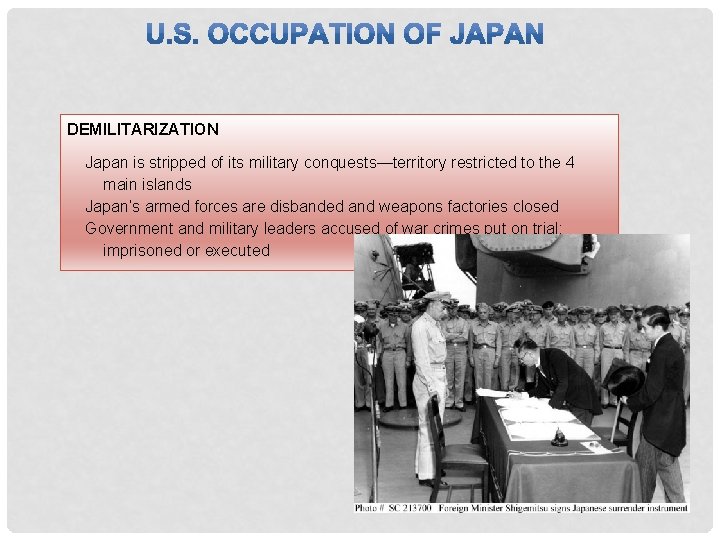
DEMILITARIZATION Japan is stripped of its military conquests—territory restricted to the 4 main islands Japan’s armed forces are disbanded and weapons factories closed Government and military leaders accused of war crimes put on trial; imprisoned or executed
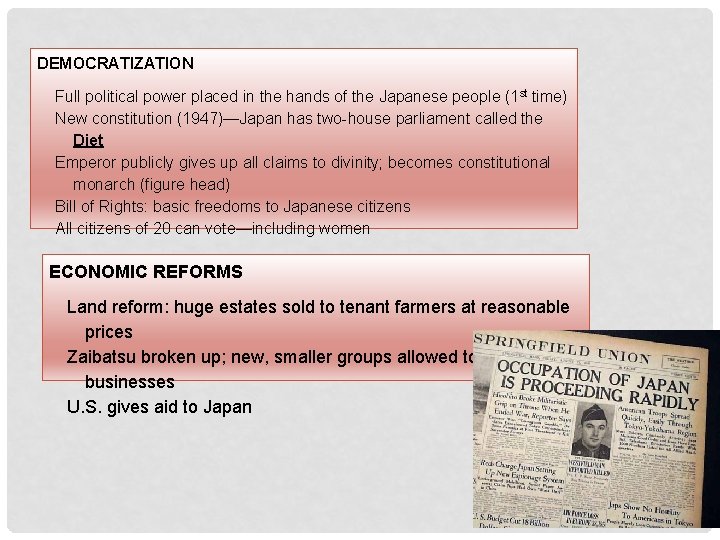
DEMOCRATIZATION Full political power placed in the hands of the Japanese people (1 st time) New constitution (1947)—Japan has two-house parliament called the Diet Emperor publicly gives up all claims to divinity; becomes constitutional monarch (figure head) Bill of Rights: basic freedoms to Japanese citizens All citizens of 20 can vote—including women ECONOMIC REFORMS Land reform: huge estates sold to tenant farmers at reasonable prices Zaibatsu broken up; new, smaller groups allowed to open up businesses U. S. gives aid to Japan
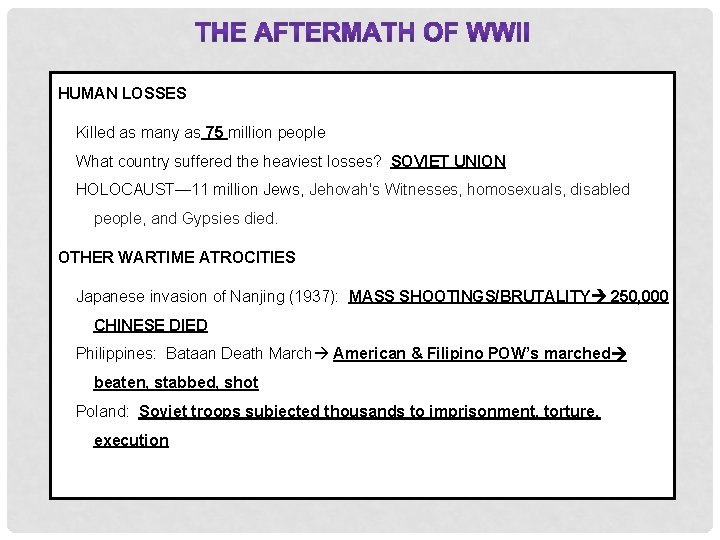
HUMAN LOSSES Killed as many as 75 million people What country suffered the heaviest losses? SOVIET UNION HOLOCAUST— 11 million Jews, Jehovah's Witnesses, homosexuals, disabled people, and Gypsies died. OTHER WARTIME ATROCITIES Japanese invasion of Nanjing (1937): MASS SHOOTINGS/BRUTALITY 250, 000 CHINESE DIED Philippines: Bataan Death March American & Filipino POW’s marched beaten, stabbed, shot Poland: Soviet troops subjected thousands to imprisonment, torture, execution
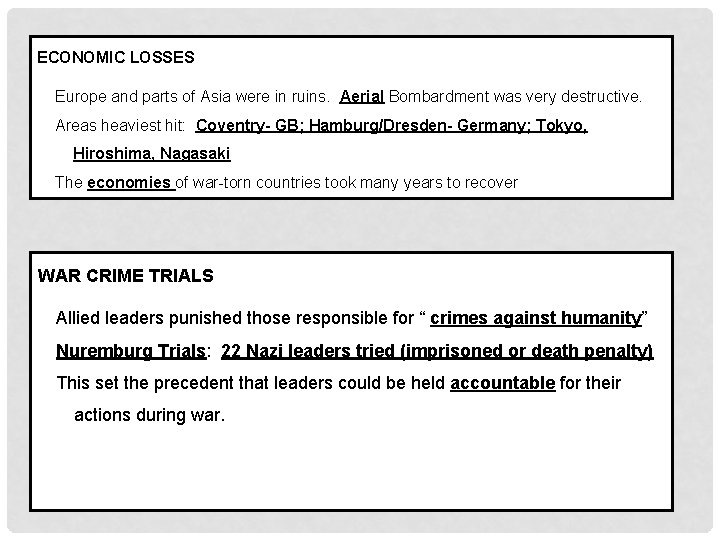
ECONOMIC LOSSES Europe and parts of Asia were in ruins. Aerial Bombardment was very destructive. Areas heaviest hit: Coventry- GB; Hamburg/Dresden- Germany; Tokyo, Hiroshima, Nagasaki The economies of war-torn countries took many years to recover WAR CRIME TRIALS Allied leaders punished those responsible for “ crimes against humanity” Nuremburg Trials: 22 Nazi leaders tried (imprisoned or death penalty) This set the precedent that leaders could be held accountable for their actions during war.
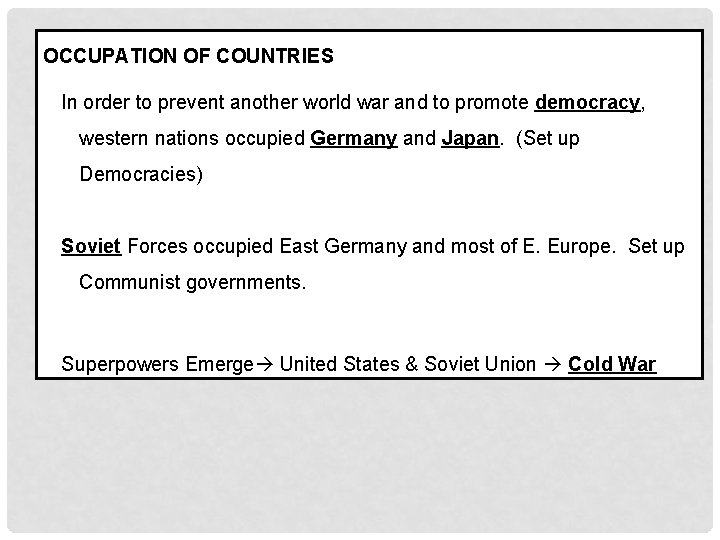
OCCUPATION OF COUNTRIES In order to prevent another world war and to promote democracy, western nations occupied Germany and Japan. (Set up Democracies) Soviet Forces occupied East Germany and most of E. Europe. Set up Communist governments. Superpowers Emerge United States & Soviet Union Cold War