
The Great Depression 1929 1941 US HISTORY Historical
- Slides: 55
The Great Depression 1929 -1941 US HISTORY
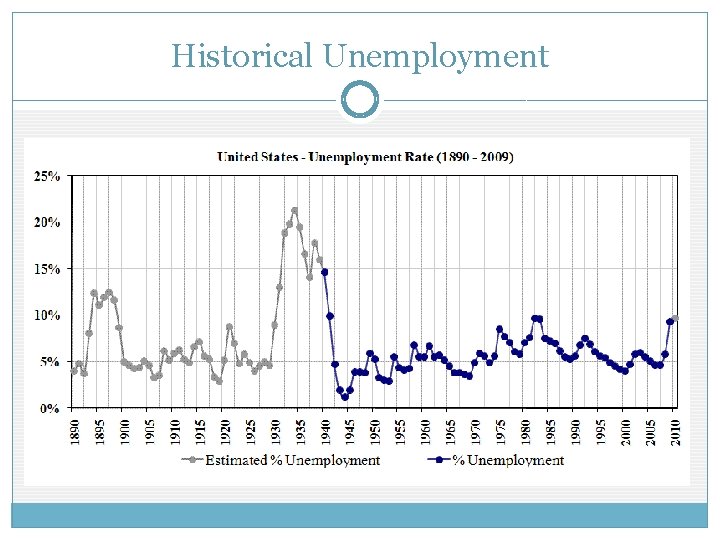
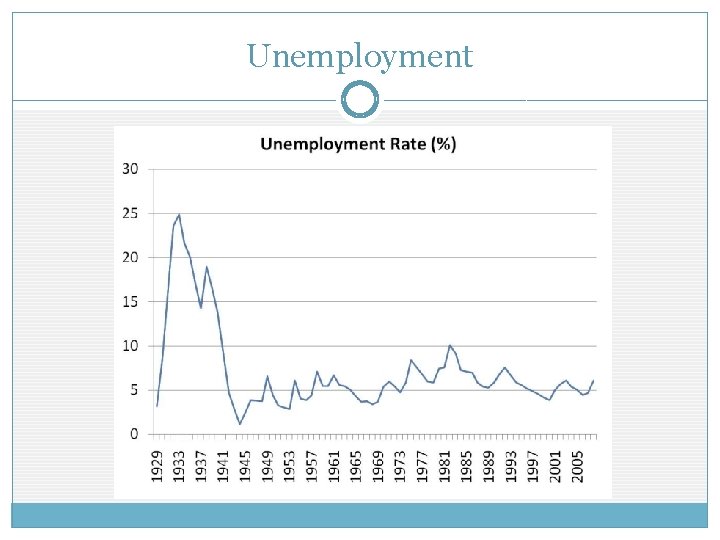
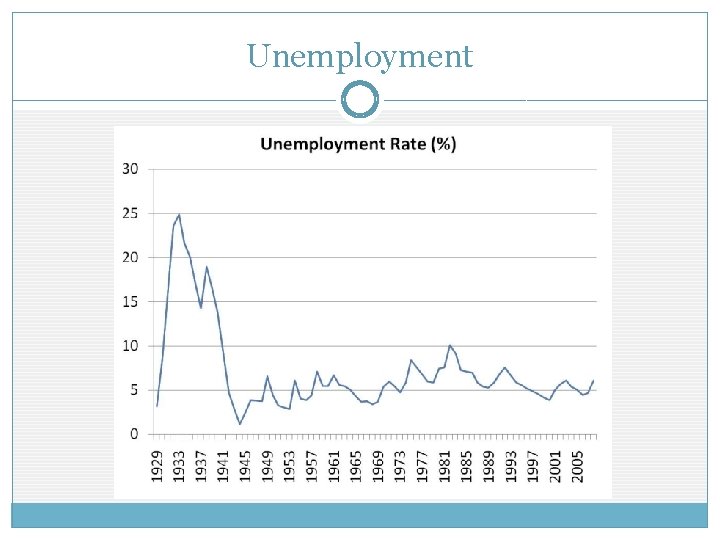
Historical Unemployment
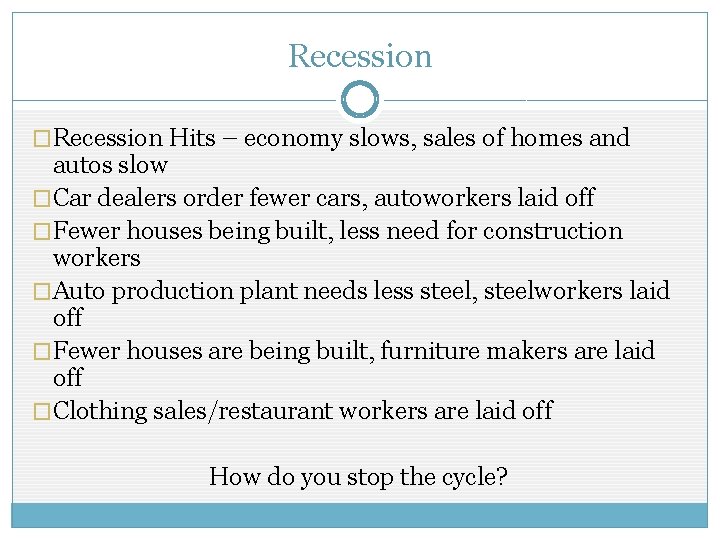
Recession �Recession Hits – economy slows, sales of homes and autos slow �Car dealers order fewer cars, autoworkers laid off �Fewer houses being built, less need for construction workers �Auto production plant needs less steel, steelworkers laid off �Fewer houses are being built, furniture makers are laid off �Clothing sales/restaurant workers are laid off How do you stop the cycle?
The Great Crash �Historical Panics: 1819, 1837, 1857, 1873, 1893, 1906, 1921 �Panic/Depression v. Recession Hoover’s Misnomer �Traditional Government Reaction
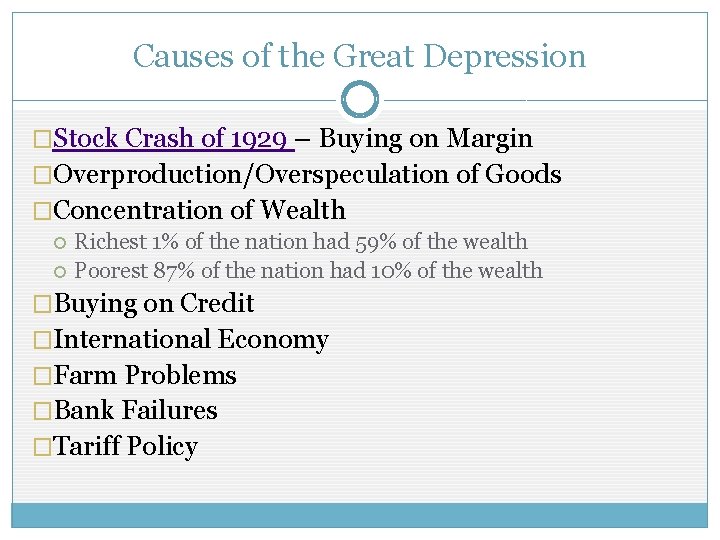
Causes of the Great Depression �Stock Crash of 1929 – Buying on Margin �Overproduction/Overspeculation of Goods �Concentration of Wealth Richest 1% of the nation had 59% of the wealth Poorest 87% of the nation had 10% of the wealth �Buying on Credit �International Economy �Farm Problems �Bank Failures �Tariff Policy
Discussion Questions 1. Does any one person or policy deserve the blame for the Great Depression? Who and/or why? 2. What should be the role of government in helping to address problems of unemployment and poverty?
Unemployment
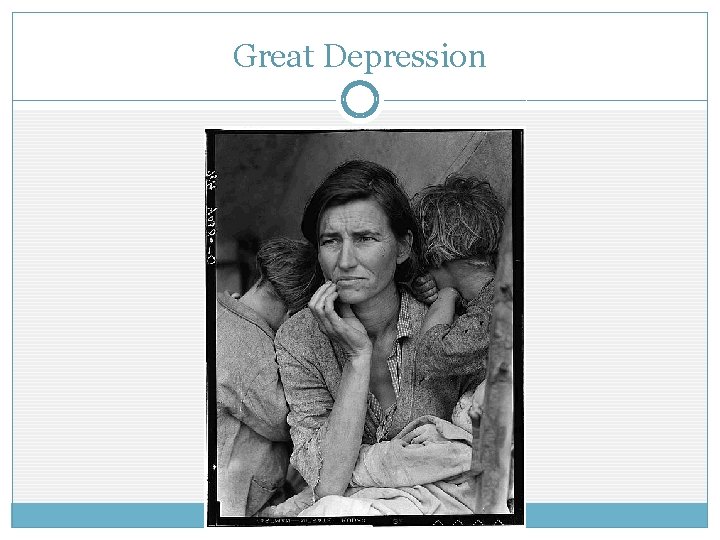
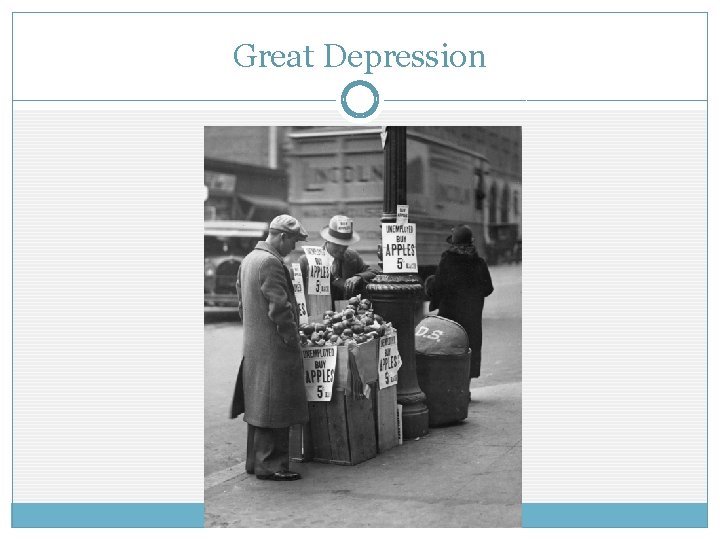
Great Depression
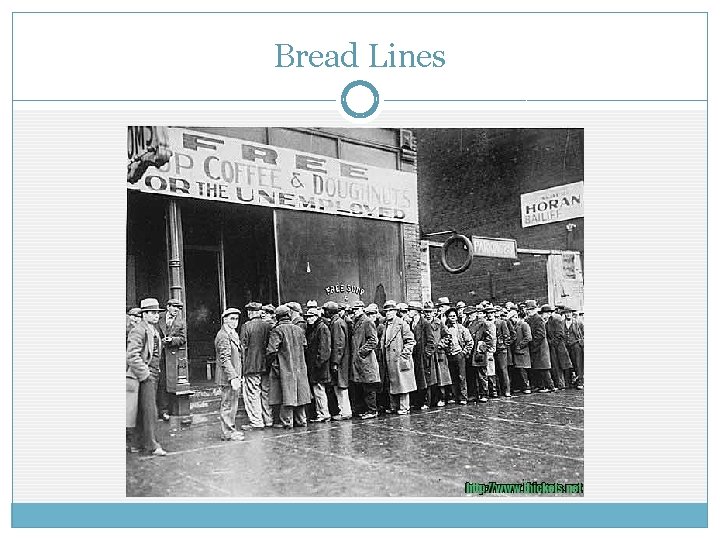
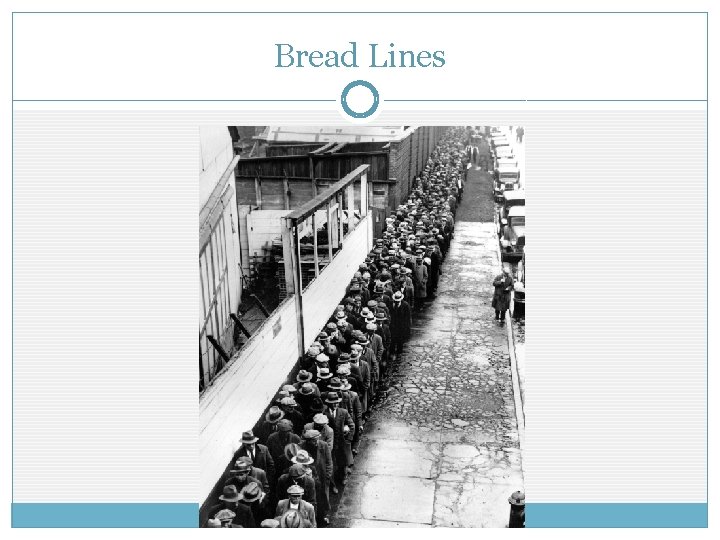
Bread Lines
Bread Lines
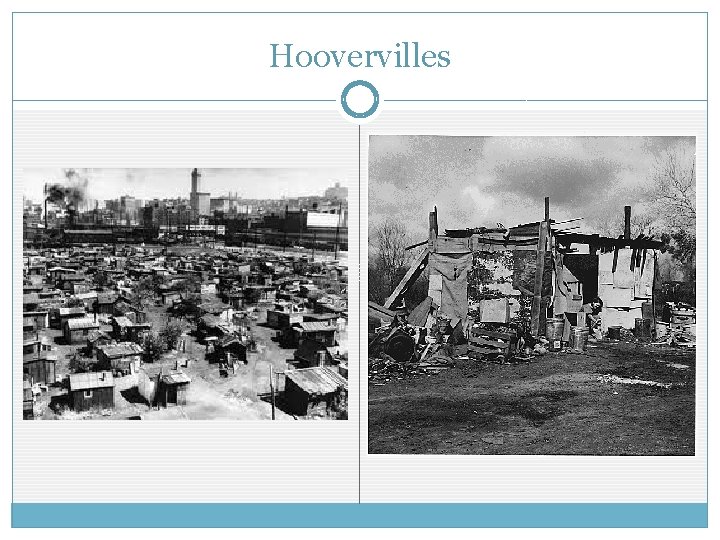
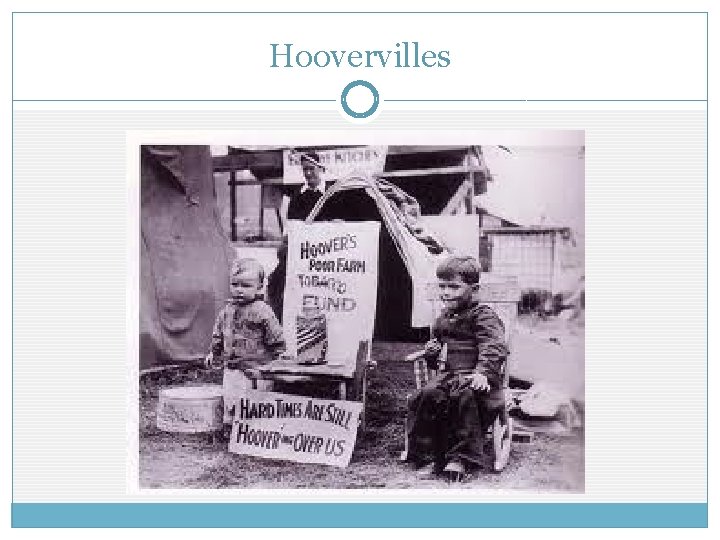
Hoovervilles
Hoovervilles
Great Depression
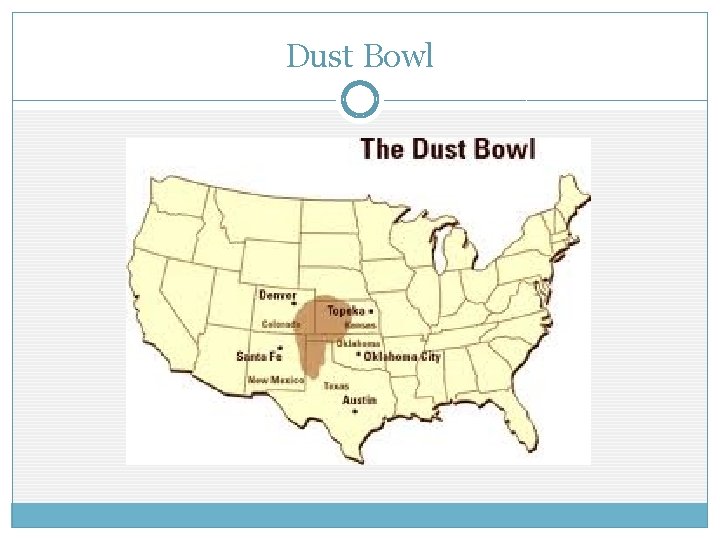
Dust Bowl
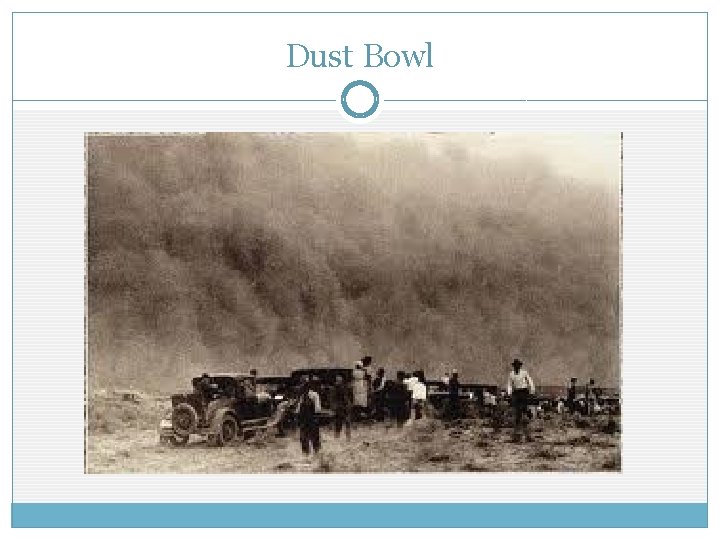
Dust Bowl
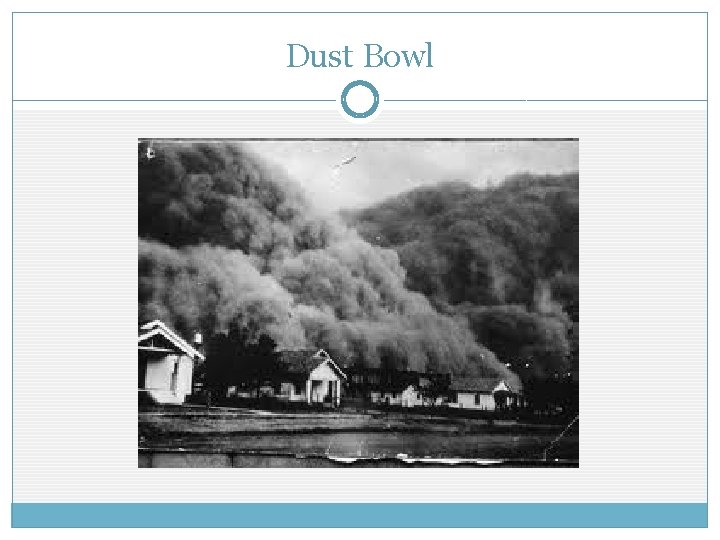
Dust Bowl
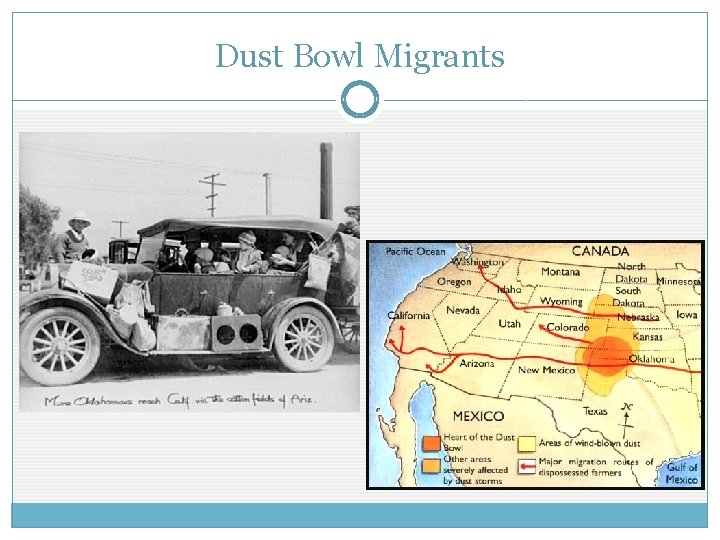
Dust Bowl Migrants
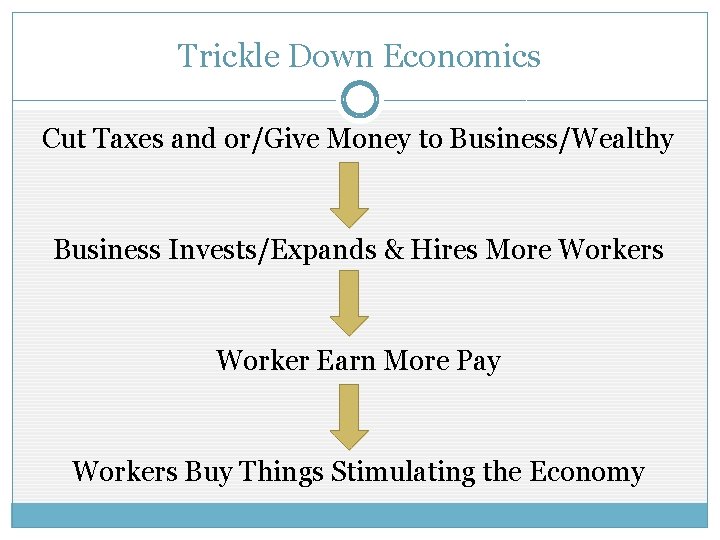
Hoover’s Response to the Depression �Self Reliance/Rugged Individualism �Hawley Smoot Tariff - 1930 �Reconstruction Finance Corporation (RFC)– 1932 Trickle Down Economics �Bonus Army – 1932
Trickle Down Economics Cut Taxes and or/Give Money to Business/Wealthy Business Invests/Expands & Hires More Workers Worker Earn More Pay Workers Buy Things Stimulating the Economy
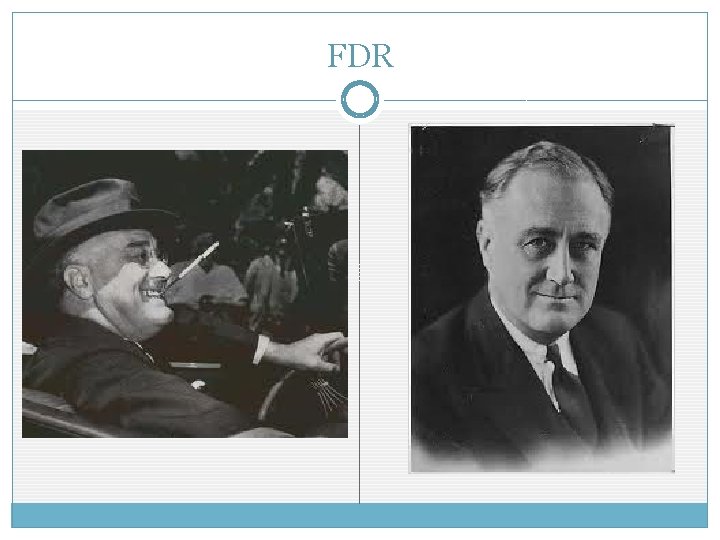
Franklin Delano Roosevelt �Background/Polio �Election of 1932 �Inaugural Address Context? Purpose? Audience? �Fireside Chats �Eleanor Roosevelt
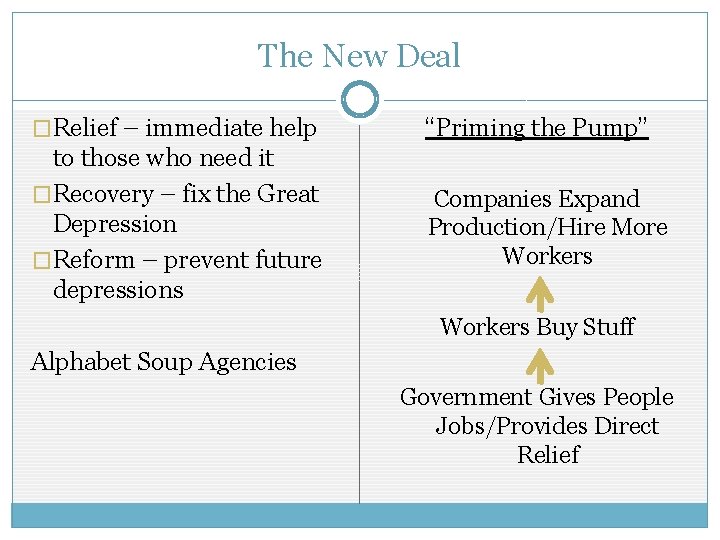
The New Deal �Relief – immediate help “Priming the Pump” to those who need it �Recovery – fix the Great Depression �Reform – prevent future depressions Companies Expand Production/Hire More Workers Buy Stuff Alphabet Soup Agencies Government Gives People Jobs/Provides Direct Relief
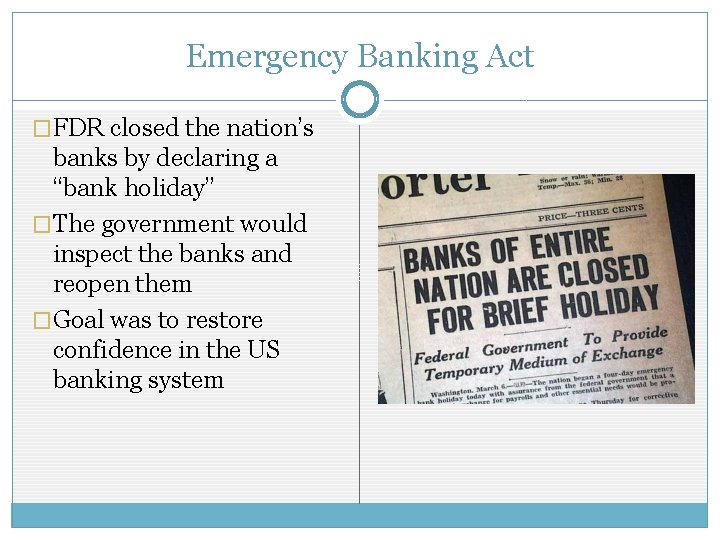
Emergency Banking Act �FDR closed the nation’s banks by declaring a “bank holiday” �The government would inspect the banks and reopen them �Goal was to restore confidence in the US banking system
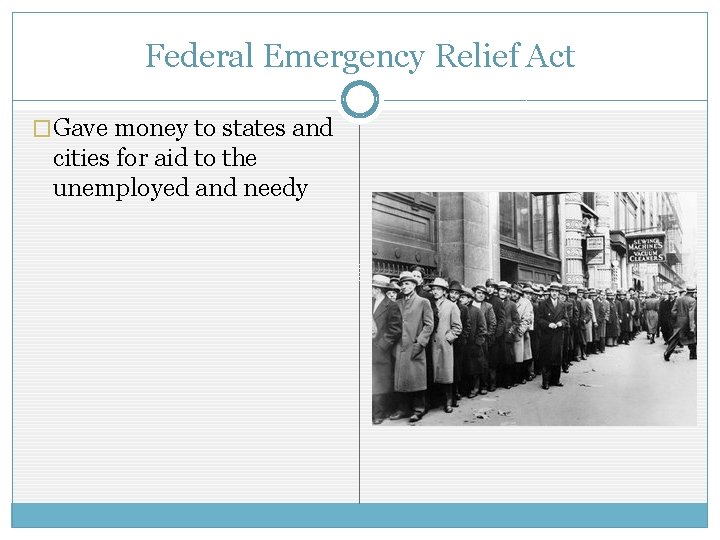
Federal Emergency Relief Act �Gave money to states and cities for aid to the unemployed and needy
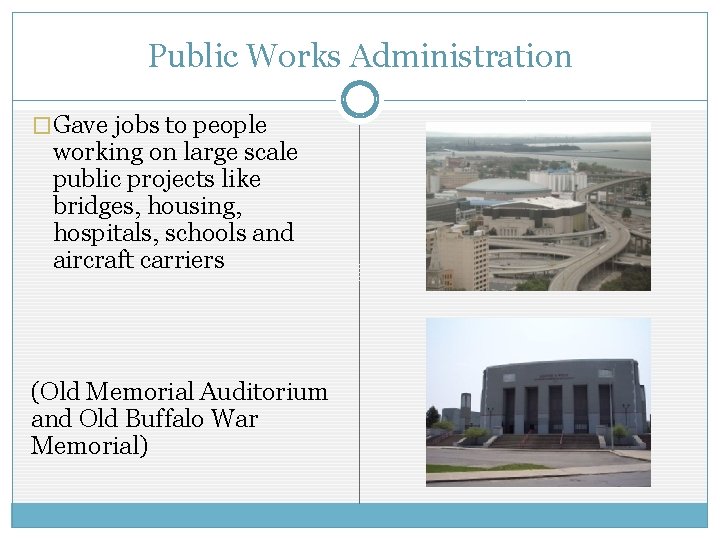
Public Works Administration �Gave jobs to people working on large scale public projects like bridges, housing, hospitals, schools and aircraft carriers (Old Memorial Auditorium and Old Buffalo War Memorial)
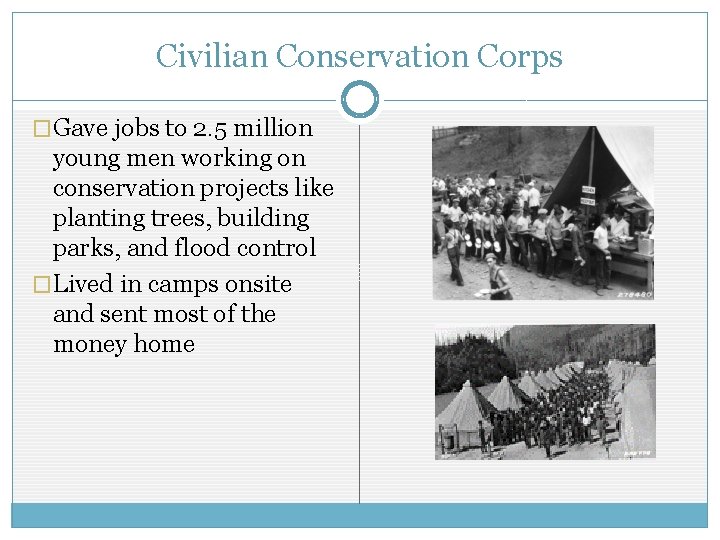
Civilian Conservation Corps �Gave jobs to 2. 5 million young men working on conservation projects like planting trees, building parks, and flood control �Lived in camps onsite and sent most of the money home
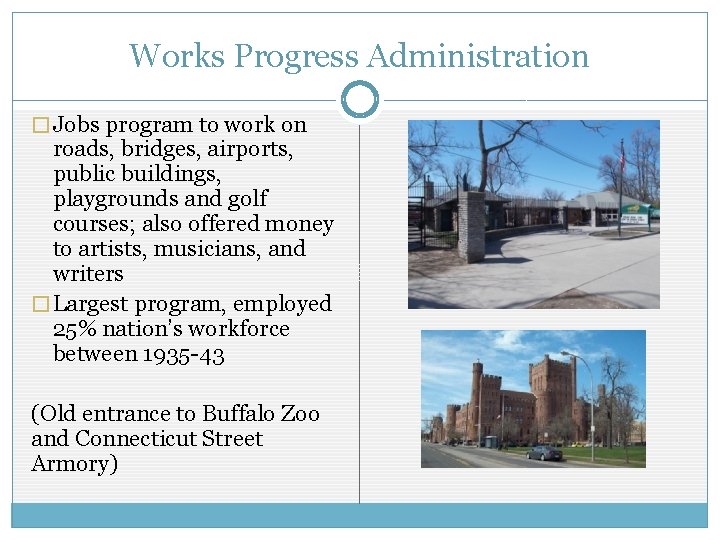
Works Progress Administration � Jobs program to work on roads, bridges, airports, public buildings, playgrounds and golf courses; also offered money to artists, musicians, and writers � Largest program, employed 25% nation’s workforce between 1935 -43 (Old entrance to Buffalo Zoo and Connecticut Street Armory)
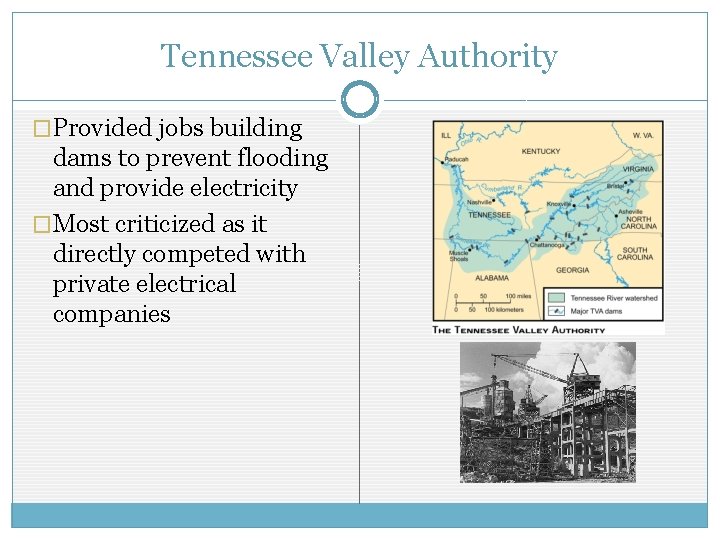
Tennessee Valley Authority �Provided jobs building dams to prevent flooding and provide electricity �Most criticized as it directly competed with private electrical companies
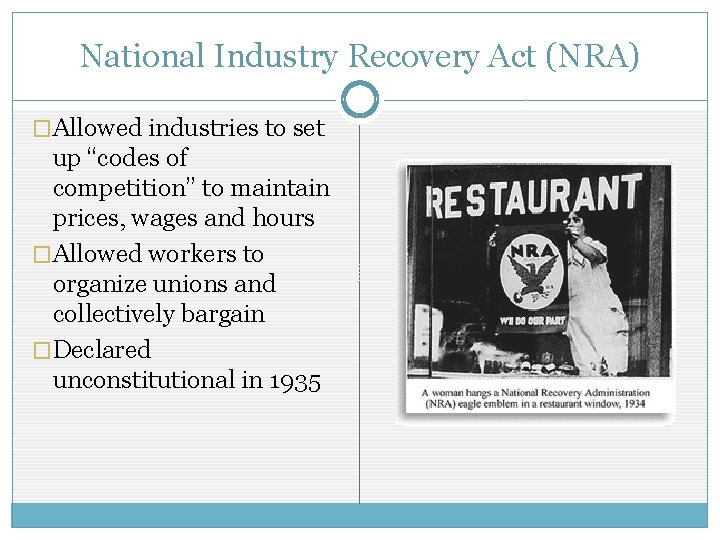
National Industry Recovery Act (NRA) �Allowed industries to set up “codes of competition” to maintain prices, wages and hours �Allowed workers to organize unions and collectively bargain �Declared unconstitutional in 1935
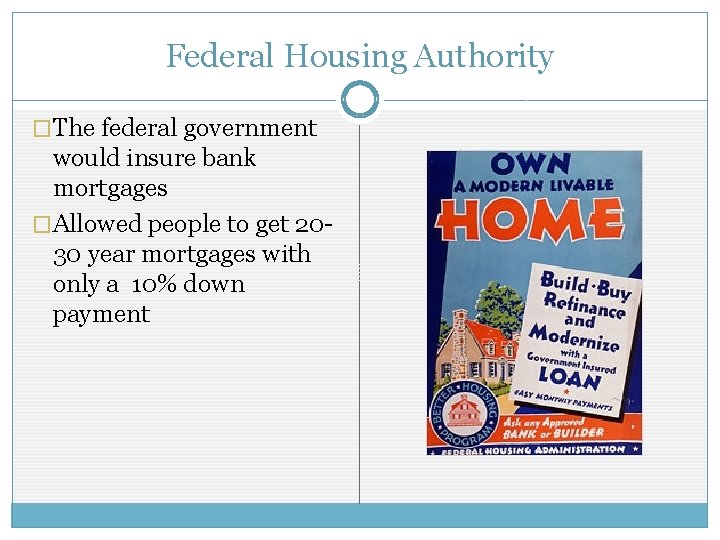
Federal Housing Authority �The federal government would insure bank mortgages �Allowed people to get 2030 year mortgages with only a 10% down payment
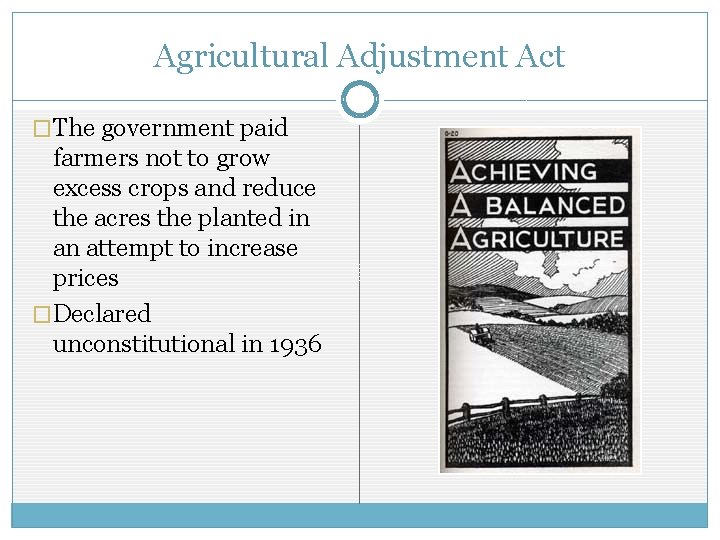
Agricultural Adjustment Act �The government paid farmers not to grow excess crops and reduce the acres the planted in an attempt to increase prices �Declared unconstitutional in 1936
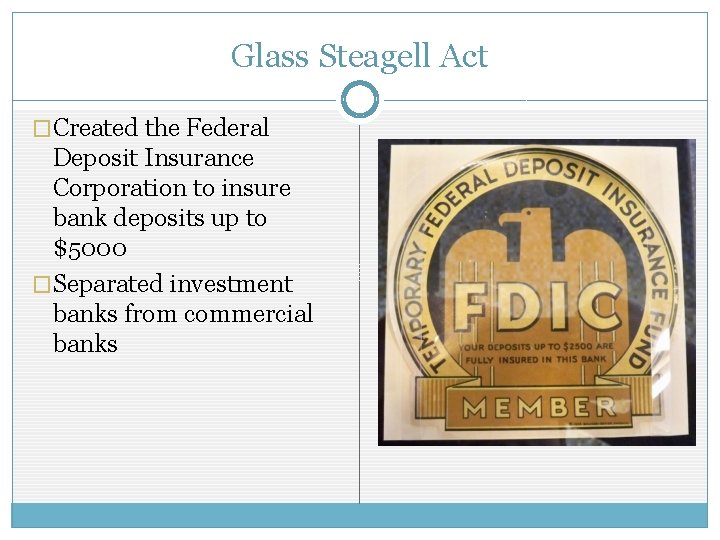
Glass Steagell Act �Created the Federal Deposit Insurance Corporation to insure bank deposits up to $5000 �Separated investment banks from commercial banks
Securities and Exchange Commission �Created the Securities and Exchange Commission to regulate the stock market and financial advisors
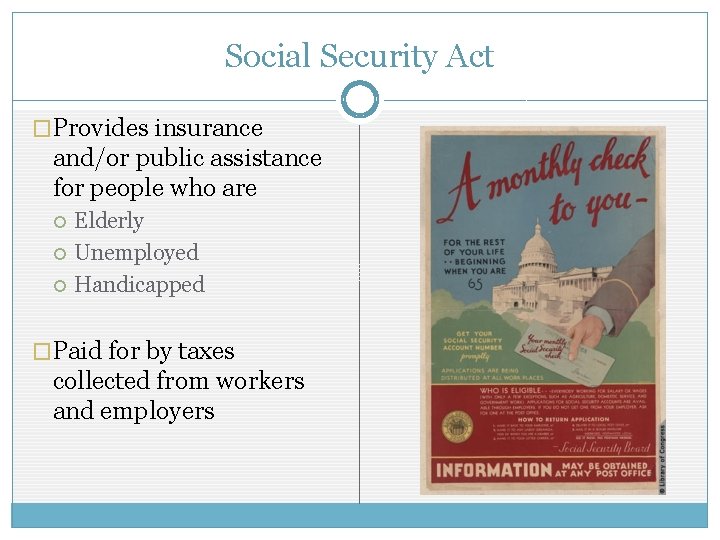
Social Security Act �Provides insurance and/or public assistance for people who are Elderly Unemployed Handicapped �Paid for by taxes collected from workers and employers
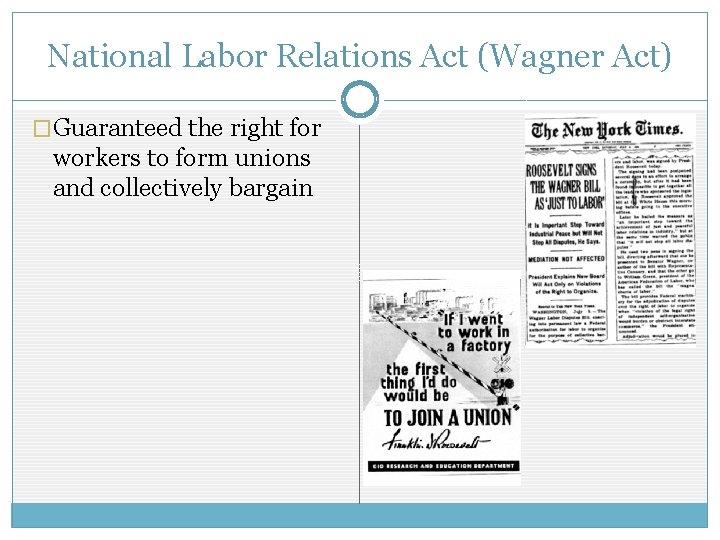
National Labor Relations Act (Wagner Act) �Guaranteed the right for workers to form unions and collectively bargain
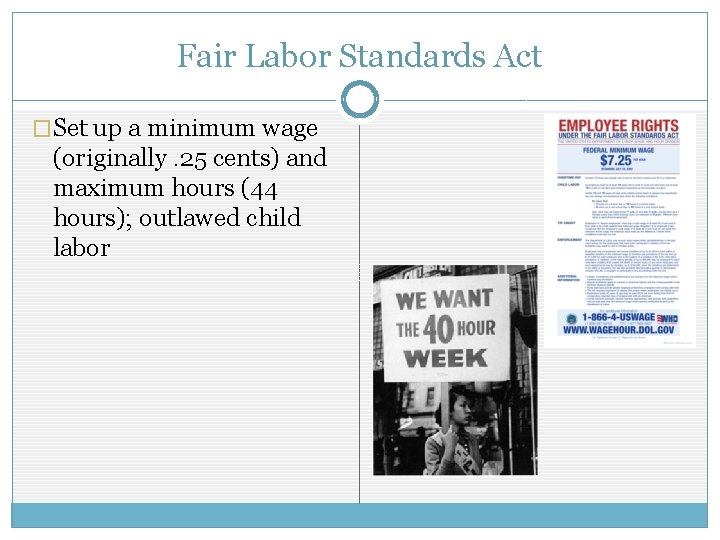
Fair Labor Standards Act �Set up a minimum wage (originally. 25 cents) and maximum hours (44 hours); outlawed child labor
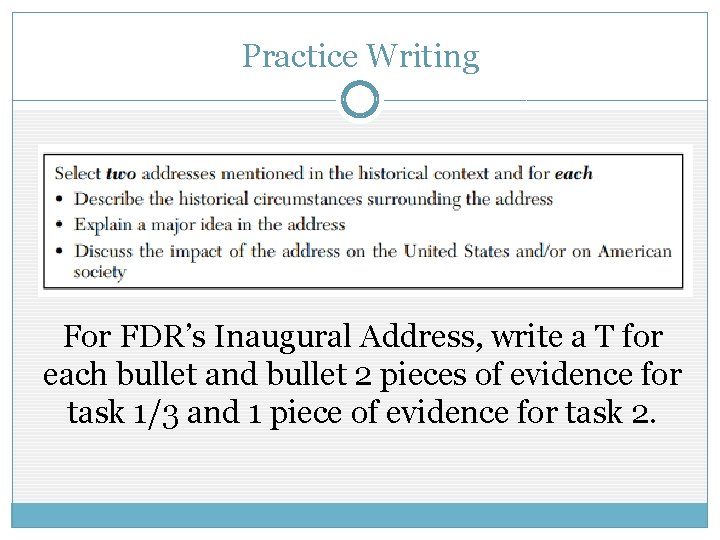
Practice Writing For FDR’s Inaugural Address, write a T for each bullet and bullet 2 pieces of evidence for task 1/3 and 1 piece of evidence for task 2.
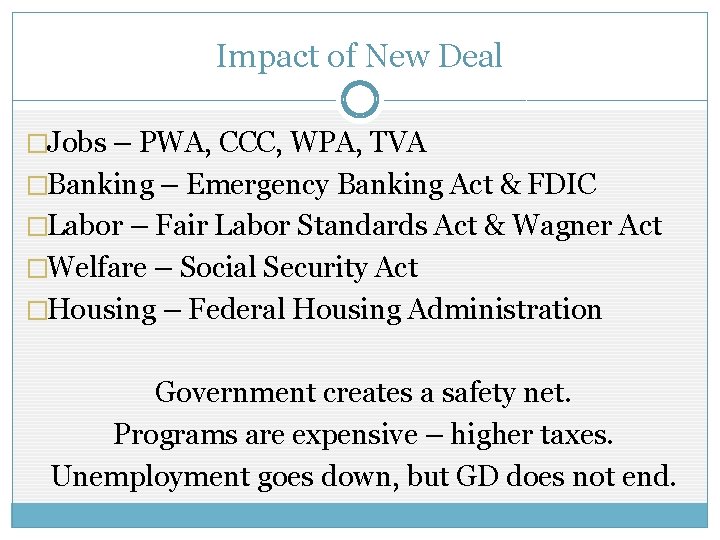
Impact of New Deal �Jobs – PWA, CCC, WPA, TVA �Banking – Emergency Banking Act & FDIC �Labor – Fair Labor Standards Act & Wagner Act �Welfare – Social Security Act �Housing – Federal Housing Administration Government creates a safety net. Programs are expensive – higher taxes. Unemployment goes down, but GD does not end.
Unemployment
Practice Question What was one similarity between Hoover and FDR’s responses to the Great Depression? What was one difference between Hoover and FDR’s responses to the Great Depression? You will need a specific for Hoover and FDR for each part (2 in each answer/4 total).
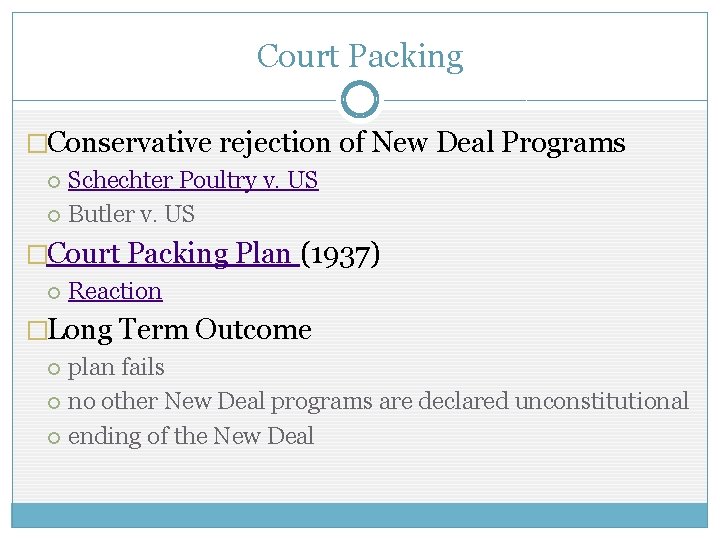
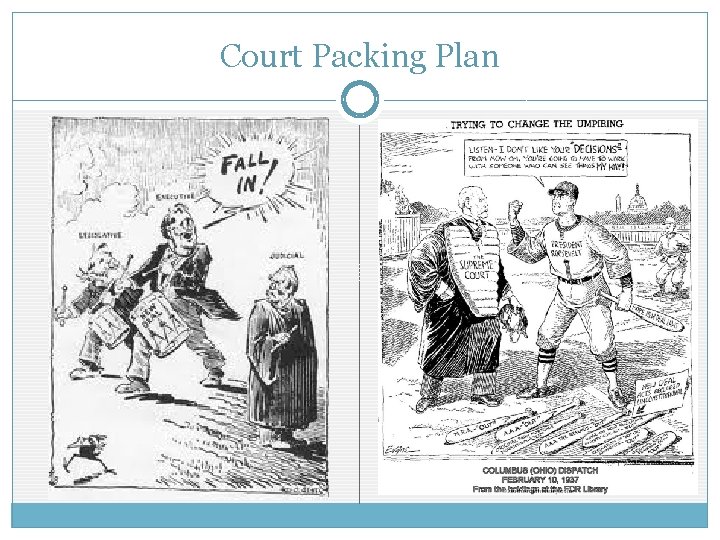
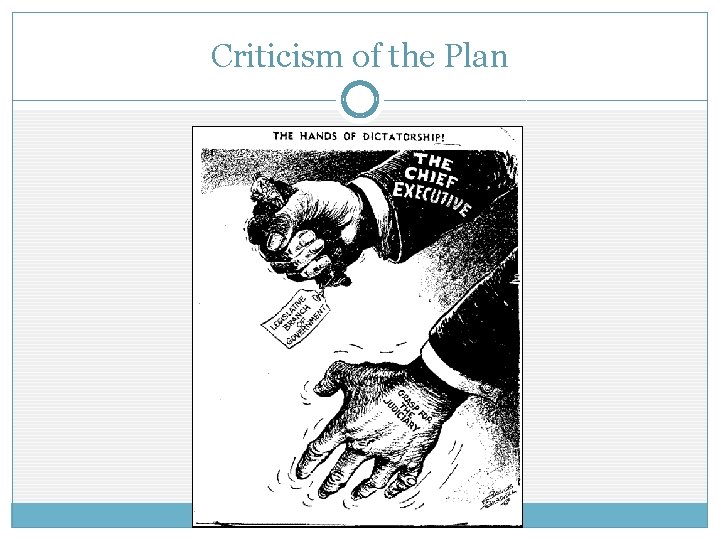
Court Packing �Conservative rejection of New Deal Programs Schechter Poultry v. US Butler v. US �Court Packing Plan (1937) Reaction �Long Term Outcome plan fails no other New Deal programs are declared unconstitutional ending of the New Deal
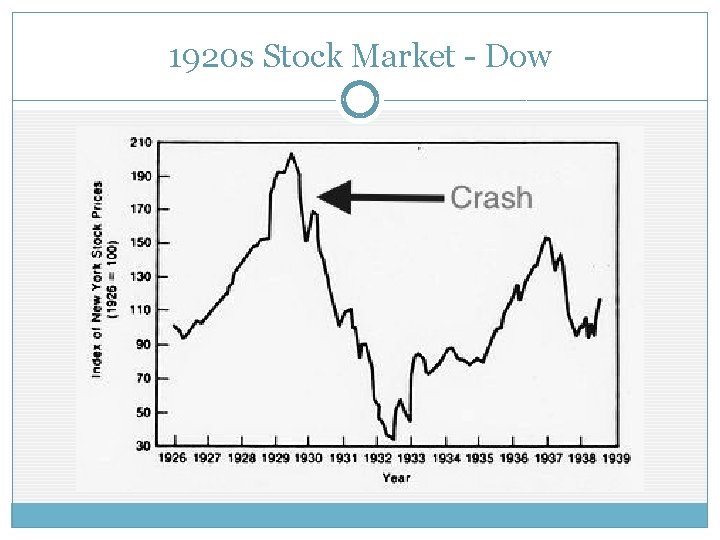
1920 s Stock Market - Dow
FDR
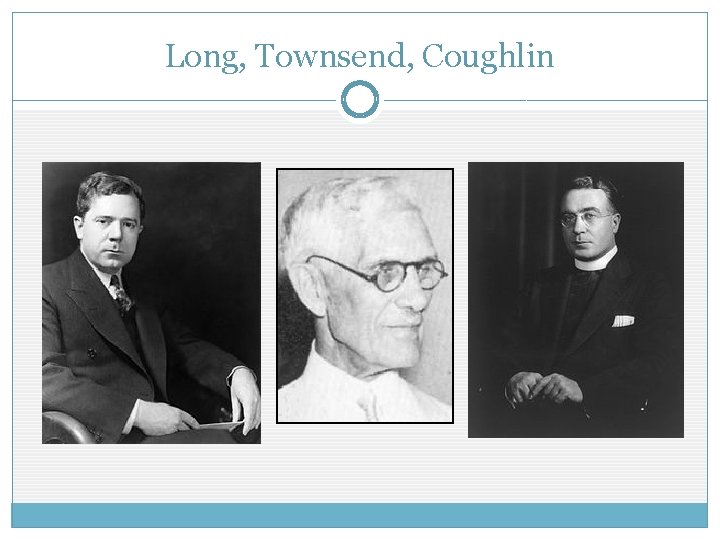
Long, Townsend, Coughlin
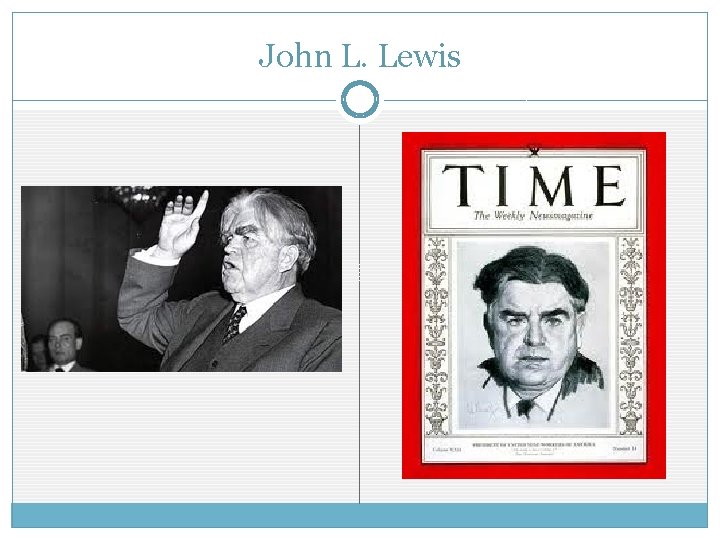
John L. Lewis
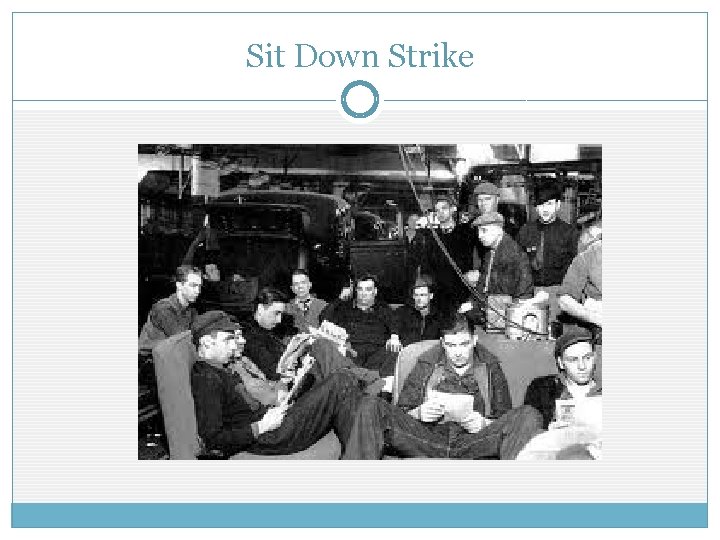
Sit Down Strike
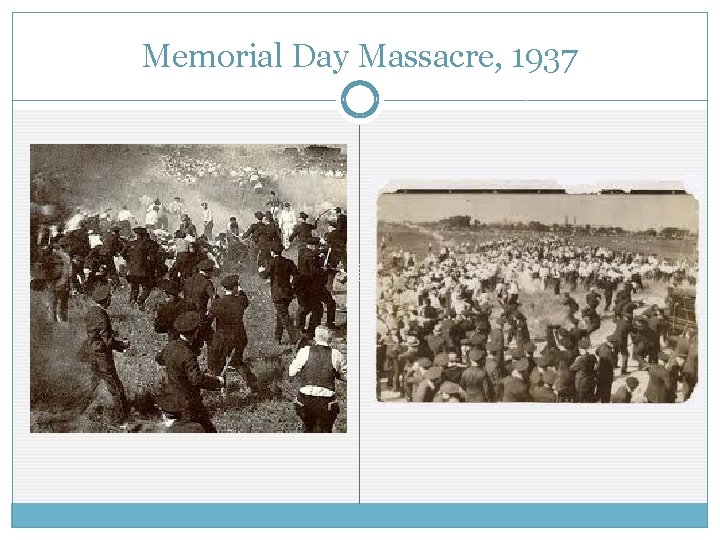
Memorial Day Massacre, 1937
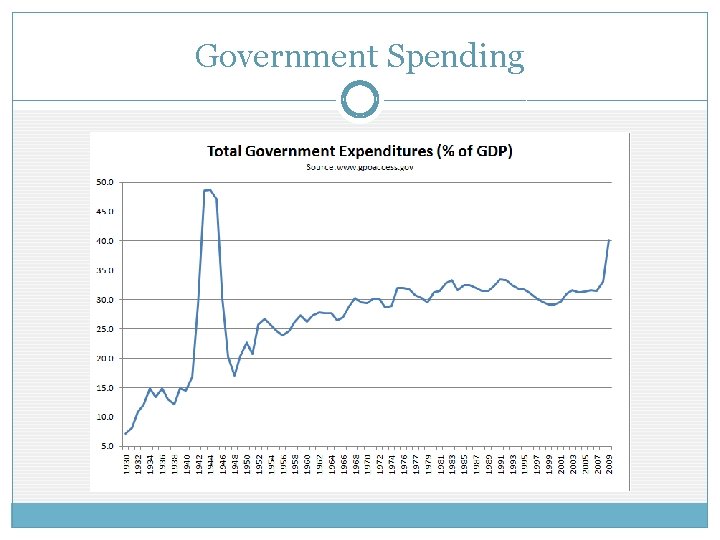
Government Spending
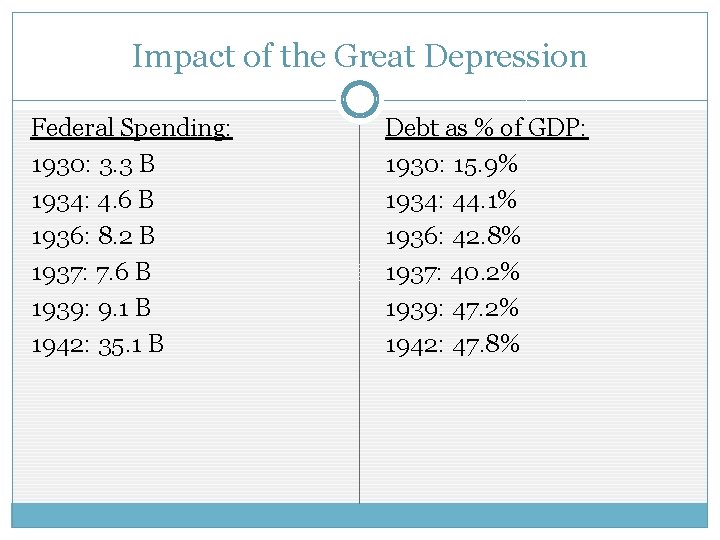
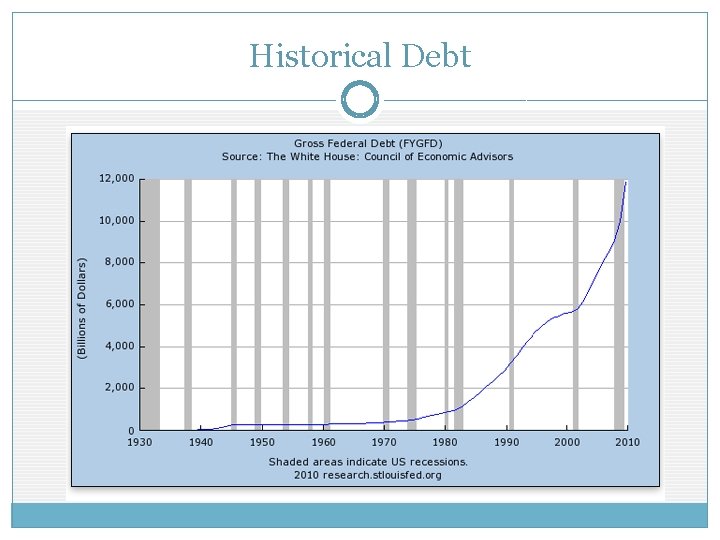
Impact of the Great Depression Federal Spending: 1930: 3. 3 B 1934: 4. 6 B 1936: 8. 2 B 1937: 7. 6 B 1939: 9. 1 B 1942: 35. 1 B Debt as % of GDP: 1930: 15. 9% 1934: 44. 1% 1936: 42. 8% 1937: 40. 2% 1939: 47. 2% 1942: 47. 8%
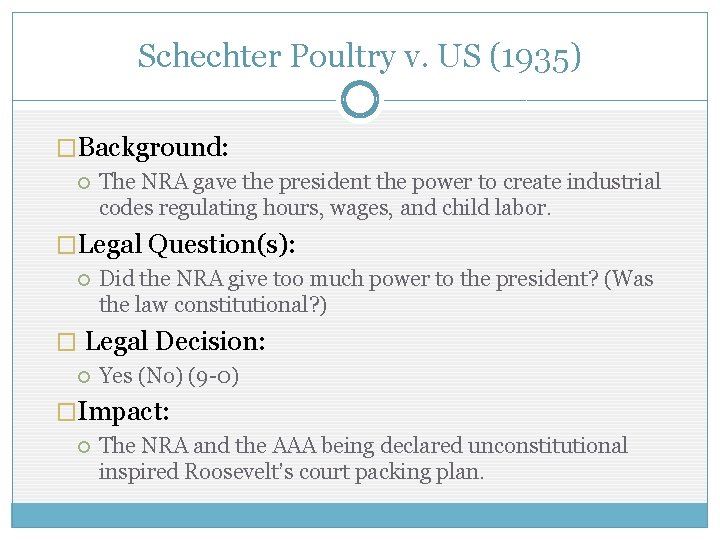
Schechter Poultry v. US (1935) �Background: The NRA gave the president the power to create industrial codes regulating hours, wages, and child labor. �Legal Question(s): Did the NRA give too much power to the president? (Was the law constitutional? ) � Legal Decision: Yes (No) (9 -0) �Impact: The NRA and the AAA being declared unconstitutional inspired Roosevelt’s court packing plan.
Court Packing Plan
Criticism of the Plan
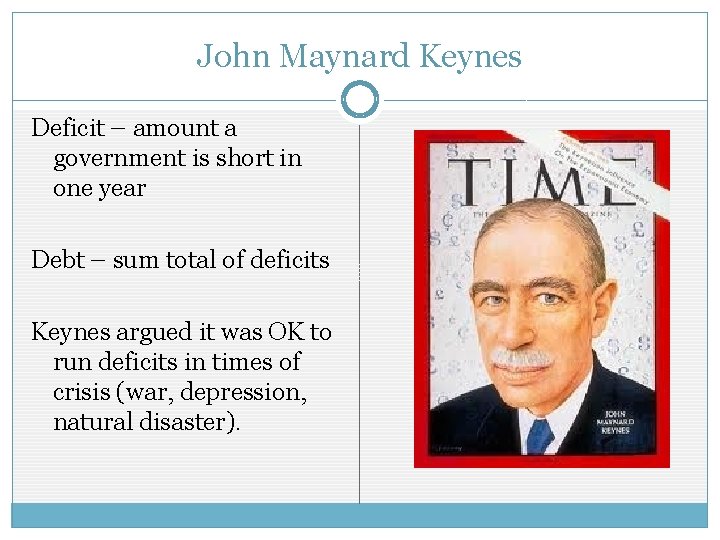
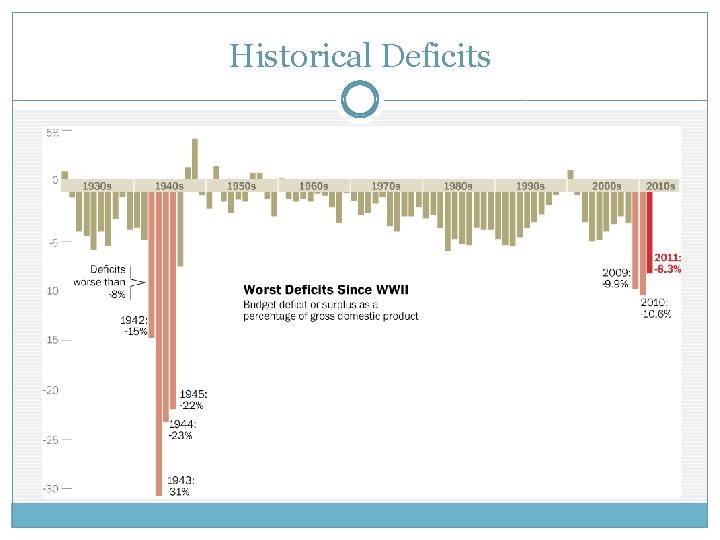
John Maynard Keynes Deficit – amount a government is short in one year Debt – sum total of deficits Keynes argued it was OK to run deficits in times of crisis (war, depression, natural disaster).
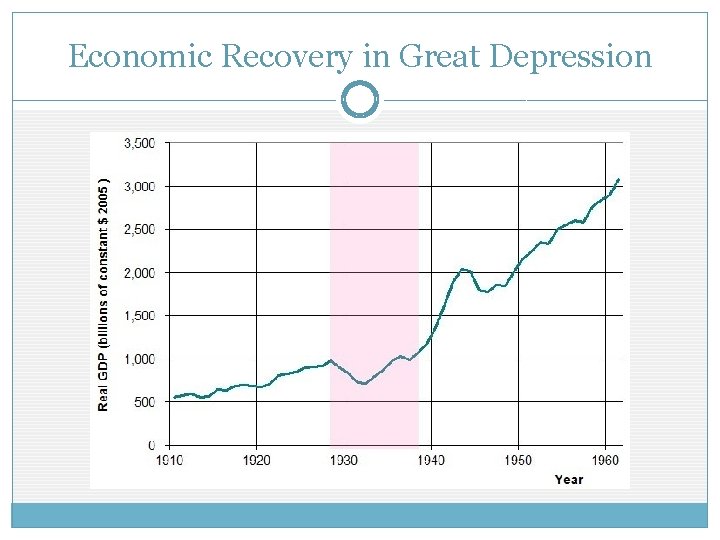
Economic Recovery in Great Depression
Historical Deficits
Historical Debt