
The Great Depression 1929 1941 Bell Ringer 1920
The Great Depression 1929 -1941
Bell Ringer � 1920 s Presentations �Be prepared as a group to share out your Time Magazine Project of the 1920 s. �Decide how you would like to present the basic framework and organization of the magazine. �Choose one page per group member to discuss to your class.
1920 s-Economy out of control �Since 1921, the idea grew that the American economy had entered a New Era of permanent growth. �But greed had promoted a number of get rich schemes. Speculation fueled the Florida realestate boom that began with the combination of Coolidge prosperity and Ford’s “tin lizzie”. �Thousands of people invested in Florida real estate, eager for quick profits in the nation’s fastest growing state. �In mid 1926, the Florida bubble burst.
1920 s-Economy out of Control � Until 1927 stock values had gone up with profits, but then values went up purely on speculation. � Treasury Secretary Mellon’s tax reductions had released money that found its way to Wall Street with the help of aggressive brokerage houses. � Instead of speculating in real estate, one could buy stock on margin—that is make a small down payment (the margin) and borrow the rest from a broker who held the stock as security against a down market. � If the stock declined and the buyer failed to meet a margin call for more money, the broker could sell the stock to cover his loan. Brokers’ loans more than doubled from 1927 to 1929.
Causes of the Great Depression �Stock Market Speculation �Increased Debt/Easy credit �Farm Sector Crisis �Unbalanced Market �Overproduction by “old school” industries �Mistakes of the Federal Reserve Board �Hawley-Smoot Tariff �Poor Distribution of Wealth �Bank crisis
Essential Questions �What were the causes of the Great Depression? �How did Hoover choose to respond to the conditions of the Depression? How would FDR respond to the same conditions?
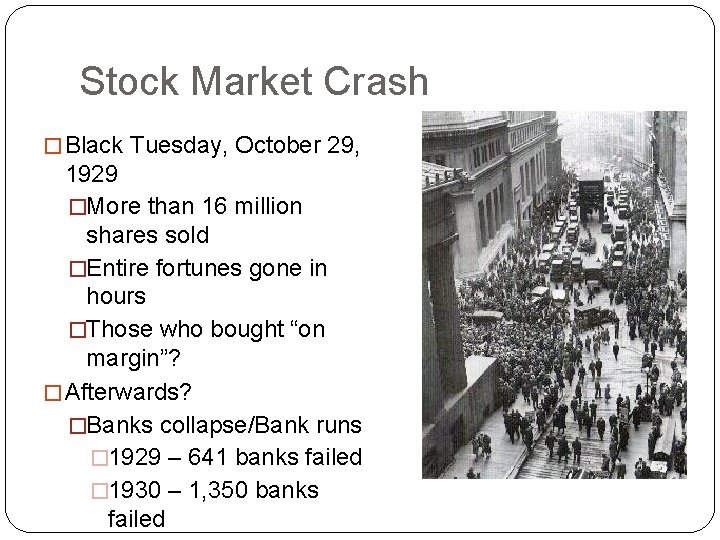
Stock Market Crash � Black Tuesday, October 29, 1929 �More than 16 million shares sold �Entire fortunes gone in hours �Those who bought “on margin”? � Afterwards? �Banks collapse/Bank runs � 1929 – 641 banks failed � 1930 – 1, 350 banks failed
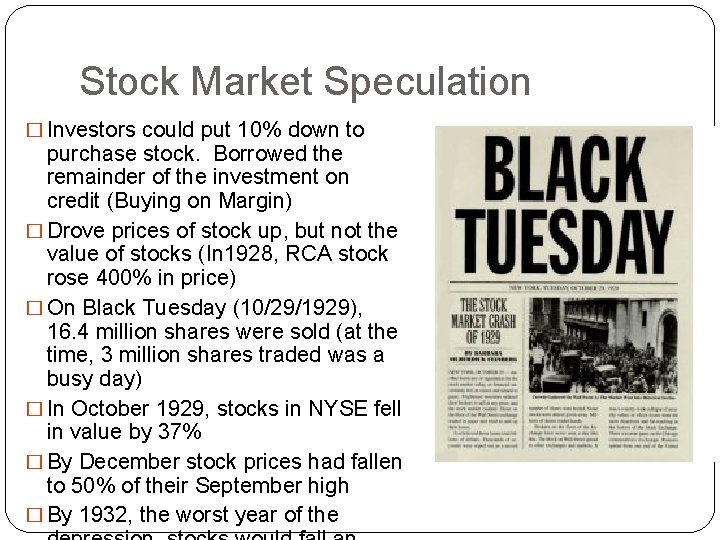
Stock Market Speculation � Investors could put 10% down to purchase stock. Borrowed the remainder of the investment on credit (Buying on Margin) � Drove prices of stock up, but not the value of stocks (In 1928, RCA stock rose 400% in price) � On Black Tuesday (10/29/1929), 16. 4 million shares were sold (at the time, 3 million shares traded was a busy day) � In October 1929, stocks in NYSE fell in value by 37% � By December stock prices had fallen to 50% of their September high � By 1932, the worst year of the

Increased Debt/Easy Credit �Mortgages for farmers increased while their ability to pay them off decreased with falling crop prices �Small banks who had loaned money to farmers went into debt �Large banks also increased debt as they began to speculate in the stock market �Consumers had increased debt with
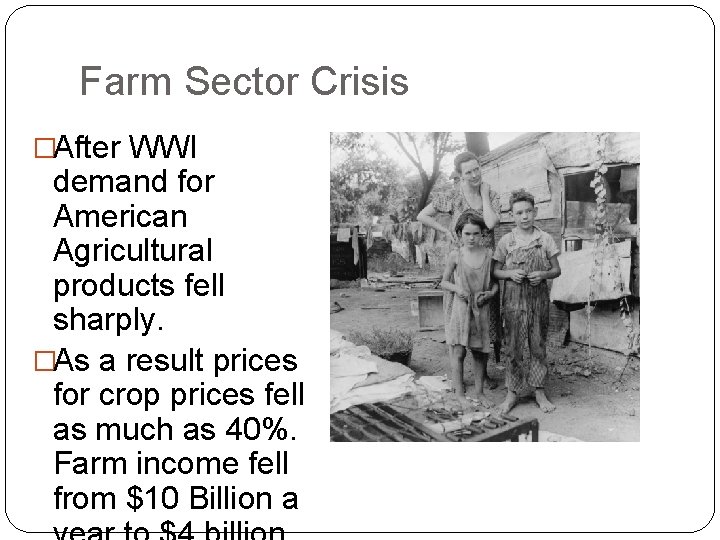
Farm Sector Crisis �After WWI demand for American Agricultural products fell sharply. �As a result prices for crop prices fell as much as 40%. Farm income fell from $10 Billion a
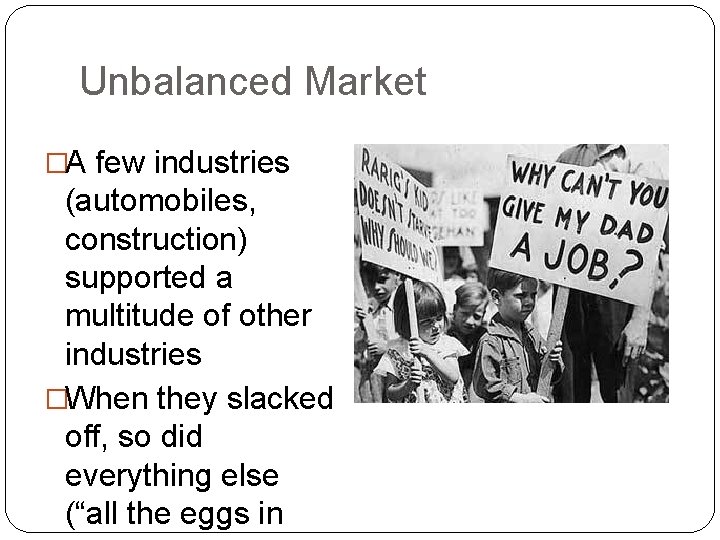
Unbalanced Market �A few industries (automobiles, construction) supported a multitude of other industries �When they slacked off, so did everything else (“all the eggs in
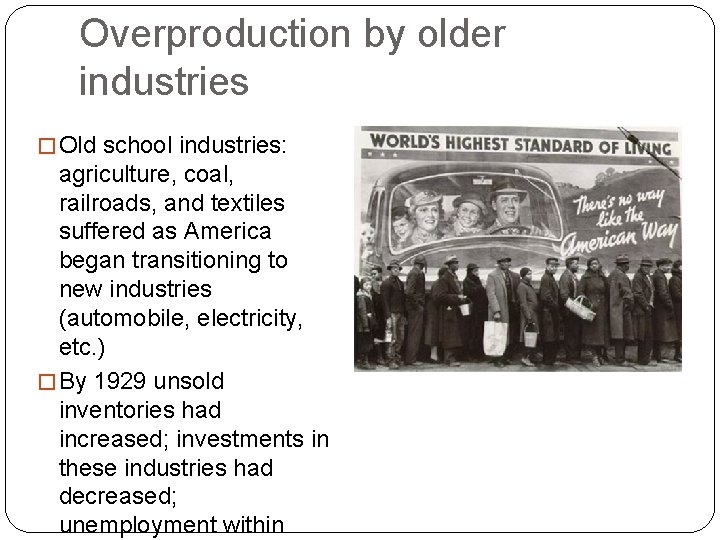
Overproduction by older industries � Old school industries: agriculture, coal, railroads, and textiles suffered as America began transitioning to new industries (automobile, electricity, etc. ) � By 1929 unsold inventories had increased; investments in these industries had decreased; unemployment within
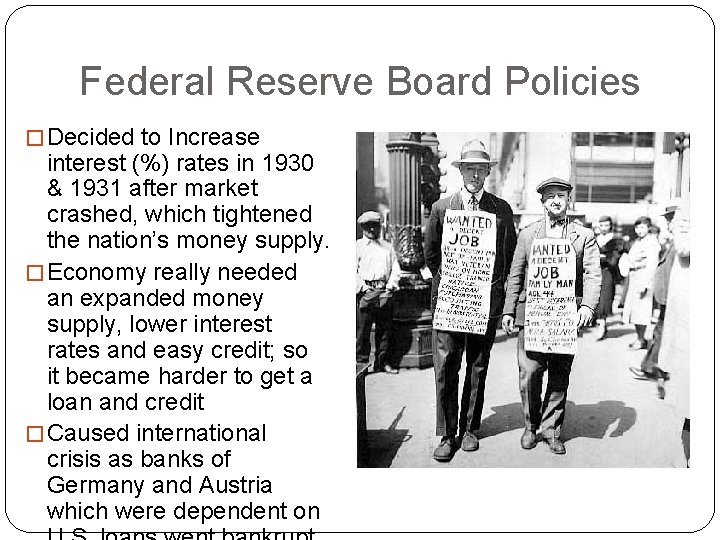
Federal Reserve Board Policies � Decided to Increase interest (%) rates in 1930 & 1931 after market crashed, which tightened the nation’s money supply. � Economy really needed an expanded money supply, lower interest rates and easy credit; so it became harder to get a loan and credit � Caused international crisis as banks of Germany and Austria which were dependent on
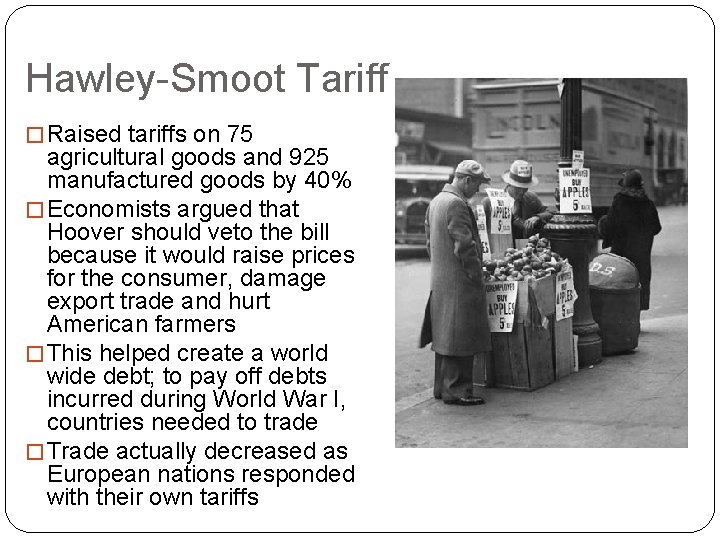
Hawley-Smoot Tariff � Raised tariffs on 75 agricultural goods and 925 manufactured goods by 40% � Economists argued that Hoover should veto the bill because it would raise prices for the consumer, damage export trade and hurt American farmers � This helped create a world wide debt; to pay off debts incurred during World War I, countries needed to trade � Trade actually decreased as European nations responded with their own tariffs

Poor distribution of wealth and purchasing power � Between 1918 and 1929, the share of the national income of the wealthiest 20% of Americans increased 10%; while the share that went to the poorest 60% of Americans fell by 13% � Coolidge administration cut taxes on the wealthy which resulted in slower consumption. This held back the growth of consumer based industries (cars, household appliances, etc. ) � By 1929, 5% of the wealthiest Americans held 33% of the money while 40% had 10% of the money � More than 70 % of the nation’s families earned less than $2, 500 per year, then considered the minimum amount needed for a decent standard of living. Families
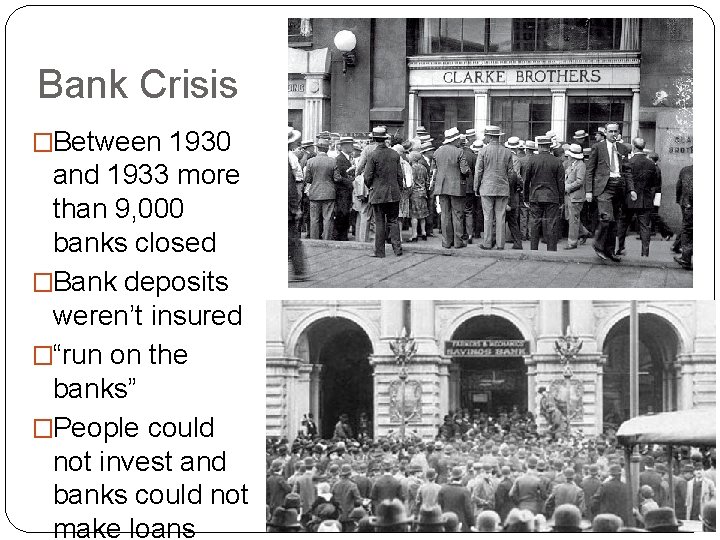
Bank Crisis �Between 1930 and 1933 more than 9, 000 banks closed �Bank deposits weren’t insured �“run on the banks” �People could not invest and banks could not make loans
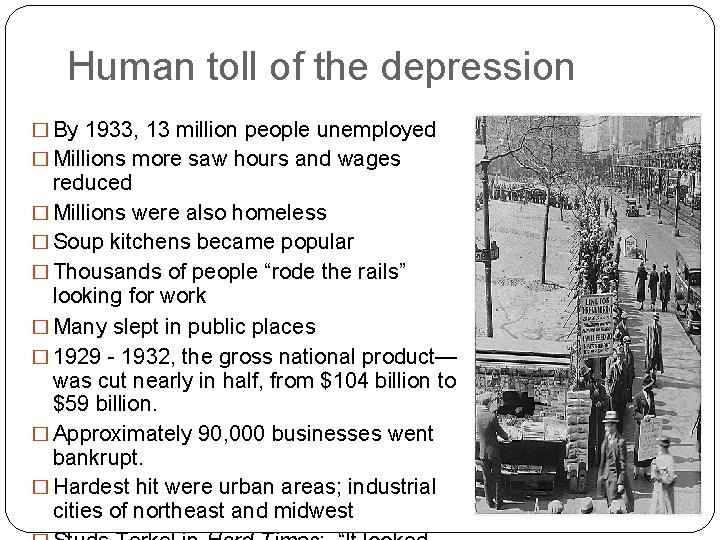
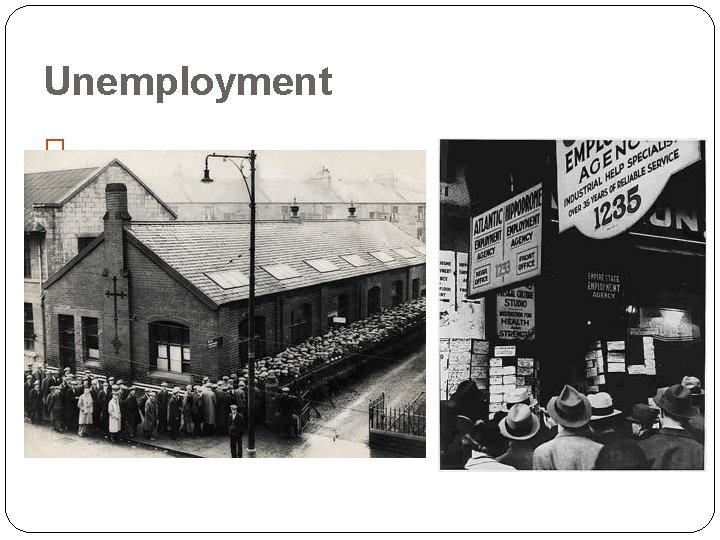
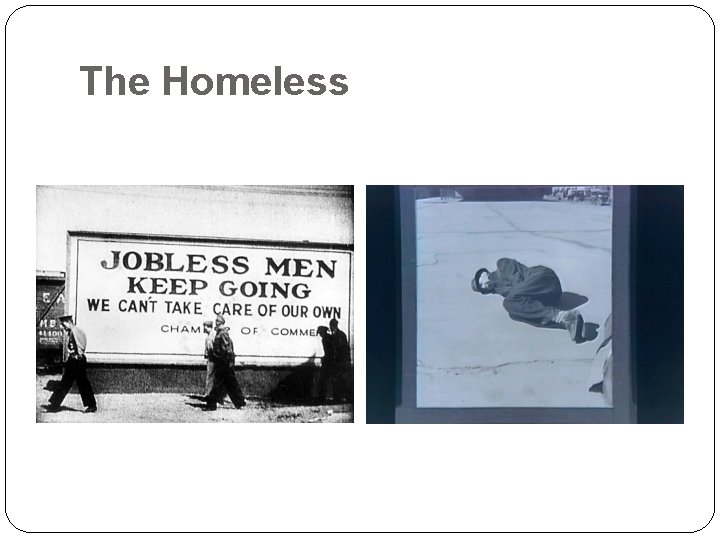
Human toll of the depression � By 1933, 13 million people unemployed � Millions more saw hours and wages reduced � Millions were also homeless � Soup kitchens became popular � Thousands of people “rode the rails” looking for work � Many slept in public places � 1929 - 1932, the gross national product— was cut nearly in half, from $104 billion to $59 billion. � Approximately 90, 000 businesses went bankrupt. � Hardest hit were urban areas; industrial cities of northeast and midwest
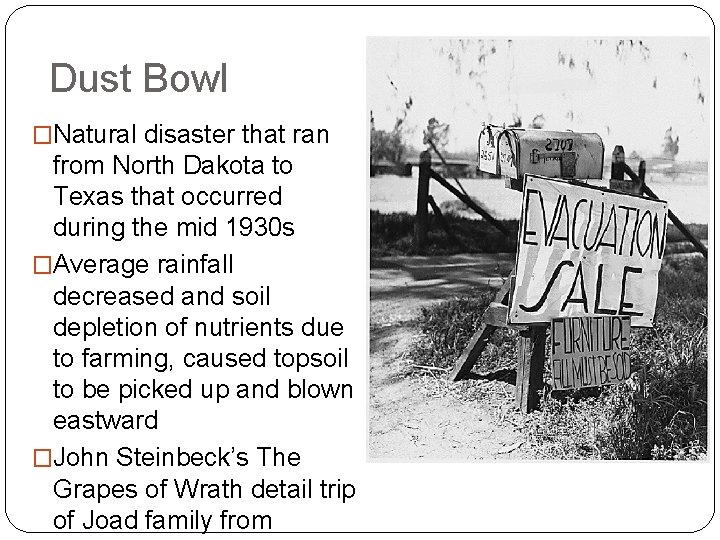
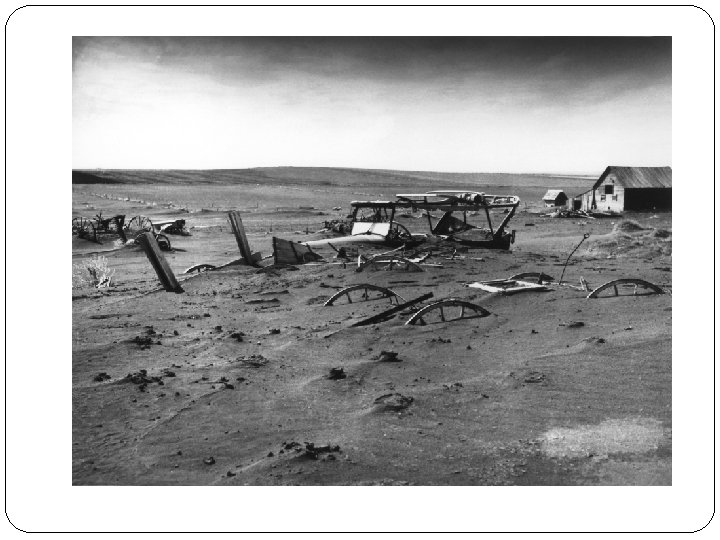
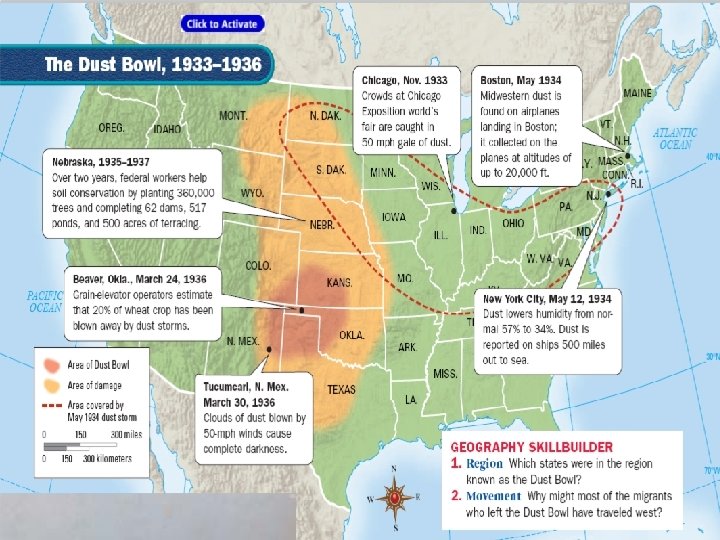
Dust Bowl �Natural disaster that ran from North Dakota to Texas that occurred during the mid 1930 s �Average rainfall decreased and soil depletion of nutrients due to farming, caused topsoil to be picked up and blown eastward �John Steinbeck’s The Grapes of Wrath detail trip of Joad family from
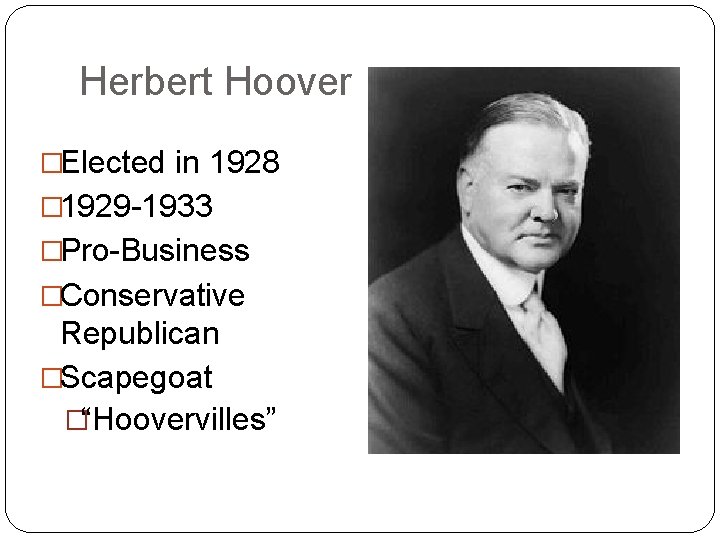
Herbert Hoover �Elected in 1928 � 1929 -1933 �Pro-Business �Conservative Republican �Scapegoat �“Hoovervilles”
Herbert Hoover �Hoover believed in the fundamental structure of the economy and though what America needed was confidence. �In speech after speech, he called on the people to keep up hope, and he asked business owners to keep the mills and shops open, maintain wage rates, and spread the work to avoid layoffs.
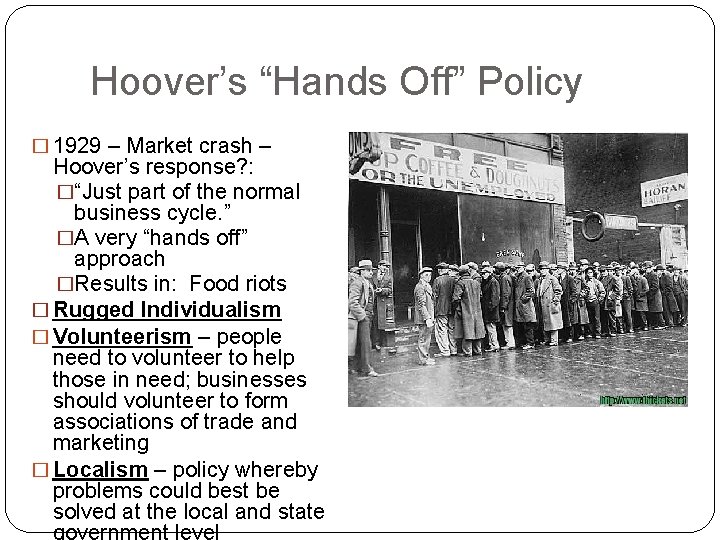
Hoover’s “Hands Off” Policy � 1929 – Market crash – Hoover’s response? : �“Just part of the normal business cycle. ” �A very “hands off” approach �Results in: Food riots � Rugged Individualism � Volunteerism – people need to volunteer to help those in need; businesses should volunteer to form associations of trade and marketing � Localism – policy whereby problems could best be solved at the local and state
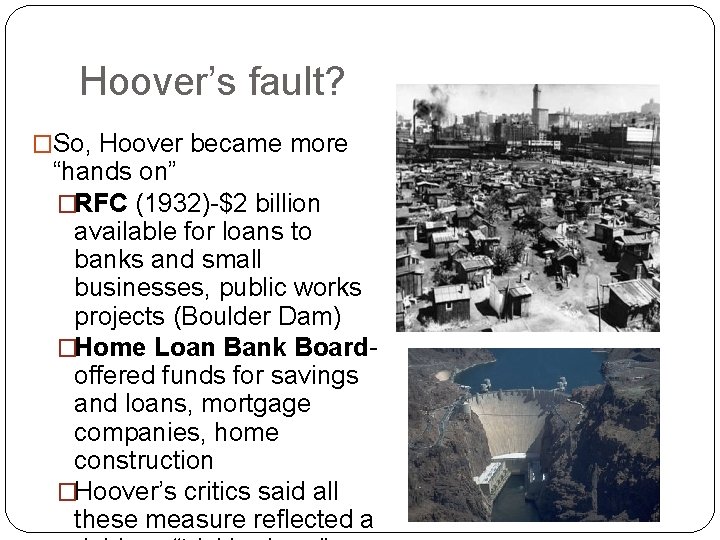
Hoover’s fault? �So, Hoover became more “hands on” �RFC (1932)-$2 billion available for loans to banks and small businesses, public works projects (Boulder Dam) �Home Loan Bank Boardoffered funds for savings and loans, mortgage companies, home construction �Hoover’s critics said all these measure reflected a
Unemployment �
The Homeless
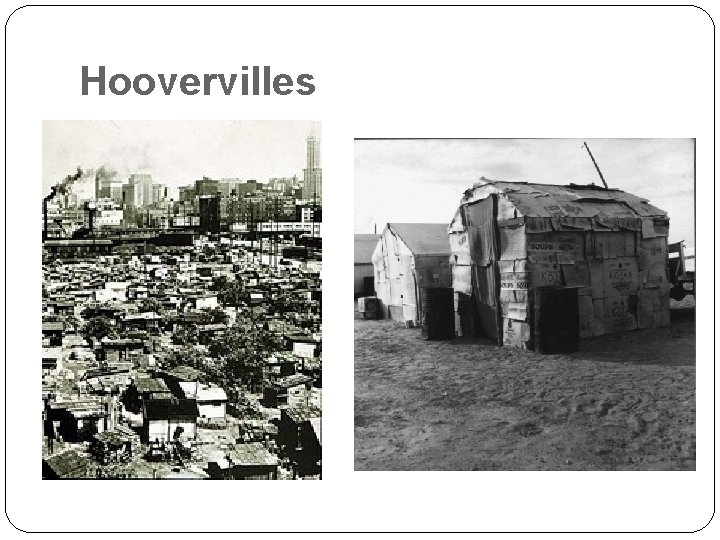
Hoovervilles
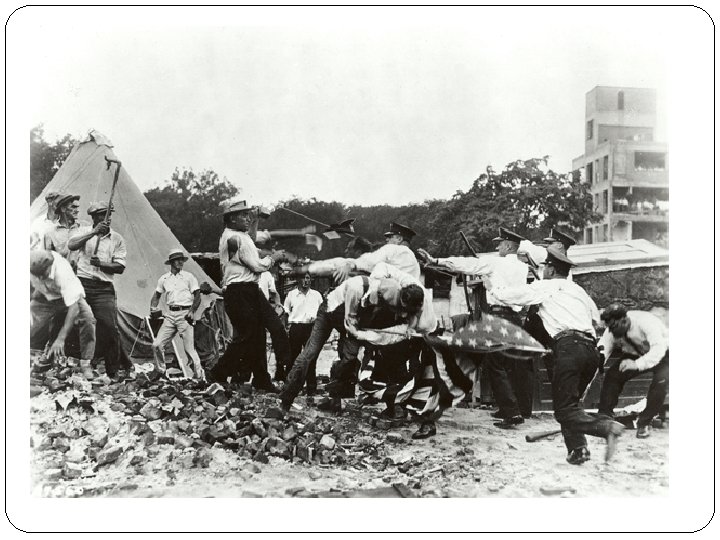
Bonus Army �Bonus Army (1932) –Marched on Washington �Adjusted Compensation Act (1924) – a lump- sum payment will be paid to veterans in 1945 �WWI veterans were scared that they would not get their compensation pay, and many were out of work �Congress approved the early payment – Hoover vetoed it �Veterans marched on Washington – “Bonus Army” �Hoover orders the Army to move the marchers
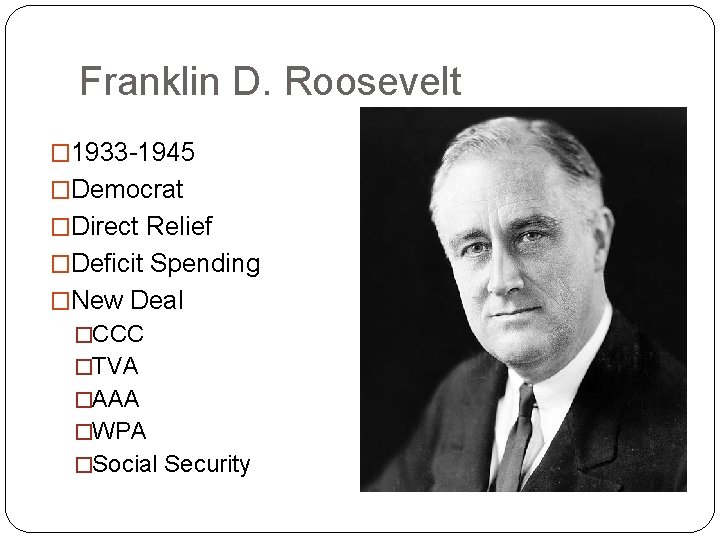
Franklin D. Roosevelt � 1933 -1945 �Democrat �Direct Relief �Deficit Spending �New Deal �CCC �TVA �AAA �WPA �Social Security
FDR’s First Inaugural Address
- Slides: 31