
The Great Depression 1920 s Presidents 1928 Peace
- Slides: 36
The Great Depression
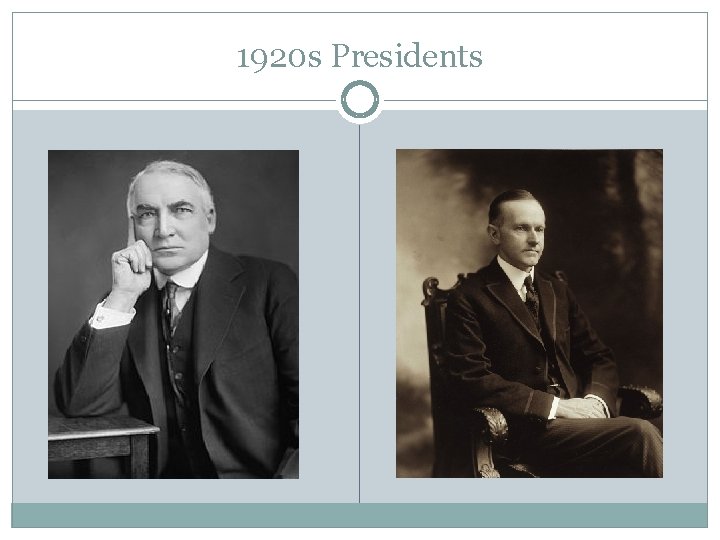
1920 s Presidents
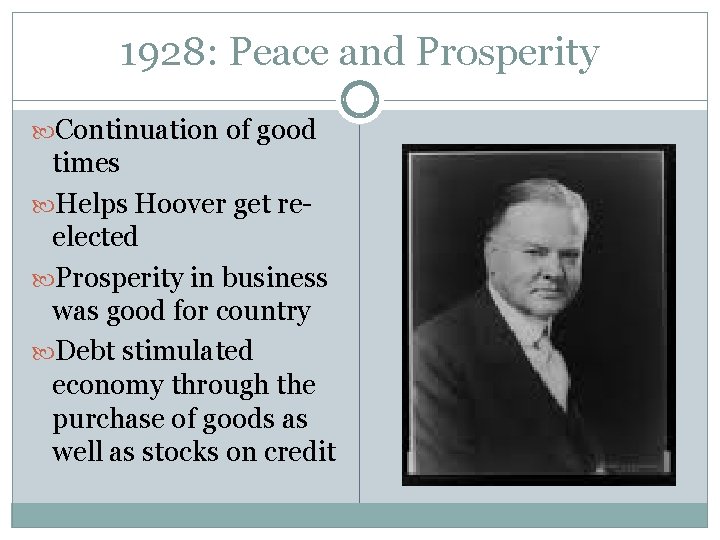
1928: Peace and Prosperity Continuation of good times Helps Hoover get reelected Prosperity in business was good for country Debt stimulated economy through the purchase of goods as well as stocks on credit
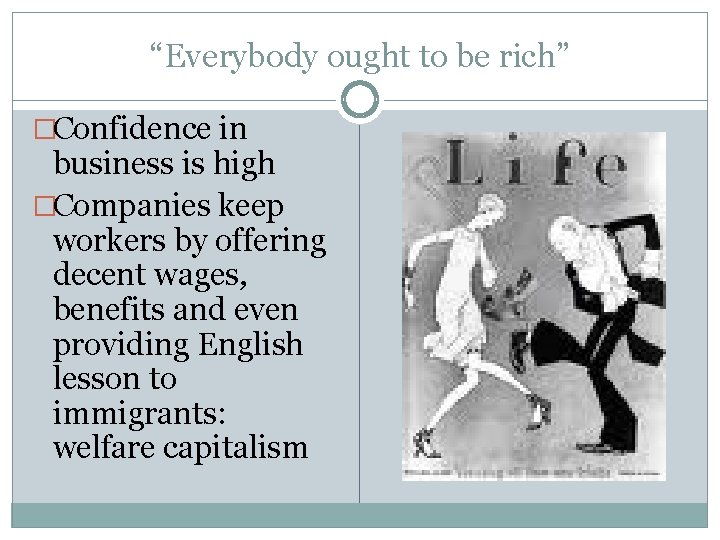
“Everybody ought to be rich” �Confidence in business is high �Companies keep workers by offering decent wages, benefits and even providing English lesson to immigrants: welfare capitalism
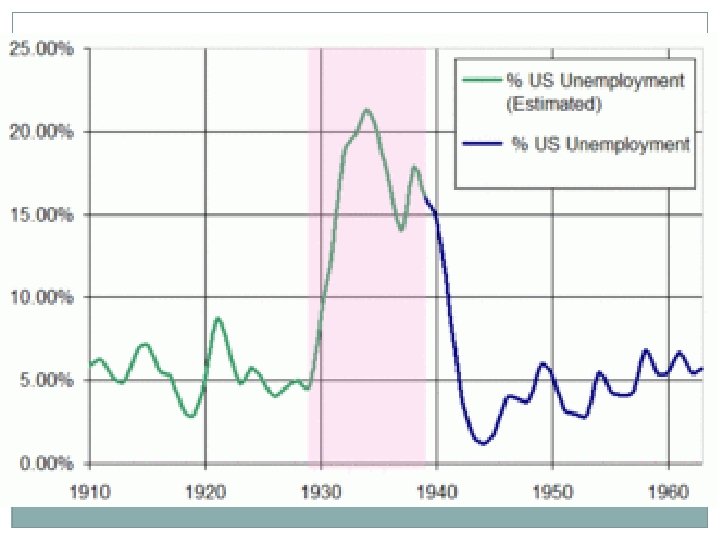
“Everybody ought to be rich” Stock market soars Working people made decent wages Real wages: money with which they could actually purchase things, grew. Unemployment was low
Signs of Trouble Too many goods Warehouses become stockpiled with surplus goods. Wages didn’t allow people to purchase goods as fast as they were made = credit. Especially harmful to the auto industry and those industries that depended on automobile production such as steel, rubber and glass.
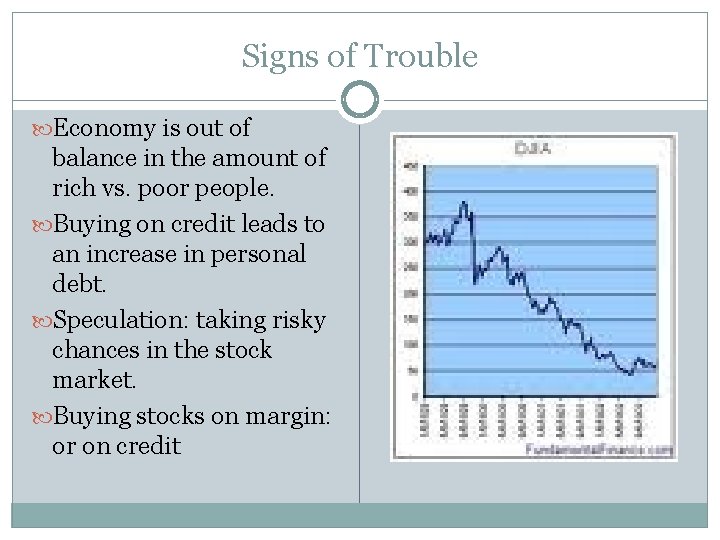
Signs of Trouble Economy is out of balance in the amount of rich vs. poor people. Buying on credit leads to an increase in personal debt. Speculation: taking risky chances in the stock market. Buying stocks on margin: or on credit
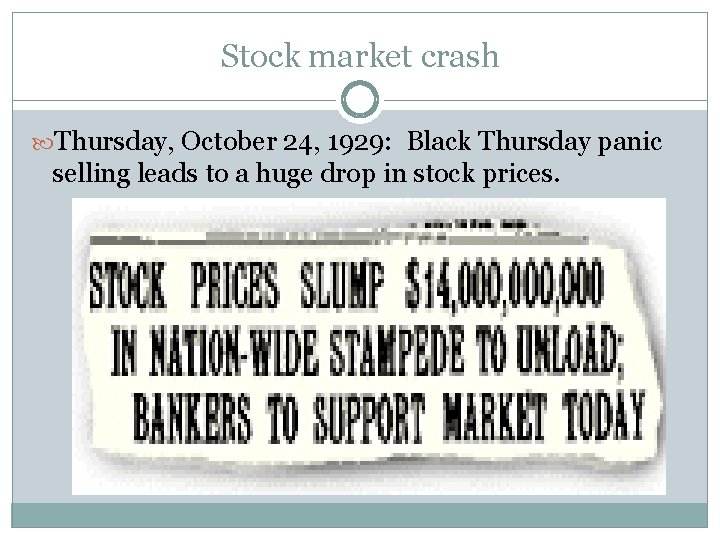
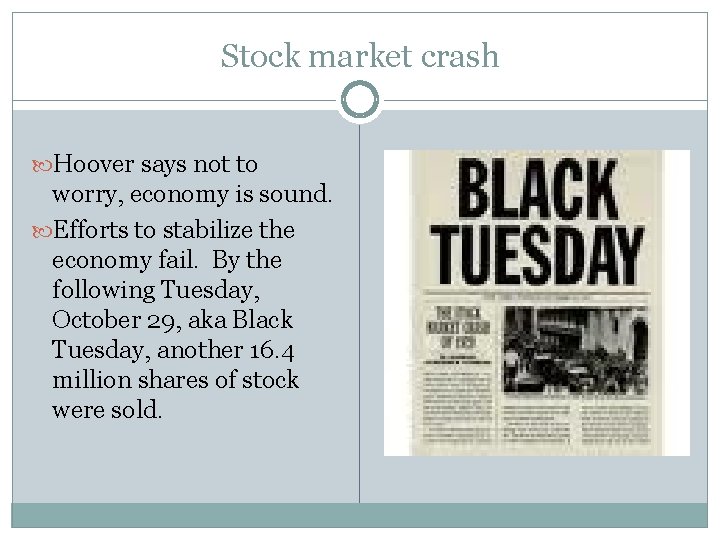
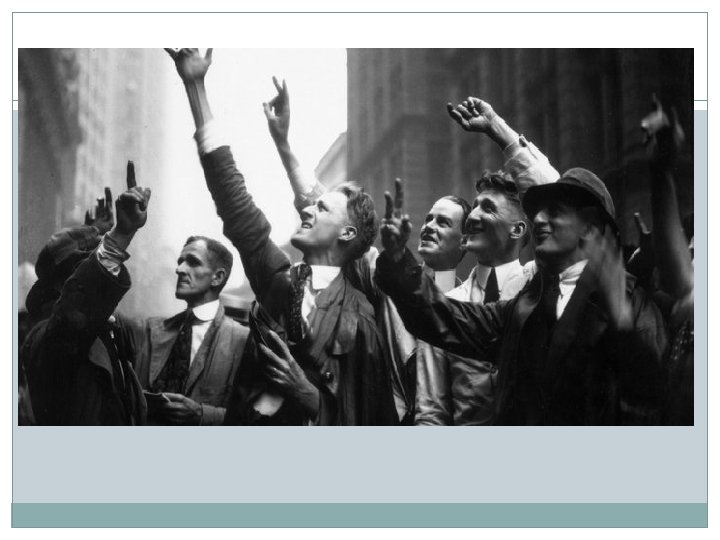
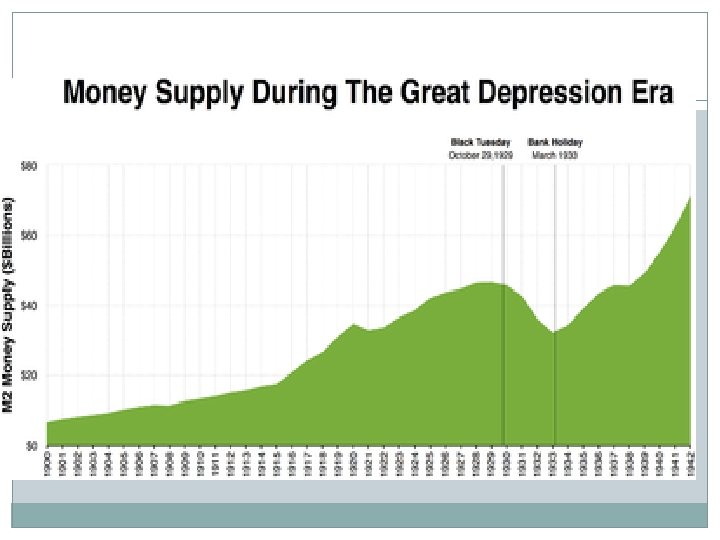
Stock market crash Thursday, October 24, 1929: Black Thursday panic selling leads to a huge drop in stock prices.
Stock market crash Hoover says not to worry, economy is sound. Efforts to stabilize the economy fail. By the following Tuesday, October 29, aka Black Tuesday, another 16. 4 million shares of stock were sold.
What caused the Great Depression? Over speculation: stocks were bought with borrowed money. Those stocks were then used as collateral to secure more loans to buy more stocks. Investors lose confidence: stock market crashes. Government policies: Interest rates are cut in the 1920’s to stimulate economic growth. In 1929, the government reverses policy and introduces a “tight Money” policy to dry up credit. Tariffs
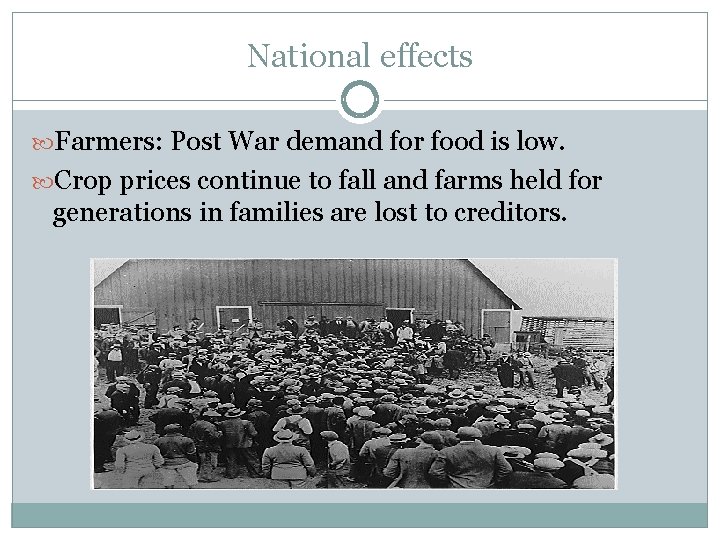
National effects Farmers: Post War demand for food is low. Crop prices continue to fall and farms held for generations in families are lost to creditors.
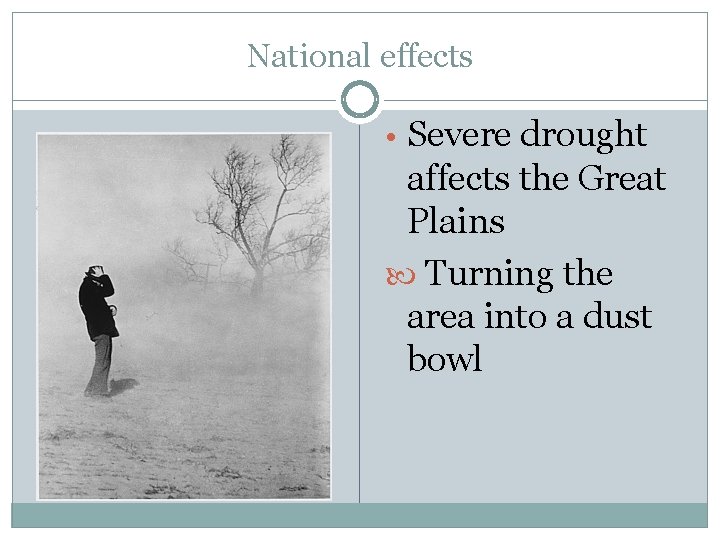
National effects • Severe drought affects the Great Plains Turning the area into a dust bowl
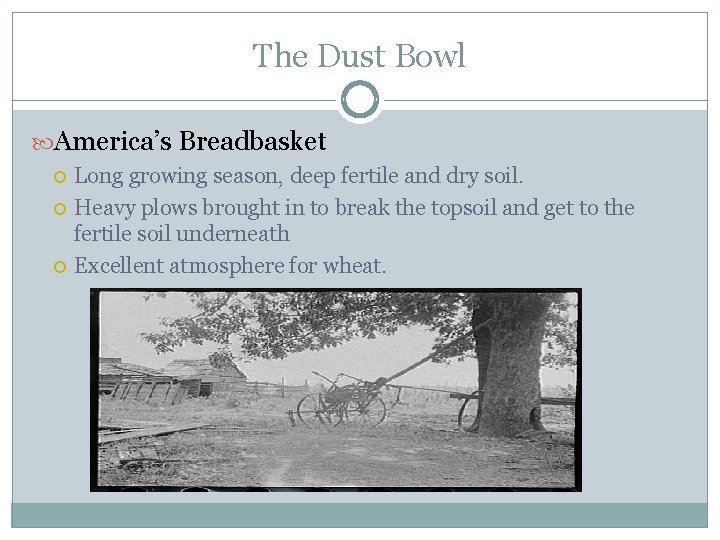
The Dust Bowl America’s Breadbasket Long growing season, deep fertile and dry soil. Heavy plows brought in to break the topsoil and get to the fertile soil underneath Excellent atmosphere for wheat.
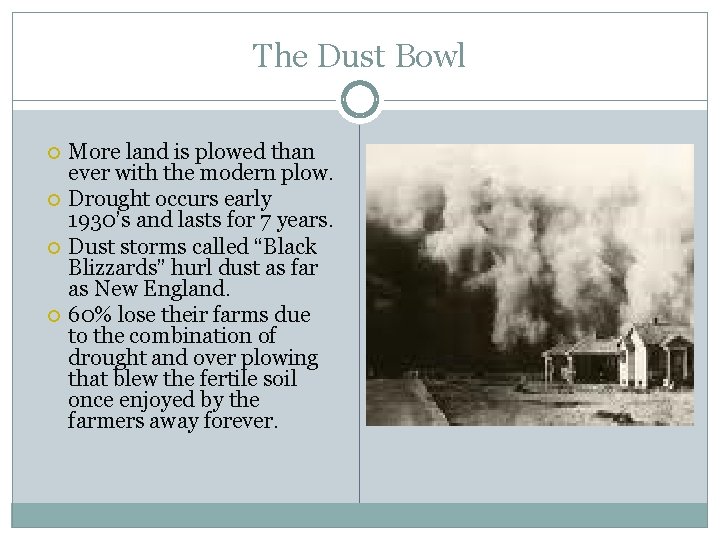
The Dust Bowl More land is plowed than ever with the modern plow. Drought occurs early 1930’s and lasts for 7 years. Dust storms called “Black Blizzards” hurl dust as far as New England. 60% lose their farms due to the combination of drought and over plowing that blew the fertile soil once enjoyed by the farmers away forever.
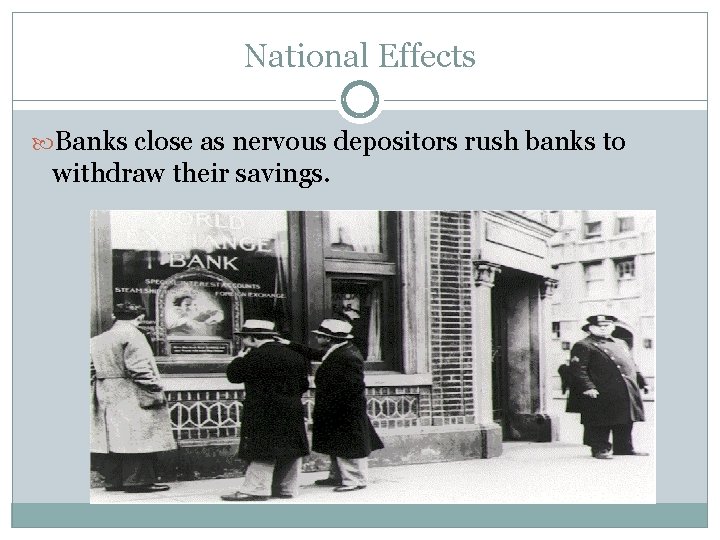
National Effects Banks close as nervous depositors rush banks to withdraw their savings.
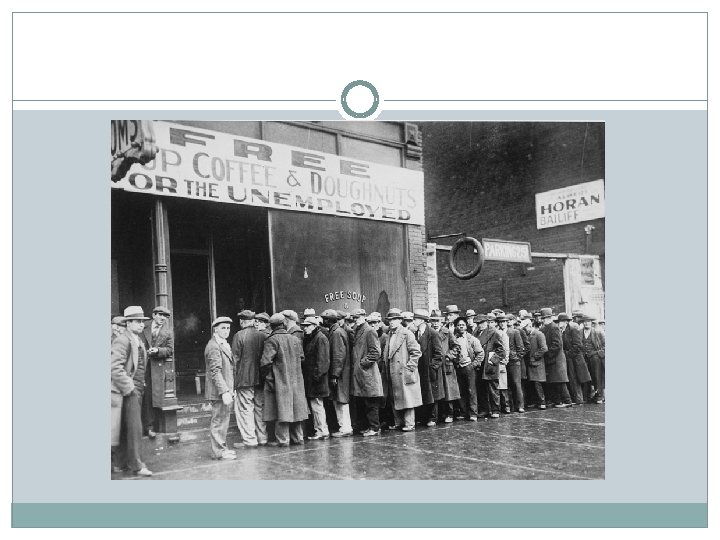
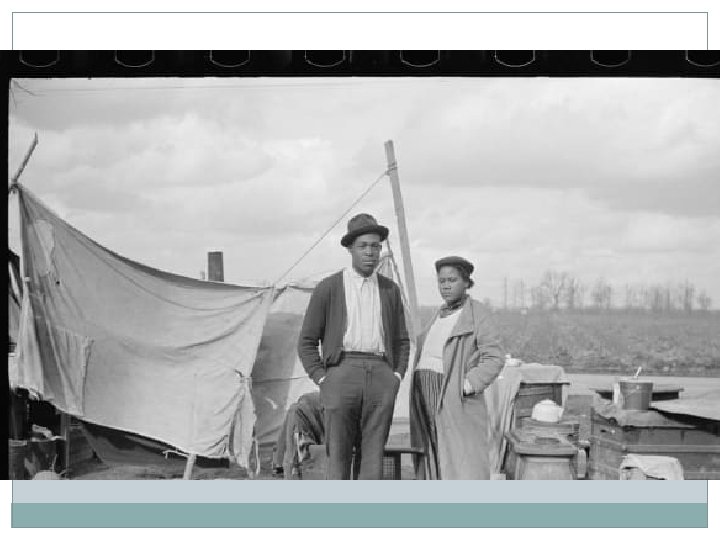
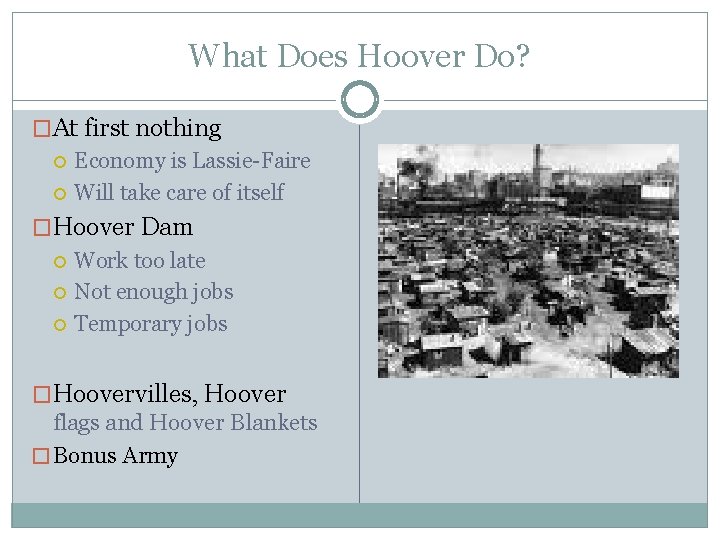
Americans Live through the Depression Henry Ford closes down his auto factories in Detroit leaving 75, 000 people out of work. No unemployment insurance available for Americans. Jobs, savings, all disappeared. Rise of homeless: New York 15, 000 Shanty towns develop across the country made of tar paper shacks nicknamed: Hoovervilles after the president for whom they held blame for their predicament.
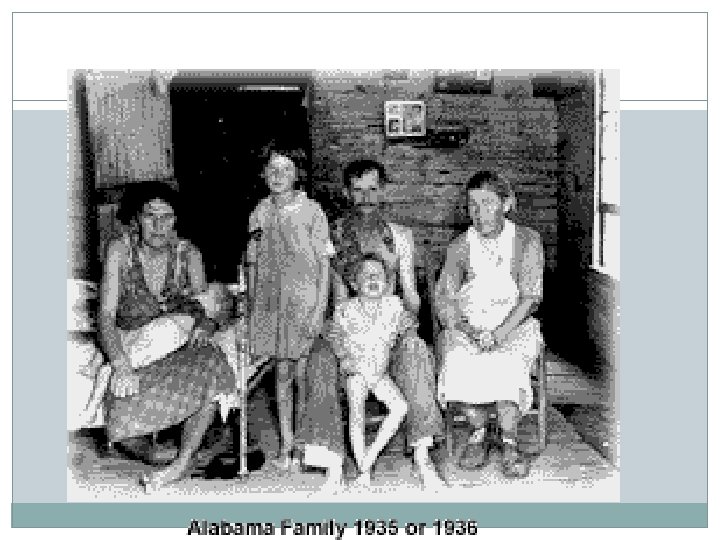
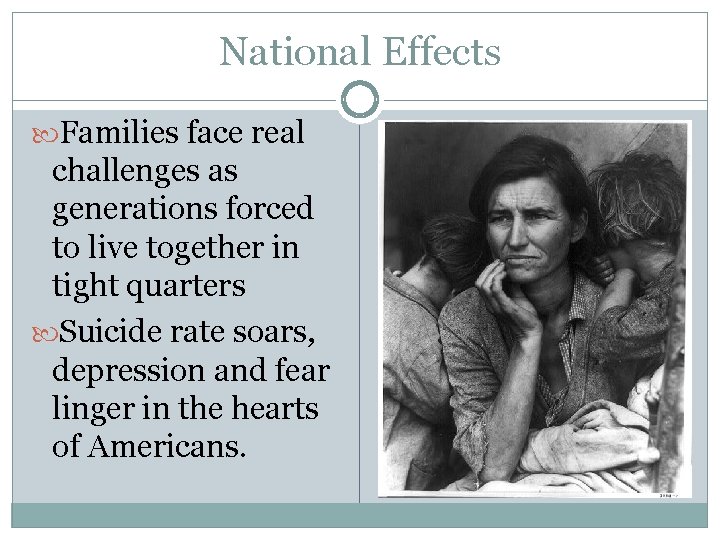
National Effects Families face real challenges as generations forced to live together in tight quarters Suicide rate soars, depression and fear linger in the hearts of Americans.
National Effects African Americans fared the worst during the depression. Continue migration from the South to the North. Most menial jobs they had been able to get were now being taken by whites. Discrimination in the south heightened as no African American was entitled to a job as long as a white man was out of work.
Women and Minorities live through the Depression Women secure domestic positions and the burden to support families often times rests on their shoulders. Married women continued to be discriminated against, though, as they were considered to be taking jobs away from men.
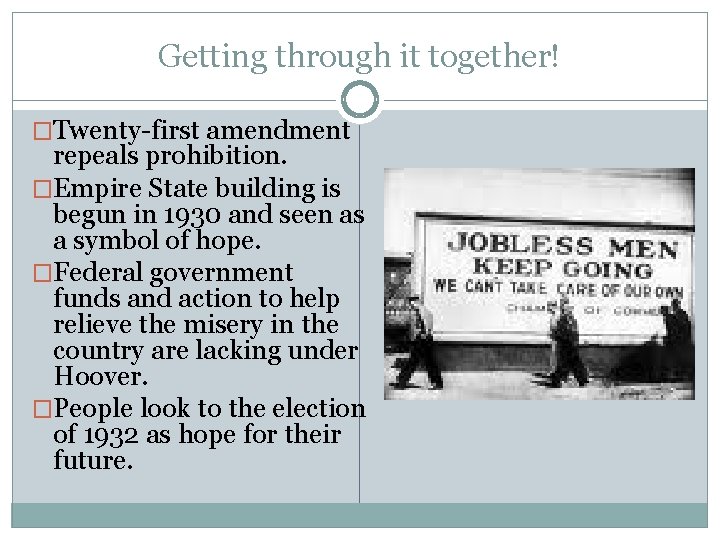
Getting through it together! �Twenty-first amendment repeals prohibition. �Empire State building is begun in 1930 and seen as a symbol of hope. �Federal government funds and action to help relieve the misery in the country are lacking under Hoover. �People look to the election of 1932 as hope for their future.
What Does Hoover Do? �At first nothing Economy is Lassie-Faire Will take care of itself �Hoover Dam Work too late Not enough jobs Temporary jobs �Hoovervilles, Hoover flags and Hoover Blankets � Bonus Army
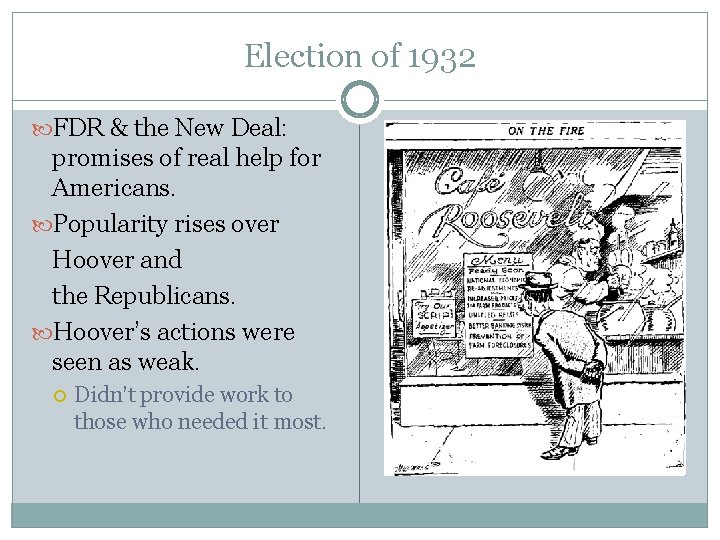
Election of 1932 FDR & the New Deal: promises of real help for Americans. Popularity rises over Hoover and the Republicans. Hoover’s actions were seen as weak. Didn’t provide work to those who needed it most.
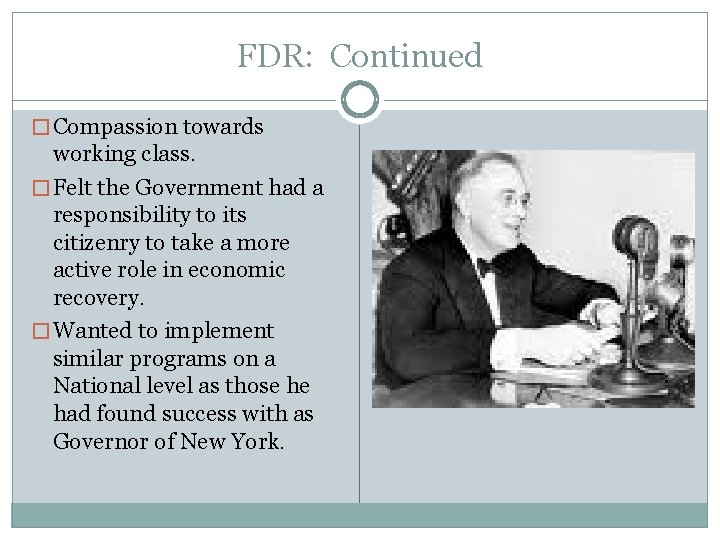
FDR: Continued � Compassion towards working class. � Felt the Government had a responsibility to its citizenry to take a more active role in economic recovery. � Wanted to implement similar programs on a National level as those he had found success with as Governor of New York.
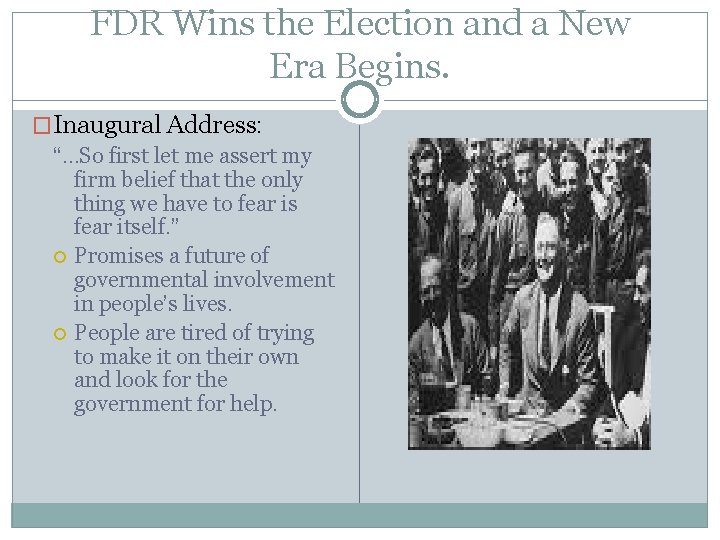
FDR Wins the Election and a New Era Begins. �Inaugural Address: “…So first let me assert my firm belief that the only thing we have to fear is fear itself. ” Promises a future of governmental involvement in people’s lives. People are tired of trying to make it on their own and look for the government for help.