
The Great Controversy 4 The Waldenses Light Shines


- Slides: 10
The Great Controversy 4 The Waldenses (Light Shines in Darkness)
Church History-Prophecy of 7 Churches Ephesus Smyrna Pergamos Thyatira Sardis Philadelphia Laodicea Early The Church The reformation that An era of spiritual Church that delays was not completed darkness left the first Christ’s (see GC, ch. 7 -16) (see GC, ch. 3, 4) love coming (see AA) The persecuted The morning star in the The true Advent Church midst of spiritual (see GC, ch. 17 -41) darkness (see GC, ch. 2) (see GC, ch. 5, 6)
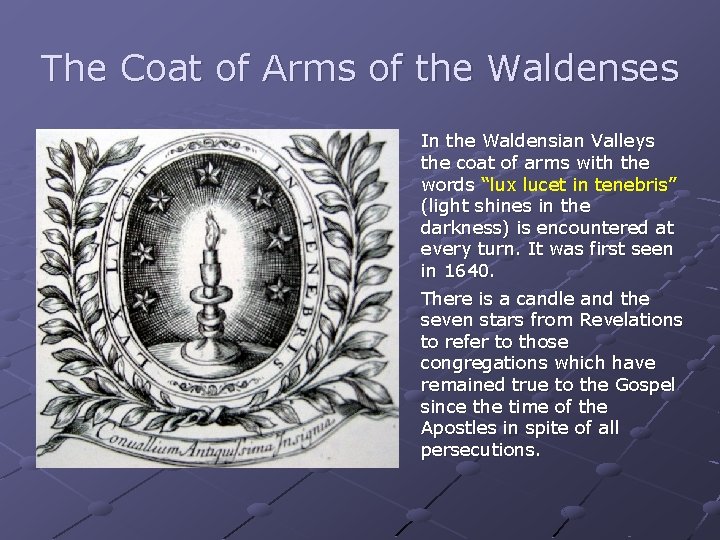
The Coat of Arms of the Waldenses In the Waldensian Valleys the coat of arms with the words “lux lucet in tenebris” (light shines in the darkness) is encountered at every turn. It was first seen in 1640. There is a candle and the seven stars from Revelations to refer to those congregations which have remained true to the Gospel since the time of the Apostles in spite of all persecutions.
In Every Age Witnesses for God Their main doctrines On the British Islands (The Celtic Church) Christ as the only Mediator The Bible the only rule of faith Keeping of the Sabbath Very soon it came to Britain (“They of Rome”) Persecution spread it to Wales, Scotland Ireland Colomba (Iona 550) Missionaries all over Europe (Root for Waldenses? ) Later Catholics conquered the land back Central Africa (Coptics), Armenia, Albigenses? Waldenses Separation lead to a separate church from Rome’s hatred of Sabbath was one of the main causes of separation The first to make a translation of the Bible into their language
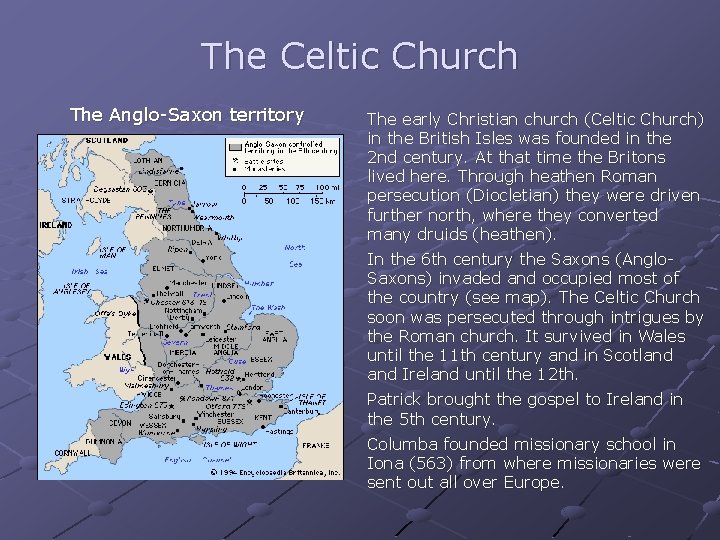
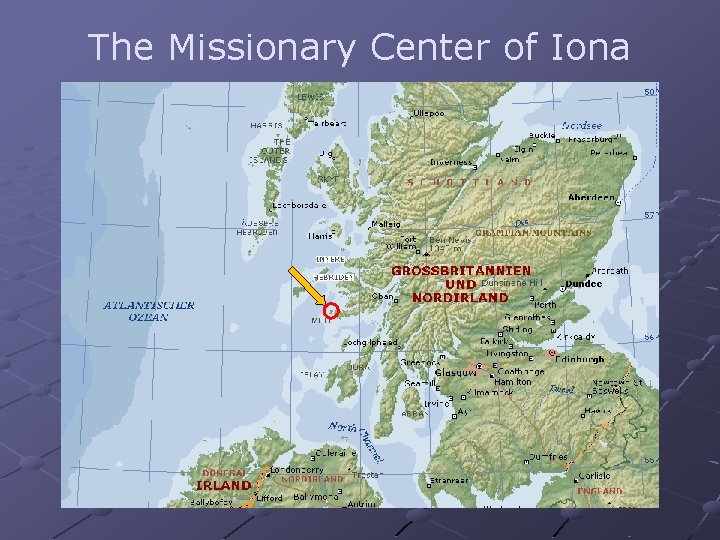
The Celtic Church The Anglo-Saxon territory The early Christian church (Celtic Church) in the British Isles was founded in the 2 nd century. At that time the Britons lived here. Through heathen Roman persecution (Diocletian) they were driven further north, where they converted many druids (heathen). In the 6 th century the Saxons (Anglo. Saxons) invaded and occupied most of the country (see map). The Celtic Church soon was persecuted through intrigues by the Roman church. It survived in Wales until the 11 th century and in Scotland Ireland until the 12 th. Patrick brought the gospel to Ireland in the 5 th century. Columba founded missionary school in Iona (563) from where missionaries were sent out all over Europe.
The Missionary Center of Iona
The Secret of the Strength of the Waldenses The Education of their children The training of pastors § § § § § Drew comparisons between Bible truths and nature Impressed with sacred claims of the law Great portions of Scripture were committed to memory To endure hardness, economy, self-denial To submit to control To think for themselves, forethought, faith To bear responsibilities, personal labor To guard their speech The culture of intellect § Before they fed the flock they went out as missionaries for 3 years § They did more than sermonize § Were sustained by freewill offerings and their own labor § They trained the youth • Bible the chief study especially gospels and epistles • They copied the Bible • The preservation of the Bible through them
The Mission of the Waldenses They did not totally shun society The missionary spirit Contact with the world (merchants, peddlers) Knowledge (sent youth to institutions) They had to work under cover (right arm work) Churches sprang up where they worked Worked to counteract the deceptions of Rome Taught the character of God Had a personal effect: there was power in the word They worked all over Europe Persecution The dragon got angry with them: illegal methods to persecute them They continued to send out missionaries
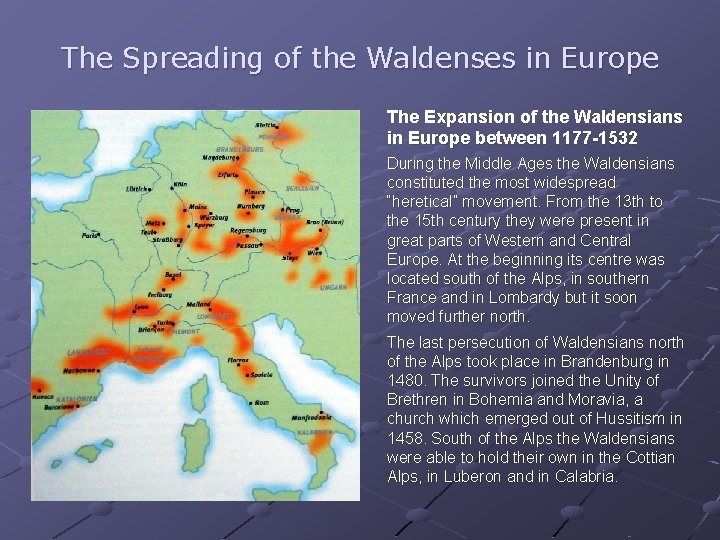
The Spreading of the Waldenses in Europe The Expansion of the Waldensians in Europe between 1177 -1532 During the Middle Ages the Waldensians constituted the most widespread “heretical” movement. From the 13 th to the 15 th century they were present in great parts of Western and Central Europe. At the beginning its centre was located south of the Alps, in southern France and in Lombardy but it soon moved further north. The last persecution of Waldensians north of the Alps took place in Brandenburg in 1480. The survivors joined the Unity of Brethren in Bohemia and Moravia, a church which emerged out of Hussitism in 1458. South of the Alps the Waldensians were able to hold their own in the Cottian Alps, in Luberon and in Calabria.
Questions What parallels do you see between the Waldenses and us today? Shall we work under-cover?