
The Graduation Effect Engaging Communities to Improve Grad




- Slides: 41
The Graduation Effect: Engaging Communities to Improve Grad Rates in Title I Schools Who is in the room? a. Federal Programs Director b. Title I Director c. Superintendent d. Professional Development Director e. Special Education Director f. Principal g. Other Text ALL 4 ED 125 to 22333 @all 4 ed #Grad. Effect
2 Entry Activity • Has your local high school’s graduation rate improved over the last three years? • If so, has this improvement been seen for all subgroups of students served? If not, to what do you attribute the decline or lack of improvement? • Have students who graduated from your school(s) been successful in colleges they attended or in a career path they entered?
3 Objectives This session will: q Explore the economic imperative for graduating students ready for college, career, and life q Walk through the Alliance’s Graduation Effect Economic Impact Analysis q Provide tools that participants can use at the state and local levels
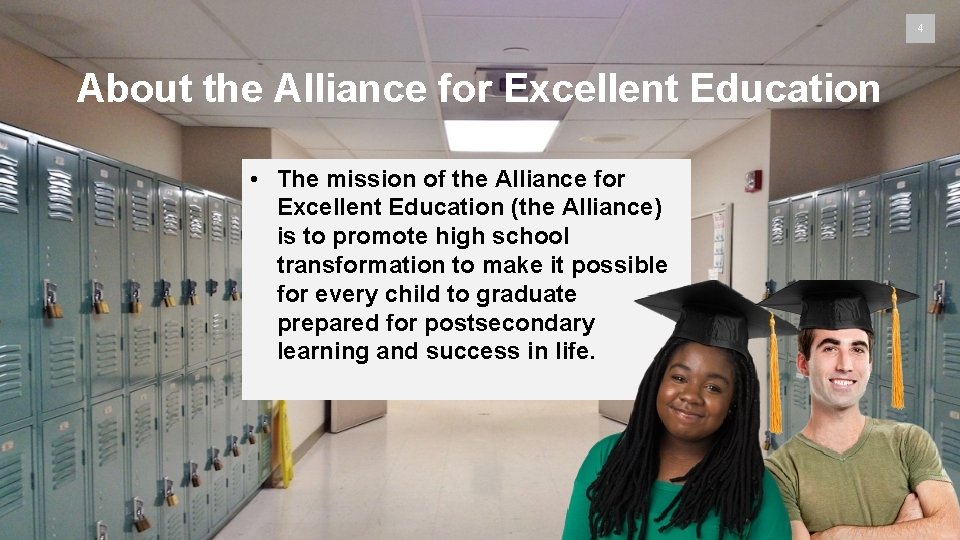
4 About the Alliance for Excellent Education • The mission of the Alliance for Excellent Education (the Alliance) is to promote high school transformation to make it possible for every child to graduate prepared for postsecondary learning and success in life.
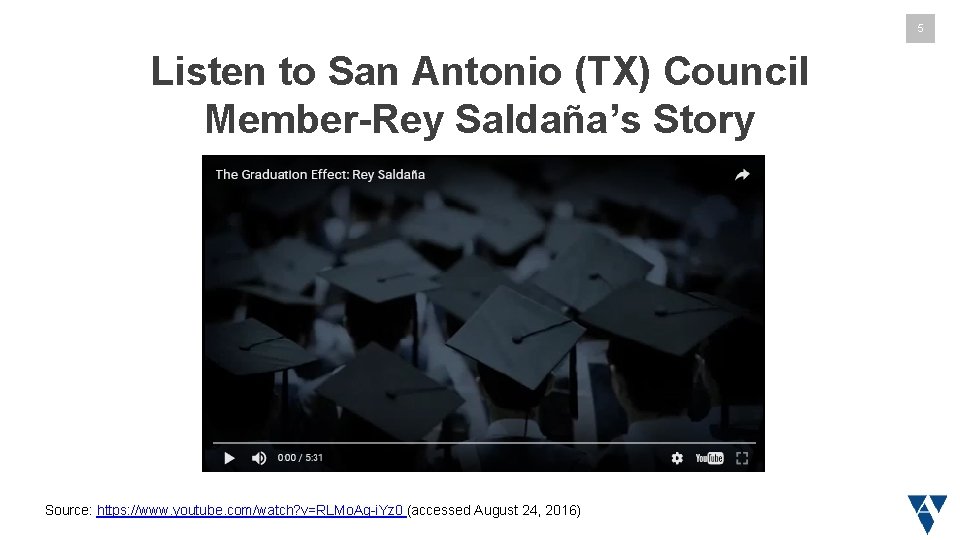
5 Listen to San Antonio (TX) Council Member-Rey Saldaña’s Story Source: https: //www. youtube. com/watch? v=RLMo. Ag-i. Yz 0 (accessed August 24, 2016)
6 Reflections: Rey Saldaña Video What was it that made the difference for Rey’s success through high school? Try to capture your response in one word! Poll Everywhere: Text ALL 4 ED 125 to 22333 or Poll. Ev. com/all 4 ed 125
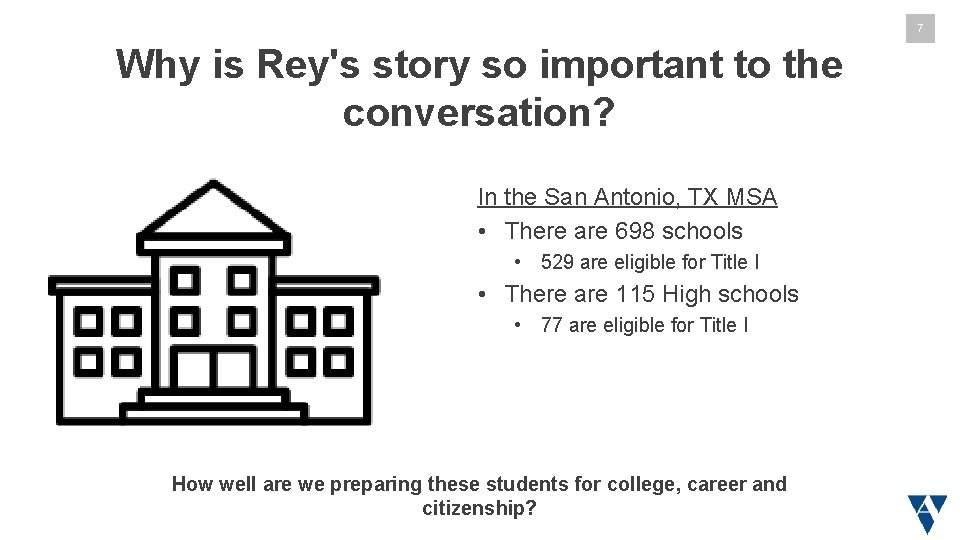
7 Why is Rey's story so important to the conversation? In the San Antonio, TX MSA • There are 698 schools • 529 are eligible for Title I • There are 115 High schools • 77 are eligible for Title I How well are we preparing these students for college, career and citizenship?
8 Economic Imperative
9 Each year 1. 2 million students drop out of high school. In 2014, there were nearly 2, 500, 000 young people ages 16 -24 without a high school diploma. Source: https: //www. dosomething. org/us/facts/11 -facts-about-high-school-dropout-rates (accessed September 26, 2016) http: //nces. ed. gov/programs/digest/d 15/tables/dt 15_219. 80. asp (accessed September 26, 2016)
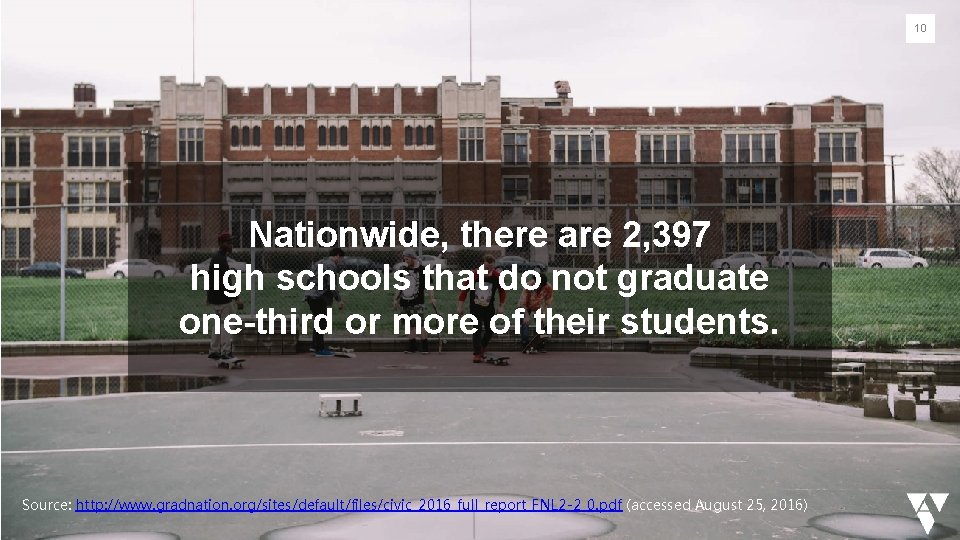
10 Nationwide, there are 2, 397 high schools that do not graduate one-third or more of their students. Source: http: //www. gradnation. org/sites/default/files/civic_2016_full_report_FNL 2 -2_0. pdf (accessed August 25, 2016)
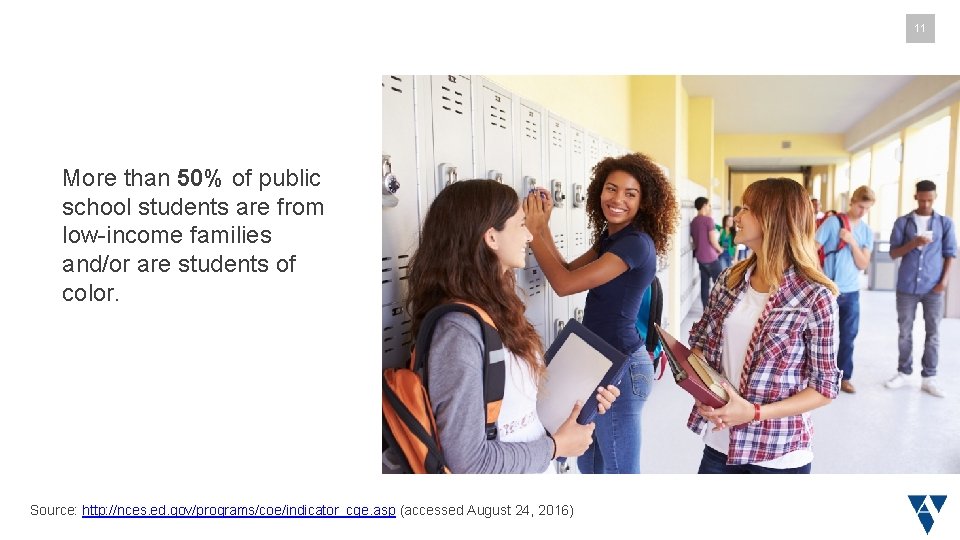
11 More than 50% of public school students are from low-income families and/or are students of color. Source: http: //nces. ed. gov/programs/coe/indicator_cge. asp (accessed August 24, 2016)
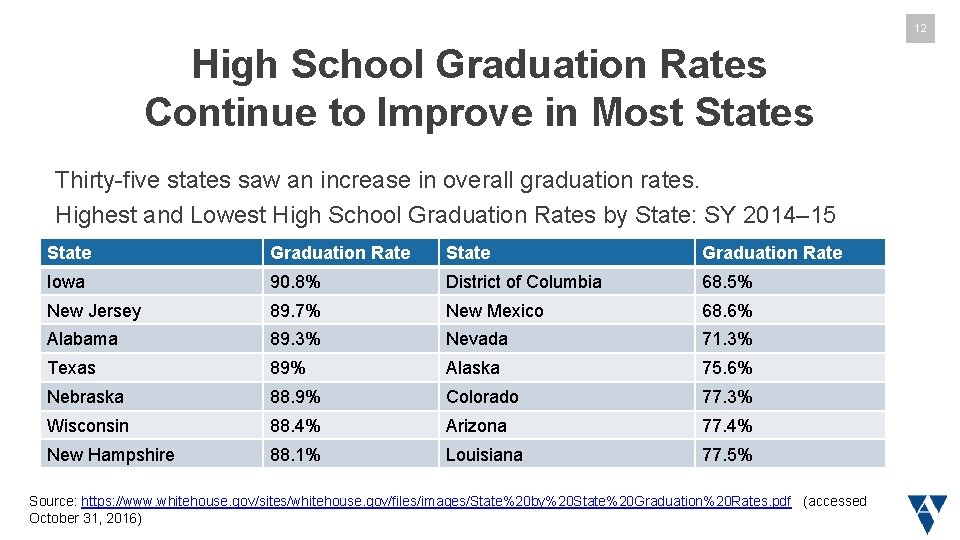
12 High School Graduation Rates Continue to Improve in Most States Thirty-five states saw an increase in overall graduation rates. Highest and Lowest High School Graduation Rates by State: SY 2014– 15 State Graduation Rate Iowa 90. 8% District of Columbia 68. 5% New Jersey 89. 7% New Mexico 68. 6% Alabama 89. 3% Nevada 71. 3% Texas 89% Alaska 75. 6% Nebraska 88. 9% Colorado 77. 3% Wisconsin 88. 4% Arizona 77. 4% New Hampshire 88. 1% Louisiana 77. 5% Source: https: //www. whitehouse. gov/sites/whitehouse. gov/files/images/State%20 by%20 State%20 Graduation%20 Rates. pdf (accessed October 31, 2016)
13 The nation still struggles to serve historically underrepresented groups Number of states where Number of states with gap decreased between gap increased between no change between SYs 2012– 13 and 2013– 14 Black-white gap 28 10 12 Hispanic-white gap 32 12 6 Economically disadvantaged/ All students 23 7 20 Limited English proficient/ All students 23 21 6 Children with one or more disabilities/All students 21 17 12 Difference in Achievement Gaps Between School Years (SYs) 2012– 13 and 2013– 14 Source: http: //www. ed. gov/news/press-releases/states-continue-improve-graduation-rates-particularly-underserved-students (accessed August 24, 2016).
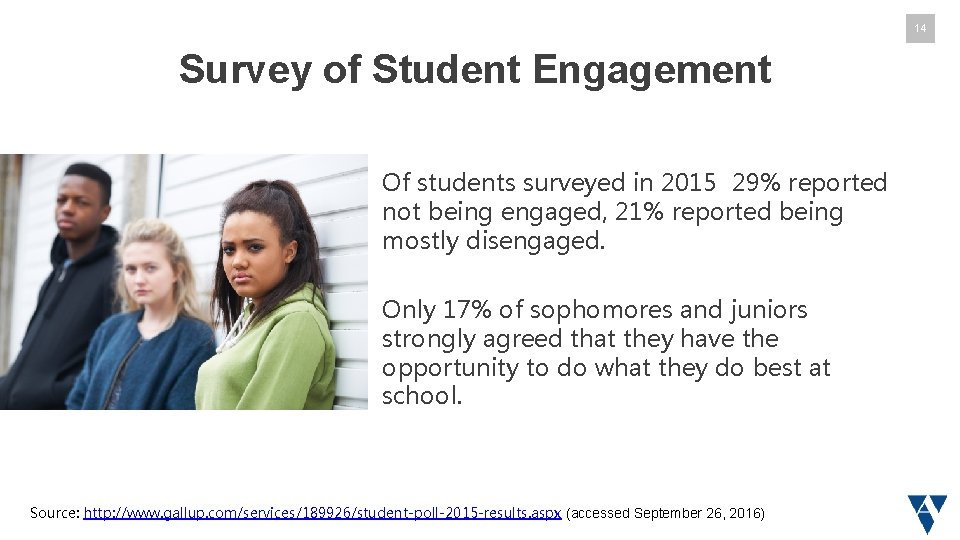
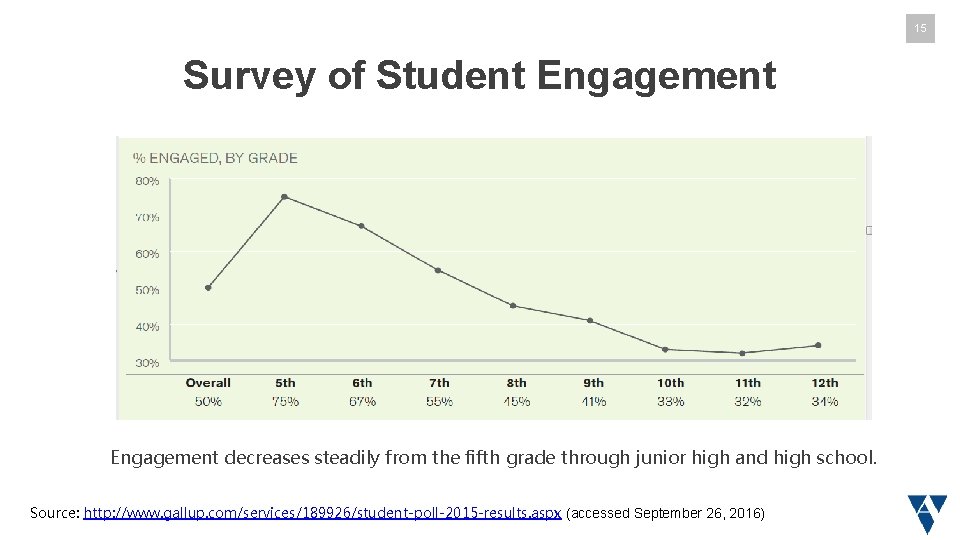
14 Survey of Student Engagement Of students surveyed in 2015 29% reported not being engaged, 21% reported being mostly disengaged. Only 17% of sophomores and juniors strongly agreed that they have the opportunity to do what they do best at school. Source: http: //www. gallup. com/services/189926/student-poll-2015 -results. aspx (accessed September 26, 2016)
15 Survey of Student Engagement decreases steadily from the fifth grade through junior high and high school. Source: http: //www. gallup. com/services/189926/student-poll-2015 -results. aspx (accessed September 26, 2016)
16 Assuming high school grads are ready for college …are they also ready for a career?
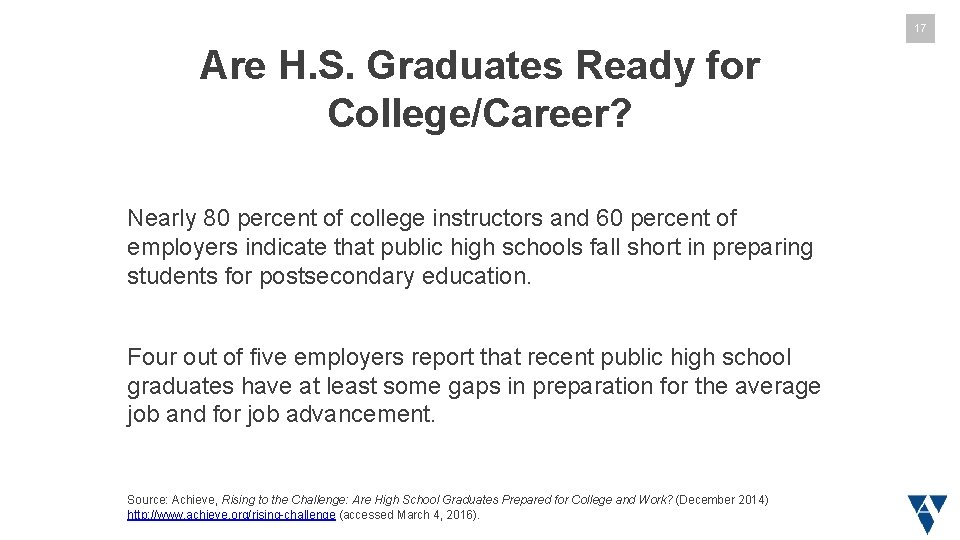
17 Are H. S. Graduates Ready for College/Career? Nearly 80 percent of college instructors and 60 percent of employers indicate that public high schools fall short in preparing students for postsecondary education. Four out of five employers report that recent public high school graduates have at least some gaps in preparation for the average job and for job advancement. Source: Achieve, Rising to the Challenge: Are High School Graduates Prepared for College and Work? (December 2014) http: //www. achieve. org/rising-challenge (accessed March 4, 2016).
18 Importance of Employability Skills • Employability skills are cited as among the most important skills by employers (Hart Research Associates, 2015). • A lack of employability skills may contribute to a “talent shortage” (Manpower. Group, 2012). • The demonstration of employability skills is correlated with better hiring rates, success on the job, and earnings (Lippman et al. , 2015). Source: www. ccrscenter. org/sites/default/files/Employability. Skills_PPT. pptx, (accessed September 27, 2016)
19 Survey of Business Leaders A 2014 survey by Northeastern University found that • Seventy-three percent of business leaders believe that there is a skills gap in the American workforce, particularly in STEM fields; and • Eighty-seven percent of business leaders think that college graduates lack the most important skills needed to succeed. Source: http: //www. achieve. org/rising-challenge (accessed September 26, 2016)
20 Education, Economy and the Future By 2020, nearly two-thirds of jobs will require postsecondary education or training, with 30 percent requiring a bachelor’s degree and 36 percent requiring at least the equivalent of an associate’s degree (Carnevale, Smith & Strohl, 2013) Source: http: //education. jhu. edu/edpolicy/commentary/12
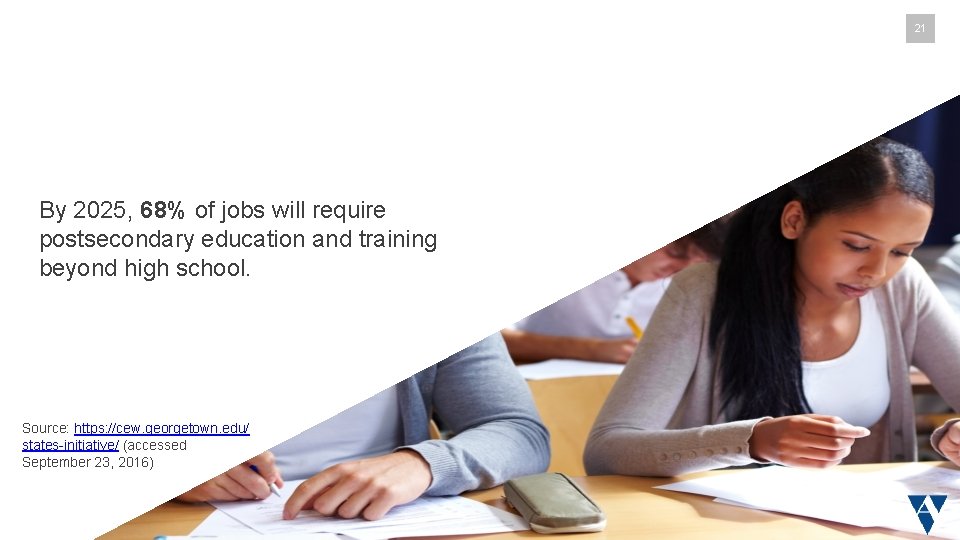
21 By 2025, 68% of jobs will require postsecondary education and training beyond high school. Source: https: //cew. georgetown. edu/ states-initiative/ (accessed September 23, 2016)
22 Economy is Changing • The fastest-growing job sectors are those that require problem- solving and critical thinking skills. • Jobs that require routine manual skills are in decline. • Deeper learning competencies—the ability to apply knowledge to new situations—are associated with better life and work outcomes. Source: http: //deeperlearning 4 all. org/understanding-the-need (accessed September 1, 2016)
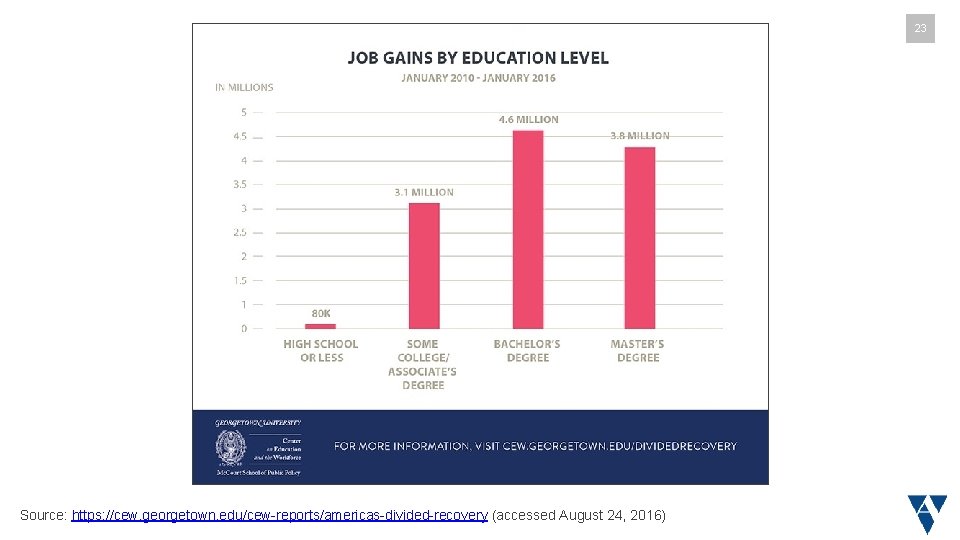
23 Source: https: //cew. georgetown. edu/cew-reports/americas-divided-recovery (accessed August 24, 2016)
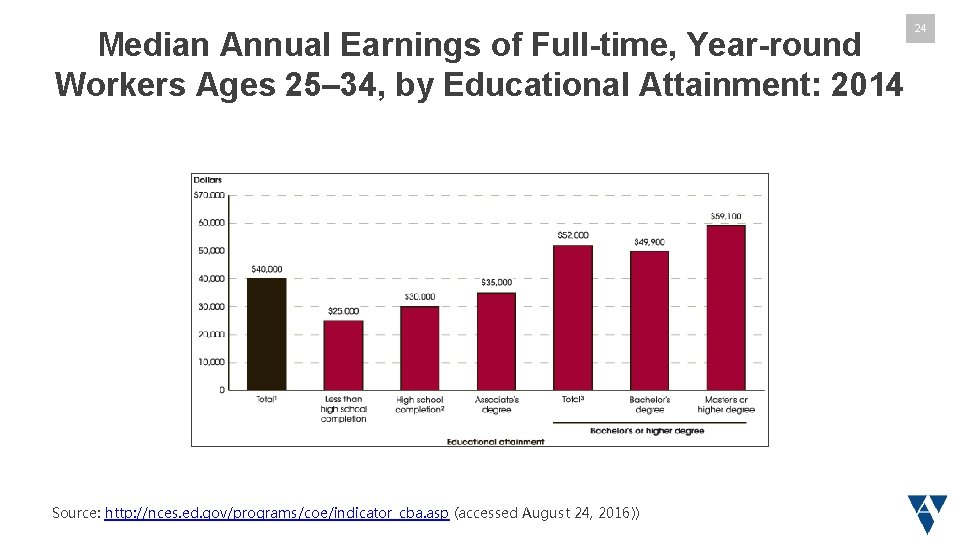
Median Annual Earnings of Full-time, Year-round Workers Ages 25– 34, by Educational Attainment: 2014 Source: http: //nces. ed. gov/programs/coe/indicator_cba. asp (accessed August 24, 2016)) 24
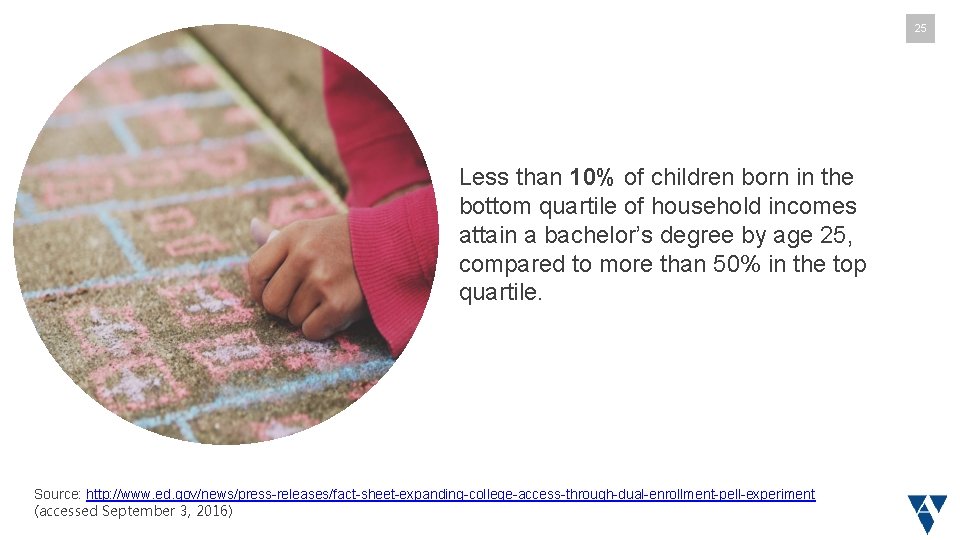
25 Less than 10% of children born in the bottom quartile of household incomes attain a bachelor’s degree by age 25, compared to more than 50% in the top quartile. Source: http: //www. ed. gov/news/press-releases/fact-sheet-expanding-college-access-through-dual-enrollment-pell-experiment (accessed September 3, 2016)
“ 26 In today’s world, twenty-first-century skill demands are steadily increasing. Most high-paying jobs require additional education and training beyond a high school diploma. We must make sure that our children, particularly those who are traditionally underserved, are prepared for and have access to postsecondary education. ” —Gov. Bob Wise, Alliance for Excellent Education
27 Using Economic Impact Data to Inform and Advance Your Work: The Graduation Effect
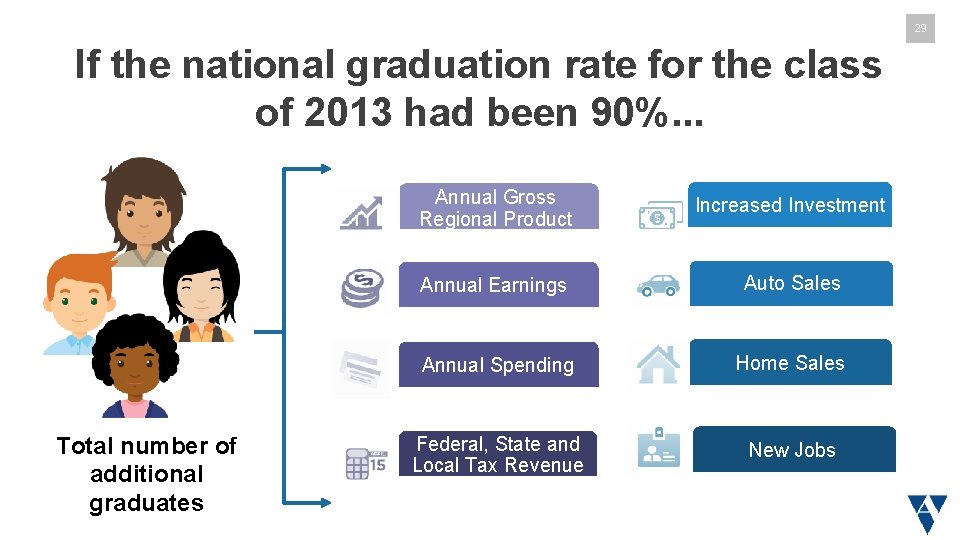
28 With generous support from State Farm®, the Alliance for Excellent Education (the Alliance) has published a series of profiles demonstrating to states and metropolitan statistical areas (MSAs) the estimated economic benefits that would likely result from increasing the graduation rate to 90 percent for just one high school class.
29 If the national graduation rate for the class of 2013 had been 90%. . . Total number of additional graduates Annual Gross Regional Product Increased Investment Annual Earnings Auto Sales Annual Spending Home Sales Federal, State and Local Tax Revenue New Jobs
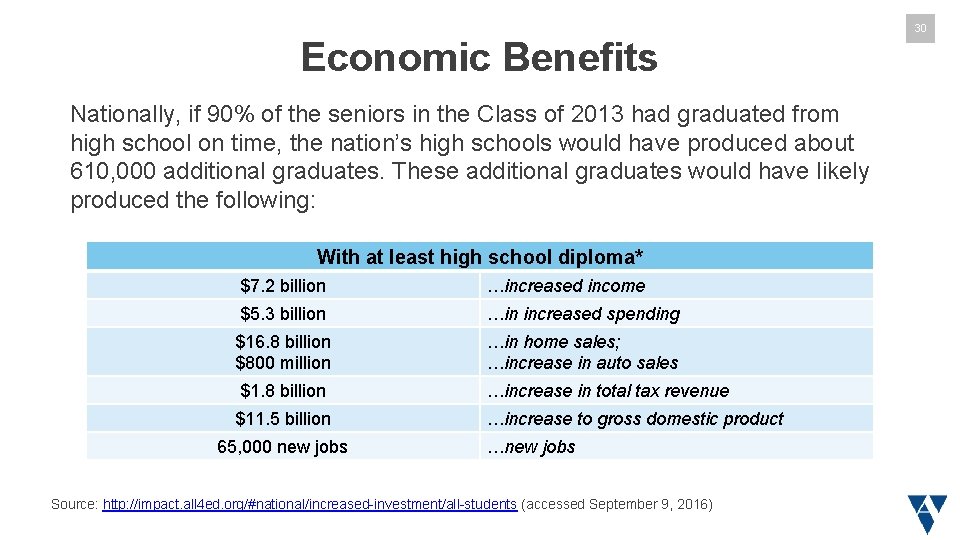
Economic Benefits Nationally, if 90% of the seniors in the Class of 2013 had graduated from high school on time, the nation’s high schools would have produced about 610, 000 additional graduates. These additional graduates would have likely produced the following: With at least high school diploma* $7. 2 billion …increased income $5. 3 billion …in increased spending $16. 8 billion $800 million …in home sales; …increase in auto sales $1. 8 billion …increase in total tax revenue $11. 5 billion …increase to gross domestic product 65, 000 new jobs …new jobs Source: http: //impact. all 4 ed. org/#national/increased-investment/all-students (accessed September 9, 2016) 30
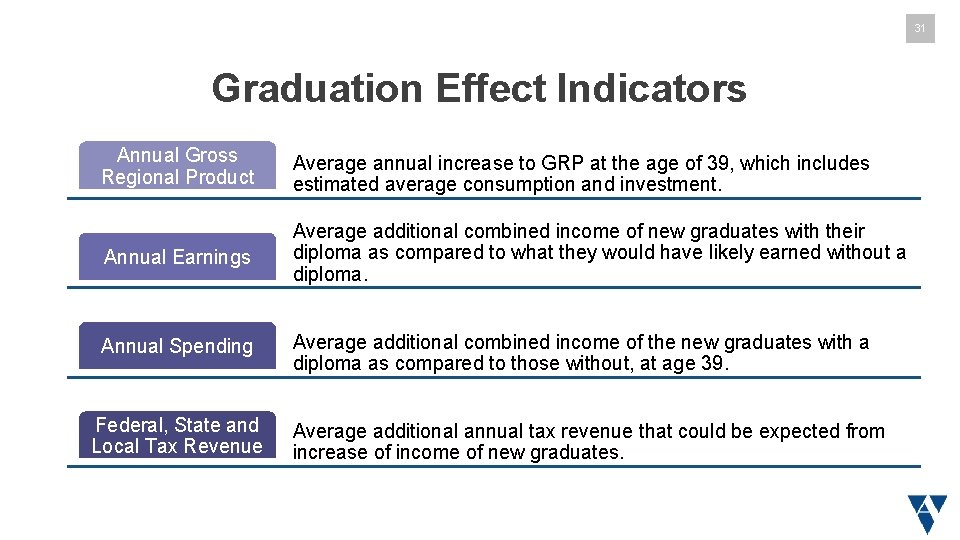
31 Graduation Effect Indicators Annual Gross Regional Product Average annual increase to GRP at the age of 39, which includes estimated average consumption and investment. Annual Earnings Average additional combined income of new graduates with their diploma as compared to what they would have likely earned without a diploma. Annual Spending Average additional combined income of the new graduates with a diploma as compared to those without, at age 39. Federal, State and Local Tax Revenue Average additional annual tax revenue that could be expected from increase of income of new graduates.
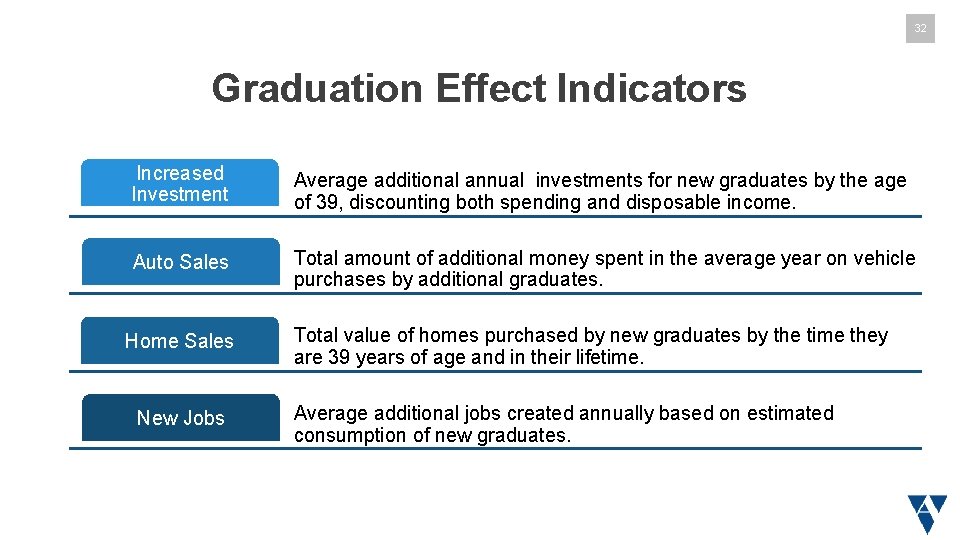
32 Graduation Effect Indicators Increased Investment Average additional annual investments for new graduates by the age of 39, discounting both spending and disposable income. Auto Sales Total amount of additional money spent in the average year on vehicle purchases by additional graduates. Home Sales New Jobs Total value of homes purchased by new graduates by the time they are 39 years of age and in their lifetime. Average additional jobs created annually based on estimated consumption of new graduates.
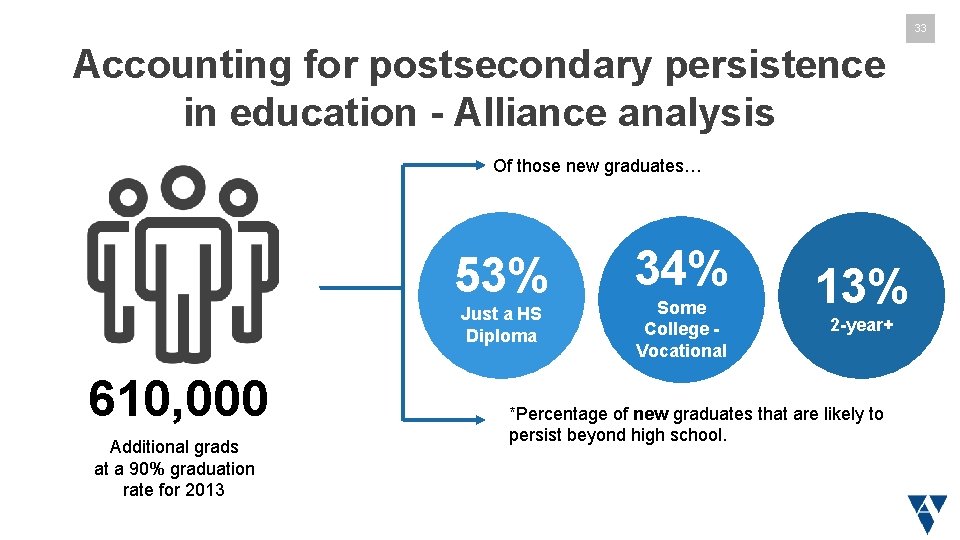
33 Accounting for postsecondary persistence in education - Alliance analysis Of those new graduates… 53% Just a HS Diploma 610, 000 Additional grads at a 90% graduation rate for 2013 34% Some College Vocational 13% 2 -year+ *Percentage of new graduates that are likely to persist beyond high school.
34 What if all additional graduates persisted beyond high school?
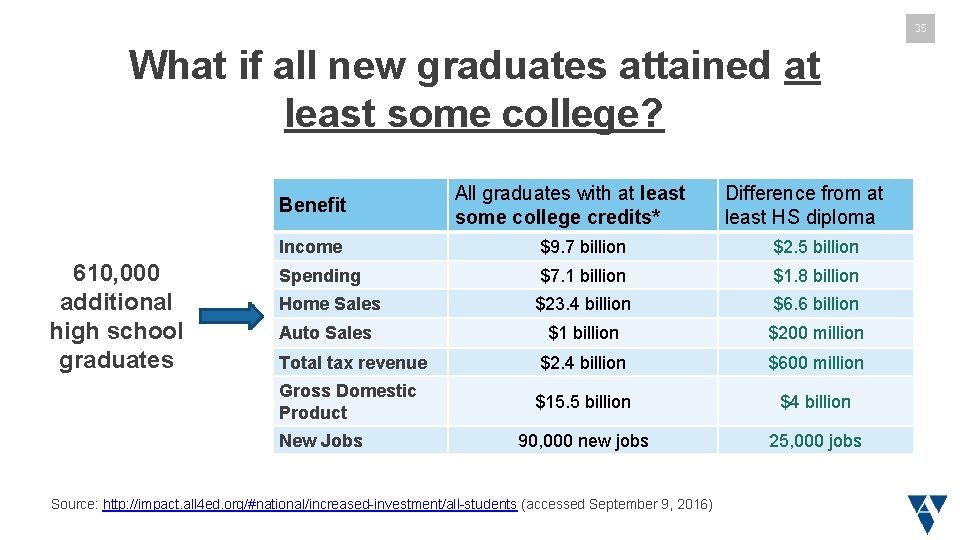
35 What if all new graduates attained at least some college? Benefit 610, 000 additional high school graduates All graduates with at least some college credits* Difference from at least HS diploma Income $9. 7 billion $2. 5 billion Spending $7. 1 billion $1. 8 billion Home Sales $23. 4 billion $6. 6 billion Auto Sales $1 billion $200 million Total tax revenue $2. 4 billion $600 million Gross Domestic Product $15. 5 billion $4 billion 90, 000 new jobs 25, 000 jobs New Jobs Source: http: //impact. all 4 ed. org/#national/increased-investment/all-students (accessed September 9, 2016)
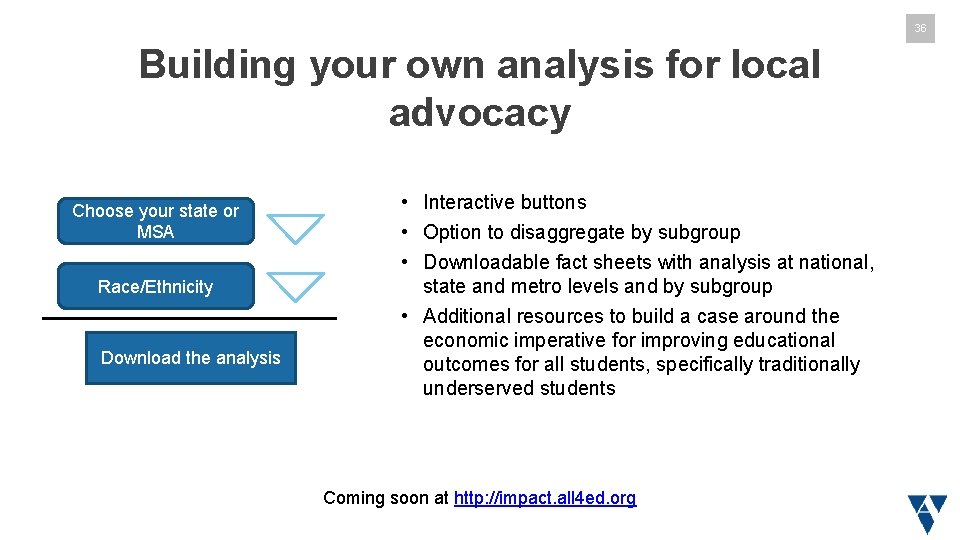
36 Building your own analysis for local advocacy Choose your state or MSA Race/Ethnicity Download the analysis • Interactive buttons • Option to disaggregate by subgroup • Downloadable fact sheets with analysis at national, state and metro levels and by subgroup • Additional resources to build a case around the economic imperative for improving educational outcomes for all students, specifically traditionally underserved students Coming soon at http: //impact. all 4 ed. org
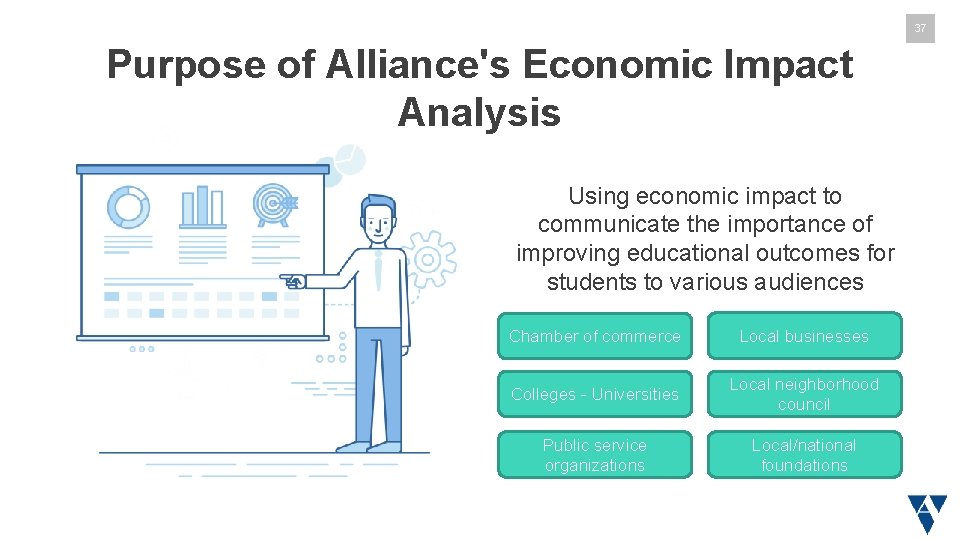
37 Purpose of Alliance's Economic Impact Analysis Using economic impact to communicate the importance of improving educational outcomes for students to various audiences Chamber of commerce Local businesses Colleges - Universities Local neighborhood council Public service organizations Local/national foundations
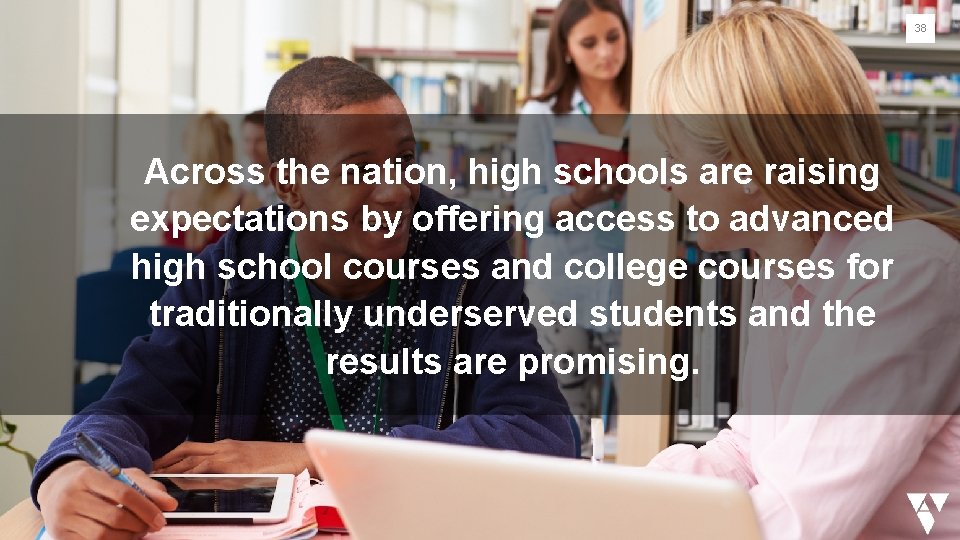
38 Across the nation, high schools are raising expectations by offering access to advanced high school courses and college courses for traditionally underserved students and the results are promising.
39 General Reflections and Your Next Steps Reflection • How has this economic impact data influenced your thinking about transforming high schools? Write a tweet and send it out. Plan for Action • What are some of the strategies, programs or initiatives that you might advocate for within your state, district or school community? • In what ways can you use this data to support the implementation of these strategies, programs or initiatives? • Who are some of the key audiences in your community that you might engage to advance the work? • Start an email/tweet to one of those audiences. @all 4 ed #Grad. Effect
40 40 For a deep dive into the economic impact analysis and additional estimates specific to your state or local community, visit: http: //impact. all 4 ed. org For additional information and resources about how to build the case for improving our schools, visit http: //all 4 ed. org/nghs. The resources featured in this toolkit represent only a small sample of the tools and research available to policymakers and practitioners from various organizations, states, districts, and schools. The findings and opinions expressed in the items highlighted here are those of their respective authors and sponsoring organizations and do not necessarily reflect the views of the Alliance for Excellent Education.
41 41 Thank You! swoodgarnett@all 4 ed. org dreid@all 4 ed. org Alliance@all 4 ed. org @all 4 ed #Grad. Effect