
THE GOPHER TORTOISE A SPECIES IN DECLINE working

- Slides: 51
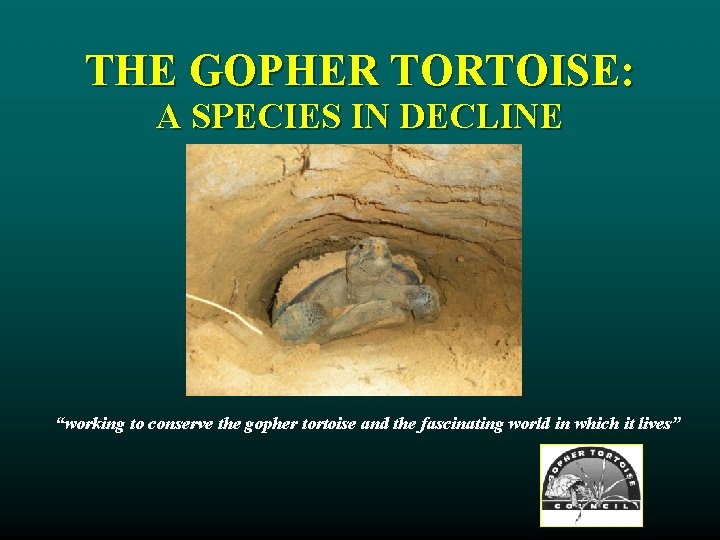
THE GOPHER TORTOISE: A SPECIES IN DECLINE “working to conserve the gopher tortoise and the fascinating world in which it lives”
Acknowledgements The following people generously donated photographs or slides for this presentation: Joan D. Berish, C. Kenneth Dodd, Jr. , George L. Heinrich, Sharon Hermann, Joseph W. Jones Ecological Research Center, Lee County Parks & Recreation, Barry Mansell, Jessica Mc. Guire, Henry Mushinsky, Lora L. Smith • Developed by Laura Wewerka and Lora L. Smith • Updated by Jessica L. Mc. Guire
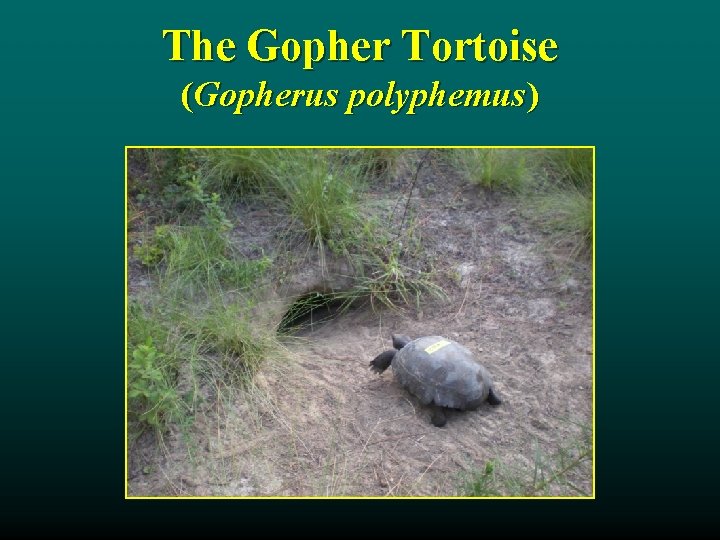
The Gopher Tortoise (Gopherus polyphemus)
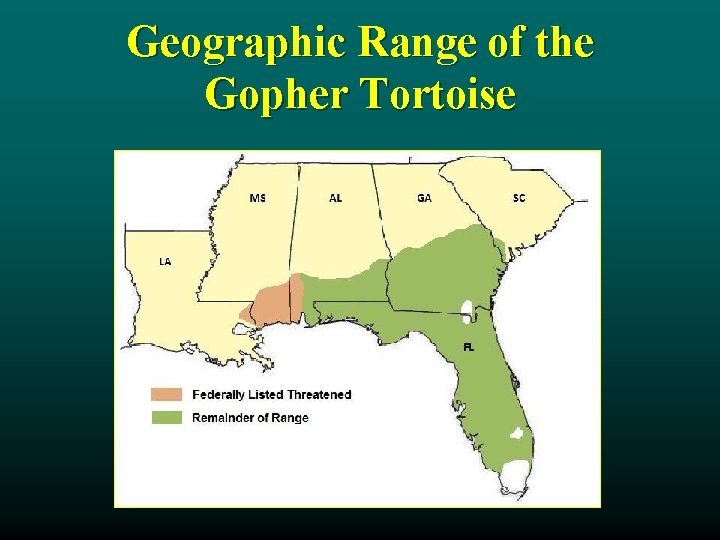
Geographic Range of the Gopher Tortoise
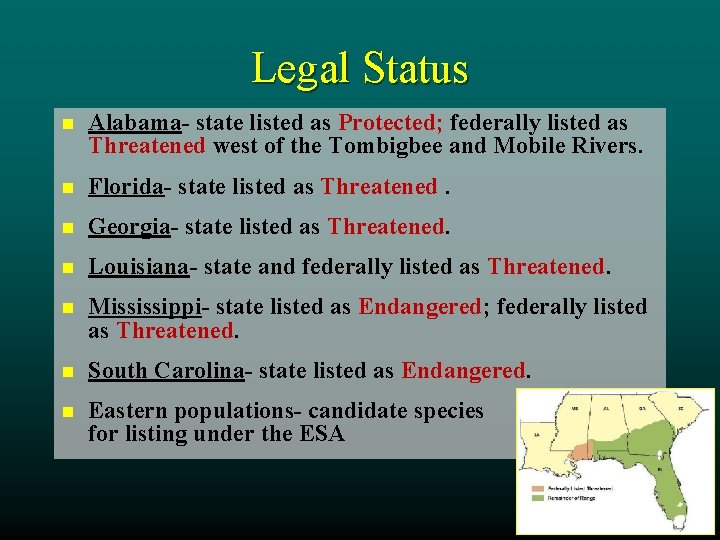
Legal Status n Alabama- state listed as Protected; federally listed as Threatened west of the Tombigbee and Mobile Rivers. n Florida- state listed as Threatened. n Georgia- state listed as Threatened. n Louisiana- state and federally listed as Threatened. n Mississippi- state listed as Endangered; federally listed as Threatened. n South Carolina- state listed as Endangered. n Eastern populations- candidate species for listing under the ESA
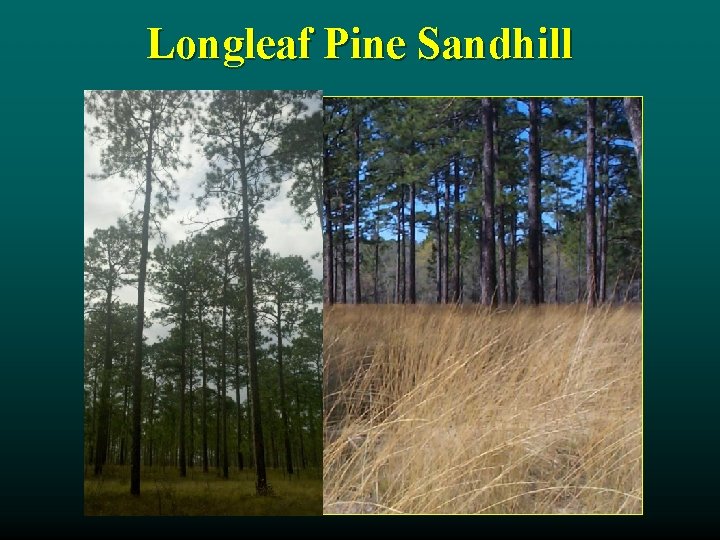
Longleaf Pine Sandhill
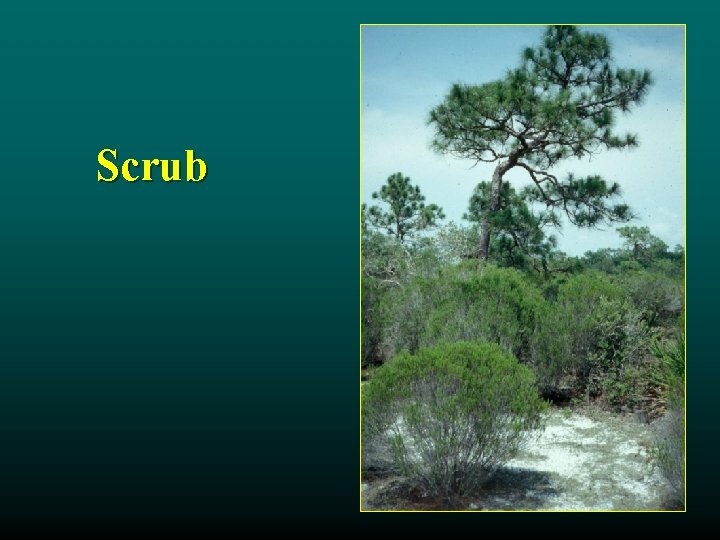
Scrub
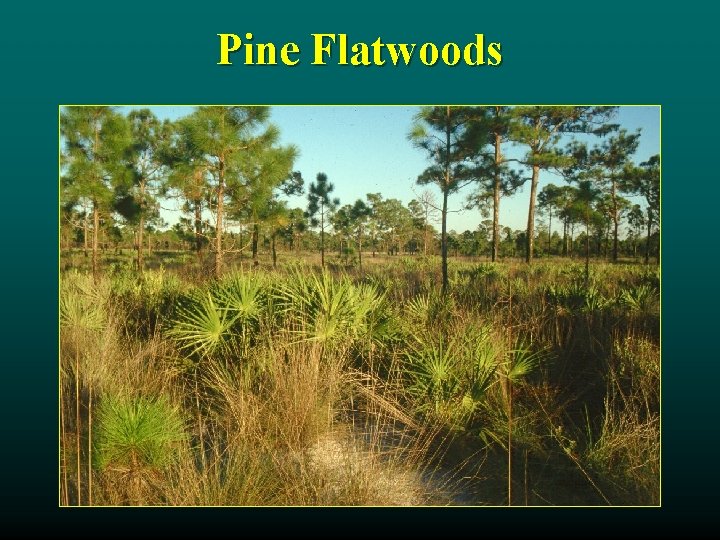
Pine Flatwoods
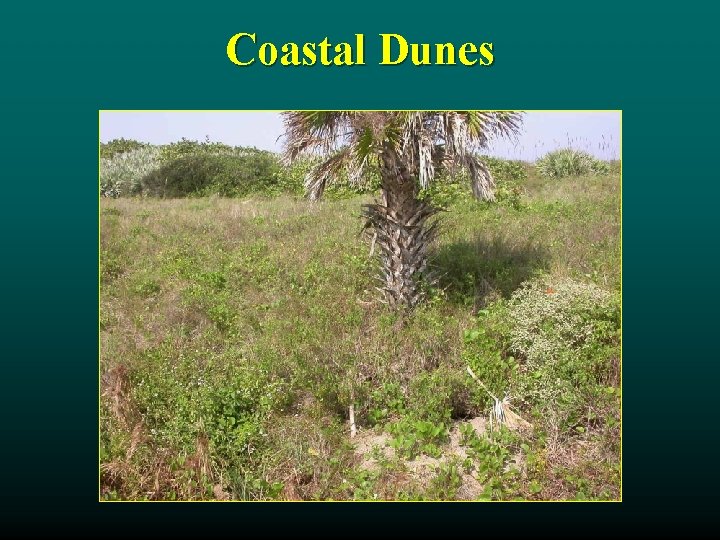
Coastal Dunes
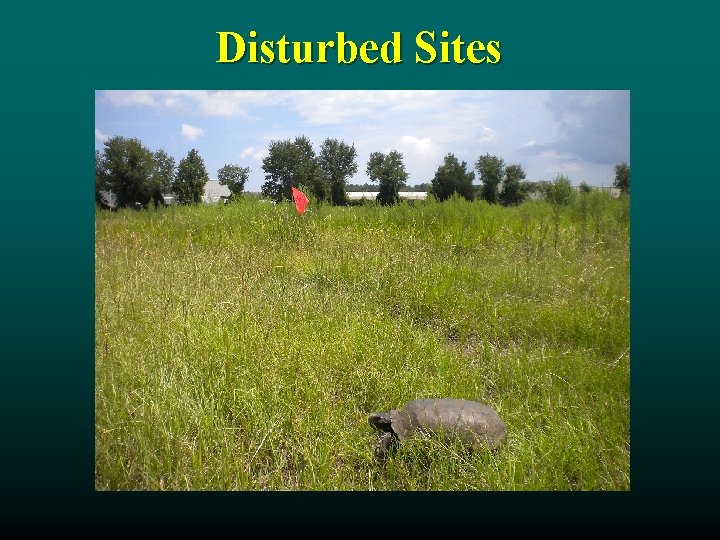
Disturbed Sites
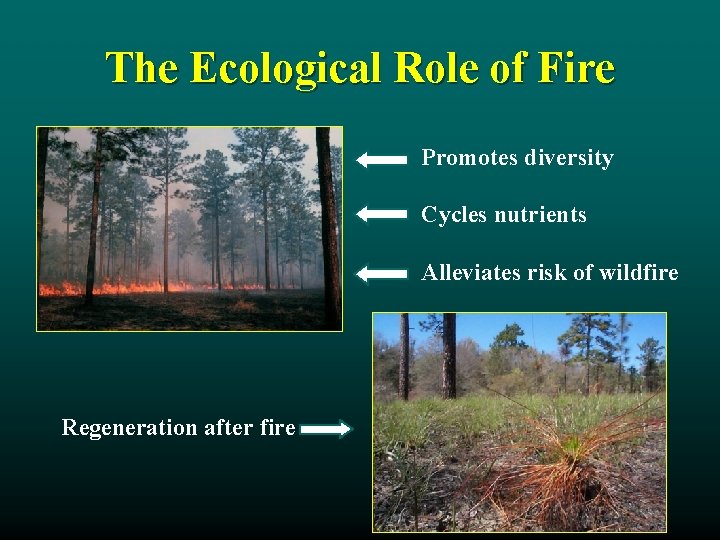
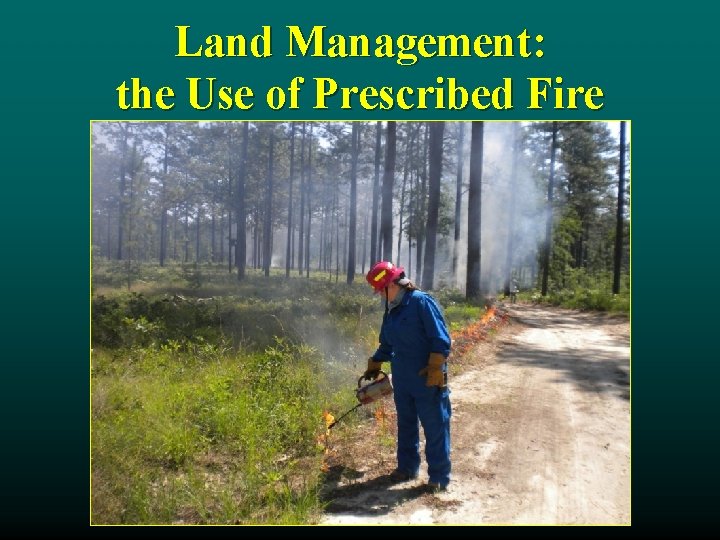
The Ecological Role of Fire Promotes diversity Cycles nutrients Alleviates risk of wildfire Regeneration after fire
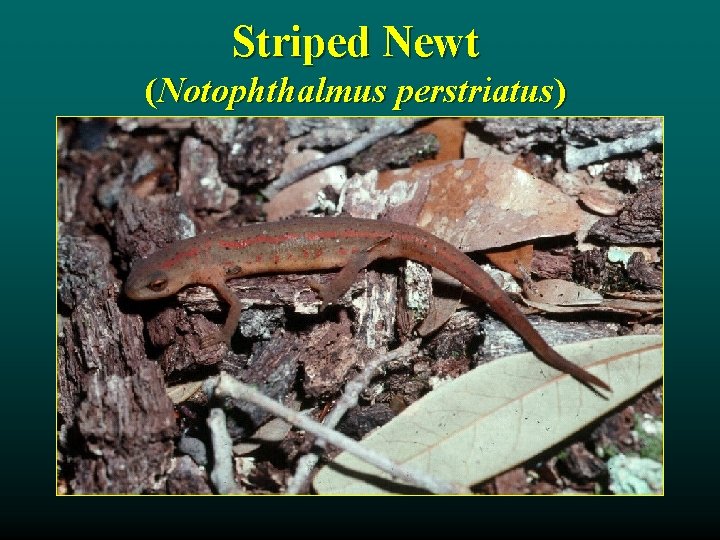
Striped Newt (Notophthalmus perstriatus)
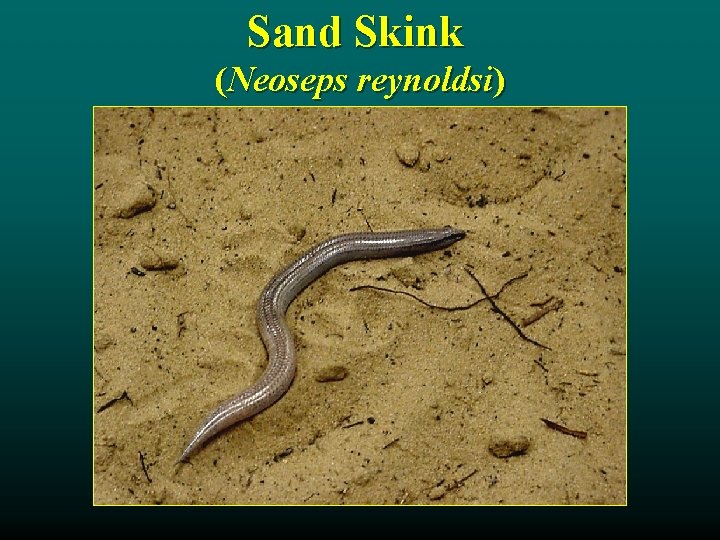
Sand Skink (Neoseps reynoldsi)
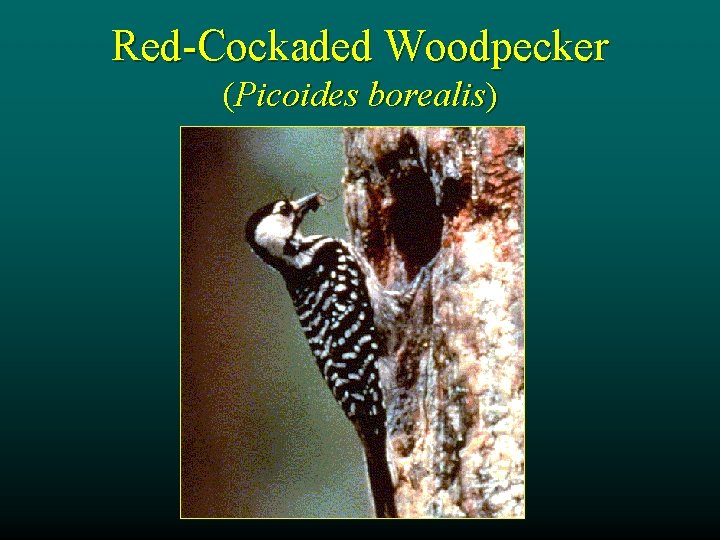
Red-Cockaded Woodpecker (Picoides borealis)
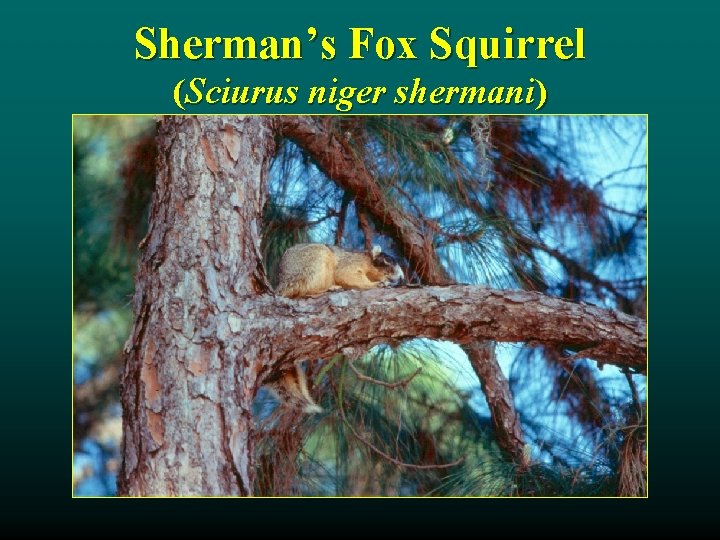
Sherman’s Fox Squirrel (Sciurus niger shermani)
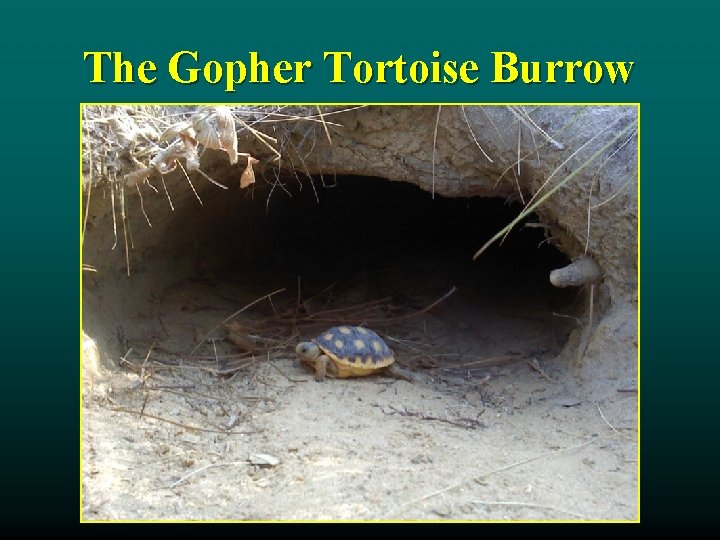
The Gopher Tortoise Burrow
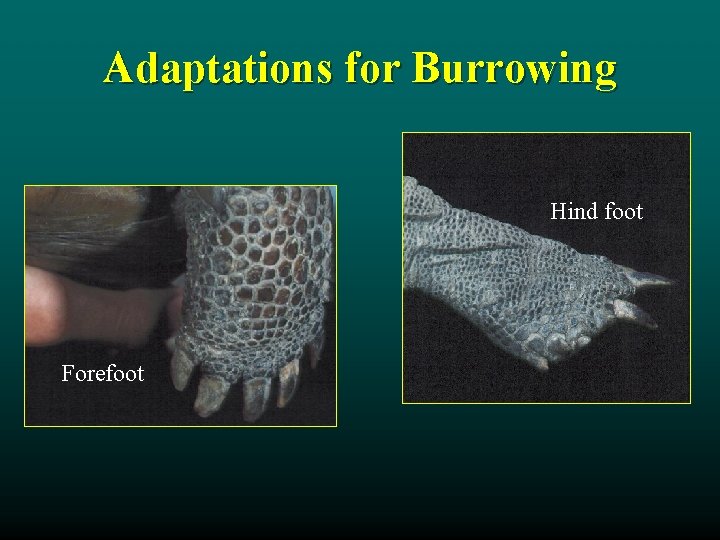
Adaptations for Burrowing Hind foot Forefoot
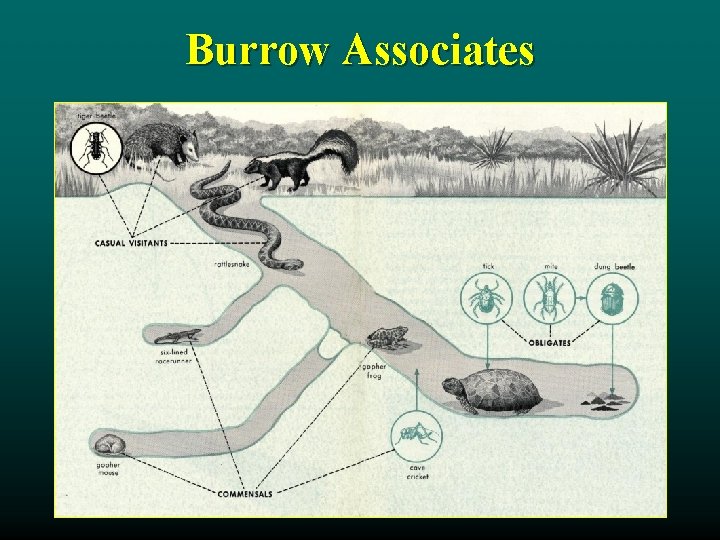
Burrow Associates
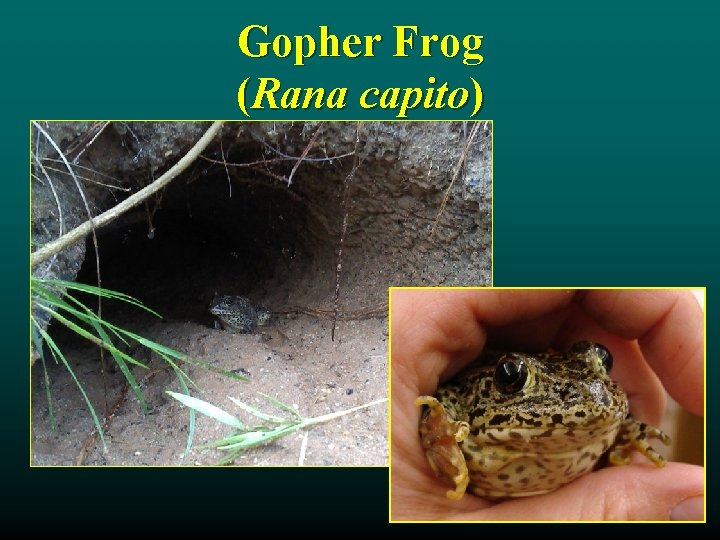
Gopher Frog (Rana capito)
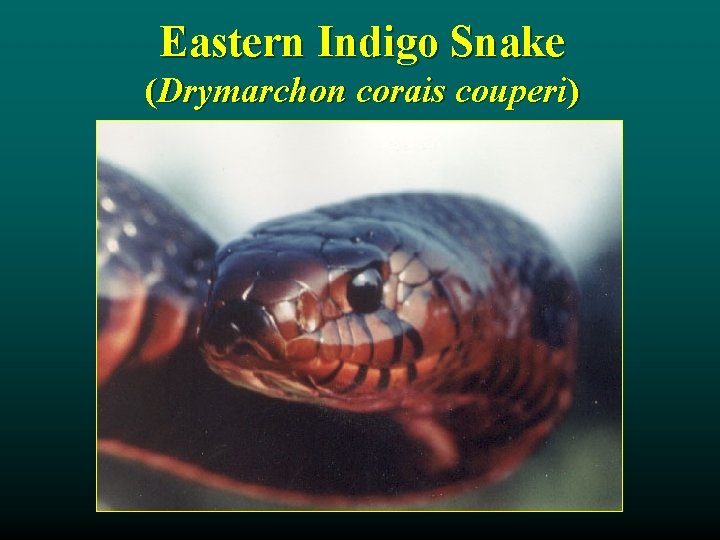
Eastern Indigo Snake (Drymarchon corais couperi)
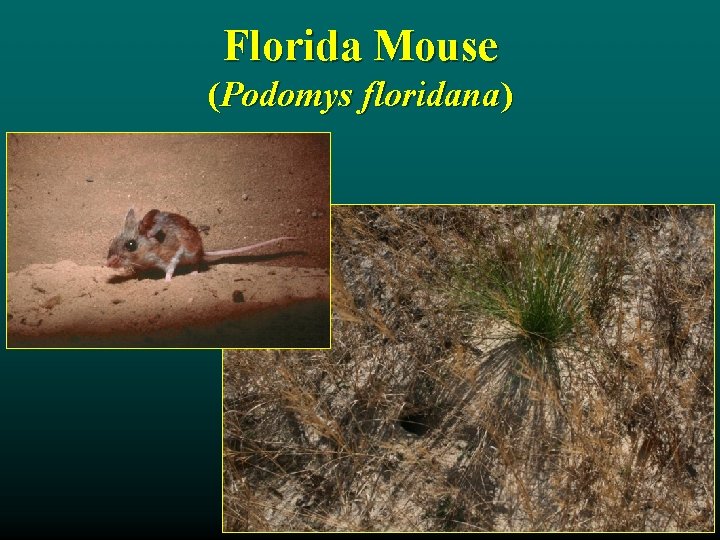
Florida Mouse (Podomys floridana)
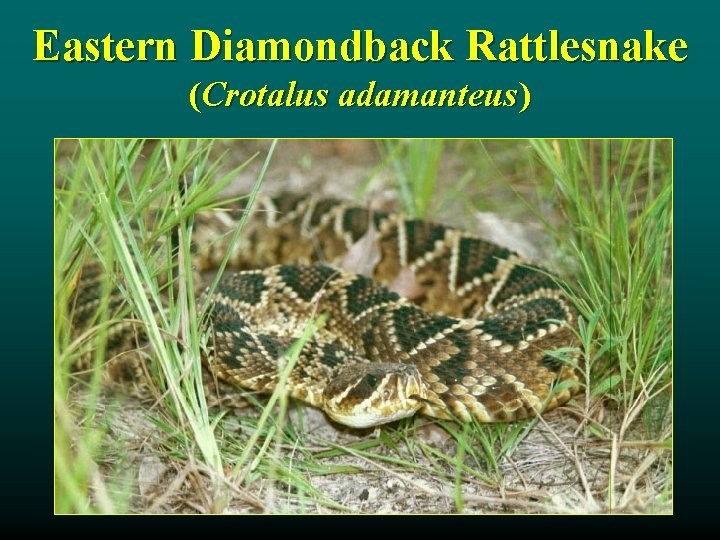
Eastern Diamondback Rattlesnake (Crotalus adamanteus)
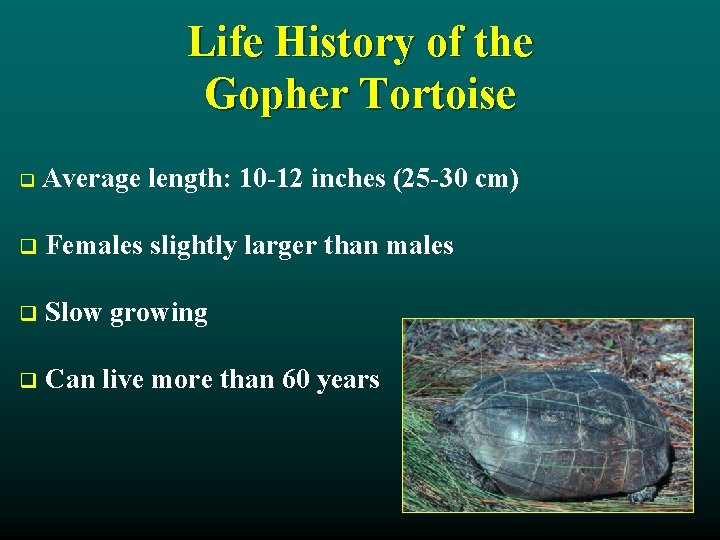
Life History of the Gopher Tortoise q Average length: 10 -12 inches (25 -30 cm) q Females slightly larger than males q Slow growing q Can live more than 60 years
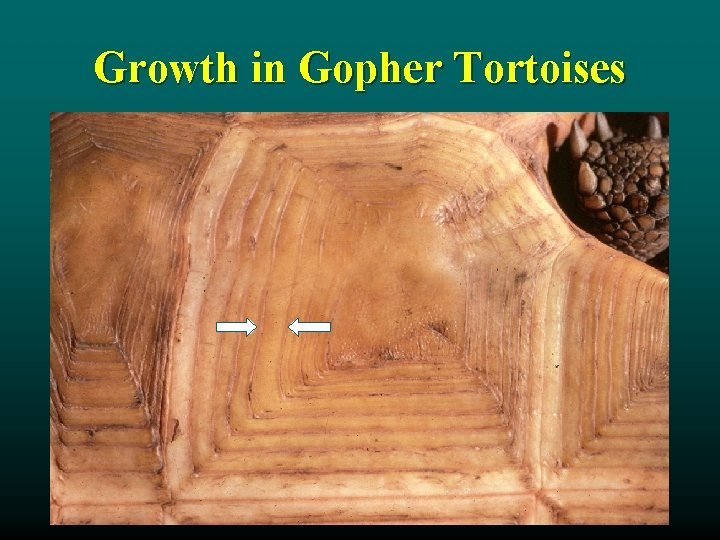
Growth in Gopher Tortoises
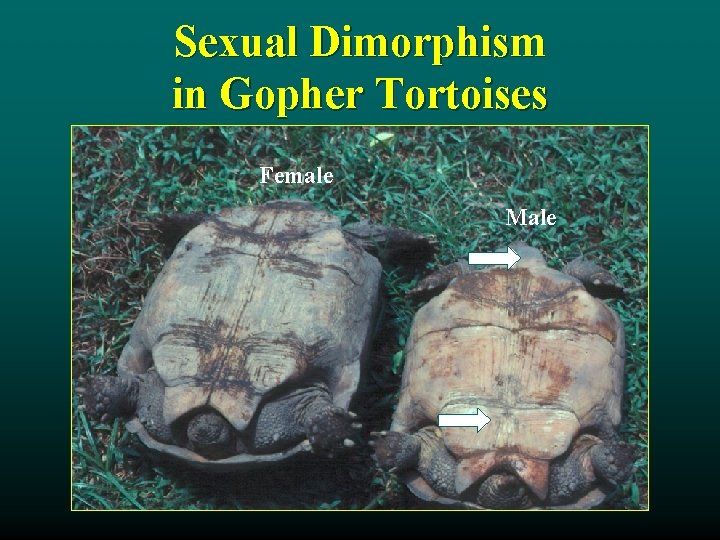
Sexual Dimorphism in Gopher Tortoises Female Male
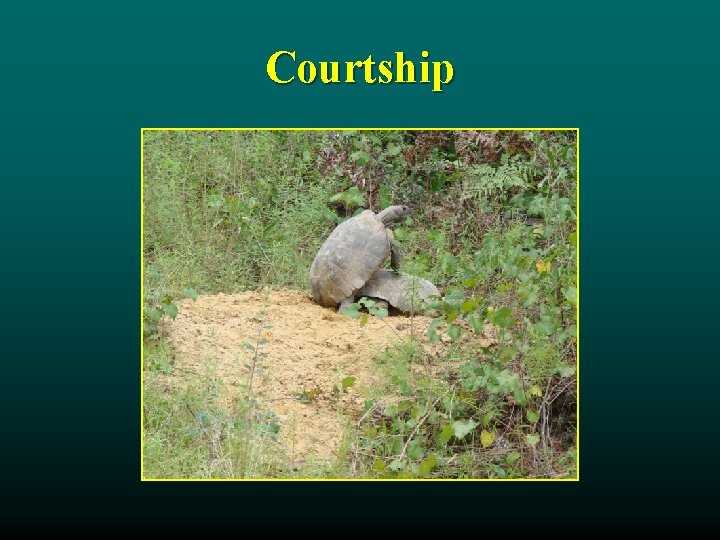
Courtship
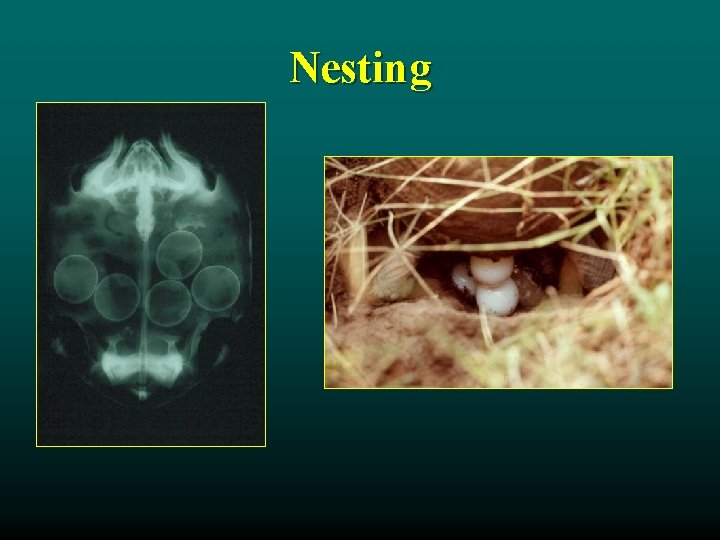
Nesting
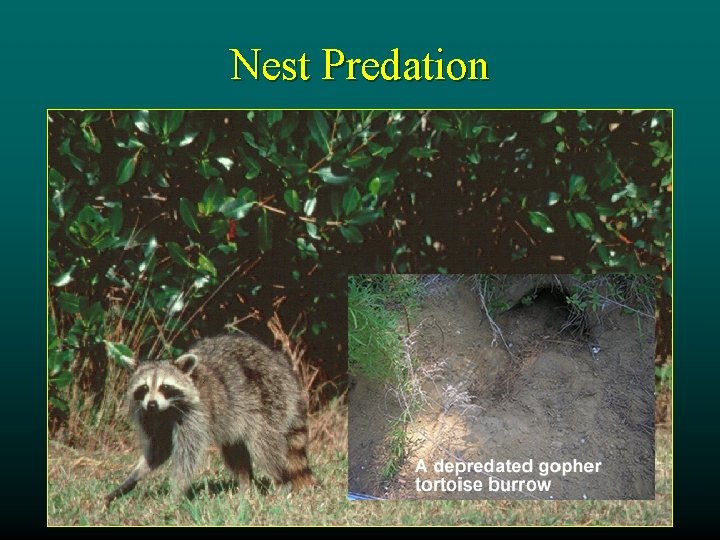
Nest Predation
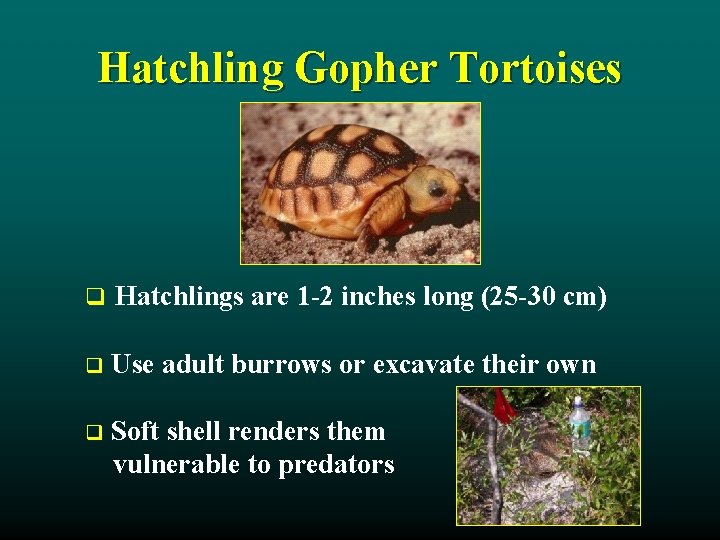
Hatchling Gopher Tortoises q Hatchlings are 1 -2 inches long (25 -30 cm) q Use adult burrows or excavate their own q Soft shell renders them vulnerable to predators
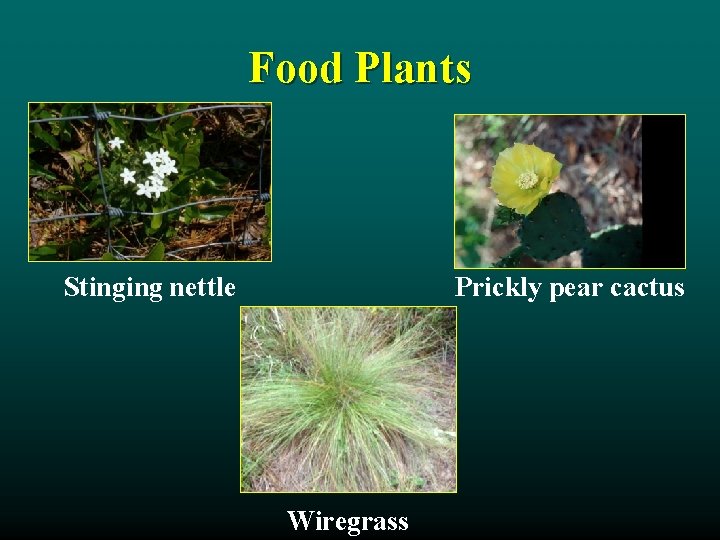
Food Plants Stinging nettle Prickly pear cactus Wiregrass
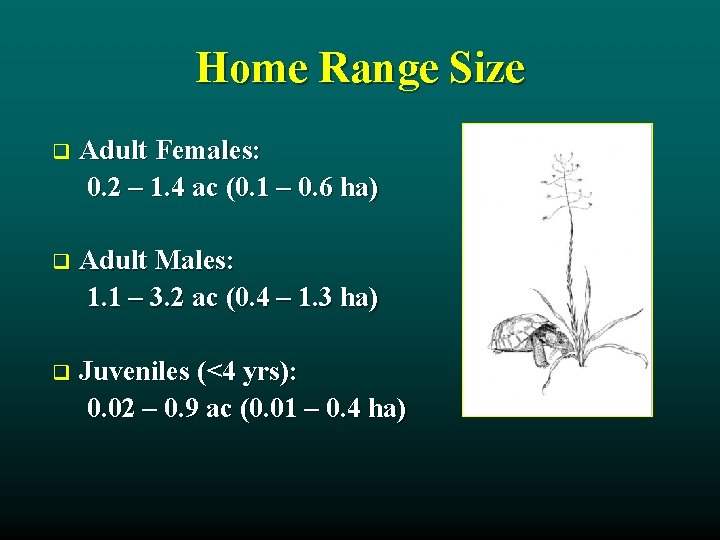
Home Range Size q Adult Females: 0. 2 – 1. 4 ac (0. 1 – 0. 6 ha) q Adult Males: 1. 1 – 3. 2 ac (0. 4 – 1. 3 ha) q Juveniles (<4 yrs): 0. 02 – 0. 9 ac (0. 01 – 0. 4 ha)
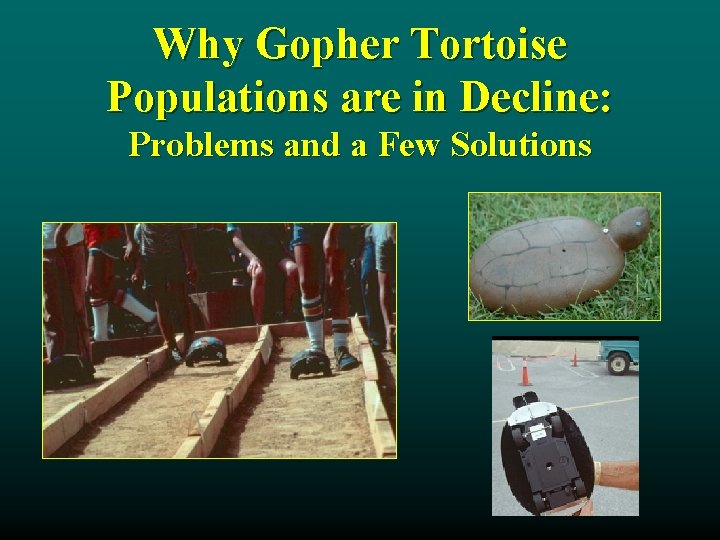
Why Gopher Tortoise Populations are in Decline: Problems and a Few Solutions
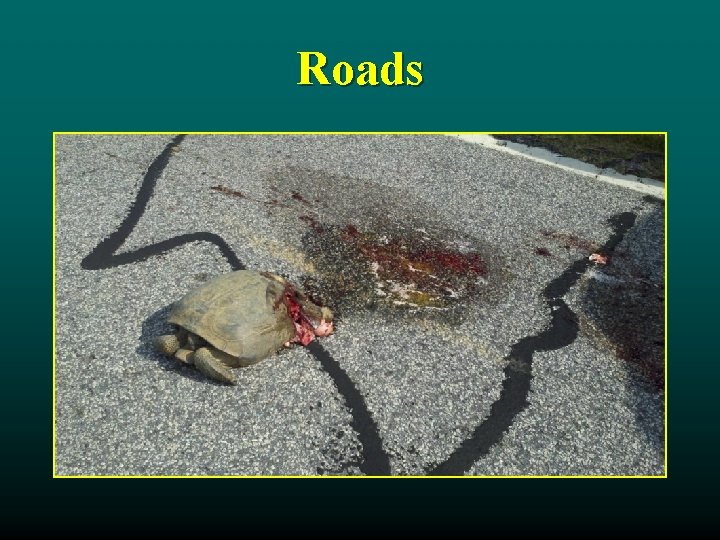
Roads
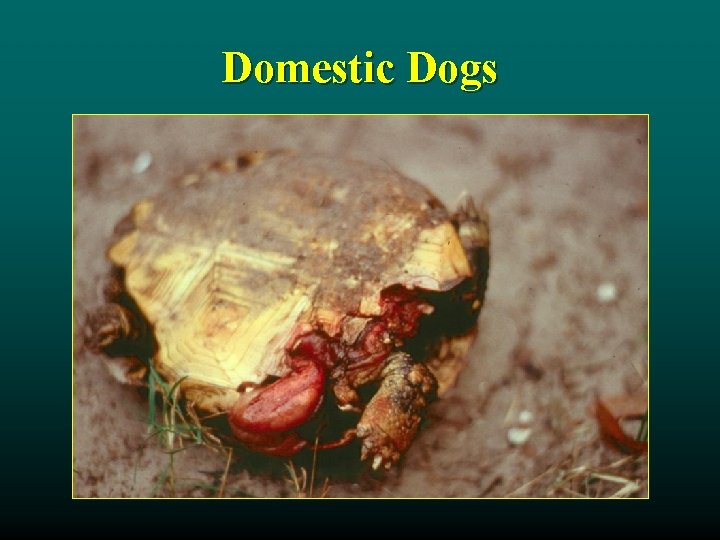
Domestic Dogs
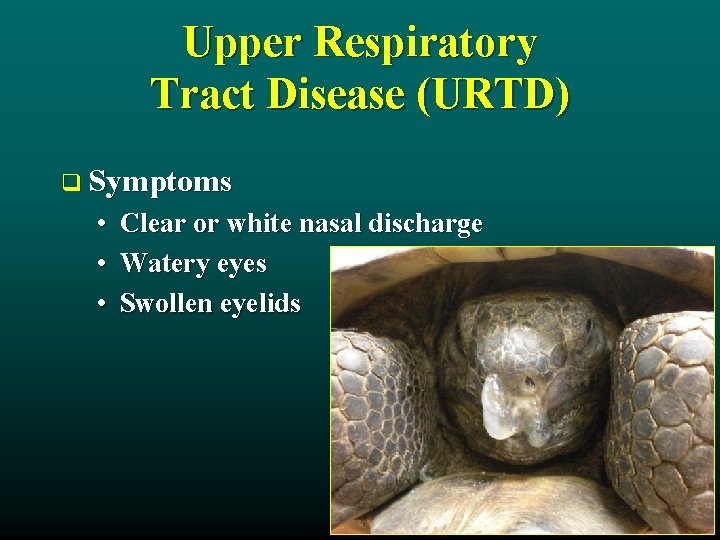
Upper Respiratory Tract Disease (URTD) q Symptoms • • • Clear or white nasal discharge Watery eyes Swollen eyelids
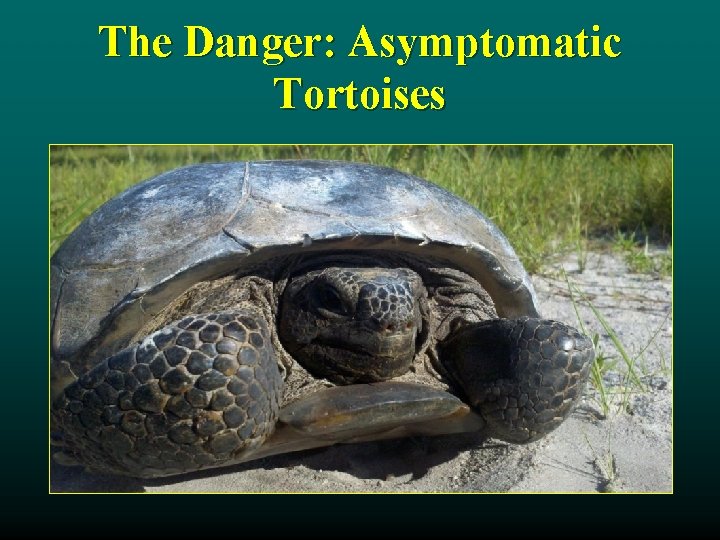
The Danger: Asymptomatic Tortoises
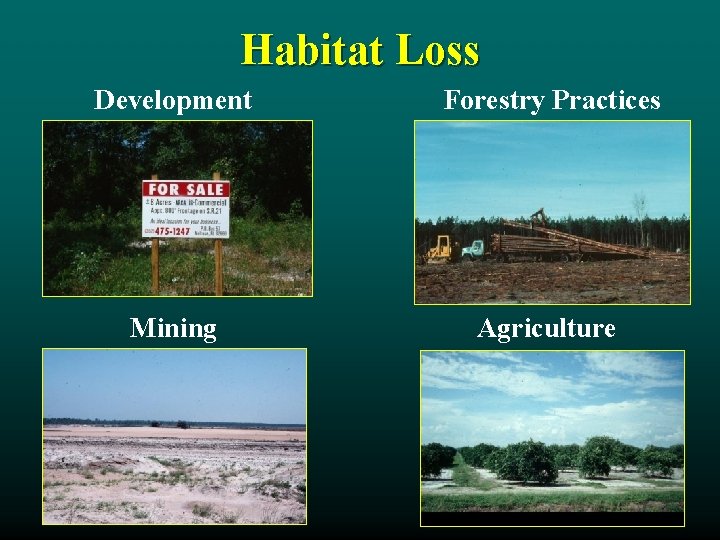
Habitat Loss Development Forestry Practices Mining Agriculture
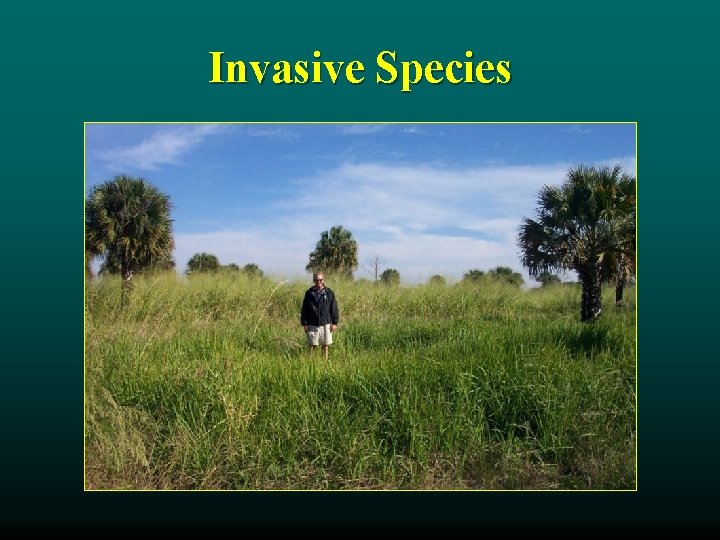
Invasive Species
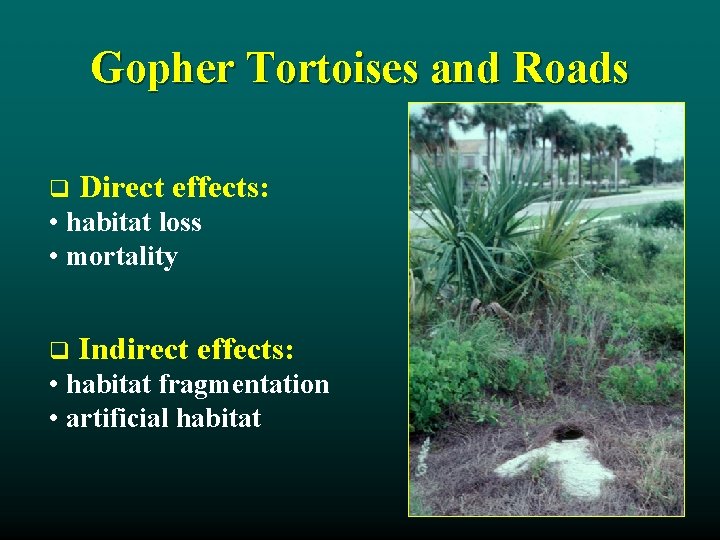
Gopher Tortoises and Roads q Direct effects: • habitat loss • mortality q Indirect effects: • habitat fragmentation • artificial habitat
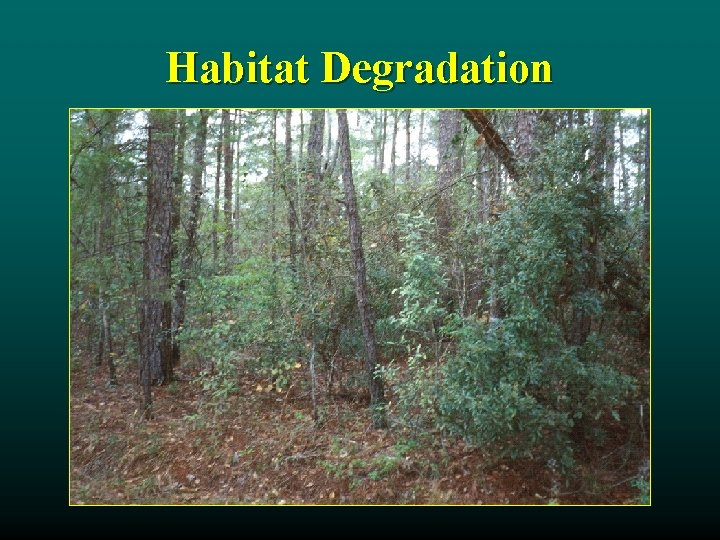
Habitat Degradation
Options q Avoid impacting burrows- flag burrows before timber harvest q Set aside on-site preserves/on-site relocation q Relocate tortoises off-site q Pay attention to road bankings/ slopes q Incidental Take/ Mitigation Banking- Florida • Protect (and manage) habitat off-site
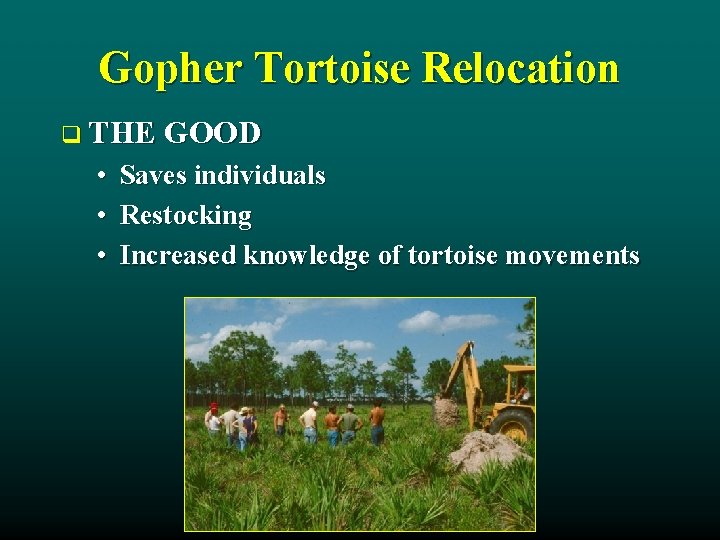
Gopher Tortoise Relocation q THE GOOD • • • Saves individuals Restocking Increased knowledge of tortoise movements
Gopher Tortoise Relocation q THE BAD… AND THE UGLY • • • Net loss of habitat Tortoises often leave relocation site Disruption of resident populations Labor intensive/costly Transmission of disease Diverts conservation funds
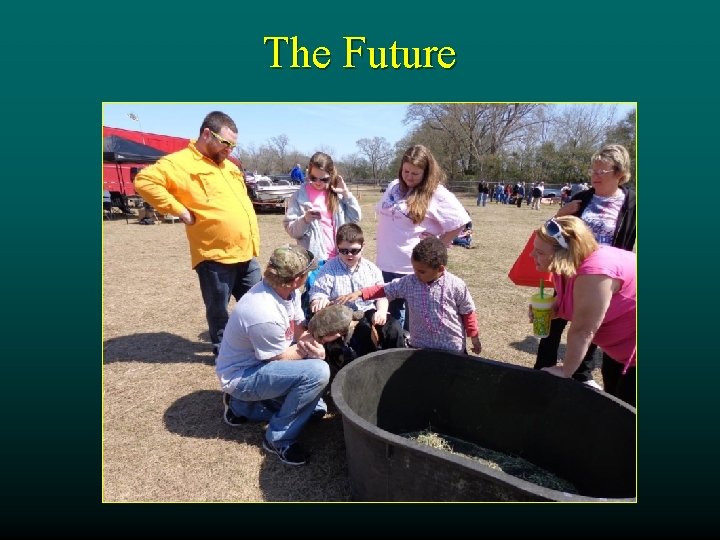
The Future
Land Management: the Use of Prescribed Fire
Creative Conservation at Work q The Nature Conservancy- habitat acquisition and land stewardship q Mitigation Banking q County-wide land conservation measures q Gopher Tortoise Conservation Initiative q Tortoise Reserve Program
What You Can Do q Landscape with native plant species (many are food plants of gopher tortoises) q Become active in conservation organizations that promote habitat protection and management q Be a watch dog for tortoises q Write to your local politicians about issues that affect tortoises and their habitat q Vote!
What to do if You Find a Stray Tortoise “Hands off” unless: q On roads, move tortoise to nearest habitat (preferably in direction it was heading) BEWARE OF TRAFFIC! q If sick or injured, contact your local Game Commission or Department of Natural Resources
The Mission of the Gopher Tortoise Council q Education q Habitat protection q Research
For More Information: q Visit our web site: www. gophertortoisecouncil. org q “Like” us on facebook! q Write to us at the following address: Gopher Tortoise Council c/o Florida Museum of Natural History P. O. Box 117800 University of Florida Gainesville, FL 32611 -7800
Thank You!