
The GoGo verbs Tener Poner Hacer Salir Decir
The “Go-Go” verbs Tener, Poner, Hacer Salir, Decir, Venir
Esp 2 Objective v SWBAT determine which verbs have loco yos 30/8/11 Bell work v v What’s special about the verb tener? List some of the differences from other verbs. When you finish, work on your word search.
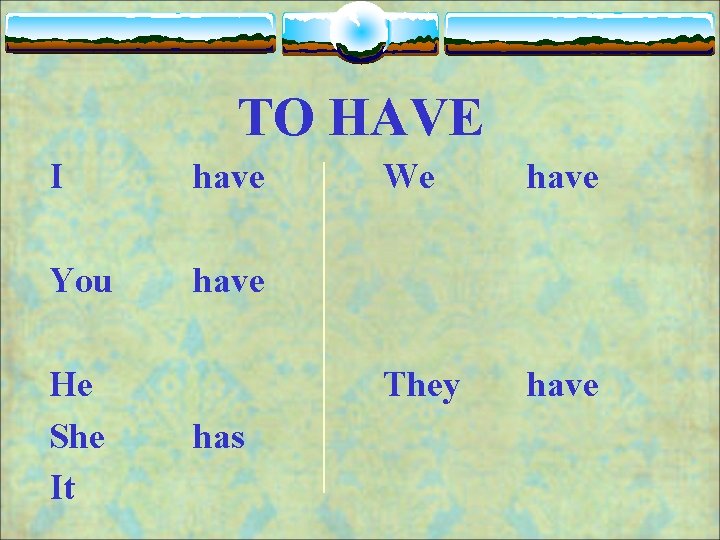
TO HAVE I have You have He She It has We have They have
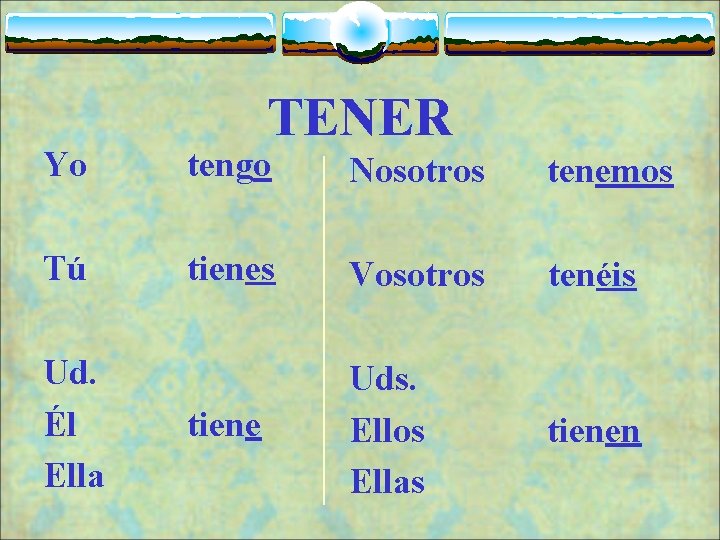
TENER Yo tengo Nosotros tenemos Tú tienes Vosotros tenéis tiene Uds. Ellos Ellas tienen Ud. Él Ella
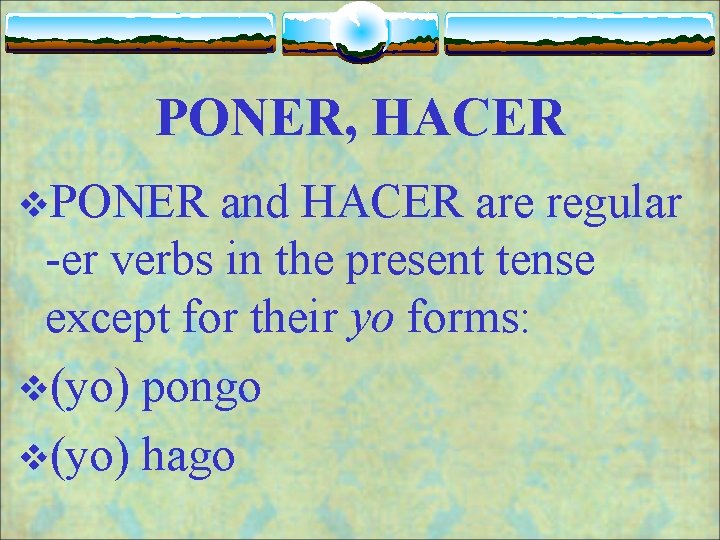
PONER, HACER v. PONER and HACER are regular -er verbs in the present tense except for their yo forms: v(yo) pongo v(yo) hago
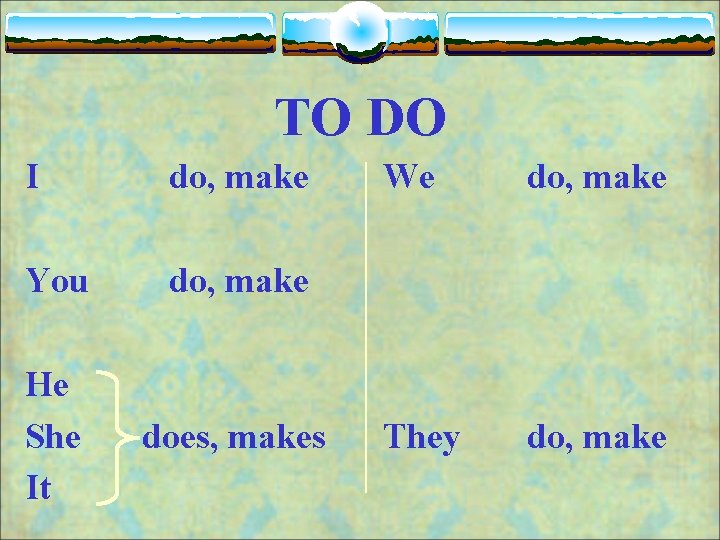
TO DO I do, make You do, make He She It does, makes We do, make They do, make
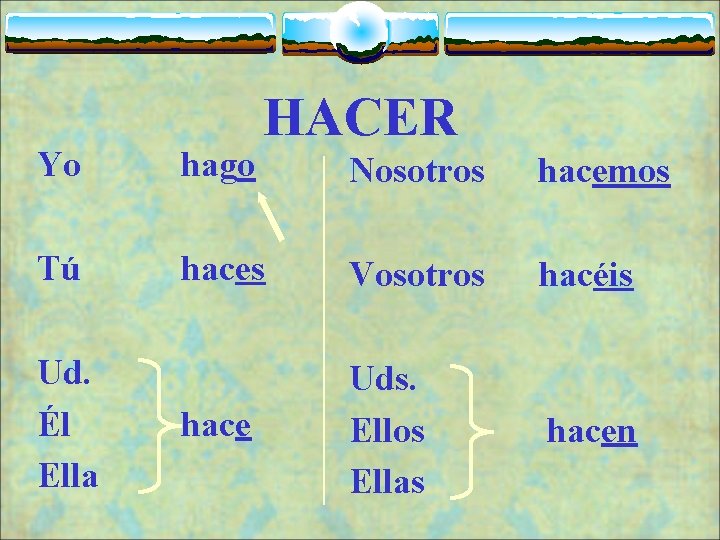
Yo hago Tú Ud. Él Ella HACER Nosotros hacemos haces Vosotros hacéis hace Uds. Ellos Ellas hacen
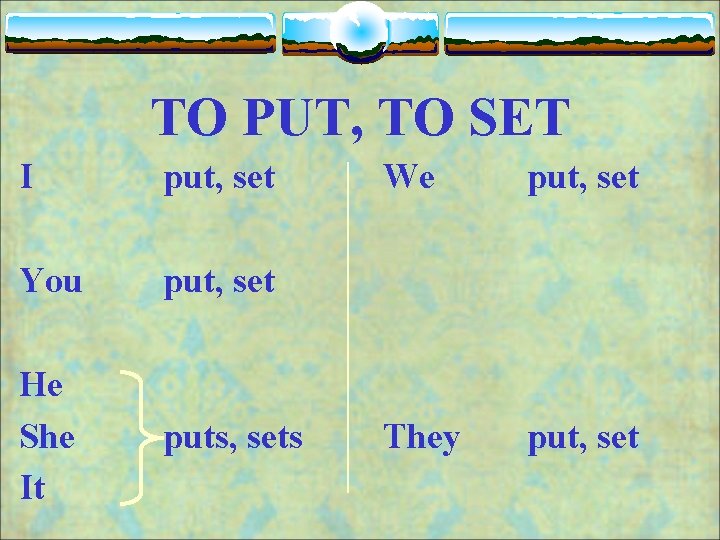
TO PUT, TO SET I put, set You put, set He She It puts, sets We put, set They put, set
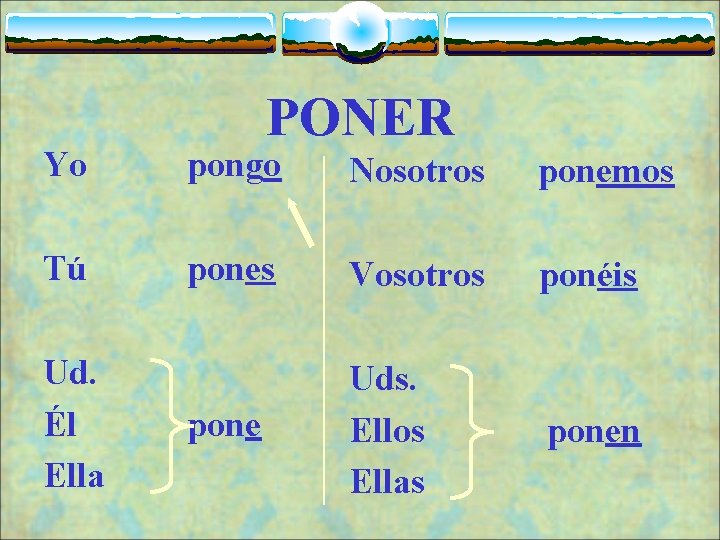
PONER Yo pongo Nosotros ponemos Tú pones Vosotros ponéis pone Uds. Ellos Ellas ponen Ud. Él Ella
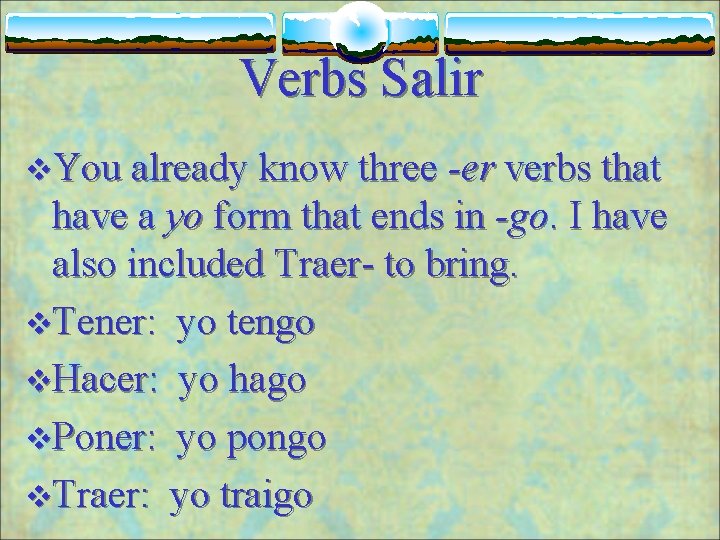
Verbs Salir v. You already know three -er verbs that have a yo form that ends in -go. I have also included Traer- to bring. v. Tener: yo tengo v. Hacer: yo hago v. Poner: yo pongo v. Traer: yo traigo
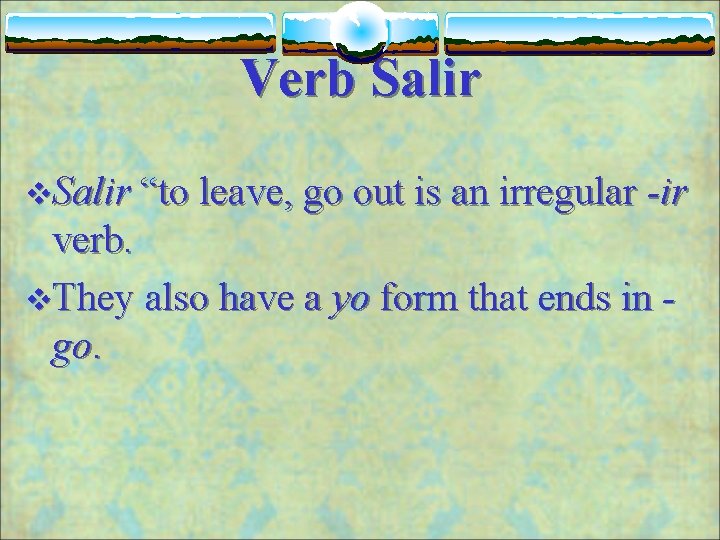
Verb Salir v. Salir “to leave, go out is an irregular -ir verb. v. They also have a yo form that ends in go.
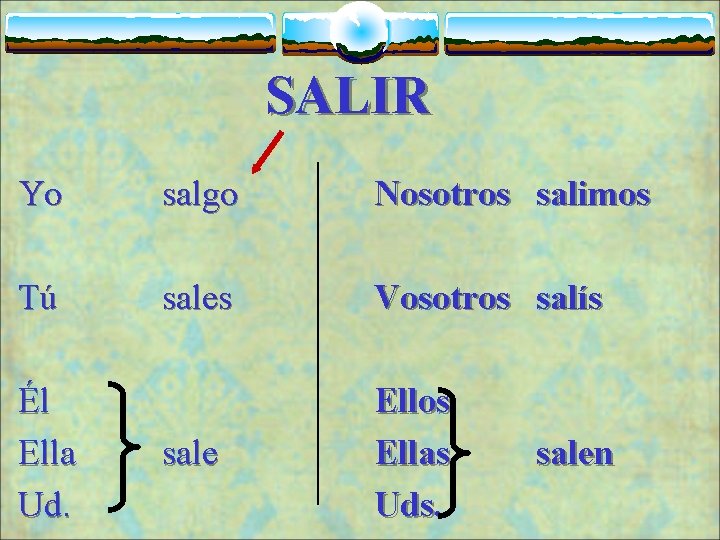
SALIR Yo salgo Nosotros salimos Tú sales Vosotros salís sale Ellos Ellas Uds. Él Ella Ud. salen
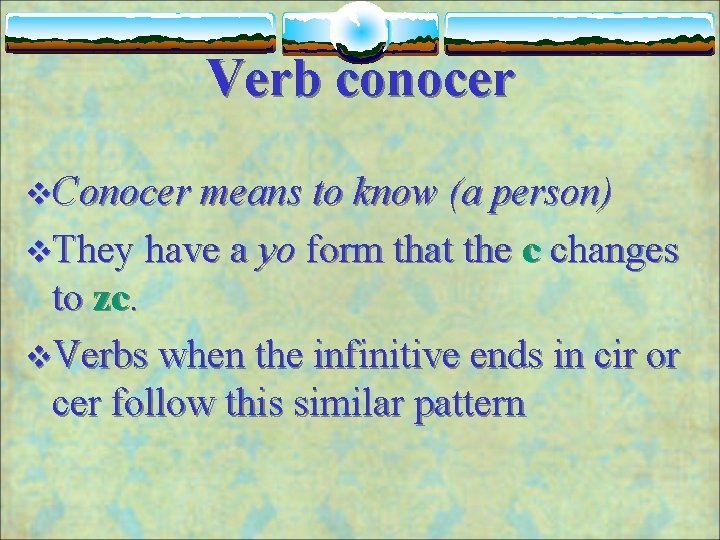
Verb conocer v. Conocer means to know (a person) v. They have a yo form that the c changes to zc. v. Verbs when the infinitive ends in cir or cer follow this similar pattern
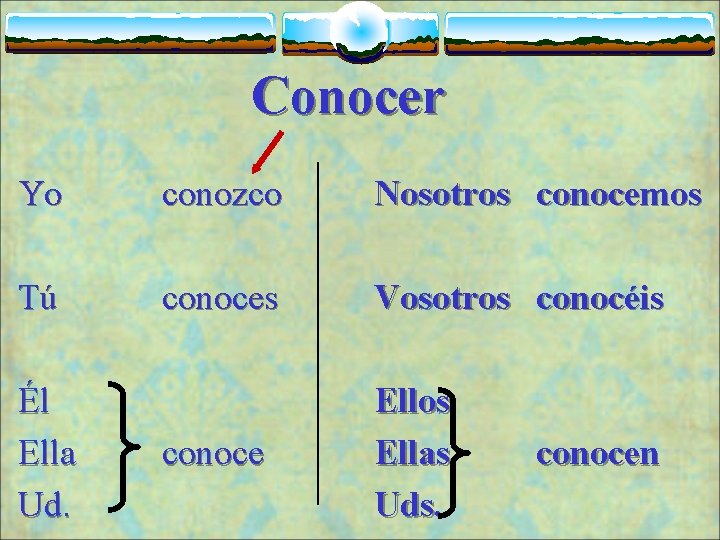
Conocer Yo conozco Nosotros conocemos Tú conoces Vosotros conocéis conoce Ellos Ellas Uds. Él Ella Ud. conocen
- Slides: 14