
The Globe Theatre and Renaissance Drama Renaissance is
The Globe Theatre and Renaissance Drama
“Renaissance” is a term which means rebirth. During the Renaissance period, the drama of the Greeks was reborn in spectacular form. Playwrights of this period copied the form and function of the Greek writers, and many of the early plot lines were approximated as well.
Many of the advancements in theatre came about because of the Catholic Church. The Catholic Church had immense power. They were the ONLY church for many years. Masses in Latin. Few people could read or write.
• Church not serving people’s needs • Attendance fell • Drama stumbled upon as teaching tool • People attracted to this way of learning • People came to the churches in droves
• Dramas expanded to other stories • Move to the steps of the churches • Secular material creeps in • Dramas forced to move on – travel • Many performed in “squares” or plazas of towns • Theatres created to house plays
With this, the world of theatre as we now know it was well on its way into the lives of everyday people. The church separated themselves from many of the new performances, and the material of the plays soon became less and less religious. Now the players needed a new place to perform their art.
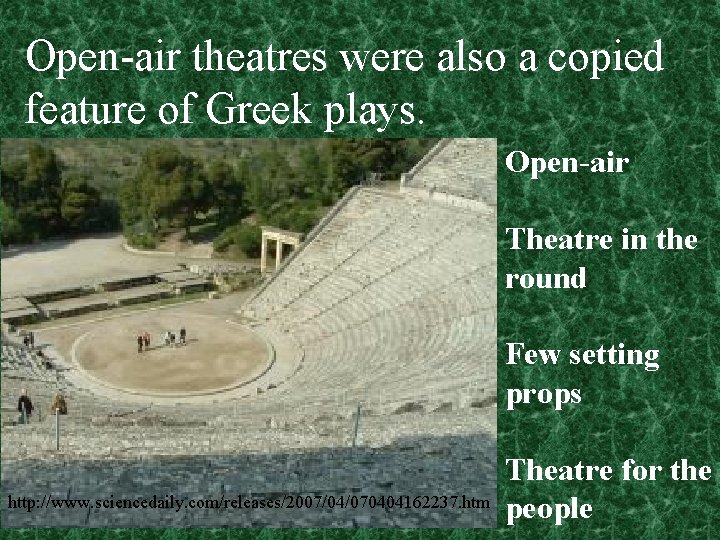
Open-air theatres were also a copied feature of Greek plays. Open-air Theatre in the round Few setting props http: //www. sciencedaily. com/releases/2007/04/070404162237. htm Theatre for the people
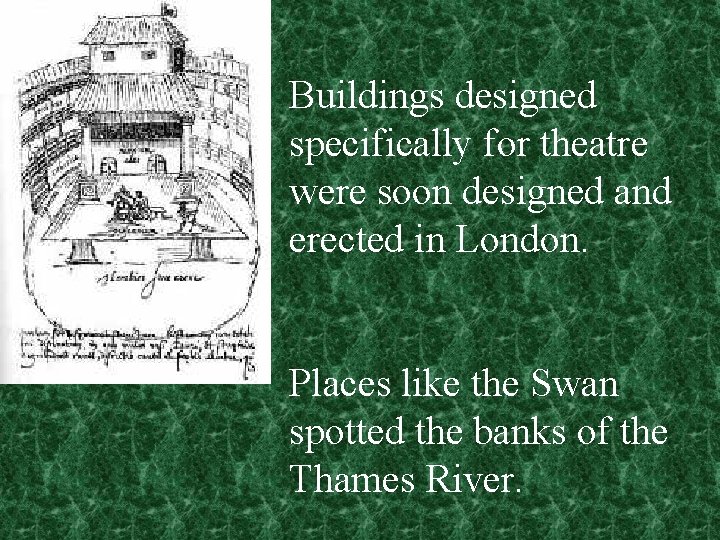
Buildings designed specifically for theatre were soon designed and erected in London. Places like the Swan spotted the banks of the Thames River.
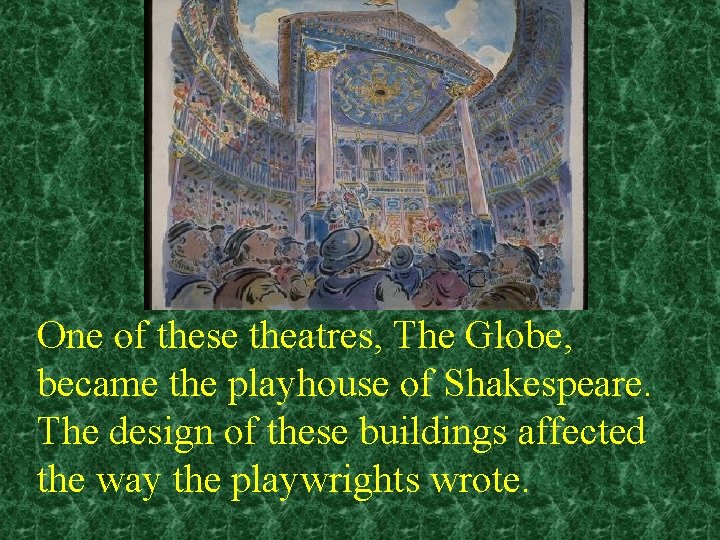
One of these theatres, The Globe, became the playhouse of Shakespeare. The design of these buildings affected the way the playwrights wrote.
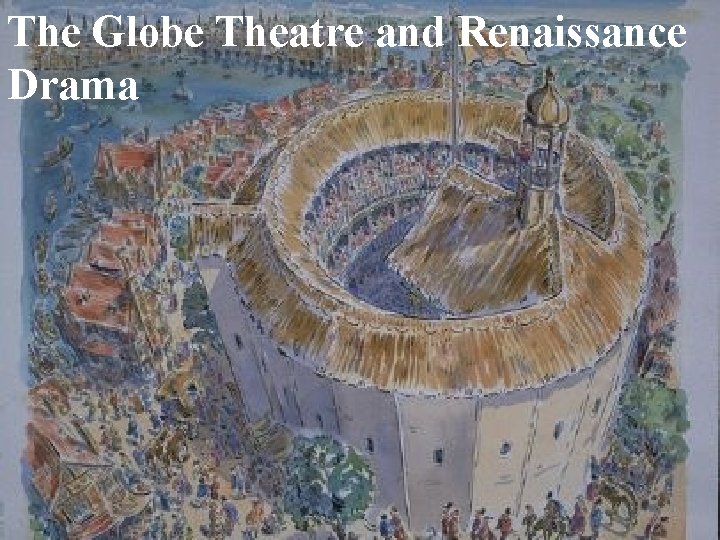
Elizabethan theatres were generally multisided (nearly round) They were open-air (building techniques did not allow for expensive, large structures) Few set designs created Created for the various levels of society
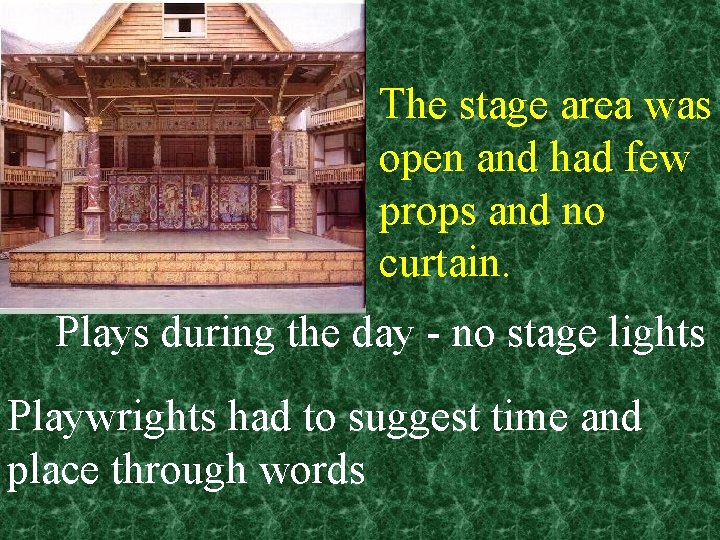
The stage area was open and had few props and no curtain. Plays during the day - no stage lights Playwrights had to suggest time and place through words
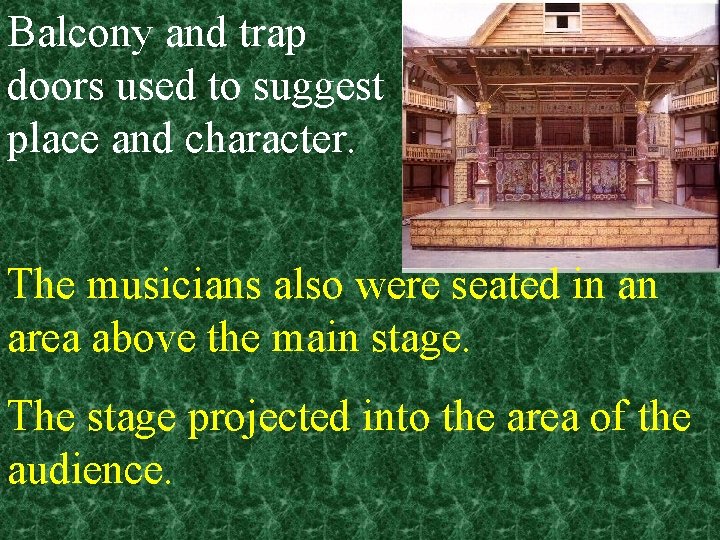
Balcony and trap doors used to suggest place and character. The musicians also were seated in an area above the main stage. The stage projected into the area of the audience.

One section backstage was for costume changes. Technically, we refer to this area as the tiring house.
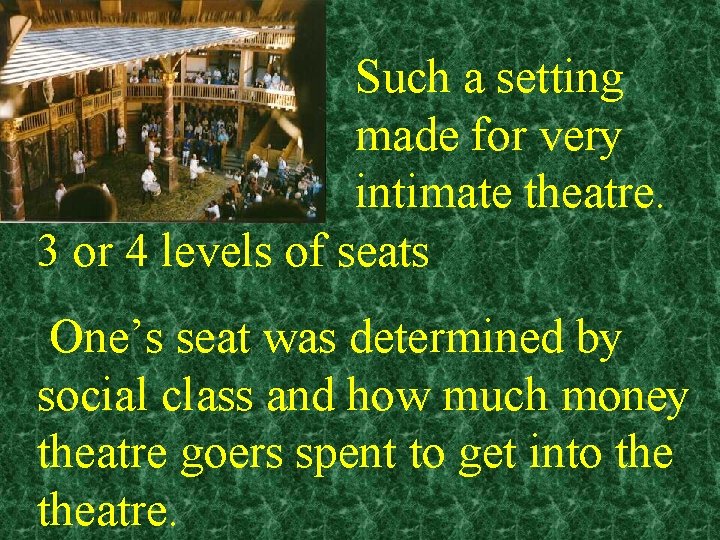
Such a setting made for very intimate theatre. 3 or 4 levels of seats One’s seat was determined by social class and how much money theatre goers spent to get into theatre.
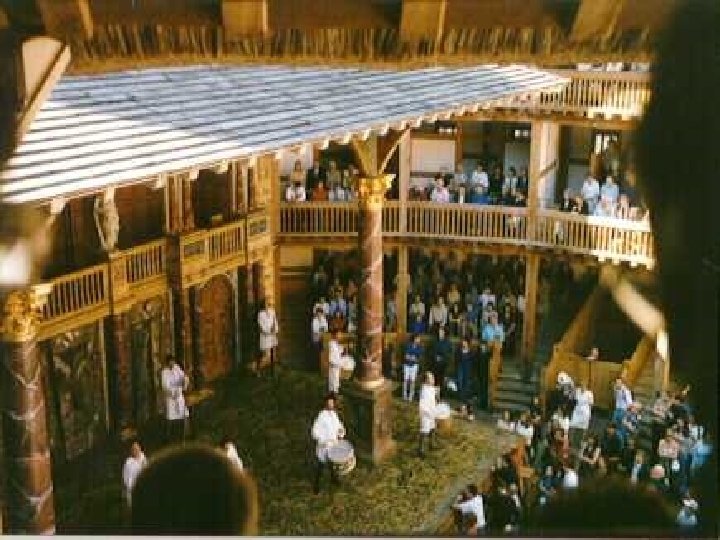
The poorest audience members paid a small amount and sat on the ground (and were called groundlings). To get a seat in the first level, but off the ground, one would pay a penny more. The wealthiest people would pay yet another penny and would sit in the next higher level of seats.
Playwrights of the time wrote for all three levels of the audience. Groundlings - fights and slapstick Middle class - romance and minor intrigue Upper class - actions of the court and deeper plot and themes
People attending these plays made the outing a social event. They would stop at the market and buy vegetables, bread, and drink (often alcohol because the water was dangerous to drink) to take to the play where they would have a picnic. Of course, the food became projectiles if the crowd was not pleased with the performance.
One famous story about The Globe says that the players lost their lease to perform in that building. While the owner was out of town, the troupe tore down theatre, moved it to a new location, and rebuilt the “new” Globe. Records suggest the owner tried unsuccessfully to reclaim his property.
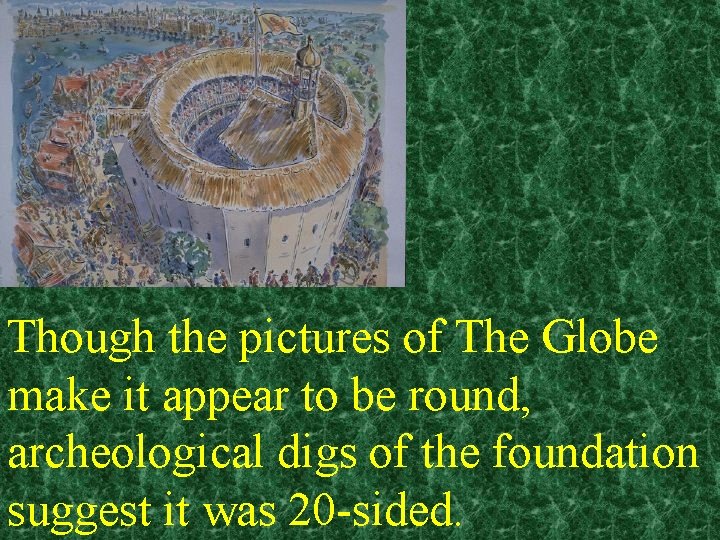
Though the pictures of The Globe make it appear to be round, archeological digs of the foundation suggest it was 20 -sided.

From this we have advanced to the technological marvels of stage and screen that dazzle audiences around the world.

Now, to the play!
- Slides: 23