
The Global IT Market Helping students understand offshore

The Global IT Market: Helping students understand offshore outsourcing and its impacts Dr. Joseph W. Rottman November 06, 2006 Presented to BA 5800 1
Agenda • Explain research base • Explore global trends • Explore impacts to US students workers • Create dialogue 2
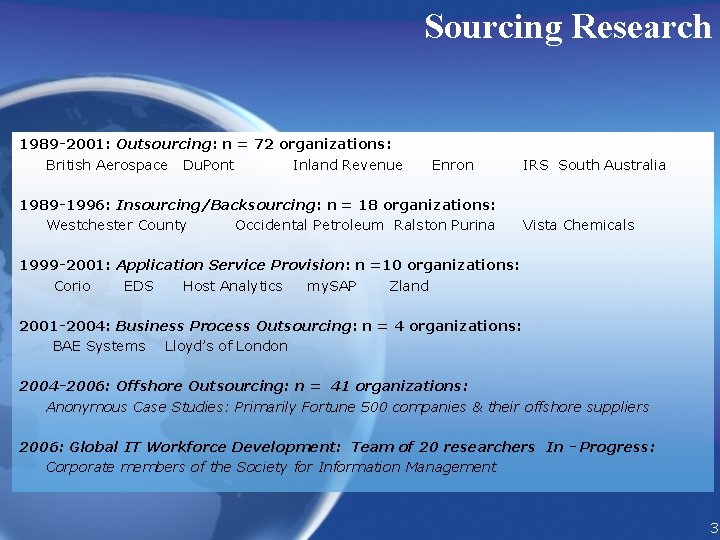
Sourcing Research 1989 -2001: Outsourcing: n = 72 organizations: British Aerospace Du. Pont Inland Revenue Enron 1989 -1996: Insourcing/Backsourcing: n = 18 organizations: Westchester County Occidental Petroleum Ralston Purina IRS South Australia Vista Chemicals 1999 -2001: Application Service Provision: n =10 organizations: Corio EDS Host Analytics my. SAP Zland 2001 -2004: Business Process Outsourcing: n = 4 organizations: BAE Systems Lloyd’s of London 2004 -2006: Offshore Outsourcing: n = 41 organizations: Anonymous Case Studies: Primarily Fortune 500 companies & their offshore suppliers 2006: Global IT Workforce Development: Team of 20 researchers In - Progress: Corporate members of the Society for Information Management 3
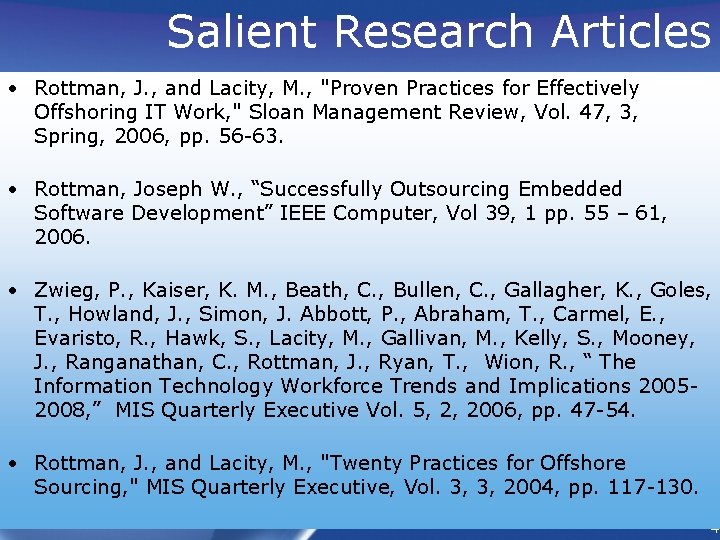
Salient Research Articles • Rottman, J. , and Lacity, M. , "Proven Practices for Effectively Offshoring IT Work, " Sloan Management Review, Vol. 47, 3, Spring, 2006, pp. 56 -63. • Rottman, Joseph W. , “Successfully Outsourcing Embedded Software Development” IEEE Computer, Vol 39, 1 pp. 55 – 61, 2006. • Zwieg, P. , Kaiser, K. M. , Beath, C. , Bullen, C. , Gallagher, K. , Goles, T. , Howland, J. , Simon, J. Abbott, P. , Abraham, T. , Carmel, E. , Evaristo, R. , Hawk, S. , Lacity, M. , Gallivan, M. , Kelly, S. , Mooney, J. , Ranganathan, C. , Rottman, J. , Ryan, T. , Wion, R. , “ The Information Technology Workforce Trends and Implications 20052008, ” MIS Quarterly Executive Vol. 5, 2, 2006, pp. 47 -54. • Rottman, J. , and Lacity, M. , "Twenty Practices for Offshore Sourcing, " MIS Quarterly Executive, Vol. 3, 3, 2004, pp. 117 -130. 4
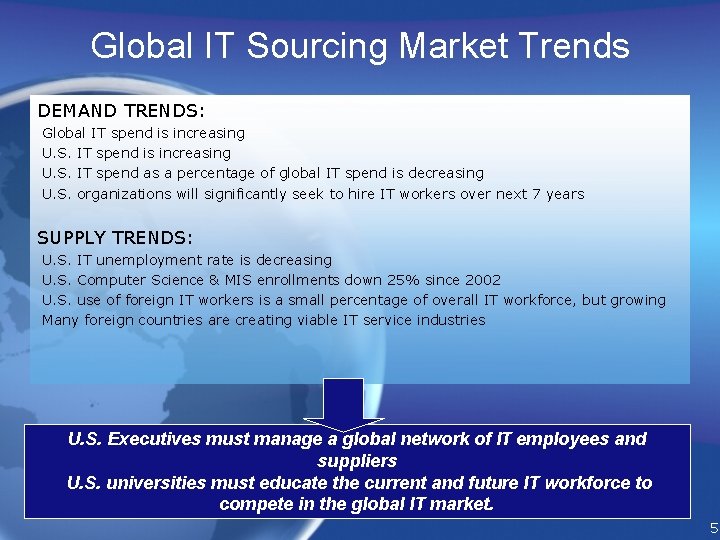
Global IT Sourcing Market Trends DEMAND TRENDS: Global IT spend is increasing U. S. IT spend as a percentage of global IT spend is decreasing U. S. organizations will significantly seek to hire IT workers over next 7 years SUPPLY TRENDS: U. S. IT unemployment rate is decreasing U. S. Computer Science & MIS enrollments down 25% since 2002 U. S. use of foreign IT workers is a small percentage of overall IT workforce, but growing Many foreign countries are creating viable IT service industries U. S. Executives must manage a global network of IT employees and suppliers U. S. universities must educate the current and future IT workforce to compete in the global IT market. 5
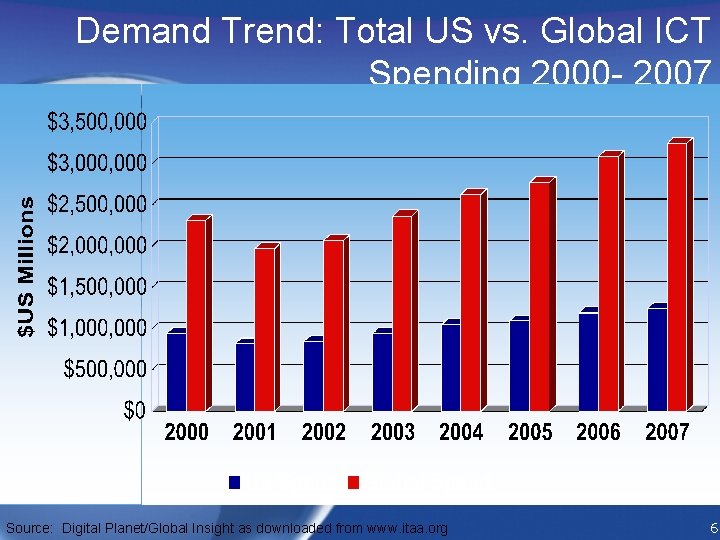
Demand Trend: Total US vs. Global ICT Spending 2000 - 2007 Source: Digital Planet/Global Insight as downloaded from www. itaa. org 6
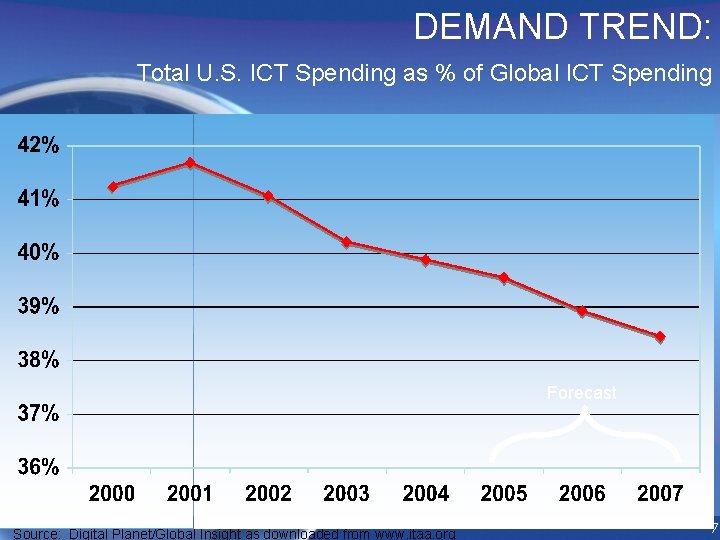
DEMAND TREND: Total U. S. ICT Spending as % of Global ICT Spending Forecast Source: Digital Planet/Global Insight as downloaded from www. itaa. org 7
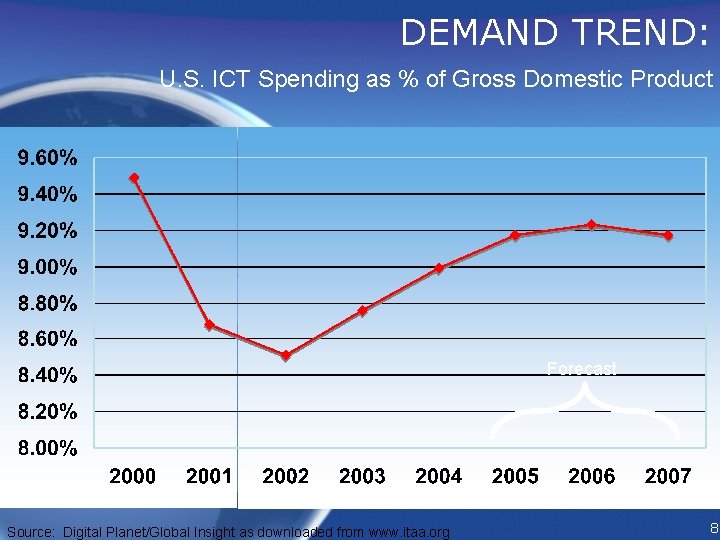
DEMAND TREND: U. S. ICT Spending as % of Gross Domestic Product Forecast Source: Digital Planet/Global Insight as downloaded from www. itaa. org 8
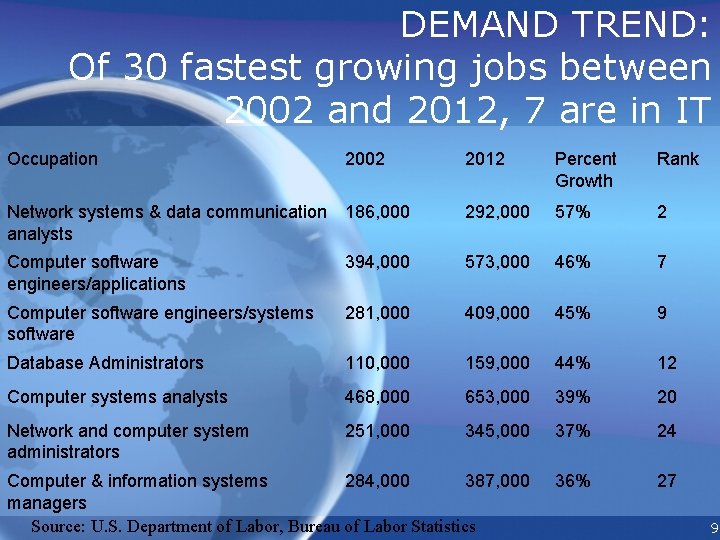
DEMAND TREND: Of 30 fastest growing jobs between 2002 and 2012, 7 are in IT Occupation 2002 2012 Percent Growth Rank Network systems & data communication 186, 000 analysts 292, 000 57% 2 Computer software engineers/applications 394, 000 573, 000 46% 7 Computer software engineers/systems software 281, 000 409, 000 45% 9 Database Administrators 110, 000 159, 000 44% 12 Computer systems analysts 468, 000 653, 000 39% 20 Network and computer system administrators 251, 000 345, 000 37% 24 Computer & information systems 284, 000 387, 000 managers Source: U. S. Department of Labor, Bureau of Labor Statistics 36% 27 9
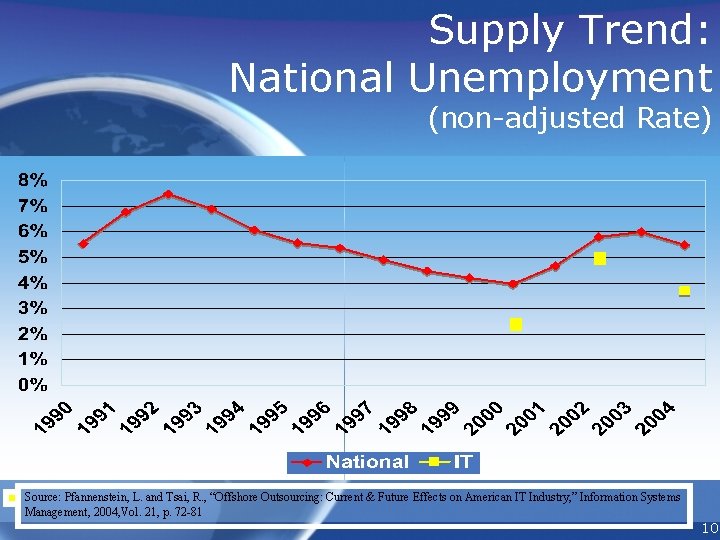
Supply Trend: National Unemployment (non-adjusted Rate) Source: Pfannenstein, L. and Tsai, R. , “Offshore Outsourcing: Current & Future Effects on American IT Industry, ” Information Systems Management, 2004, Vol. 21, p. 72 -81 10
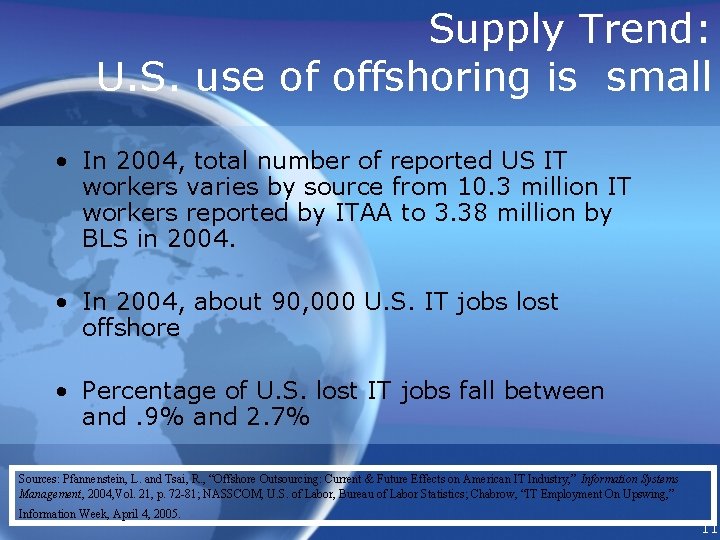
Supply Trend: U. S. use of offshoring is small • In 2004, total number of reported US IT workers varies by source from 10. 3 million IT workers reported by ITAA to 3. 38 million by BLS in 2004. • In 2004, about 90, 000 U. S. IT jobs lost offshore • Percentage of U. S. lost IT jobs fall between and. 9% and 2. 7% Sources: Pfannenstein, L. and Tsai, R. , “Offshore Outsourcing: Current & Future Effects on American IT Industry, ” Information Systems Management, 2004, Vol. 21, p. 72 -81; NASSCOM, U. S. of Labor, Bureau of Labor Statistics; Chabrow, “IT Employment On Upswing, ” Information Week, April 4, 2005. 11
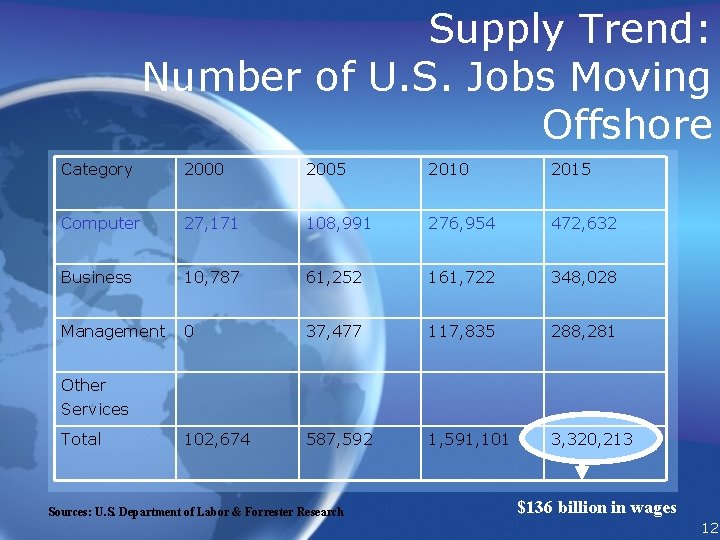
Supply Trend: Number of U. S. Jobs Moving Offshore Category 2000 2005 2010 2015 Computer 27, 171 108, 991 276, 954 472, 632 Business 10, 787 61, 252 161, 722 348, 028 Management 0 37, 477 117, 835 288, 281 102, 674 587, 592 1, 591, 101 3, 320, 213 Other Services Total Sources: U. S. Department of Labor & Forrester Research $136 billion in wages 12
The Information Technology Workforce Trends and Implications 2005 -2008 Zwieg, P. , Kaiser, K. M. , Beath, C. , Bullen, C. , Gallagher, K. , Goles, T. , Howland, J. , Simon, J. Abbott, P. , Abraham, T. , Carmel, E. , Evaristo, R. , Hawk, S. , Lacity, M. , Gallivan, M. , Kelly, S. , Mooney, J. , Ranganathan, C. , Rottman, J. , Ryan, T. , Wion, R. , The Information Technology Workforce Trends and Implications 2005 -2008, MIS Quarterly Executive Vol. 5, 2, 2006, pp. 47 -54. 13
Research Method • 20 Academic researchers working in U. S. and Europe • 96 interviews of 81 IT leaders in 77 departments • 82% of respondents are IT top management 14
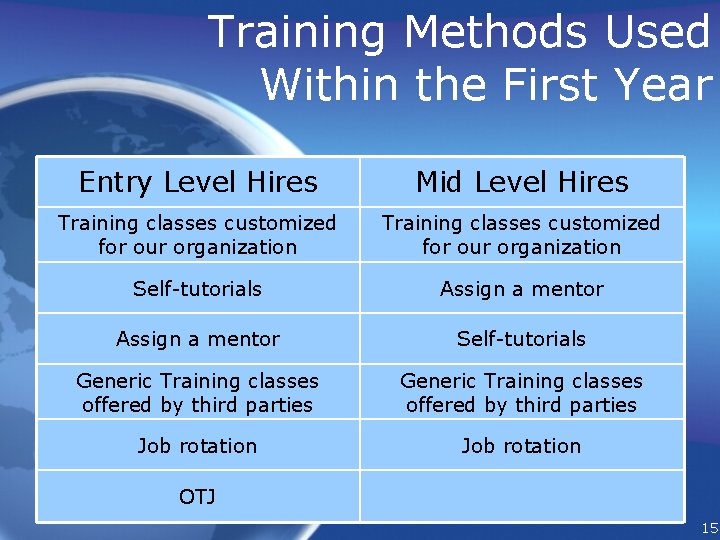
Training Methods Used Within the First Year Entry Level Hires Mid Level Hires Training classes customized for our organization Self-tutorials Assign a mentor Self-tutorials Generic Training classes offered by third parties Job rotation OTJ 15
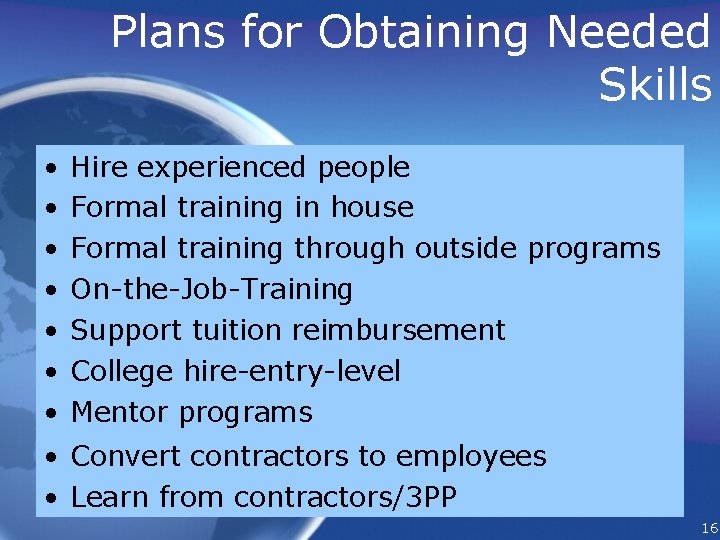
Plans for Obtaining Needed Skills • • Hire experienced people Formal training in house Formal training through outside programs On-the-Job-Training Support tuition reimbursement College hire-entry-level Mentor programs • Convert contractors to employees • Learn from contractors/3 PP 16
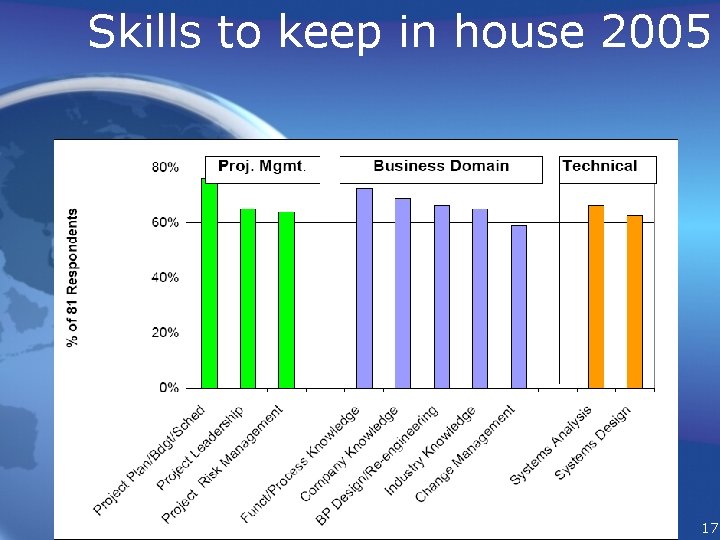
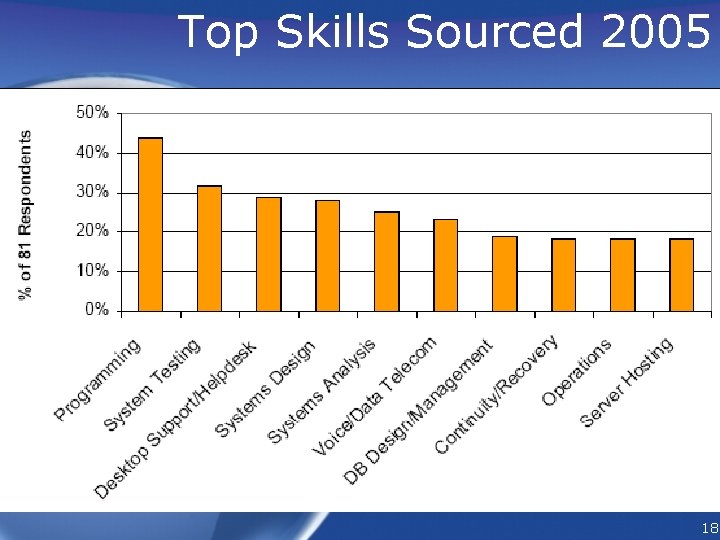
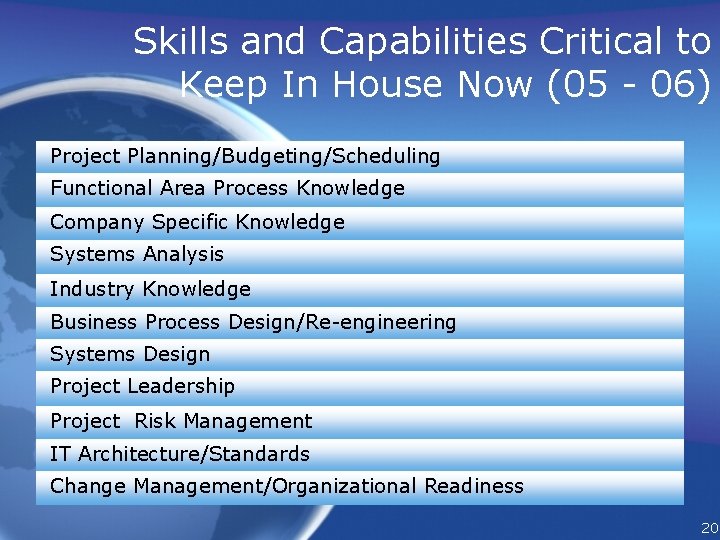
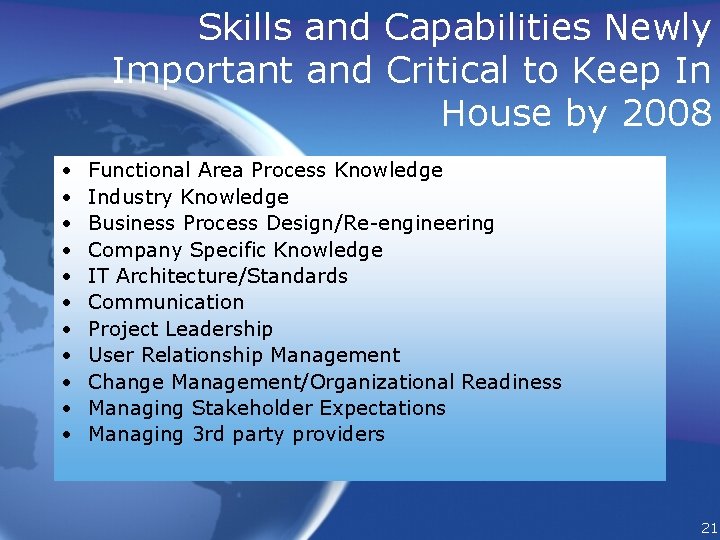
Skills to keep in house 2005 17
Top Skills Sourced 2005 18
Top Desired Entry Level Skills 19
Skills and Capabilities Critical to Keep In House Now (05 - 06) Project Planning/Budgeting/Scheduling Functional Area Process Knowledge Company Specific Knowledge Systems Analysis Industry Knowledge Business Process Design/Re-engineering Systems Design Project Leadership Project Risk Management IT Architecture/Standards Change Management/Organizational Readiness 20
Skills and Capabilities Newly Important and Critical to Keep In House by 2008 • • • Functional Area Process Knowledge Industry Knowledge Business Process Design/Re-engineering Company Specific Knowledge IT Architecture/Standards Communication Project Leadership User Relationship Management Change Management/Organizational Readiness Managing Stakeholder Expectations Managing 3 rd party providers 21
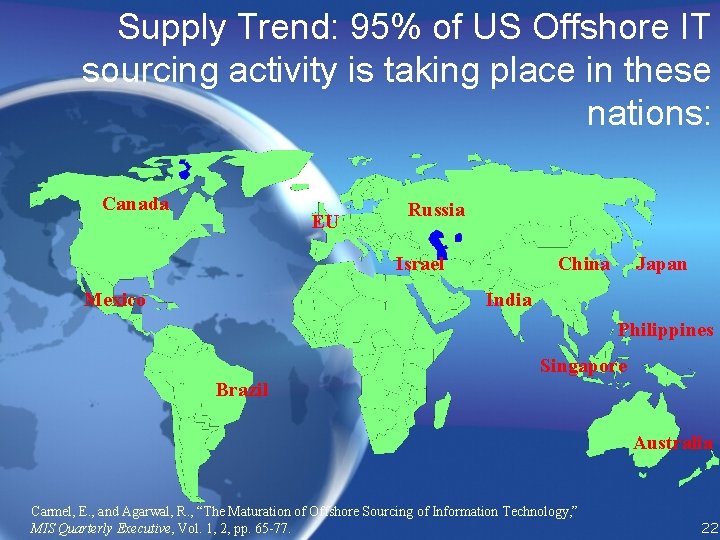
Supply Trend: 95% of US Offshore IT sourcing activity is taking place in these nations: Canada EU Russia Israel Mexico China Japan India Philippines Singapore Brazil Australia Carmel, E. , and Agarwal, R. , “The Maturation of Offshore Sourcing of Information Technology, ” MIS Quarterly Executive, Vol. 1, 2, pp. 65 -77. 22
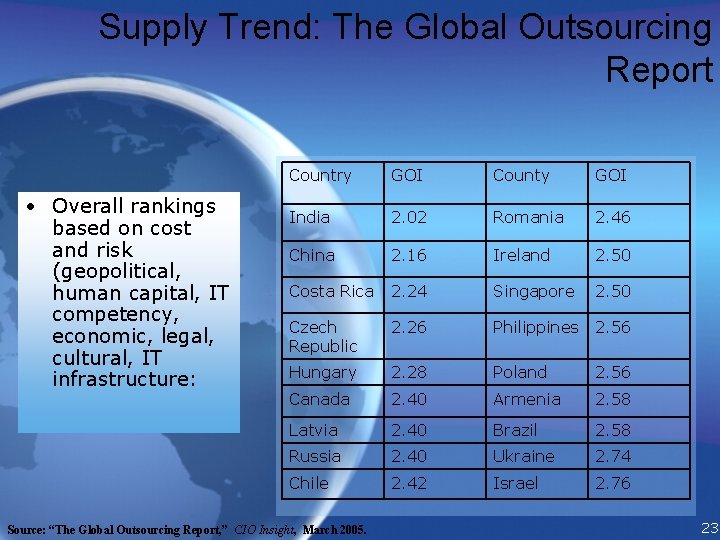
Supply Trend: The Global Outsourcing Report • Overall rankings based on cost and risk (geopolitical, human capital, IT competency, economic, legal, cultural, IT infrastructure: Country GOI County GOI India 2. 02 Romania 2. 46 China 2. 16 Ireland 2. 50 Costa Rica 2. 24 Singapore 2. 50 Czech Republic 2. 26 Philippines 2. 56 Hungary 2. 28 Poland 2. 56 Canada 2. 40 Armenia 2. 58 Latvia 2. 40 Brazil 2. 58 Russia 2. 40 Ukraine 2. 74 Chile 2. 42 Israel 2. 76 Source: “The Global Outsourcing Report, ” CIO Insight, March 2005. 23
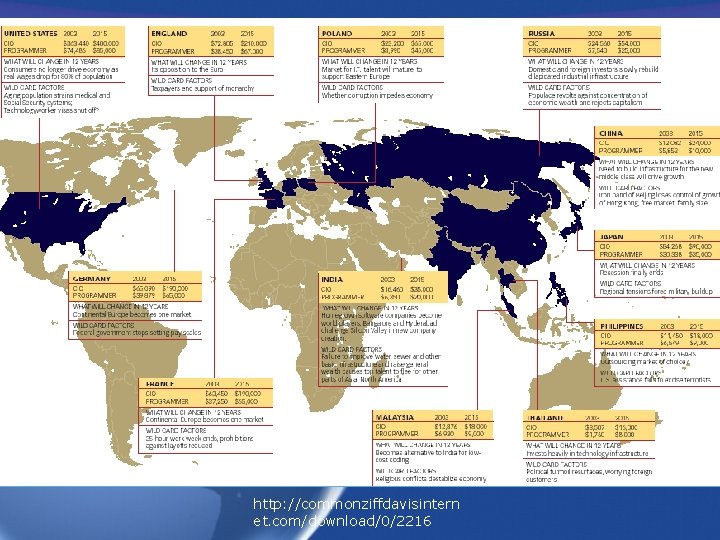
http: //commonziffdavisintern et. com/download/0/2216
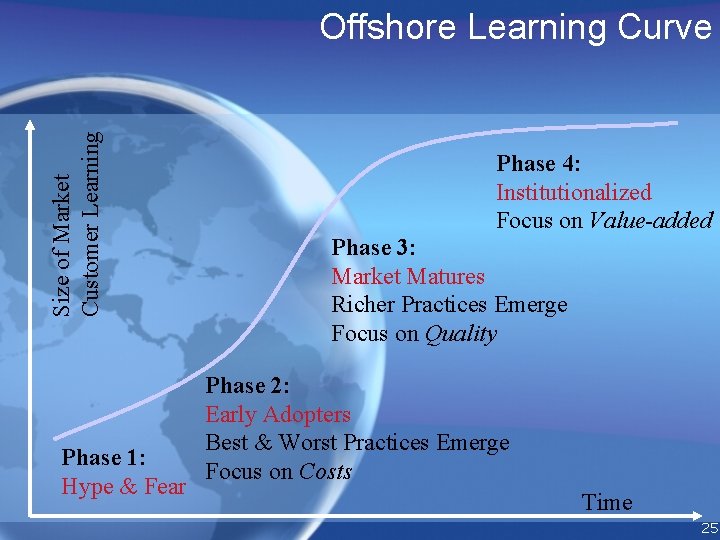
Size of Market Customer Learning Offshore Learning Curve Phase 1: Hype & Fear Phase 4: Institutionalized Focus on Value-added Phase 3: Market Matures Richer Practices Emerge Focus on Quality Phase 2: Early Adopters Best & Worst Practices Emerge Focus on Costs Time 25
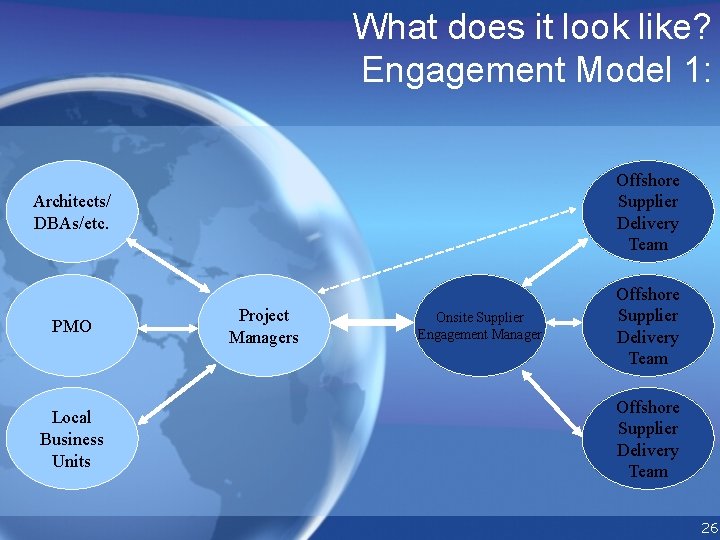
What does it look like? Engagement Model 1: Architects/ DBAs/etc. Offshore Supplier Delivery Team PMO Offshore Supplier Delivery Team Local Business Units Project Managers Onsite Supplier Engagement Manager Offshore Supplier Delivery Team 26
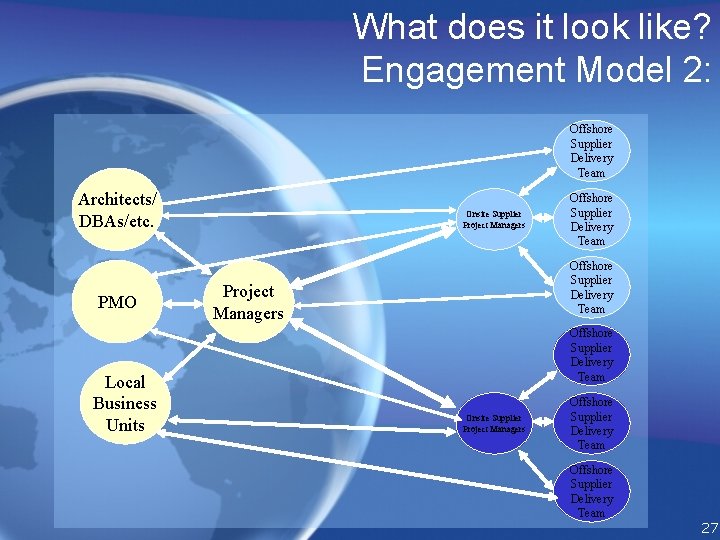
What does it look like? Engagement Model 2: Offshore Supplier Delivery Team Architects/ DBAs/etc. PMO Local Business Units Onsite Supplier Project Managers Offshore Supplier Delivery Team Onsite Supplier Project Managers Offshore Supplier Delivery Team 27
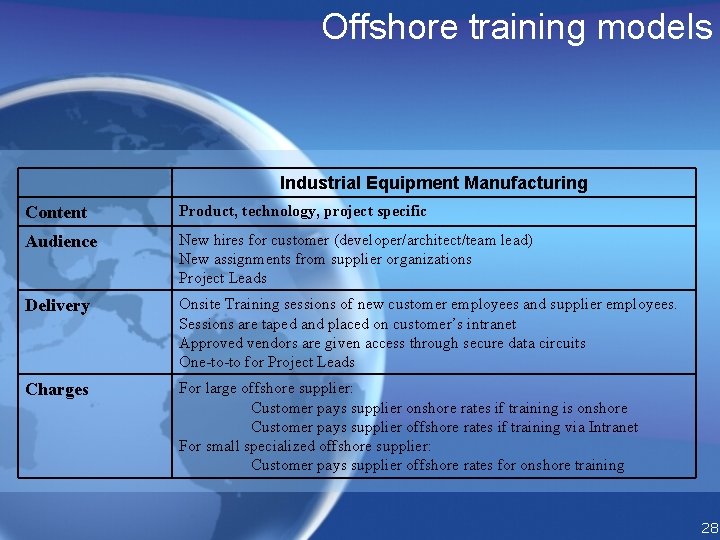
Offshore training models Industrial Equipment Manufacturing Content Product, technology, project specific Audience New hires for customer (developer/architect/team lead) New assignments from supplier organizations Project Leads Delivery Onsite Training sessions of new customer employees and supplier employees. Sessions are taped and placed on customer’s intranet Approved vendors are given access through secure data circuits One-to-to for Project Leads Charges For large offshore supplier: Customer pays supplier onshore rates if training is onshore Customer pays supplier offshore rates if training via Intranet For small specialized offshore supplier: Customer pays supplier offshore rates for onshore training 28
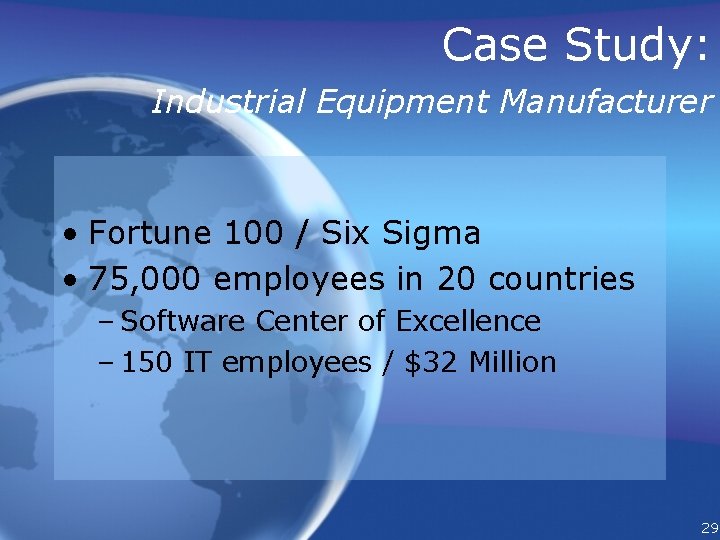
Case Study: Industrial Equipment Manufacturer • Fortune 100 / Six Sigma • 75, 000 employees in 20 countries – Software Center of Excellence – 150 IT employees / $32 Million 29
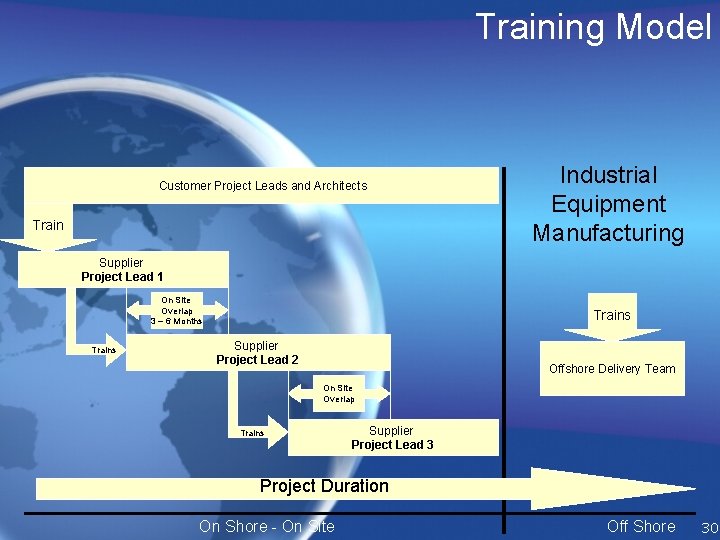
Training Model Customer Project Leads and Architects Train Industrial Equipment Manufacturing Supplier Project Lead 1 On Site Overlap 3 – 6 Months Trains Supplier Project Lead 2 Offshore Delivery Team On Site Overlap Trains Supplier Project Lead 3 Project Duration On Shore - On Site Off Shore 30
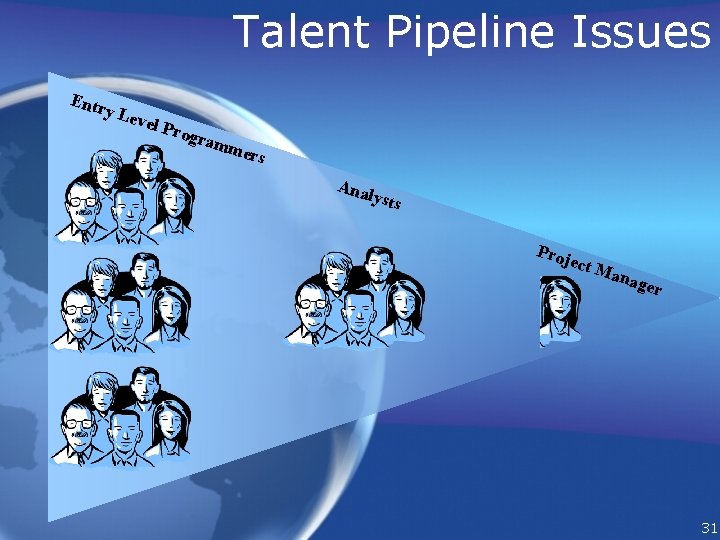
Talent Pipeline Issues Entr y Leve l Pro gram mer s Ana lysts Proj ect M anag er 31
Conclusion • Research Base • Career Implications and Trends • Case Study 32
- Slides: 32