
The Global Harmonization Initiative GHI Food safety regulations
The Global Harmonization Initiative (GHI) Food safety regulations based on science Kirsten Brandt & Huub Lelieveld
Safe and authentic food • Food must correspond to ‘what it says on the tin’ and not contain banned substances • Otherwise it is adulterated or contaminated • Such food is considered fraudulent or unsafe or both • When discovered, the food containing the illegal constituents is usually confiscated and destroyed
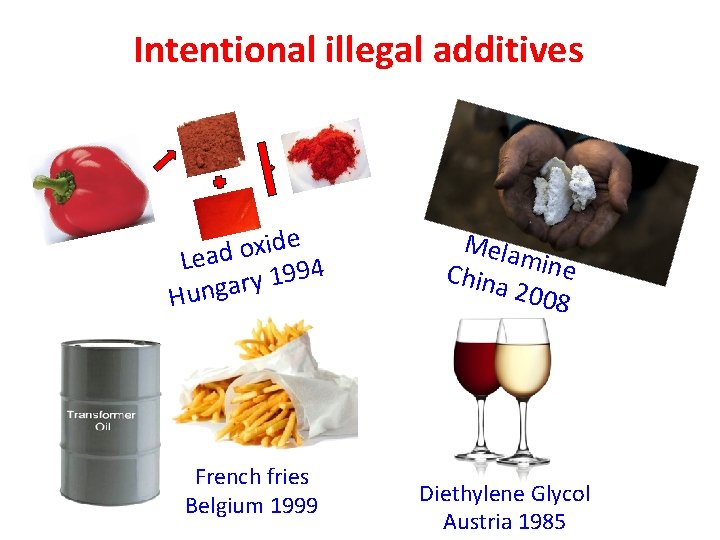
Intentional illegal additives e d i x o d Lea 94 9 1 y r Hunga French fries Belgium 1999 Mela mine China 2008 Diethylene Glycol Austria 1985
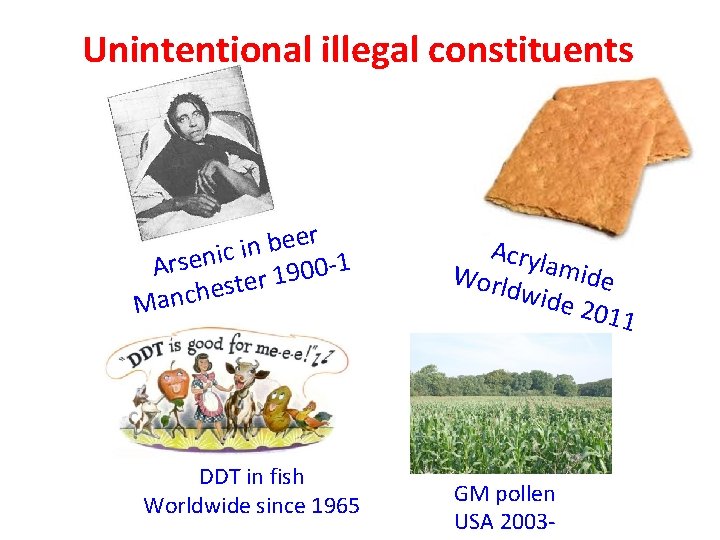
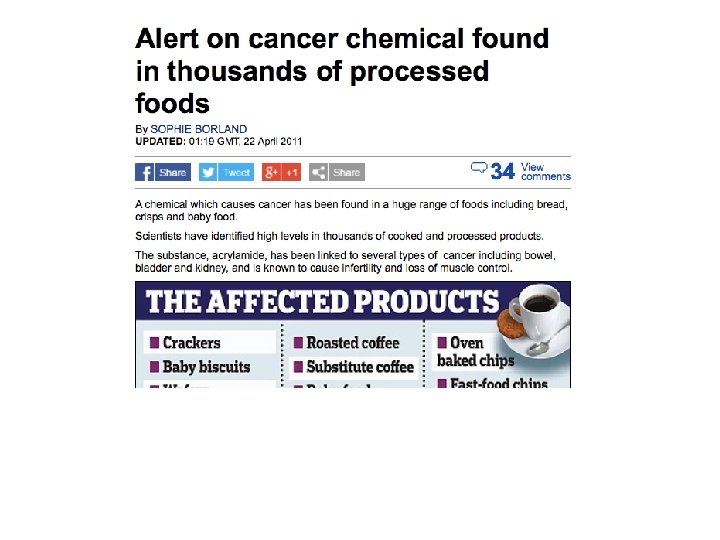
Unintentional illegal constituents r e e b in c i n e s -1 Ar 0 0 9 1 er t s e h c Man DDT in fish Worldwide since 1965 Acryl Worl amide dwid e 201 1 GM pollen USA 2003 -
• In some cases it is evident that consumption of the food would entail a health risk for the consumer • In other cases this is not the case, and destruction of the food is an unjustifiable waste of food and money • Science should be used to define appropriate distinctions between safe and unsafe food • National regulations should be harmonised to prevent unnecessary waste of safe food
Chemicals that are not allowed but nevertheless present in food are not necessarily additives. Most man-made chemicals occur in nature in concentrations that can be detected now, but not previously. They are produced by • animals • microbes (bacteria, fungi, parasites) • plants • geochemical processes (e. g. volcanos) This includes chlorinated organic compounds. More than 5000 different natural organic halogens have been identified in nature G. W. Gribble. Chemosphere 52 (2003), 289– 297 and Heterocycles, 84 (1) (2011), 157 -207.
30 -03 -2012 USA: Carbendazim in orange juice Carbendazim is approved as pesticide in many countries, but not the United States. MRLs (maximum residual levels) for carbendazim EU: 100 ppb - 700 ppb Canada: 500 - 6000 ppb USA: 10 ppb US Environmental Protection Agency: “. . . consumption of orange juice with carbendazim at the low levels that have been reported does not raise public health concerns. ” GHI
Organic food contain more natural pesticides than conventional food Most pesticides are organic

Natural, potentially toxic substances in food • • • solanine (potatoes, tomatoes, aubergines) tomatine (tomatoes) oxalates (rhubarb, chard) polyacetylenes (carrots) glucosinolates such as progoitrin (broccoli) 9
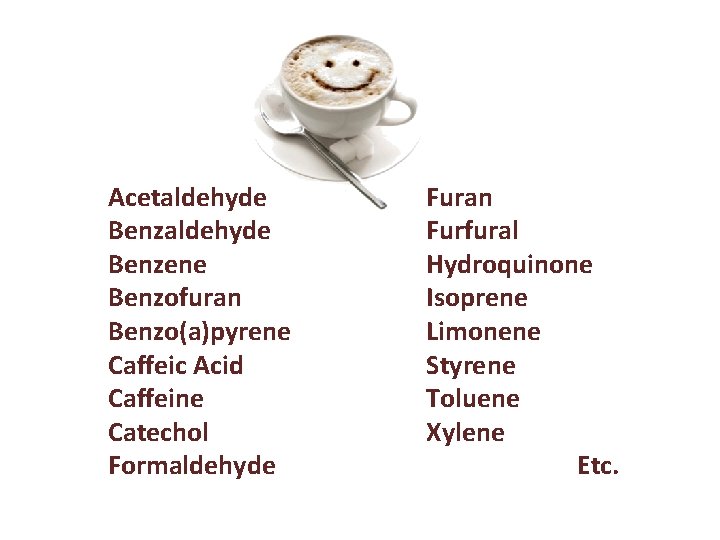
Acetaldehyde Benzene Benzofuran Benzo(a)pyrene Caffeic Acid Caffeine Catechol Formaldehyde Furan Furfural Hydroquinone Isoprene Limonene Styrene Toluene Xylene Etc.
Differences in regulations • result in needless destruction of healthy food in a world where a billion people have very little or no food • hamper international trade and innovation
The making of food safety regulations The main problem is the lack of understanding of toxicity by • politicians • general public • activists (antis) • press and the strong influence of professional lobbyists
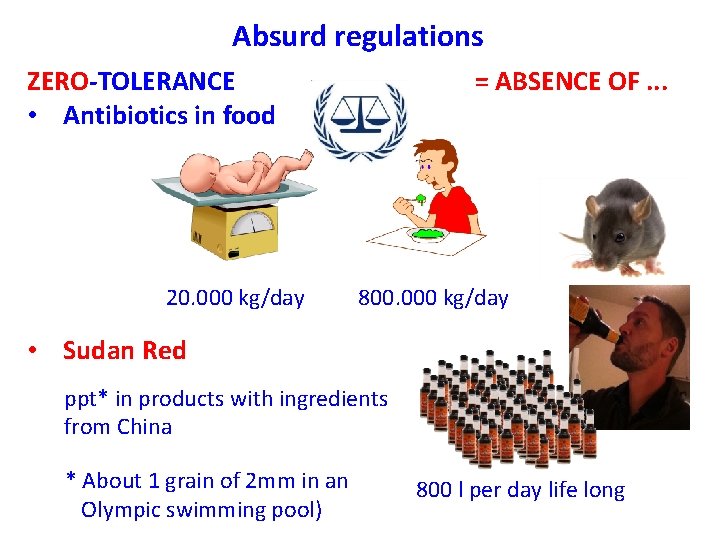
Absurd regulations = ABSENCE OF. . . ZERO-TOLERANCE • Antibiotics in food 20. 000 kg/day 800. 000 kg/day • Sudan Red ppt* in products with ingredients from China * About 1 grain of 2 mm in an Olympic swimming pool) 800 l per day life long
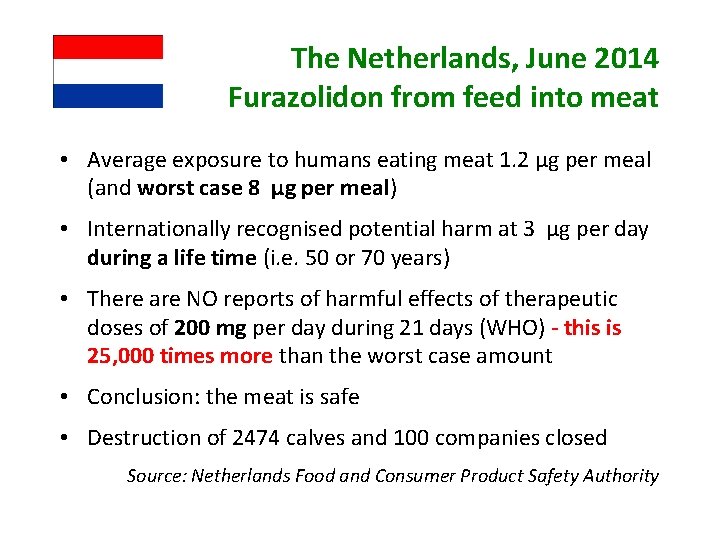
The Netherlands, June 2014 Furazolidon from feed into meat • Average exposure to humans eating meat 1. 2 μg per meal (and worst case 8 μg per meal) • Internationally recognised potential harm at 3 μg per day during a life time (i. e. 50 or 70 years) • There are NO reports of harmful effects of therapeutic doses of 200 mg per day during 21 days (WHO) - this is 25, 000 times more than the worst case amount • Conclusion: the meat is safe • Destruction of 2474 calves and 100 companies closed Source: Netherlands Food and Consumer Product Safety Authority
If chemicals have been added illegally: • those responsible should be prosecuted • the product should be confiscated • but if safe, the product should not be destroyed
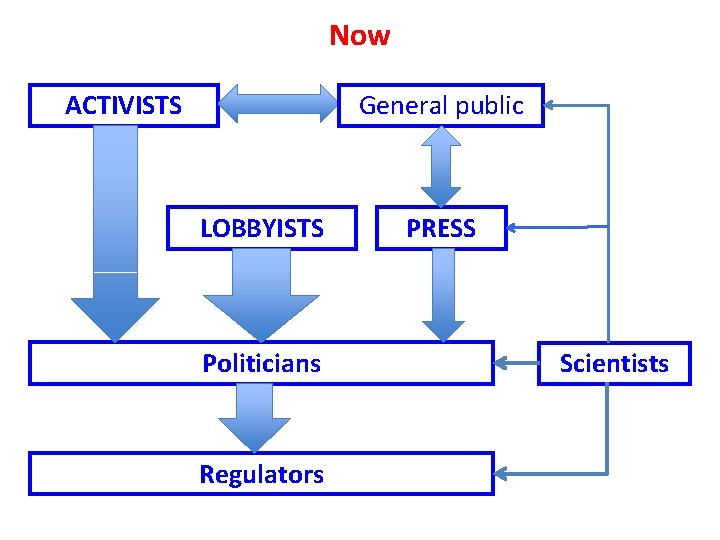
Now ACTIVISTS General public LOBBYISTS Politicians Regulators PRESS Scientists
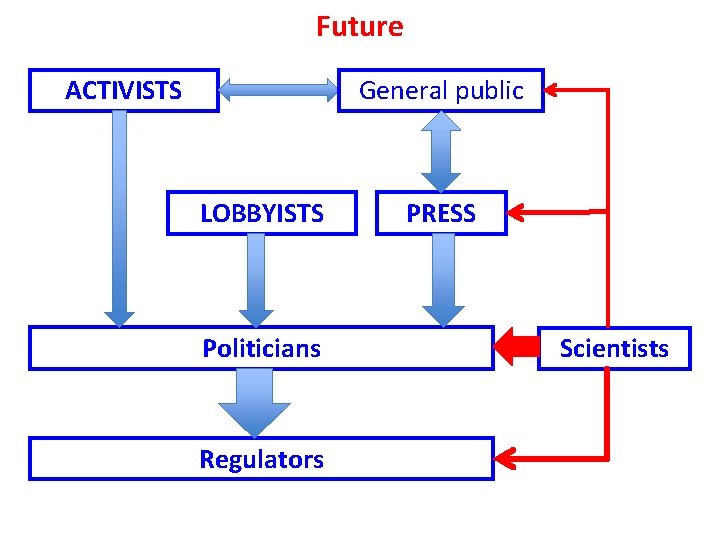
Future ACTIVISTS General public LOBBYISTS Politicians Regulators PRESS Scientists
The Global Harmonization Initiative wants to improve food regulations and remove absurd regulations by obtaining global scientific consensus and convincing those who need to know
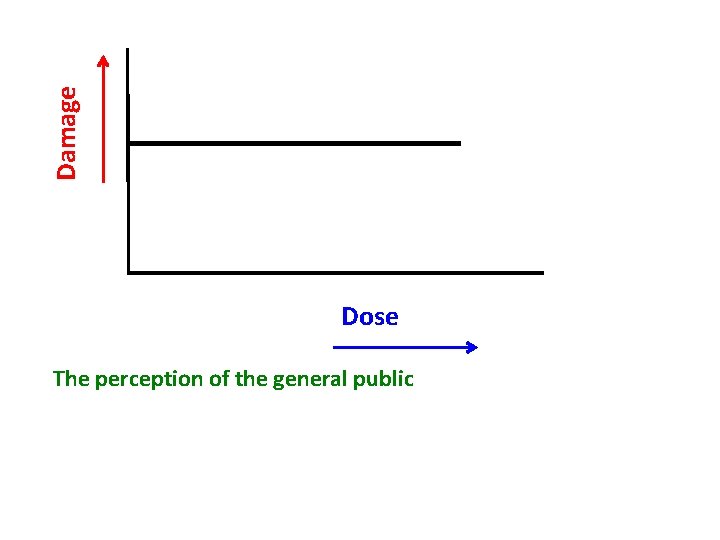
Damage Dose The perception of the general public
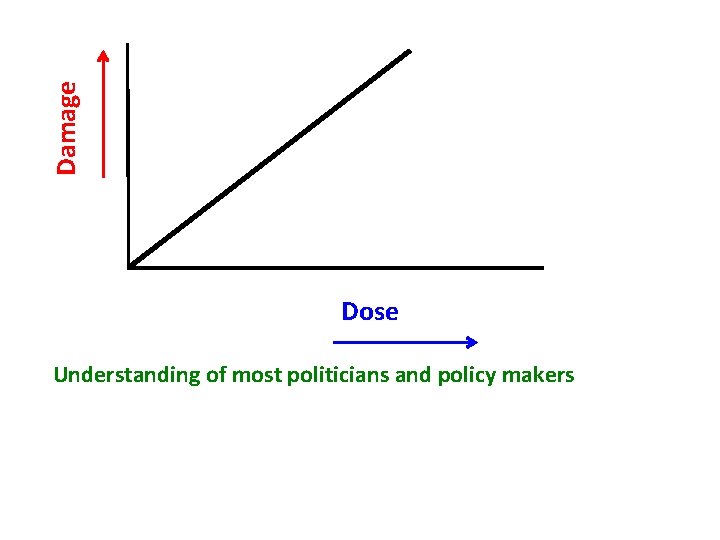
Damage Dose Understanding of most politicians and policy makers
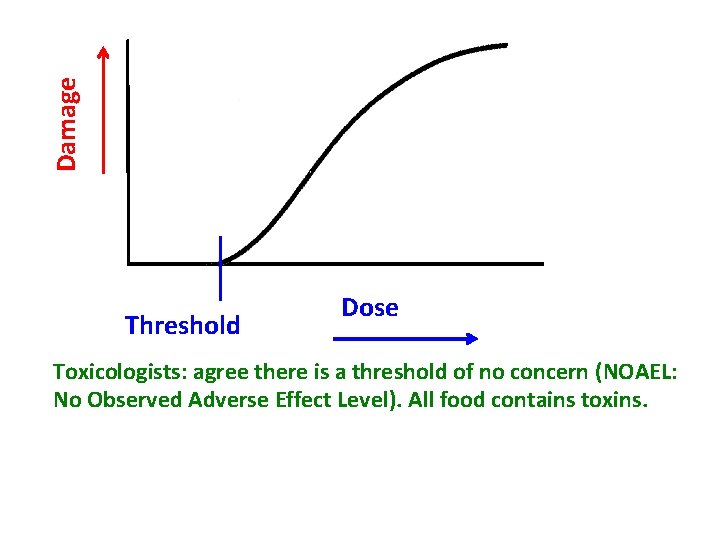
Damage Threshold Dose Toxicologists: agree there is a threshold of no concern (NOAEL: No Observed Adverse Effect Level). All food contains toxins.
Evolution Humans and their predecessors have been exposed to all those most scary chemicals for millions of years and developed a biological system (with liver, kidneys, etc. ) to cope with them or even use them beneficially. The system, however, can be overloaded and then the chemical becomes toxic.
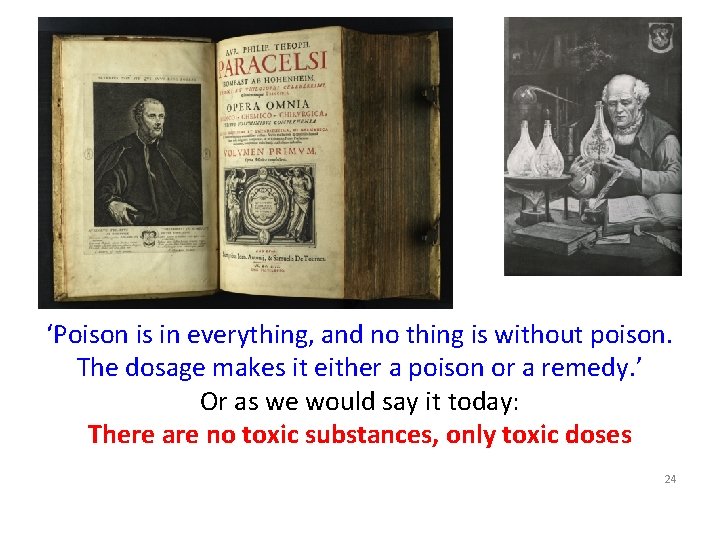
‘Poison is in everything, and no thing is without poison. The dosage makes it either a poison or a remedy. ’ Or as we would say it today: There are no toxic substances, only toxic doses 24
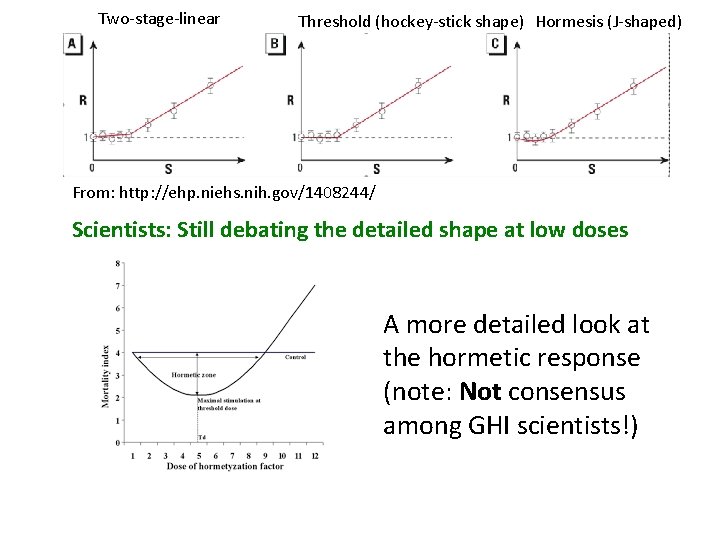
Two-stage-linear Threshold (hockey-stick shape) Hormesis (J-shaped) From: http: //ehp. niehs. nih. gov/1408244/ Scientists: Still debating the detailed shape at low doses A more detailed look at the hormetic response (note: Not consensus among GHI scientists!)
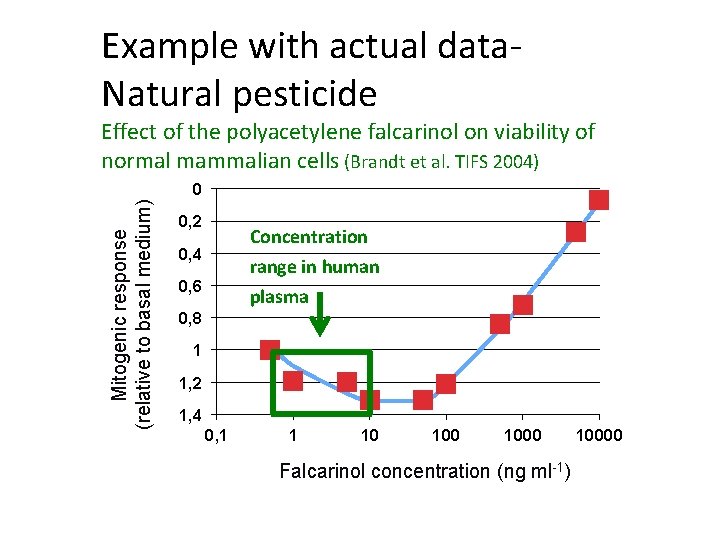
Example with actual data. Natural pesticide Effect of the polyacetylene falcarinol on viability of normal mammalian cells (Brandt et al. TIFS 2004) Mitogenic response (relative to basal medium) 0 0, 2 Concentration 0, 4 range in human plasma 0, 6 0, 8 1 1, 2 1, 4 0, 1 1 10 1000 Falcarinol concentration (ng ml-1) 10000
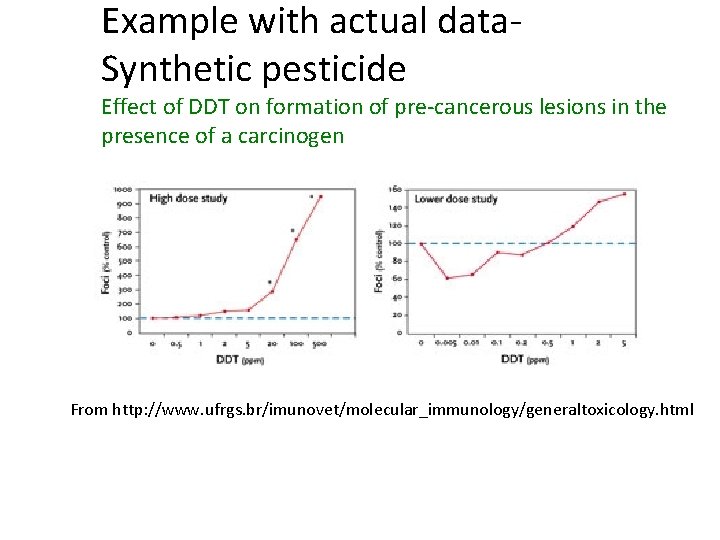
Example with actual data. Synthetic pesticide Effect of DDT on formation of pre-cancerous lesions in the presence of a carcinogen From http: //www. ufrgs. br/imunovet/molecular_immunology/generaltoxicology. html
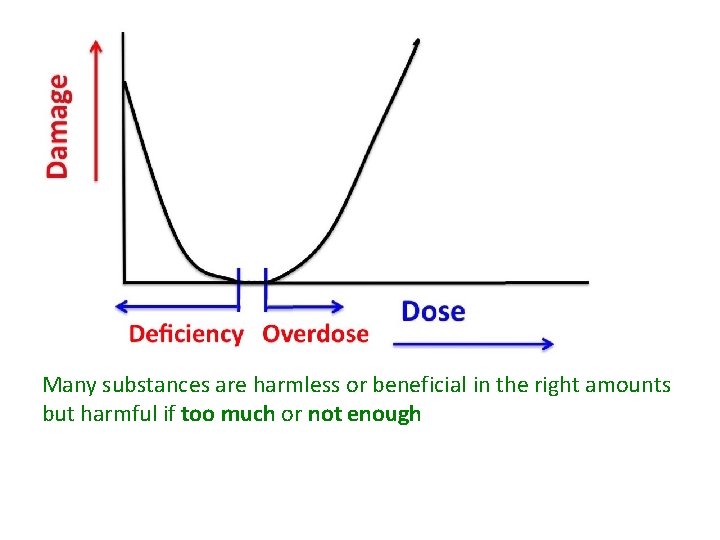
Many substances are harmless or beneficial in the right amounts but harmful if too much or not enough
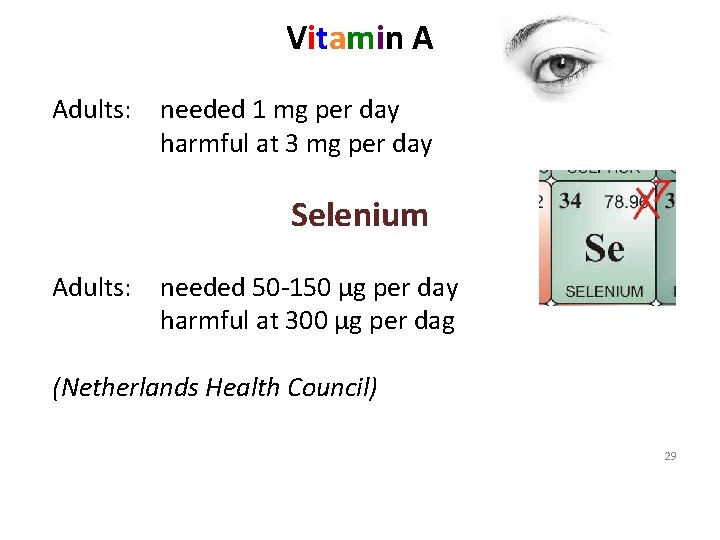
Vitamin A Adults: needed 1 mg per day harmful at 3 mg per day Selenium Adults: needed 50 -150 μg per day harmful at 300 μg per dag (Netherlands Health Council) 29
Development of improved methodology GHI: WG Genetic toxicology Chair: Firouz Darroudi Currently evidence of safety of new food products, new ingredients and new technologies is typically obtained by animal testing. Testing using animals is not popular, it is slow and expensive. The alternative, developed in the past three decades is in vitro testing, using intact human liver cells. It is: • more accurate • relevant to humans (not test animals) • cheap • fast But it is NOT IN CURRENT REGULATIONS

GHI

If you are not a member, you are invited to join GHI, just go to Z www. globalharmonization. net/user/register and if you forgot, email Info@globalharmonization. net There is no fee, you only need to qualify as a food scientist You will influence the future
Development of improved methodology If the dose-response is actually hormetic: Then it is not so important to know which doses are harmful, since they should be avoided anyway. We just need to know which doses are beneficial! • Most tests of harm are not suitable for measuring benefits. • Most tests that are suitable for measuring benefits are not routinely applied to toxins. There is no scientific reason for this, and lots of options Just get on with it and produce some data! This will change the world as we know it!

Thank you for your interest! Any questions?
- Slides: 34