
The Global Experience Lessons for Indonesia May 2014
The Global Experience Lessons for Indonesia? May 2014
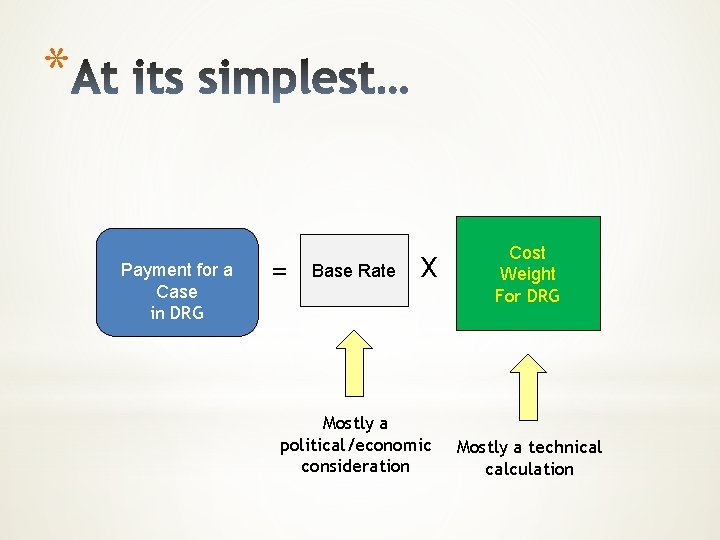
* Payment for a Case in DRG = Base Rate X Mostly a political/economic consideration Cost Weight For DRG Mostly a technical calculation
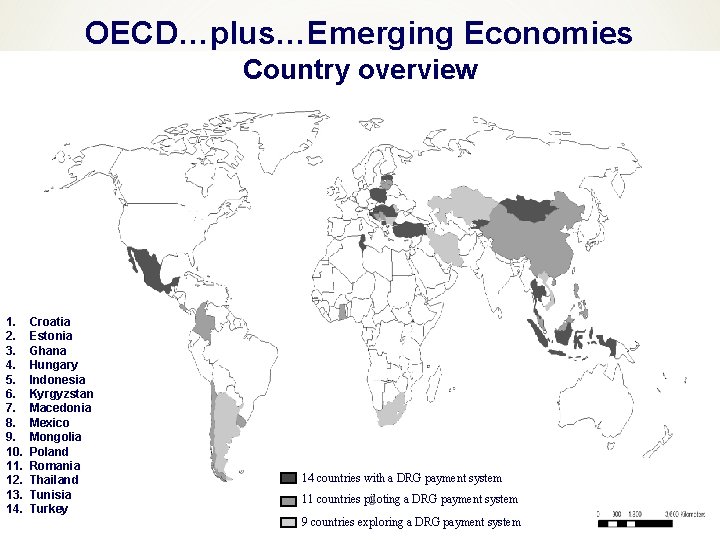
OECD…plus…Emerging Economies Country overview 1. 2. 3. 4. 5. 6. 7. 8. 9. 10. 11. 12. 13. 14. Croatia Estonia Ghana Hungary Indonesia Kyrgyzstan Macedonia Mexico Mongolia Poland Romania Thailand Tunisia Turkey 14 countries with a DRG payment system 11 countries piloting a DRG payment system 3 9 countries exploring a DRG payment system
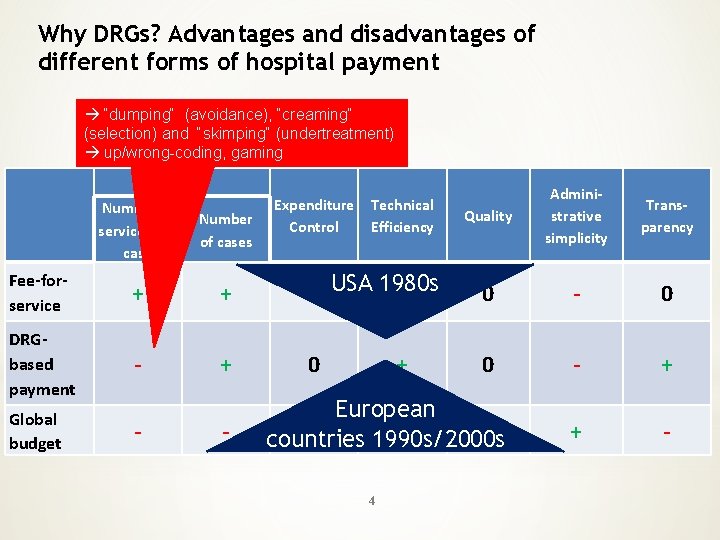
Why DRGs? Advantages and disadvantages of different forms of hospital payment “dumping“ (avoidance), “creaming“ (selection) and “skimping“ (undertreatment) up/wrong-coding, gaming Activity Expenditure Technical Control Efficiency Quality Administrative simplicity Transparency Number of services per case Number of cases Fee-forservice + + - USA 1980 s 0 0 - 0 DRGbased payment - + 0 0 - + Global budget - + - - + European + 0 0 countries 1990 s/2000 s 4
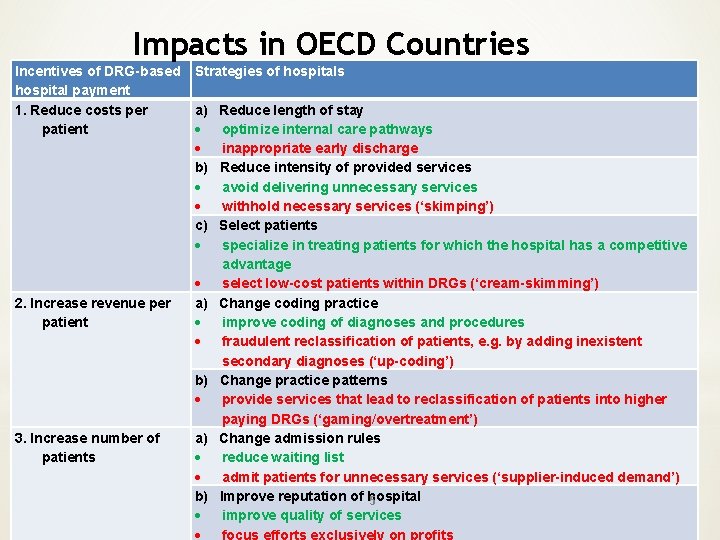
Impacts in OECD Countries Incentives of DRG-based hospital payment 1. Reduce costs per patient 2. Increase revenue per patient Strategies of hospitals a) b) c) a) b) 3. Increase number of patients a) b) Reduce length of stay optimize internal care pathways inappropriate early discharge Reduce intensity of provided services avoid delivering unnecessary services withhold necessary services (‘skimping’) Select patients specialize in treating patients for which the hospital has a competitive advantage select low-cost patients within DRGs (‘cream-skimming’) Change coding practice improve coding of diagnoses and procedures fraudulent reclassification of patients, e. g. by adding inexistent secondary diagnoses (‘up-coding’) Change practice patterns provide services that lead to reclassification of patients into higher paying DRGs (‘gaming/overtreatment’) Change admission rules reduce waiting list admit patients for unnecessary services (‘supplier-induced demand’) Improve reputation of hospital 5 improve quality of services focus efforts exclusively on profits
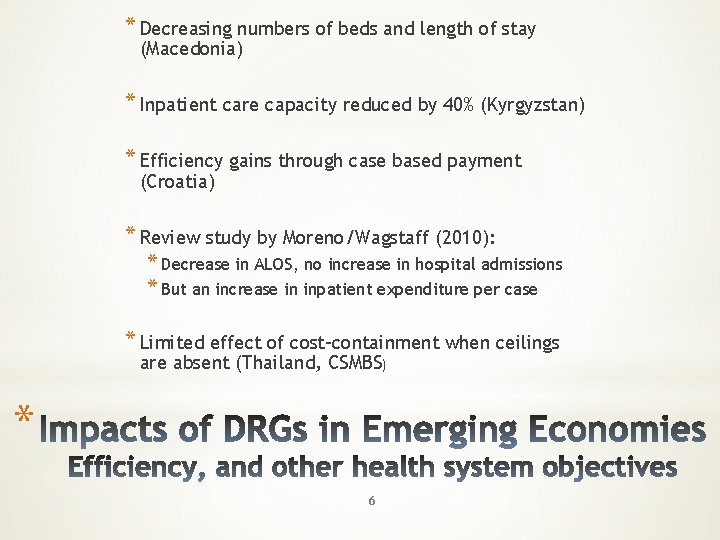
* Decreasing numbers of beds and length of stay (Macedonia) * Inpatient care capacity reduced by 40% (Kyrgyzstan) * Efficiency gains through case based payment (Croatia) * Review study by Moreno/Wagstaff (2010): * Decrease in ALOS, no increase in hospital admissions * But an increase in inpatient expenditure per case * Limited effect of cost-containment when ceilings are absent (Thailand, CSMBS) * 6
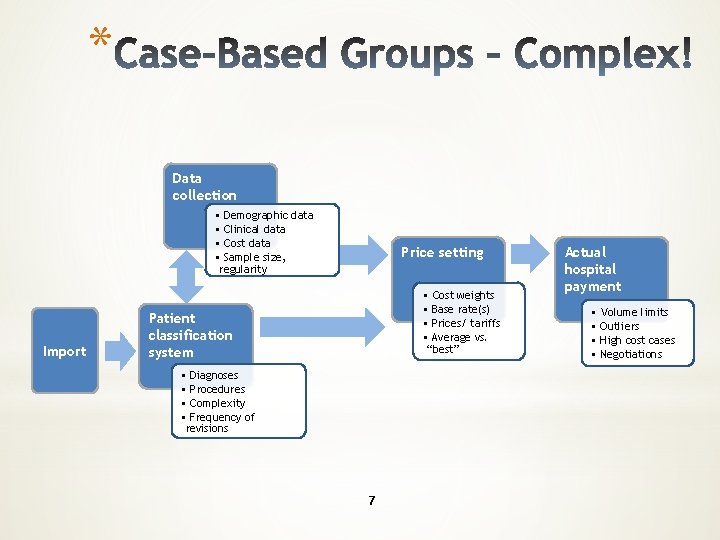
* Data collection • Demographic data • Clinical data • Cost data • Sample size, regularity Price setting • Cost weights Import • Base rate(s) • Prices/ tariffs • Average vs. “best” Patient classification system • Diagnoses • Procedures • Complexity • Frequency of revisions 7 Actual hospital payment • Volume limits • Outliers • High cost cases • Negotiations
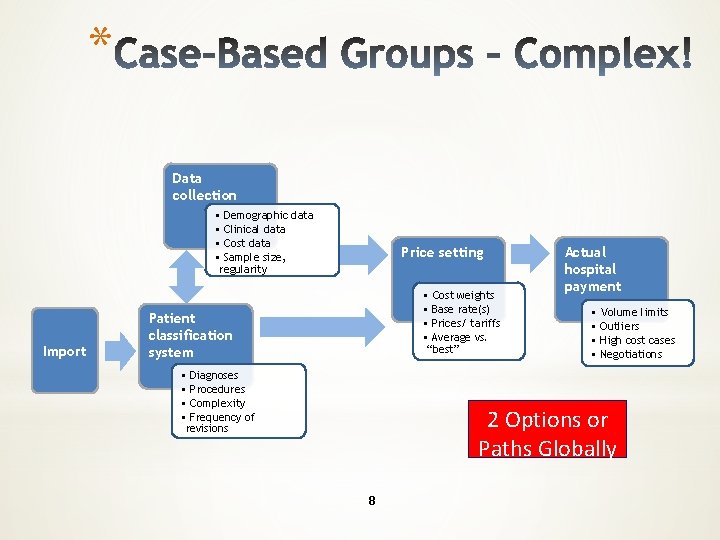
* Data collection • Demographic data • Clinical data • Cost data • Sample size, regularity Price setting • Cost weights Import • Base rate(s) • Prices/ tariffs • Average vs. “best” Patient classification system • Diagnoses • Procedures • Complexity • Frequency of revisions Actual hospital payment • Volume limits • Outliers • High cost cases • Negotiations 2 Options or Paths Globally 8

* Build Your Own 9
Data ! Availability and IT Requirements Availability of diagnosis data is a prerequisite for DRGs, but often only once a DRG system is in place, are systems set up to generate the necessary data. 1) Lack of standardized and systematized data generation and coding has been slowing down the introduction of DRGs Many countries in Europe: clinical data = all patients; but, US used 5% sample with inconsistent coding of Dx 2) Cost data, cost accounting data from hospitals to adjust cost weights to local context and to assure adequate reimbursement perceived as equitable. * 10
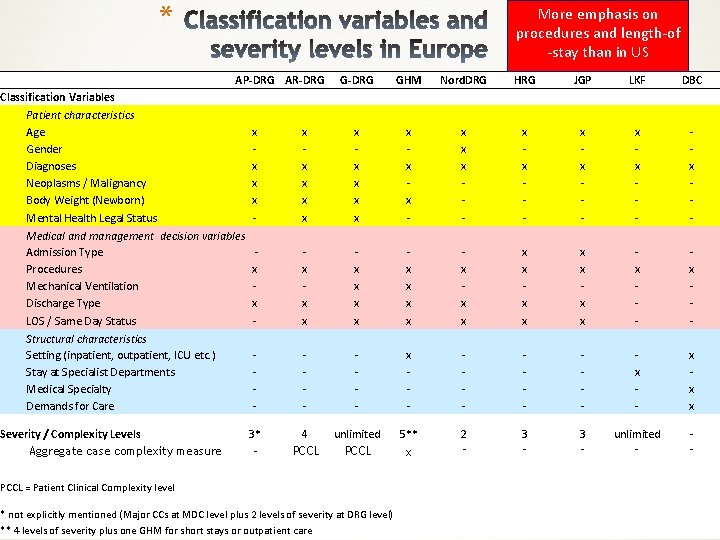
* Classification Variables Patient characteristics Age Gender Diagnoses Neoplasms / Malignancy Body Weight (Newborn) Mental Health Legal Status More emphasis on procedures and length-of -stay than in US AP-DRG AR-DRG x x x x x G-DRG x x x GHM x x x - Nord. DRG x x x - HRG x x - JGP x x - LKF x x - DBC x - Medical and management decision variables Admission Type Procedures Mechanical Ventilation Discharge Type LOS / Same Day Status x x - x x x x x x x x x - Structural characteristics Setting (inpatient, outpatient, ICU etc. ) Stay at Specialist Departments Medical Specialty Demands for Care - - - x x x 3* - 4 PCCL unlimited PCCL 5** x 2 - 3 - unlimited - - Severity / Complexity Levels Aggregate case complexity measure PCCL = Patient Clinical Complexity level 11 * not explicitly mentioned (Major CCs at MDC level plus 2 levels of severity at DRG level) ** 4 levels of severity plus one GHM for short stays or outpatient care
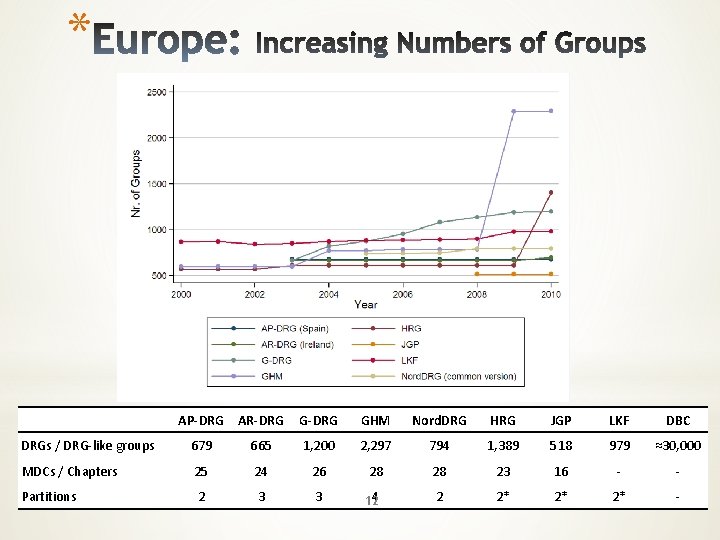
* AP-DRG AR-DRG GHM Nord. DRG HRG JGP LKF DBC DRGs / DRG-like groups 679 665 1, 200 2, 297 794 1, 389 518 979 ≈30, 000 MDCs / Chapters 25 24 26 28 28 23 16 - - Partitions 2 3 3 4 12 2 2* 2* 2* -
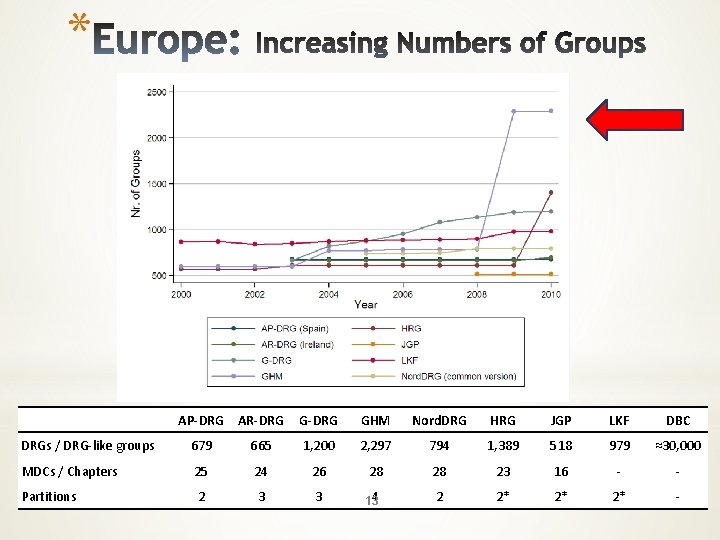
* AP-DRG AR-DRG GHM Nord. DRG HRG JGP LKF DBC DRGs / DRG-like groups 679 665 1, 200 2, 297 794 1, 389 518 979 ≈30, 000 MDCs / Chapters 25 24 26 28 28 23 16 - - Partitions 2 3 3 4 13 2 2* 2* 2* -

14
How many is too many? 15
* 2 options imported (not good but easy) or collected within country (better) • BUT, needs standardised cost accounting, too) * What about Charge data? Example: US, Thailand, and 16 China Taiwan. Solution for Mainland?
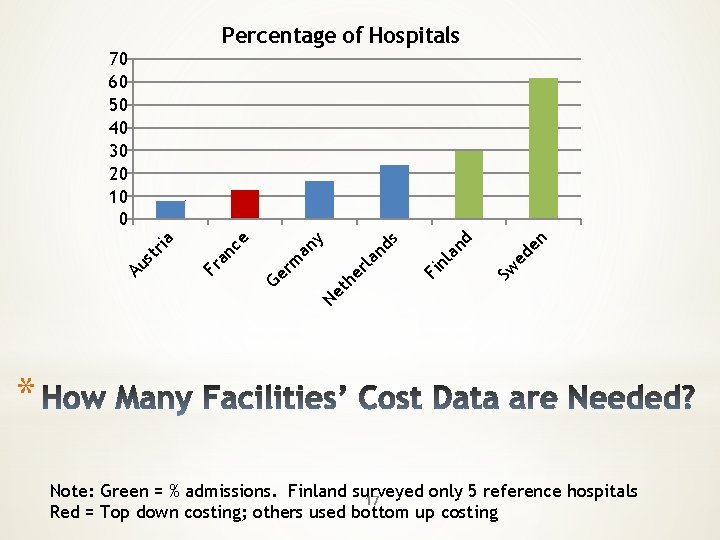
Percentage of Hospitals n ed e Sw d an nl Fi Ne th er la nd s an y m Ge r e nc Fr a Au s tr ia 70 60 50 40 30 20 10 0 * Note: Green = % admissions. Finland surveyed only 5 reference hospitals 17 Red = Top down costing; others used bottom up costing

* Buy and Modify an Existing Grouper 18
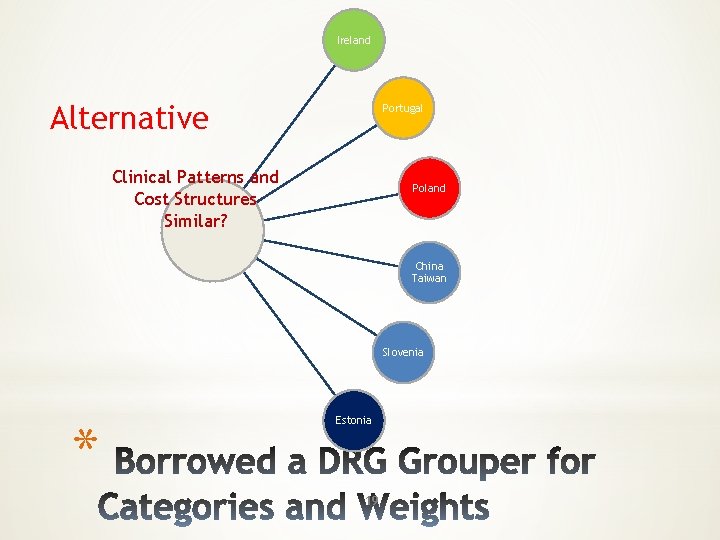
Ireland Alternative Portugal Clinical Patterns and Cost Structures Similar? Poland China Taiwan Slovenia * Estonia 19
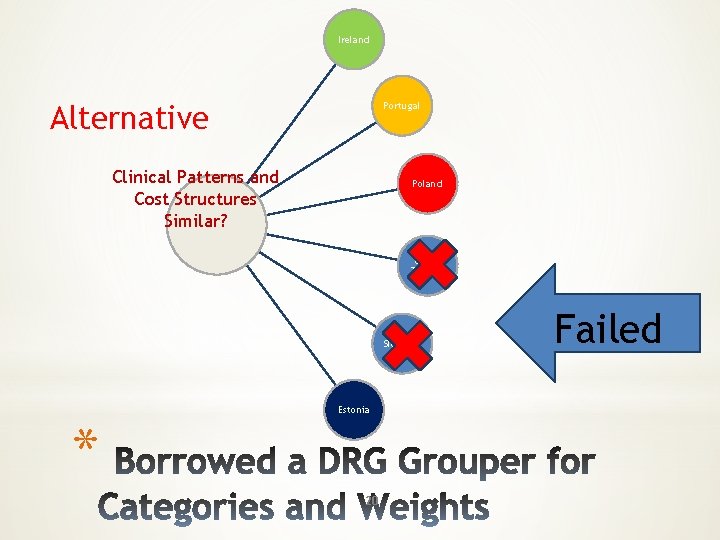
Ireland Alternative Portugal Clinical Patterns and Cost Structures Similar? Poland China Taiwan Slovenia Estonia * 20 Failed

* 21
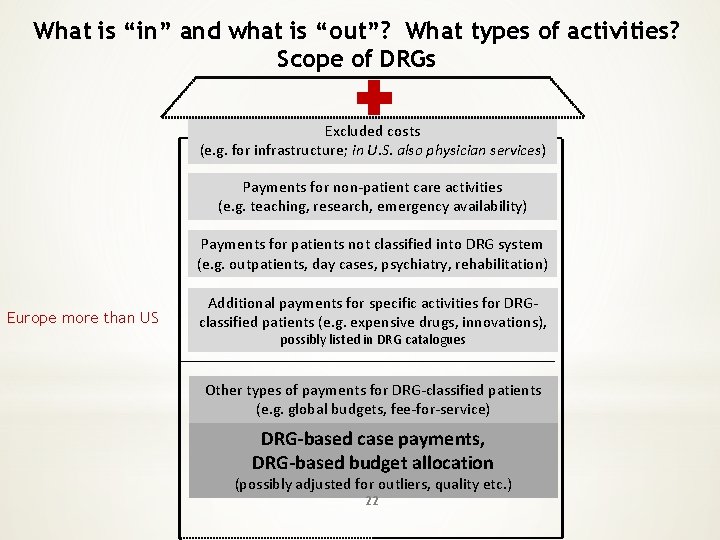
What is “in” and what is “out”? What types of activities? Scope of DRGs Excluded costs (e. g. for infrastructure; in U. S. also physician services) Payments for non-patient care activities (e. g. teaching, research, emergency availability) Payments for patients not classified into DRG system (e. g. outpatients, day cases, psychiatry, rehabilitation) Europe more than US Additional payments for specific activities for DRGclassified patients (e. g. expensive drugs, innovations), possibly listed in DRG catalogues Other types of payments for DRG-classified patients (e. g. global budgets, fee-for-service) DRG-based case payments, DRG-based budget allocation (possibly adjusted for outliers, quality etc. ) 22
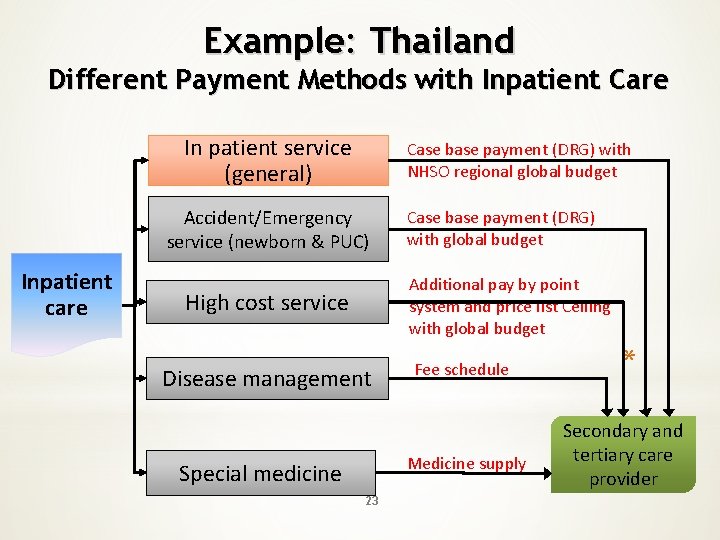
Example: Thailand Different Payment Methods with Inpatient Care In patient service (general) Case base payment (DRG) with NHSO regional global budget Accident/Emergency service (newborn & PUC) Inpatient care Case base payment (DRG) with global budget Additional pay by point system and price list Ceiling with global budget High cost service Disease management Fee schedule Medicine supply Special medicine 23 * Secondary and tertiary care provider
* Avoiding Mistakes of Other Countries 24
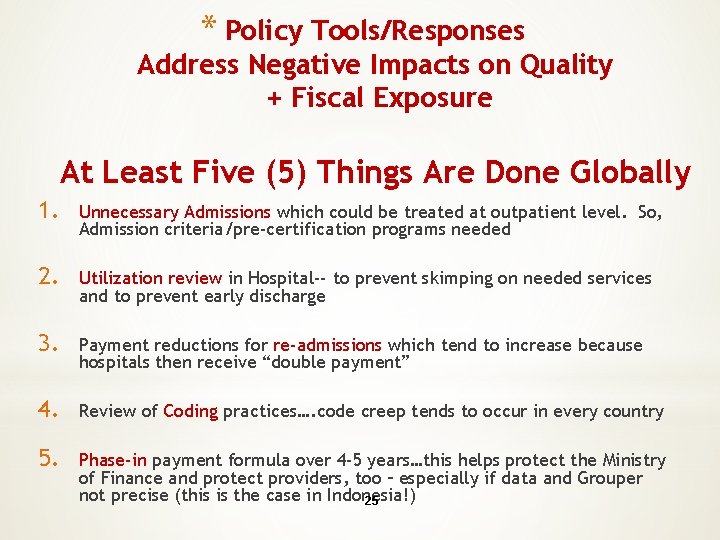
* Policy Tools/Responses Address Negative Impacts on Quality + Fiscal Exposure At Least Five (5) Things Are Done Globally 1. Unnecessary Admissions which could be treated at outpatient level. So, Admission criteria/pre-certification programs needed 2. Utilization review in Hospital-- to prevent skimping on needed services and to prevent early discharge 3. Payment reductions for re-admissions which tend to increase because hospitals then receive “double payment” 4. Review of Coding practices…. code creep tends to occur in every country 5. Phase-in payment formula over 4 -5 years…this helps protect the Ministry of Finance and protect providers, too – especially if data and Grouper not precise (this is the case in Indonesia!) 25
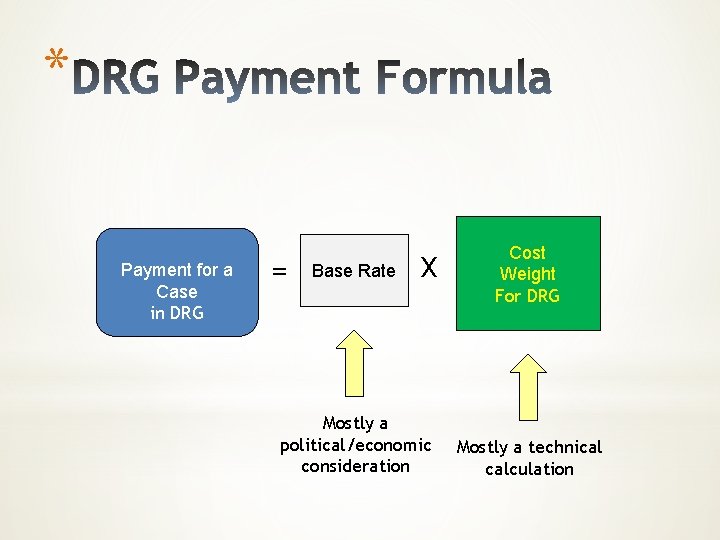
* Payment for a Case in DRG = Base Rate X Mostly a political/economic consideration Cost Weight For DRG Mostly a technical calculation

Percent Unnecessary Admissions Prior to Reforms 60 50 40 30 20 10 0 China Russia United States * 27 World Bank, various years Indonesia (Jakarta Card Scheme)
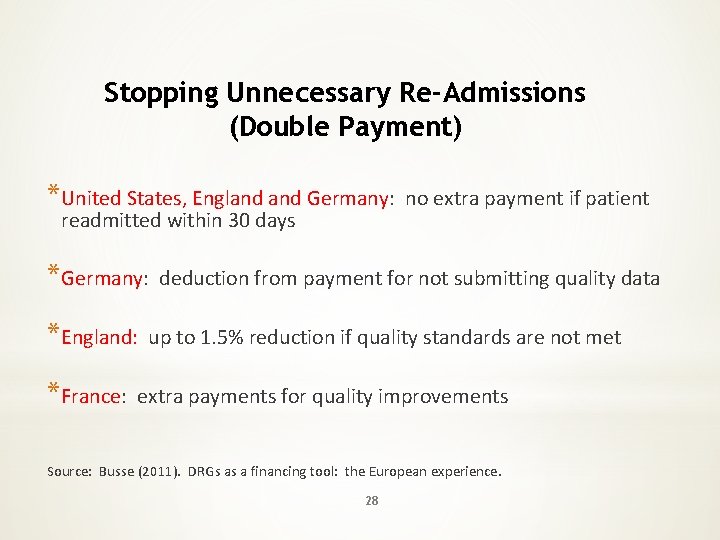
Stopping Unnecessary Re-Admissions (Double Payment) *United States, England Germany: no extra payment if patient readmitted within 30 days *Germany: deduction from payment for not submitting quality data *England: up to 1. 5% reduction if quality standards are not met *France: extra payments for quality improvements Source: Busse (2011). DRGs as a financing tool: the European experience. 28
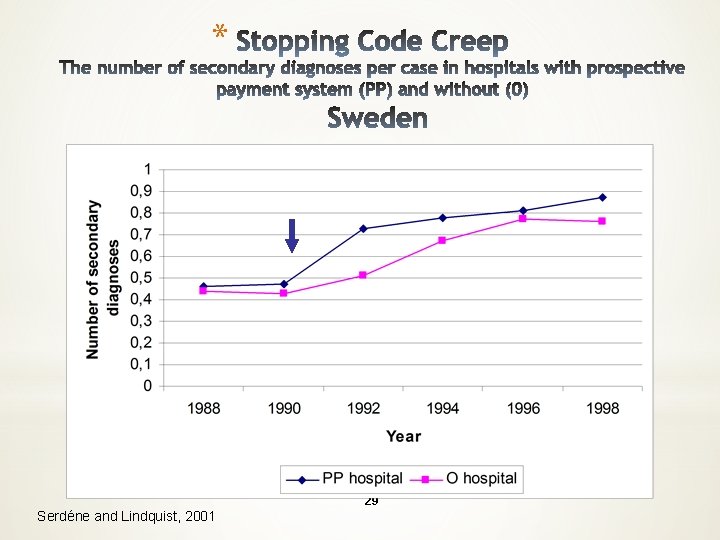
* 29 Serdéne and Lindquist, 2001
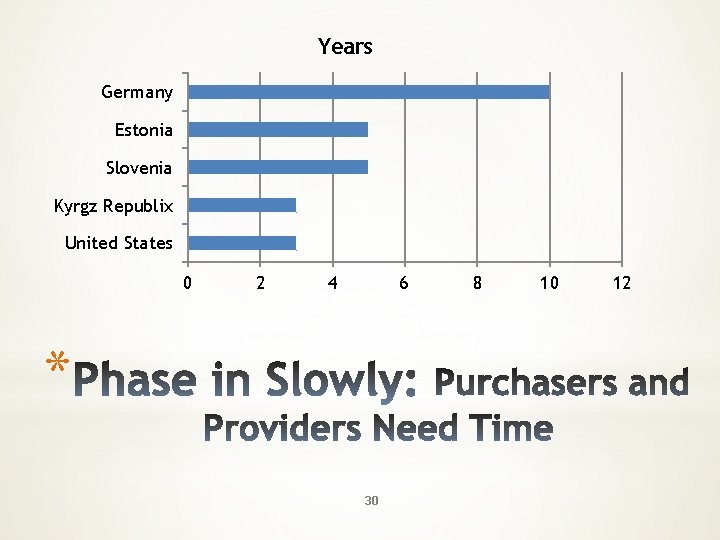
Years Germany Estonia Slovenia Kyrgz Republix United States 0 2 4 6 * 30 8 10 12
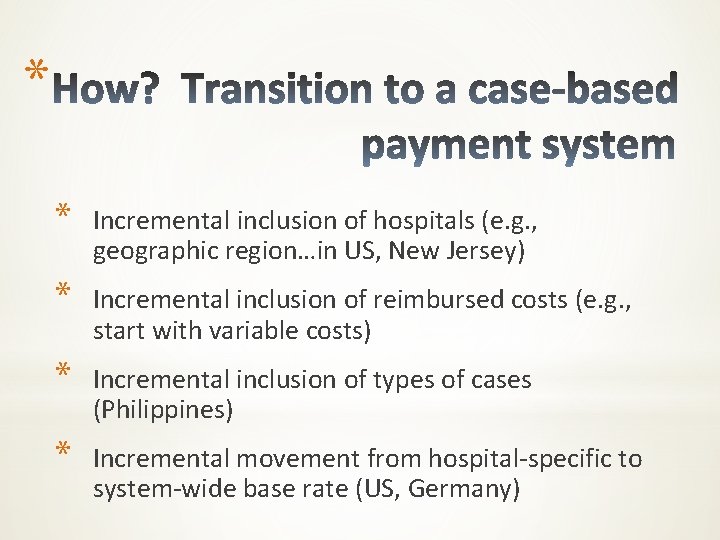
* * Incremental inclusion of hospitals (e. g. , geographic region…in US, New Jersey) * Incremental inclusion of reimbursed costs (e. g. , start with variable costs) * Incremental inclusion of types of cases (Philippines) * Incremental movement from hospital-specific to system-wide base rate (US, Germany)
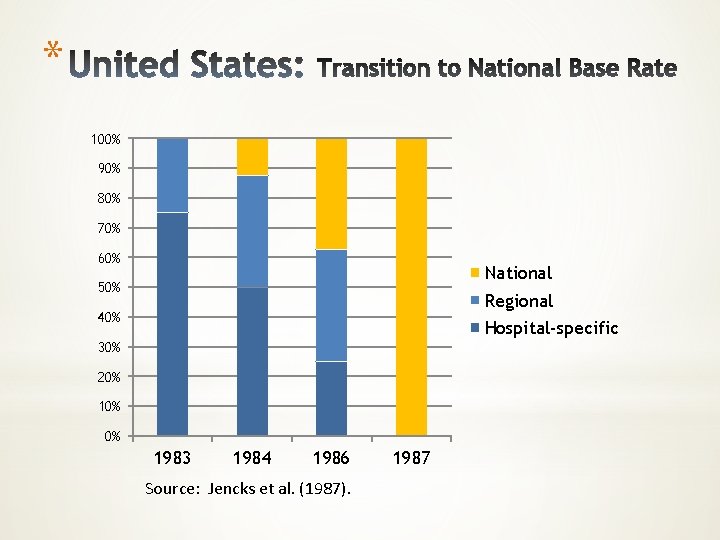
* 100% 90% 80% 70% 60% National 50% Regional 40% Hospital-specific 30% 20% 10% 0% 1983 1984 1986 Source: Jencks et al. (1987). 1987
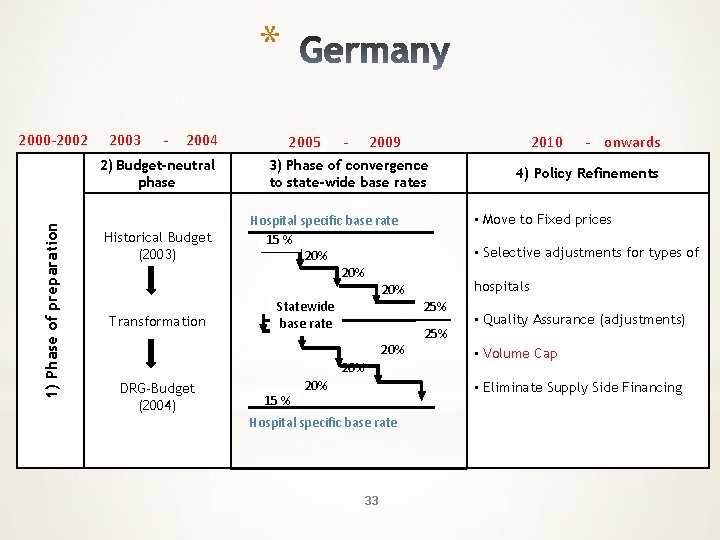
* 2000 -2002 2003 - 2004 1) Phase of preparation 2) Budget-neutral phase Historical Budget (2003) Transformation 2005 - 2009 3) Phase of convergence to state-wide base rates Hospital specific base rate 15 % 20% 20% Statewide base rate 20% DRG-Budget (2004) 2010 - onwards 15 % 20% 4) Policy Refinements • Move to Fixed prices • Selective adjustments for types of hospitals 25% • Quality Assurance (adjustments) • Volume Cap • Eliminate Supply Side Financing Hospital specific base rate 33
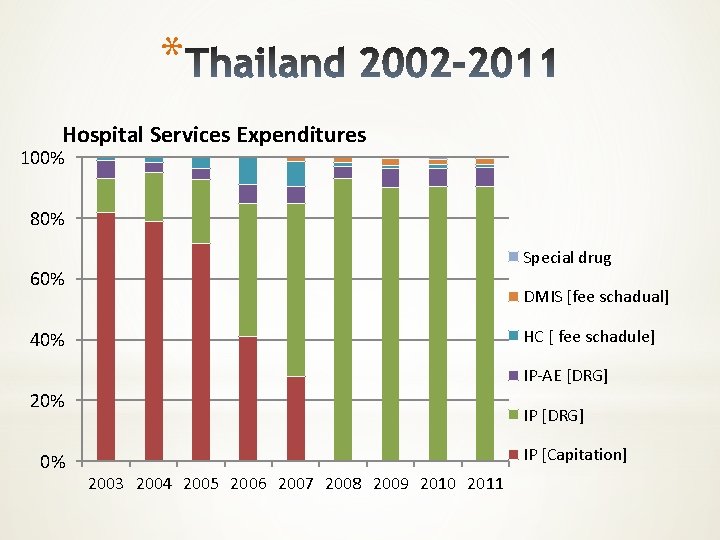
* Hospital Services Expenditures 100% 80% Special drug 60% DMIS [fee schadual] HC [ fee schadule] 40% IP-AE [DRG] 20% 0% IP [DRG] IP [Capitation] 2003 2004 2005 2006 2007 2008 2009 2010 2011
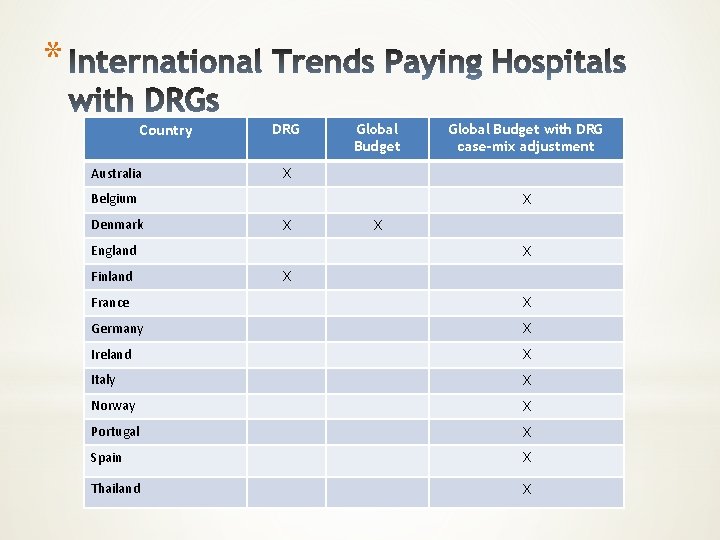
* Country Australia DRG Global Budget X Belgium Denmark X X England Finland Global Budget with DRG case-mix adjustment X X X France X Germany X Ireland X Italy X Norway X Portugal X Spain X Thailand X
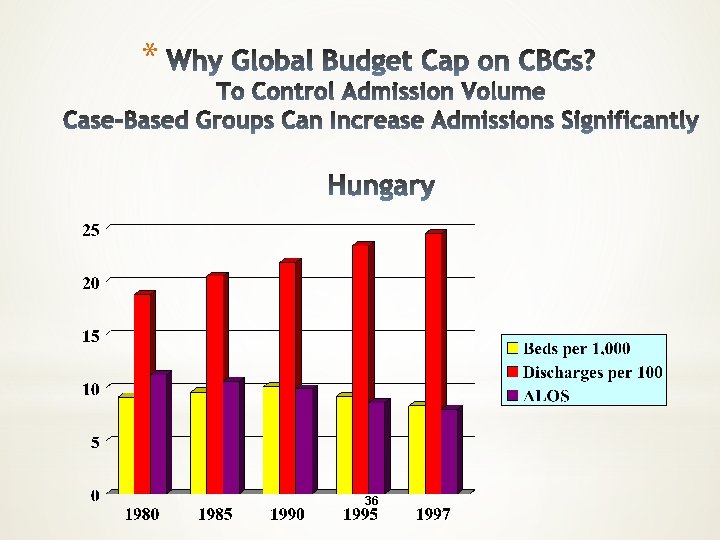
* 36


Correct Diagnosis? UI Study = > 50% of CVD wrong diagnosis * 38
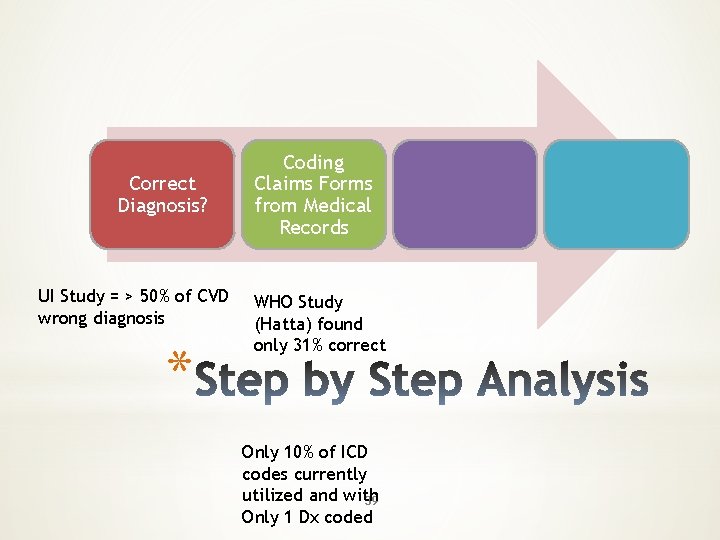
Correct Diagnosis? UI Study = > 50% of CVD wrong diagnosis * Coding Claims Forms from Medical Records WHO Study (Hatta) found only 31% correct Only 10% of ICD codes currently utilized and with 39 Only 1 Dx coded
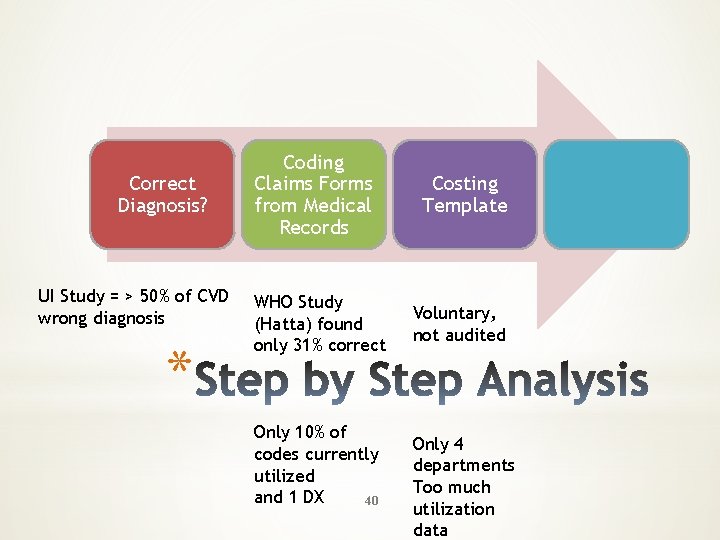
Correct Diagnosis? UI Study = > 50% of CVD wrong diagnosis * Coding Claims Forms from Medical Records WHO Study (Hatta) found only 31% correct Only 10% of codes currently utilized and 1 DX 40 Costing Template Voluntary, not audited Only 4 departments Too much utilization data
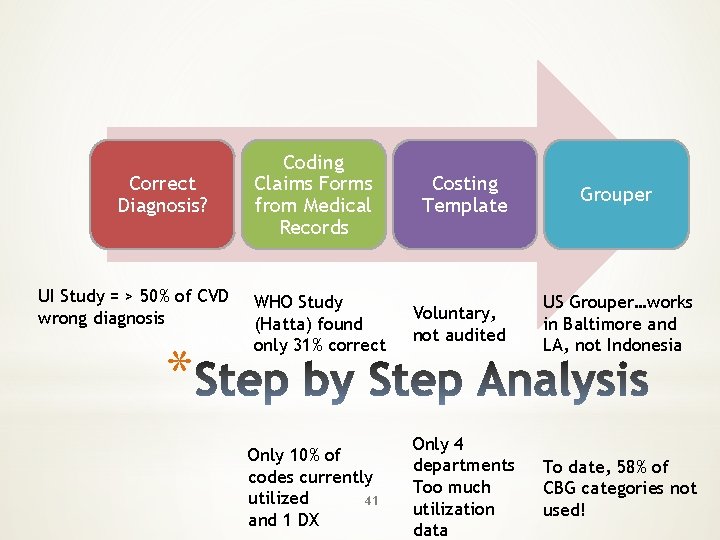
Correct Diagnosis? UI Study = > 50% of CVD wrong diagnosis * Coding Claims Forms from Medical Records WHO Study (Hatta) found only 31% correct Only 10% of codes currently utilized 41 and 1 DX Costing Template Grouper Voluntary, not audited US Grouper…works in Baltimore and LA, not Indonesia Only 4 departments Too much utilization data To date, 58% of CBG categories not used!
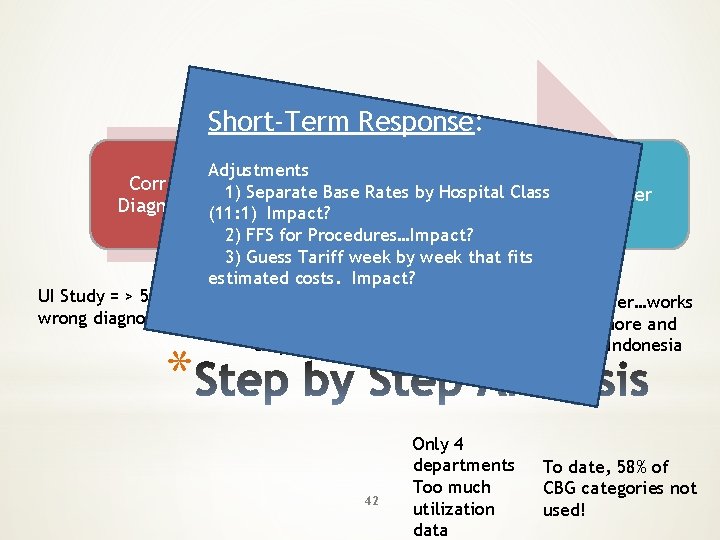
Short-Term Response: Coding Adjustments Correct 1) Separate Claims Forms Base Rates by. Costing Hospital Class Grouper Diagnosis? (11: 1)from Template Medical Impact? 2) FFS Records for Procedures…Impact? 3) Guess Tariff week by week that fits estimated costs. Impact? UI Study = > 50% of CVD WHO Study US Grouper…works Voluntary, wrong diagnosis (Hatta) found in Baltimore and not audited only 31% correct LA, not Indonesia * 42 Only 4 departments Too much utilization data To date, 58% of CBG categories not used!
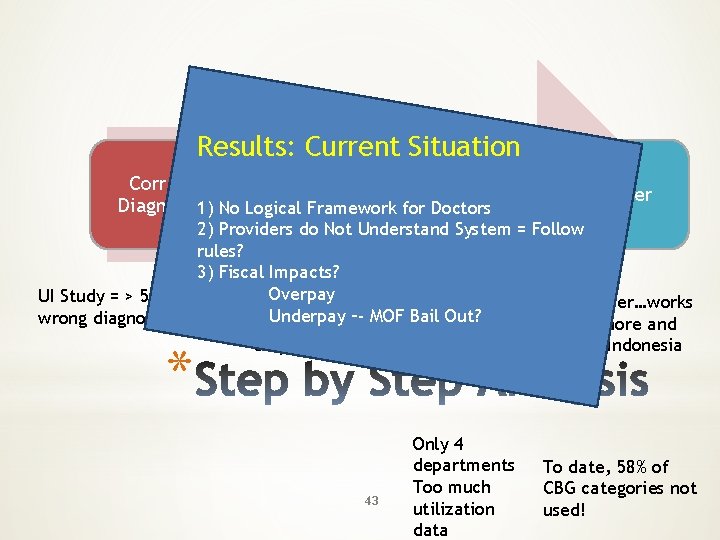
Results: Coding Current Situation Correct Costing Claims Forms Grouper Diagnosis? 1) No Logical from Medical Framework for. Template Doctors Records 2) Providers do Not Understand System = Follow rules? 3) Fiscal Impacts? Overpay UI Study = > 50% of CVD WHO Study Voluntary, Underpay –- MOF Bail Out? wrong diagnosis (Hatta) found not audited only 31% correct * 43 Only 4 departments Too much utilization data US Grouper…works in Baltimore and LA, not Indonesia To date, 58% of CBG categories not used!
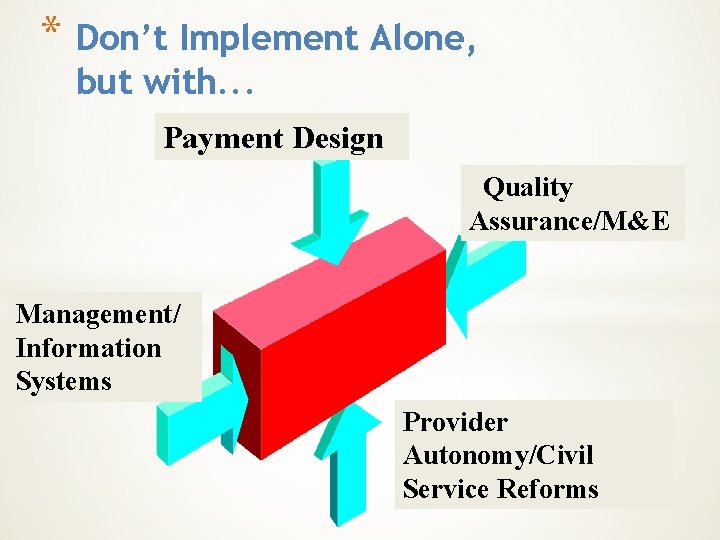
* Don’t Implement Alone, but with. . . Payment Design Quality Assurance/M&E Management/ Information Systems Provider Autonomy/Civil Service Reforms
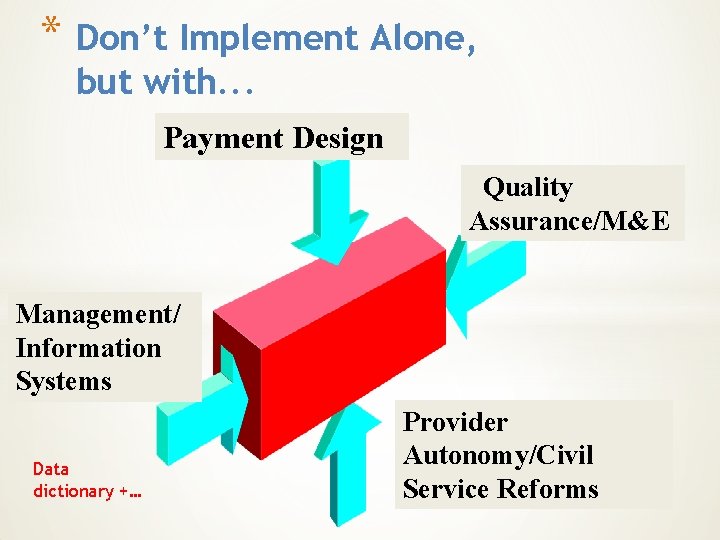
* Don’t Implement Alone, but with. . . Payment Design Quality Assurance/M&E Management/ Information Systems Data dictionary +… Provider Autonomy/Civil Service Reforms
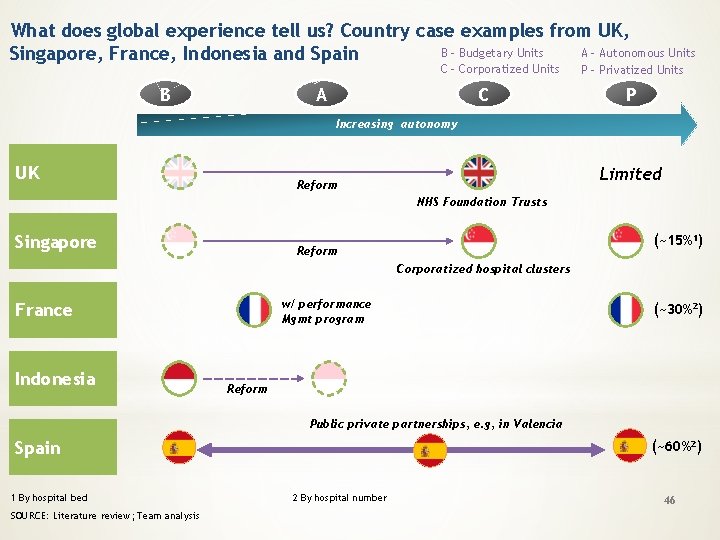
What does global experience tell us? Country case examples from UK, B – Budgetary Units A – Autonomous Units Singapore, France, Indonesia and Spain C – Corporatized Units B A C P – Privatized Units P Increasing autonomy UK Limited Reform NHS Foundation Trusts Singapore (~15%1) Reform Corporatized hospital clusters w/ performance Mgmt program France Indonesia (~30%2) Reform Public private partnerships, e. g, in Valencia Spain 1 By hospital bed SOURCE: Literature review; Team analysis (~60%2) 2 By hospital number 46

Organization of care global case learnings – Indonesia * The BLU law in 2007 was the key policy to transform public hospitals into semiautonomous organizations The government opted for an “autonomization” instead of full blown corporatization B Corporation A C P Increasing autonomy Decision Rights Not for Profit Non-privatization Bureaucratic (Pre -1991) Public Semi Autono Service -mous Agency (Swadana) (BLU/BLUD) (1991) (2007) Income Retention Market Exposure Accountability Social Functions 47 SOURCE: literature search; Team analysis
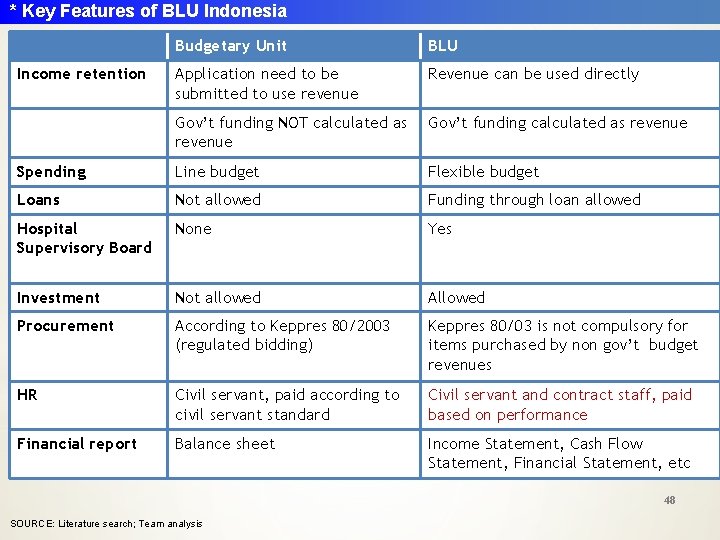
* Key Features of BLU Indonesia Budgetary Unit BLU Application need to be submitted to use revenue Revenue can be used directly Gov’t funding NOT calculated as revenue Gov’t funding calculated as revenue Spending Line budget Flexible budget Loans Not allowed Funding through loan allowed Hospital Supervisory Board None Yes Investment Not allowed Allowed Procurement According to Keppres 80/2003 (regulated bidding) Keppres 80/03 is not compulsory for items purchased by non gov’t budget revenues HR Civil servant, paid according to civil servant standard Civil servant and contract staff, paid based on performance Financial report Balance sheet Income Statement, Cash Flow Statement, Financial Statement, etc Income retention 48 SOURCE: Literature search; Team analysis
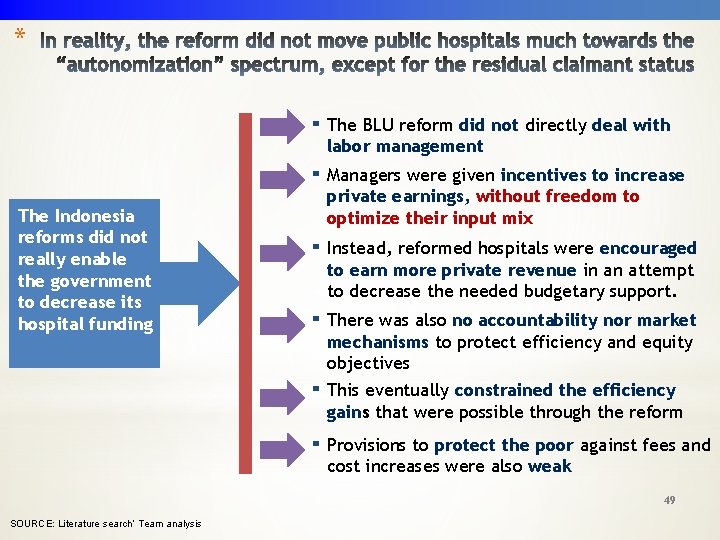
* The Indonesia reforms did not really enable the government to decrease its hospital funding ▪ The BLU reform did not directly deal with labor management ▪ Managers were given incentives to increase private earnings, without freedom to optimize their input mix ▪ Instead, reformed hospitals were encouraged to earn more private revenue in an attempt to decrease the needed budgetary support. ▪ There was also no accountability nor market mechanisms to protect efficiency and equity objectives This eventually constrained the efficiency gains that were possible through the reform ▪ ▪ Provisions to protect the poor against fees and cost increases were also weak 49 SOURCE: Literature search’ Team analysis
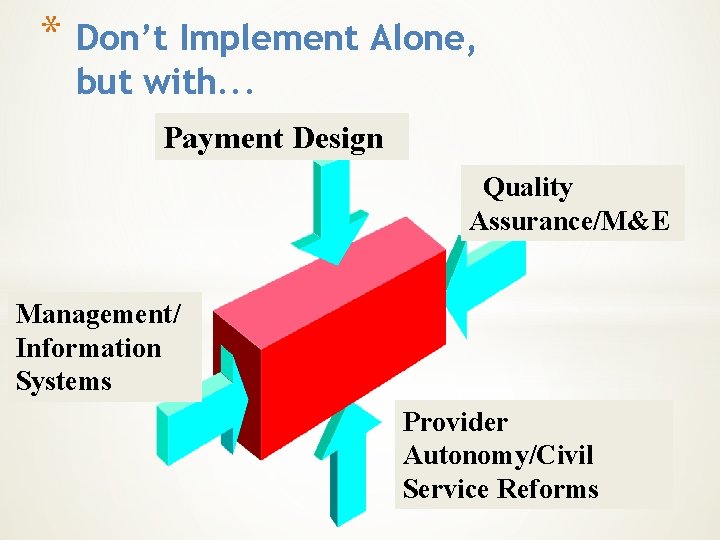
* Don’t Implement Alone, but with. . . Payment Design Quality Assurance/M&E Management/ Information Systems Provider Autonomy/Civil Service Reforms
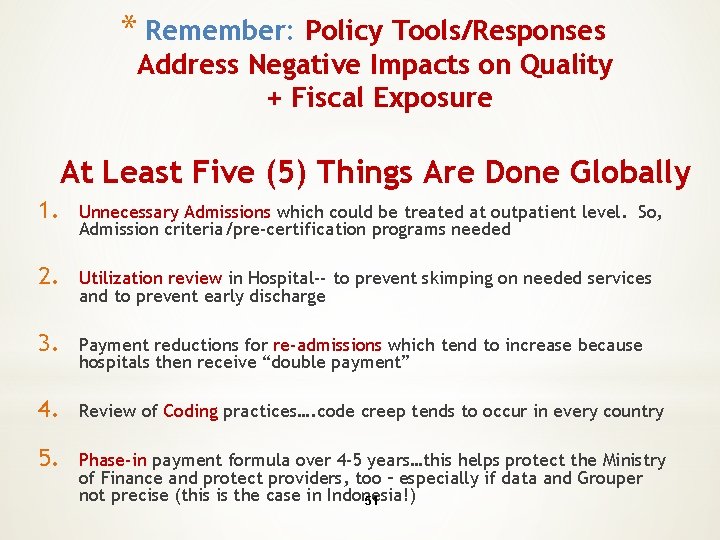
* Remember: Policy Tools/Responses Address Negative Impacts on Quality + Fiscal Exposure At Least Five (5) Things Are Done Globally 1. Unnecessary Admissions which could be treated at outpatient level. So, Admission criteria/pre-certification programs needed 2. Utilization review in Hospital-- to prevent skimping on needed services and to prevent early discharge 3. Payment reductions for re-admissions which tend to increase because hospitals then receive “double payment” 4. Review of Coding practices…. code creep tends to occur in every country 5. Phase-in payment formula over 4 -5 years…this helps protect the Ministry of Finance and protect providers, too – especially if data and Grouper not precise (this is the case in Indonesia!) 51
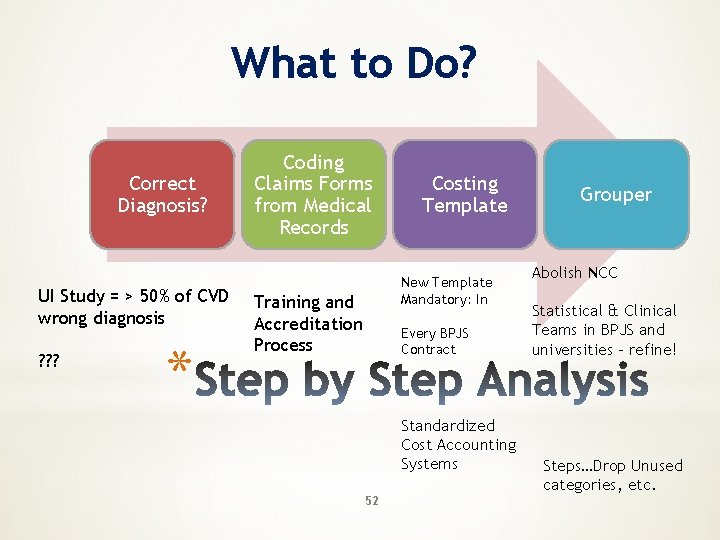
What to Do? Correct Diagnosis? UI Study = > 50% of CVD wrong diagnosis ? ? ? * Coding Claims Forms from Medical Records Costing Template New Template Mandatory: In Training and Accreditation Process Every BPJS Contract Standardized Cost Accounting Systems 52 Grouper Abolish NCC Statistical & Clinical Teams in BPJS and universities – refine! Steps…Drop Unused categories, etc.

* 53
- Slides: 53