
The Global Environment Section 1 Exploring the World
The Global Environment Section 1 Exploring the World Around Us
What is Geography? �The study of where people, places, and things are located and how they relate to each other. �Many uses beyond creating maps, globes and charts. �Geographers have created 5 basic themes to help us understand the links between people and the Earth.
5 Themes �Location �Place �Interaction between people and their environment �Movement �Region
Location �Position on the Earth’s surface. �By describing the position of a place in relation to another place- relative location. �Absolute location- exact location ◦ People use the grid of numbered lines of latitude and longitude see on many maps and globes.
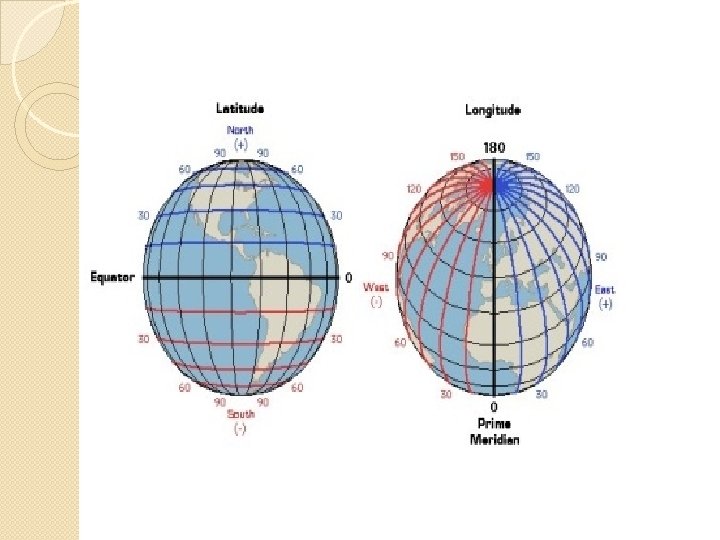
�Imagine the Earth as a sphere, with an axis around which it spins. The ends of the axis are the North and South Poles. �The Equator is a line around the earth, an equal distance from both poles. �Latitude values indicate the angular distance between the Equator and points north or south of it on the surface of the Earth.
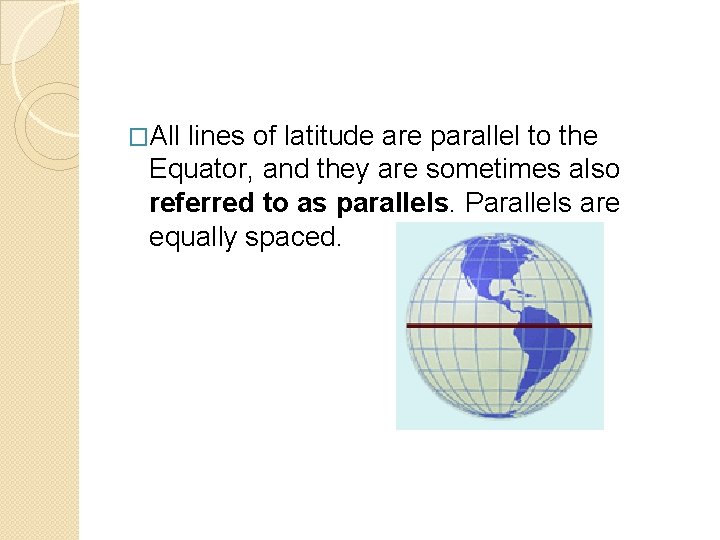
�All lines of latitude are parallel to the Equator, and they are sometimes also referred to as parallels. Parallels are equally spaced.
Longitude �Lines of longitude, called meridians, run perpendicular to lines of latitude, and all pass through both poles. �Measure distances east or west of the Prime Meridian. �The Prime Meridian is an imaginary line that runs through Greenwich, England. ◦ The circle formed by the Prime Meridian divides the Earth into the Eastern and Western hemispheres.
Place �Described in terms of physical and human characteristics. �Physical- landforms, climate, soil. �Human characteristics- peoples way of life-activities, means of transportation, religion, and languages.
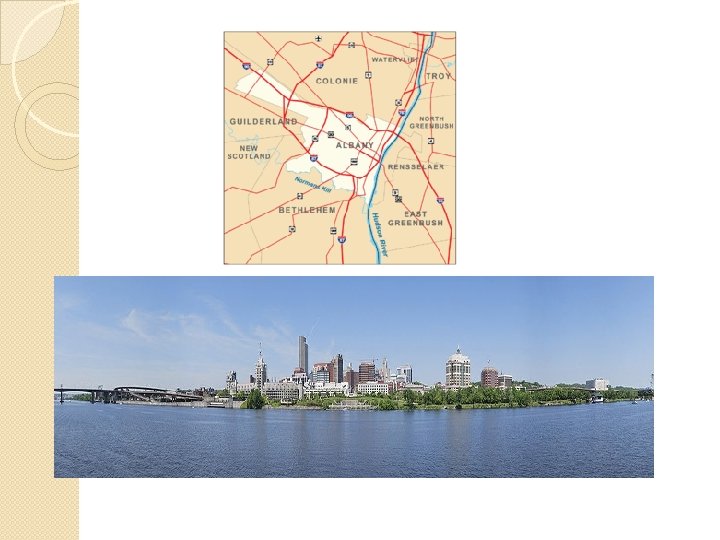
Albany �Capital of New York state �Physical- position on the Hudson River, weather, landforms, plants and animals. �Human Characteristics- state office buildings, stores houses, and roads.
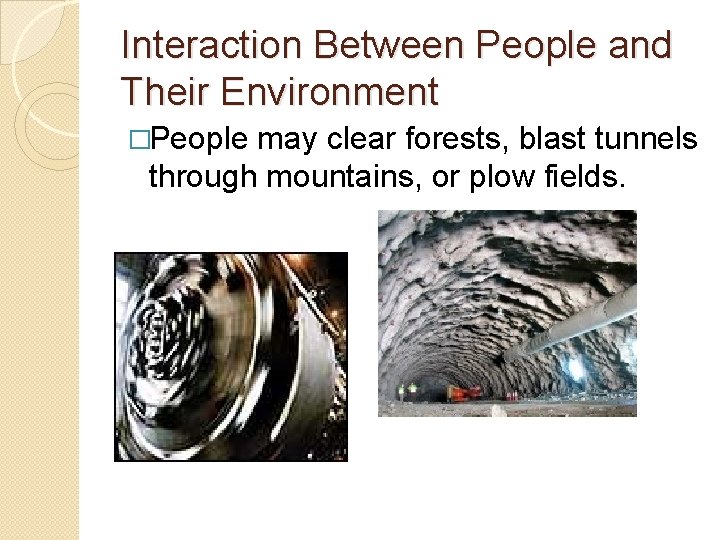
Interaction Between People and Their Environment �People may clear forests, blast tunnels through mountains, or plow fields.
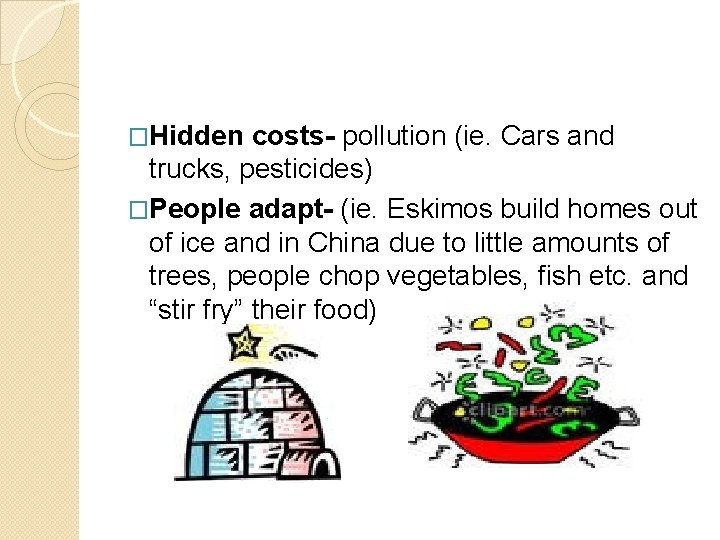
�Hidden costs- pollution (ie. Cars and trucks, pesticides) �People adapt- (ie. Eskimos build homes out of ice and in China due to little amounts of trees, people chop vegetables, fish etc. and “stir fry” their food)
Movement �Migration- people move in order to find food. More recently people came to the US to find freedom or better life. �Trade- movement of goods between areas. Some countries export natural resources (copper, or farm products)
� Ideas spread- movement of ideas occurs with the movement of people and goods. � Interdependence- dependence of countries on goods, resources, and knowledge from other parts of the world. ◦ (ie. Americans get coffee from South America and tea from India. )
Region �Area with its own unifying characteristics. �Identification◦ physical characteristics, climate or landforms (ie. Worlds continents- Rocky Mountains and rain forests of Brazil) ◦ Cultural, political, or economic features (is. The Muslim world, is the cultural region influenced by the religion of Islam)
�Can a Country belong to several different regions?
�Yes! Because regions can be defined in different ways. ◦ (ie. Pakistan is part of the physical region of South Asia, most Pakistanis are Muslim they are past of that cultural region and they are part of the developing world )
- Slides: 18