
The Global Conflict Allied Successes I Occupied Lands
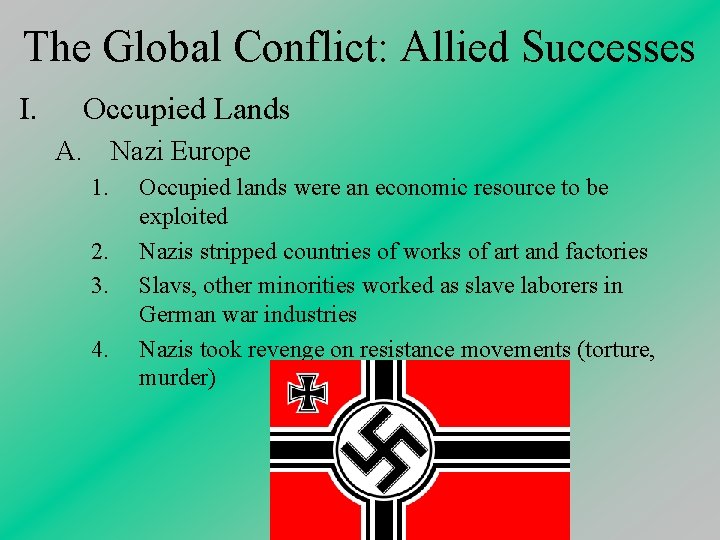
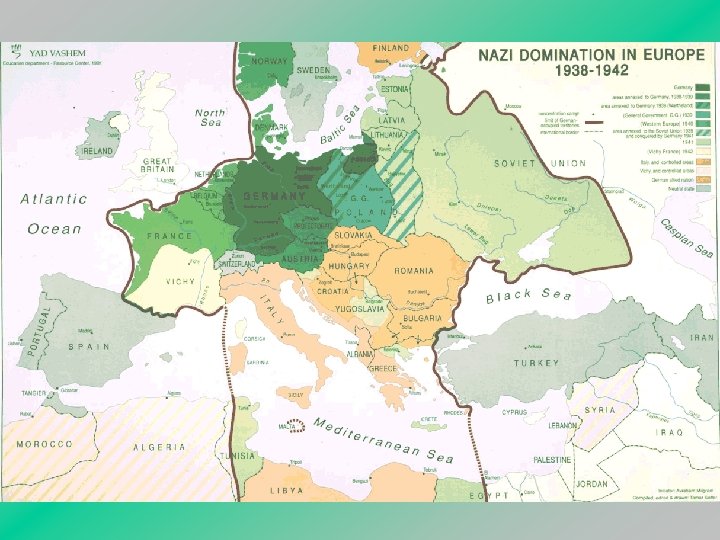
The Global Conflict: Allied Successes I. Occupied Lands A. Nazi Europe 1. 2. 3. 4. Occupied lands were an economic resource to be exploited Nazis stripped countries of works of art and factories Slavs, other minorities worked as slave laborers in German war industries Nazis took revenge on resistance movements (torture, murder)
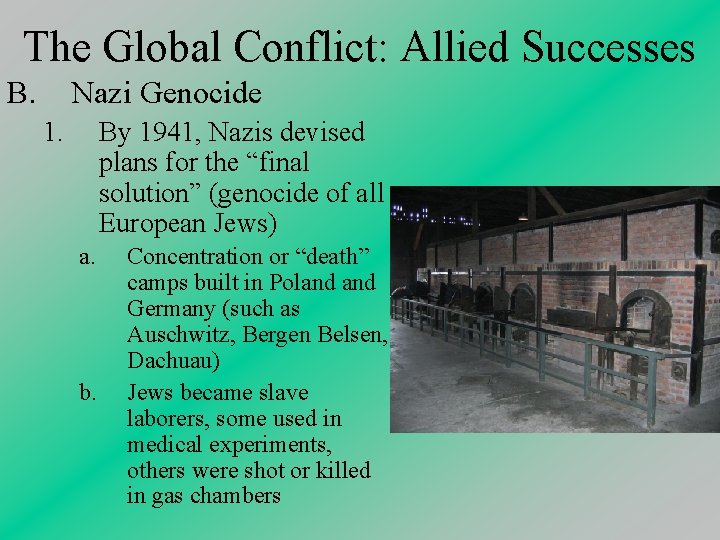
The Global Conflict: Allied Successes B. Nazi Genocide 1. By 1941, Nazis devised plans for the “final solution” (genocide of all European Jews) a. b. Concentration or “death” camps built in Poland Germany (such as Auschwitz, Bergen Belsen, Dachuau) Jews became slave laborers, some used in medical experiments, others were shot or killed in gas chambers
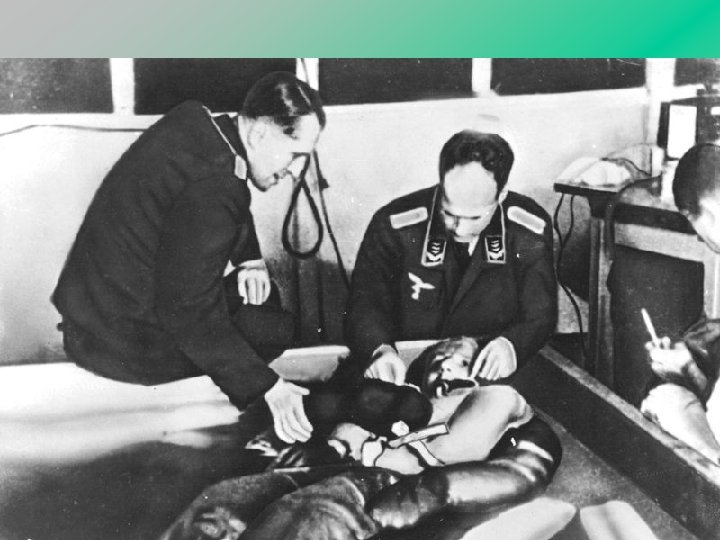
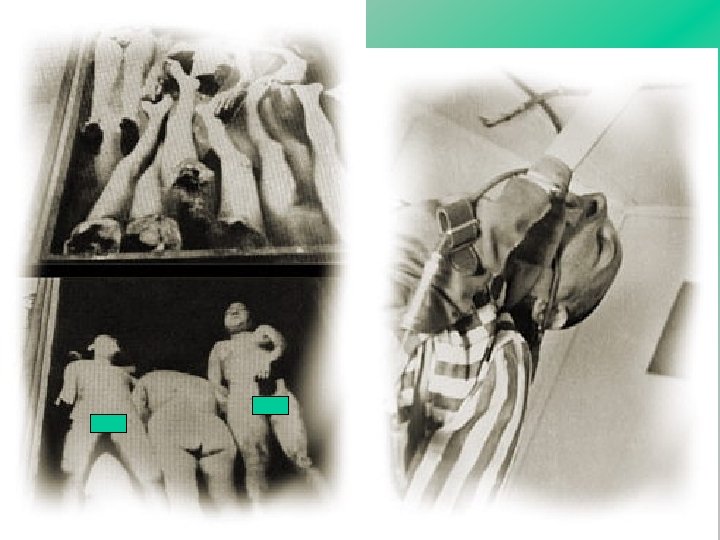
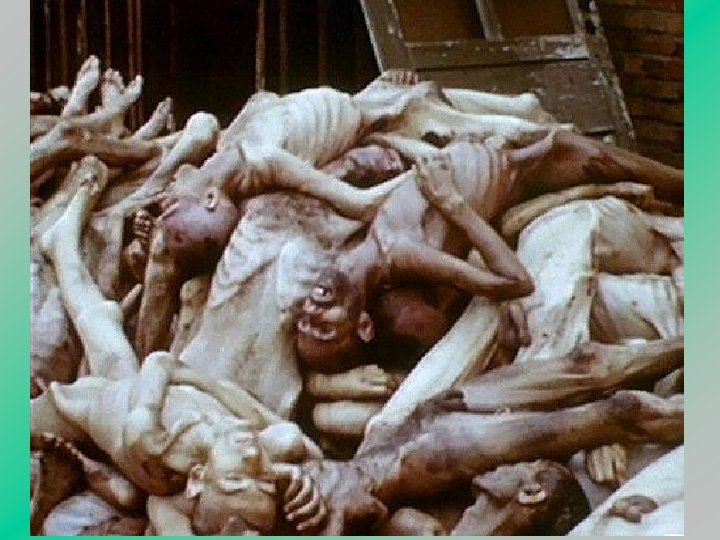
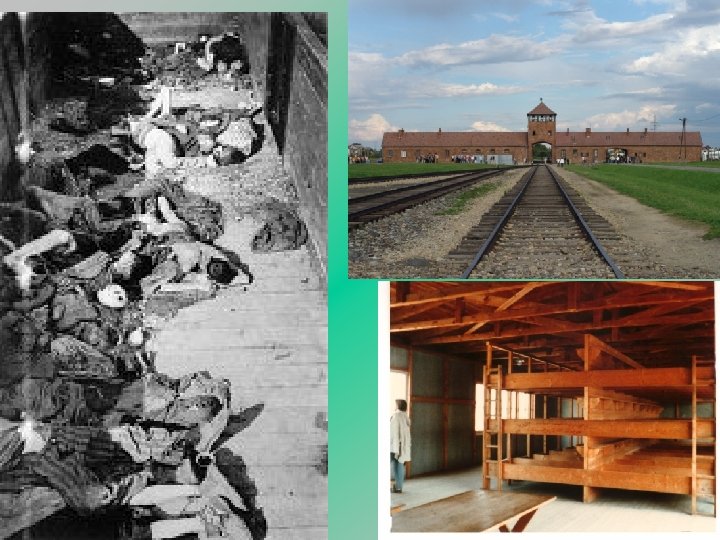
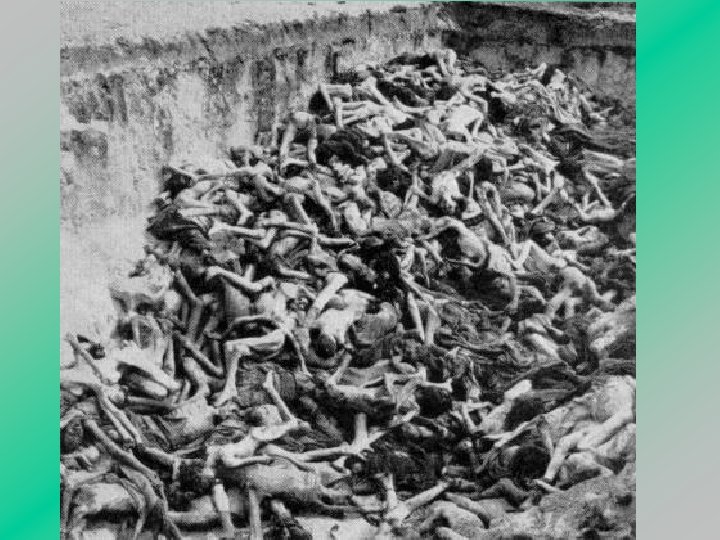
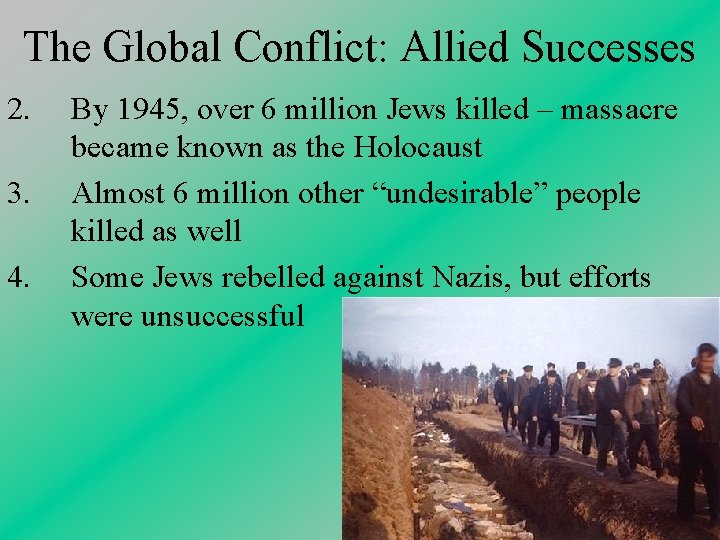
The Global Conflict: Allied Successes 2. 3. 4. By 1945, over 6 million Jews killed – massacre became known as the Holocaust Almost 6 million other “undesirable” people killed as well Some Jews rebelled against Nazis, but efforts were unsuccessful
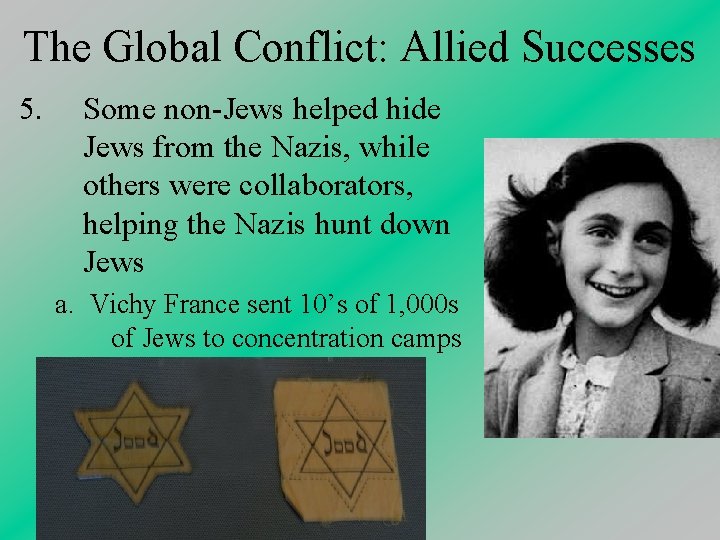
The Global Conflict: Allied Successes 5. Some non-Jews helped hide Jews from the Nazis, while others were collaborators, helping the Nazis hunt down Jews a. Vichy France sent 10’s of 1, 000 s of Jews to concentration camps

Amon Goeth
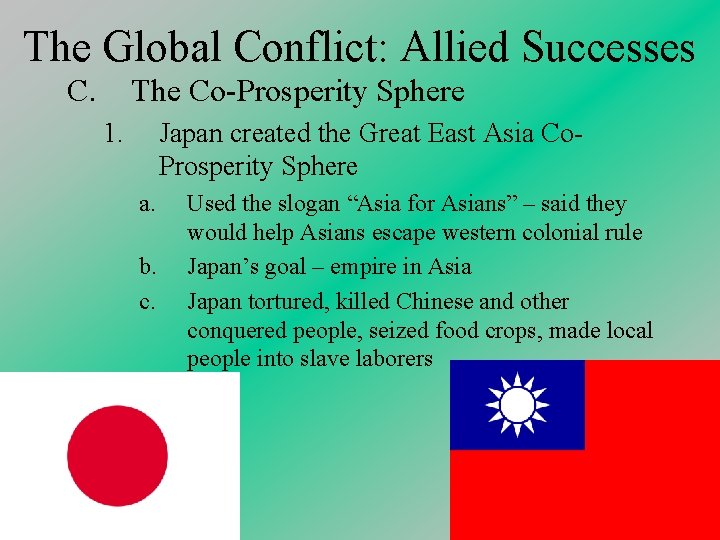
The Global Conflict: Allied Successes C. The Co-Prosperity Sphere 1. Japan created the Great East Asia Co. Prosperity Sphere a. b. c. Used the slogan “Asia for Asians” – said they would help Asians escape western colonial rule Japan’s goal – empire in Asia Japan tortured, killed Chinese and other conquered people, seized food crops, made local people into slave laborers
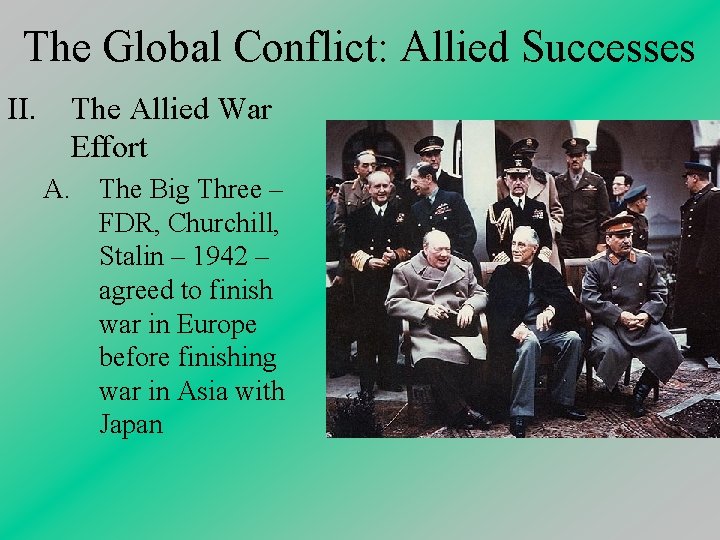
The Global Conflict: Allied Successes II. The Allied War Effort A. The Big Three – FDR, Churchill, Stalin – 1942 – agreed to finish war in Europe before finishing war in Asia with Japan
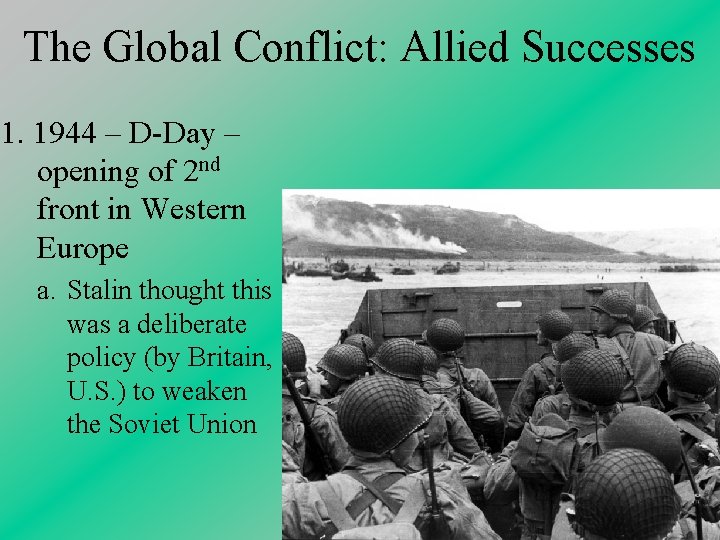
The Global Conflict: Allied Successes 1. 1944 – D-Day – opening of 2 nd front in Western Europe a. Stalin thought this was a deliberate policy (by Britain, U. S. ) to weaken the Soviet Union
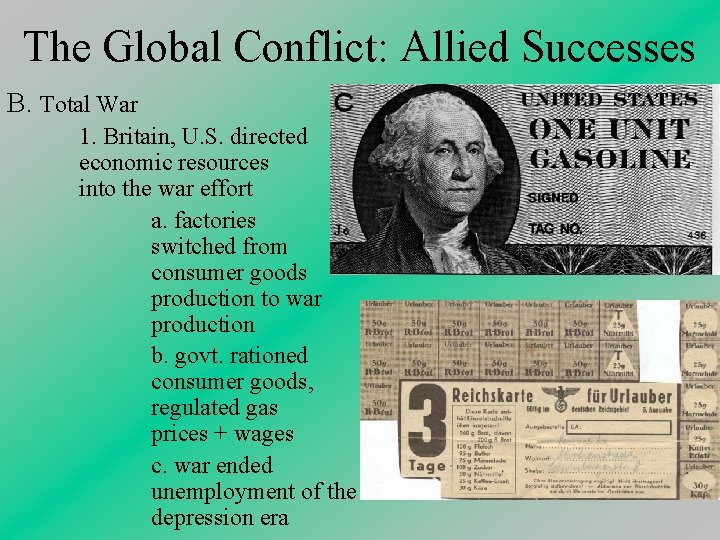
The Global Conflict: Allied Successes B. Total War 1. Britain, U. S. directed economic resources into the war effort a. factories switched from consumer goods production to war production b. govt. rationed consumer goods, regulated gas prices + wages c. war ended unemployment of the depression era
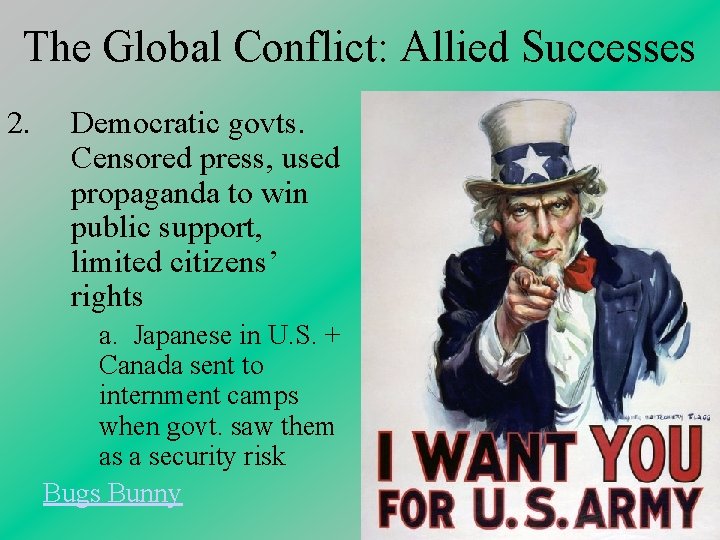
The Global Conflict: Allied Successes 2. Democratic govts. Censored press, used propaganda to win public support, limited citizens’ rights a. Japanese in U. S. + Canada sent to internment camps when govt. saw them as a security risk Bugs Bunny
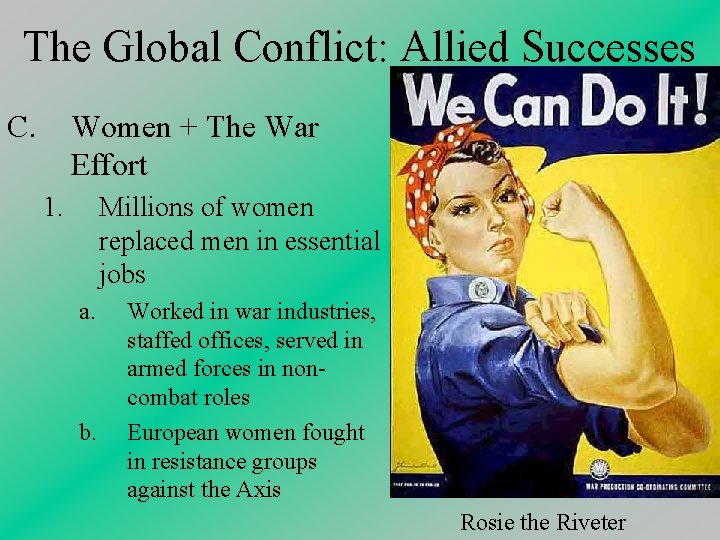
The Global Conflict: Allied Successes C. Women + The War Effort 1. Millions of women replaced men in essential jobs a. b. Worked in war industries, staffed offices, served in armed forces in noncombat roles European women fought in resistance groups against the Axis Rosie the Riveter
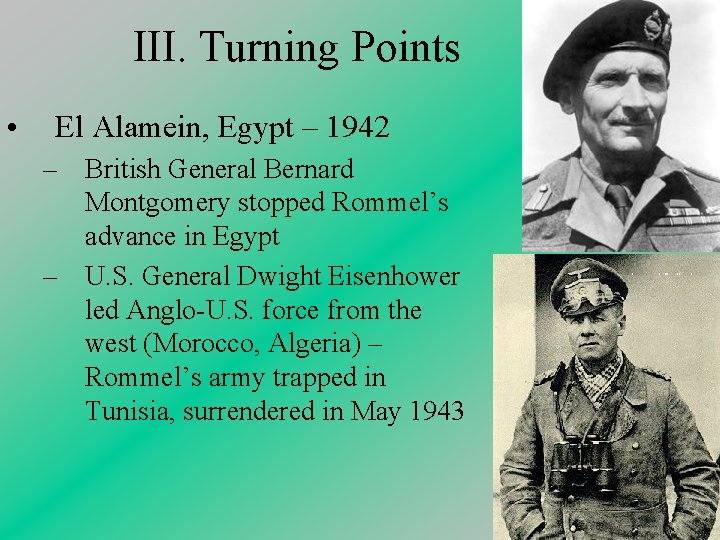
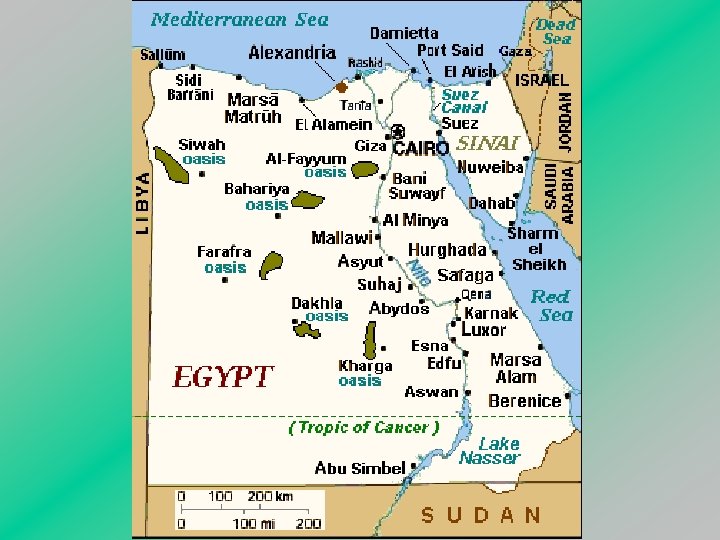
III. Turning Points • El Alamein, Egypt – 1942 – British General Bernard Montgomery stopped Rommel’s advance in Egypt – U. S. General Dwight Eisenhower led Anglo-U. S. force from the west (Morocco, Algeria) – Rommel’s army trapped in Tunisia, surrendered in May 1943
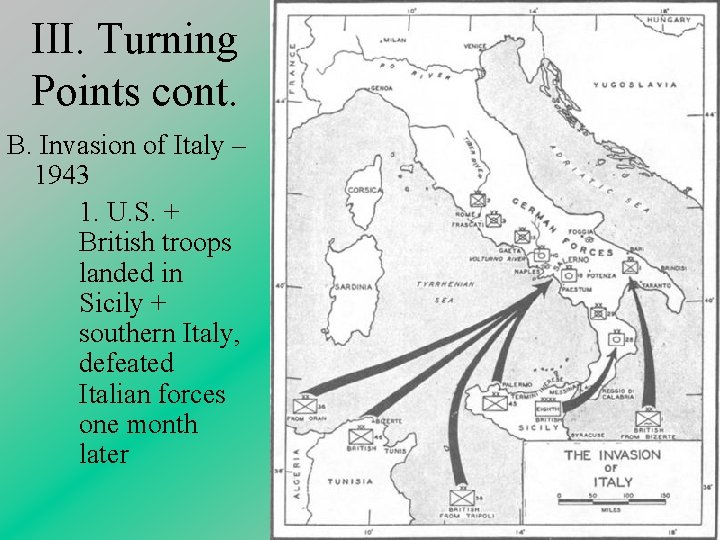
III. Turning Points cont. B. Invasion of Italy – 1943 1. U. S. + British troops landed in Sicily + southern Italy, defeated Italian forces one month later
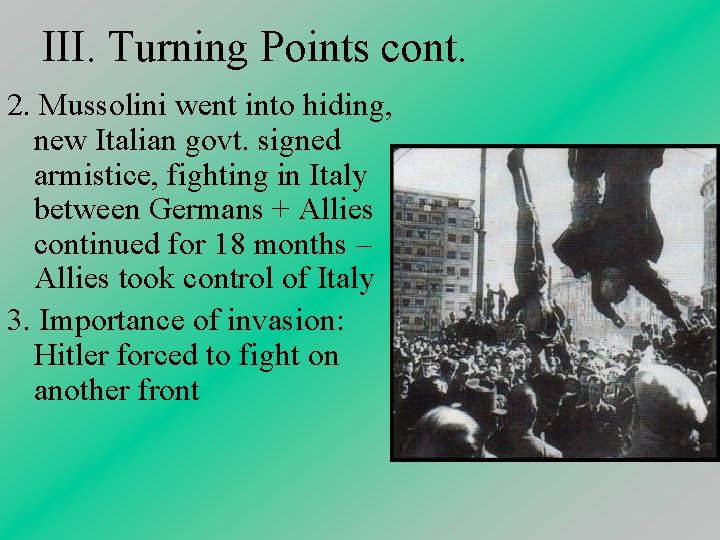
III. Turning Points cont. 2. Mussolini went into hiding, new Italian govt. signed armistice, fighting in Italy between Germans + Allies continued for 18 months – Allies took control of Italy 3. Importance of invasion: Hitler forced to fight on another front
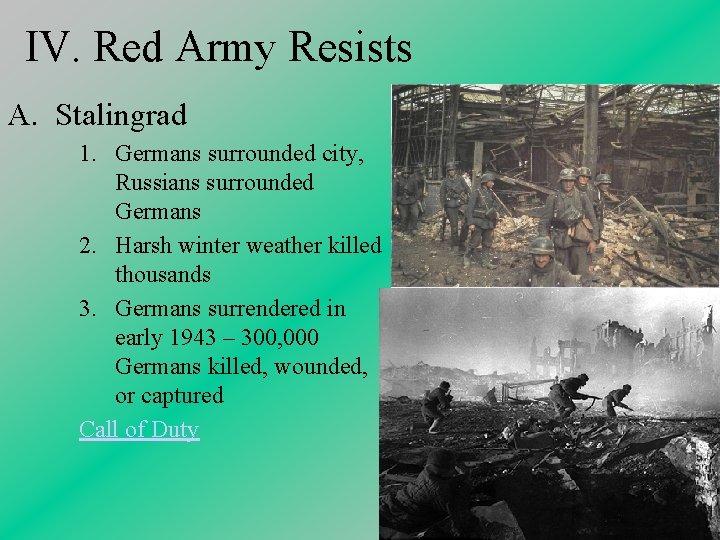
IV. Red Army Resists A. Stalingrad 1. Germans surrounded city, Russians surrounded Germans 2. Harsh winter weather killed thousands 3. Germans surrendered in early 1943 – 300, 000 Germans killed, wounded, or captured Call of Duty
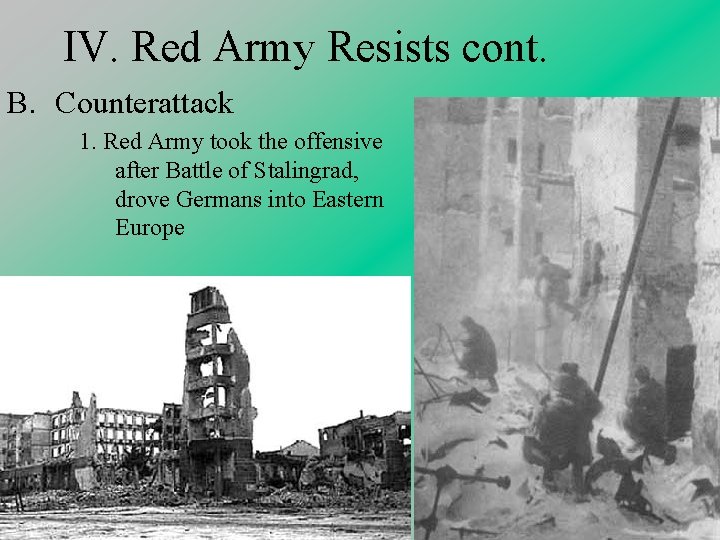
IV. Red Army Resists cont. B. Counterattack 1. Red Army took the offensive after Battle of Stalingrad, drove Germans into Eastern Europe
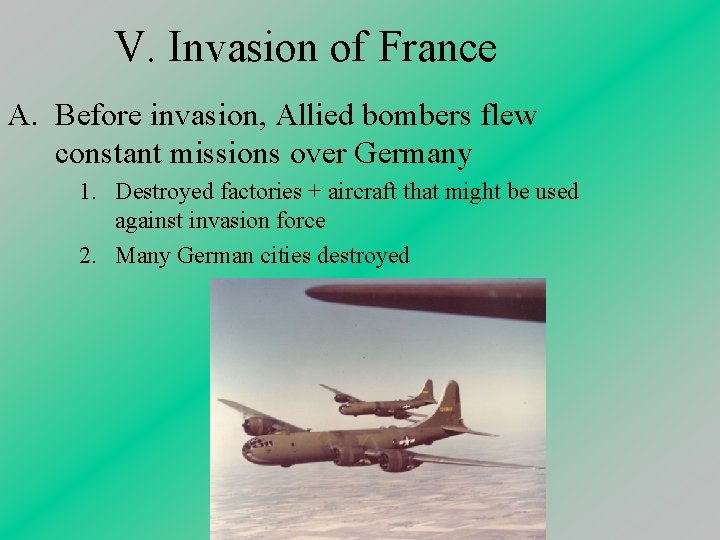
V. Invasion of France A. Before invasion, Allied bombers flew constant missions over Germany 1. Destroyed factories + aircraft that might be used against invasion force 2. Many German cities destroyed
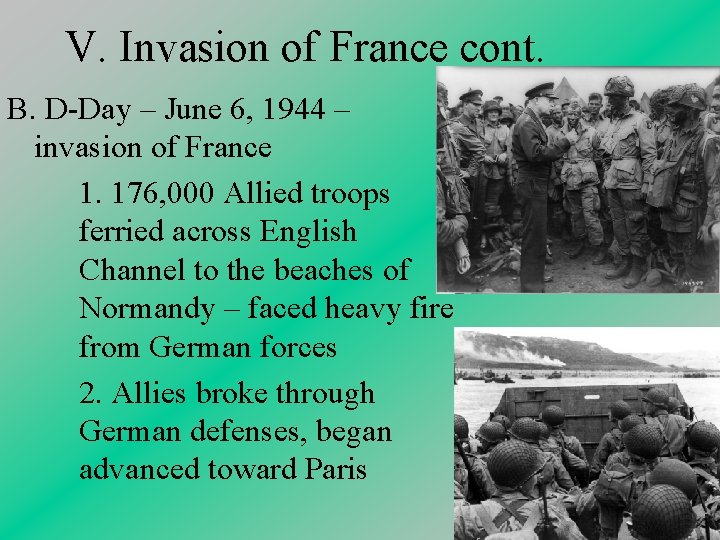
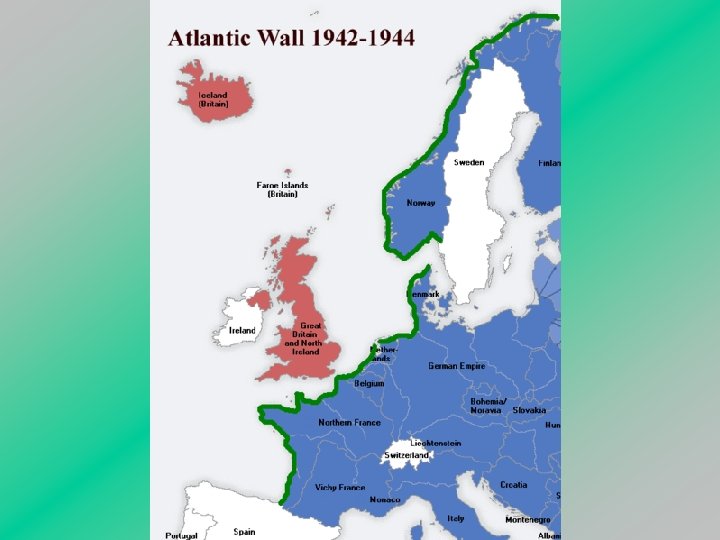
V. Invasion of France cont. B. D-Day – June 6, 1944 – invasion of France 1. 176, 000 Allied troops ferried across English Channel to the beaches of Normandy – faced heavy fire from German forces 2. Allies broke through German defenses, began advanced toward Paris
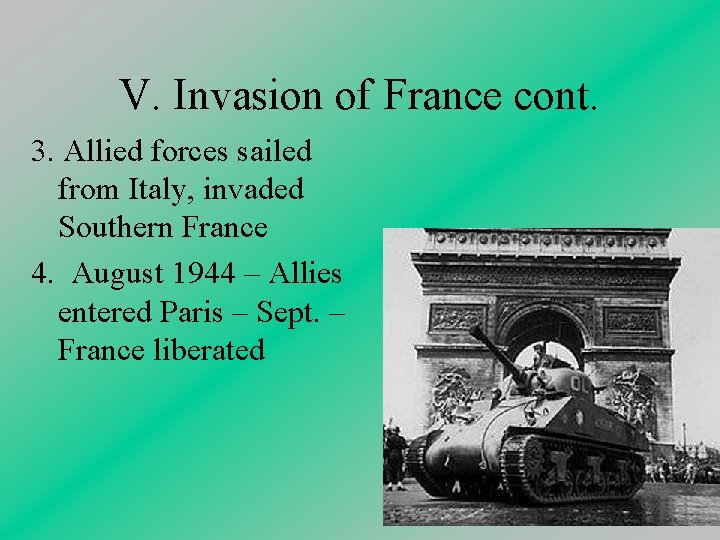
V. Invasion of France cont. 3. Allied forces sailed from Italy, invaded Southern France 4. August 1944 – Allies entered Paris – Sept. – France liberated
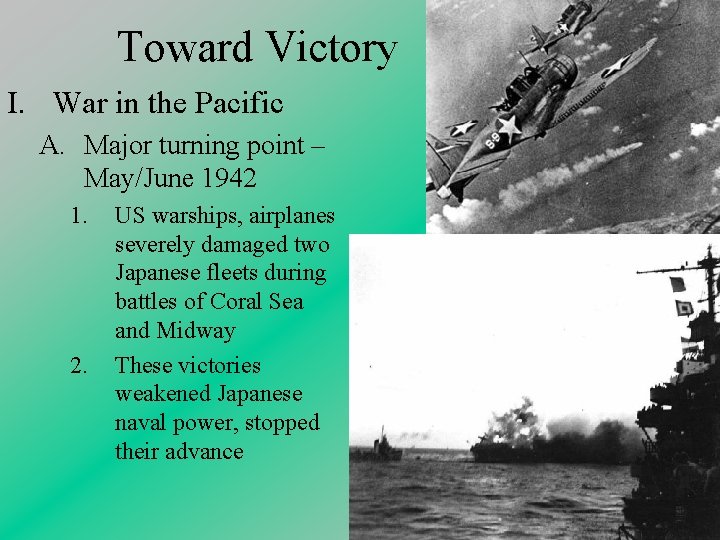
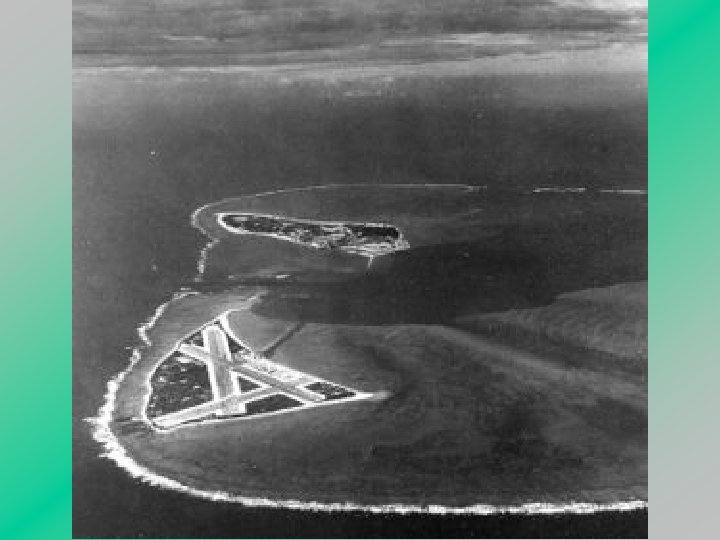
Toward Victory I. War in the Pacific A. Major turning point – May/June 1942 1. 2. US warships, airplanes severely damaged two Japanese fleets during battles of Coral Sea and Midway These victories weakened Japanese naval power, stopped their advance
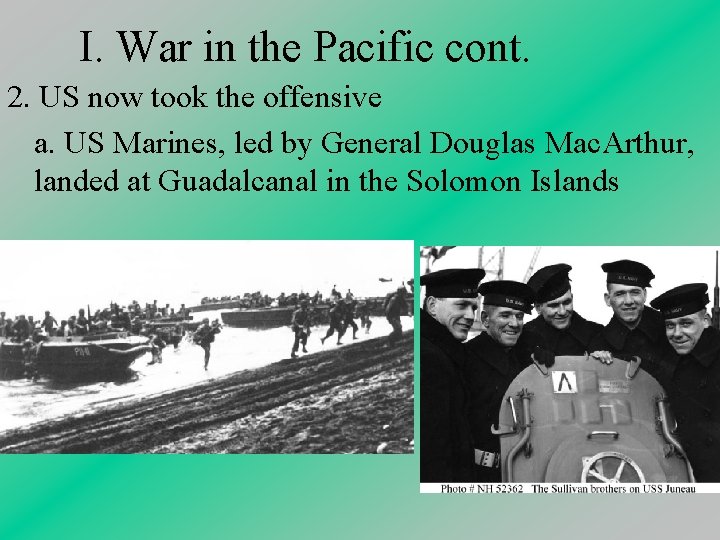
I. War in the Pacific cont. 2. US now took the offensive a. US Marines, led by General Douglas Mac. Arthur, landed at Guadalcanal in the Solomon Islands
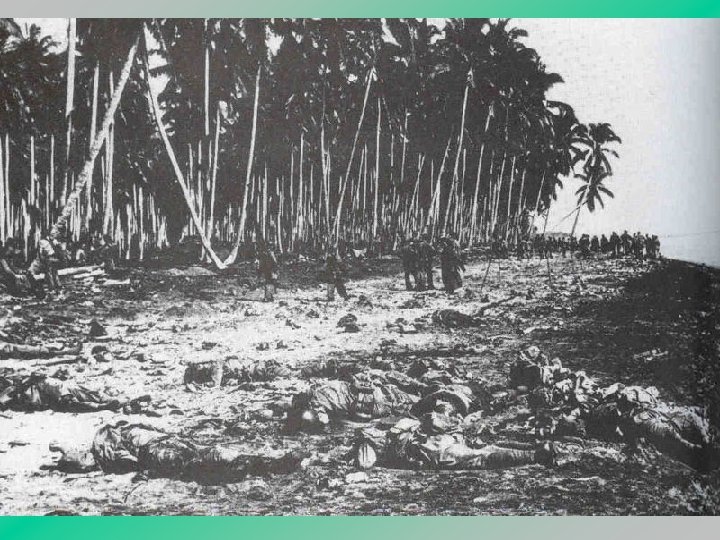
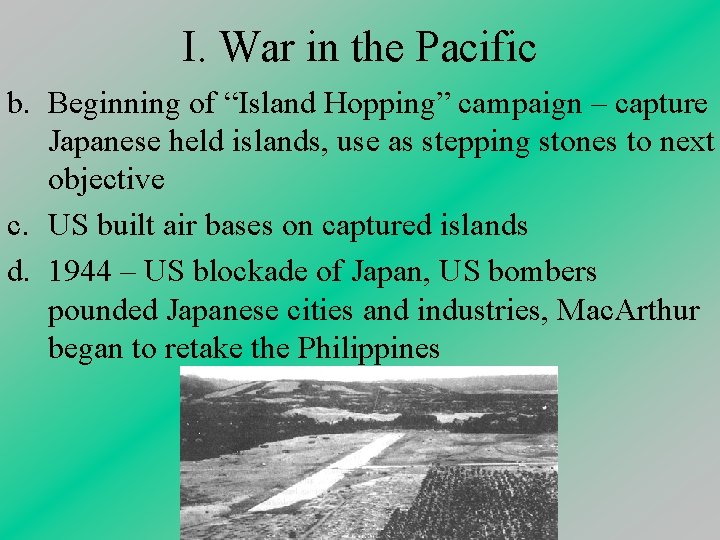
I. War in the Pacific b. Beginning of “Island Hopping” campaign – capture Japanese held islands, use as stepping stones to next objective c. US built air bases on captured islands d. 1944 – US blockade of Japan, US bombers pounded Japanese cities and industries, Mac. Arthur began to retake the Philippines
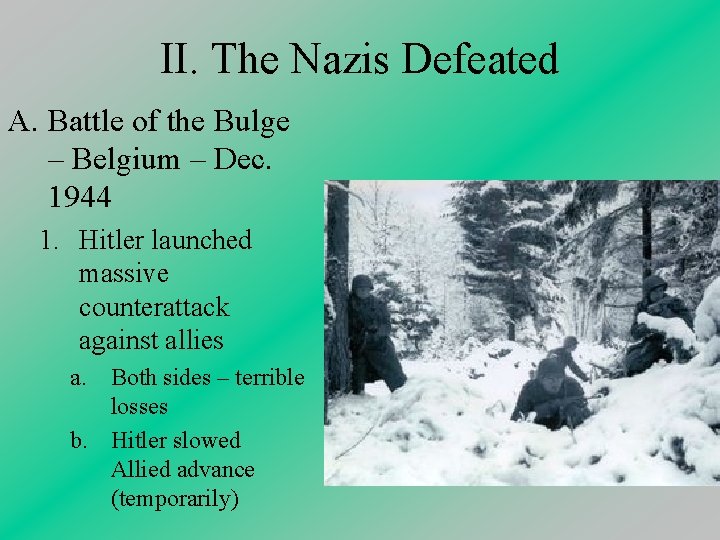
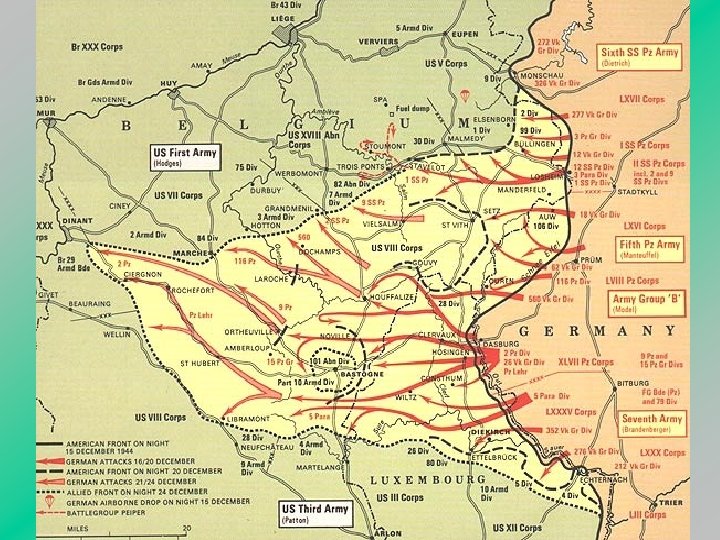
II. The Nazis Defeated A. Battle of the Bulge – Belgium – Dec. 1944 1. Hitler launched massive counterattack against allies a. Both sides – terrible losses b. Hitler slowed Allied advance (temporarily)
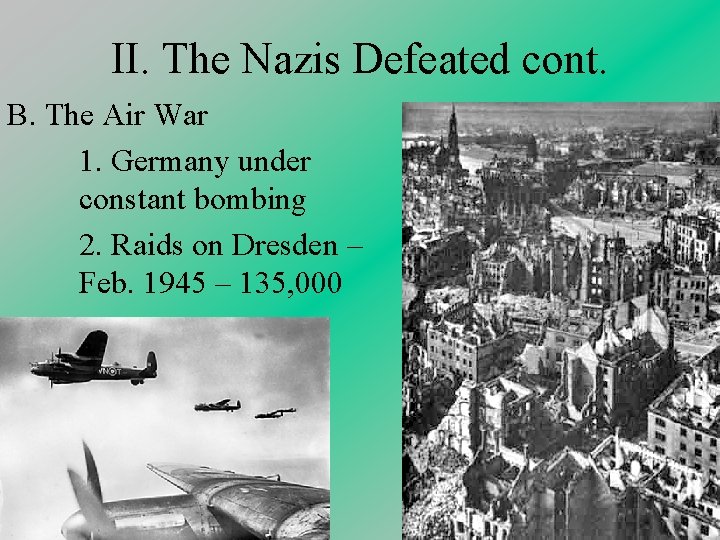
II. The Nazis Defeated cont. B. The Air War 1. Germany under constant bombing 2. Raids on Dresden – Feb. 1945 – 135, 000
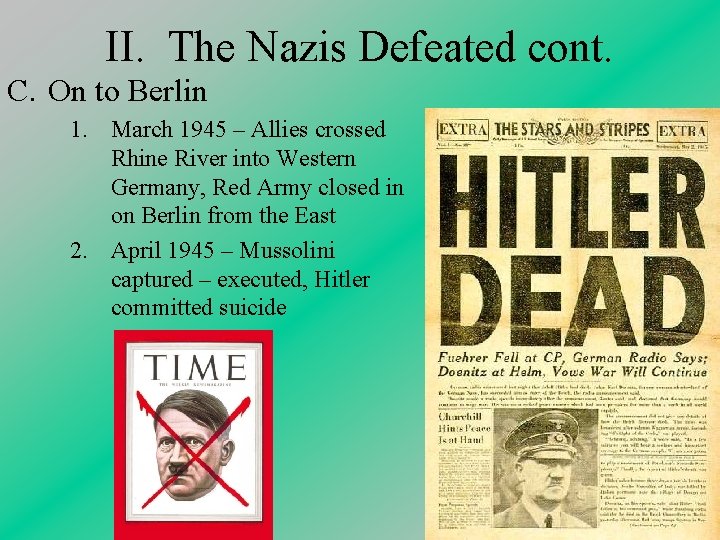
II. The Nazis Defeated cont. C. On to Berlin 1. March 1945 – Allies crossed Rhine River into Western Germany, Red Army closed in on Berlin from the East 2. April 1945 – Mussolini captured – executed, Hitler committed suicide
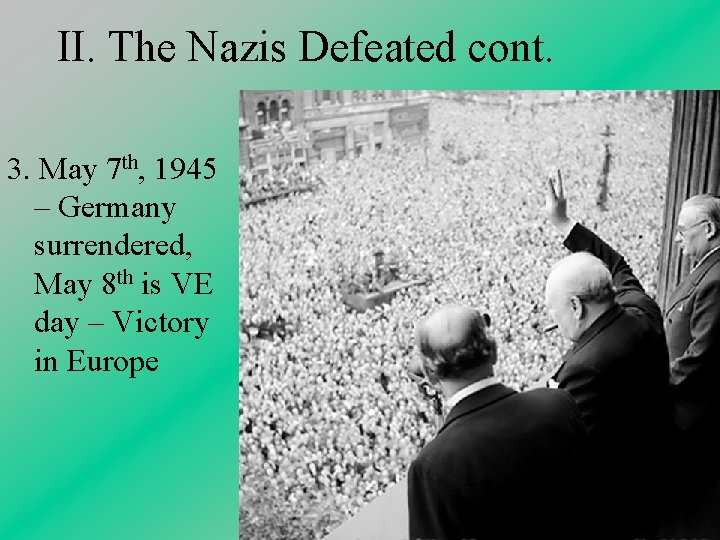
II. The Nazis Defeated cont. 3. May 7 th, 1945 – Germany surrendered, May 8 th is VE day – Victory in Europe
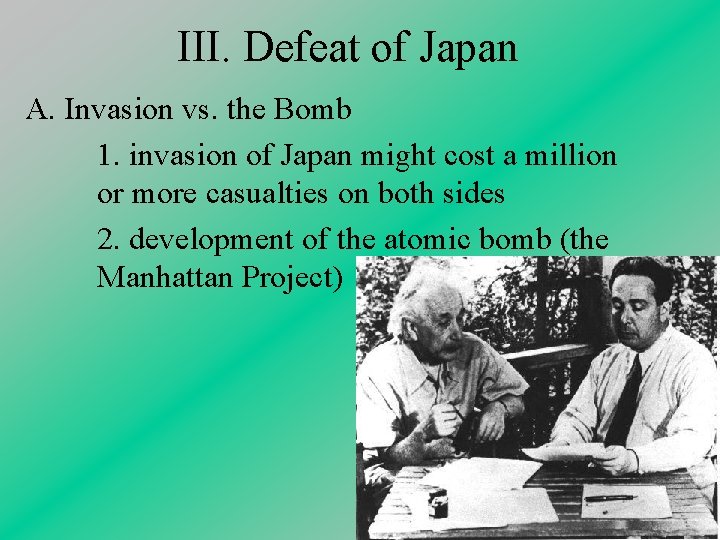
III. Defeat of Japan A. Invasion vs. the Bomb 1. invasion of Japan might cost a million or more casualties on both sides 2. development of the atomic bomb (the Manhattan Project)
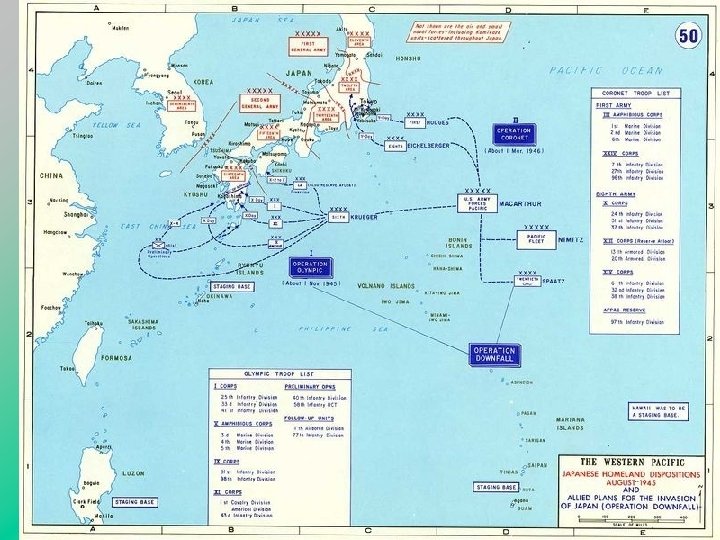
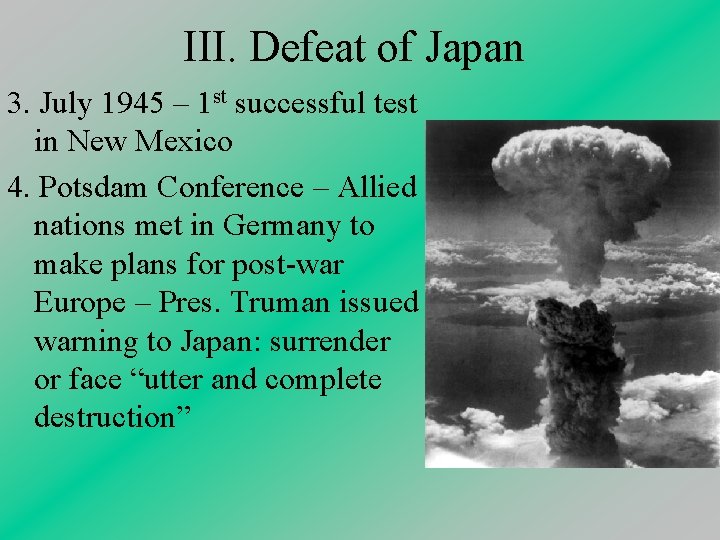
III. Defeat of Japan 3. July 1945 – 1 st successful test in New Mexico 4. Potsdam Conference – Allied nations met in Germany to make plans for post-war Europe – Pres. Truman issued warning to Japan: surrender or face “utter and complete destruction”
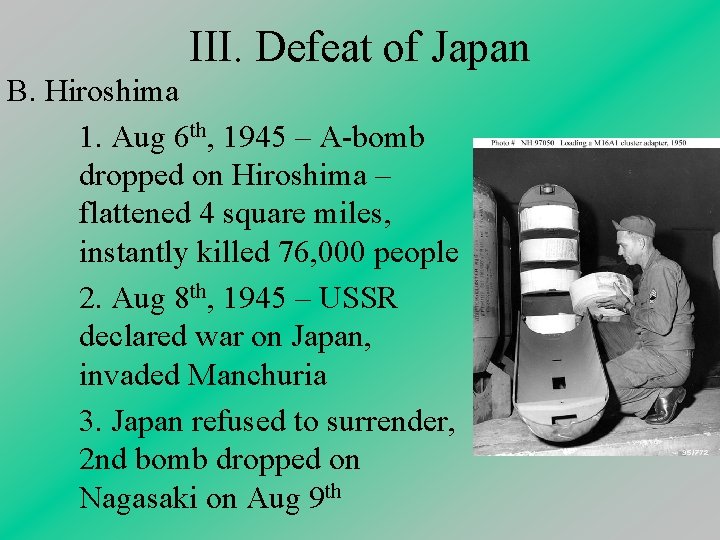
III. Defeat of Japan B. Hiroshima 1. Aug 6 th, 1945 – A-bomb dropped on Hiroshima – flattened 4 square miles, instantly killed 76, 000 people 2. Aug 8 th, 1945 – USSR declared war on Japan, invaded Manchuria 3. Japan refused to surrender, 2 nd bomb dropped on Nagasaki on Aug 9 th
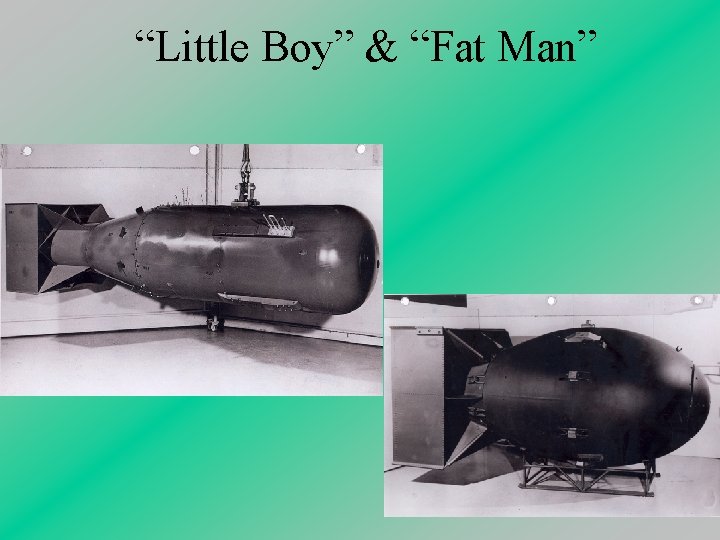
“Little Boy” & “Fat Man”
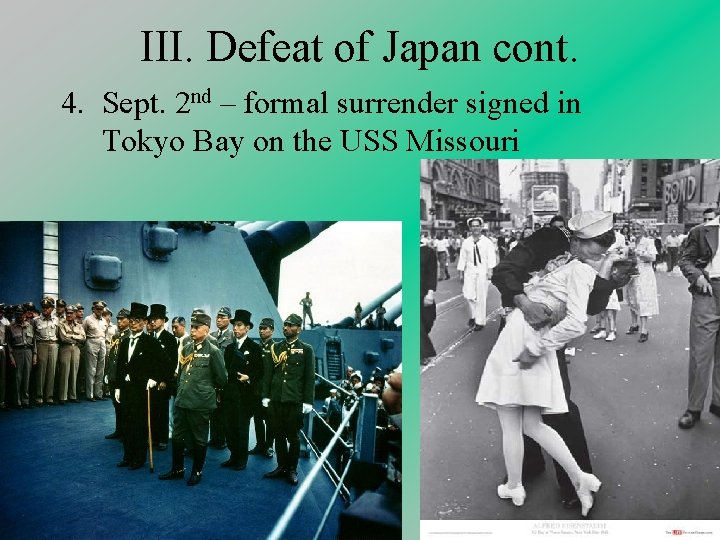
III. Defeat of Japan cont. 4. Sept. 2 nd – formal surrender signed in Tokyo Bay on the USS Missouri
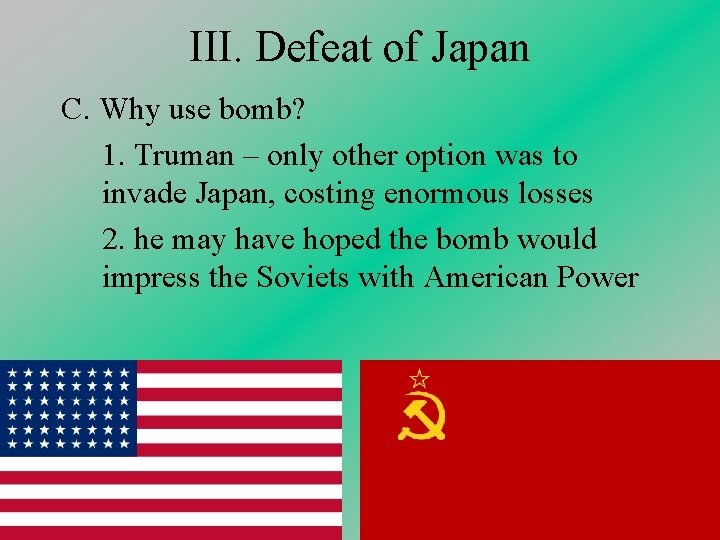
III. Defeat of Japan C. Why use bomb? 1. Truman – only other option was to invade Japan, costing enormous losses 2. he may have hoped the bomb would impress the Soviets with American Power
- Slides: 51