
The Gilded Age Includes Industrialization Resources Innovation Technology
- Slides: 30
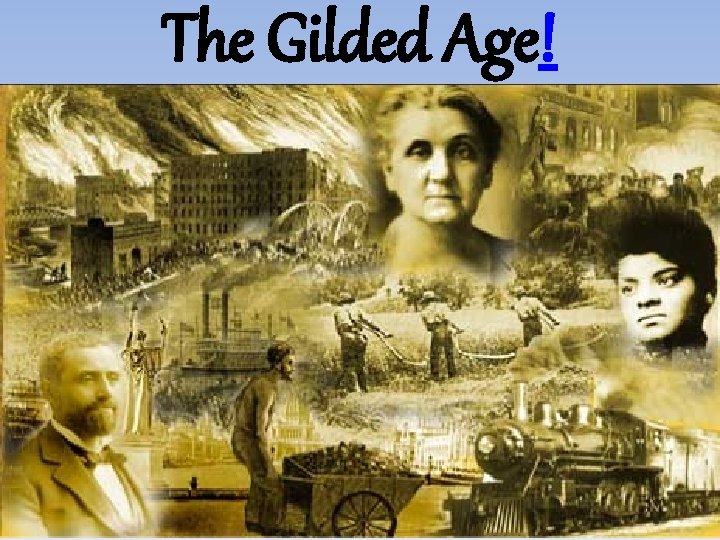
The Gilded Age!
Includes: Industrialization – Resources, Innovation, Technology, Gov’t Policy – Robber Barons, Corporations vs. Unions Urbanization – Immigration, Nativists, & Government Policy – City & Society (Highs & Lows) Progressive Movement – Muckrakers – Government Regulations
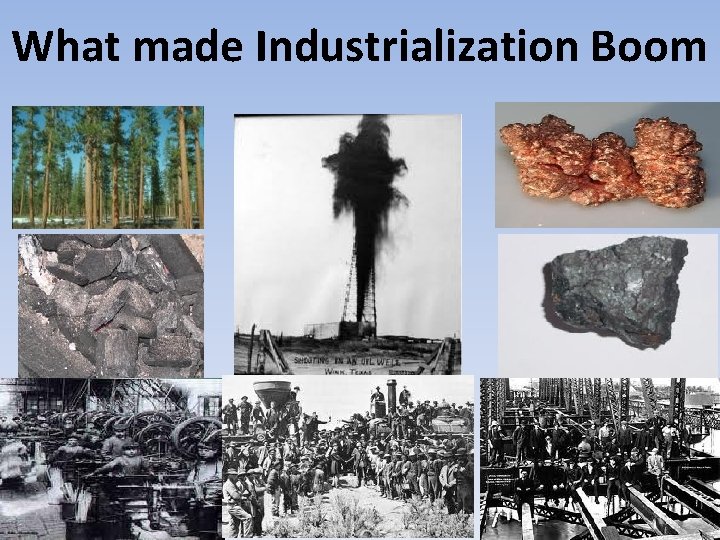
What made Industrialization Boom
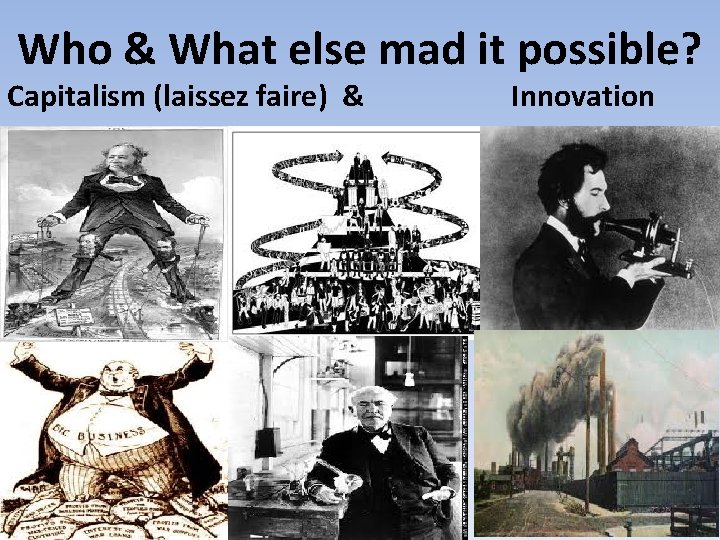
Who & What else mad it possible? Capitalism (laissez faire) & Innovation
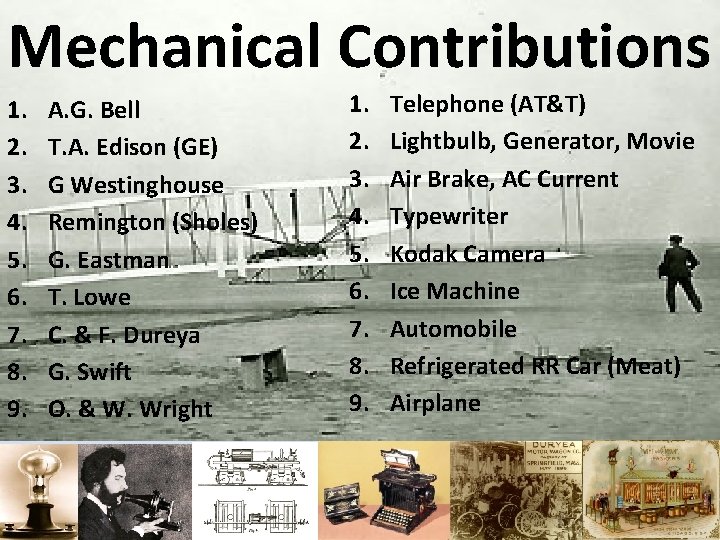
Mechanical Contributions 1. 2. 3. 4. 5. 6. 7. 8. 9. A. G. Bell T. A. Edison (GE) G Westinghouse Remington (Sholes) G. Eastman T. Lowe C. & F. Dureya G. Swift O. & W. Wright 1. 2. 3. 4. 5. 6. 7. 8. 9. Telephone (AT&T) Lightbulb, Generator, Movie Air Brake, AC Current Typewriter Kodak Camera Ice Machine Automobile Refrigerated RR Car (Meat) Airplane
What made it possible? Social: Population- 76 million (17 million Immigrants) Political: Laissez-Faire/Tariffs (No/Limited Gov. ’t Restrictions) Economics: Free Enterprise System (Individuals own & profit) Advancements: Inventions & Business Models (Lightbulb/Consolidate) Resources: Timber, Coal, Iron, Copper, Petroleum(Kerosene), etc.
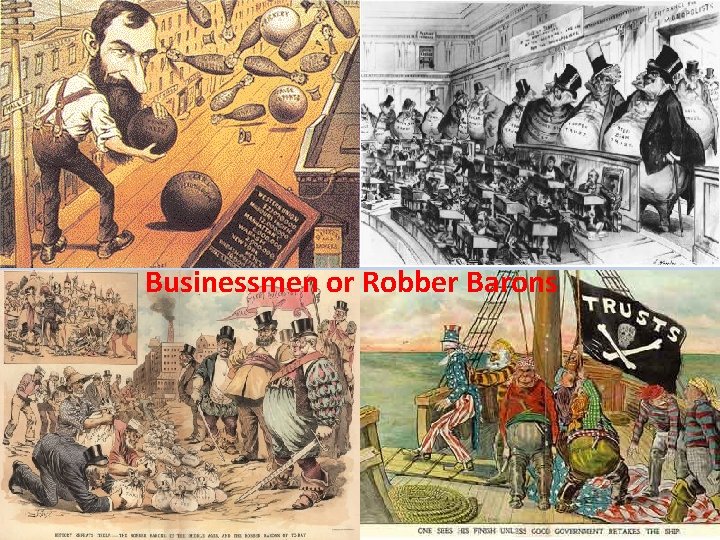
Businessmen or Robber Barons
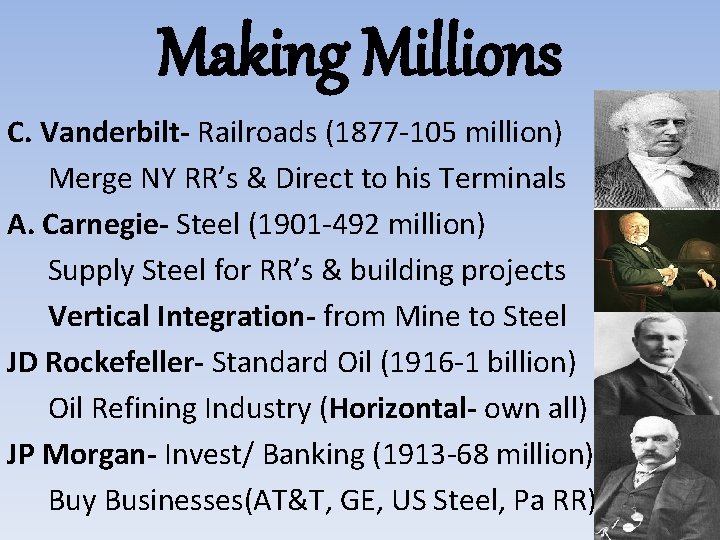
Making Millions C. Vanderbilt- Railroads (1877 -105 million) Merge NY RR’s & Direct to his Terminals A. Carnegie- Steel (1901 -492 million) Supply Steel for RR’s & building projects Vertical Integration- from Mine to Steel JD Rockefeller- Standard Oil (1916 -1 billion) Oil Refining Industry (Horizontal- own all) JP Morgan- Invest/ Banking (1913 -68 million) Buy Businesses(AT&T, GE, US Steel, Pa RR)
How they did it! 1. Control the Corporation Own the largest amount of stock & manage fixed costs 2. Invest in Technology & Machines Factories, Bessemer Process, Engines, Lighting, etc. 3. Hire large Workforces (skilled & unskilled) Pay workers as little as possible (operating cost) 4. Produce Goods & Services cheaply & efficiently Eco. of Scale- negotiate deals: supply, transport, & retail 5. Pool, Consolidate, Integrate, create Trusts & Holding Companies to monopolize their industry
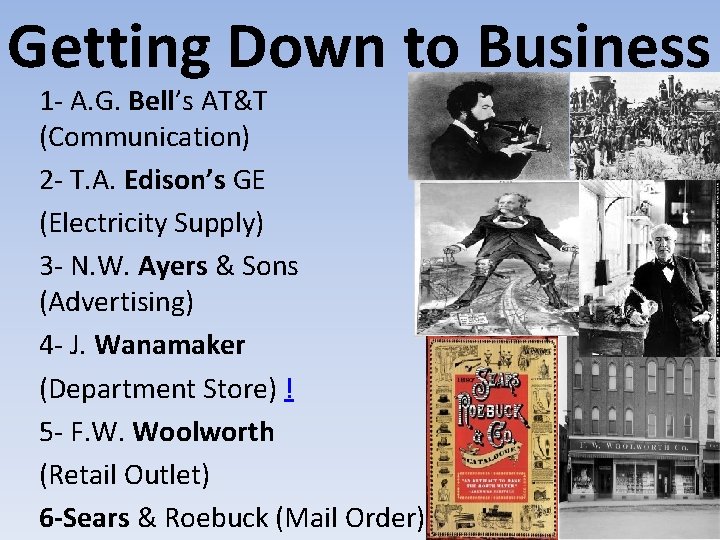
Getting Down to Business 1 - A. G. Bell’s AT&T (Communication) 2 - T. A. Edison’s GE (Electricity Supply) 3 - N. W. Ayers & Sons (Advertising) 4 - J. Wanamaker (Department Store) ! 5 - F. W. Woolworth (Retail Outlet) 6 -Sears & Roebuck (Mail Order)
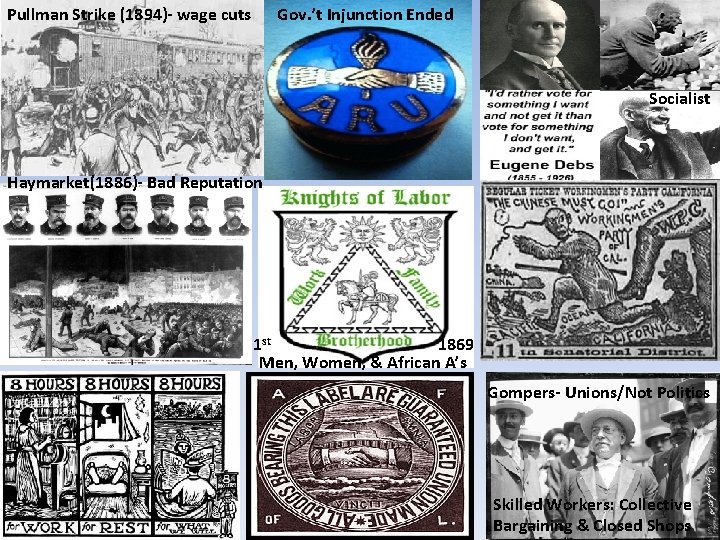
Workers Unionize! 1. Knights of Labor! 2. Amalgamated Association of Iron, Steel & Tin Workers 3. American Federation of Labor 4. American Railway Union! A- Why did they Unionize? B- Tactics used? C- Notable Events Match with Union: Pullman/Homestead/Haymarket
• • • “List of Trouble Makers” Arbitration • United workers in 1 specific industry Boycott • Prevent workers on property/no pay Trade Union • Class struggle between workers & Industrial Union owners • Process of a 3 rd party negotiating a Collective settlement b/t Unions & Owners Bargaining • Complaint • Formal court order Marxism Closed Shops • Refuse to deal with, buy, or use • Craftsmen join together Blacklist • Companies only hire Union members Lockout • process in which workers, through their unions, negotiate contracts Injunction including pay, benefits, hours, leave, job Grievance health and safety policies
Pullman Strike (1894)- wage cuts Gov. ’t Injunction Ended Socialist Haymarket(1886)- Bad Reputation 1 st 1869 Men, Women, & African A’s Gompers- Unions/Not Politics Skilled Workers: Collective Bargaining & Closed Shops
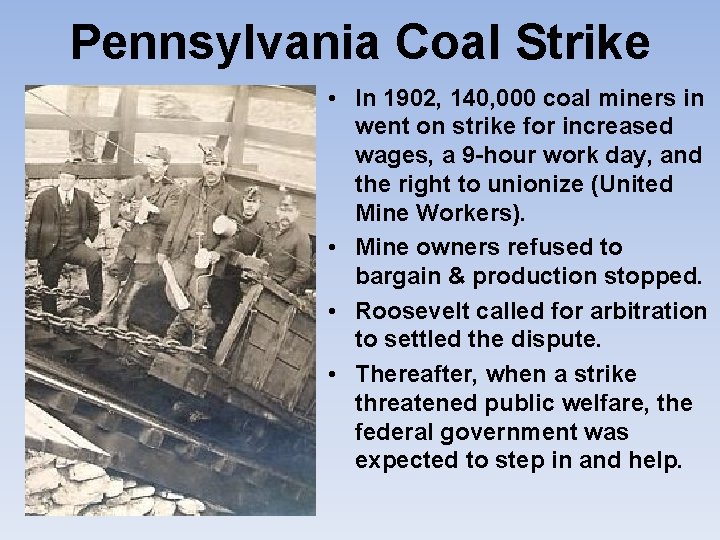
Pennsylvania Coal Strike • In 1902, 140, 000 coal miners in went on strike for increased wages, a 9 -hour work day, and the right to unionize (United Mine Workers). • Mine owners refused to bargain & production stopped. • Roosevelt called for arbitration to settled the dispute. • Thereafter, when a strike threatened public welfare, the federal government was expected to step in and help.
Immigration (25 milion+) Where from: • Eastern Europe • Southern Europe • (Italy, Greece, Russia, Serbia, Austria-Hungary) • Asia- China Where to: • Ellis Island (1892) • Angel Island (1910) • Cities/Tenements Why come: • Disease • Land Shortage/High Rents • Food Shortages • Poverty/Unemployment • Military Draft/War Work: • Unskilled- construction /factories/ dock workers • Skilled- Farm/merchants/ miners/ masons/ meat/ mills
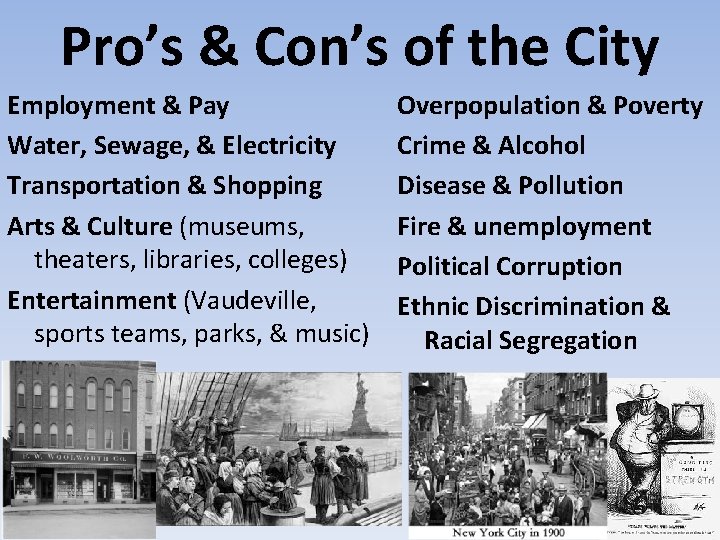
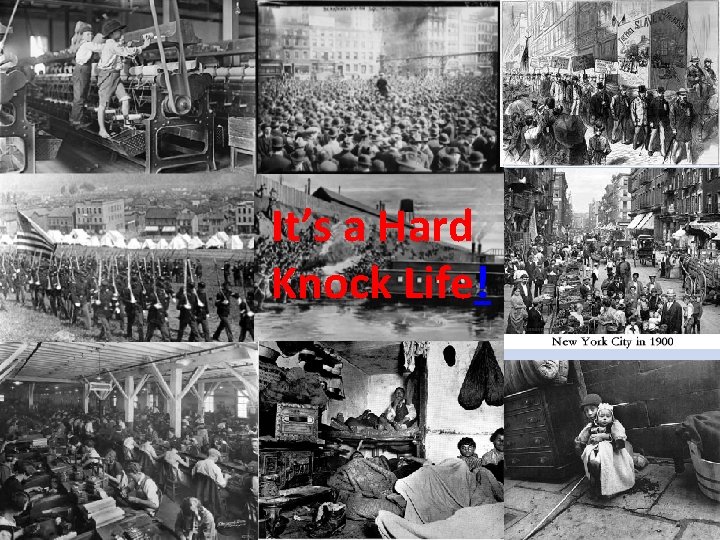
Pro’s & Con’s of the City Employment & Pay Water, Sewage, & Electricity Transportation & Shopping Arts & Culture (museums, theaters, libraries, colleges) Entertainment (Vaudeville, sports teams, parks, & music) Overpopulation & Poverty Crime & Alcohol Disease & Pollution Fire & unemployment Political Corruption Ethnic Discrimination & Racial Segregation
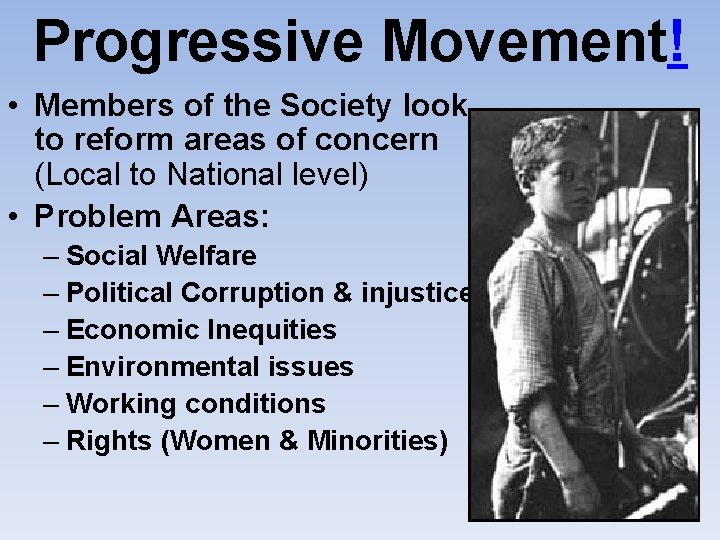
Progressive Movement! • Members of the Society look to reform areas of concern (Local to National level) • Problem Areas: – Social Welfare – Political Corruption & injustice – Economic Inequities – Environmental issues – Working conditions – Rights (Women & Minorities)
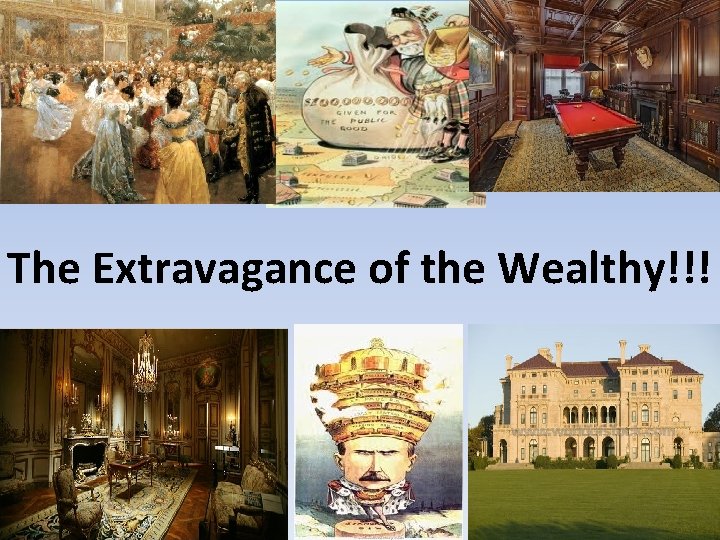
The Extravagance of the Wealthy!!!
It’s a Hard Knock Life!
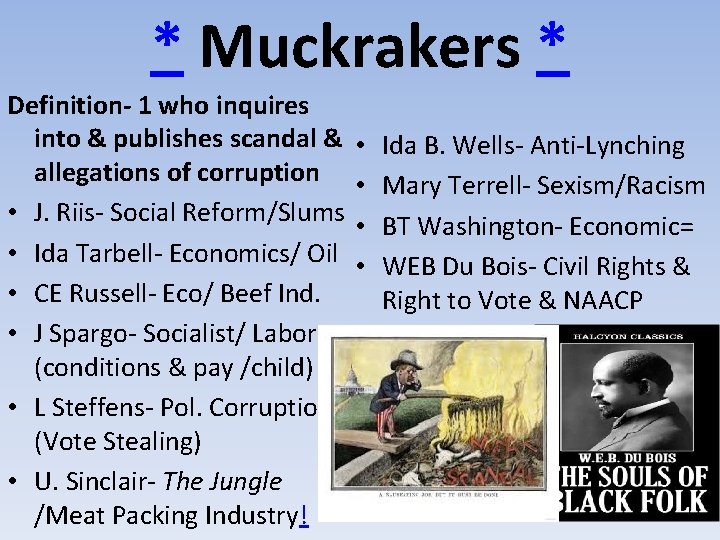
* Muckrakers * Definition- 1 who inquires into & publishes scandal & allegations of corruption • J. Riis- Social Reform/Slums • Ida Tarbell- Economics/ Oil • CE Russell- Eco/ Beef Ind. • J Spargo- Socialist/ Labor (conditions & pay /child) • L Steffens- Pol. Corruption (Vote Stealing) • U. Sinclair- The Jungle /Meat Packing Industry! • • Ida B. Wells- Anti-Lynching Mary Terrell- Sexism/Racism BT Washington- Economic= WEB Du Bois- Civil Rights & Right to Vote & NAACP
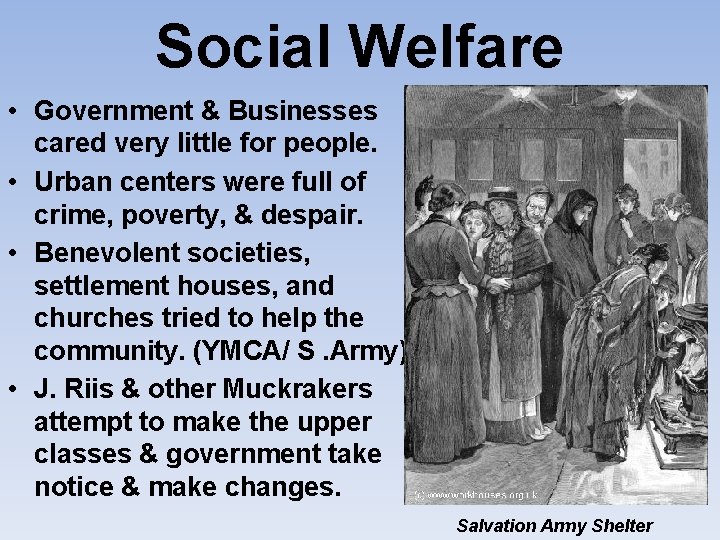
Social Welfare • Government & Businesses cared very little for people. • Urban centers were full of crime, poverty, & despair. • Benevolent societies, settlement houses, and churches tried to help the community. (YMCA/ S. Army) • J. Riis & other Muckrakers attempt to make the upper classes & government take notice & make changes. Salvation Army Shelter
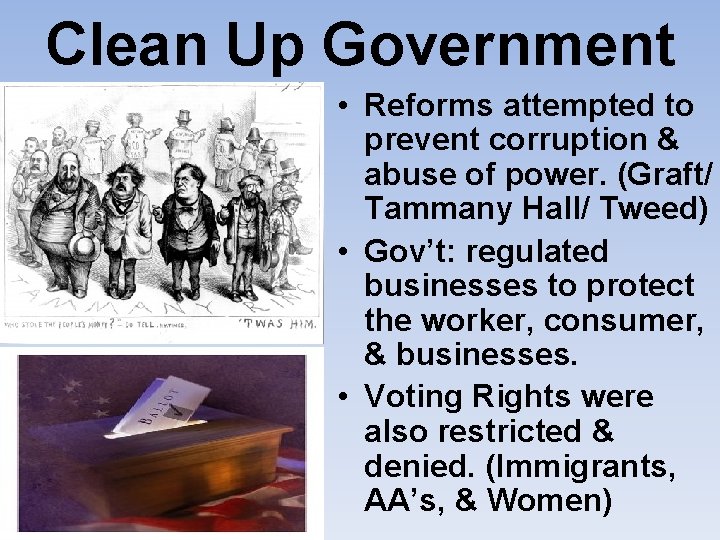
Clean Up Government • Reforms attempted to prevent corruption & abuse of power. (Graft/ Tammany Hall/ Tweed) • Gov’t: regulated businesses to protect the worker, consumer, & businesses. • Voting Rights were also restricted & denied. (Immigrants, AA’s, & Women)
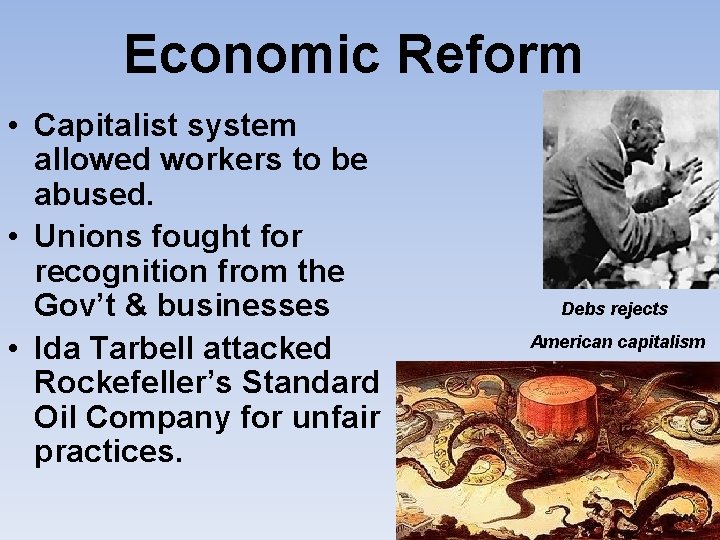
Economic Reform • Capitalist system allowed workers to be abused. • Unions fought for recognition from the Gov’t & businesses • Ida Tarbell attacked Rockefeller’s Standard Oil Company for unfair practices. Debs rejects American capitalism
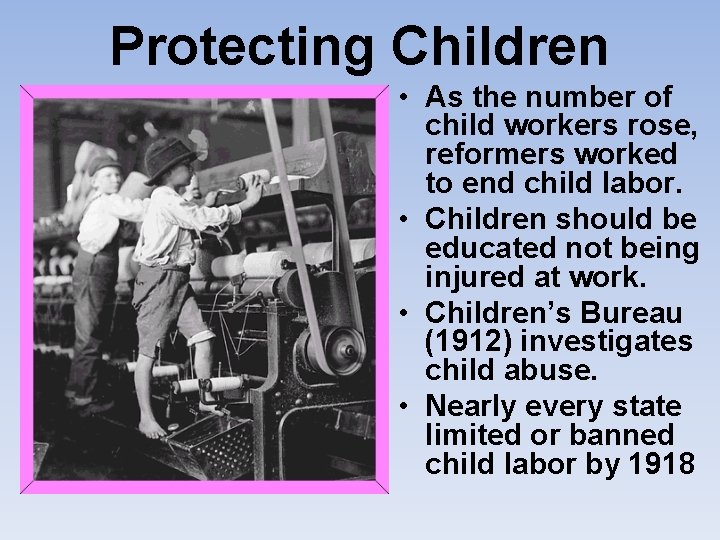
Protecting Children • As the number of child workers rose, reformers worked to end child labor. • Children should be educated not being injured at work. • Children’s Bureau (1912) investigates child abuse. • Nearly every state limited or banned child labor by 1918
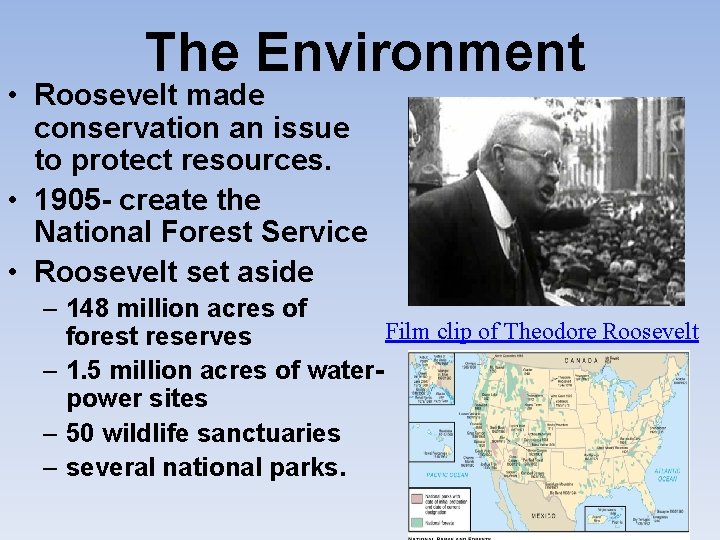
The Environment • Roosevelt made conservation an issue to protect resources. • 1905 - create the National Forest Service • Roosevelt set aside – 148 million acres of Film clip of Theodore Roosevelt forest reserves – 1. 5 million acres of waterpower sites – 50 wildlife sanctuaries – several national parks.
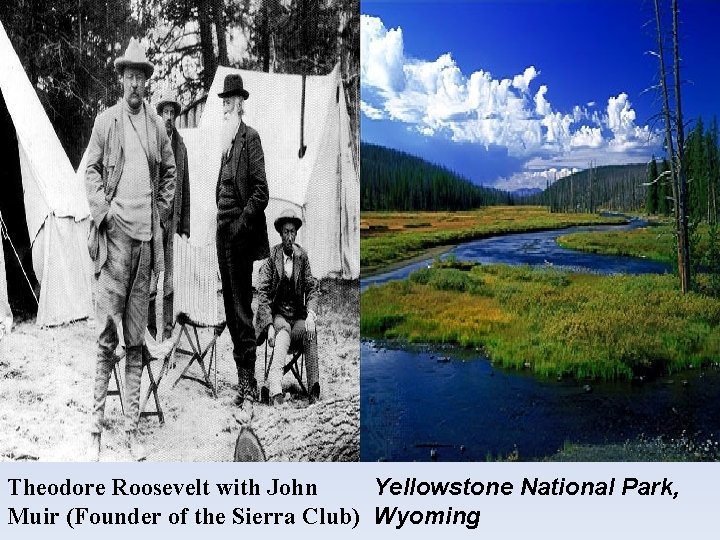
Theodore Roosevelt with John Yellowstone National Park, Muir (Founder of the Sierra Club) Wyoming
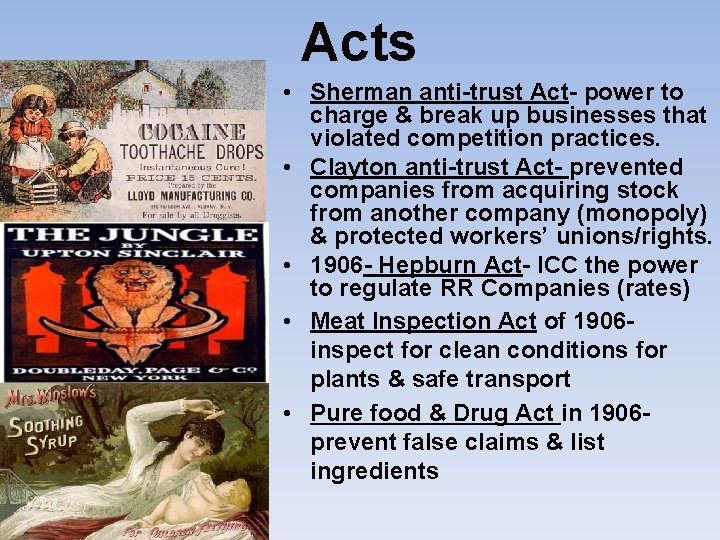
Acts • Sherman anti-trust Act- power to charge & break up businesses that violated competition practices. • Clayton anti-trust Act- prevented companies from acquiring stock from another company (monopoly) & protected workers’ unions/rights. • 1906 - Hepburn Act- ICC the power to regulate RR Companies (rates) • Meat Inspection Act of 1906 inspect for clean conditions for plants & safe transport • Pure food & Drug Act in 1906 prevent false claims & list ingredients
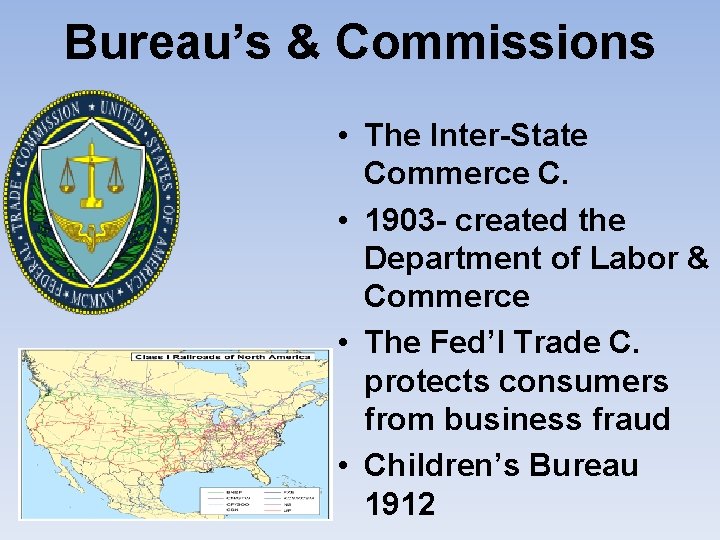
Bureau’s & Commissions • The Inter-State Commerce C. • 1903 - created the Department of Labor & Commerce • The Fed’l Trade C. protects consumers from business fraud • Children’s Bureau 1912
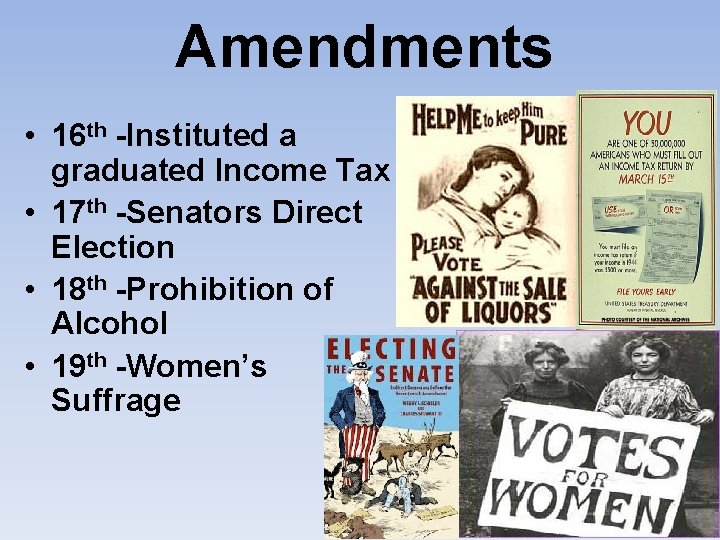
Amendments • 16 th -Instituted a graduated Income Tax • 17 th -Senators Direct Election • 18 th -Prohibition of Alcohol • 19 th -Women’s Suffrage
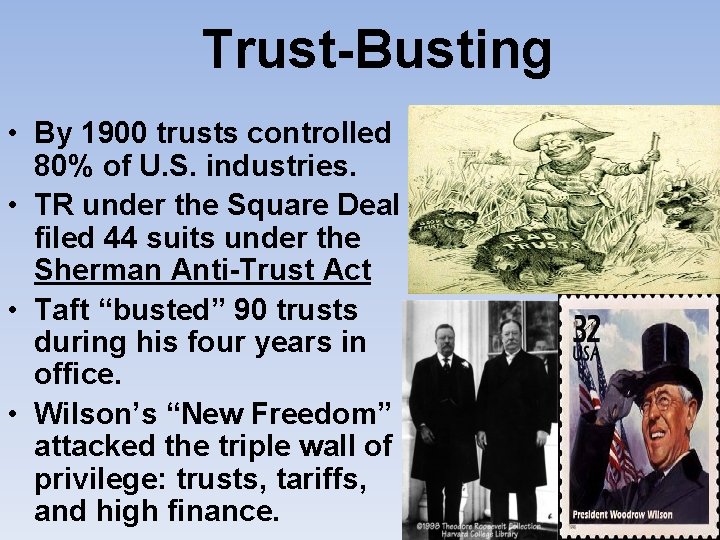
Trust-Busting • By 1900 trusts controlled 80% of U. S. industries. • TR under the Square Deal filed 44 suits under the Sherman Anti-Trust Act • Taft “busted” 90 trusts during his four years in office. • Wilson’s “New Freedom” attacked the triple wall of privilege: trusts, tariffs, and high finance.