
The Gilded Age 1870 1900 After the Civil
- Slides: 32
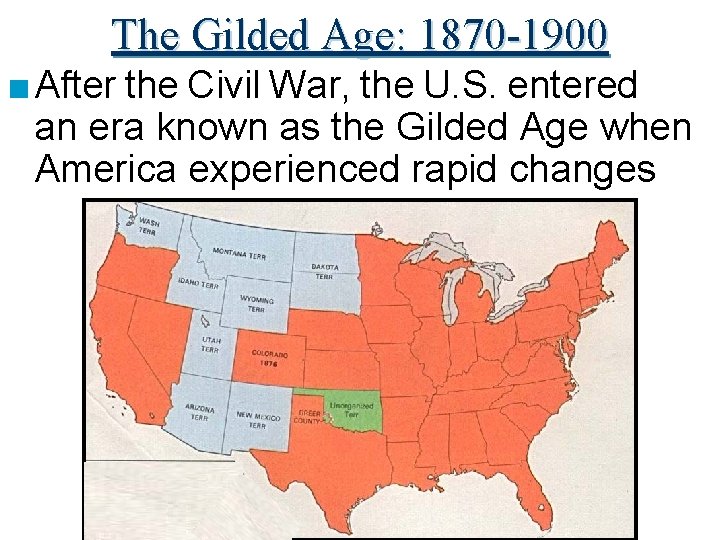
The Gilded Age: 1870 -1900 ■ After the Civil War, the U. S. entered an era known as the Gilded Age when America experienced rapid changes
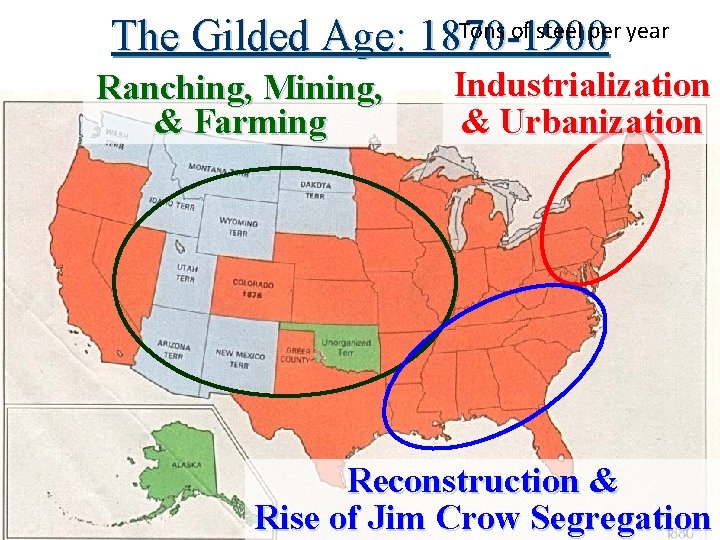
Tons of steel per year The Gilded Age: 1870 -1900 Ranching, Mining, & Farming Industrialization & Urbanization Reconstruction & Rise of Jim Crow Segregation
Overview of the West ■ After the Civil War, the area west of the Mississippi River was settled: –Miners, ranchers, farmers flooded into the “frontier” looking for economic opportunities –Transcontinental railroads connected the country –Plains Indians were forced to assimilate & move to reservations ■ By 1890, the frontier was closed
The Mining Bonanza ■ Mining was the 1 st magnet to attract settlers to the West: –Before the Civil War, miners discovered gold in California, Colorado, & Nevada –After the Civil War, miners resumed their migration into the West to find more gold & silver
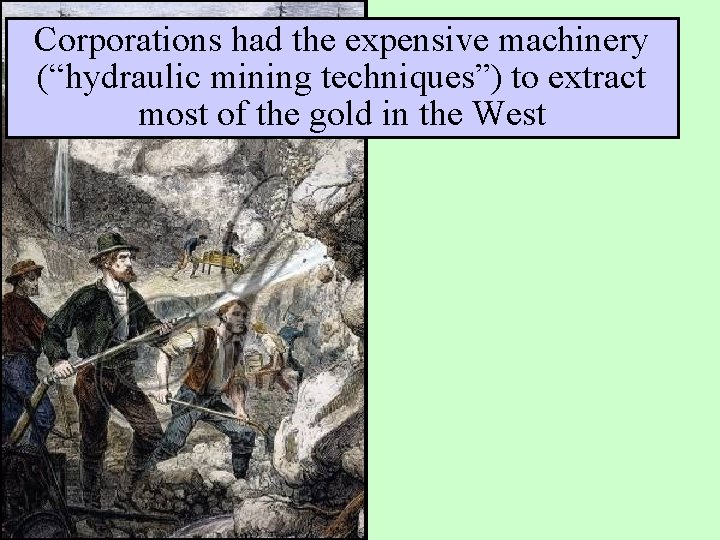
Corporations had the expensive machinery (“hydraulic mining techniques”) to extract most of the gold in the West
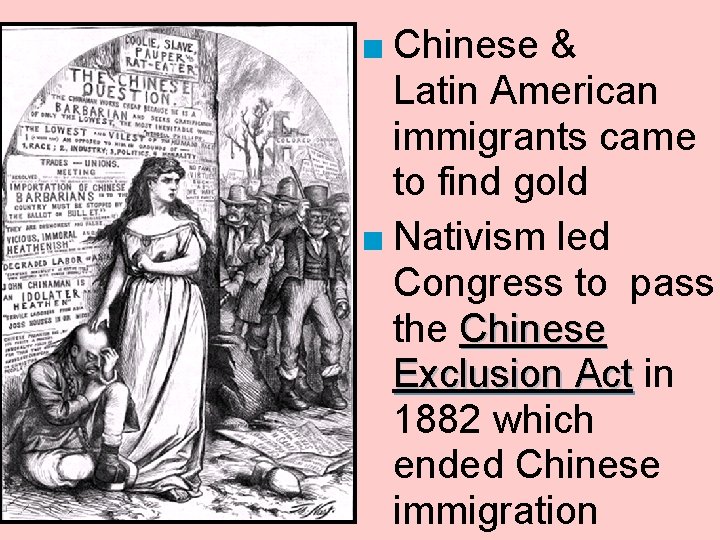
■ Chinese & Latin American immigrants came to find gold ■ Nativism led Congress to pass the Chinese Exclusion Act in 1882 which ended Chinese immigration
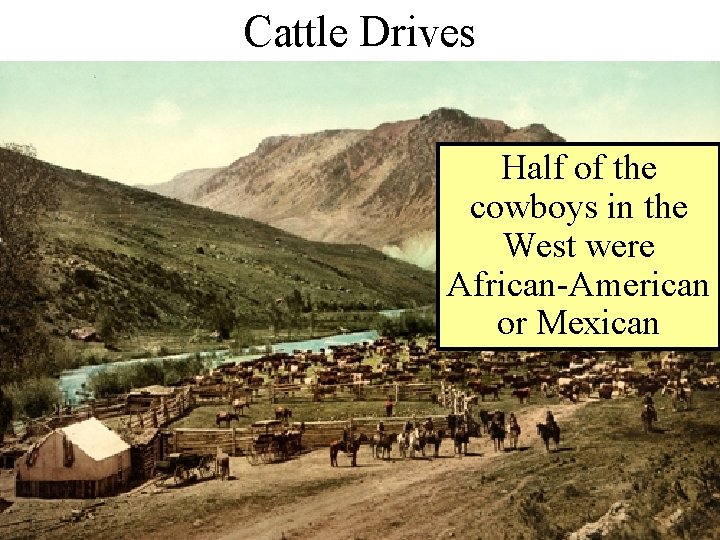
Ranchers & The Cattle Boom ■ After the Civil War, the demand for beef skyrocketed ■ To meet this demand, ranchers drove Texas longhorns across the open “range” to railroad towns: –Cattle bought in Texas for $4 could be sold for $40 in Kansas –Cattle drives created new towns
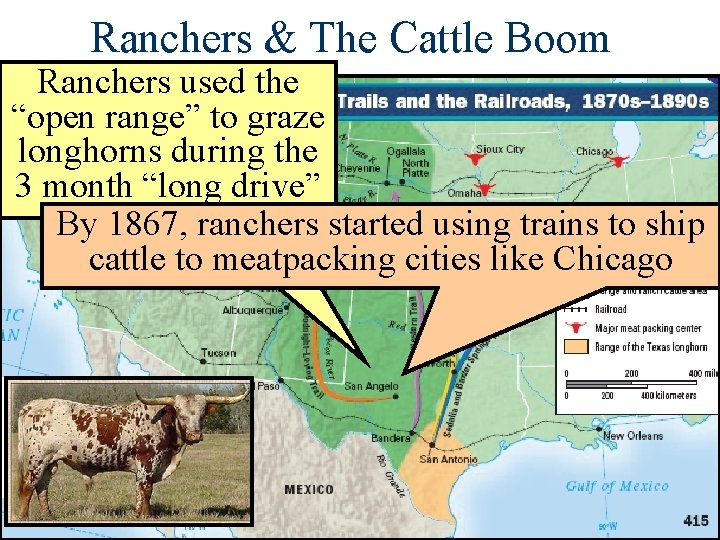
Ranchers & The Cattle Boom Ranchers used the “open range” to graze longhorns during the 3 month “long drive” By 1867, ranchers started using trains to ship cattle to meatpacking cities like Chicago
Cattle Drives Half of the cowboys in the West were African-American or Mexican
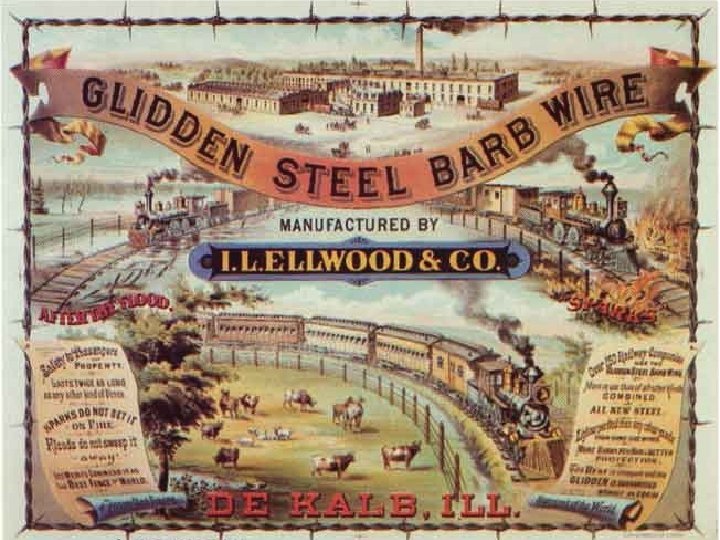
Ranchers & The Cattle Boom ■ By the 1880 s, cattle ranching was difficult because: –The “open range” was closed as farmers used new barbed wire fencing to close off their farms –Overgrazing & drought left little grasslands for grazing cattle –Competition from sheep herding
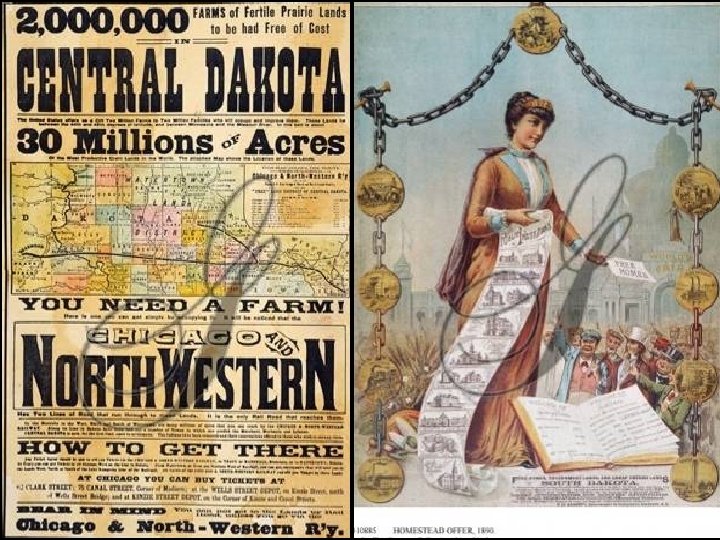
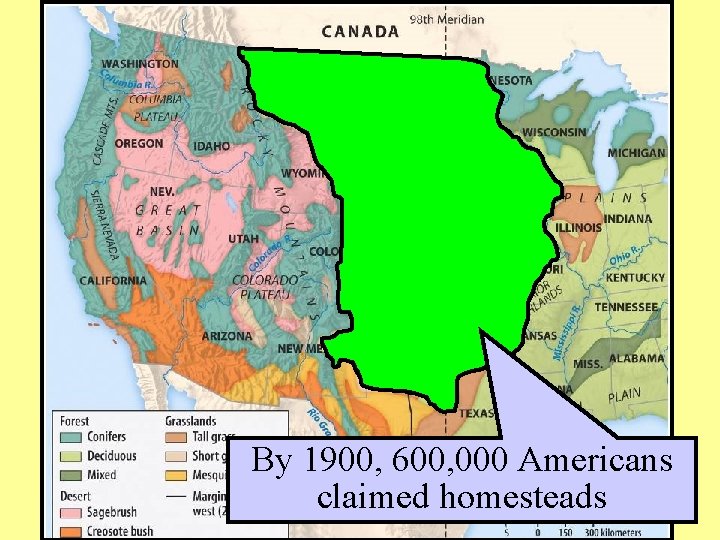
Homesteads & Farmers ■ The U. S. gov’t offered incentives for farmers to settle the West: –Homestead Act (1862) gave 160 acres to citizens who pledged to “improve the land” for at least 5 years –Other gov’t acts helped develop western lands by planting trees & building irrigation systems
By 1900, 600, 000 Americans claimed homesteads
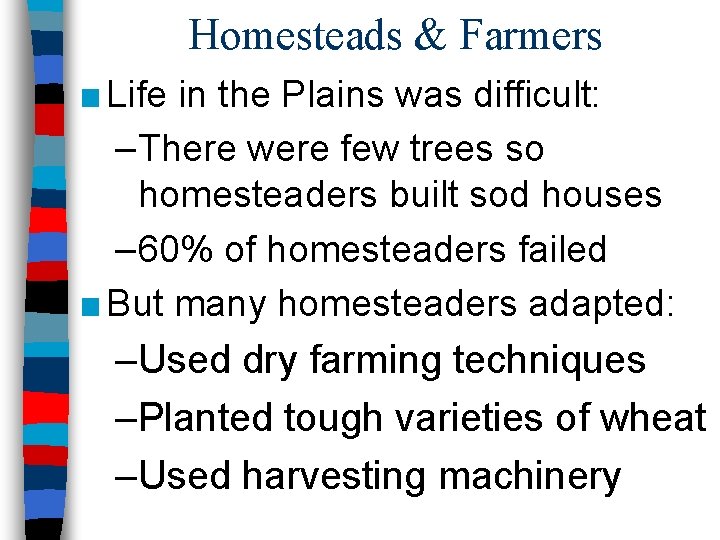
Homesteads & Farmers ■ Life in the Plains was difficult: –There were few trees so homesteaders built sod houses – 60% of homesteaders failed ■ But many homesteaders adapted: –Used dry farming techniques –Planted tough varieties of wheat –Used harvesting machinery
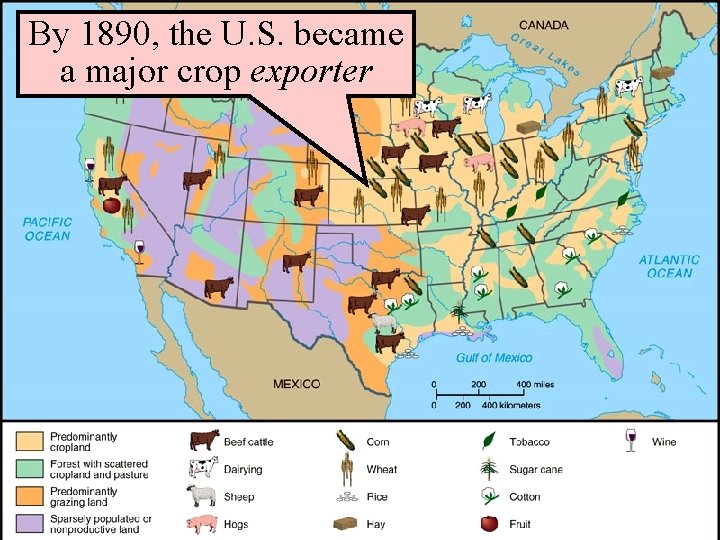
By 1890, the U. S. became a major crop exporter
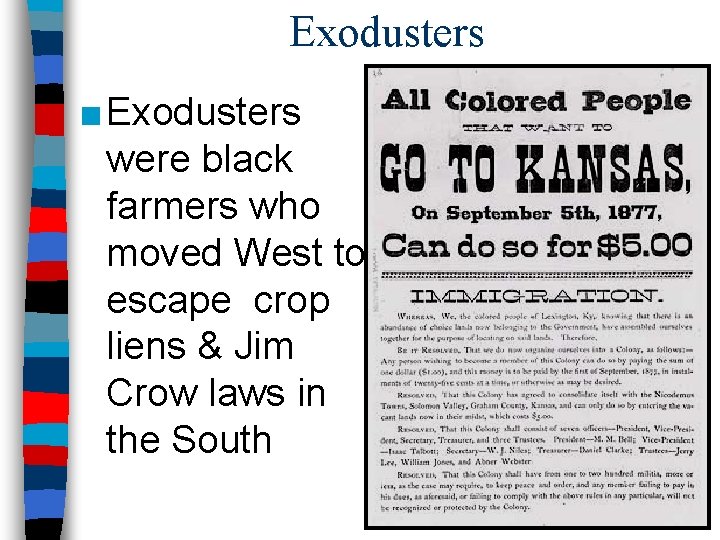
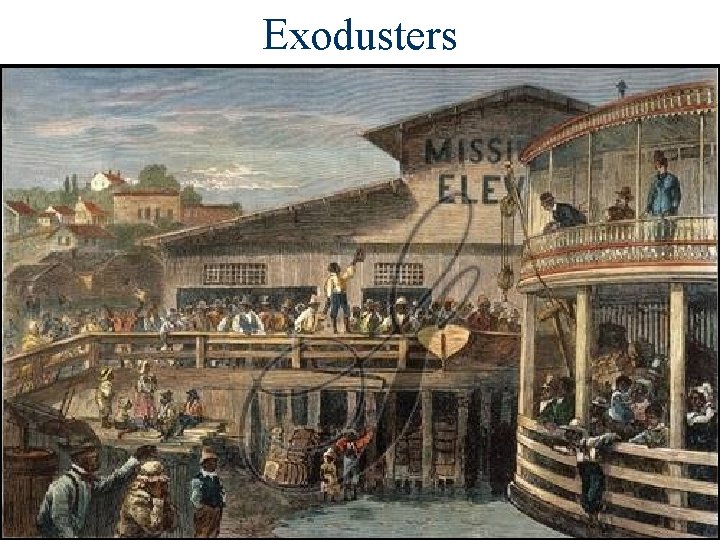
Exodusters ■ Exodusters were black farmers who moved West to escape crop liens & Jim Crow laws in the South
Exodusters
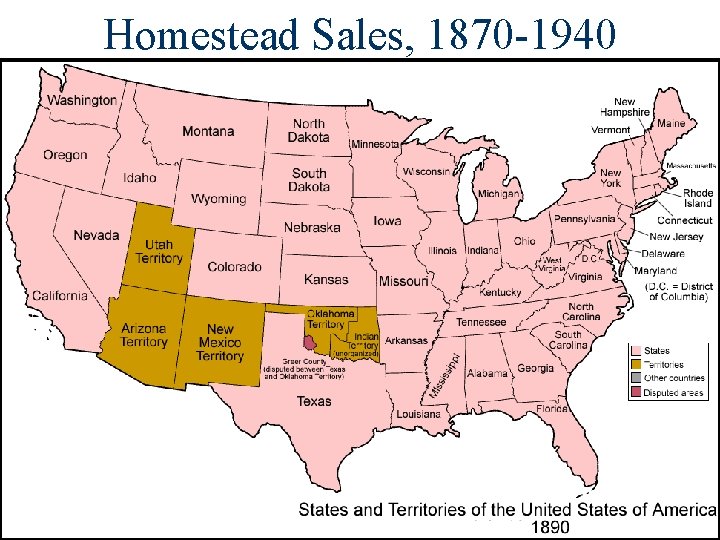
Homestead Sales, 1870 -1940 In 1890, the western frontier “closed”: There were no more unorganized territories in the West
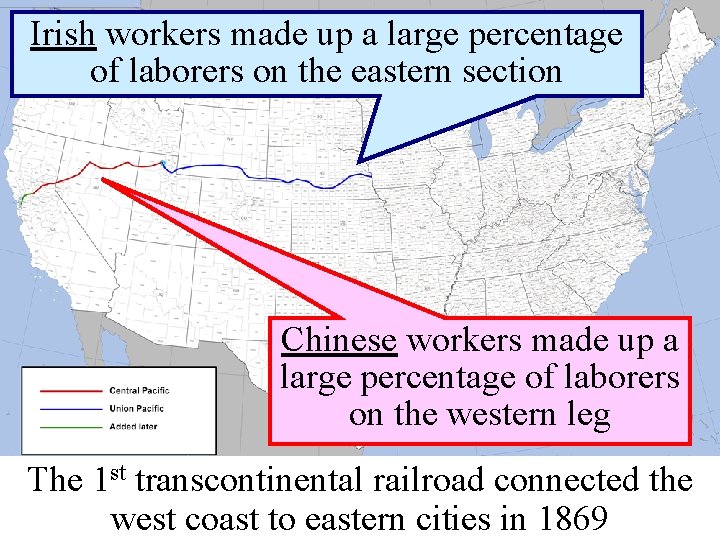
Rails Across the Continent ■ In 1862, Congress authorized the first transcontinental railroad: –Union Pacific worked westward from Nebraska (Irish laborers) –Central Pacific worked eastward from CA (Chinese immigrants) –On May 10, 1869 the 2 tracks met at Promontory Point in Utah
Irish workers made up a large percentage of laborers on the eastern section Chinese workers made up a large percentage of laborers on the western leg The 1 st transcontinental railroad connected the west coast to eastern cities in 1869
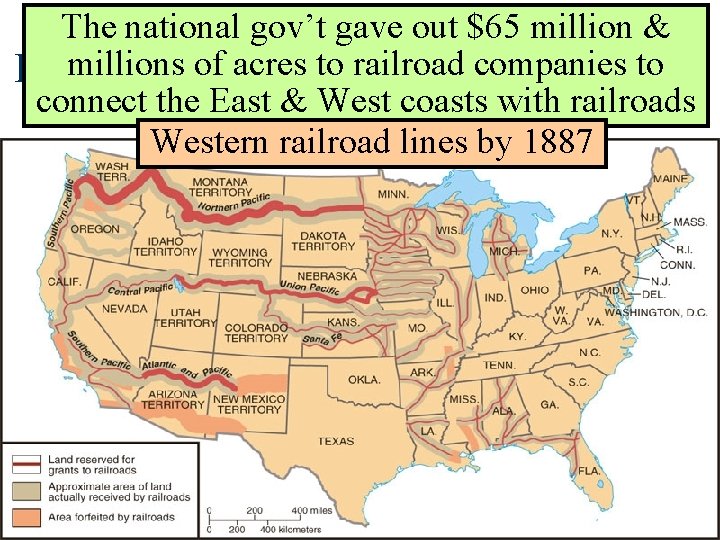
The national gov’t gave out $65 million & millions of acres to railroad companies to Federal Land Grants to Railroads by 1871 connect the East & West coasts with railroads Western railroad lines by 1887
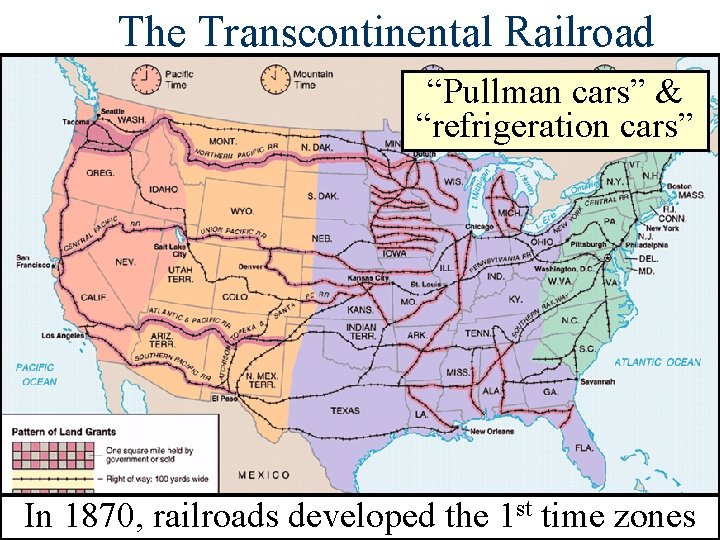
The Transcontinental Railroad “Pullman cars” & “refrigeration cars” In 1870, railroads developed the 1 st time zones
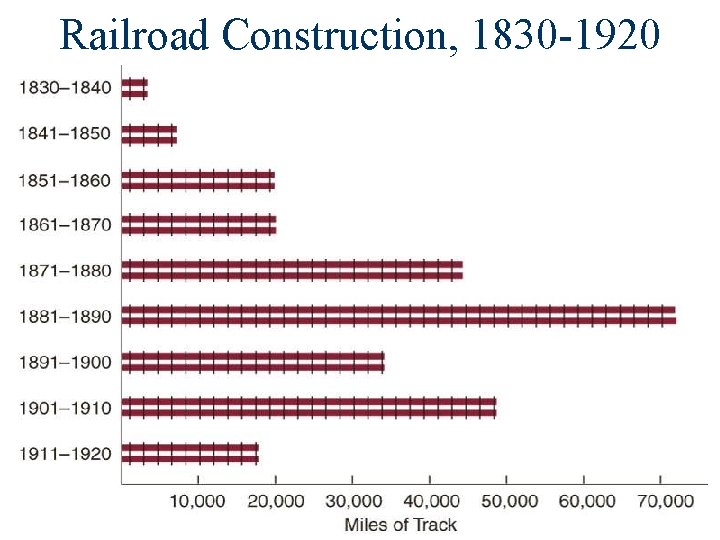
Railroad Construction, 1830 -1920
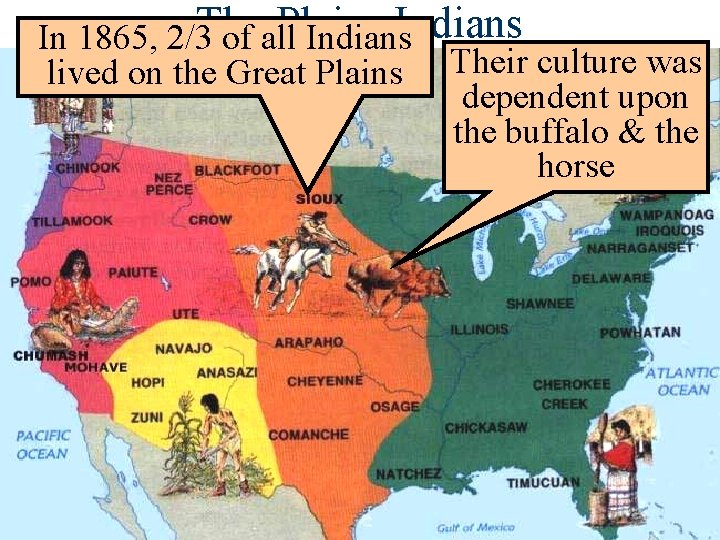
Plains In 1865, 2/3 The of all Indians lived on the Great Plains Their culture was dependent upon the buffalo & the horse
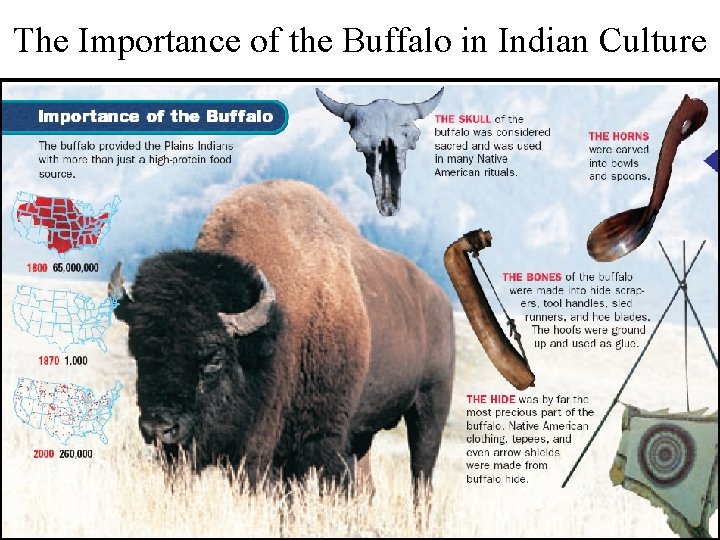
The Importance of the Buffalo in Indian Culture
America’s Indian Policy ■ America’s Indian policy changed: –In the 1830 s, Indians were moved across the Mississippi River into “one big reservation” –In the 1850 s, (due to Manifest Destiny), Indians were moved into concentrated reservations –In the 1860 s, reservations were violated by farmers & miners
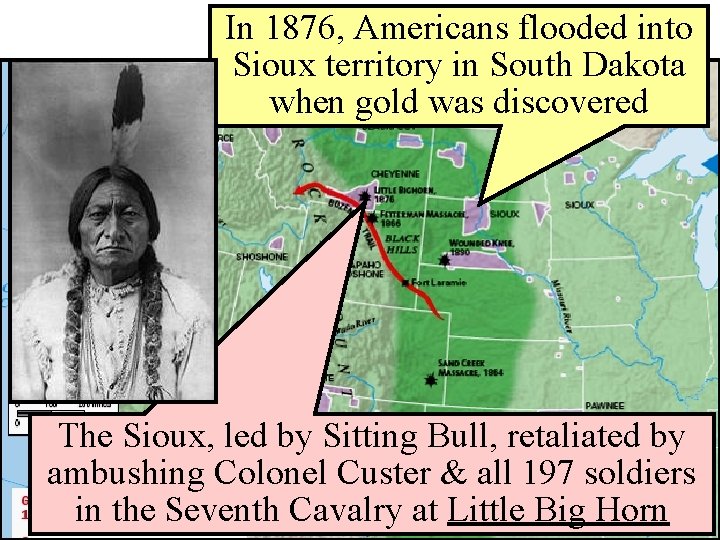
In. Indians 1876, Americans Wars flooded into Sioux territory in South Dakota when gold was discovered The Sioux, led by Sitting Bull, retaliated by ambushing Colonel Custer & all 197 soldiers in the Seventh Cavalry at Little Big Horn
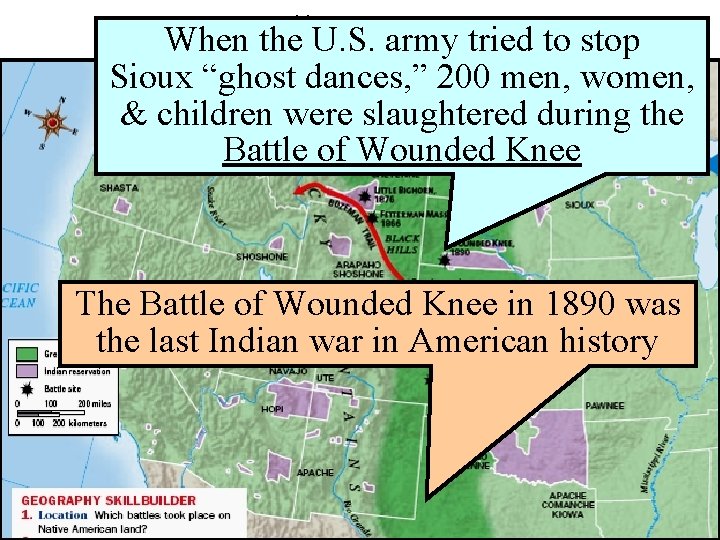
When. Indians the U. S. Wars army tried to stop Sioux “ghost dances, ” 200 men, women, & children were slaughtered during the Battle of Wounded Knee The Battle of Wounded Knee in 1890 was the last Indian war in American history
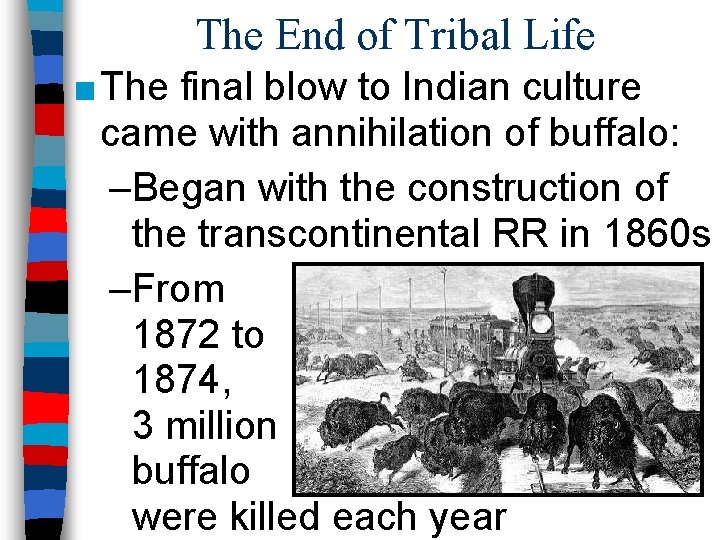
The End of Tribal Life ■ The final blow to Indian culture came with annihilation of buffalo: –Began with the construction of the transcontinental RR in 1860 s –From 1872 to 1874, 3 million buffalo were killed each year
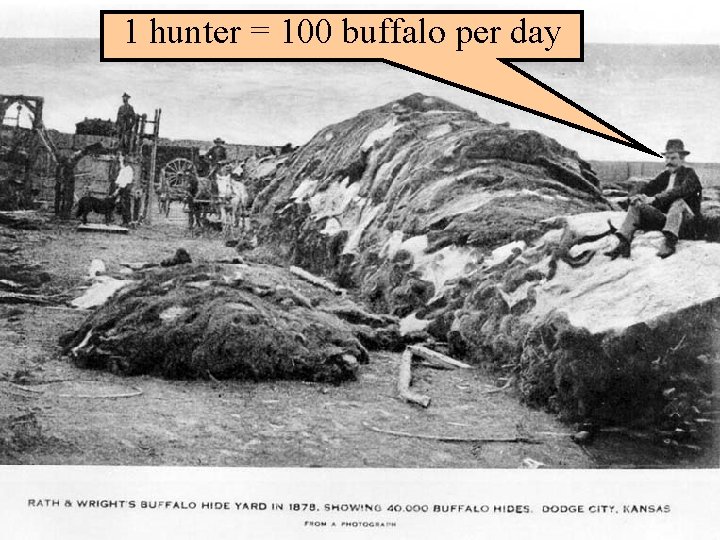
1 hunter = 100 buffalo per day
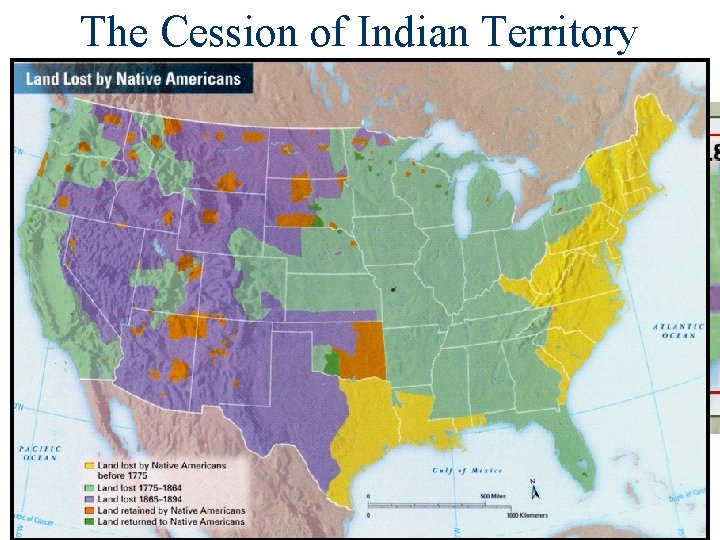
Lands by Native Americans (1894) The. Lost Cession of Indian Territory