
The Gilded Age 1865 1900 covered in gold

- Slides: 32
The Gilded Age 1865 -1900 “covered in gold” - beneath the gold is a decaying structure An era of growth and political scandal US transitioning to a world power
Times of boom and bust… Manufacturing for war/Let down after the war ¡ Expansion westward ¡ Need for new inventions ¡ Depression (deflation) ¡ Crop/Cattle prices fall dramatically ¡
Communism vs. Capitalism ¡ Communism – mid¡ Entrepreneurs – 1800’s motivated by wealth and wanting to better their ¡ Karl Marx – lives German ¡ Self-reliant individualism philosopher – harder I work the more ¡ Community I will get provides for all ¡ Horatio Alger Jr. – writer, regardless of social “rags to riches” stories ¡ rank
Social Darwinism Herbert Spencer – adapted Darwin’s biological theory to societal issues ¡ “survival of the fittest” ¡ l l “fittest” people would rise to positions of wealth and power “unfit” would fail
¡ Way to organize business ownership ¡ Has existed since colonial times ¡ Sells shares of stock to raise money ¡ Profits paid out in the form of dividends
¡ ¡ ¡ Includes a board of trustees Group of corporations run as a single enterprise Reduces competition in the industry by eliminating inefficient business practices
¡ Exclusive control of an industry ¡ Little to no competition ¡ Control over price and quality of product
¡ “let people do as they choose” ¡ No government intervention ¡ Also known as free enterprise ¡ Private ownership based on free market competition (sets price)
Big Business in America Who are the rising stars in America’s second industrial revolution?
Robber Barons Businessman that dominated a particular industry ¡ Gained enormous wealth ¡ Practiced anti-competitive business practices/strategies ¡ l l l ¡ Gain market share Eliminate competition Set prices and standards as you wish A. Carnegie, J. D. Rockefeller, C. Vanderbilt, H. Ford
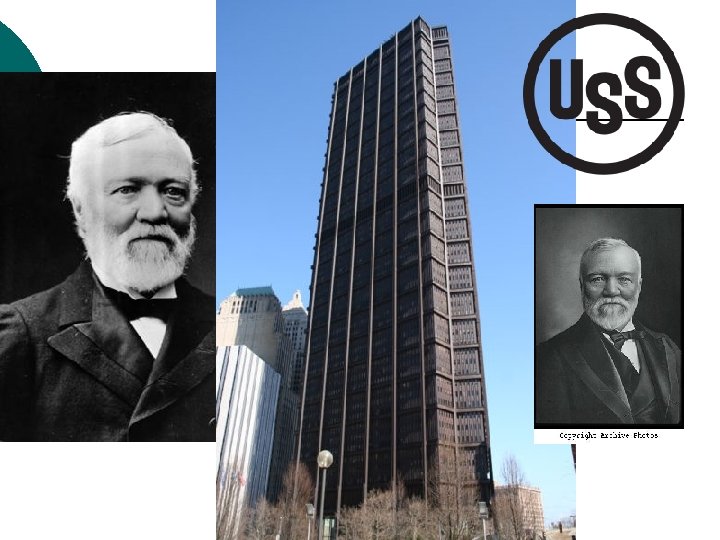
Andrew Carnegie ¡ Steel l Carnegie Steel Company Entrepreneur (risk-taking business people) ¡ Little knowledge of steel industry but outstanding at running a company ¡ How did he gain an edge over his competition? ¡ l Lower production costs Economies of scale ¡ Vertical integration ¡ l Owning all steps used in turning raw materials into finished goods ¡ Iron mines, railroads, steamship lines,
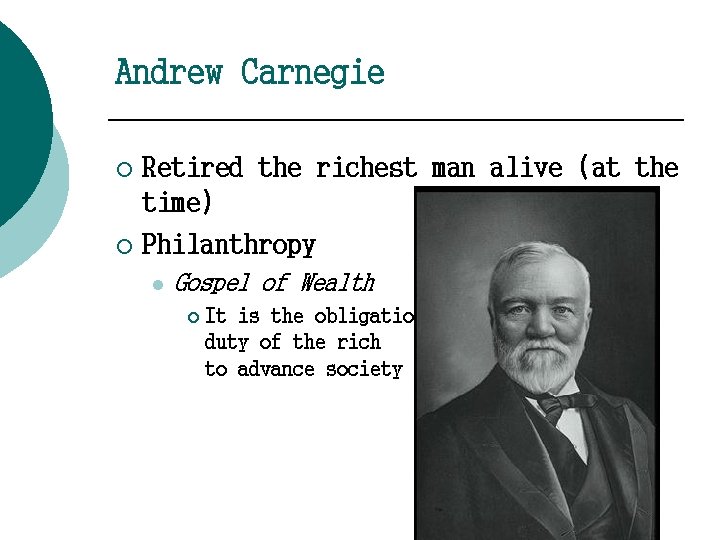
Andrew Carnegie Retired the richest man alive (at the time) ¡ Philanthropy ¡ l Gospel of Wealth ¡ It is the obligation/ duty of the rich to advance society
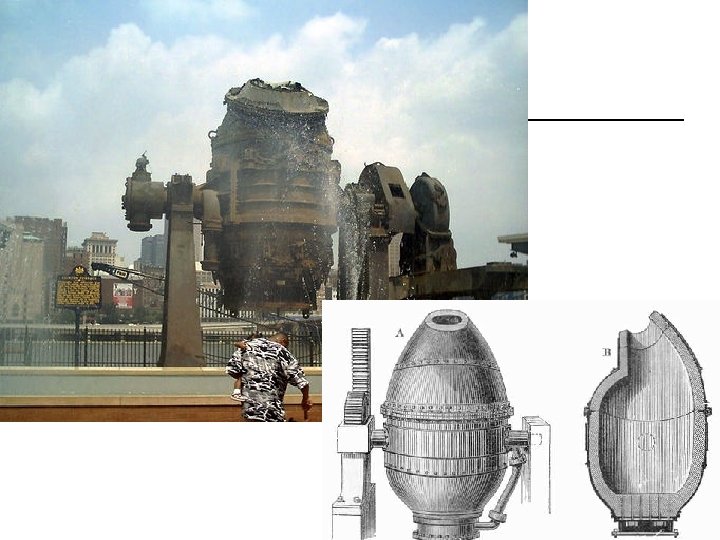
Henry Bessemer/ Bessemer Process ¡ Age of Iron l l ¡ Cheap to make Technology available and reliable Rust Weak Age of Steel l William Kelly (US) and Henry Bessemer (UK) ¡ Steel l l Produce it cheaper Stronger material ¡ Allowed for the advancement of railroads and skyscrapers (both significant in the growth of cities)
Henry Bessemer/ Bessemer Process ¡ Bessemer Process (1855); low cost method of converting iron to steel l l ¡ Process had existed for more than 100 years before Bessemer; however, never on a commercial scale until the mid 1800’s Products ¡ Nails ¡ Screws ¡ Needles ¡ Girders ¡ Rail ties Steel mills sprang up throughout the country l Pittsburgh; steel-making capital ¡ Good transportation (rivers) ¡ Coal mines ¡ Polluted waters ¡ Grey skies
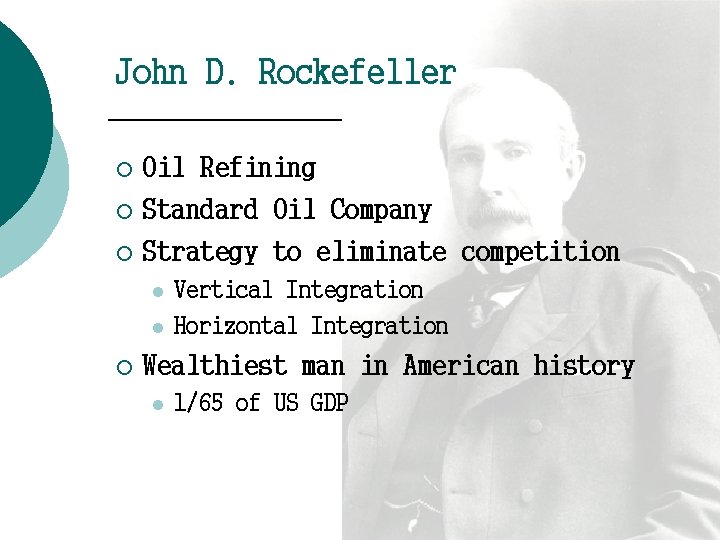
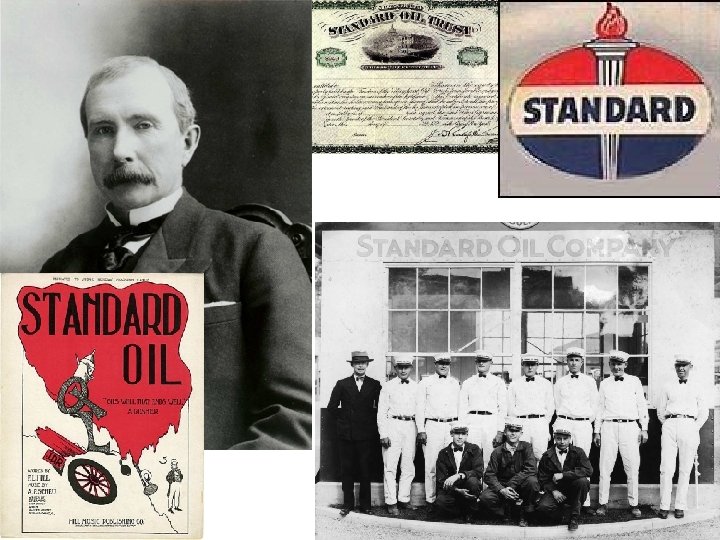
John D. Rockefeller Oil Refining ¡ Standard Oil Company ¡ Strategy to eliminate competition ¡ l l ¡ Vertical Integration Horizontal Integration Wealthiest man in American history l 1/65 of US GDP
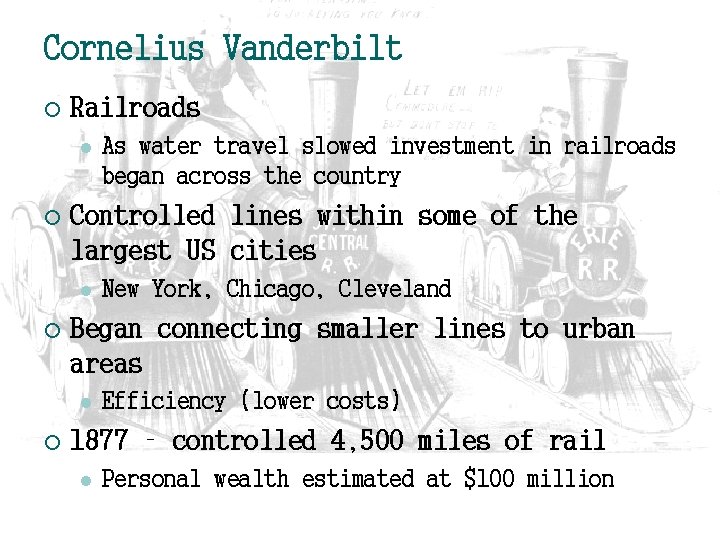
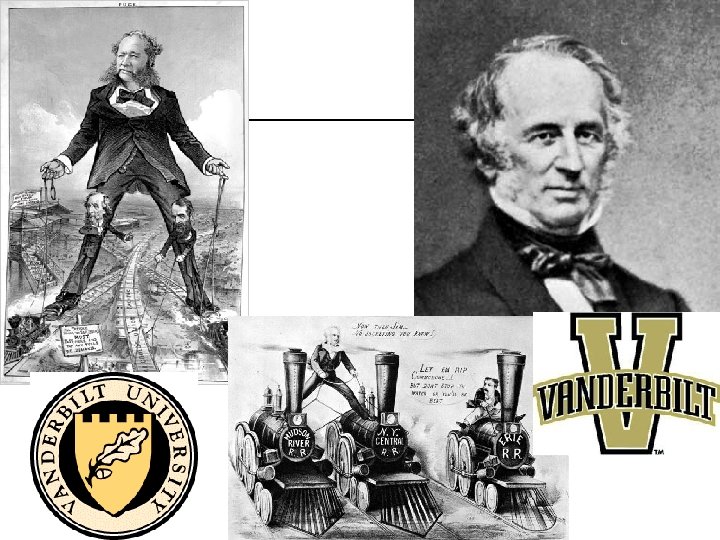
Cornelius Vanderbilt ¡ Railroads l ¡ Controlled lines within some of the largest US cities l ¡ New York, Chicago, Cleveland Began connecting smaller lines to urban areas l ¡ As water travel slowed investment in railroads began across the country Efficiency (lower costs) 1877 – controlled 4, 500 miles of rail l Personal wealth estimated at $100 million
Railroad standardization & consolidation ¡ Civil War railroads l l l ¡ Track width Length – Where does it take you? Location US expansion l l Demand for movement of goods and people increased Standardization and consolidation lowered costs ¡ Standardization – tracks universal width ¡ Consolidation – merger of smaller companies into one larger, more efficient company ¡ Did not have to change trains/tracks/companies
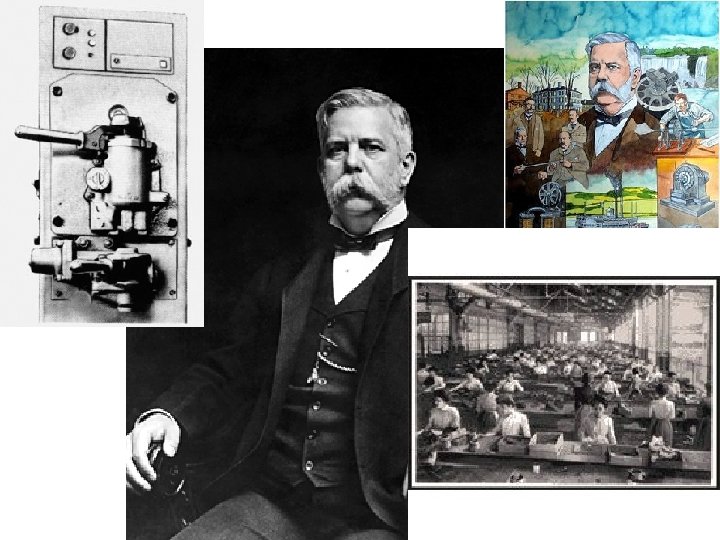
George Westinghouse Railroad ¡ Westinghouse Air Brake Company ¡ l ¡ Compressed air brake As the railroad industry grew… l l The industry was looking for improvements Long time before Westinghouse’s air brake was accepted/embraced
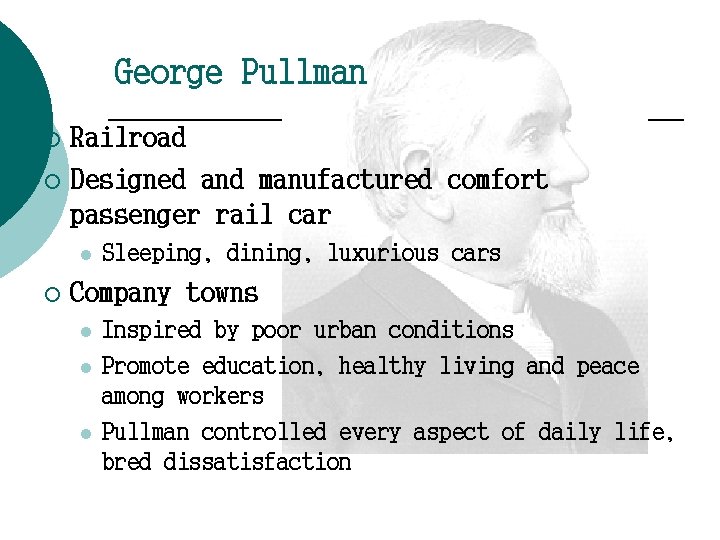
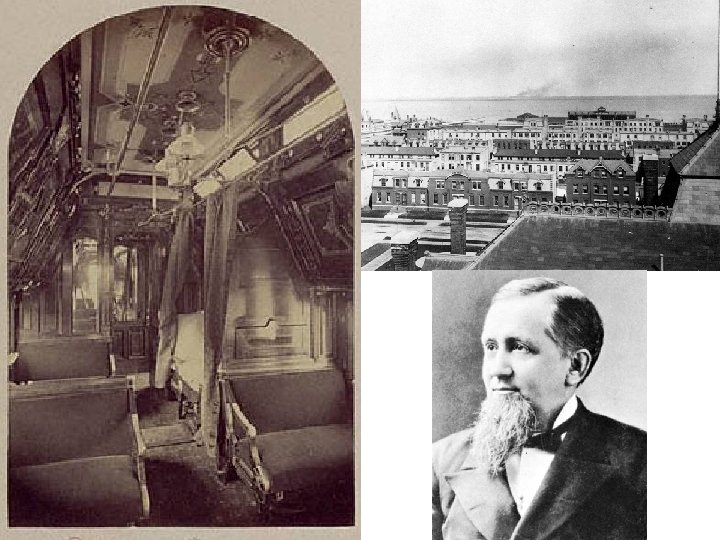
George Pullman Railroad ¡ Designed and manufactured comfort passenger rail car ¡ l ¡ Sleeping, dining, luxurious cars Company towns l l l Inspired by poor urban conditions Promote education, healthy living and peace among workers Pullman controlled every aspect of daily life, bred dissatisfaction
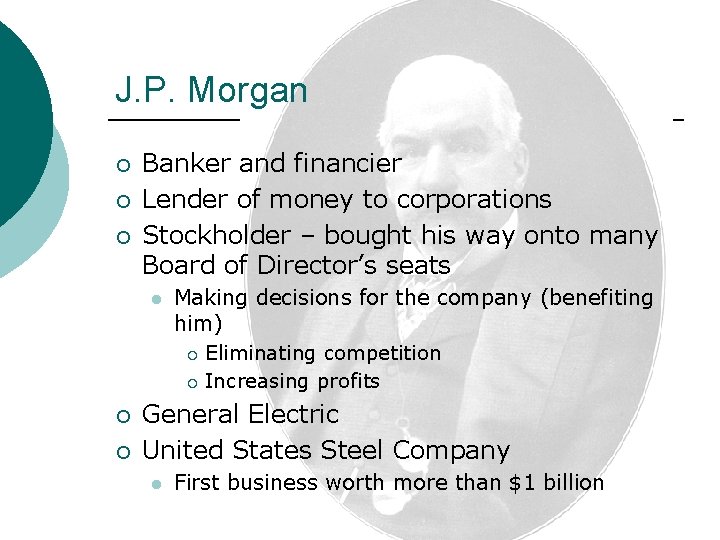
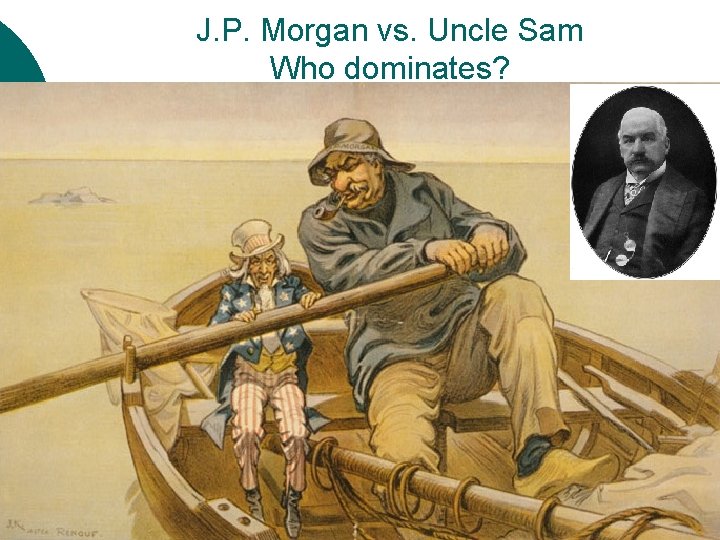
J. P. Morgan ¡ ¡ ¡ Banker and financier Lender of money to corporations Stockholder – bought his way onto many Board of Director’s seats l ¡ ¡ Making decisions for the company (benefiting him) ¡ Eliminating competition ¡ Increasing profits General Electric United States Steel Company l First business worth more than $1 billion
J. P. Morgan vs. Uncle Sam Who dominates?
Sherman Antitrust Act - 1890 ¡ ¡ ¡ Angered by anti-competitive business strategies (monopolies, trusts, consolidation) the American public (small businesses) sought reform in free capitalism system Intentionally creating a monopoly or suppressing trade or controlling supply was made illegal Proved to be weak and ineffective legislation l Those in power often benefited from large corporations, trusts and monopolies (turn the other cheek)