
THE GERMAN SCHOOL SYSTEM Schulsystem systme scolaire okul

- Slides: 41
THE GERMAN SCHOOL SYSTEM Schulsystem système scolaire okul sistem skolesystem
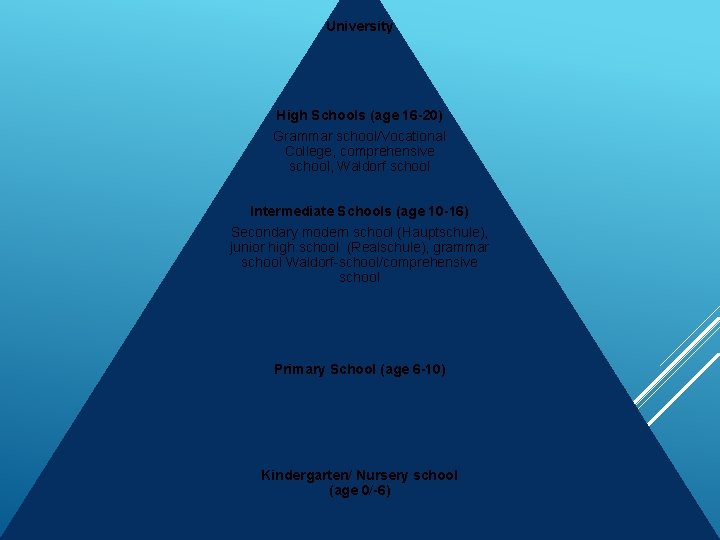
University High Schools (age 16 -20) Grammar school/Vocational College, comprehensive school, Waldorf school Intermediate Schools (age 10 -16) Secondary modern school (Hauptschule), junior high school (Realschule), grammar school Waldorf-school/comprehensive school Primary School (age 6 -10) Kindergarten/ Nursery school (age 0/-6)
Overview of the different school forms 1. Nursery and primary school 2. Hauptschule (secondary modern school) and Realschule (junior high school) 3. Comprehensive school 4. Waldorf school 5. Grammar school 6. Vocational college
1. NURSERY SCHOOL/KINDERGARTEN
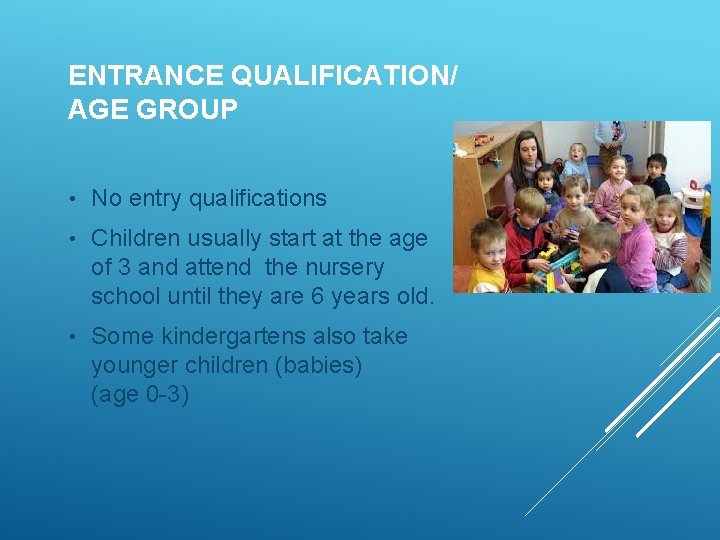
ENTRANCE QUALIFICATION/ AGE GROUP • No entry qualifications • Children usually start at the age of 3 and attend the nursery school until they are 6 years old. • Some kindergartens also take younger children (babies) (age 0 -3)
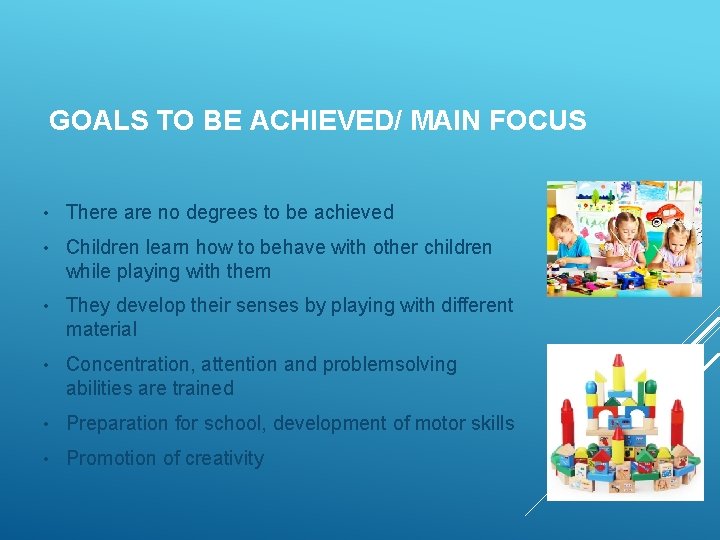
GOALS TO BE ACHIEVED/ MAIN FOCUS • There are no degrees to be achieved • Children learn how to behave with other children while playing with them • They develop their senses by playing with different material • Concentration, attention and problemsolving abilities are trained • Preparation for school, development of motor skills • Promotion of creativity
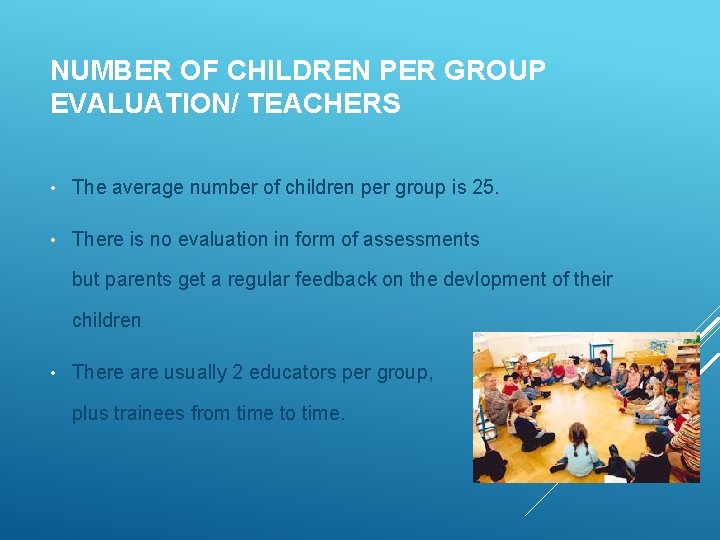
NUMBER OF CHILDREN PER GROUP EVALUATION/ TEACHERS • The average number of children per group is 25. • There is no evaluation in form of assessments but parents get a regular feedback on the devlopment of their children • There are usually 2 educators per group, plus trainees from time to time.
PRIMARY SCHOOL
ENTRANCE QUALIFICATION/ AGE GROUP • Age group 6 -10 • No real entrance qualification, just a convesration between headmaster/ teacher and child to find out about any special educational needs • Child must be sociable, emotional stable and ready to participate in lessons
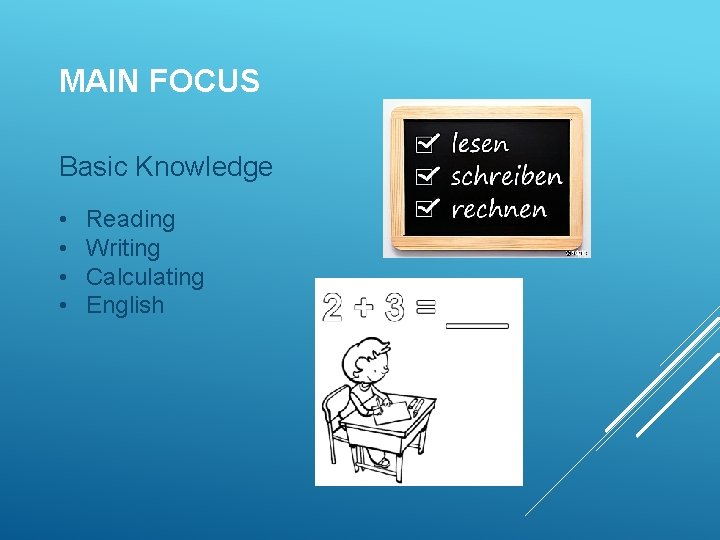
MAIN FOCUS Basic Knowledge • • Reading Writing Calculating English
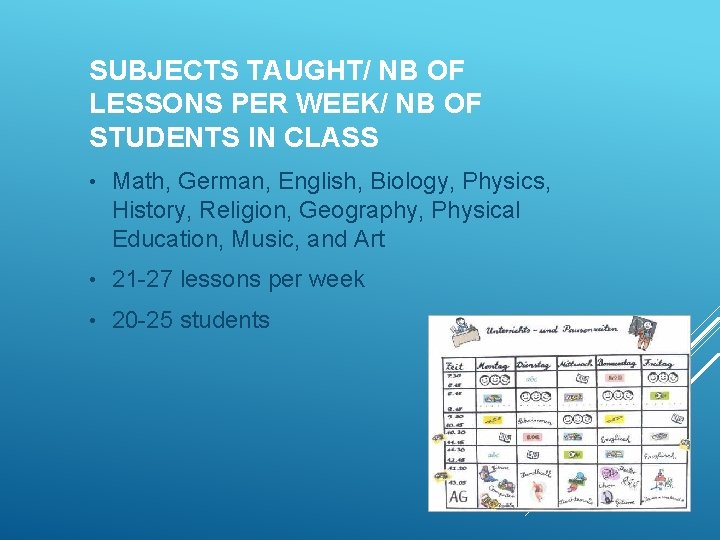
SUBJECTS TAUGHT/ NB OF LESSONS PER WEEK/ NB OF STUDENTS IN CLASS • Math, German, English, Biology, Physics, History, Religion, Geography, Physical Education, Music, and Art • 21 -27 lessons per week • 20 -25 students
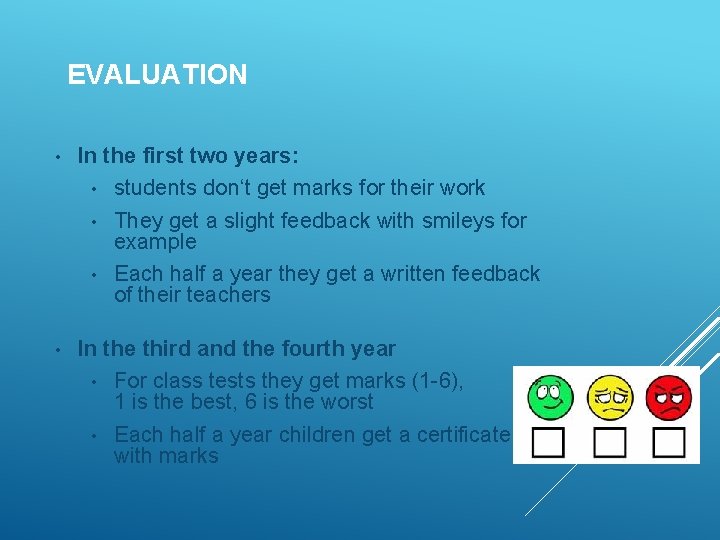
EVALUATION • In the first two years: • students don‘t get marks for their work • They get a slight feedback with smileys for example • Each half a year they get a written feedback of their teachers • In the third and the fourth year • For class tests they get marks (1 -6), 1 is the best, 6 is the worst • Each half a year children get a certificate with marks
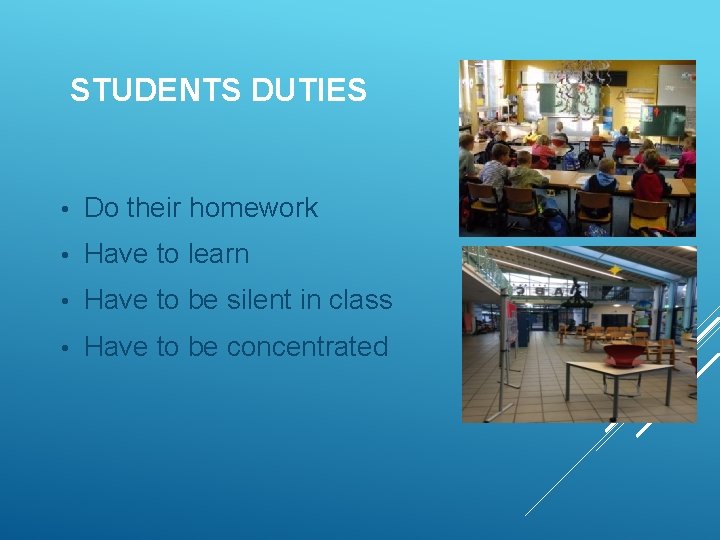
STUDENTS DUTIES • Do their homework • Have to learn • Have to be silent in class • Have to be concentrated
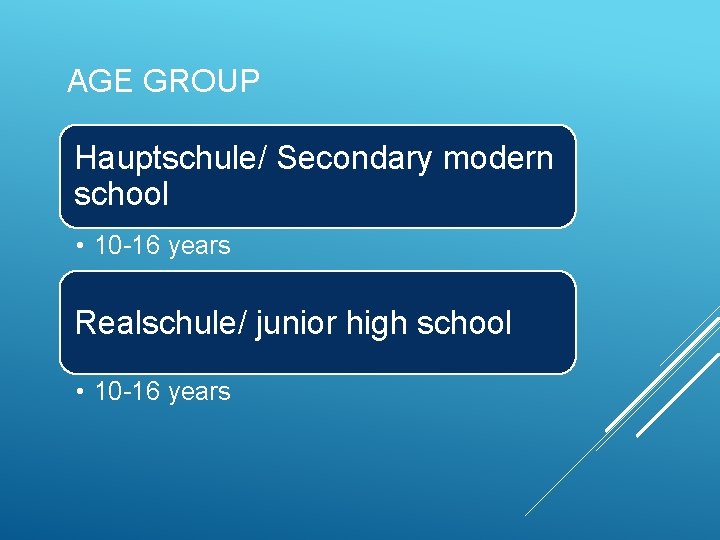
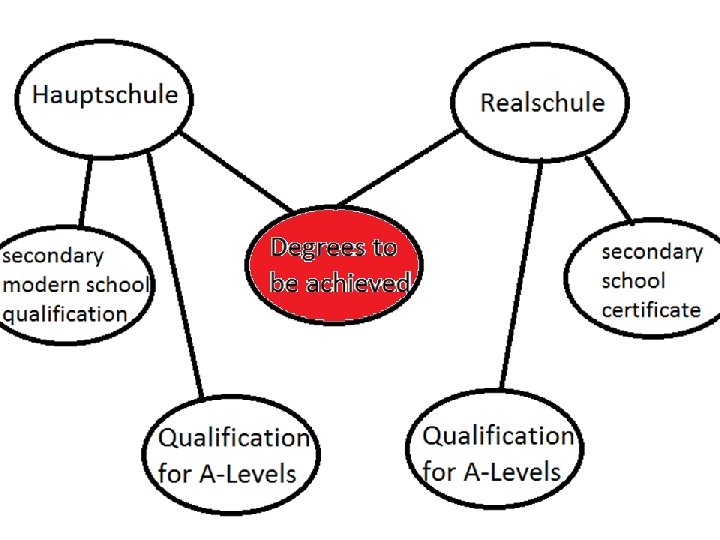
AGE GROUP Hauptschule/ Secondary modern school • 10 -16 years Realschule/ junior high school • 10 -16 years
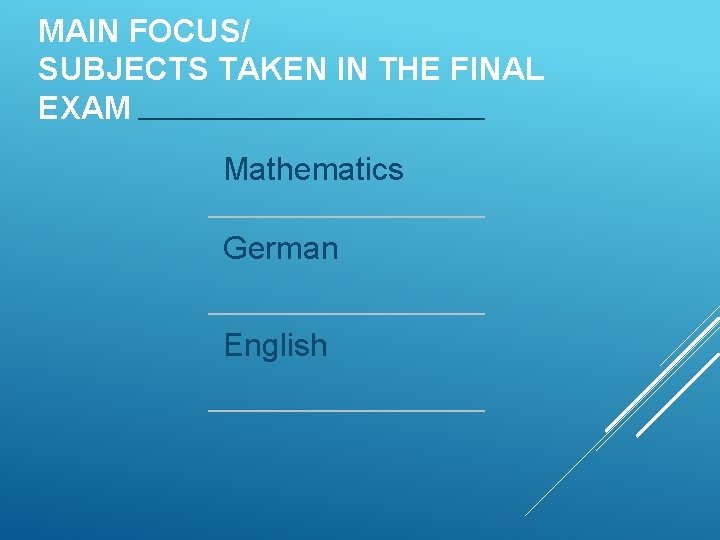
MAIN FOCUS/ SUBJECTS TAKEN IN THE FINAL EXAM Mathematics German English
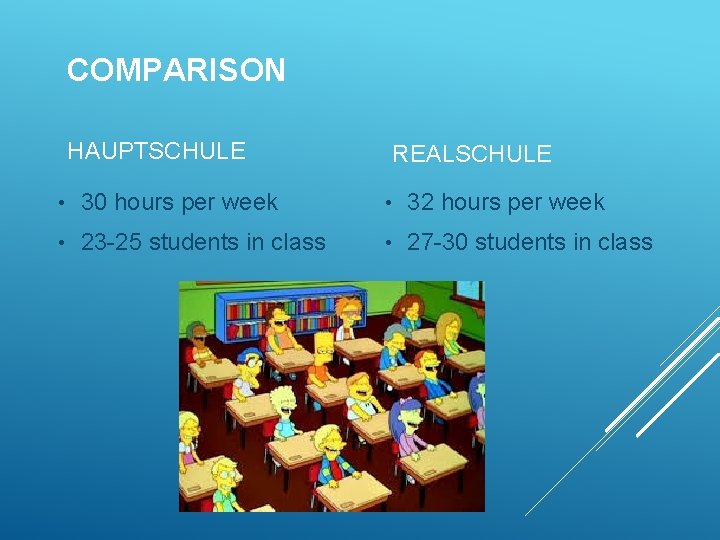
COMPARISON HAUPTSCHULE REALSCHULE • 30 hours per week • 32 hours per week • 23 -25 students in class • 27 -30 students in class
GRADUATION SYSTEM • 1 -2 very good • 3 -4 average • 5 -6 you should learn more
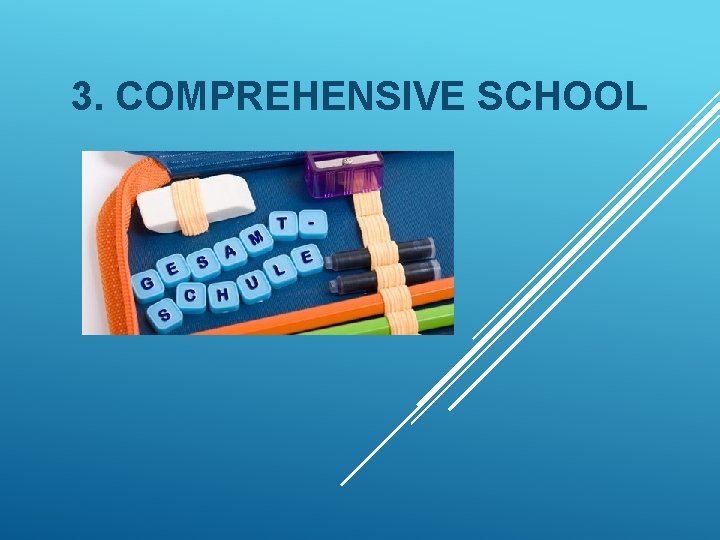
3. COMPREHENSIVE SCHOOL
GENERAL INFORMATION • Alternative to the general school system • It‘s a mixture of secondary school and grammar school • The school wants to promote every student. It doesn‘t matter how good they are.
Facts • There about 26 students in one class • They can choose programms in the break e. g. • Photography • Free painting • Music • Handicraft work
GRADUATION Certificate of secondary education Ø Ø 15 years 1. 2. General certificate of secondary education Ø Ø 16 years 3. A-levels Ø Ø 19 years
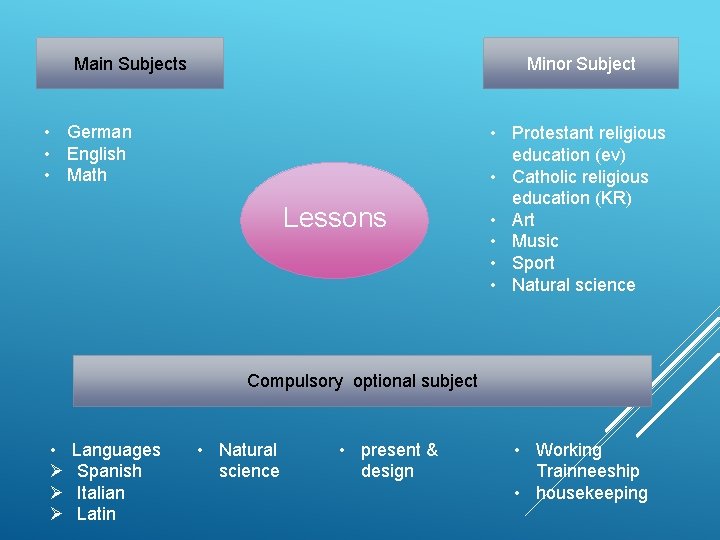
Minor Subject Main Subjects • German • English • Math Lessons • Protestant religious education (ev) • Catholic religious education (KR) • Art • Music • Sport • Natural science Compulsory optional subject • Ø Ø Ø Languages Spanish Italian Latin • Natural science • present & design • Working Trainneeship • housekeeping
4. WALDORF EDUCATION
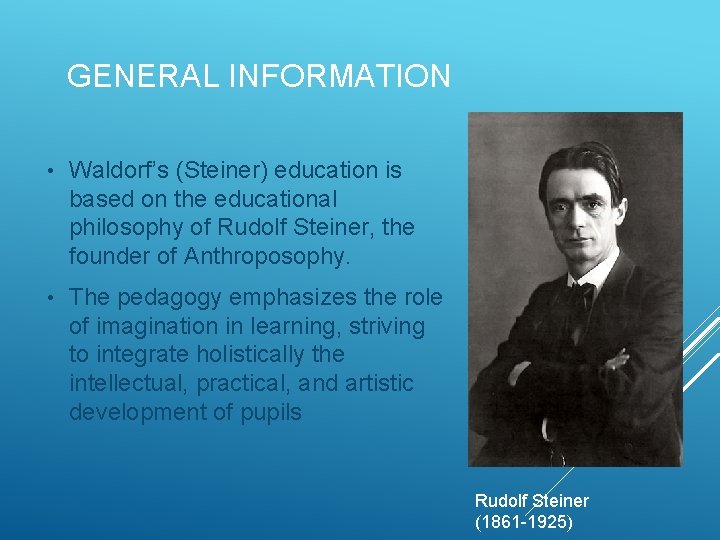
GENERAL INFORMATION • Waldorf’s (Steiner) education is based on the educational philosophy of Rudolf Steiner, the founder of Anthroposophy. • The pedagogy emphasizes the role of imagination in learning, striving to integrate holistically the intellectual, practical, and artistic development of pupils Rudolf Steiner (1861 -1925)
FINANCING • Normally, you don‘t pay for schools in Germany, just for the university but you have to pay for Waldorf education • You get state fundings on the one hand „school money“ on the other, for the rest you have to pay for yourself • based on the income and set from the respective school • The average of what you have to pay is 1639 € per year and child.
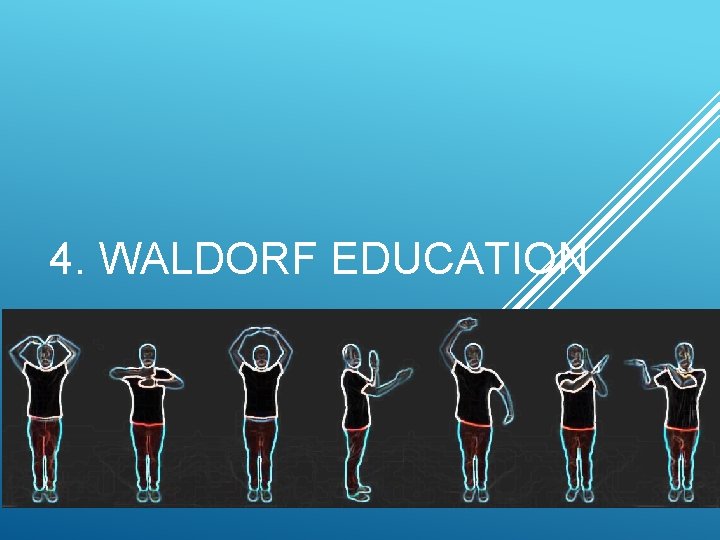
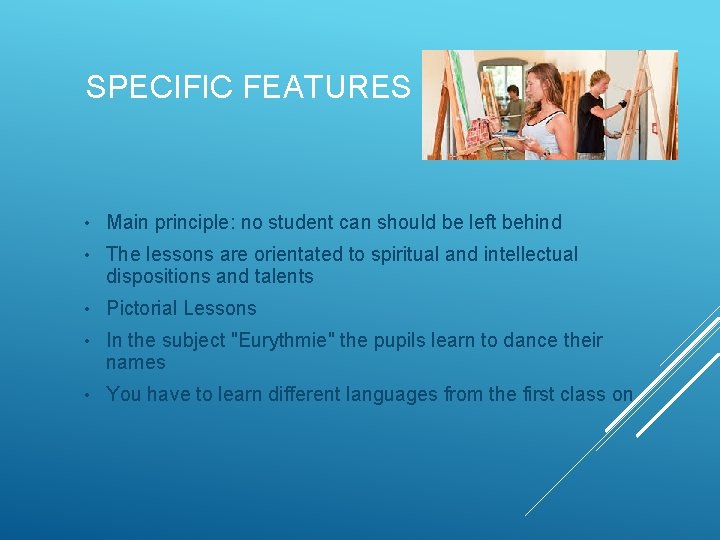
SPECIFIC FEATURES • Main principle: no student can should be left behind • The lessons are orientated to spiritual and intellectual dispositions and talents • Pictorial Lessons • In the subject "Eurythmie" the pupils learn to dance their names • You have to learn different languages from the first class on
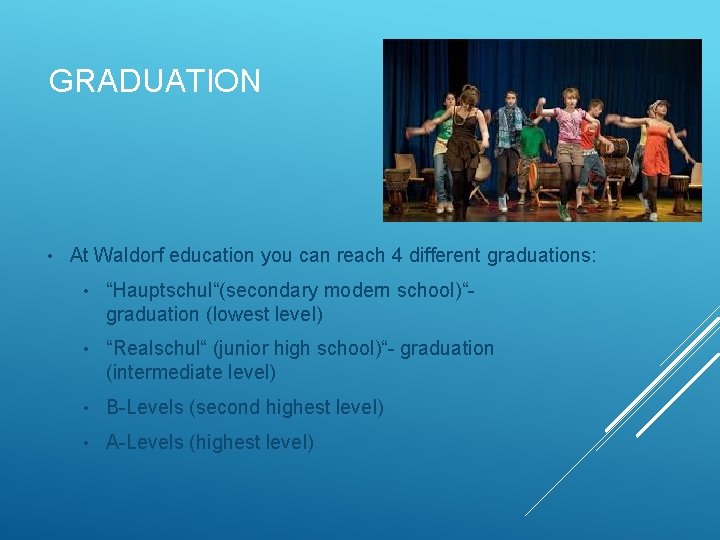
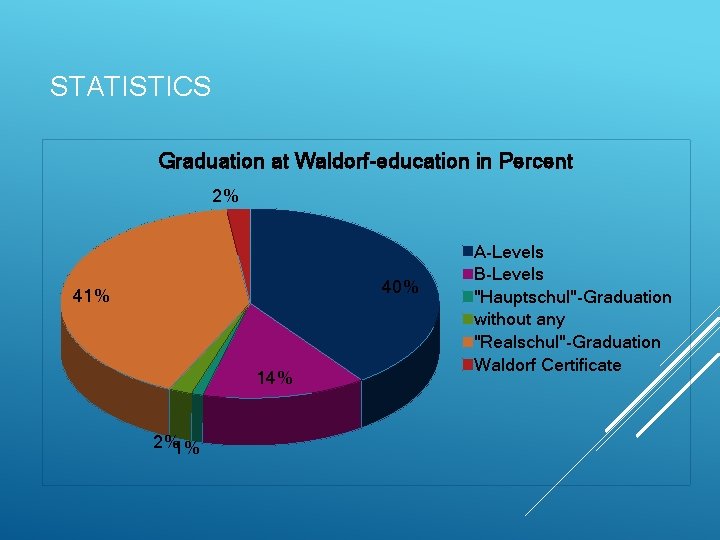
GRADUATION • At Waldorf education you can reach 4 different graduations: • “Hauptschul“(secondary modern school)“graduation (lowest level) • “Realschul“ (junior high school)“- graduation (intermediate level) • B-Levels (second highest level) • A-Levels (highest level)
STATISTICS Graduation at Waldorf-education in Percent 2% 40% 41% 14% 2%1% A-Levels B-Levels "Hauptschul"-Graduation without any "Realschul"-Graduation Waldorf Certificate
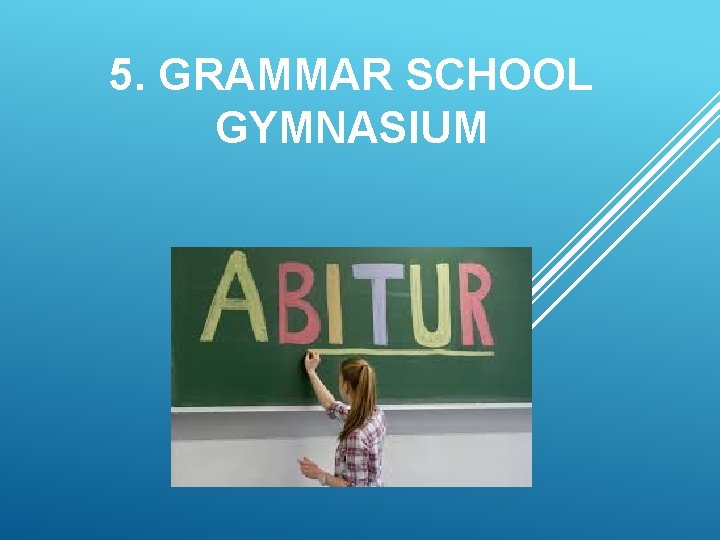
5. GRAMMAR SCHOOL GYMNASIUM
GENERAL INFORMATION • The students are between 10 to 19 years old • If you finish succesfully you achieve the qualifications of A-Levels (entrance qualification for any kind of university) • Most schools focus on making you ready for studying
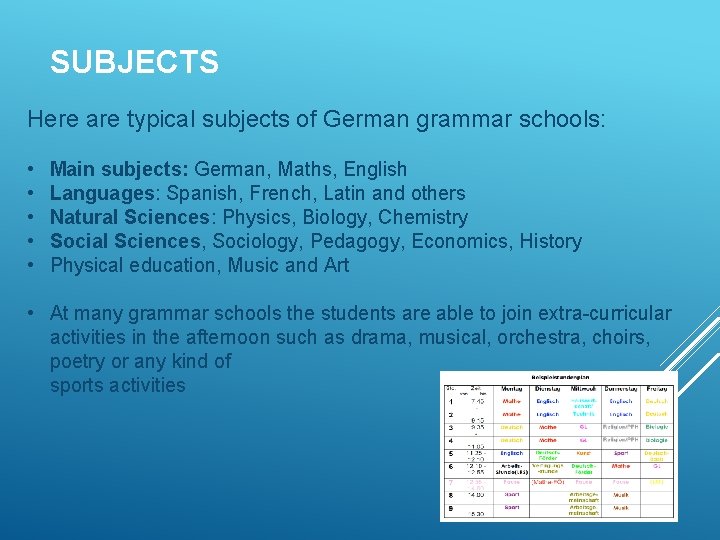
SUBJECTS Here are typical subjects of German grammar schools: • • • Main subjects: German, Maths, English Languages: Spanish, French, Latin and others Natural Sciences: Physics, Biology, Chemistry Social Sciences, Sociology, Pedagogy, Economics, History Physical education, Music and Art • At many grammar schools the students are able to join extra-curricular activities in the afternoon such as drama, musical, orchestra, choirs, poetry or any kind of sports activities
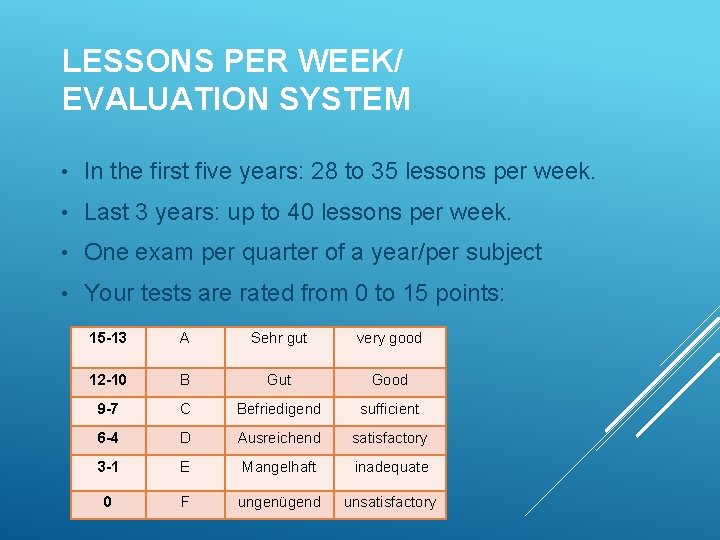
LESSONS PER WEEK/ EVALUATION SYSTEM • In the first five years: 28 to 35 lessons per week. • Last 3 years: up to 40 lessons per week. • One exam per quarter of a year/per subject • Your tests are rated from 0 to 15 points: 15 -13 A Sehr gut very good 12 -10 B Gut Good 9 -7 C Befriedigend sufficient 6 -4 D Ausreichend satisfactory 3 -1 E Mangelhaft inadequate 0 F ungenügend unsatisfactory
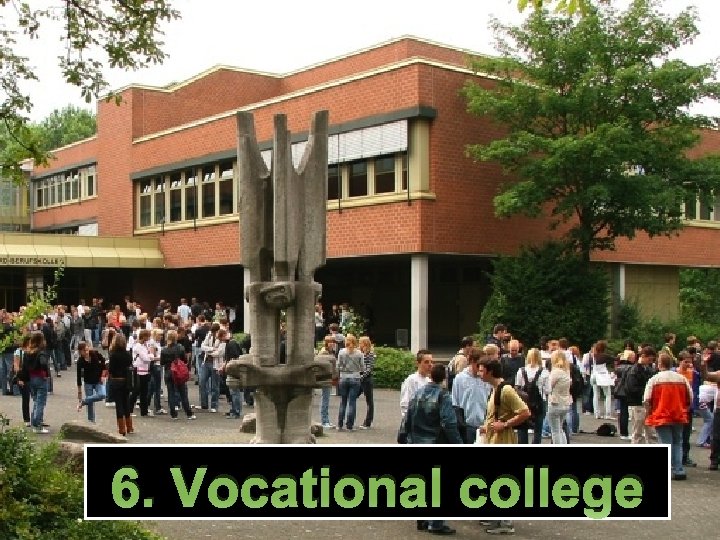
6. Vocational college
DIFFERENT TYPES OF VOCATIONAL SCHOOLS • Engineering • Economy • Educational science • Language • Art • Media
ENTRANCE QUALIFICATION • Previous school‘s certificate • CV • Maybe a portfolio for art classes • References
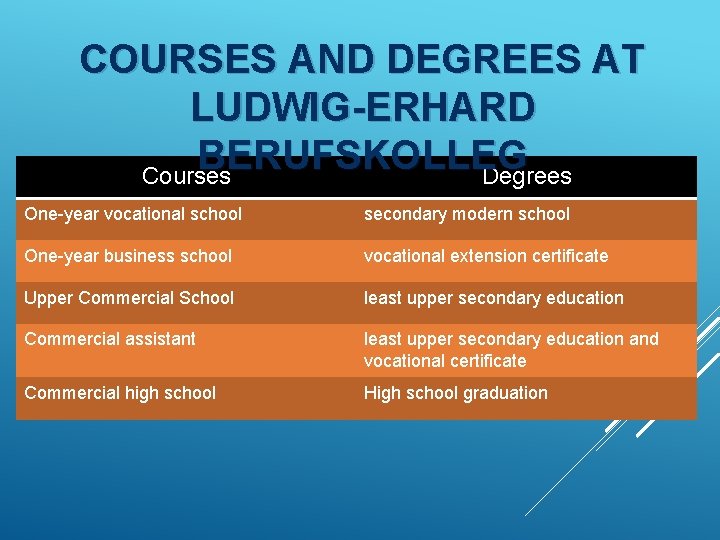
COURSES AND DEGREES AT LUDWIG-ERHARD BERUFSKOLLEG Courses Degrees One-year vocational school secondary modern school One-year business school vocational extension certificate Upper Commercial School least upper secondary education Commercial assistant least upper secondary education and vocational certificate Commercial high school High school graduation
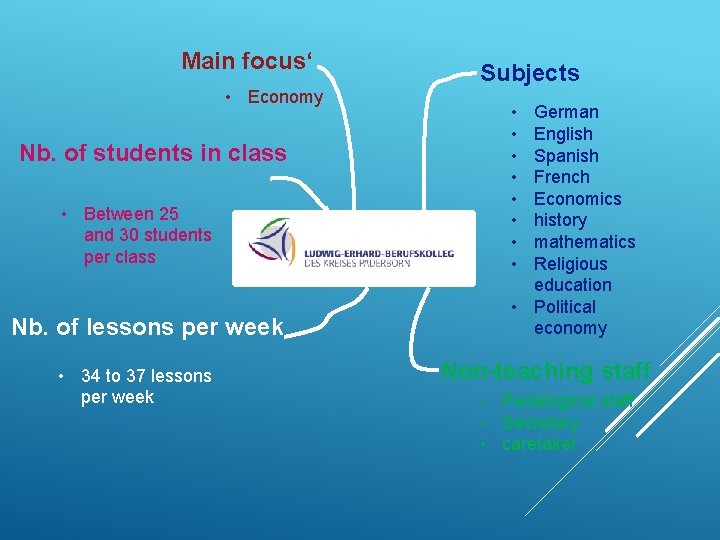
Main focus‘ • Economy Nb. of students in class • Between 25 and 30 students per class Nb. of lessons per week • 34 to 37 lessons per week Subjects • • German English Spanish French Economics history mathematics Religious education • Political economy Non-teaching staff • Pedalogical staff • Secretary • caretaker
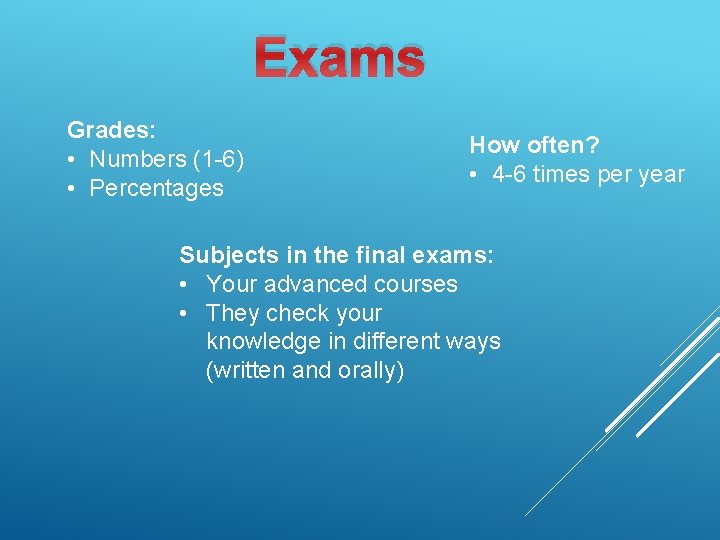
Exams Grades: • Numbers (1 -6) • Percentages How often? • 4 -6 times per year Subjects in the final exams: • Your advanced courses • They check your knowledge in different ways (written and orally)