
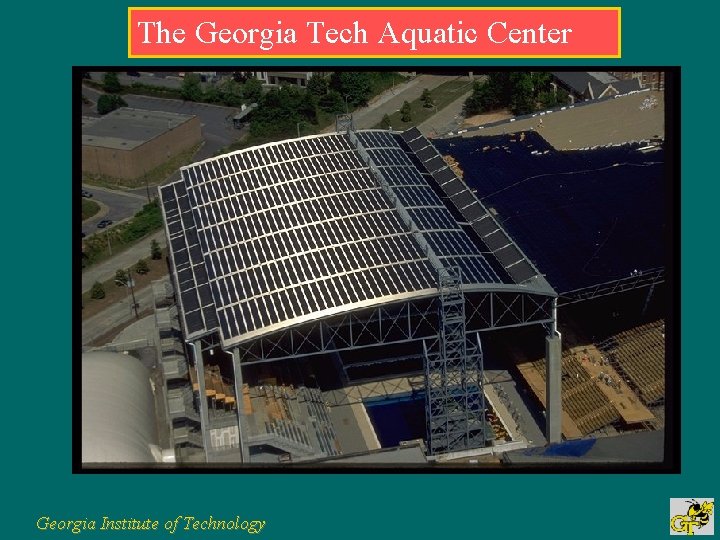
The Georgia Tech Aquatic Center Georgia Institute of
- Slides: 21
The Georgia Tech Aquatic Center Georgia Institute of Technology
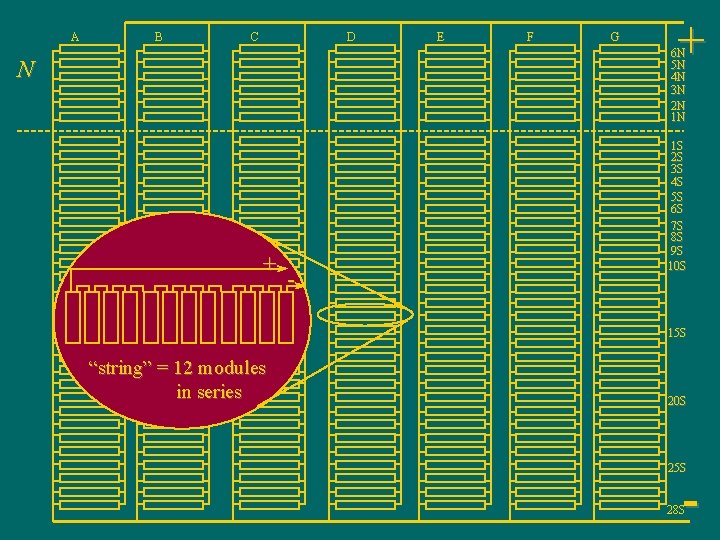
A B D C E F G + 6 N 5 N 4 N 3 N 2 N 1 N N + - 1 S 2 S 3 S 4 S 5 S 6 S 7 S 8 S 9 S 10 S 15 S “string” = 12 modules in series 20 S 25 S - 28 S
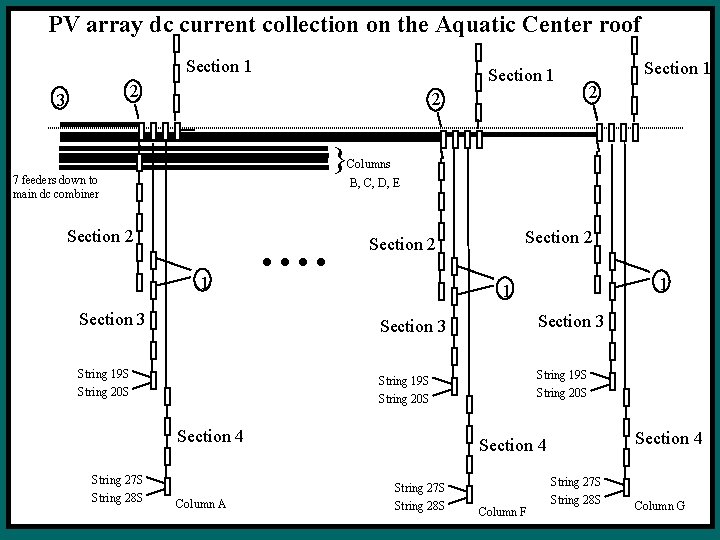
PV array dc current collection on the Aquatic Center roof Section 1 2 3 } 7 feeders down to main dc combiner 2 2 Section 2 Columns B, C, D, E Section 2 1 Section 3 String 19 S String 20 S . . Section 3 String 19 S String 20 S Section 4 String 27 S Column A 1 1 Section 4 String 27 S String 28 S Section 1 String 28 S Column F String 27 S String 28 S Column G
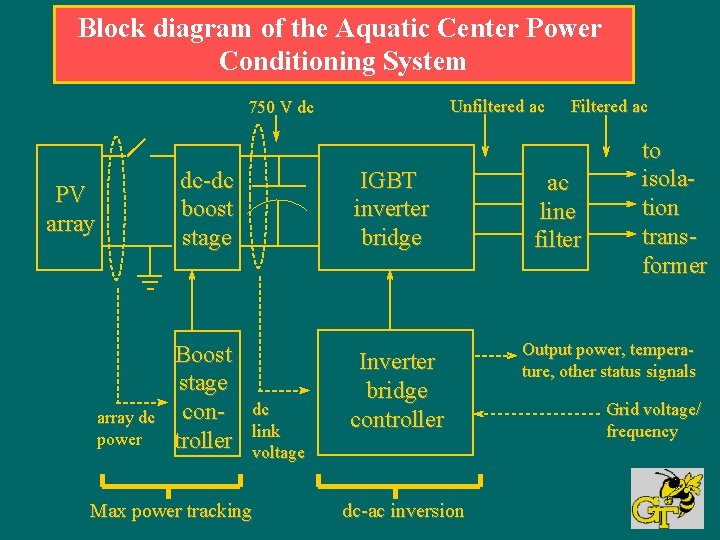
Block diagram of the Aquatic Center Power Conditioning System Unfiltered ac 750 V dc dc-dc boost stage PV array dc power Boost stage controller IGBT inverter bridge dc link voltage Max power tracking Inverter bridge controller dc-ac inversion Filtered ac ac line filter to isolation transformer Output power, temperature, other status signals Grid voltage/ frequency
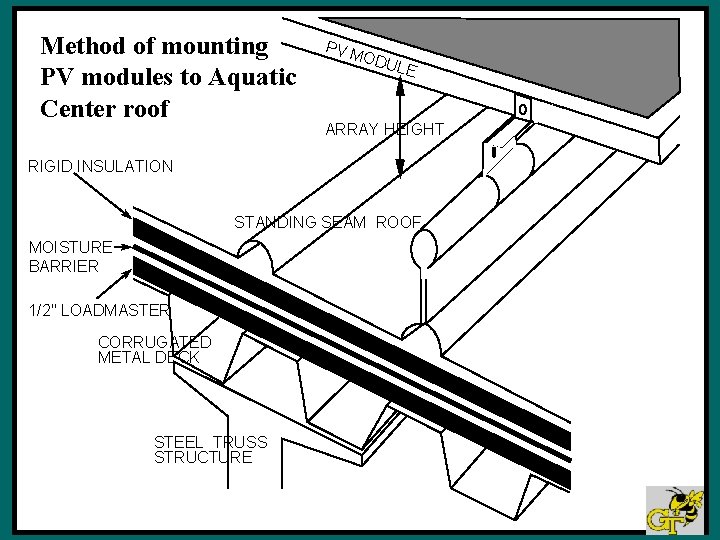
Method of mounting PV modules to Aquatic Center roof PV M ODU LE ARRAY HEIGHT RIGID INSULATION STANDING SEAM ROOF MOISTURE BARRIER 1/2" LOADMASTER CORRUGATED METAL DECK STEEL TRUSS STRUCTURE
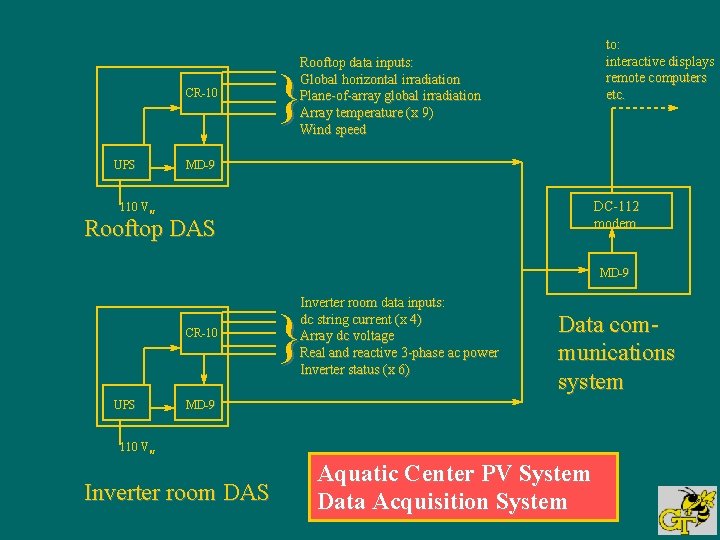
CR-10 UPS to: interactive displays remote computers etc. Rooftop data inputs: Global horizontal irradiation Plane-of-array global irradiation Array temperature (x 9) Wind speed } MD-9 DC-112 modem 110 Vac Rooftop DAS MD-9 CR-10 UPS Inverter room data inputs: dc string current (x 4) Array dc voltage Real and reactive 3 -phase ac power Inverter status (x 6) } Data communications system MD-9 110 Vac Inverter room DAS Aquatic Center PV System Data Acquisition System
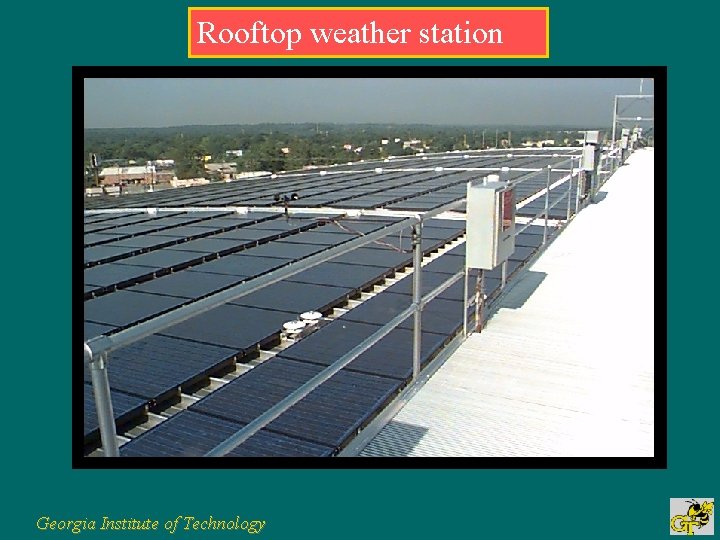
Rooftop weather station Georgia Institute of Technology
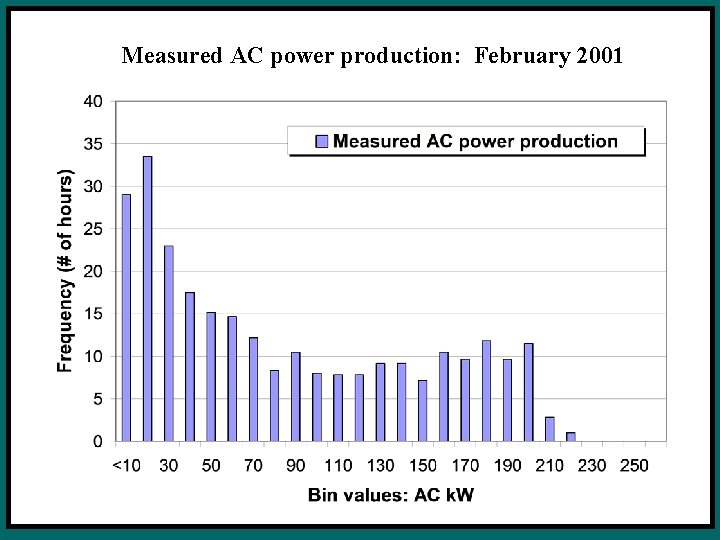
Measured AC power production: February 2001
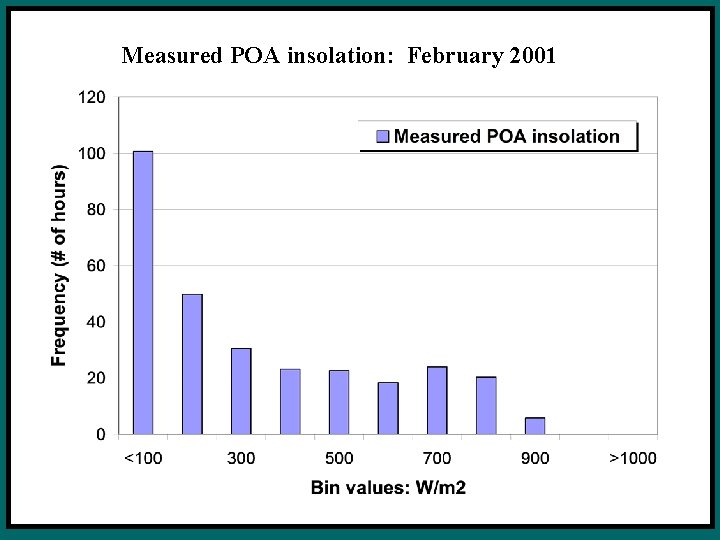
Measured POA insolation: February 2001
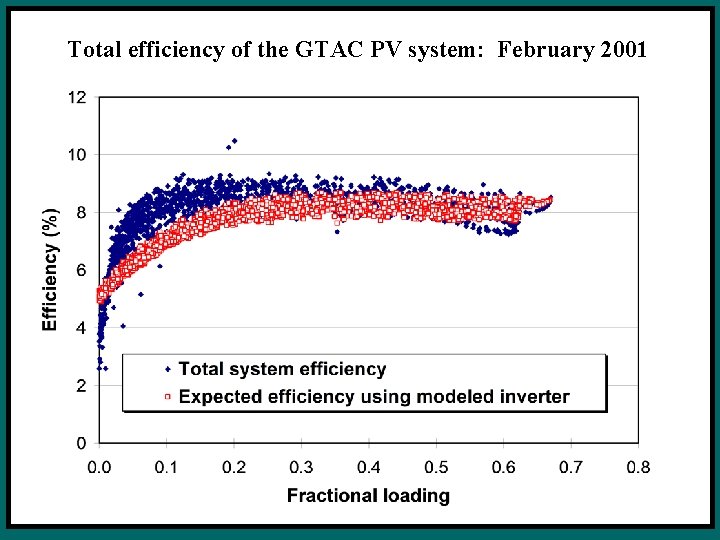
Total efficiency of the GTAC PV system: February 2001
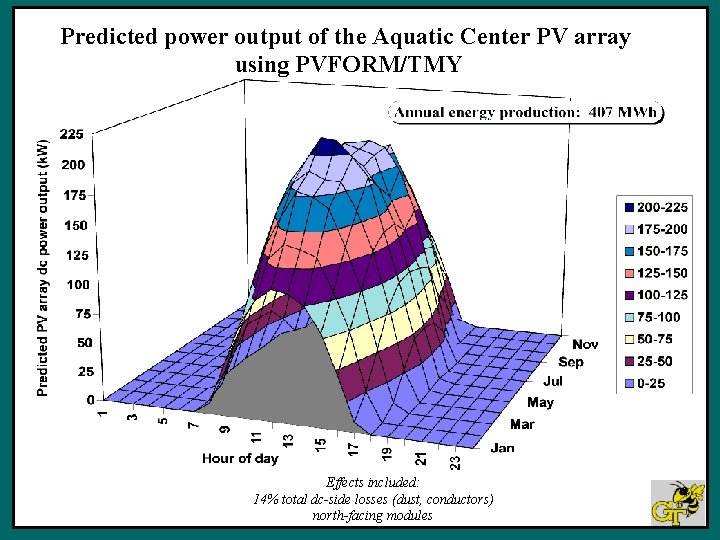
Predicted power output of the Aquatic Center PV array using PVFORM/TMY Effects included: 14% total dc-side losses (dust, conductors) north-facing modules
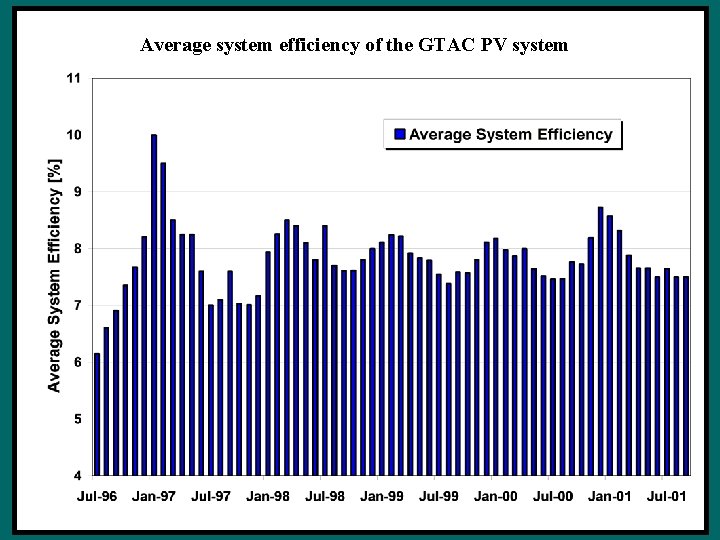
Average system efficiency of the GTAC PV system
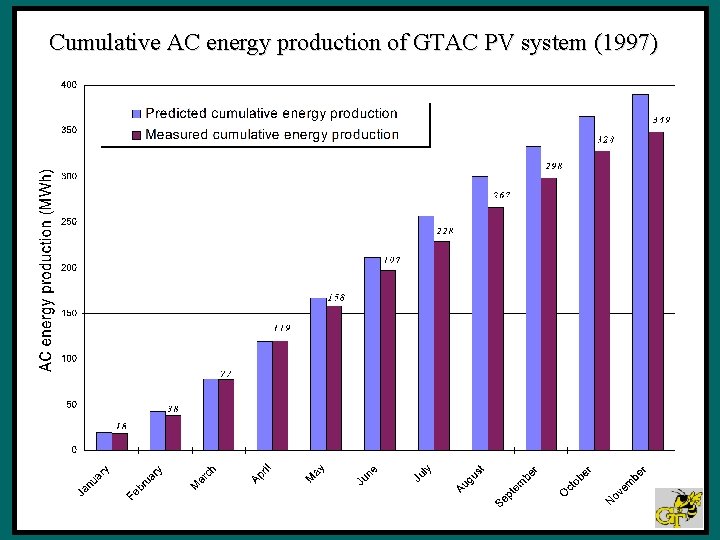
Cumulative AC energy production of GTAC PV system (1997)
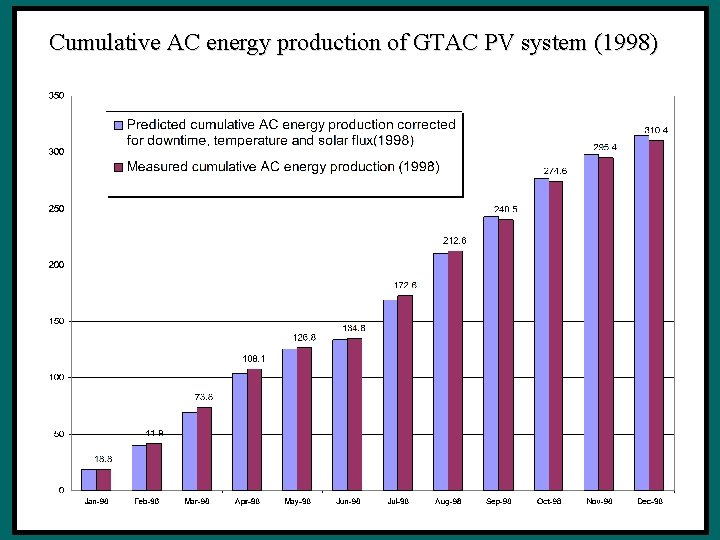
Cumulative AC energy production of GTAC PV system (1998)
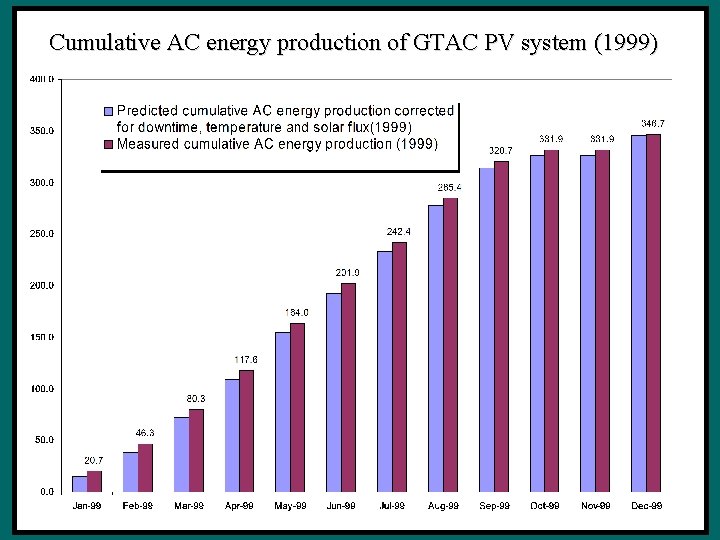
Cumulative AC energy production of GTAC PV system (1999)
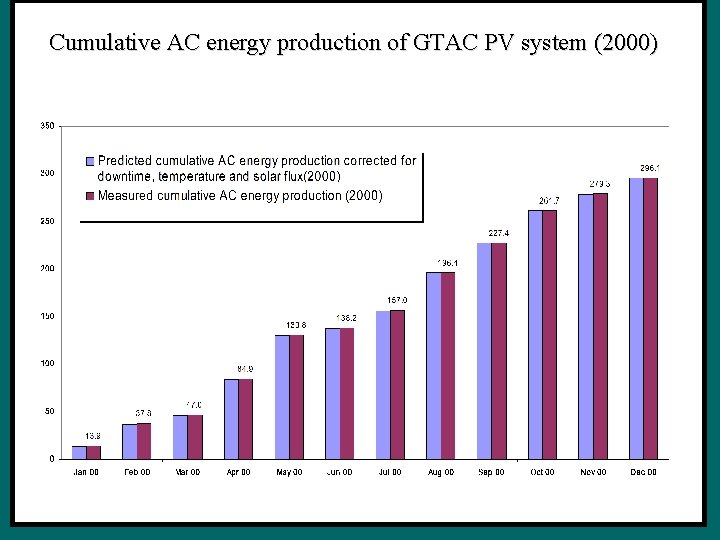
Cumulative AC energy production of GTAC PV system (2000)
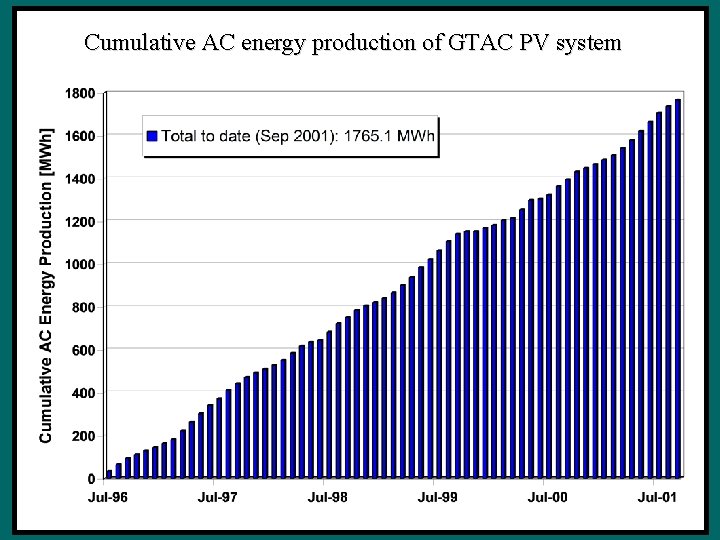
Cumulative AC energy production of GTAC PV system
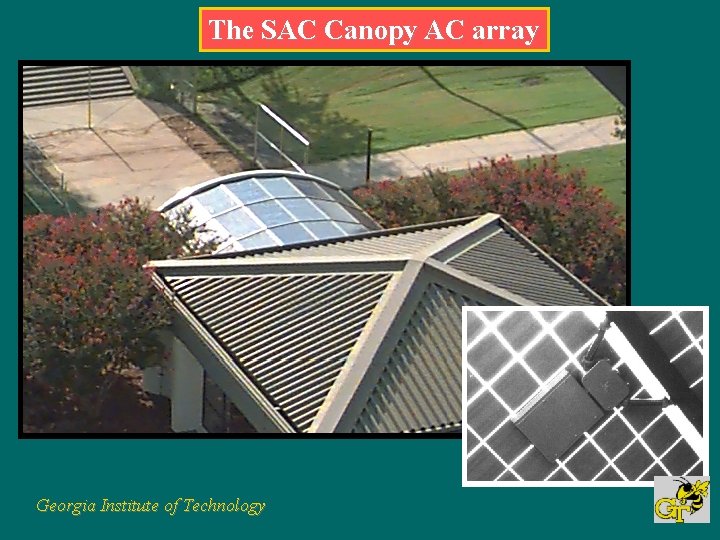
The SAC Canopy AC array Georgia Institute of Technology
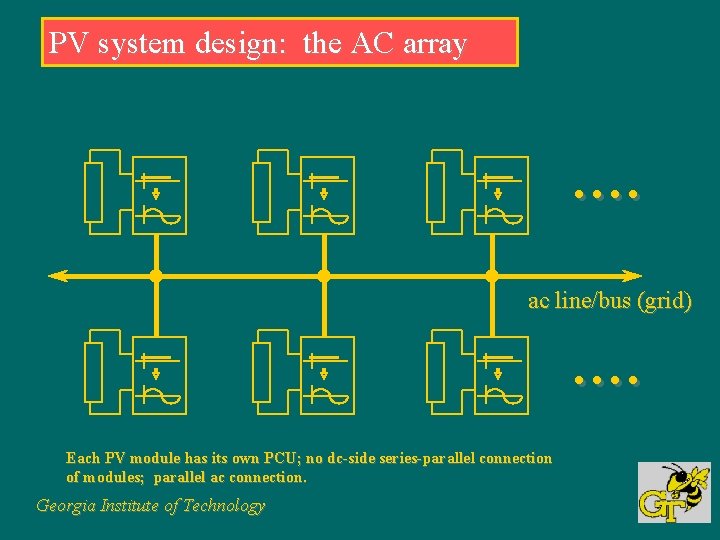
PV system design: the AC array . . ac line/bus (grid) . . Each PV module has its own PCU; no dc-side series-parallel connection of modules; parallel ac connection. Georgia Institute of Technology
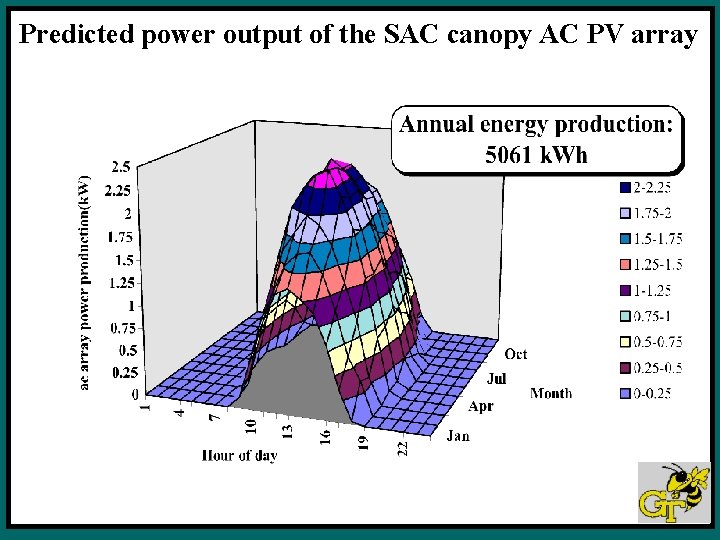
Predicted power output of the SAC canopy AC PV array
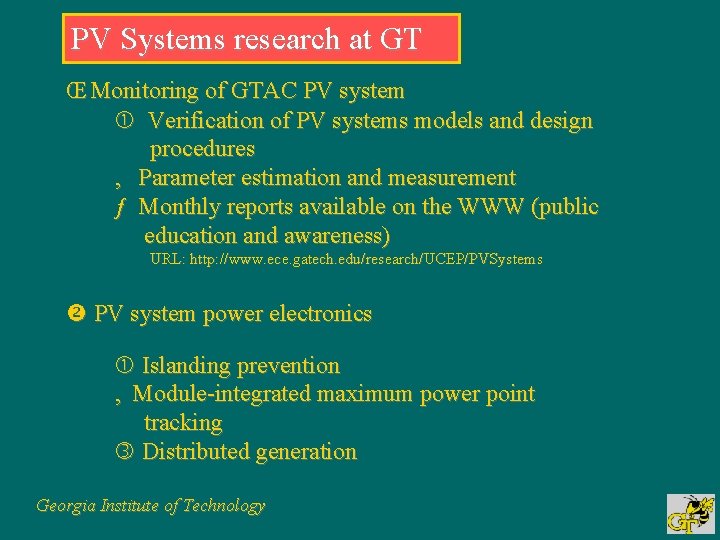
PV Systems research at GT Œ Monitoring of GTAC PV system Verification of PV systems models and design procedures ‚ Parameter estimation and measurement ƒ Monthly reports available on the WWW (public education and awareness) URL: http: //www. ece. gatech. edu/research/UCEP/PVSystems PV system power electronics Islanding prevention ‚ Module-integrated maximum power point tracking Distributed generation Georgia Institute of Technology