
The Geography of Japan and Vietnam Japan Size
- Slides: 31
The Geography of Japan and Vietnam
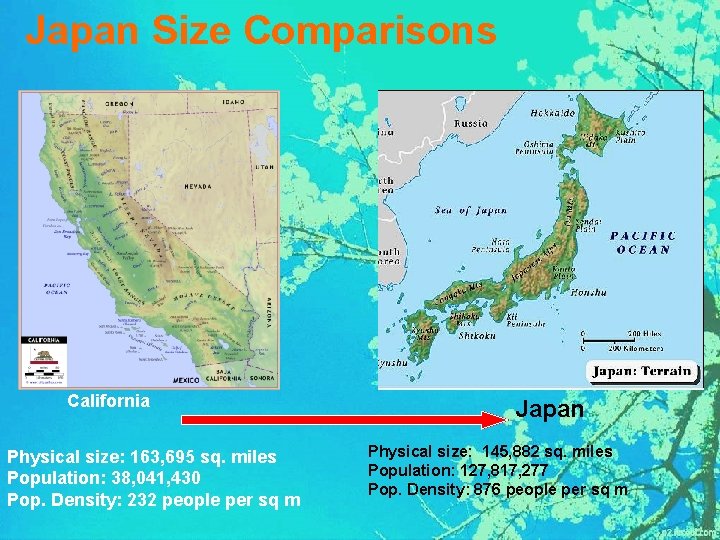
Japan Size Comparisons California Physical size: 163, 695 sq. miles Population: 38, 041, 430 Pop. Density: 232 people per sq m Japan Physical size: 145, 882 sq. miles Population: 127, 817, 277 Pop. Density: 876 people per sq m
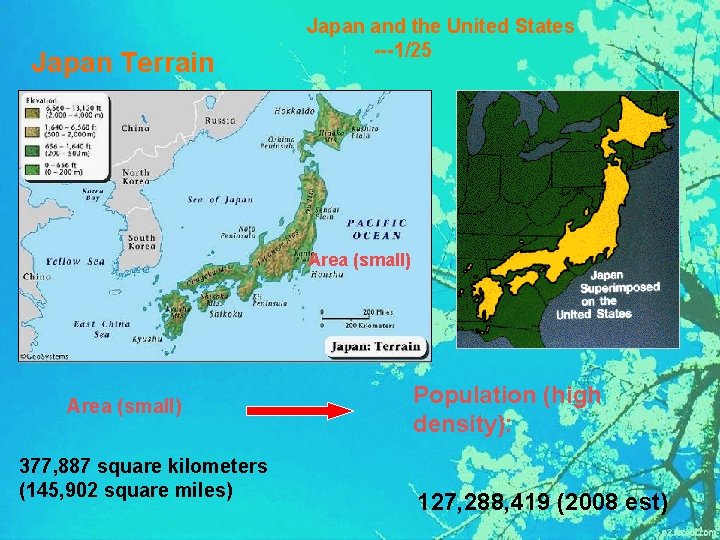
Japan Terrain Japan and the United States ---1/25 Area (small) 377, 887 square kilometers (145, 902 square miles) Population (high density): 127, 288, 419 (2008 est)
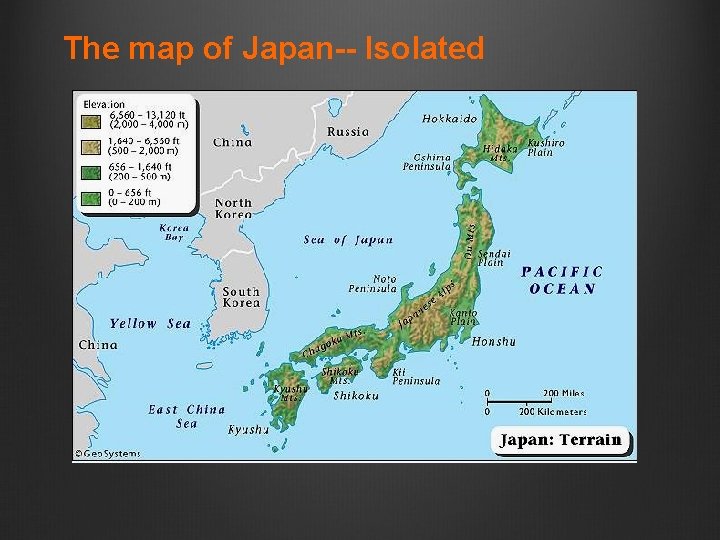
The map of Japan-- Isolated
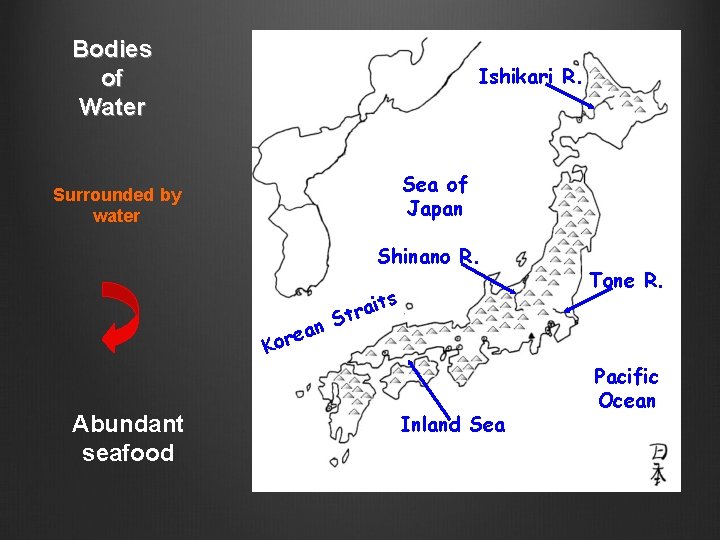
Bodies of Water Ishikari R. Sea of Japan Surrounded by water Shinano R. s n ea r o K Abundant seafood ait r t S Inland Sea Tone R. Pacific Ocean
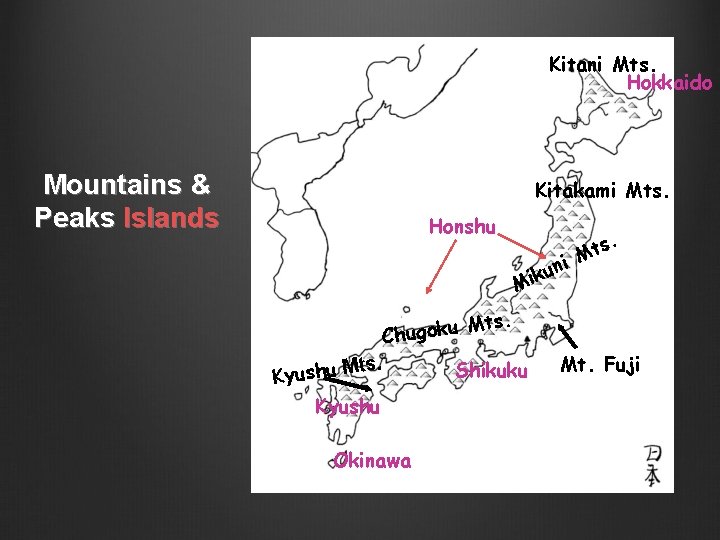
Kitani Mts. Hokkaido Mountains & Peaks Islands Kitakami Mts. Honshu i un k i M ts. M u k o g Chu ts. Kyushu M Kyushu Okinawa Shikuku s. t M Mt. Fuji
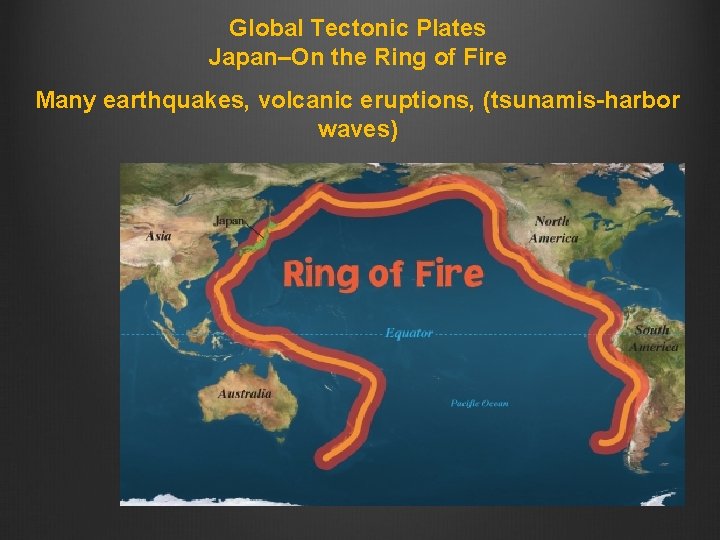
Global Tectonic Plates Japan–On the Ring of Fire Many earthquakes, volcanic eruptions, (tsunamis-harbor waves)
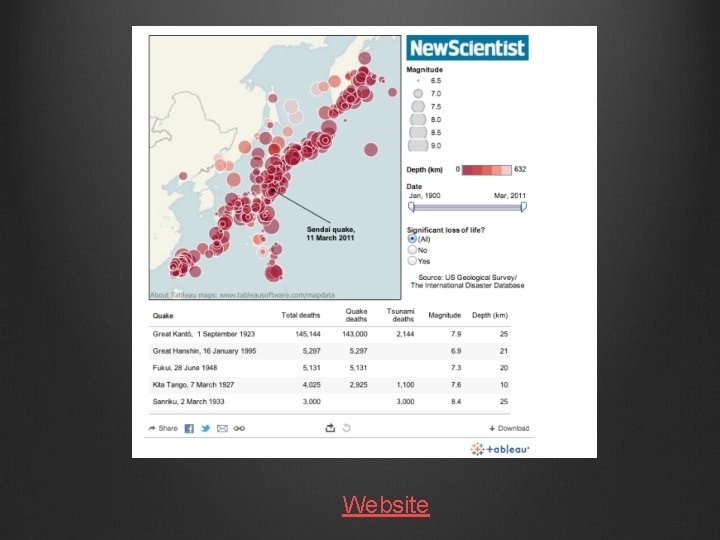
Website
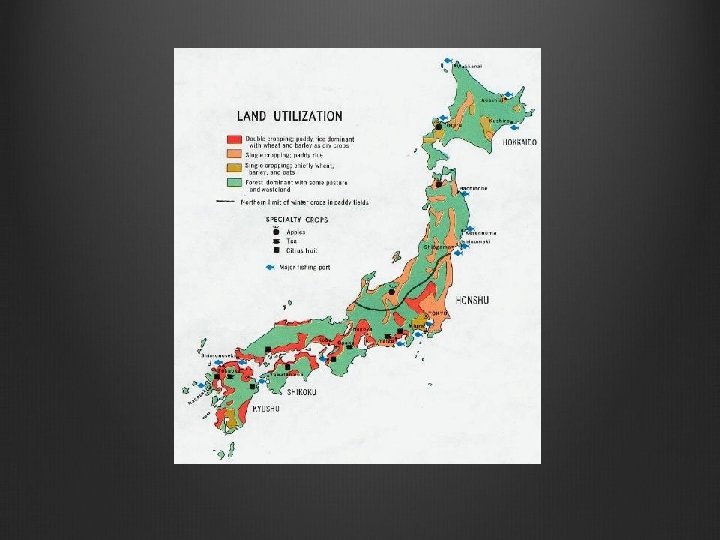
Issues –Isolation -Limited area to live. Buildings are tall and vulnerable during natural disasters –Natural Disasters-Volcanoes, Earthquakes, Tsunamis –Limited farm land –Few natural resources
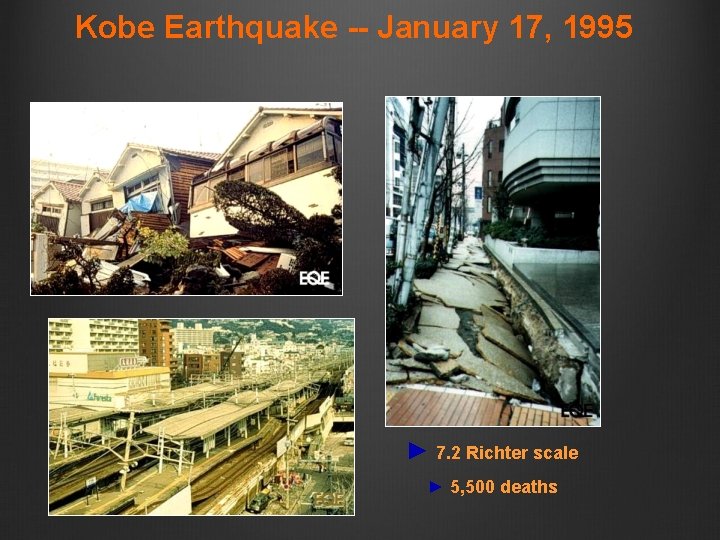
Kobe Earthquake -- January 17, 1995 ► 7. 2 Richter scale ► 5, 500 deaths
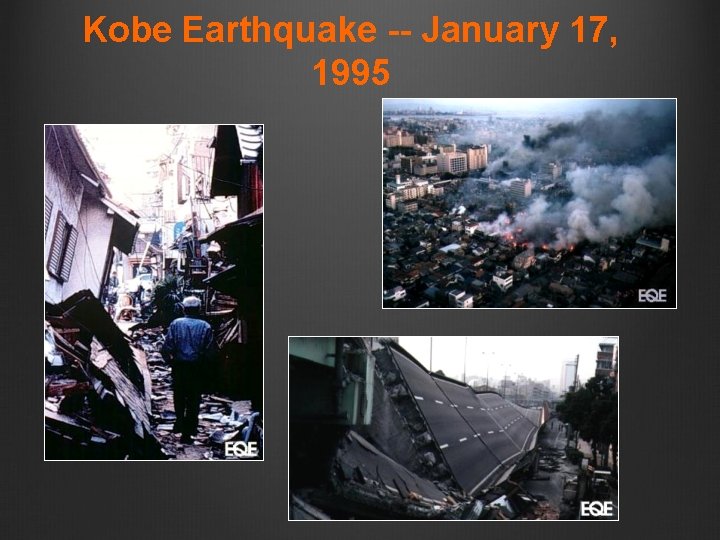
Kobe Earthquake -- January 17, 1995
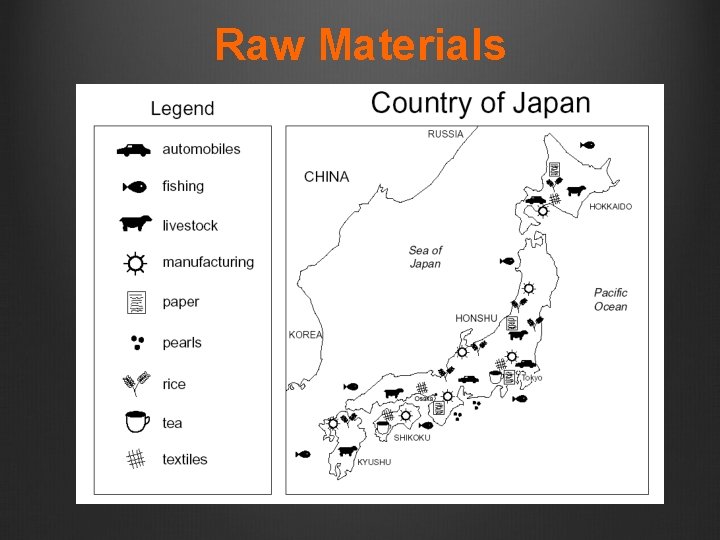
Raw Materials
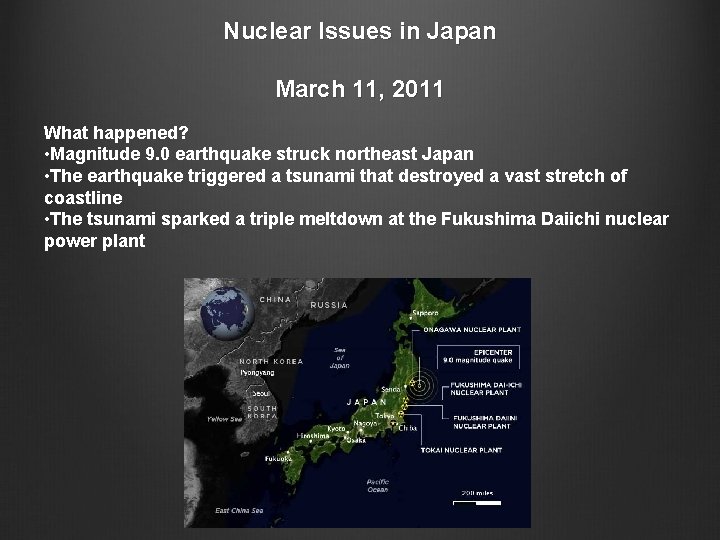
Nuclear Issues in Japan March 11, 2011 What happened? • Magnitude 9. 0 earthquake struck northeast Japan • The earthquake triggered a tsunami that destroyed a vast stretch of coastline • The tsunami sparked a triple meltdown at the Fukushima Daiichi nuclear power plant
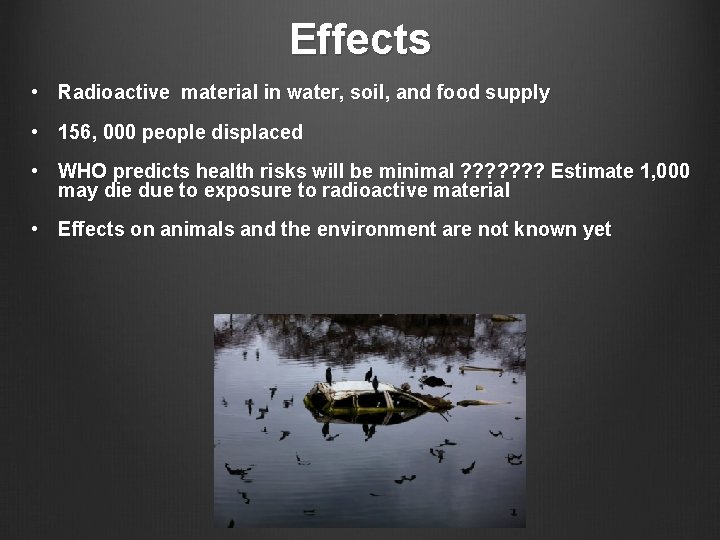
Effects • Radioactive material in water, soil, and food supply • 156, 000 people displaced • WHO predicts health risks will be minimal ? ? ? ? Estimate 1, 000 may die due to exposure to radioactive material • Effects on animals and the environment are not known yet
17
Vietnam
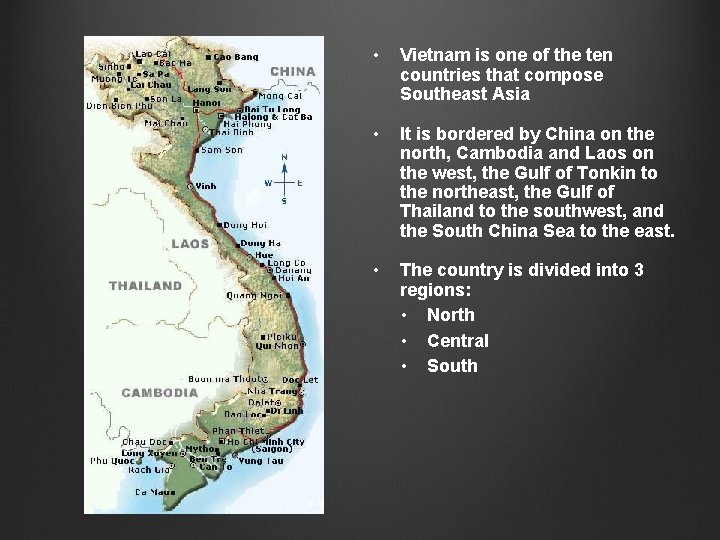
• Vietnam is one of the ten countries that compose Southeast Asia • It is bordered by China on the north, Cambodia and Laos on the west, the Gulf of Tonkin to the northeast, the Gulf of Thailand to the southwest, and the South China Sea to the east. • The country is divided into 3 regions: • North • Central • South
• North Vietnam • With Hanoi as the urban center, northern Vietnam developed more rapidly than other sections of the country • Fertile soil of the Red River allowed for an agrarian-based society to develop and prosper
• Central Vietnam is very narrow. In some sections, only 50 kilometers separates neighboring country, Laos, from the sea. • Due to the limited land area, most inhabitants are employed in sea-related activities
• South Vietnam • Southern Vietnam corresponds to America’s “Wild West” • The frontier area is underdeveloped compared to the rest of the country, however, the rich land of the Mekong Delta today makes the area the world’s third leading exporter of rice
The Vietnam War (Conflict) War was never officially declared Cold War era military conflict in Vietnam, Laos, and Cambodia Lasted from 1 November 1955 to 30 April 1975 (US troop involvement ended 15 August 1973) Goal: Contain communism Domino Theory-if one country in Asia fell to communism they all would fall
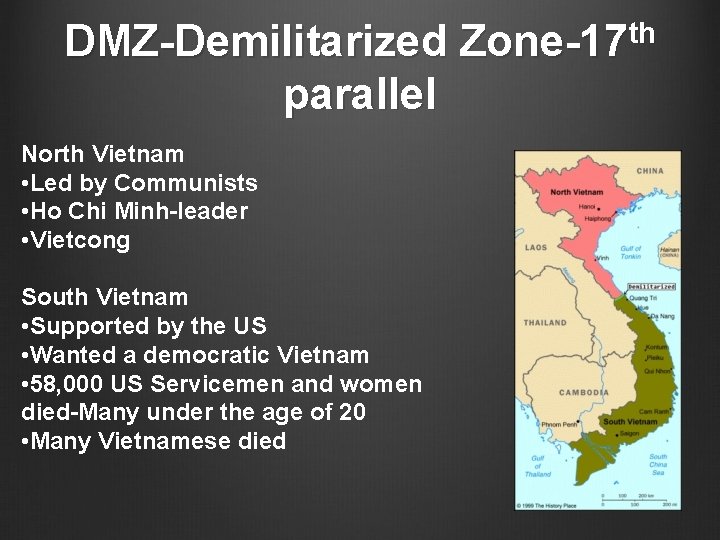
DMZ-Demilitarized Zone-17 th parallel North Vietnam • Led by Communists • Ho Chi Minh-leader • Vietcong South Vietnam • Supported by the US • Wanted a democratic Vietnam • 58, 000 US Servicemen and women died-Many under the age of 20 • Many Vietnamese died
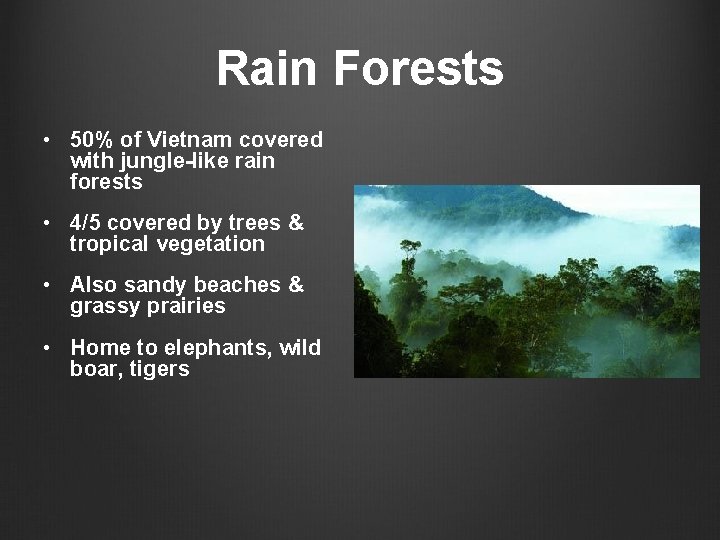
Rain Forests • 50% of Vietnam covered with jungle-like rain forests • 4/5 covered by trees & tropical vegetation • Also sandy beaches & grassy prairies • Home to elephants, wild boar, tigers
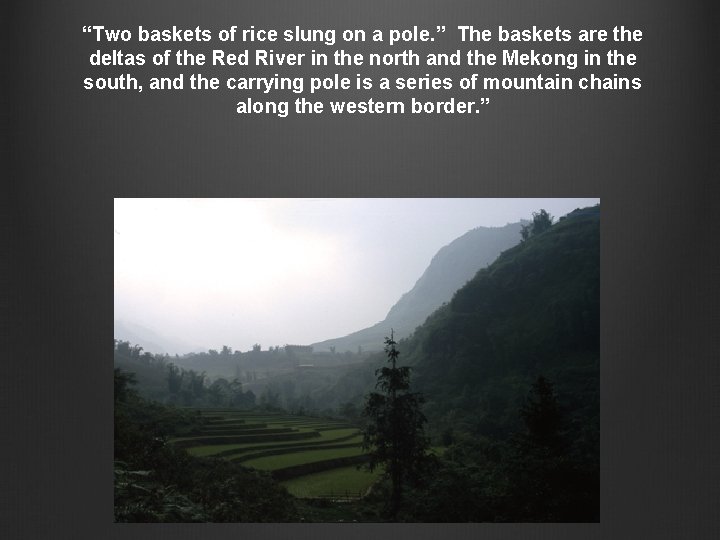
“Two baskets of rice slung on a pole. ” The baskets are the deltas of the Red River in the north and the Mekong in the south, and the carrying pole is a series of mountain chains along the western border. ”
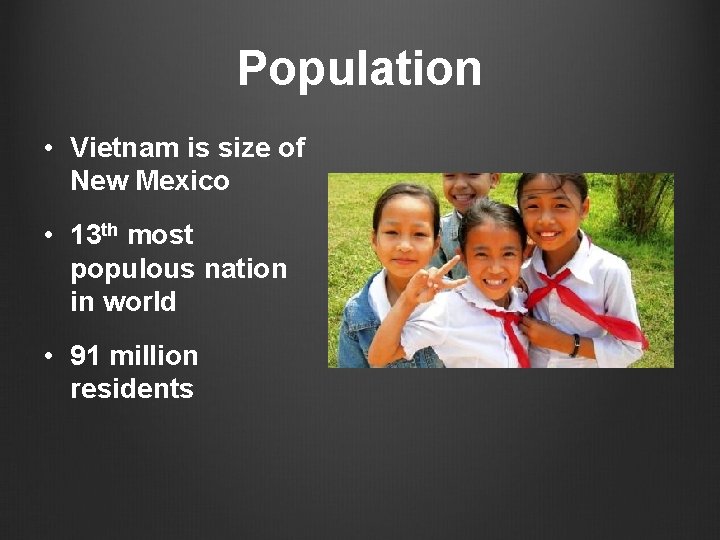
Population • Vietnam is size of New Mexico • 13 th most populous nation in world • 91 million residents
Climate • Warm and Humid • Monsoon season is from June to November • The monsoon brings intense heat and typhoons, along with heavy rain • Average yearly rainfall is 59 inches, though Hanoi receives 72 inches annually
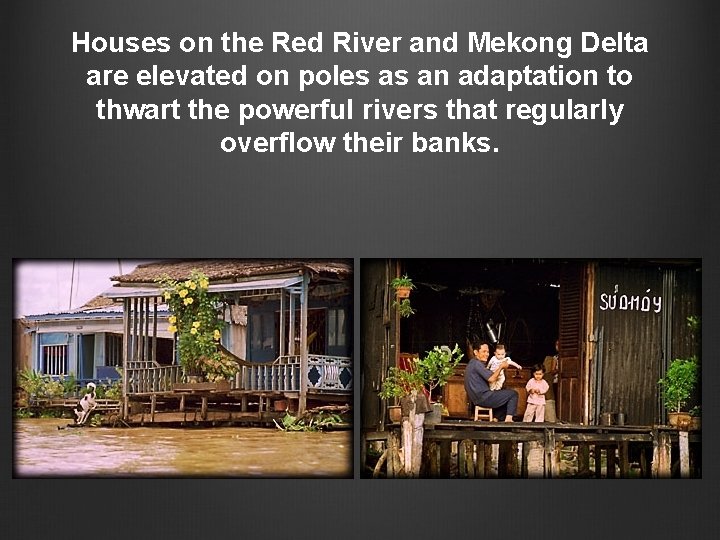
Houses on the Red River and Mekong Delta are elevated on poles as an adaptation to thwart the powerful rivers that regularly overflow their banks.
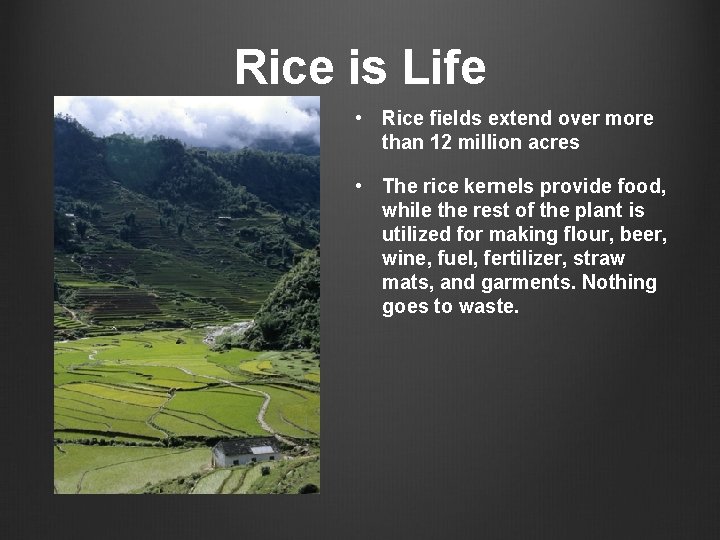
Rice is Life • Rice fields extend over more than 12 million acres • The rice kernels provide food, while the rest of the plant is utilized for making flour, beer, wine, fuel, fertilizer, straw mats, and garments. Nothing goes to waste.
“The Farmer’s Calendar” The twelfth moon for potato growing, the first for beans, the second for eggplant. In the third, we break the land to plant rice in the fourth while the rains are strong. The man plows, the woman plants, and in the fifth: harvest, and the gods are good— an acre yields five full baskets this year. I grind and pound the paddy, strew husks to cover manure, and feed the hogs with bran. Next year, if the land is extravagant, I shall pay the taxes for you. In plenty or in want, there will still be you and me, always the two of us. Isn’t that better than always prospering, alone?