
The Genetics of Bacteria Bacterial Reproduction Ms Day

The Genetics of Bacteria: Bacterial Reproduction Ms. Day AP Biology
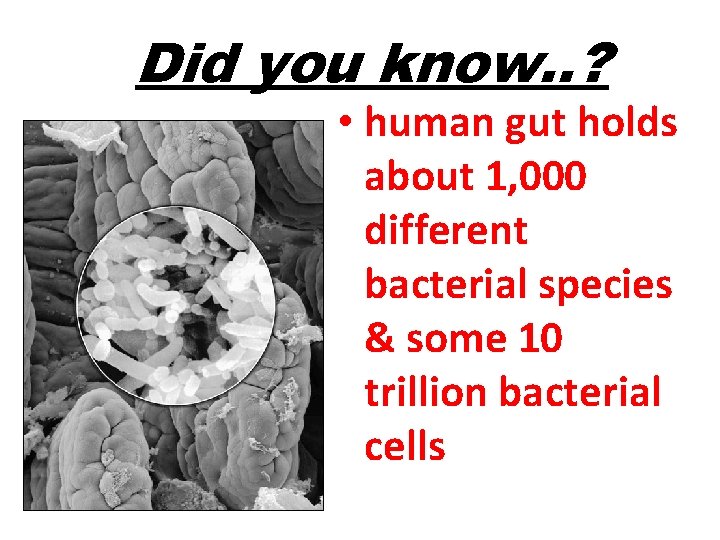
Did you know. . ? • human gut holds about 1, 000 different bacterial species & some 10 trillion bacterial cells
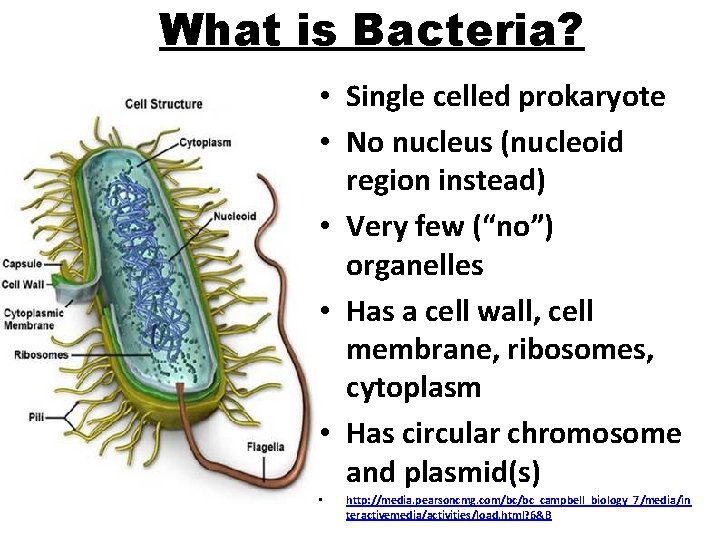
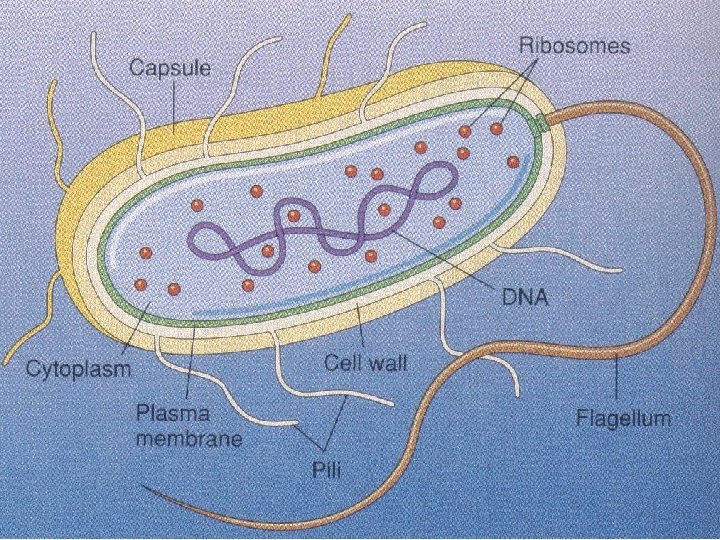
What is Bacteria? • Single celled prokaryote • No nucleus (nucleoid region instead) • Very few (“no”) organelles • Has a cell wall, cell membrane, ribosomes, cytoplasm • Has circular chromosome and plasmid(s) • http: //media. pearsoncmg. com/bc/bc_campbell_biology_7/media/in teractivemedia/activities/load. html? 6&B
2 Types (domains) of Bacteria • Eubacteria (can be harmful) – “regular” bacteria – They live in most environments – their cell-wall DOES contain peptidoglycan • Archaea Bacteria (not harmful) – “older” bacteria; live in EXTREME habitats – more similar to eukaryotes than to bacteria in several ways – cell-wall does NOT contain peptidoglycan
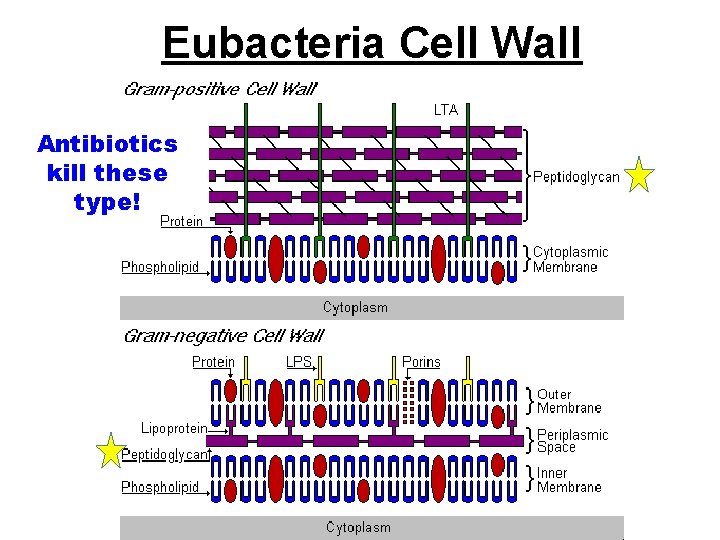
Eubacteria Cell Wall Antibiotics kill these type!
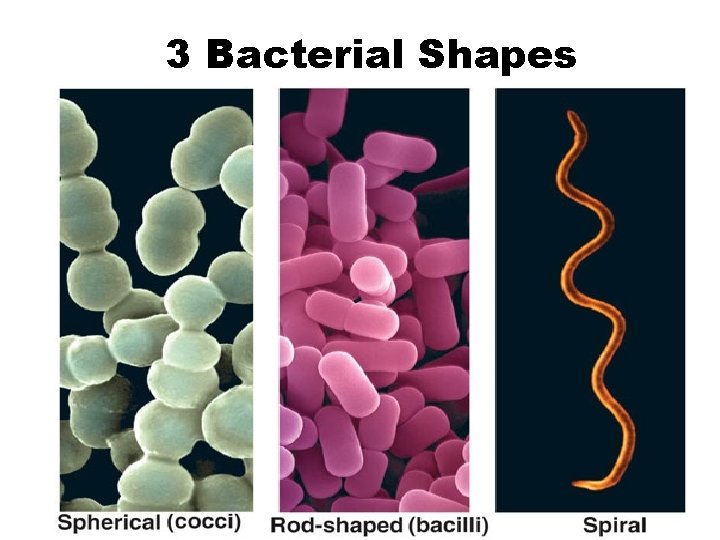
3 Bacterial Shapes
Genetic Diversity of Bacteria • Bacteria can – REPRODUCE VERY QUICKLY – MUTATE VERY QUICKLY – RECOMBINE THEIR GENES • contribute to the genetic diversity of bacteria • The well-studied intestinal bacterium Escherichia coli (E. coli) is “the laboratory rat of molecular biology”
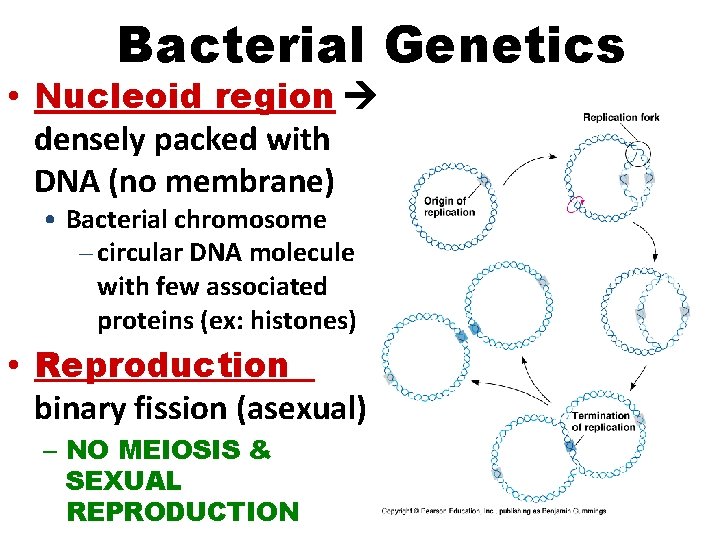
Bacterial Genetics • Nucleoid region densely packed with DNA (no membrane) • Bacterial chromosome – circular DNA molecule with few associated proteins (ex: histones) • Reproduction binary fission (asexual) – NO MEIOSIS & SEXUAL REPRODUCTION
Mutation/Genetic Recombination as Sources of Genetic Variation • Since bacteria can reproduce rapidly –New mutations can quickly increase a population’s genetic diversity • Genetic diversity in bacteria… –Can also arise by genetic recombination of the DNA from 2 different bacterial cells ***Remember that prokaryotes don’t undergo meiosis (crossing over) or fertilization
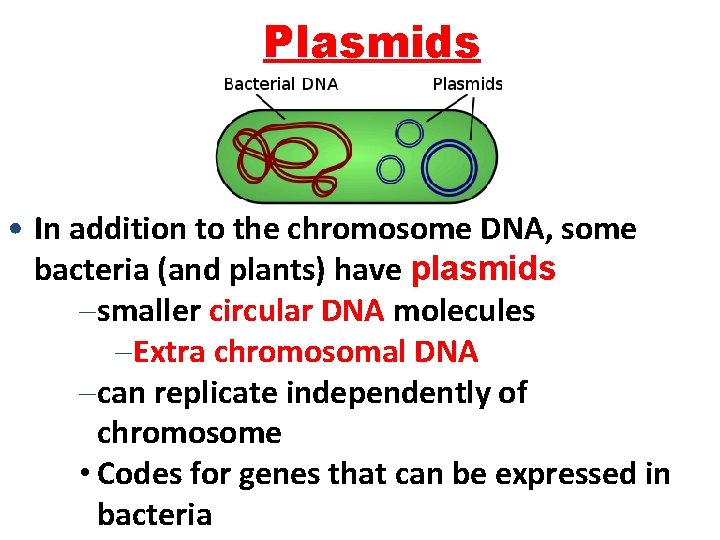
Plasmids • In addition to the chromosome DNA, some bacteria (and plants) have plasmids –smaller circular DNA molecules –Extra chromosomal DNA –can replicate independently of chromosome • Codes for genes that can be expressed in bacteria
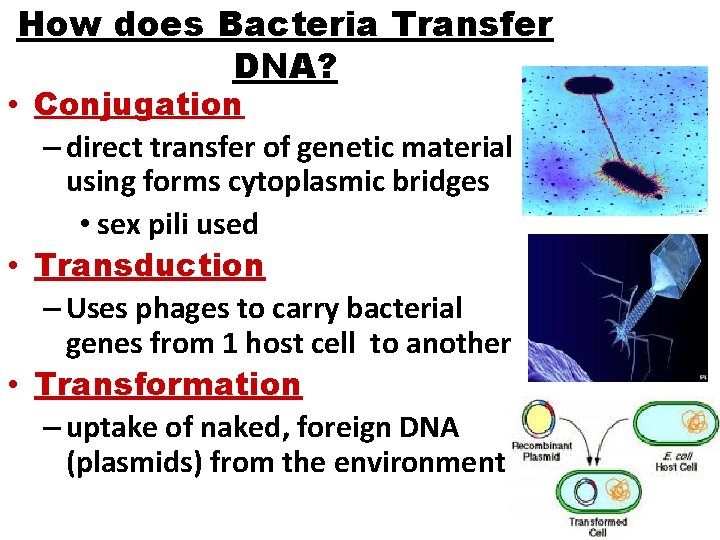
How does Bacteria Transfer DNA? • Conjugation – direct transfer of genetic material using forms cytoplasmic bridges • sex pili used • Transduction – Uses phages to carry bacterial genes from 1 host cell to another • Transformation – uptake of naked, foreign DNA (plasmids) from the environment
#1) Conjugation • Conjugation –direct transfer of genetic material between bacterial cells – 2 bacterial cells are temporarily joined • Sex pili (cilia) are used in the transfer of DNA
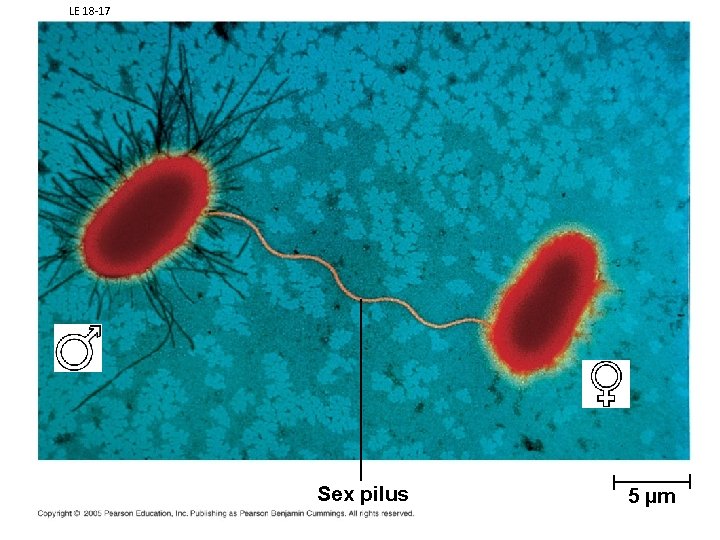
LE 18 -17 Sex pilus 5 µm
Conjugation Transfers Bacterial Plasmids • F (fertility) Plasmid: – codes for production of sex pili – bacteria are either F+ or F • R (resistance) Plasmid: – codes for antibiotic drug resistance • Transposons (transposable genetic elements): – piece of DNA that can move from location to another in a cell’s genome – chromosome to plasmid, plasmid to plasmid, etc. – They are commonly referred to as “jumping genes”
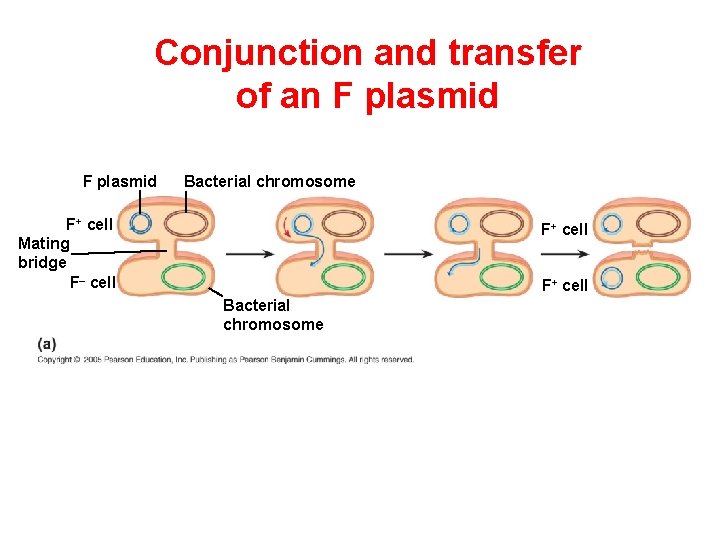
Conjunction and transfer of an F plasmid Bacterial chromosome F+ cell Mating bridge F– cell F+ cell Bacterial chromosome
R plasmids and Antibiotic Resistance • R plasmids resist various antibiotics • When a bacterial population is exposed to an antibiotic, individuals with the R plasmid will survive and increase in the overall population
Conjugation Animations of F Plasmid • http: //highered. mcgrawhill. com/sites/0072556781/student_view 0/chapter 13/ani mation_quiz_3. html Conjugation Animations of R Plasmid • http: //www. hhmi. org/biointeractive/animations/conjugati on/conj_frames. htm Rolling Circle Plasmid Transfer Mechanisms Animations • http: //highered. mcgrawhill. com/sites/0072556781/student_view 0/chapter 13/ani
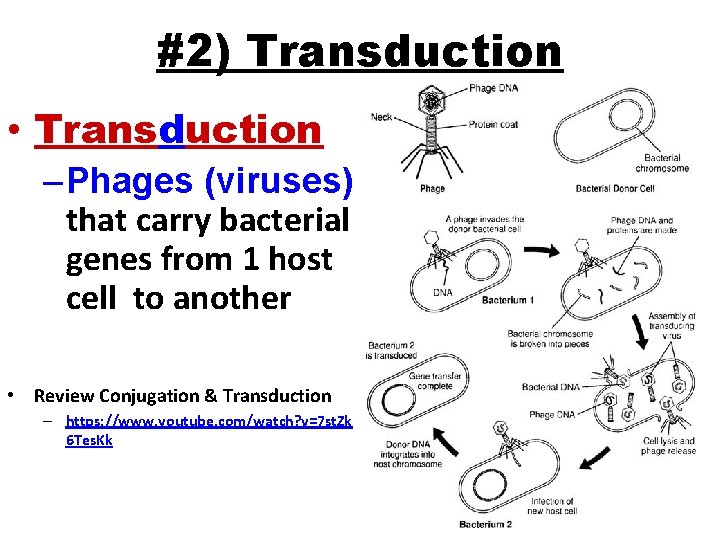
#2) Transduction • Transduction – Phages (viruses) that carry bacterial genes from 1 host cell to another • Review Conjugation & Transduction – https: //www. youtube. com/watch? v=7 st. Zk 6 Tes. Kk
Generalized Transduction Animations • http: //highered. mcgrawhill. com/sites/0072556781/student_view 0/chapter 1 3/animation_quiz_2. html Specialized Transduction Animations • http: //highered. mcgrawhill. com/sites/0072552980/student_view 0/chapter 9 /animation_quiz_4. html
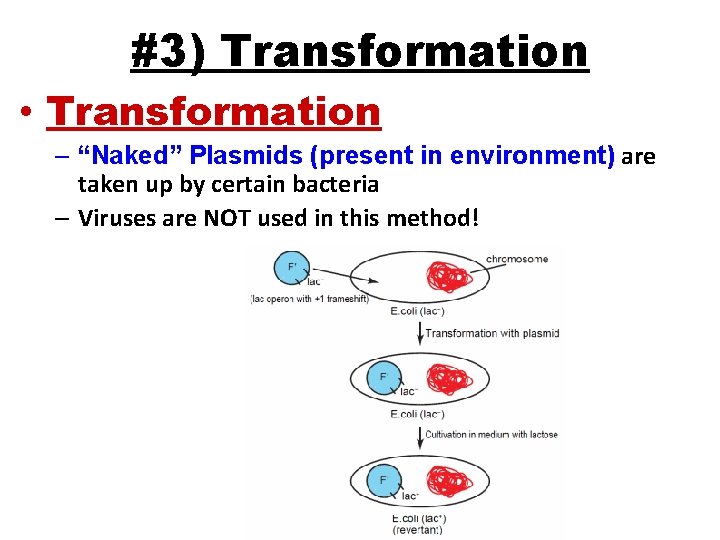
#3) Transformation • Transformation – “Naked” Plasmids (present in environment) are taken up by certain bacteria – Viruses are NOT used in this method!
Bacterial Transformation Animations https: //www. youtube. com/watch? v=MRBdb. KFisg. I http: //highered. mcgrawhill. com/sites/0072556781/student_view 0/chapter 13/a nimation_quiz_1. html
Transposon Animations • http: //highered. mcgrawhill. com/sites/0072556781/student_view 0/ch apter 13/animation_quiz_5. html
The Genetics of Bacteria: Operons
OPERONS Used by bacteria for gene regulation
How do Bacteria Control Gene Expression? • Individual bacteria respond to environmental change by regulating their gene expression • A bacterium can ADJUST its metabolism to the changing environment and food sources • This metabolic control occurs on 2 levels: – Adjusting activity of actual enzymes – Regulate genes that encode enzymes
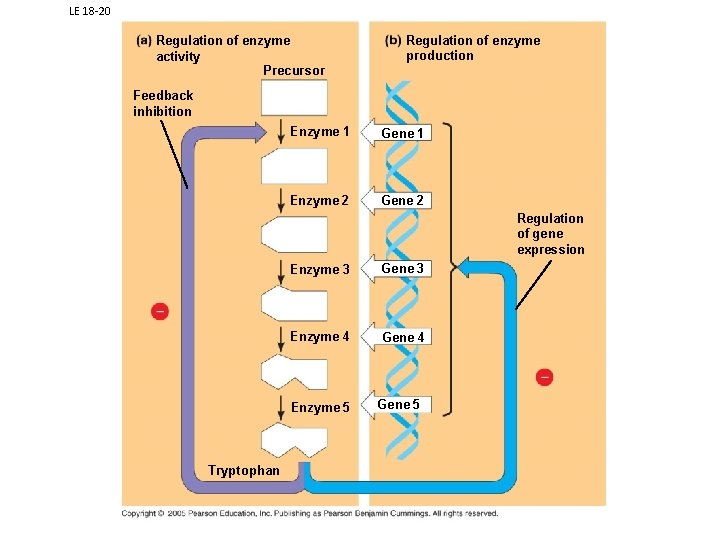
LE 18 -20 Regulation of enzyme activity Precursor Regulation of enzyme production Feedback inhibition Enzyme 1 Gene 1 Enzyme 2 Gene 2 Regulation of gene expression Enzyme 3 Gene 3 Enzyme 4 Gene 4 Enzyme 5 Tryptophan Gene 5
Operons: The Basic Concept • Mostly in bacteria genes are often clustered (grouped) into operons – OPERON INCLUDES: • An operator = an “on-off” switch • A promoter with a TATA box • Structural genes for metabolic enzymes • An operon can be switched off by a protein called a repressor • A corepressor is a small molecule that cooperates with a repressor to switch operon off
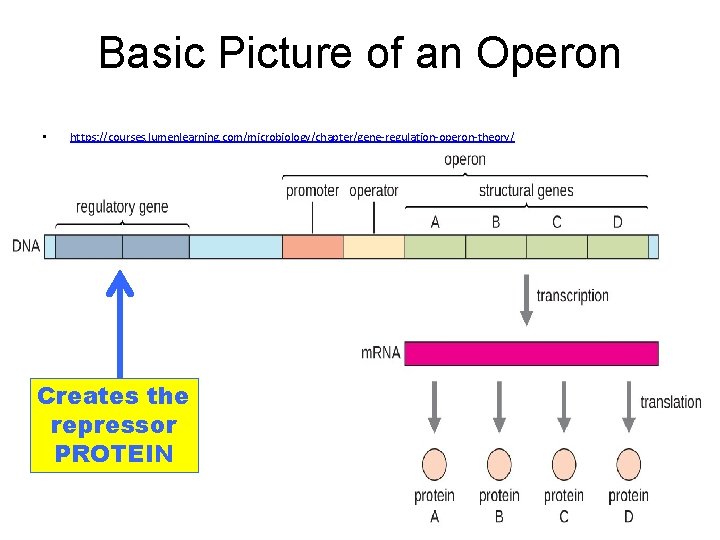
Basic Picture of an Operon • https: //courses. lumenlearning. com/microbiology/chapter/gene-regulation-operon-theory/ Creates the repressor PROTEIN
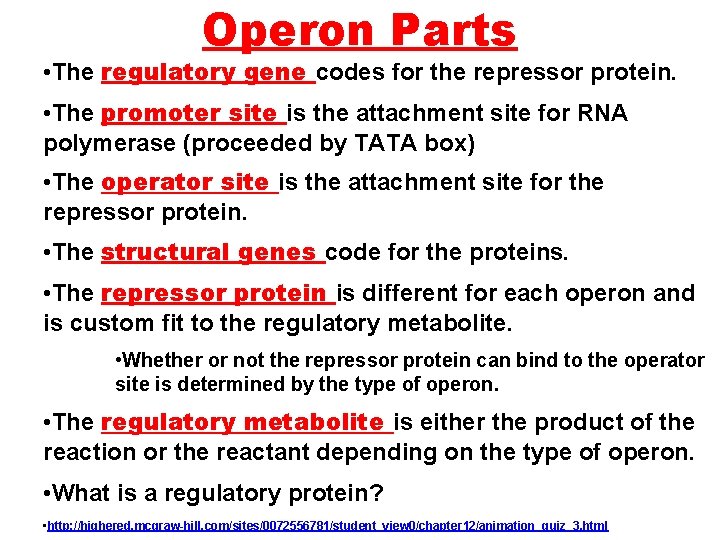
Operon Parts • The regulatory gene codes for the repressor protein. • The promoter site is the attachment site for RNA polymerase (proceeded by TATA box) • The operator site is the attachment site for the repressor protein. • The structural genes code for the proteins. • The repressor protein is different for each operon and is custom fit to the regulatory metabolite. • Whether or not the repressor protein can bind to the operator site is determined by the type of operon. • The regulatory metabolite is either the product of the reaction or the reactant depending on the type of operon. • What is a regulatory protein? • http: //highered. mcgraw-hill. com/sites/0072556781/student_view 0/chapter 12/animation_quiz_3. html
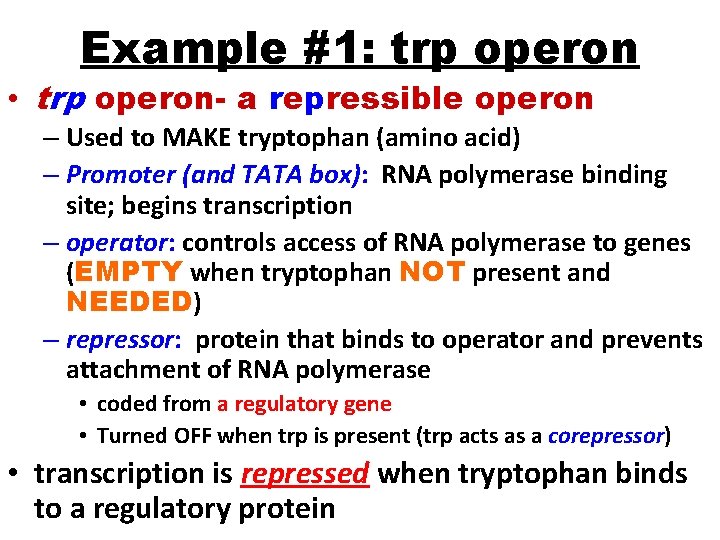
Example #1: trp operon • trp operon- a repressible operon – Used to MAKE tryptophan (amino acid) – Promoter (and TATA box): RNA polymerase binding site; begins transcription – operator: controls access of RNA polymerase to genes (EMPTY when tryptophan NOT present and NEEDED) – repressor: protein that binds to operator and prevents attachment of RNA polymerase • coded from a regulatory gene • Turned OFF when trp is present (trp acts as a corepressor) • transcription is repressed when tryptophan binds to a regulatory protein
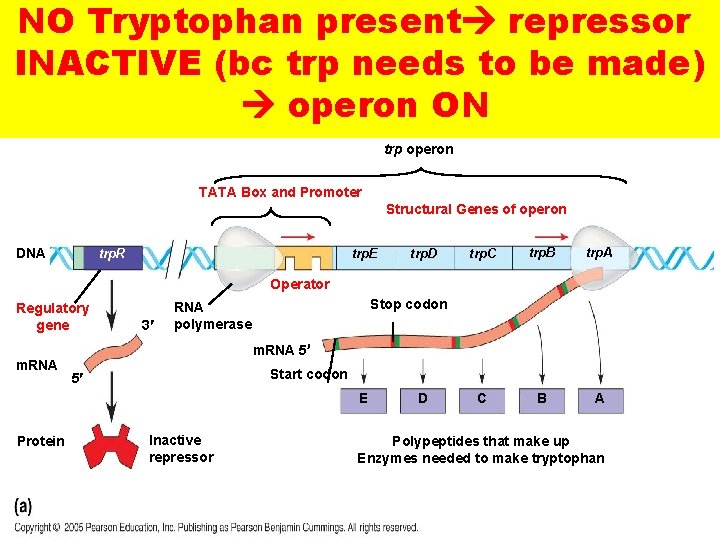
NO Tryptophan present repressor INACTIVE (bc trp needs to be made) operon ON trp operon TATA Box and Promoter Structural Genes of operon DNA trp. E trp. R trp. D trp. C trp. B trp. A C B A Operator Regulatory gene m. RNA 3¢ Stop codon RNA polymerase m. RNA 5¢ Start codon 5¢ E Protein Inactive repressor D Polypeptides that make up Enzymes needed to make tryptophan
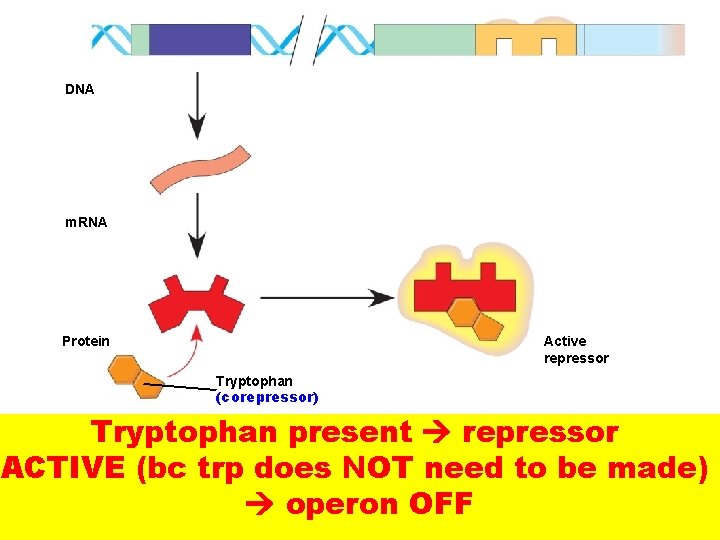
DNA m. RNA Active repressor Protein Tryptophan (corepressor) Tryptophan present repressor ACTIVE (bc trp does NOT need to be made) operon OFF
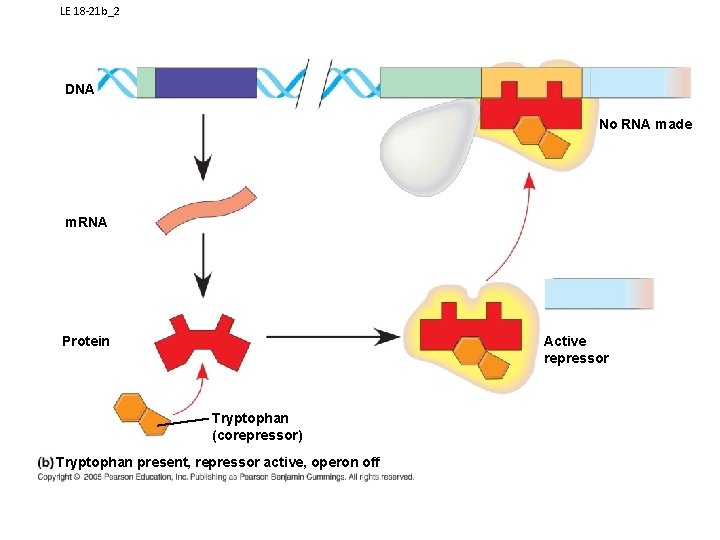
LE 18 -21 b_2 DNA No RNA made m. RNA Active repressor Protein Tryptophan (corepressor) Tryptophan present, repressor active, operon off
Tryptophan Repressor Operon • http: //highered. mcgrawhill. com/sites/0072437316/student_view 0/ch apter 18/animations. html# – Animation #1
Example #2: lac Operon • lac operon- an inducible operon • Operon makes proteins that BREAKS down(metabolizes) lactose • assume NO glucose in habitat – When lactose not present: • repressor active • operon off • no transcription for lactose enzymes – When lactose present: • repressor inactive • operon on • inducer molecule inactivates protein repressor (allolactose) • transcription is stimulated when inducer binds to a regulatory protein
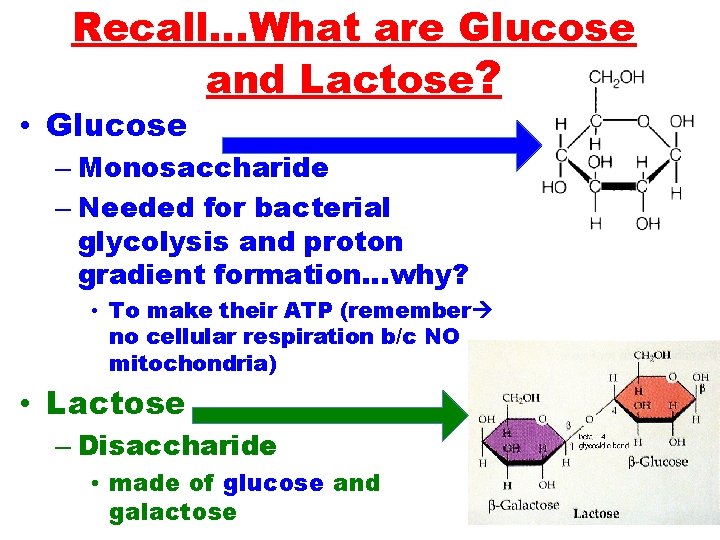
Recall…What are Glucose and Lactose? • Glucose – Monosaccharide – Needed for bacterial glycolysis and proton gradient formation…why? • To make their ATP (remember no cellular respiration b/c NO mitochondria) • Lactose – Disaccharide • made of glucose and galactose
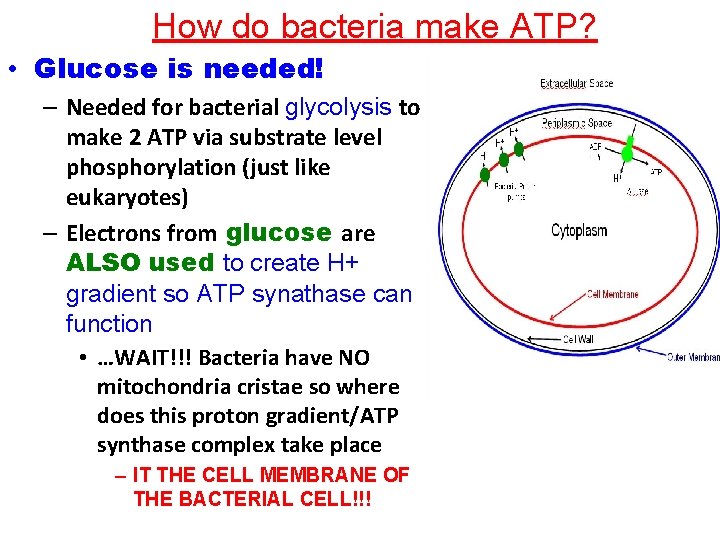
How do bacteria make ATP? • Glucose is needed! – Needed for bacterial glycolysis to make 2 ATP via substrate level phosphorylation (just like eukaryotes) – Electrons from glucose are ALSO used to create H+ gradient so ATP synathase can function • …WAIT!!! Bacteria have NO mitochondria cristae so where does this proton gradient/ATP synthase complex take place – IT THE CELL MEMBRANE OF THE BACTERIAL CELL!!!
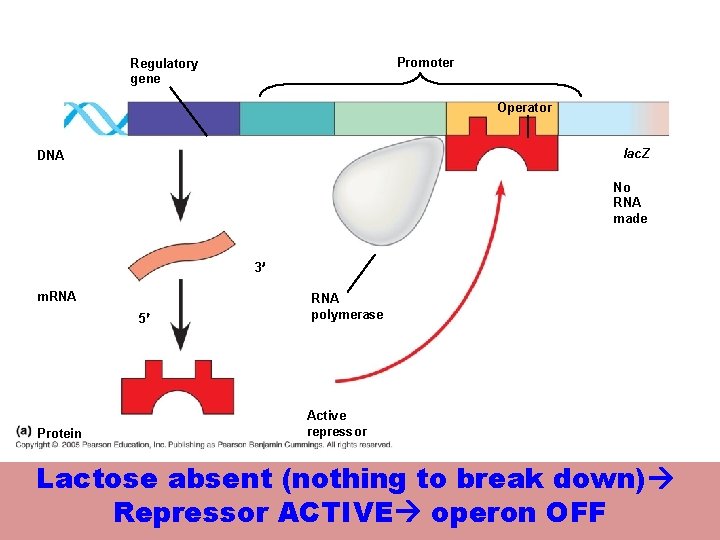
Promoter Regulatory gene Operator lacl DNA lac. Z No RNA made 3¢ m. RNA 5¢ Protein RNA polymerase Active repressor Lactose absent (nothing to break down) Repressor ACTIVE operon OFF
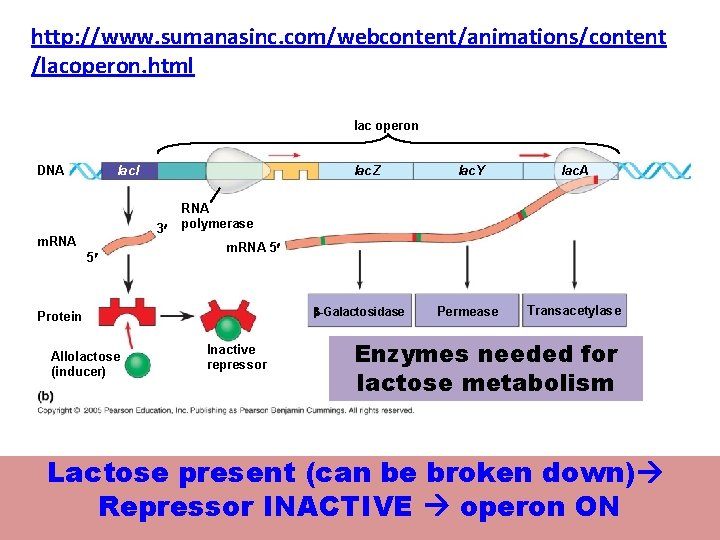
http: //www. sumanasinc. com/webcontent/animations/content /lacoperon. html lac operon DNA lac. Z lacl 3¢ m. RNA 5¢ lac. A Permease Transacetylase RNA polymerase m. RNA 5¢ -Galactosidase Protein Allolactose (inducer) lac. Y Inactive repressor Enzymes needed for lactose metabolism Lactose present (can be broken down) Repressor INACTIVE operon ON
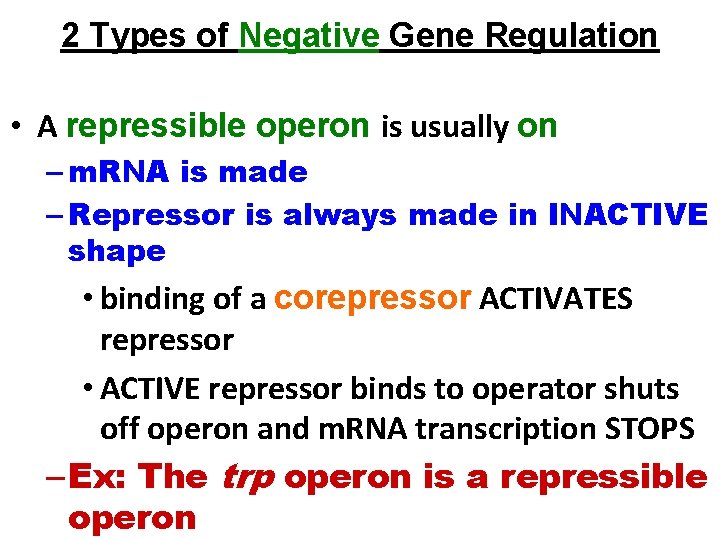
2 Types of Negative Gene Regulation • A repressible operon is usually on – m. RNA is made – Repressor is always made in INACTIVE shape • binding of a corepressor ACTIVATES repressor • ACTIVE repressor binds to operator shuts off operon and m. RNA transcription STOPS – Ex: The trp operon is a repressible operon
2 Types of Negative Gene Regulation (con’t) • An inducible operon is usually off – m. RNA is NOT made – Repressor is always made in ACTIVE shape • binding of an inducer INACTIVATES repressor • INACTIVE repressor falls off operator operon turned ON m. RNA IS made – Ex: The lac operon is a repressible operon http: //highered. mcgrawhill. com/sites/0072556781/student _view 0/chapter 12/animation_quiz_ 3. html
Positive Gene Regulation • Some operons are also subject to positive control through a stimulatory activator protein, such as catabolite activator protein (CAP) • When glucose (a preferred food source of E. coli ) is scarce, the lac operon is activated by the binding of CAP • When glucose levels increase, CAP detaches from the lac operon, turning it off
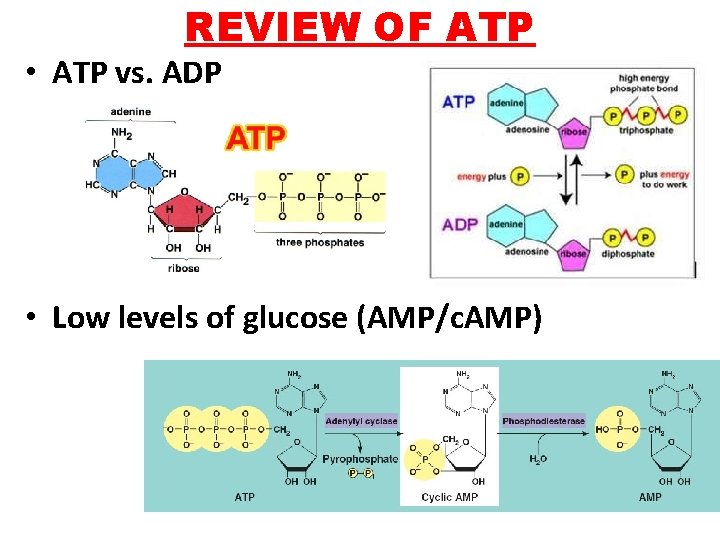
REVIEW OF ATP • ATP vs. ADP • Low levels of glucose (AMP/c. AMP)
Review… • If ATP levels are high – what can you say about levels? • If ATP levels are low – what can you say about levels? • If ATP levels are high – what can you say about • If ATP levels are low – what can you say about glucose c. AMP levels?
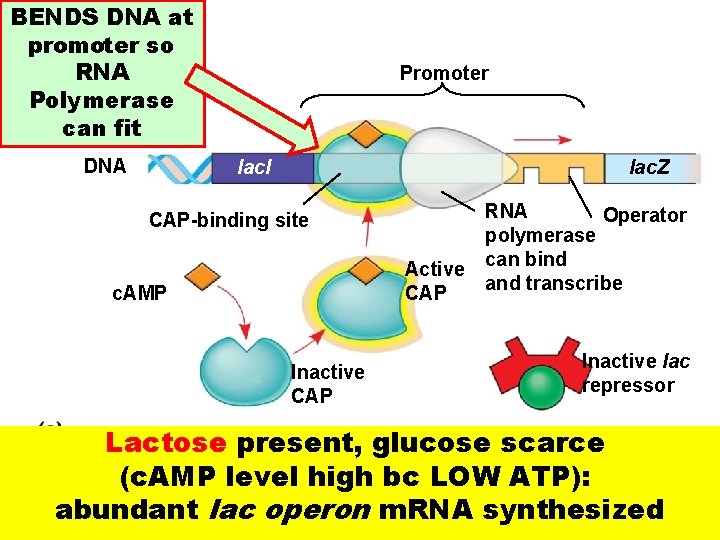
BENDS DNA at promoter so RNA Polymerase can fit DNA Promoter lacl lac. Z CAP-binding site Active CAP c. AMP Inactive CAP RNA Operator polymerase can bind and transcribe Inactive lac repressor Lactose present, glucose scarce (c. AMP level high bc LOW ATP): abundant lac operon m. RNA synthesized
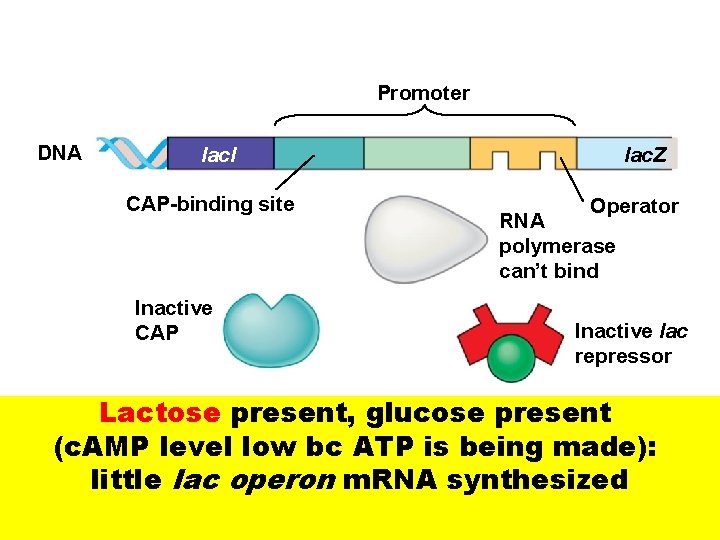
Promoter DNA lacl CAP-binding site Inactive CAP lac. Z Operator RNA polymerase can’t bind Inactive lac repressor Lactose present, glucose present (c. AMP level low bc ATP is being made): little lac operon m. RNA synthesized
Lac Operon (with and without lactose/ glucose) • http: //highered. mcgrawhill. com/sites/0072437316/student_view 0/chapter 18/animations. html# • http: //highered. mcgrawhill. com/sites/0072556781/student_view 0/chapter 12/animation_quiz_4. html
- Slides: 48