
The General Special Senses Chapter 17 Introduction Senses
- Slides: 42
The General & Special Senses Chapter 17
Introduction • Senses – our perception of what is “out there” • 2 groups – General senses – Special senses
General Senses • Includes senses that are skin or kinesthetic – Temperature, pressure, touch, pain, vibration, proprioception • Pass information along the spinal nerves and pathways to the somatosensory cortex
Special Senses • Olfaction, gustation, equilibrium, hearing, & vision • Found within complex sense organs • Pass information along the cranial nerves to specific areas of the cerebral cortex.
Receptors • Sensory receptors are transducers – Change stimuli into electro-chemical impulses – Specific receptors can transduce only certain types of stimuli • Two general types – Exteroceptors – Interoceptors
Interpretation of Sensory Information • Occurs in cerebral cortex • Depends on the area of the cerebral cortex that receives the information • Also depends on the sequence of neurons carrying the information
Central Processing and Adaptation • Adaptation – the loss of sensitivity after continuous stimulation – Tonic receptors are always active – Phasic receptors only relay changes in the conditions they are monitoring • Role – prevents brain from being overloaded with unimportant information
Receptors of the General Senses
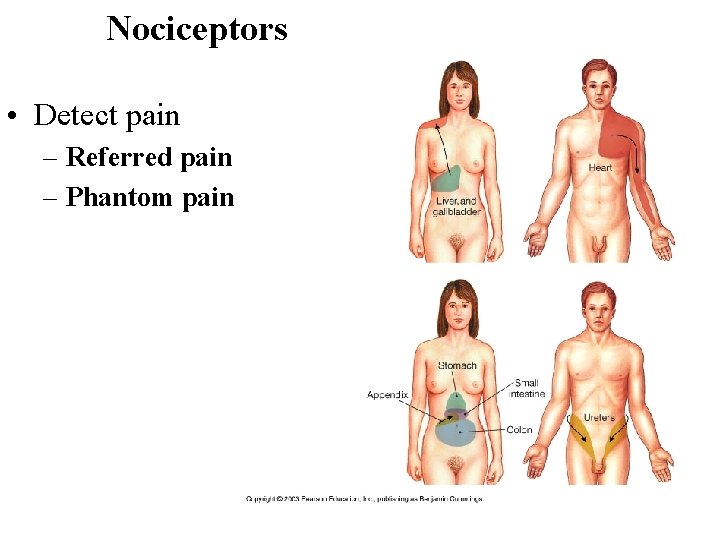
Nociceptors • Detect pain – Referred pain – Phantom pain
Mechanoreceptors • Respond to pressure & touch – Tactile receptors – Baroreceptors – Proprioreceptors – Thermoreceptors
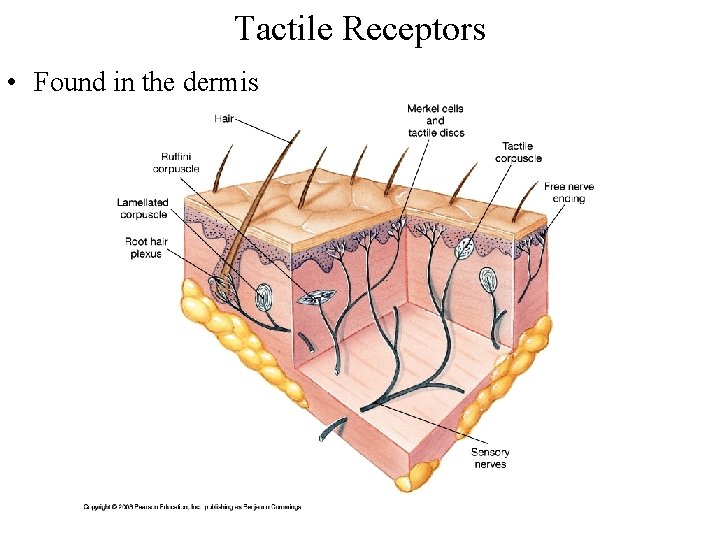
Tactile Receptors • Found in the dermis
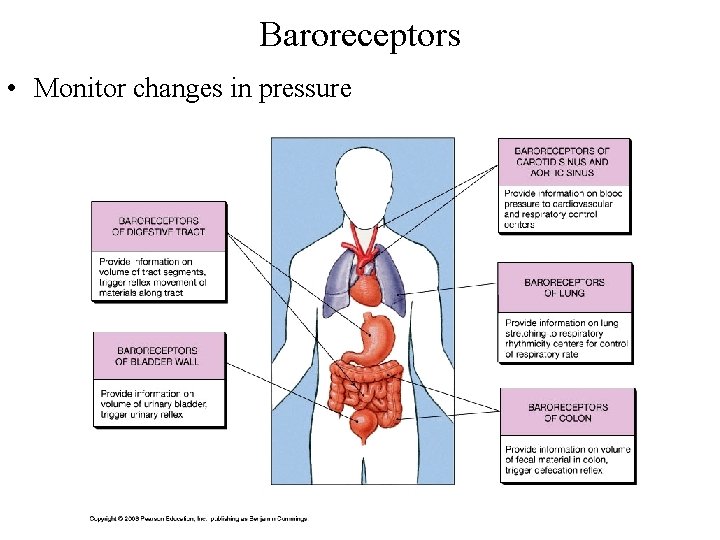
Baroreceptors • Monitor changes in pressure
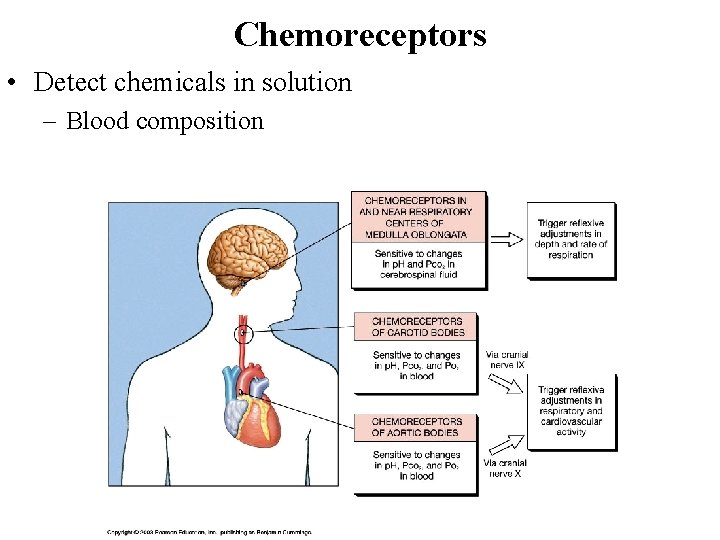
Chemoreceptors • Detect chemicals in solution – Blood composition
The Special Senses
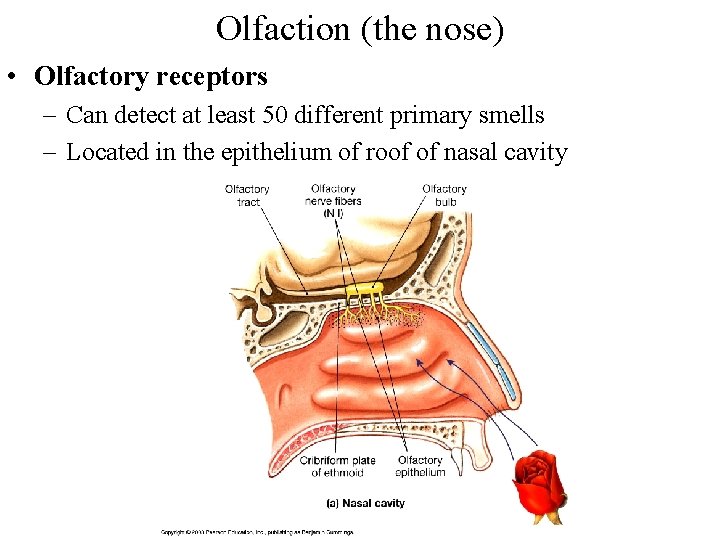
Olfaction (the nose) • Olfactory receptors – Can detect at least 50 different primary smells – Located in the epithelium of roof of nasal cavity
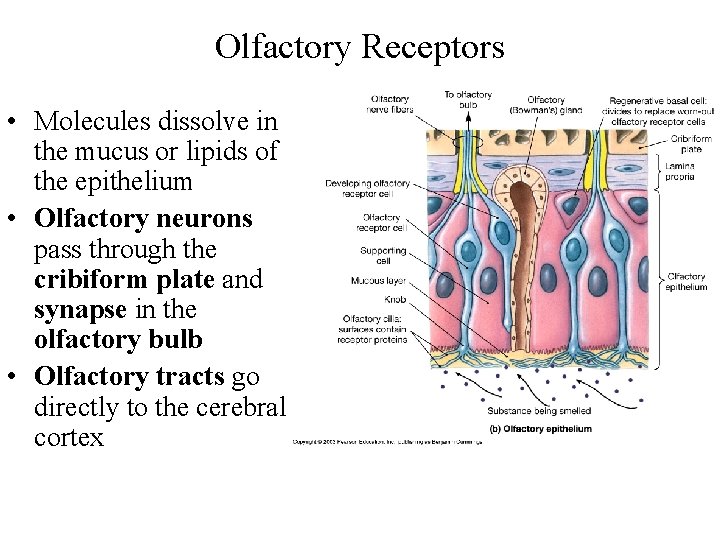
Olfactory Receptors • Molecules dissolve in the mucus or lipids of the epithelium • Olfactory neurons pass through the cribiform plate and synapse in the olfactory bulb • Olfactory tracts go directly to the cerebral cortex
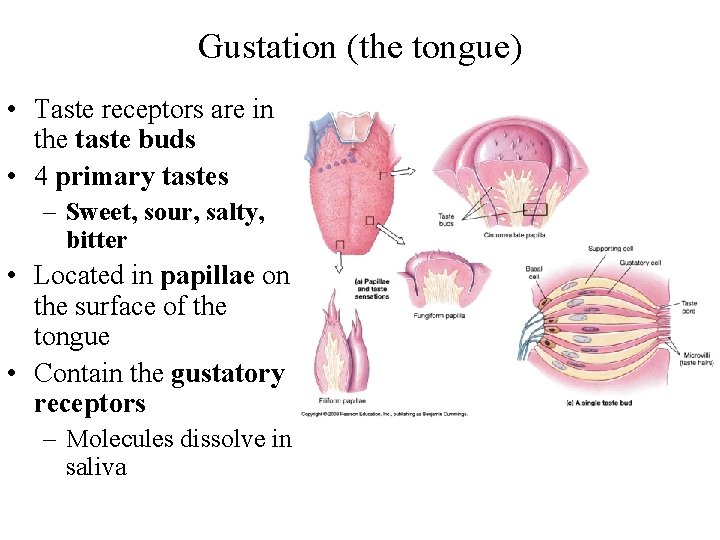
Gustation (the tongue) • Taste receptors are in the taste buds • 4 primary tastes – Sweet, sour, salty, bitter • Located in papillae on the surface of the tongue • Contain the gustatory receptors – Molecules dissolve in saliva
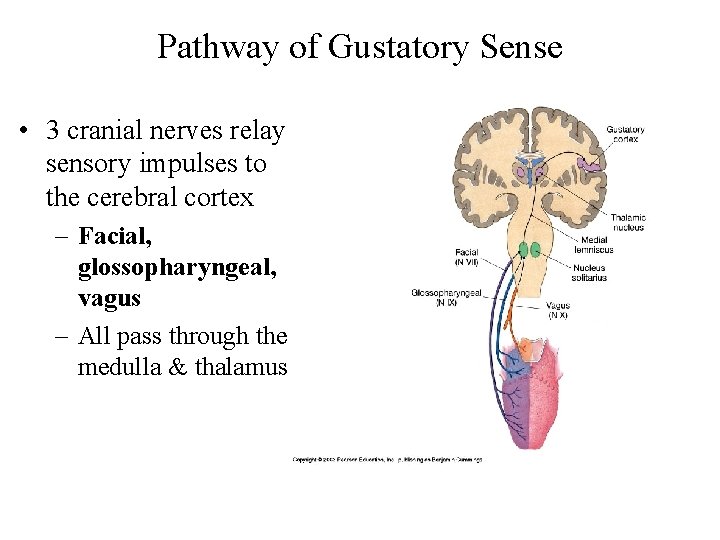
Pathway of Gustatory Sense • 3 cranial nerves relay sensory impulses to the cerebral cortex – Facial, glossopharyngeal, vagus – All pass through the medulla & thalamus
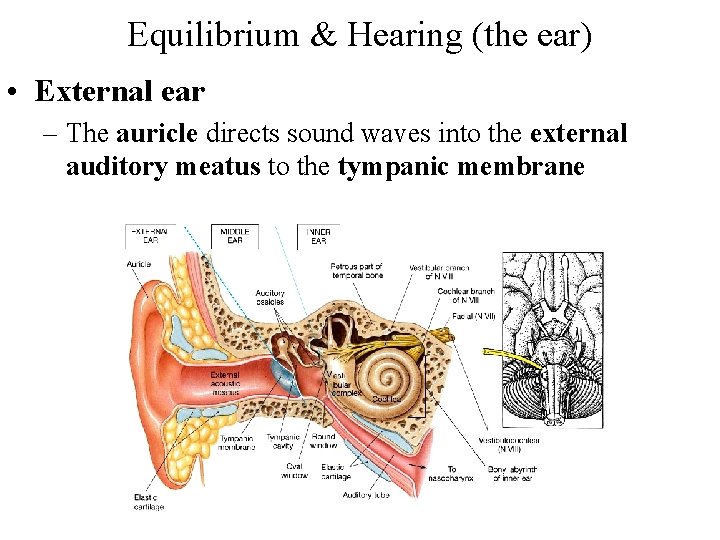
Equilibrium & Hearing (the ear) • External ear – The auricle directs sound waves into the external auditory meatus to the tympanic membrane
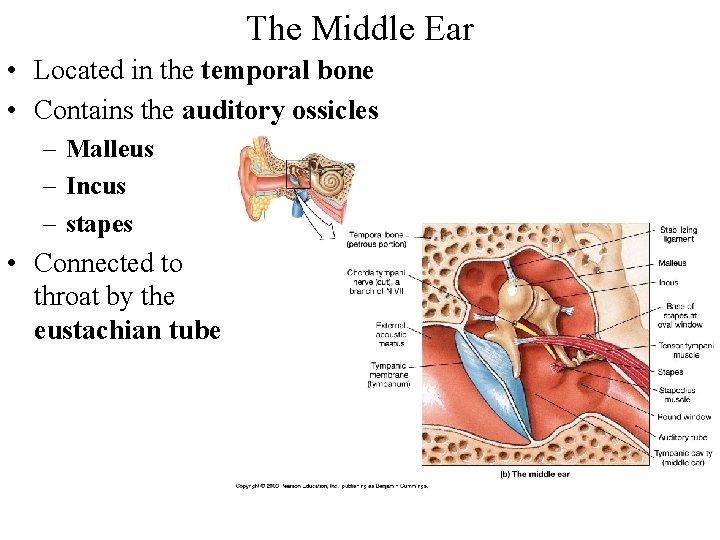
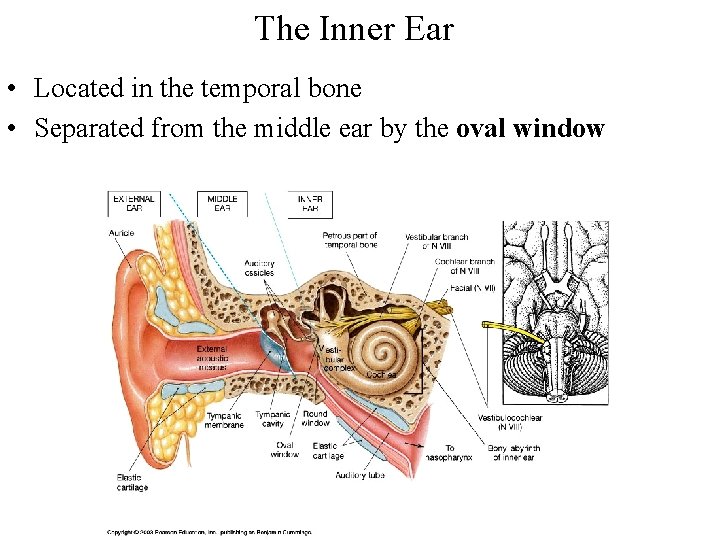
The Middle Ear • Located in the temporal bone • Contains the auditory ossicles – Malleus – Incus – stapes • Connected to throat by the eustachian tube
The Inner Ear • Located in the temporal bone • Separated from the middle ear by the oval window
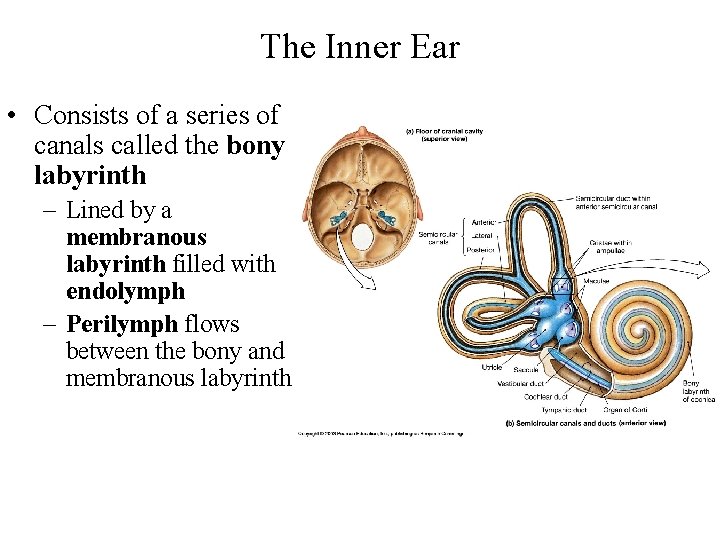
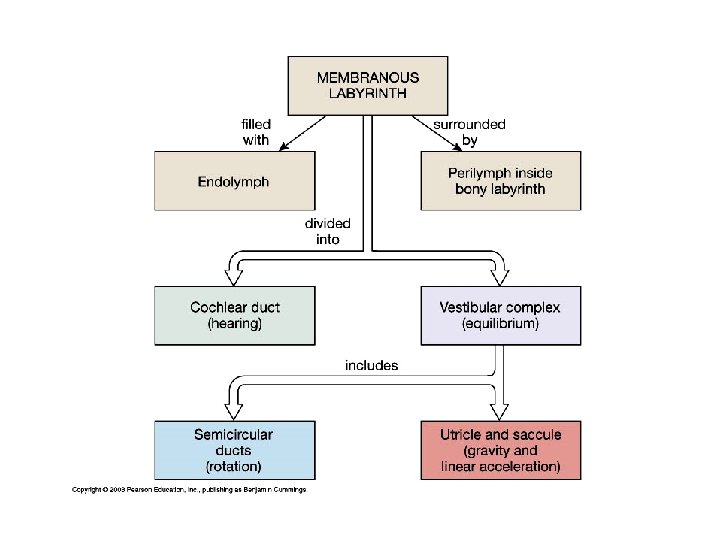
The Inner Ear • Consists of a series of canals called the bony labyrinth – Lined by a membranous labyrinth filled with endolymph – Perilymph flows between the bony and membranous labyrinth
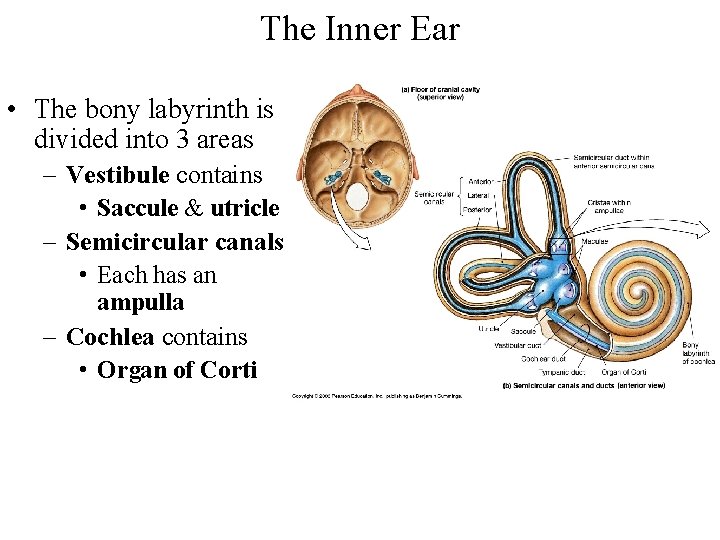
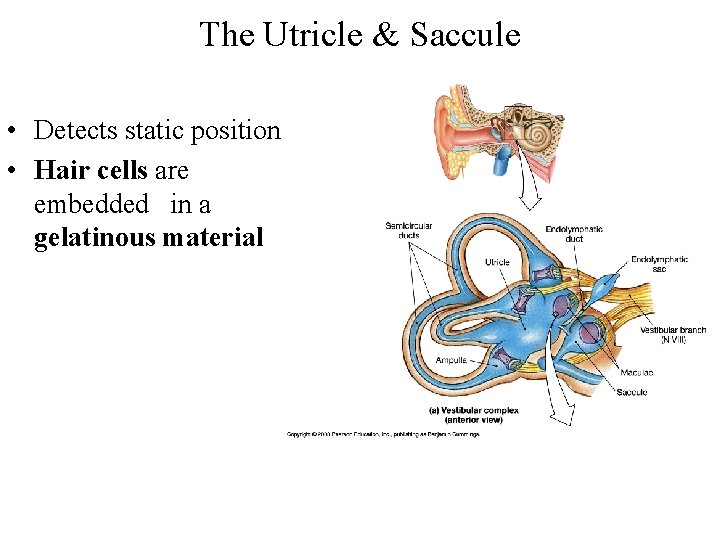
The Inner Ear • The bony labyrinth is divided into 3 areas – Vestibule contains • Saccule & utricle – Semicircular canals • Each has an ampulla – Cochlea contains • Organ of Corti
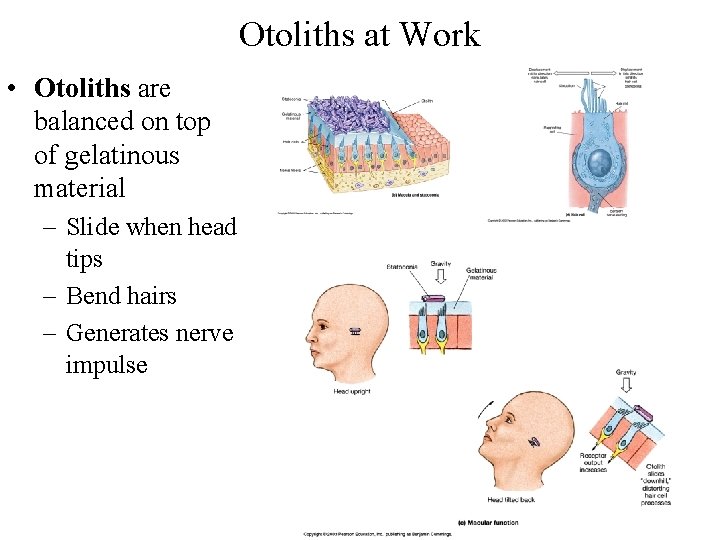
The Utricle & Saccule • Detects static position • Hair cells are embedded in a gelatinous material
Otoliths at Work • Otoliths are balanced on top of gelatinous material – Slide when head tips – Bend hairs – Generates nerve impulse
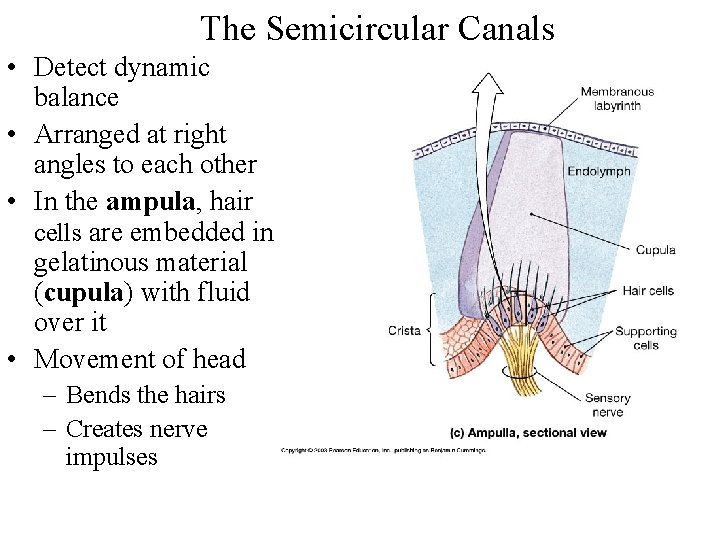
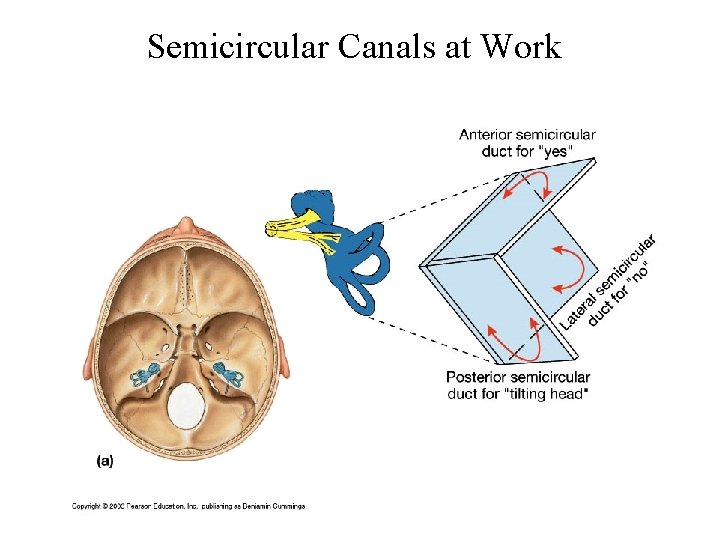
The Semicircular Canals • Detect dynamic balance • Arranged at right angles to each other • In the ampula, hair cells are embedded in gelatinous material (cupula) with fluid over it • Movement of head – Bends the hairs – Creates nerve impulses
Semicircular Canals at Work
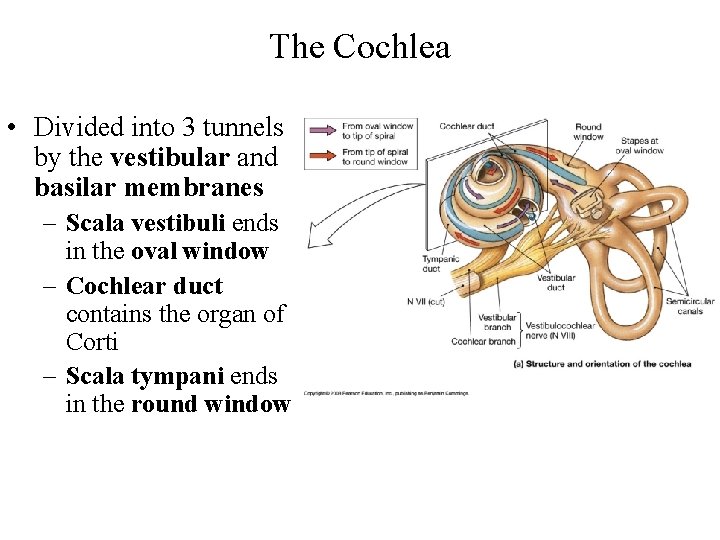
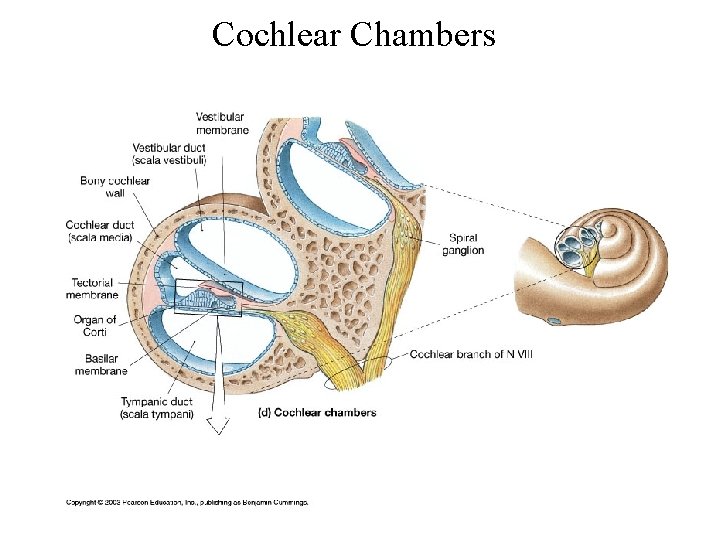
The Cochlea • Divided into 3 tunnels by the vestibular and basilar membranes – Scala vestibuli ends in the oval window – Cochlear duct contains the organ of Corti – Scala tympani ends in the round window
Cochlear Chambers
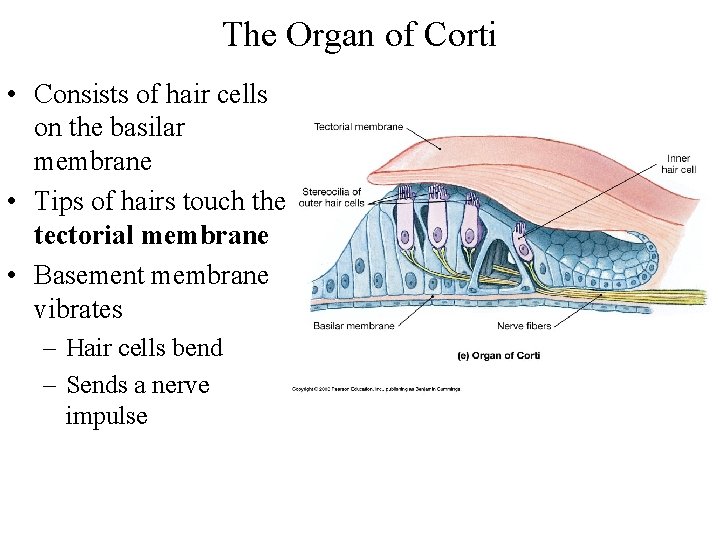
The Organ of Corti • Consists of hair cells on the basilar membrane • Tips of hairs touch the tectorial membrane • Basement membrane vibrates – Hair cells bend – Sends a nerve impulse
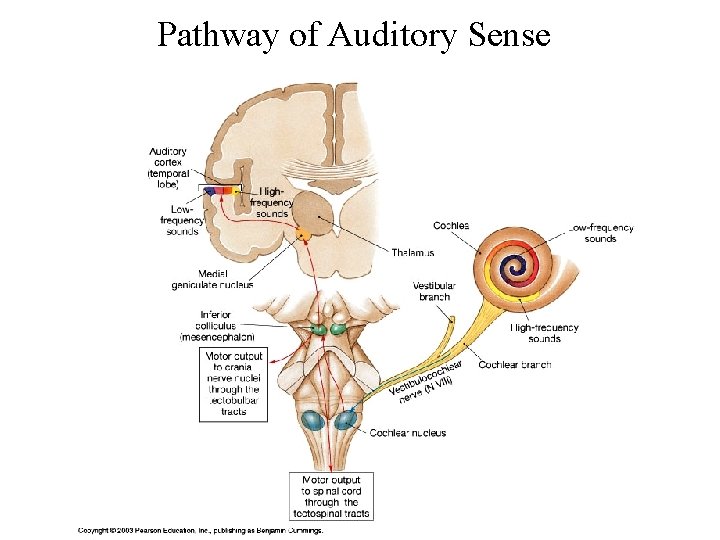
Pathway of Auditory Sense
Summary of Hearing • • • Sound waves enter the external auditory meatus Tympanic membrane vibrates Auditory ossicles vibrate Oval window vibrates Perilymph in scala vestibuli & scala tympani moves • Basilar membrane moves • Hairs rub against the tectorial membrane • Nerve impulse is sent along the vestibulocochlear nerve to the brain
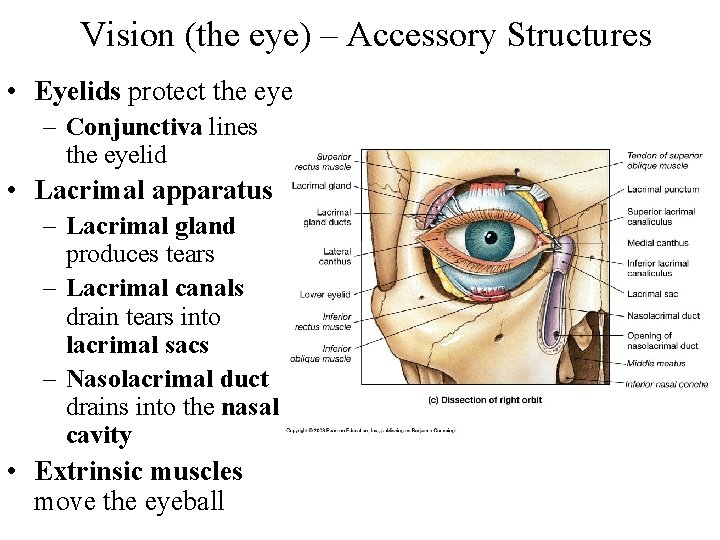
Vision (the eye) – Accessory Structures • Eyelids protect the eye – Conjunctiva lines the eyelid • Lacrimal apparatus – Lacrimal gland produces tears – Lacrimal canals drain tears into lacrimal sacs – Nasolacrimal duct drains into the nasal cavity • Extrinsic muscles move the eyeball
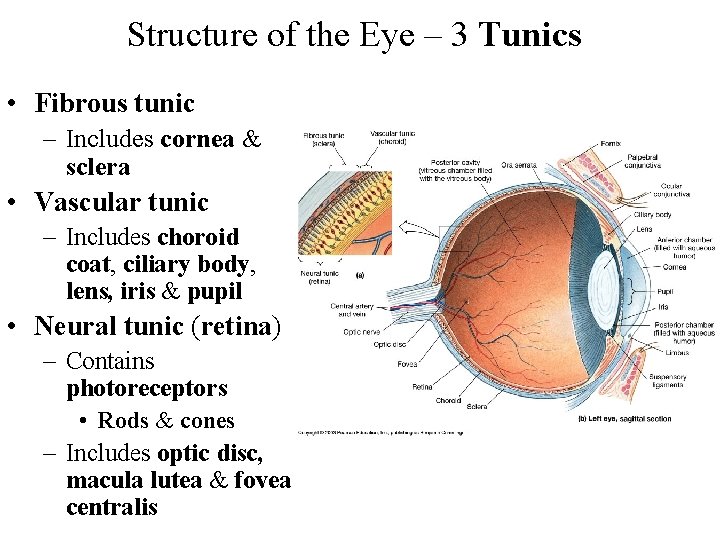
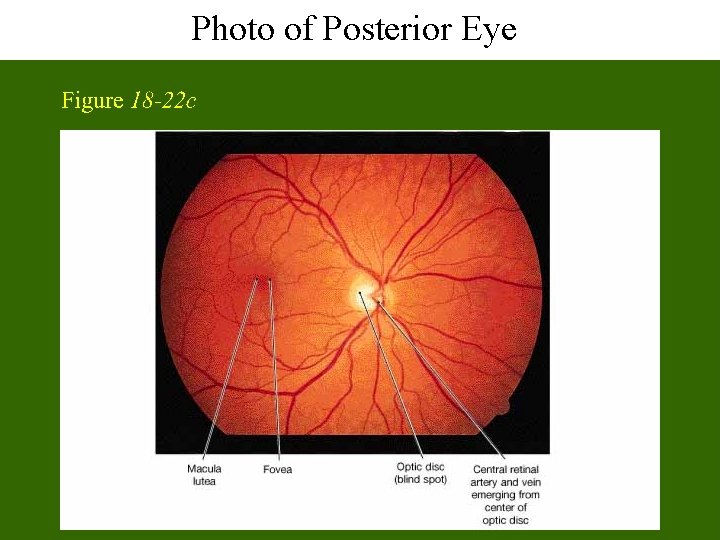
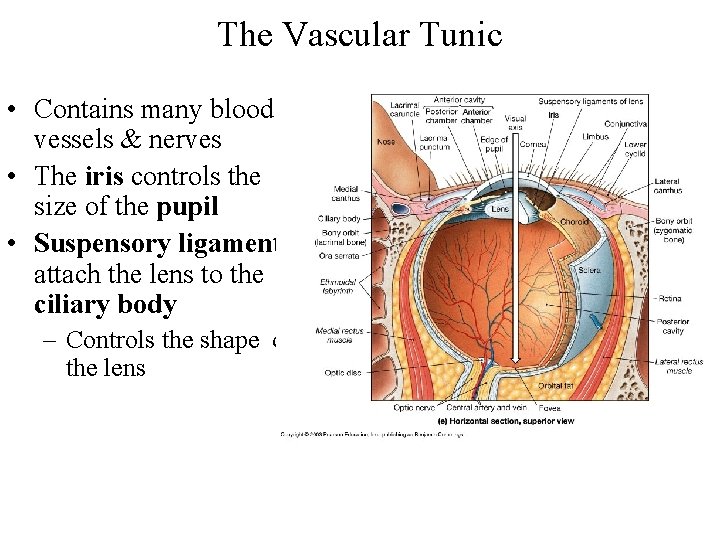
Structure of the Eye – 3 Tunics • Fibrous tunic – Includes cornea & sclera • Vascular tunic – Includes choroid coat, ciliary body, lens, iris & pupil • Neural tunic (retina) – Contains photoreceptors • Rods & cones – Includes optic disc, macula lutea & fovea centralis
Photo of Posterior Eye
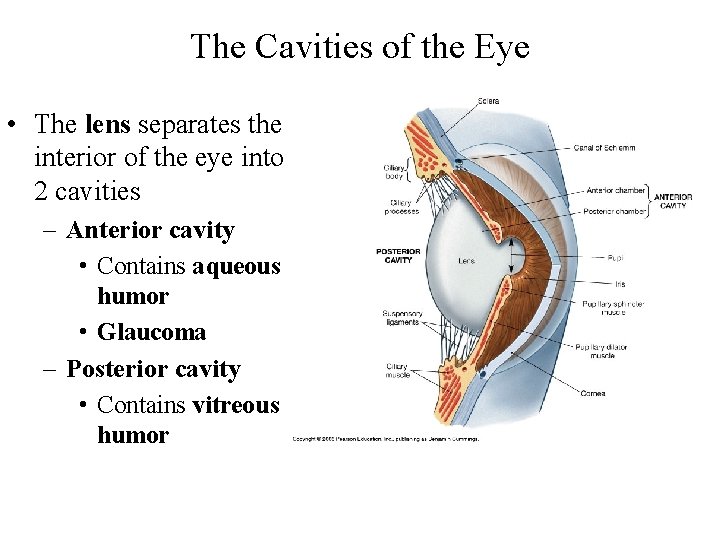
The Cavities of the Eye • The lens separates the interior of the eye into 2 cavities – Anterior cavity • Contains aqueous humor • Glaucoma – Posterior cavity • Contains vitreous humor
The Vascular Tunic • Contains many blood vessels & nerves • The iris controls the size of the pupil • Suspensory ligaments attach the lens to the ciliary body – Controls the shape of the lens
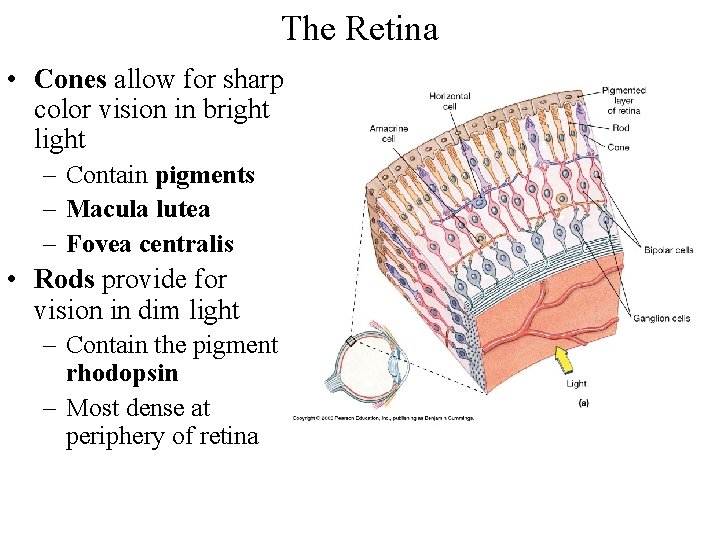
The Retina • Cones allow for sharp color vision in bright light – Contain pigments – Macula lutea – Fovea centralis • Rods provide for vision in dim light – Contain the pigment rhodopsin – Most dense at periphery of retina
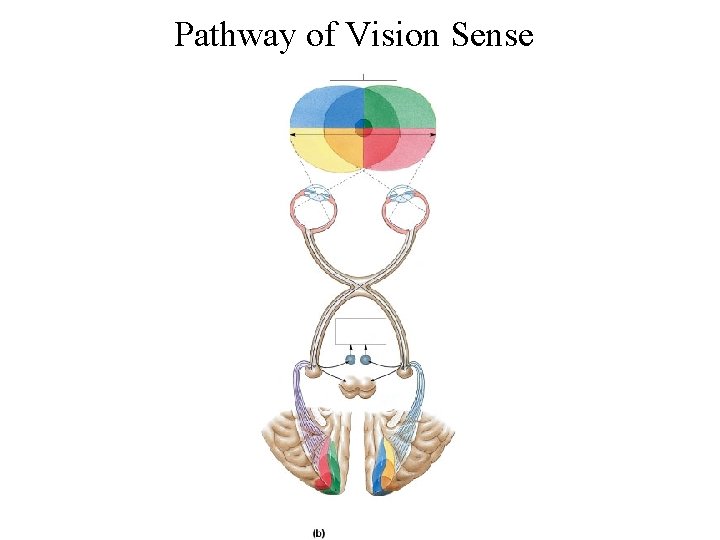
Pathway of Vision Sense
Summary of Vision • Light rays enters through the pupil • Light rays cross in the lens • Retina receives reversed & upside down image • Rods & cones are stimulated • Optic nerve carries impulse to the brain
Abnormal Vision • • Myopia Hyperopia Presbyopia Astigmatism