
The General Linear Model GLM Dr Frederike Petzschner
- Slides: 40
The General Linear Model (GLM) Dr. Frederike Petzschner Translational Neuromodeling Unit (TNU) Institute for Biomedical Engineering, University of Zurich & ETH Zurich With many thanks for slides & images to: FIL Methods group, Virginia Flanagin and Klaas Enno Stephan Translational Neuromodeling Unit
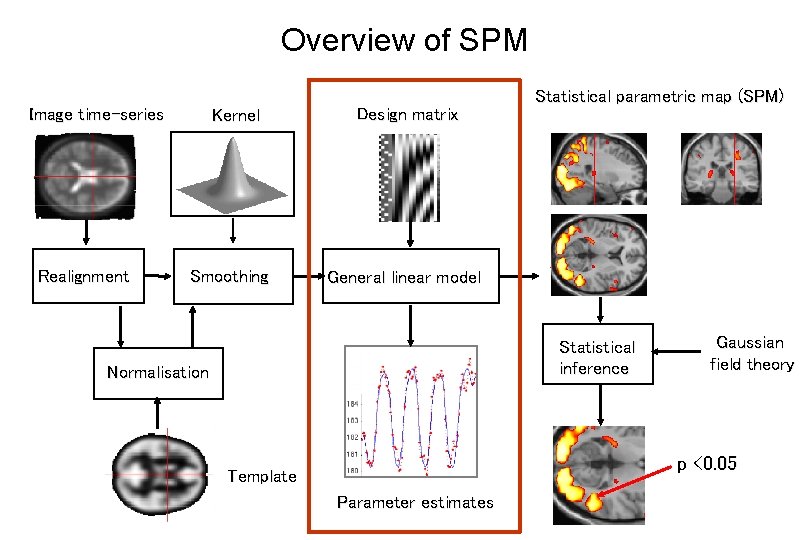
Overview of SPM Image time-series Realignment Kernel Smoothing Design matrix Statistical parametric map (SPM) General linear model Statistical inference Normalisation Gaussian field theory p <0. 05 Template Parameter estimates
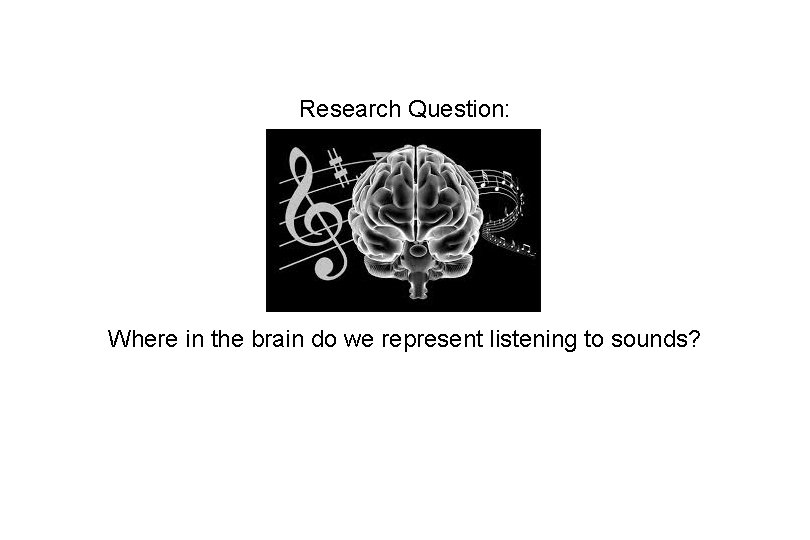
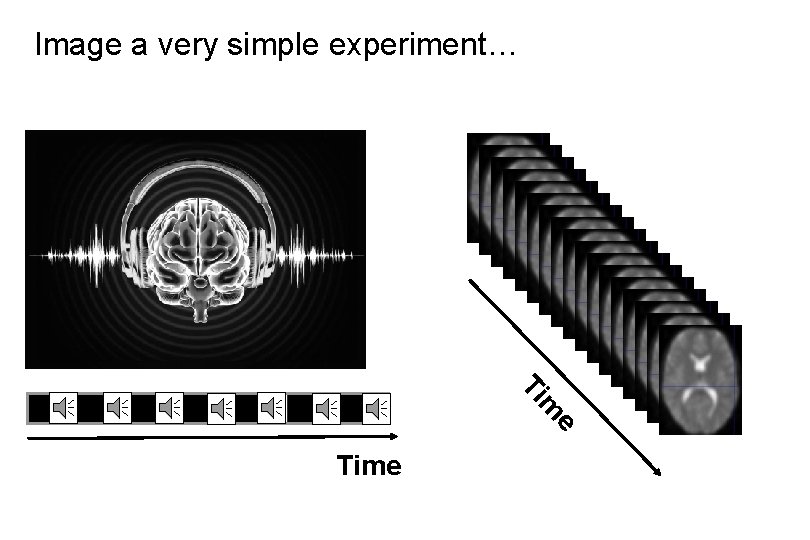
Research Question: Where in the brain do we represent listening to sounds?
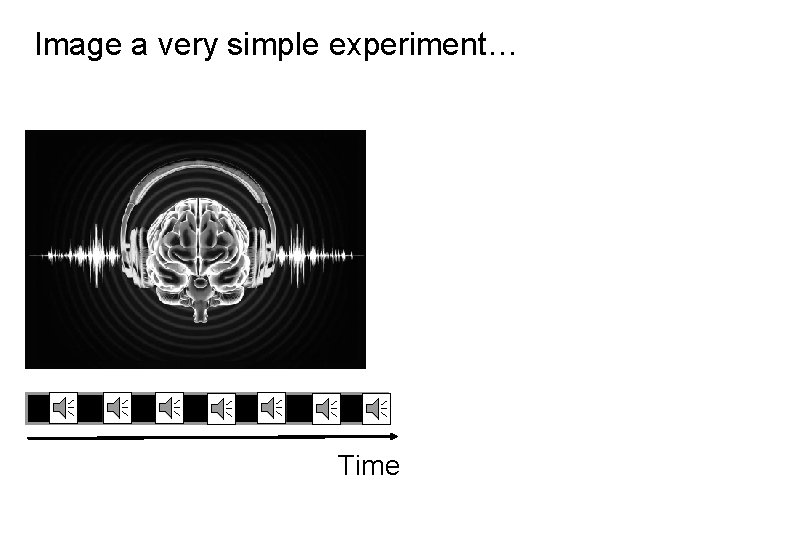
Image a very simple experiment… Time
Image a very simple experiment… e m Ti Time
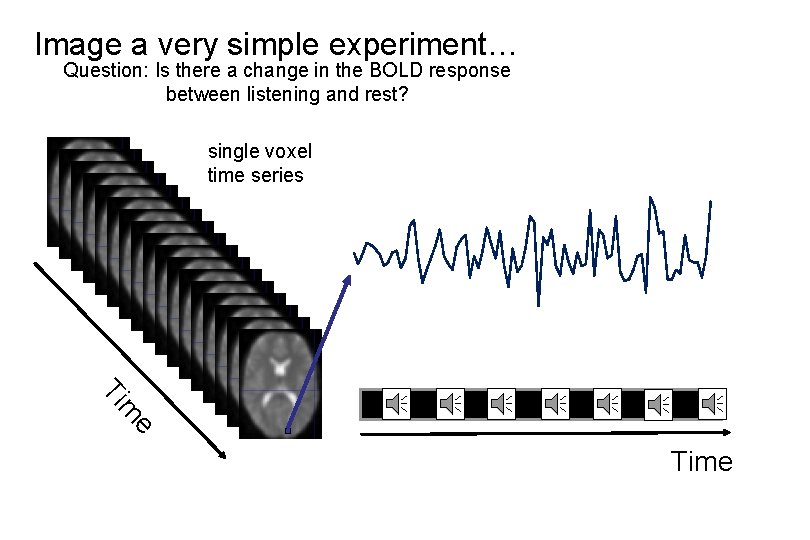
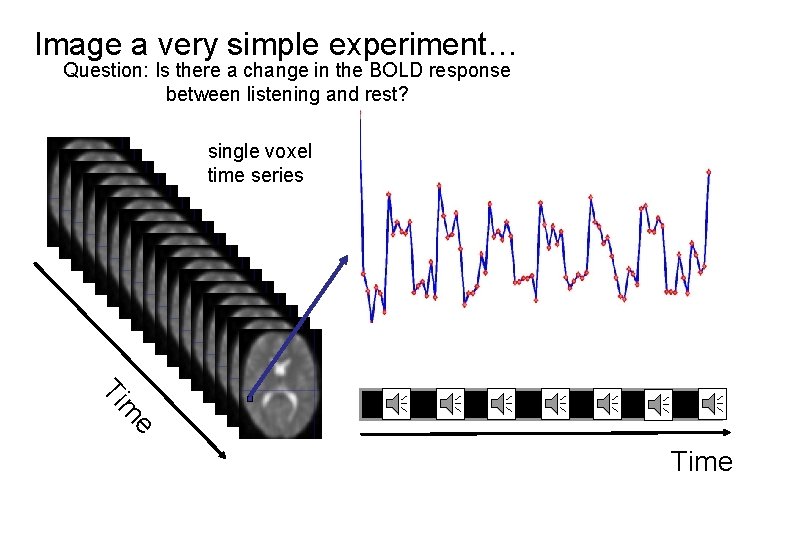
Image a very simple experiment… Question: Is there a change in the BOLD response between listening and rest? single voxel time series e m Ti Time
Image a very simple experiment… Question: Is there a change in the BOLD response between listening and rest? single voxel time series e m Ti Time
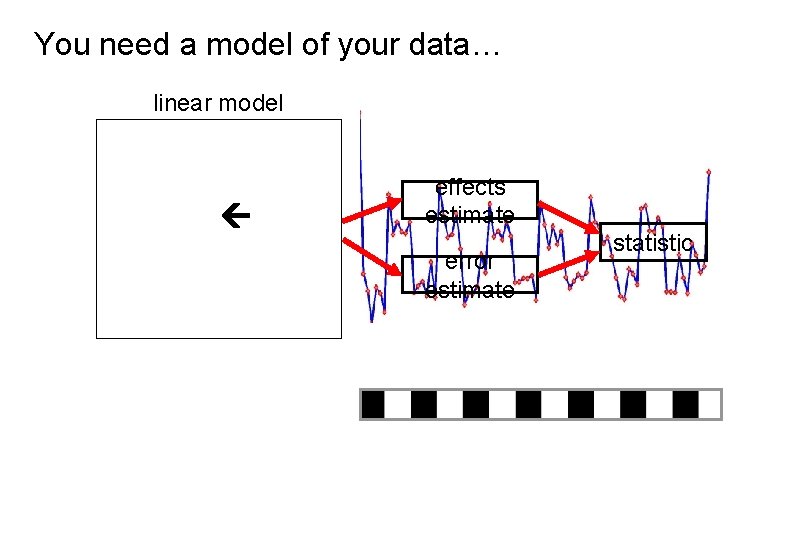
You need a model of your data… linear model effects estimate error estimate statistic
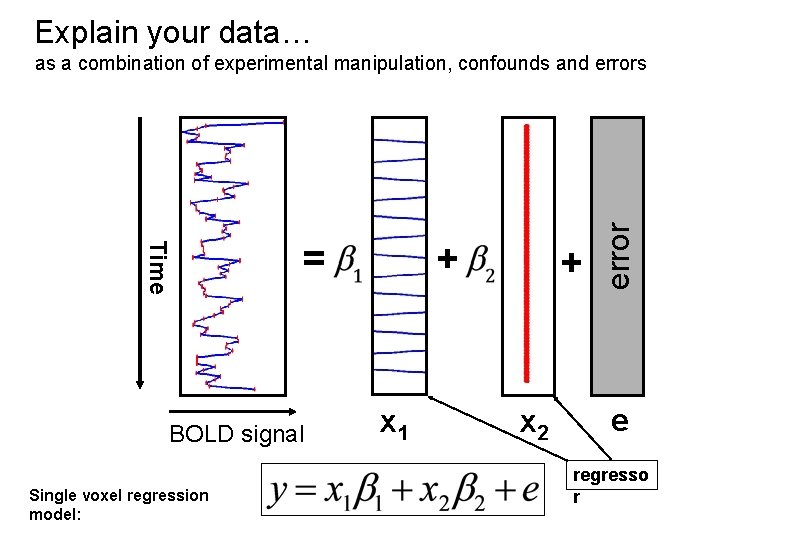
Explain your data… Time = BOLD signal Single voxel regression model: + x 1 + x 2 error as a combination of experimental manipulation, confounds and errors e regresso r
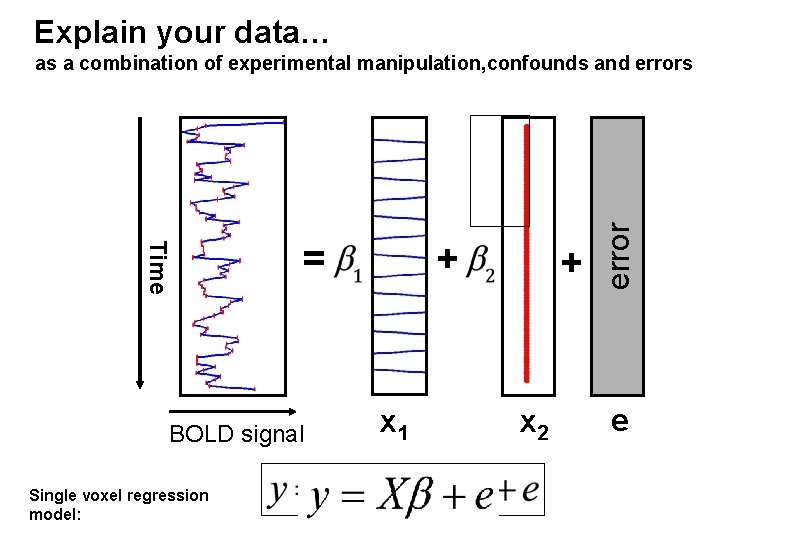
Explain your data… Time = BOLD signal Single voxel regression model: + x 1 + x 2 error as a combination of experimental manipulation, confounds and errors e
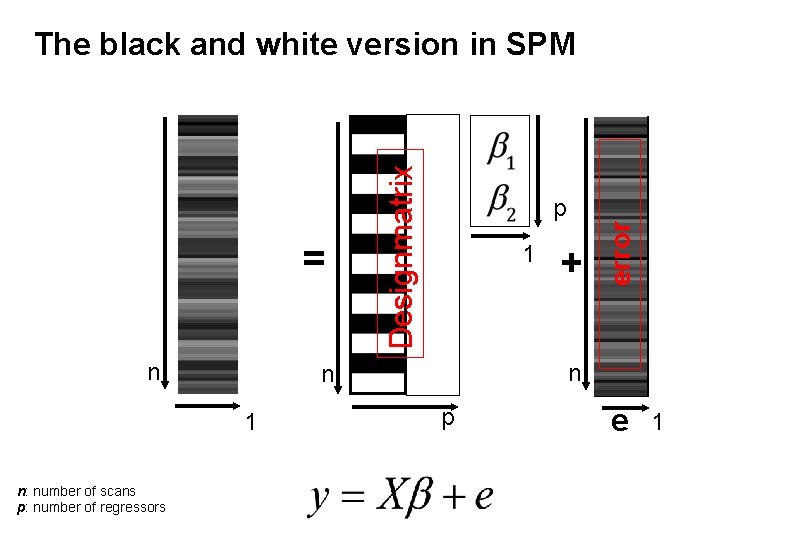
n + 1 + n n 1 n: number of scans p: number of regressors p error = Designmatrix The black and white version in SPM p e 1
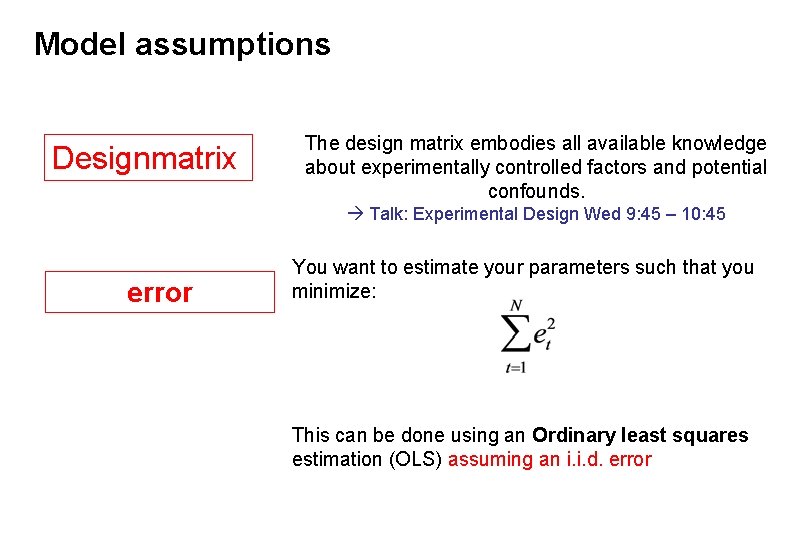
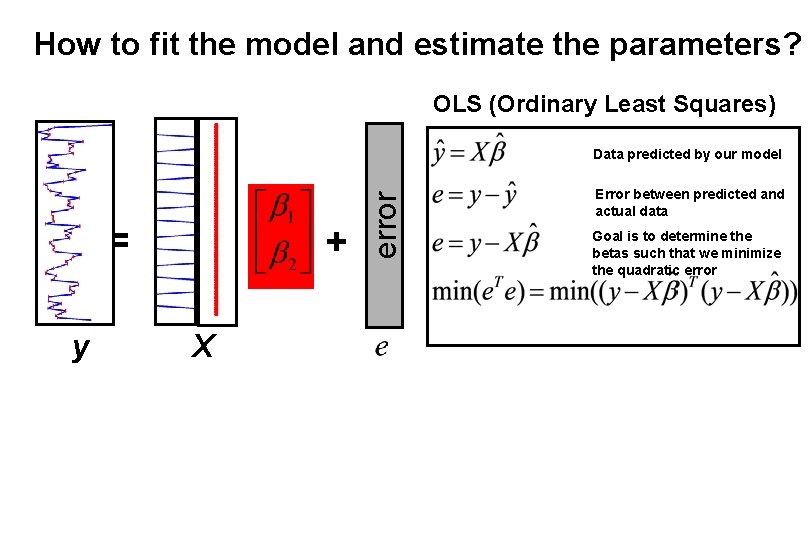
Model assumptions Designmatrix The design matrix embodies all available knowledge about experimentally controlled factors and potential confounds. Talk: Experimental Design Wed 9: 45 – 10: 45 error You want to estimate your parameters such that you minimize: This can be done using an Ordinary least squares estimation (OLS) assuming an i. i. d. error
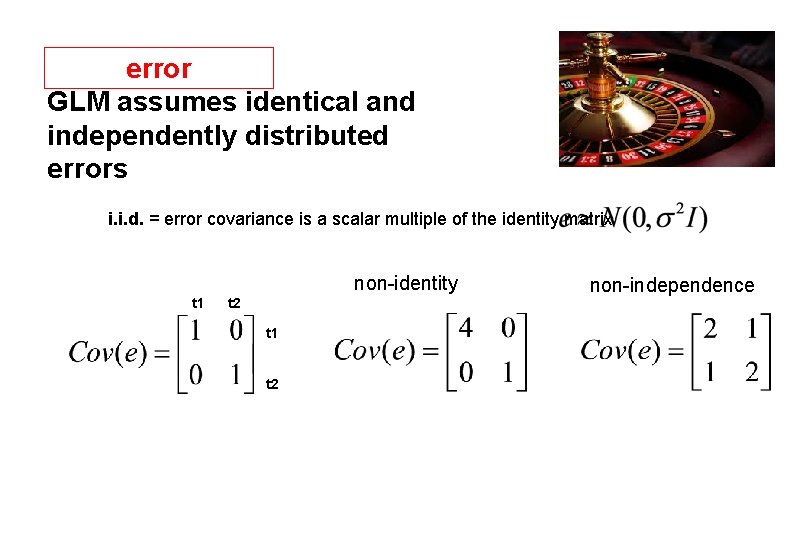
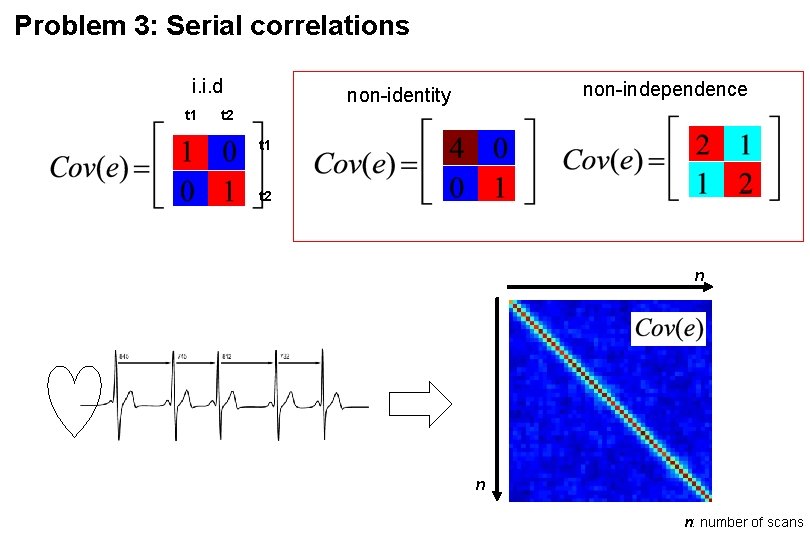
error GLM assumes identical and independently distributed errors i. i. d. = error covariance is a scalar multiple of the identity matrix non-identity t 1 t 2 non-independence
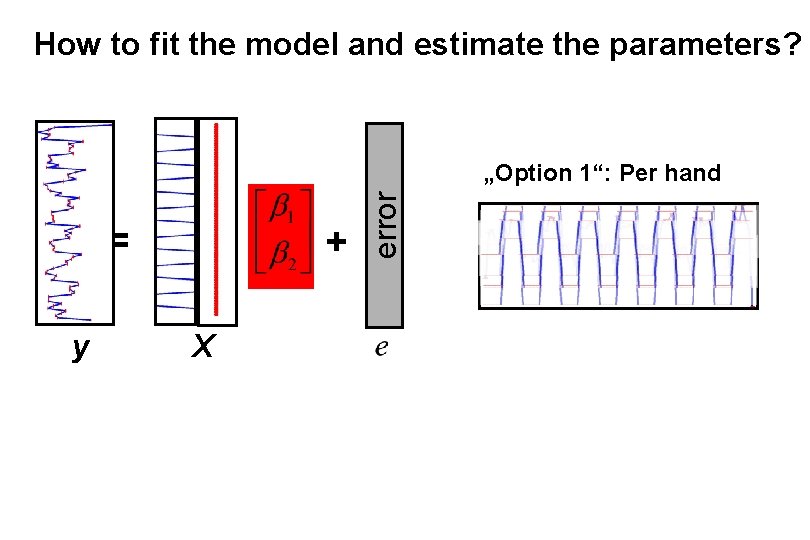
How to fit the model and estimate the parameters? = y + X error „Option 1“: Per hand
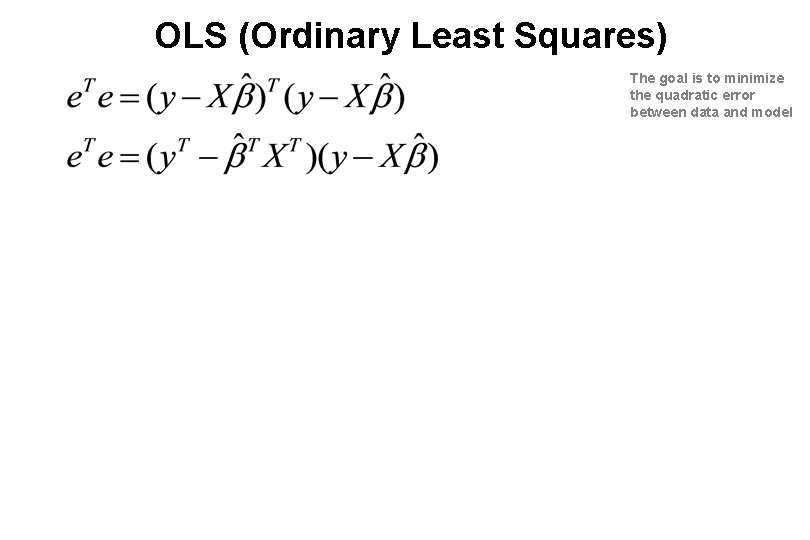
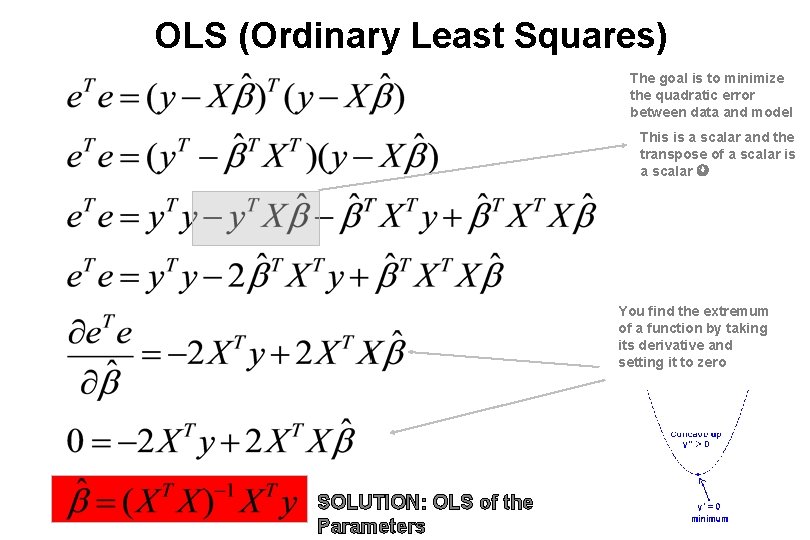
How to fit the model and estimate the parameters? OLS (Ordinary Least Squares) = y + X error Data predicted by our model Error between predicted and actual data Goal is to determine the betas such that we minimize the quadratic error
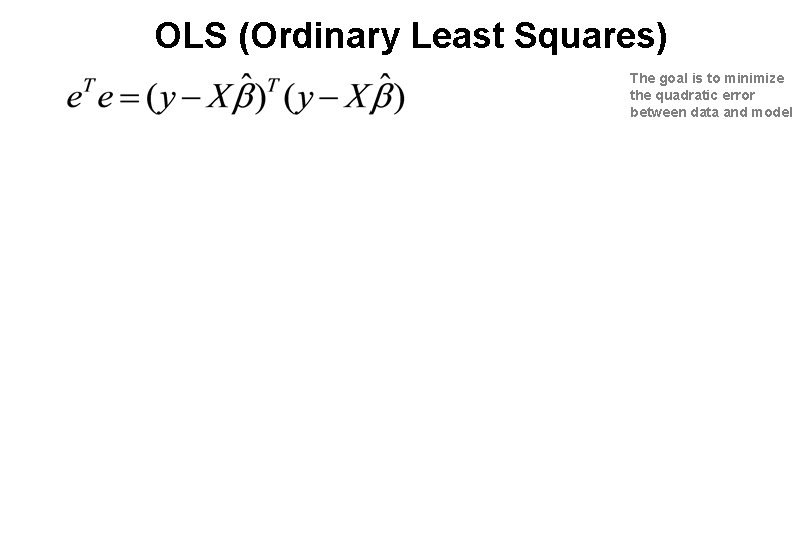
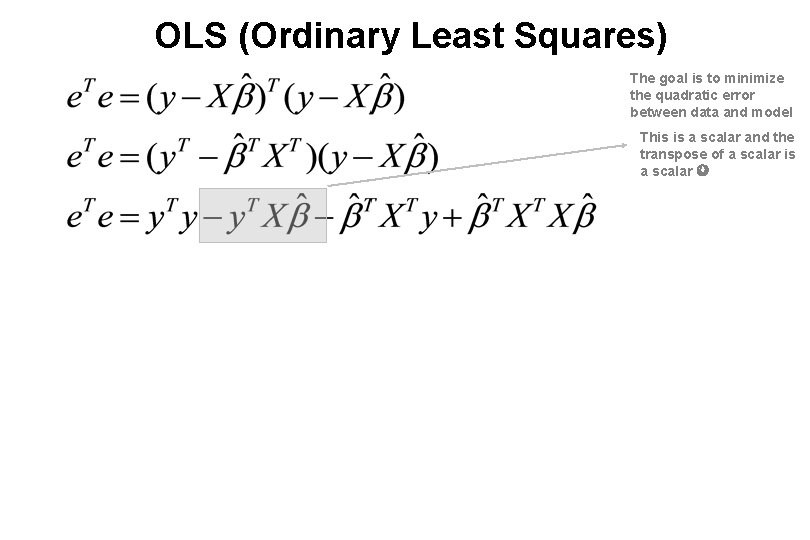
OLS (Ordinary Least Squares) The goal is to minimize the quadratic error between data and model
OLS (Ordinary Least Squares) The goal is to minimize the quadratic error between data and model
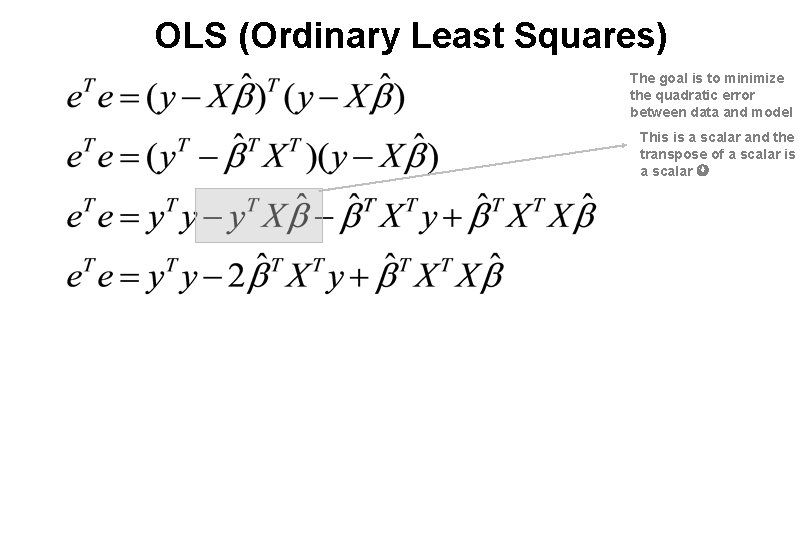
OLS (Ordinary Least Squares) The goal is to minimize the quadratic error between data and model This is a scalar and the transpose of a scalar is a scalar
OLS (Ordinary Least Squares) The goal is to minimize the quadratic error between data and model This is a scalar and the transpose of a scalar is a scalar
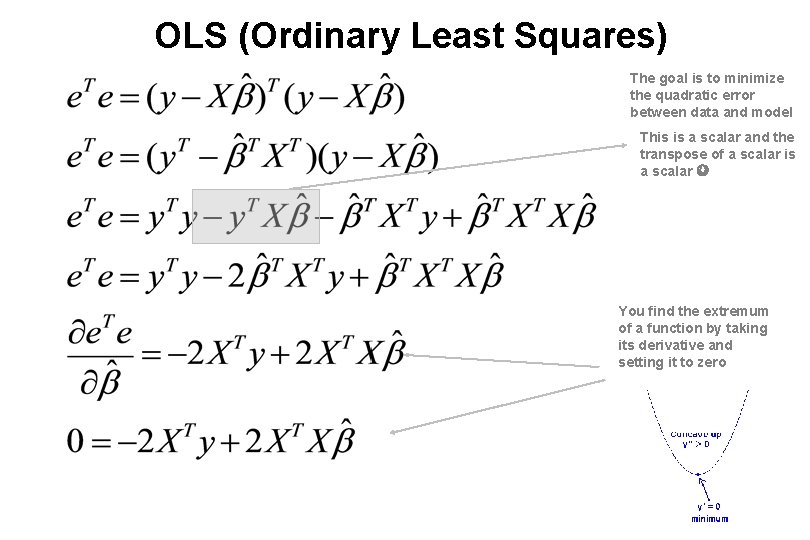
OLS (Ordinary Least Squares) The goal is to minimize the quadratic error between data and model This is a scalar and the transpose of a scalar is a scalar You find the extremum of a function by taking its derivative and setting it to zero
OLS (Ordinary Least Squares) The goal is to minimize the quadratic error between data and model This is a scalar and the transpose of a scalar is a scalar You find the extremum of a function by taking its derivative and setting it to zero SOLUTION: OLS of the Parameters
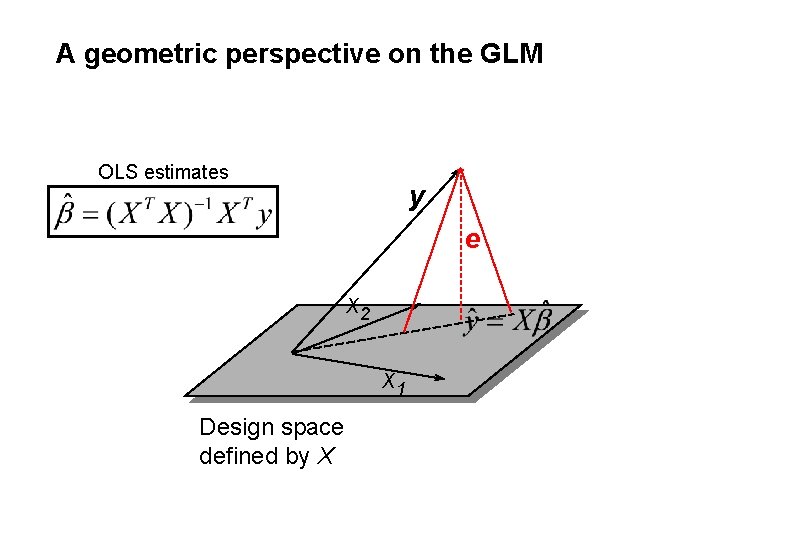
A geometric perspective on the GLM OLS estimates y e x 2 x 1 Design space defined by X
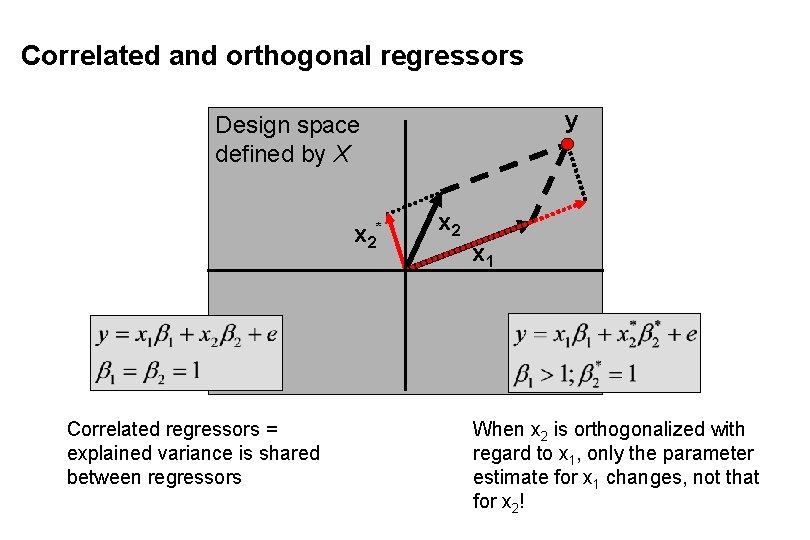
Correlated and orthogonal regressors y Design space defined by X x 2* Correlated regressors = explained variance is shared between regressors x 2 x 1 When x 2 is orthogonalized with regard to x 1, only the parameter estimate for x 1 changes, not that for x 2!
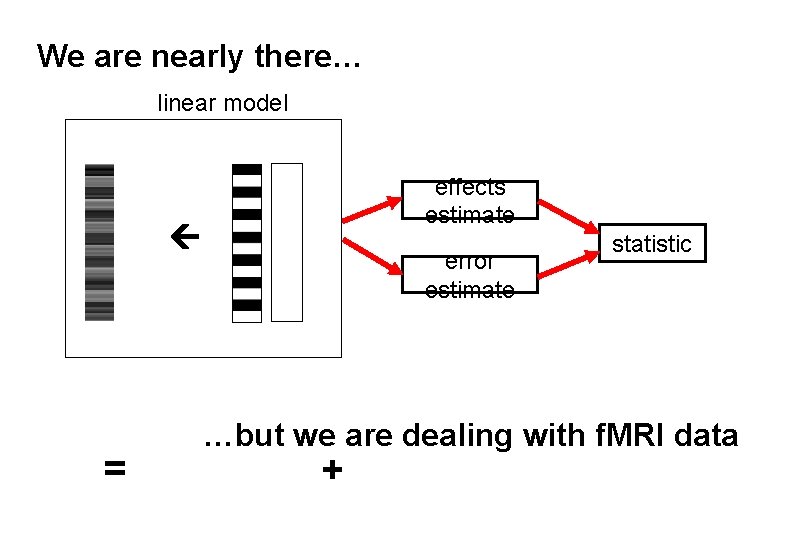
We are nearly there… linear model effects estimate = error estimate statistic …but we are dealing with f. MRI data +
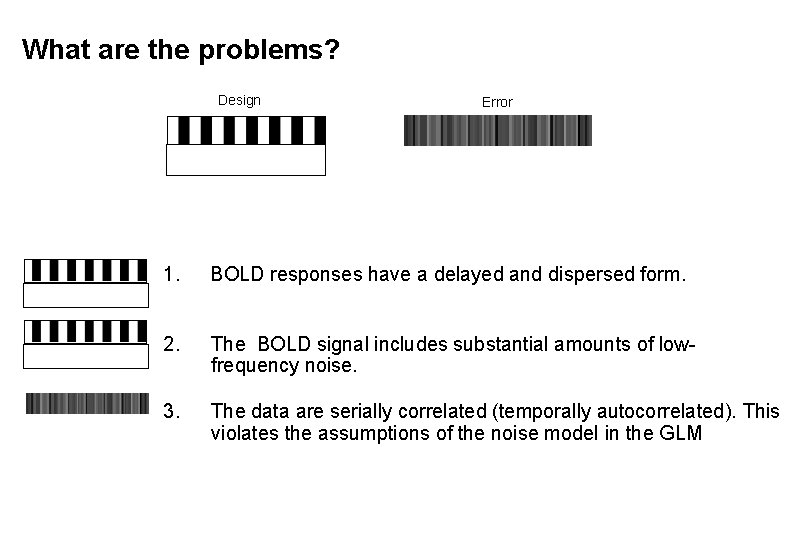
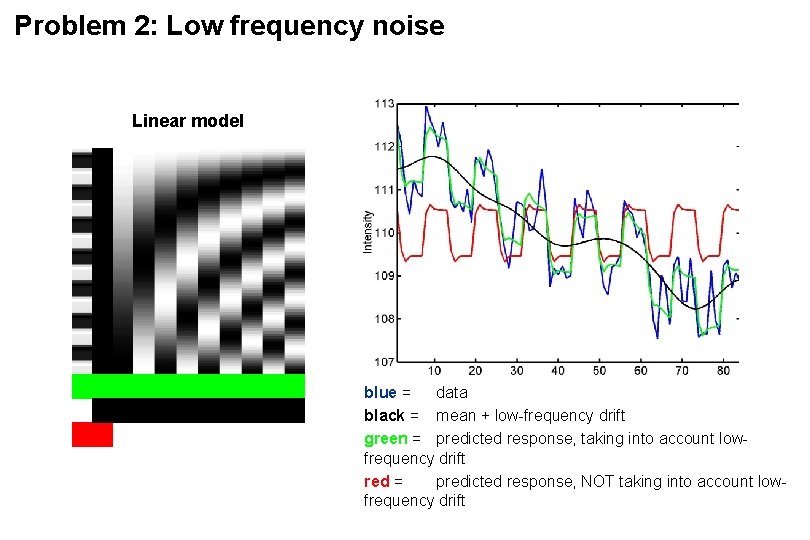
What are the problems? Design Error 1. BOLD responses have a delayed and dispersed form. 2. The BOLD signal includes substantial amounts of lowfrequency noise. 3. The data are serially correlated (temporally autocorrelated). This violates the assumptions of the noise model in the GLM
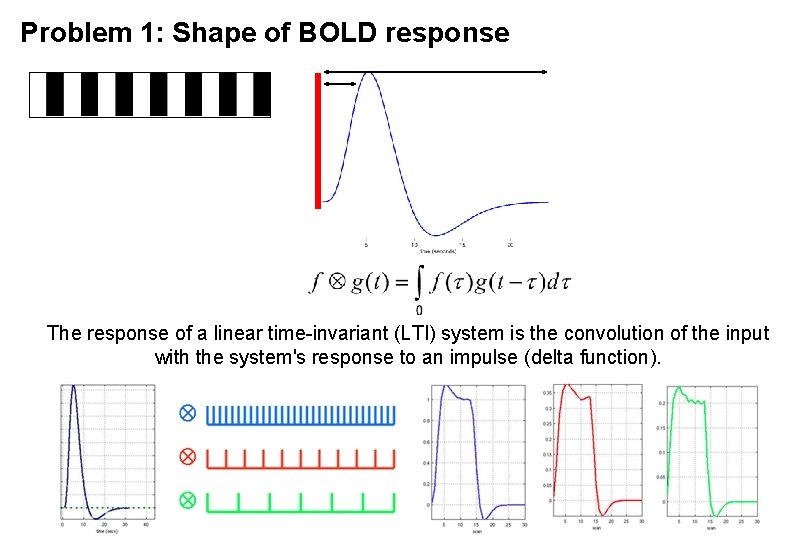
Problem 1: Shape of BOLD response The response of a linear time-invariant (LTI) system is the convolution of the input with the system's response to an impulse (delta function).
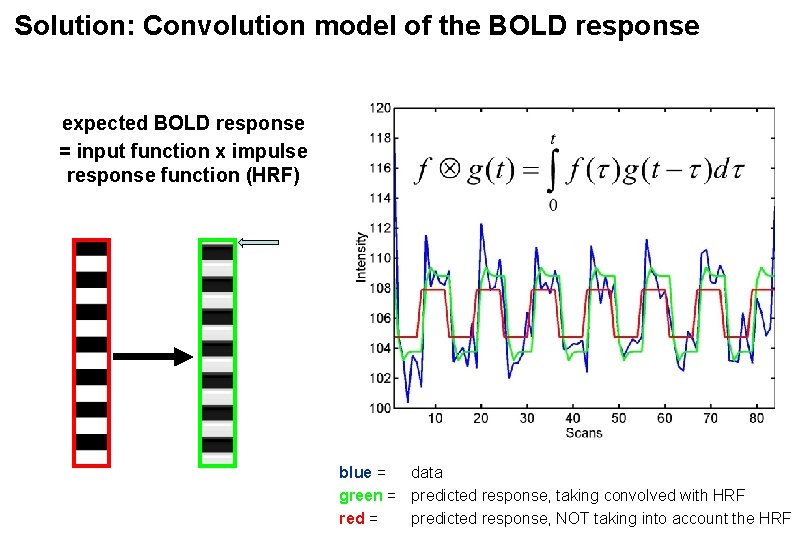
Solution: Convolution model of the BOLD response expected BOLD response = input function x impulse response function (HRF) blue = data green = predicted response, taking convolved with HRF red = predicted response, NOT taking into account the HRF
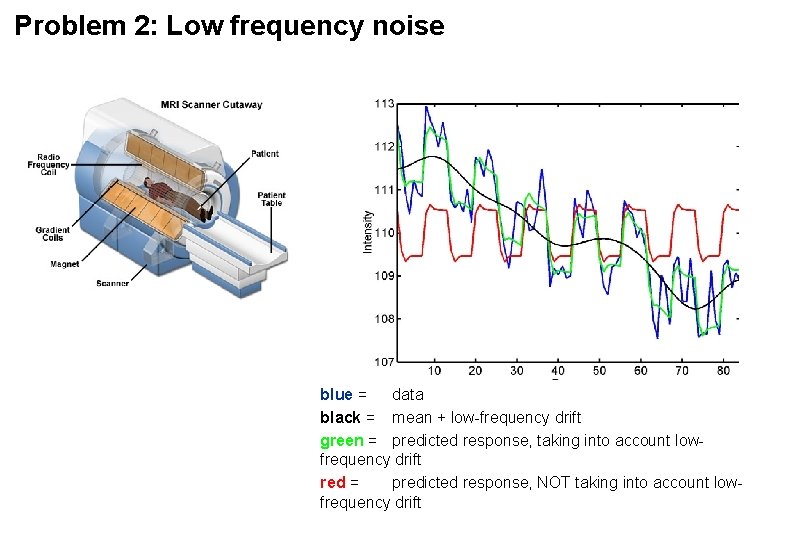
Problem 2: Low frequency noise blue = data black = mean + low-frequency drift green = predicted response, taking into account lowfrequency drift red = predicted response, NOT taking into account lowfrequency drift
Problem 2: Low frequency noise Linear model blue = data black = mean + low-frequency drift green = predicted response, taking into account lowfrequency drift red = predicted response, NOT taking into account lowfrequency drift
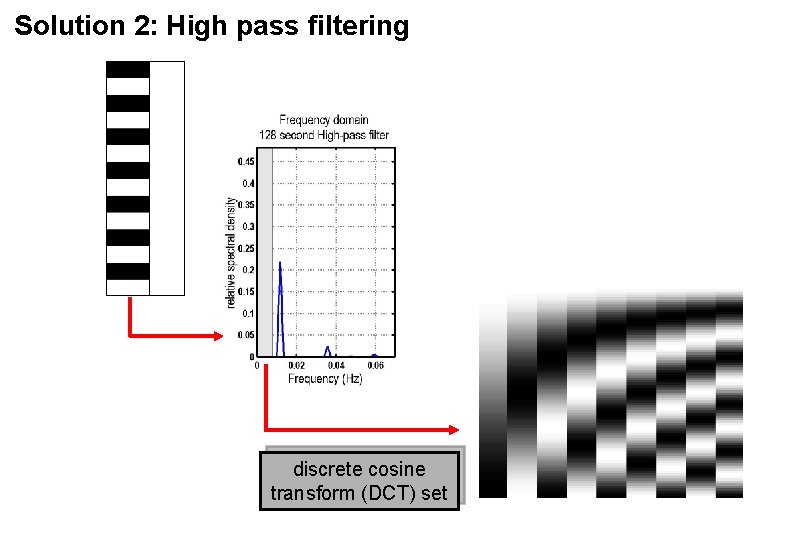
Solution 2: High pass filtering discrete cosine transform (DCT) set
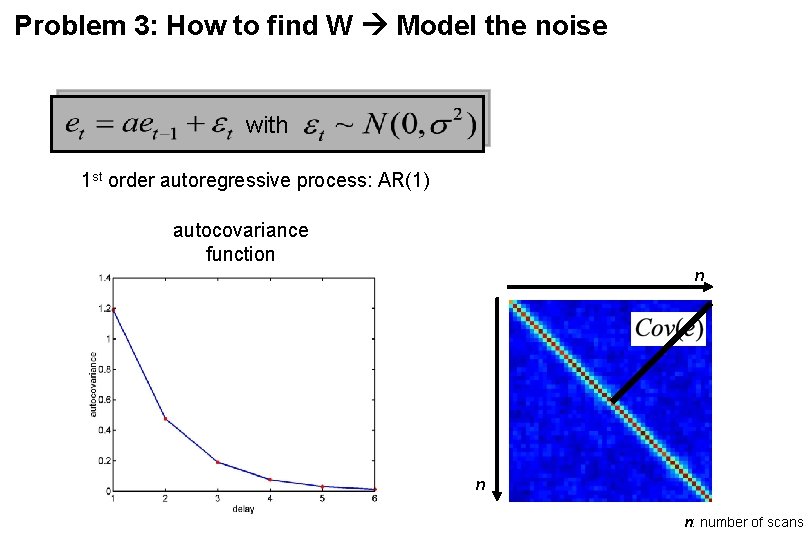
Problem 3: Serial correlations i. i. d t 1 non-independence non-identity t 2 t 1 t 2 n n n: number of scans
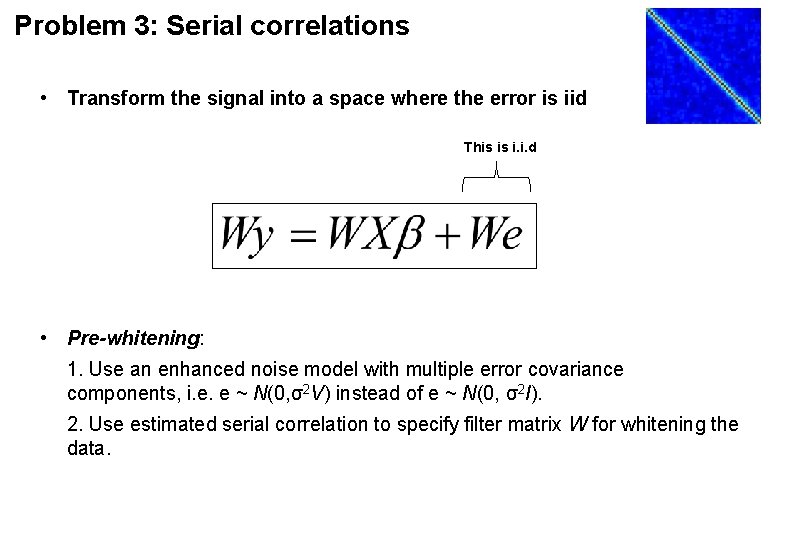
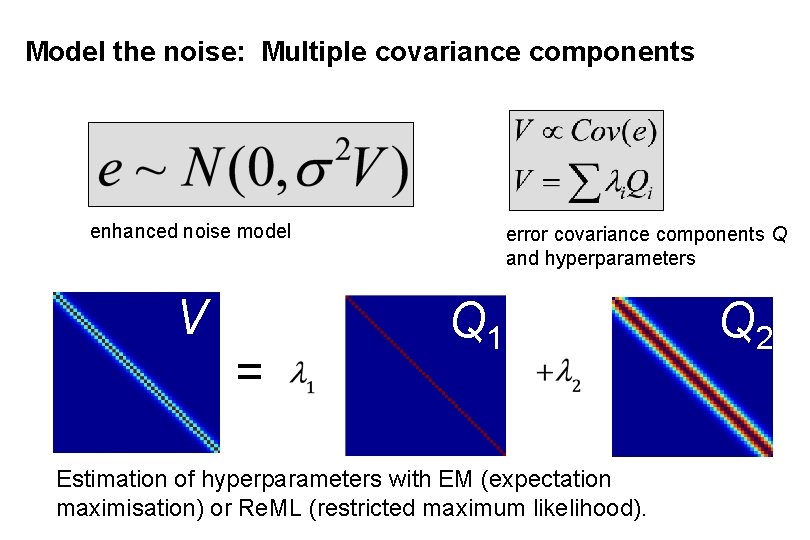
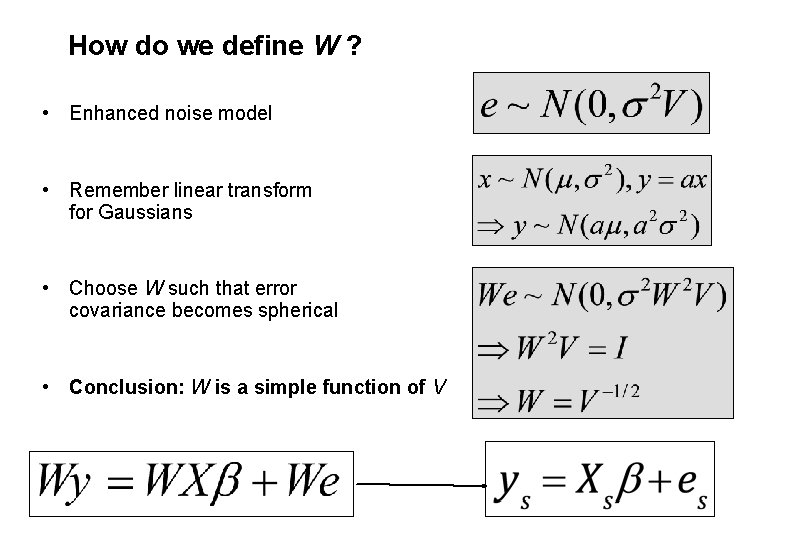
Problem 3: Serial correlations • Transform the signal into a space where the error is iid This is i. i. d • Pre-whitening: 1. Use an enhanced noise model with multiple error covariance components, i. e. e ~ N(0, σ2 V) instead of e ~ N(0, σ2 I). 2. Use estimated serial correlation to specify filter matrix W for whitening the data.
Problem 3: How to find W Model the noise with 1 st order autoregressive process: AR(1) autocovariance function n n n: number of scans
Model the noise: Multiple covariance components enhanced noise model V = error covariance components Q and hyperparameters Q 1 Estimation of hyperparameters with EM (expectation maximisation) or Re. ML (restricted maximum likelihood). Q 2
How do we define W ? • Enhanced noise model • Remember linear transform for Gaussians • Choose W such that error covariance becomes spherical • Conclusion: W is a simple function of V
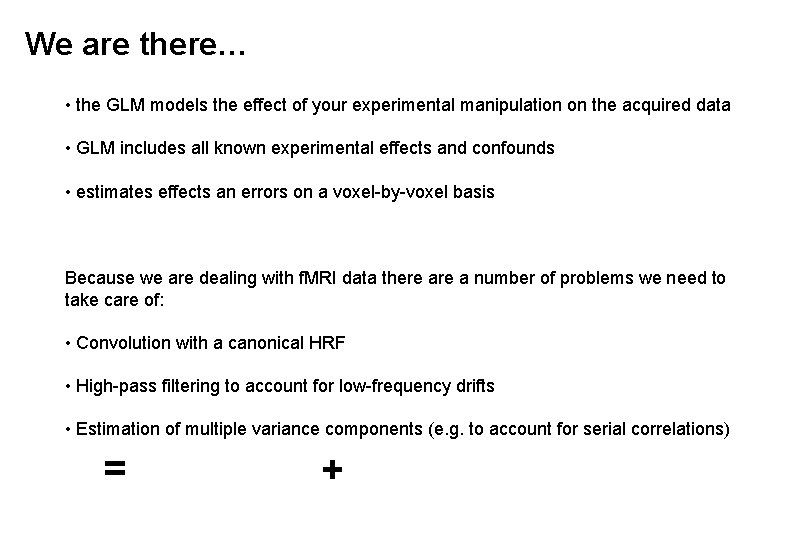
We are there… • the GLM models the effect of your experimental manipulation on the acquired data • GLM includes all known experimental effects and confounds • estimates effects an errors on a voxel-by-voxel basis Because we are dealing with f. MRI data there a number of problems we need to take care of: • Convolution with a canonical HRF • High-pass filtering to account for low-frequency drifts • Estimation of multiple variance components (e. g. to account for serial correlations) = +
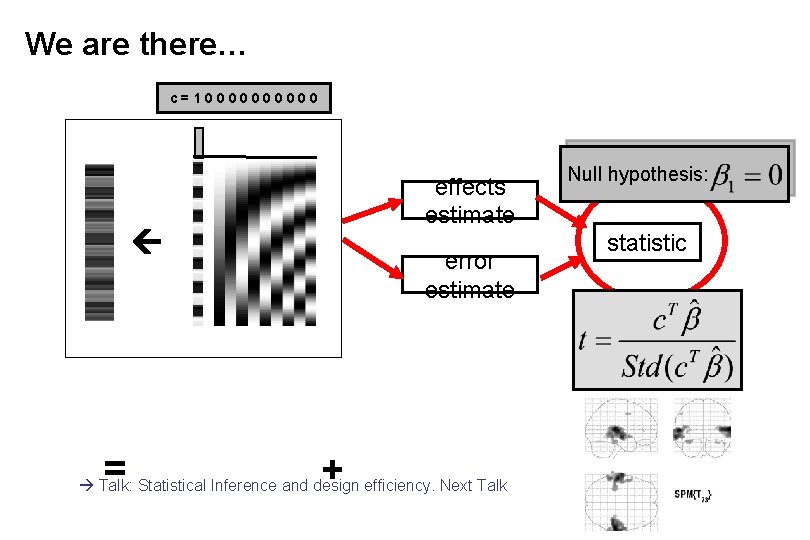
We are there… c=100000 linear model effects estimate = error estimate + Talk: Statistical Inference and design efficiency. Next Talk Null hypothesis: statistic
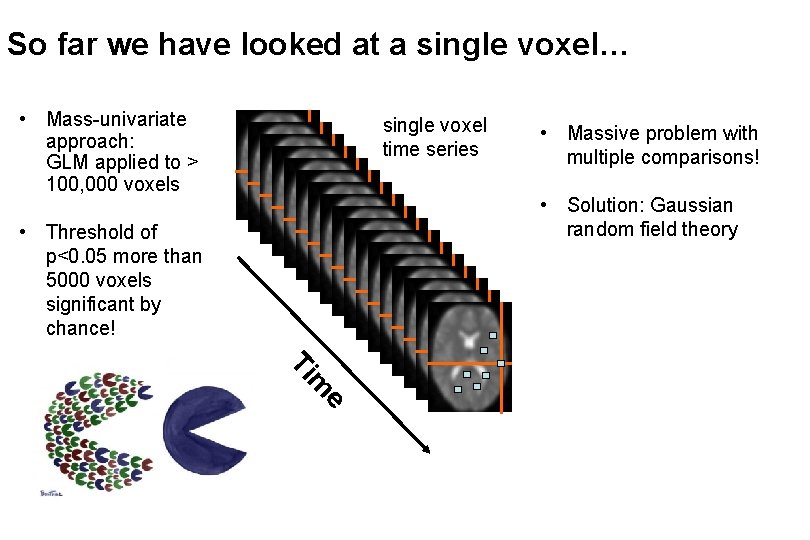
So far we have looked at a single voxel… • Mass-univariate approach: GLM applied to > 100, 000 voxels single voxel time series • Massive problem with multiple comparisons! • Solution: Gaussian random field theory • Threshold of p<0. 05 more than 5000 voxels significant by chance! e m Ti
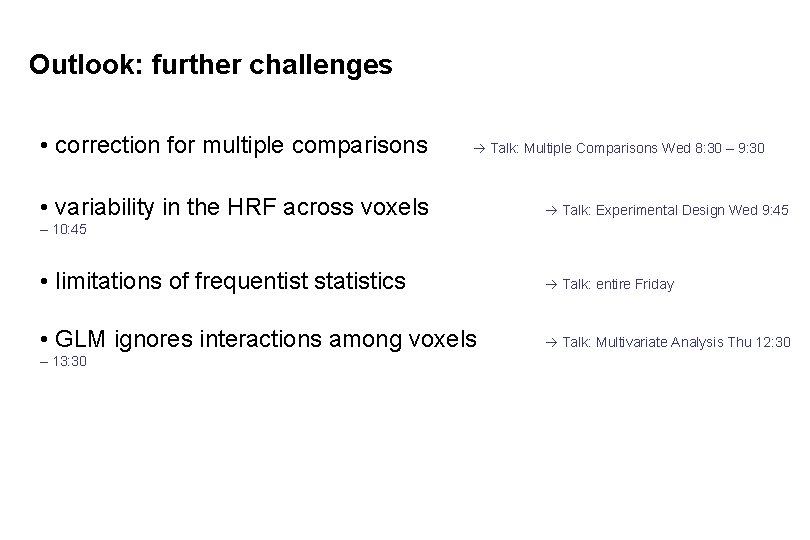
Outlook: further challenges • correction for multiple comparisons Talk: Multiple Comparisons Wed 8: 30 – 9: 30 • variability in the HRF across voxels Talk: Experimental Design Wed 9: 45 – 10: 45 • limitations of frequentist statistics Talk: entire Friday • GLM ignores interactions among voxels Talk: Multivariate Analysis Thu 12: 30 – 13: 30
Thank you for listening! • Friston, Ashburner, Kiebel, Nichols, Penny (2007) Statistical Parametric Mapping: The Analysis of Functional Brain Images. Elsevier. • Christensen R (1996) Plane Answers to Complex Questions: Theory of Linear Models. Springer. • Friston KJ et al. (1995) Statistical parametric maps in functional imaging: a