
The Gender Spectrum CREATED BY IAN UNGER PROGRAM
The Gender Spectrum CREATED BY IAN UNGER, PROGRAM MANAGER AT AFFIRMATIONS
Group Expectations ASSUME BEST INTENTIONS RESPECT EACH OTHER CALLING IN, NOT OUT ASK FOR CLARIFICATION
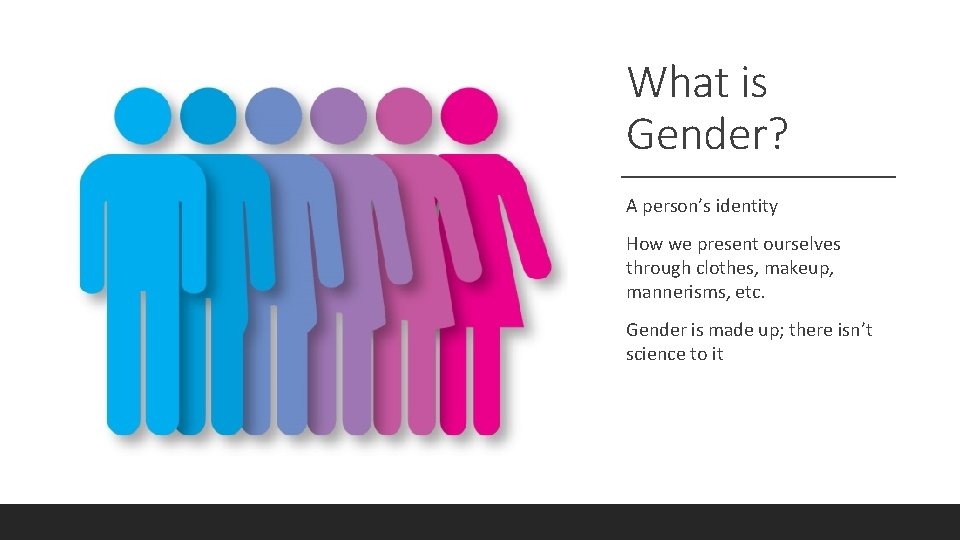
What is Gender? A person’s identity How we present ourselves through clothes, makeup, mannerisms, etc. Gender is made up; there isn’t science to it
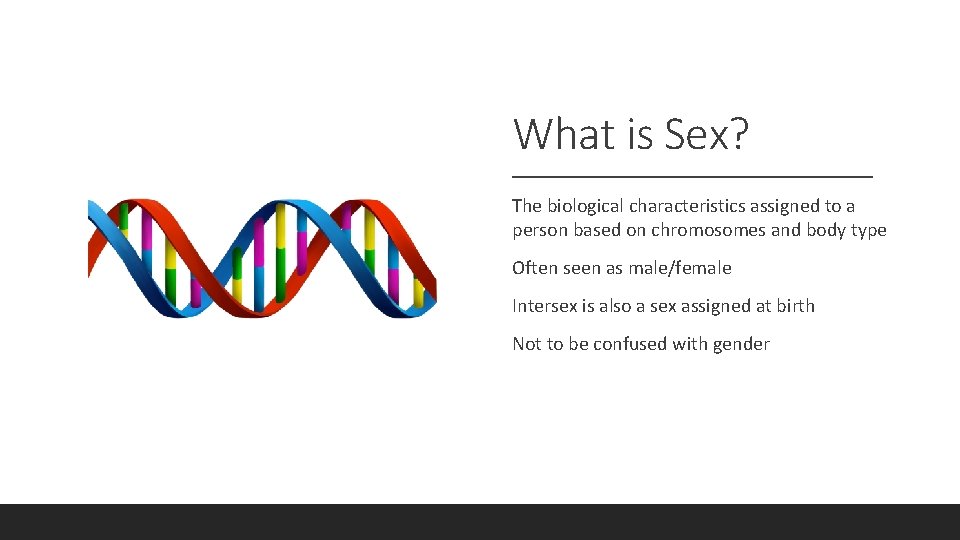
What is Sex? The biological characteristics assigned to a person based on chromosomes and body type Often seen as male/female Intersex is also a sex assigned at birth Not to be confused with gender
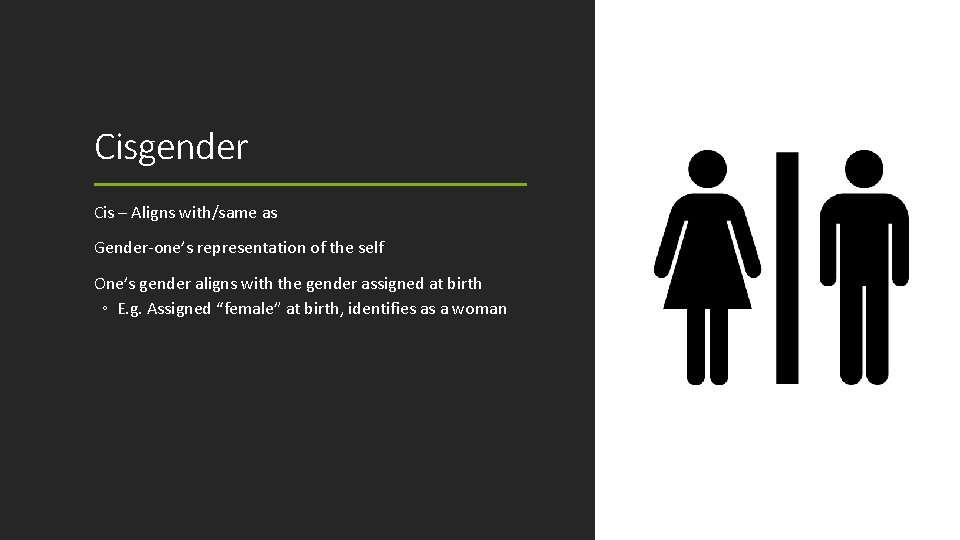
Cisgender Cis – Aligns with/same as Gender-one’s representation of the self One’s gender aligns with the gender assigned at birth ◦ E. g. Assigned “female” at birth, identifies as a woman

Transgender Trans – crosses, moving beyond or through Gender-one’s representation of the self One’s gender moves beyond the gender assigned at birth ◦ E. g. Assigned “female” at birth, identifies as a man
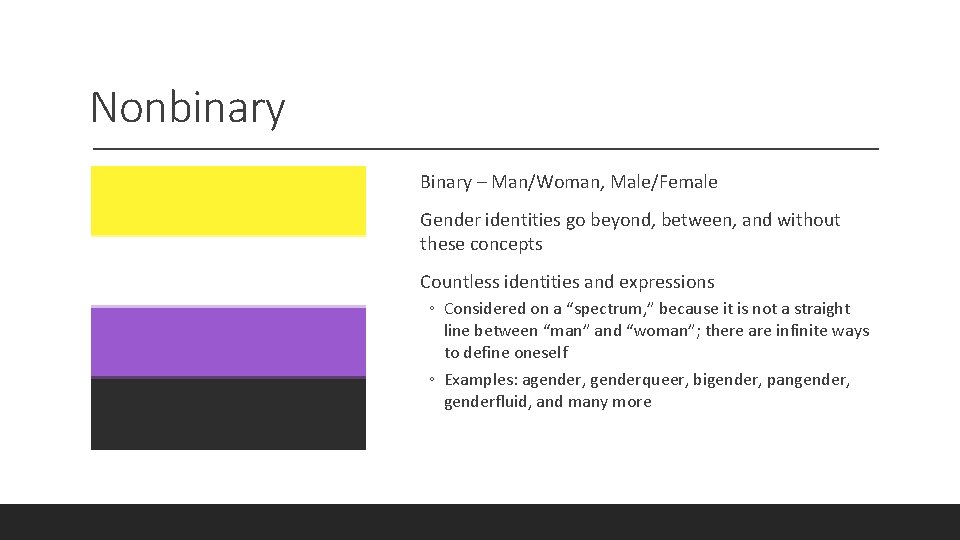
Nonbinary Binary – Man/Woman, Male/Female Gender identities go beyond, between, and without these concepts Countless identities and expressions ◦ Considered on a “spectrum, ” because it is not a straight line between “man” and “woman”; there are infinite ways to define oneself ◦ Examples: agender, genderqueer, bigender, pangender, genderfluid, and many more
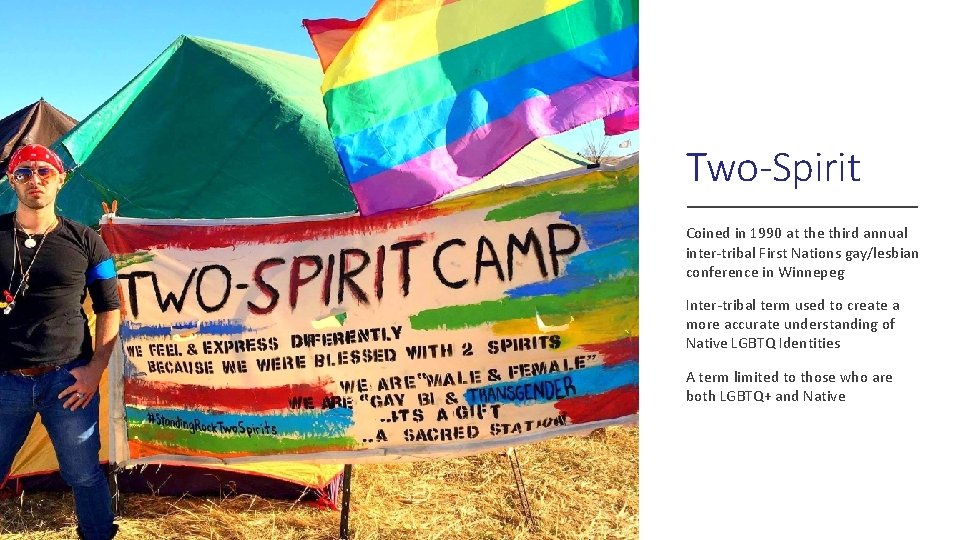
Two-Spirit Coined in 1990 at the third annual inter-tribal First Nations gay/lesbian conference in Winnepeg Inter-tribal term used to create a more accurate understanding of Native LGBTQ Identities A term limited to those who are both LGBTQ+ and Native
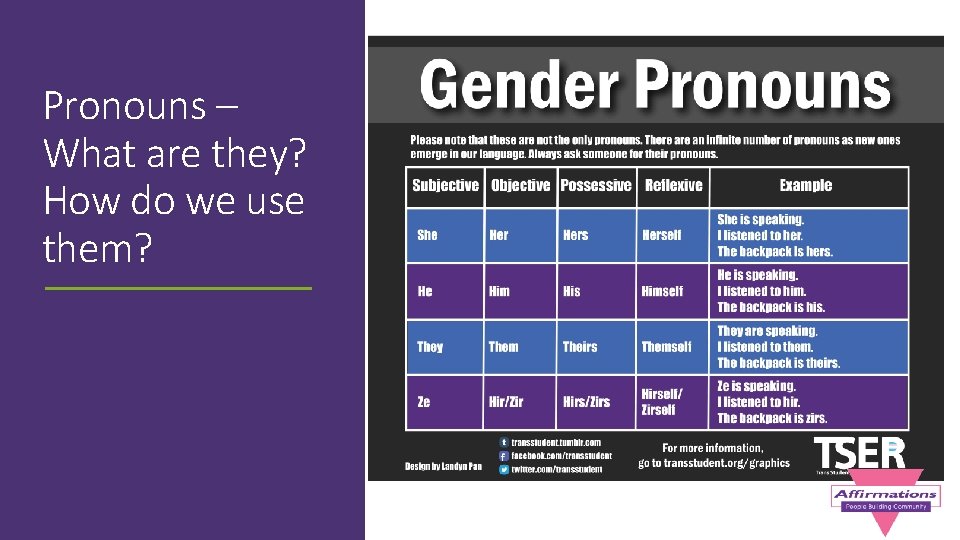
Pronouns – What are they? How do we use them?

Representations of Gender
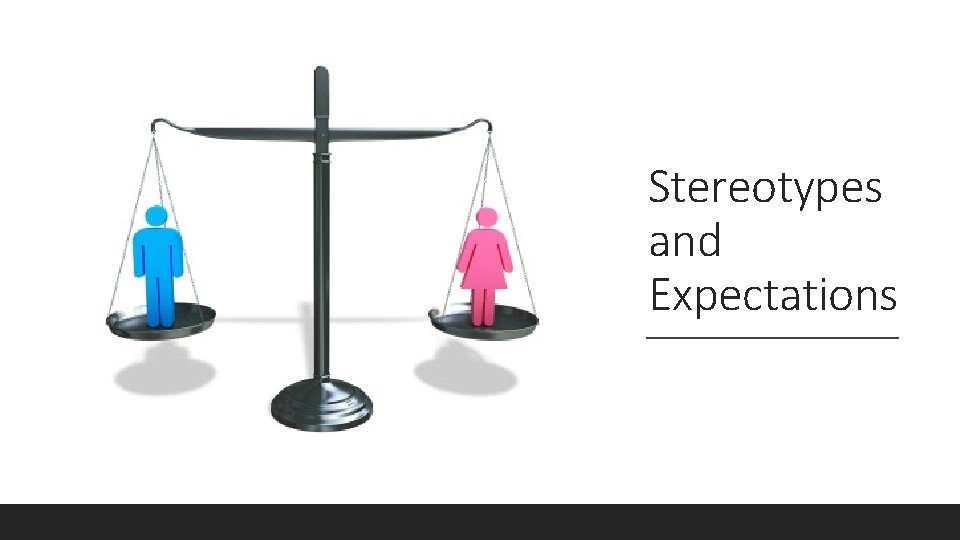
Stereotypes and Expectations
Transition A SOCIAL AND/OR MEDICAL TERM FOR ALIGNING ONE’S BODY/EXPRESSION WITH THEIR GENDER IDENTITY SOME TRANS/NONBINARY PEOPLE ELECT TO HAVE MEDICAL PROCEDURES TO CONFIRM THEIR IDENTITY COMPLETELY ACCEPTABLE TO ONLY SOCIALLY TRANSITION, OR NOT TRANSITION AT ALL EVERYONE’S JOURNEY IS DIFFERENT

What is Gender Dysphoria? A Diagnosis in the DSM-V, defining a conflict between one’s physical/assigned gender and the gender by which the individual identifies Significant distress and/or problems functioning associated with the conflict between a person’s gender identity and their physical or social characteristics
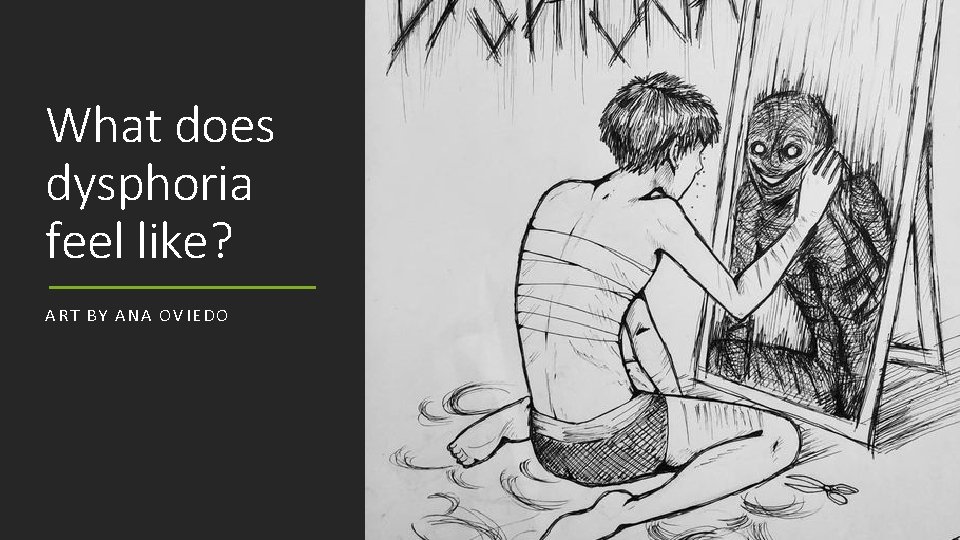
What does dysphoria feel like? ART BY ANA OVIEDO
Being transgender makes your sexuality “x” • Gender identity does not define sexuality, and being transgender or nonbinary doesn’t change who you can be attracted to All transgender people have dysphoria Myths • Dysphoria is a symptom some people experience, but not everyone has to – gender is defined in the brain, and doesn’t need physical symptoms Bathrooms are defined by a person’s sex • Bathrooms are a necessity for all humans, and privacy is a must regardless of identity; bathrooms should be for whoever identifies with the bathroom they are using People are transgender just because it’s popular • Coming out and transitioning are long processes, often involving cutting ties with people in one’s life; the vast majority of trans/nonbinary identified people don’t take that lightly
Chest binders, breast forms, and other genderaffirming clothing, including neutral clothing selections Helping Minimize Gender Dysphoria Therapy/Counseling – with a therapist knowledgeable about gender-expansive youth Support groups for young people (e. g. Stand with Trans, Affirmations) Using correct pronouns/chosen name and helping others do the same Allowing the space to not be okay sometimes
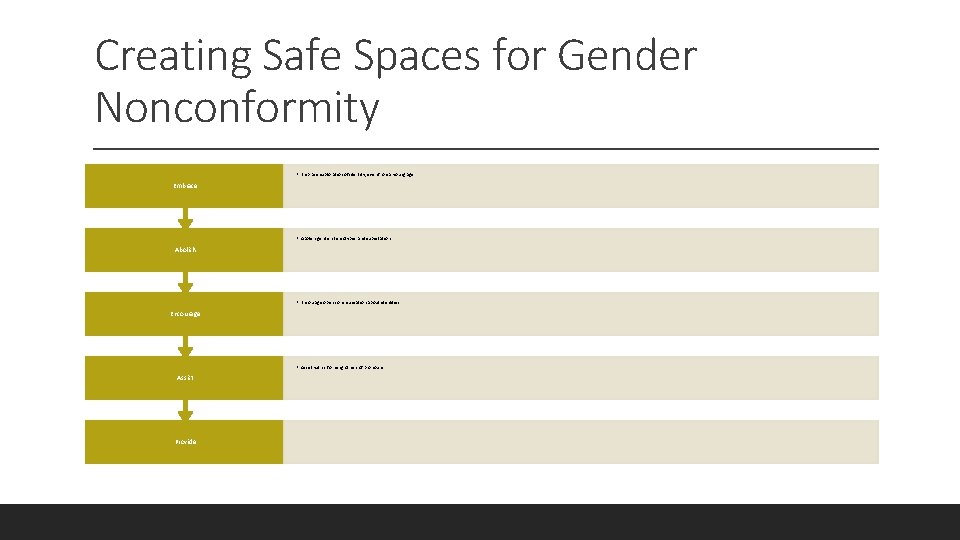
Creating Safe Spaces for Gender Nonconformity • Embrace exploration of identity, even from a young age Embrace • Abolish gender stereotypes and expectations Abolish • Encourage open communication about identities Encourage • Assist with informing others of pronouns Assist Provide
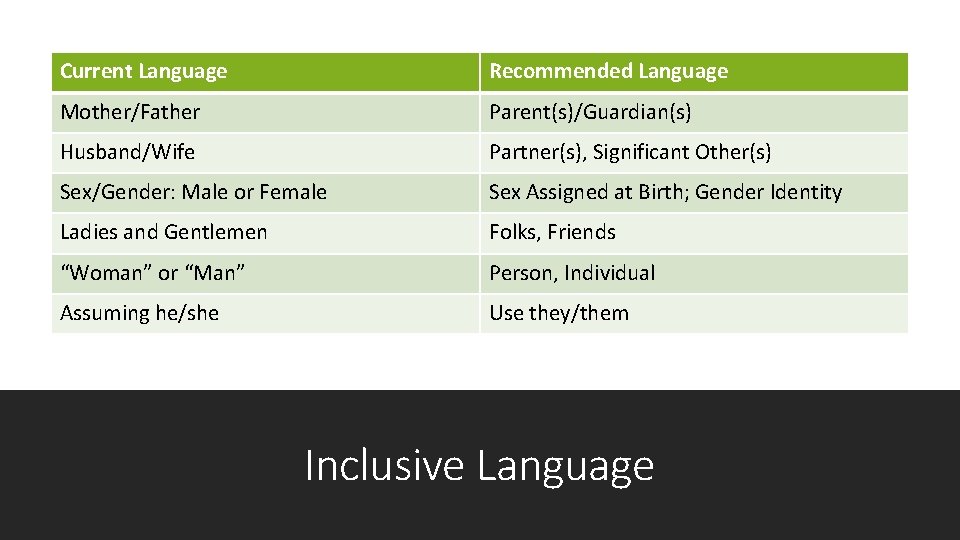
Current Language Recommended Language Mother/Father Parent(s)/Guardian(s) Husband/Wife Partner(s), Significant Other(s) Sex/Gender: Male or Female Sex Assigned at Birth; Gender Identity Ladies and Gentlemen Folks, Friends “Woman” or “Man” Person, Individual Assuming he/she Use they/them Inclusive Language
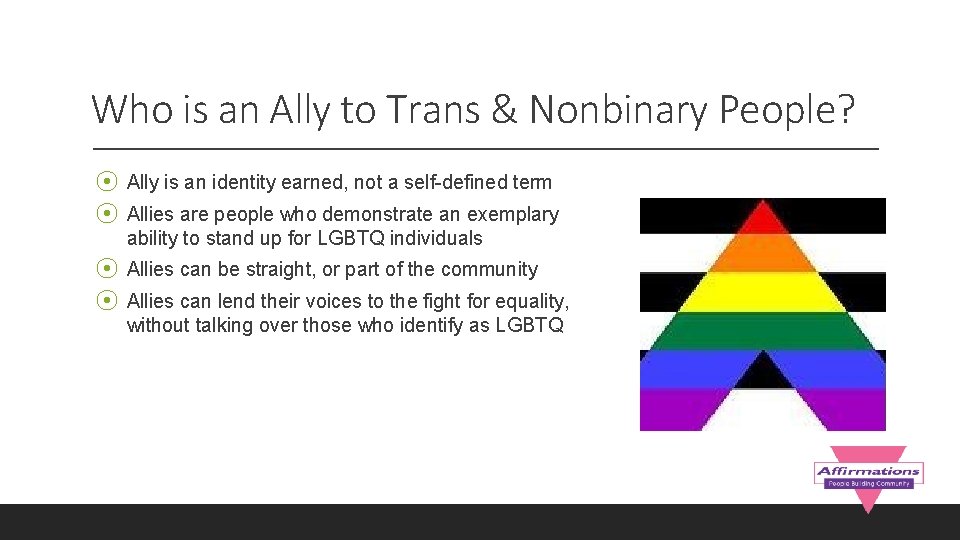
Who is an Ally to Trans & Nonbinary People? ⦿ Ally is an identity earned, not a self-defined term ⦿ Allies are people who demonstrate an exemplary ability to stand up for LGBTQ individuals ⦿ Allies can be straight, or part of the community ⦿ Allies can lend their voices to the fight for equality, without talking over those who identify as LGBTQ
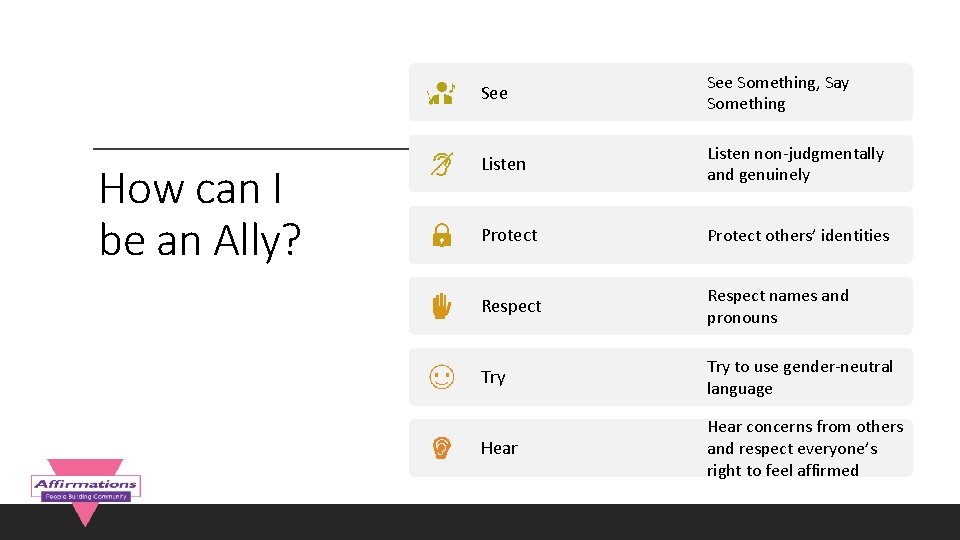
How can I be an Ally? See Something, Say Something Listen non-judgmentally and genuinely Protect others’ identities Respect names and pronouns Try to use gender-neutral language Hear concerns from others and respect everyone’s right to feel affirmed
Questions?
- Slides: 21