
The Gender Equality Index GEI Conceptual Framework and

- Slides: 17
The Gender Equality Index (GEI): Conceptual Framework and Proposed Domains Anne Laure Humbert, Anna Rita Manca, Ligia Nobrega, Jolanta Reingarde, Irene Rioboo Conference of European Statisticians Group of Experts on Gender Statistics Indicators of Gender Equality Geneva, 14 th March 2012
Objectives of a GEI • Measures gender equality • Allows for a comparison over time • Allows for a geographical comparison among MS Geneva, 14 March 2012 Work session of Gender Statisticians
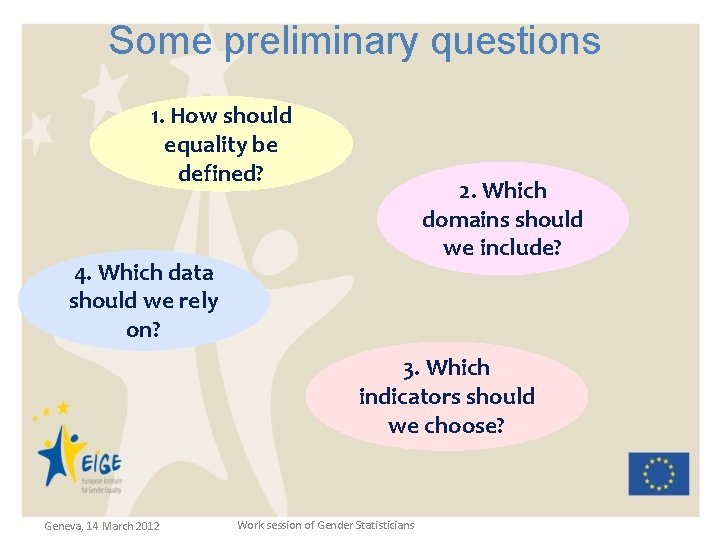
Some preliminary questions 1. How should equality be defined? 2. Which domains should we include? 4. Which data should we rely on? 3. Which indicators should we choose? Geneva, 14 March 2012 Work session of Gender Statisticians
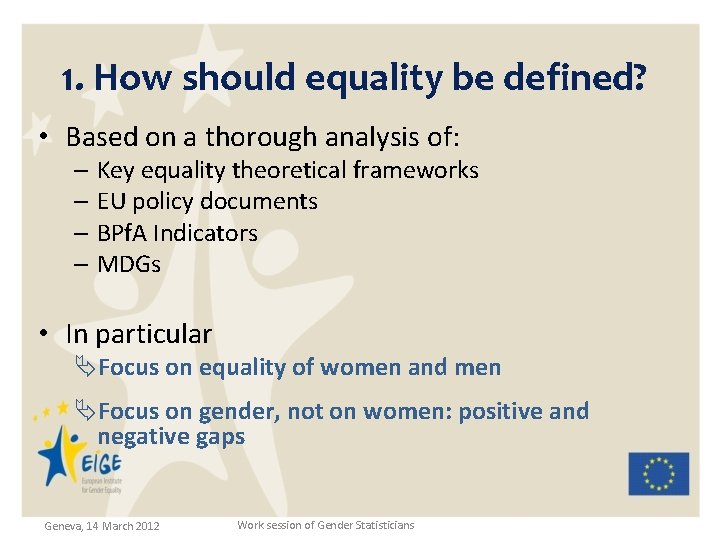
1. How should equality be defined? • Based on a thorough analysis of: – Key equality theoretical frameworks – EU policy documents – BPf. A Indicators – MDGs • In particular ÄFocus on equality of women and men ÄFocus on gender, not on women: positive and negative gaps Geneva, 14 March 2012 Work session of Gender Statisticians
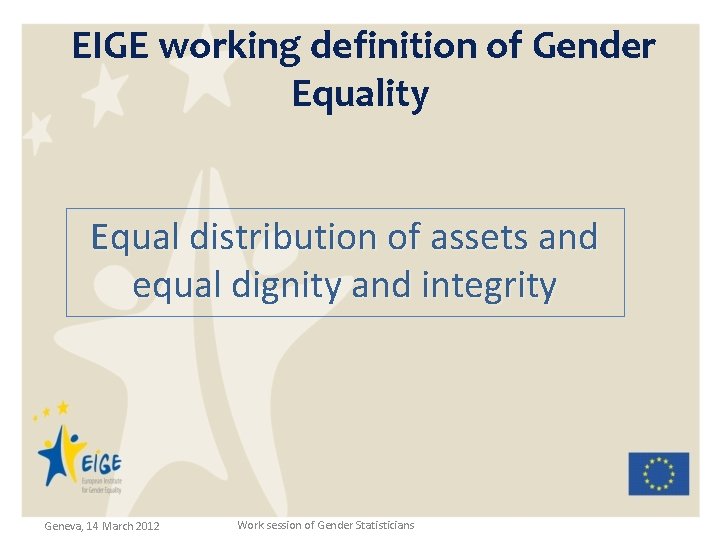
EIGE working definition of Gender Equality Equal distribution of assets and equal dignity and integrity Geneva, 14 March 2012 Work session of Gender Statisticians
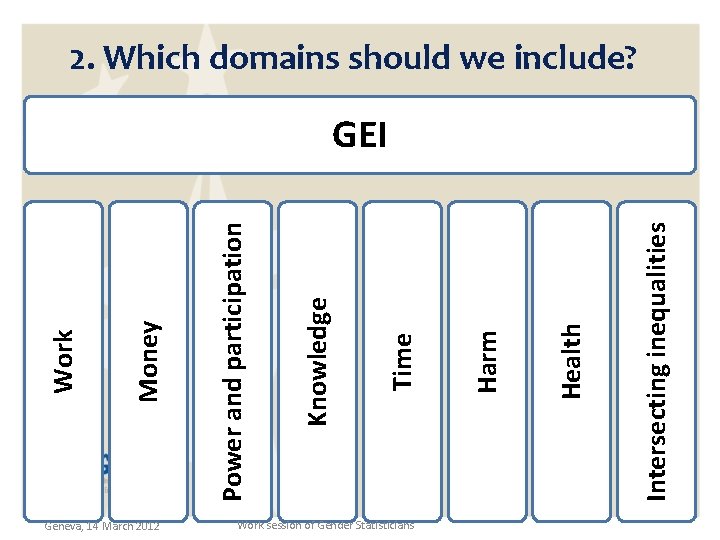
2. Which domains should we include? Geneva, 14 March 2012 Work session of Gender Statisticians Intersecting inequalities Health Harm Time Knowledge Power and participation Money Work GEI
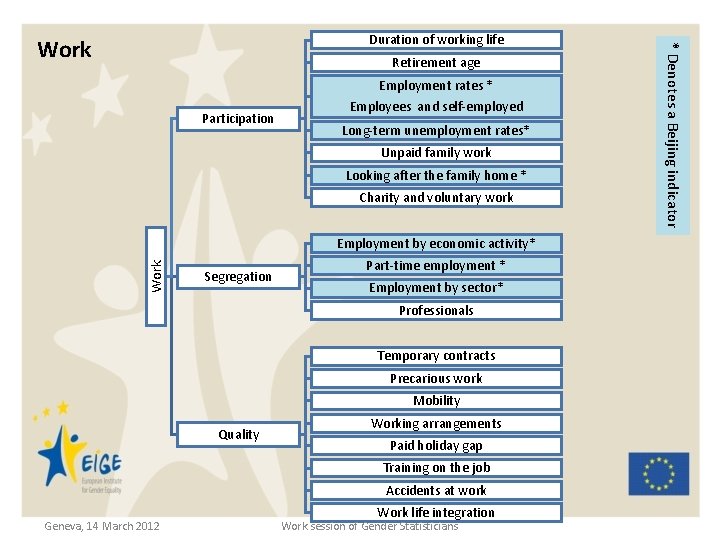
Retirement age Employment rates * Participation Employees and self-employed Long-term unemployment rates* Unpaid family work Looking after the family home * Charity and voluntary work Work Employment by economic activity* Segregation Part-time employment * Employment by sector* Professionals Temporary contracts Precarious work Mobility Quality Working arrangements Paid holiday gap Training on the job Accidents at work Geneva, 14 March 2012 Work life integration Work session of Gender Statisticians * Denotes a Beijing indicator Duration of working life Work
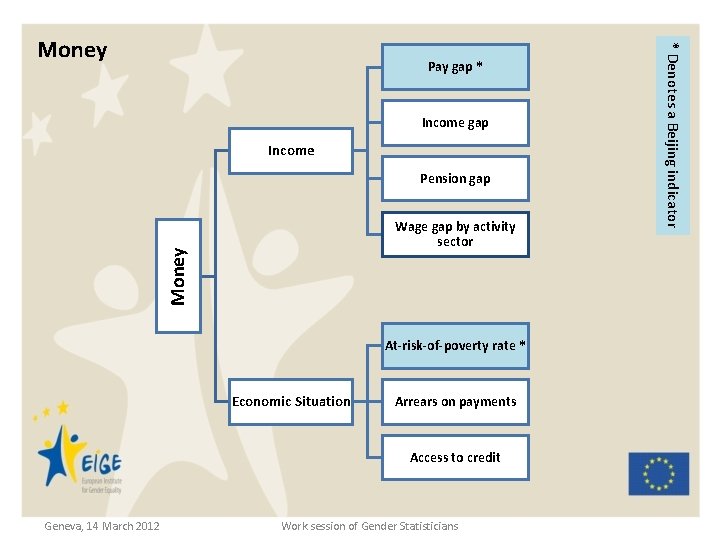
Pay gap * Income gap Income Pension gap Money Wage gap by activity sector At-risk-of-poverty rate * Economic Situation Arrears on payments Access to credit Geneva, 14 March 2012 Work session of Gender Statisticians * Denotes a Beijing indicator Money
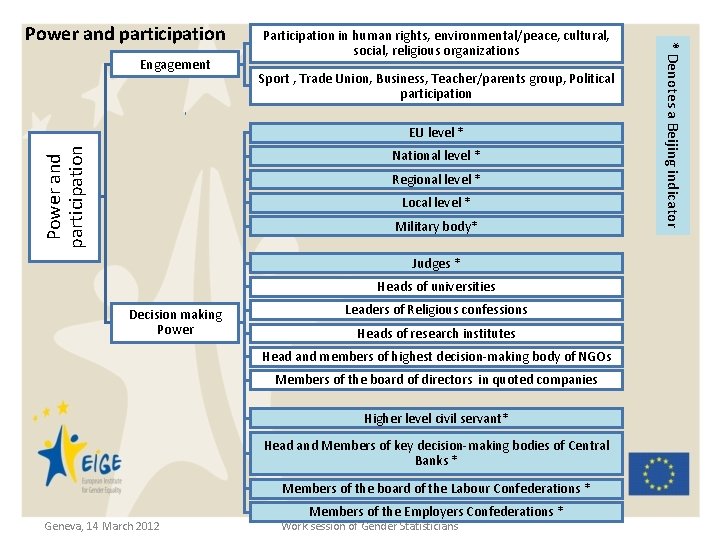
Engagement Participation in human rights, environmental/peace, cultural, social, religious organizations Sport , Trade Union, Business, Teacher/parents group, Political participation Power and participation EU level * National level * Regional level * Local level * Military body* Judges * Heads of universities Decision making Power Leaders of Religious confessions Heads of research institutes Head and members of highest decision-making body of NGOs Members of the board of directors in quoted companies Higher level civil servant* Head and Members of key decision-making bodies of Central Banks * Members of the board of the Labour Confederations * Geneva, 14 March 2012 Members of the Employers Confederations * Work session of Gender Statisticians * Denotes a Beijing indicator Power and participation
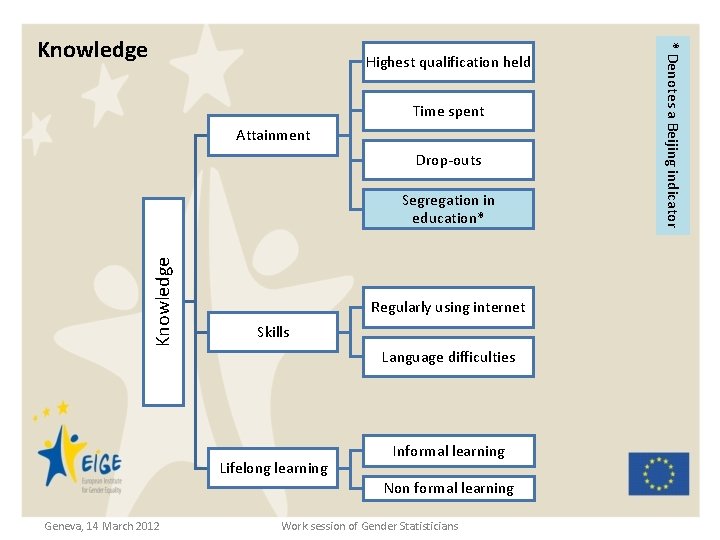
Highest qualification held Time spent Attainment Drop-outs Knowledge Segregation in education* Regularly using internet Skills Language difficulties Lifelong learning Informal learning Non formal learning Geneva, 14 March 2012 Work session of Gender Statisticians * Denotes a Beijing indicator Knowledge
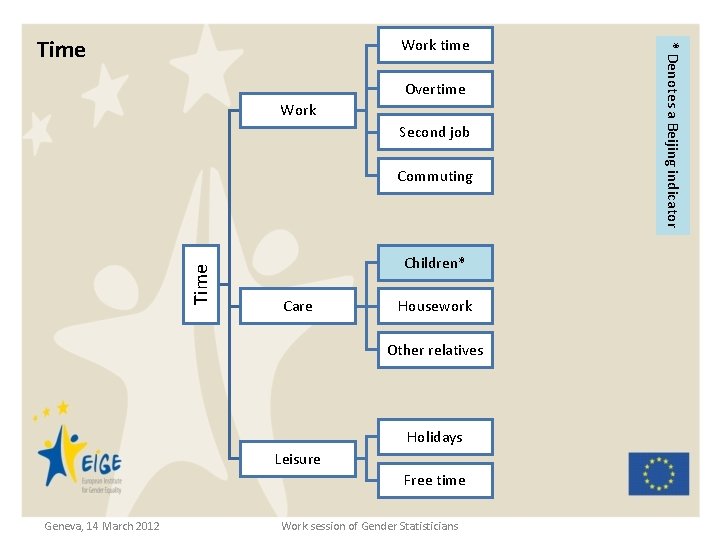
Work time Overtime Work Second job Time Commuting Children* Care Housework Other relatives Holidays Leisure Free time Geneva, 14 March 2012 Work session of Gender Statisticians * Denotes a Beijing indicator Time
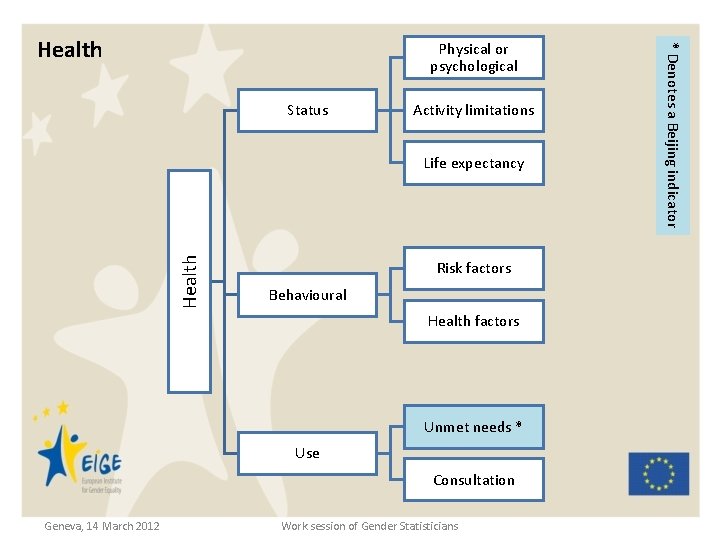
Physical or psychological Status Activity limitations Health Life expectancy Risk factors Behavioural Health factors Unmet needs * Use Consultation Geneva, 14 March 2012 Work session of Gender Statisticians * Denotes a Beijing indicator Health
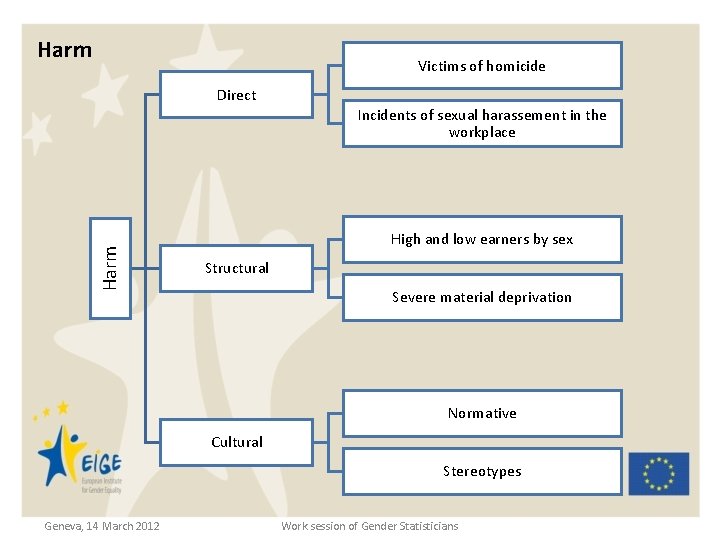
Harm Victims of homicide Direct Harm Incidents of sexual harassement in the workplace High and low earners by sex Structural Severe material deprivation Normative Cultural Stereotypes Geneva, 14 March 2012 Work session of Gender Statisticians
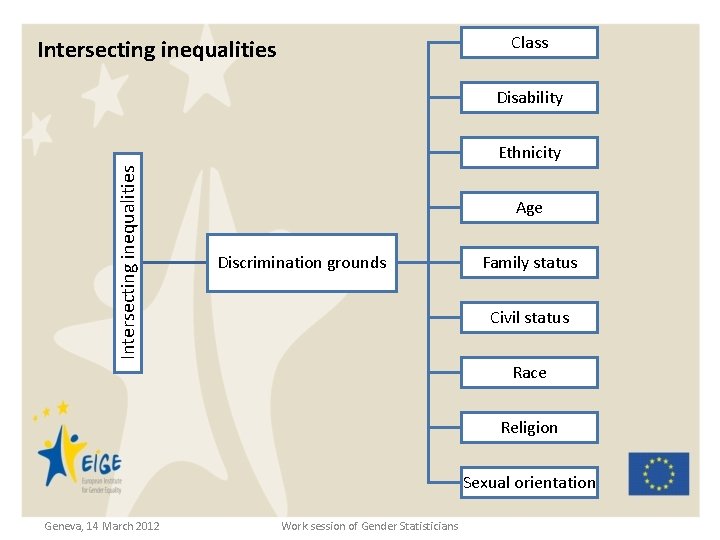
Class Intersecting inequalities Disability Intersecting inequalities Ethnicity Age Discrimination grounds Family status Civil status Race Religion Sexual orientation Geneva, 14 March 2012 Work session of Gender Statisticians
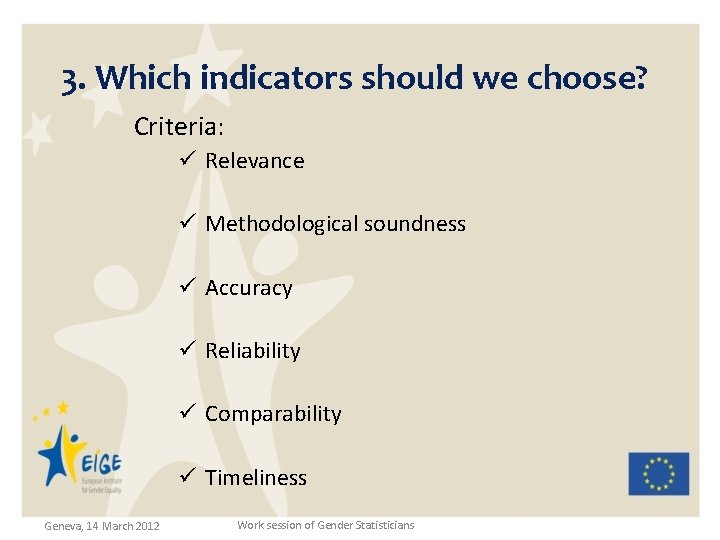
3. Which indicators should we choose? Criteria: ü Relevance ü Methodological soundness ü Accuracy ü Reliability ü Comparability ü Timeliness Geneva, 14 March 2012 Work session of Gender Statisticians
The GEI Team Anne Laure Humbert – Gender Expert Anne. Humbert@eige. europa. eu Anna Rita Manca – Statistics Officer Anna. Manca@eige. europa. eu Ligia Nobrega – Gender Expert Ligia. Nobrega@eige. europa. eu Jolanta Reingarde -Senior Researcher-Team Leader Jolanta. Reingarde@eige. europa. eu Irene Rioboo – Seconded National Expert Irene. Rioboo@eige. europa. eu
Questions and Comments?