
The GEF7 Results Architecture CONTINUOUS IMPROVEMENT OF THE


- Slides: 18
The GEF-7 Results Architecture
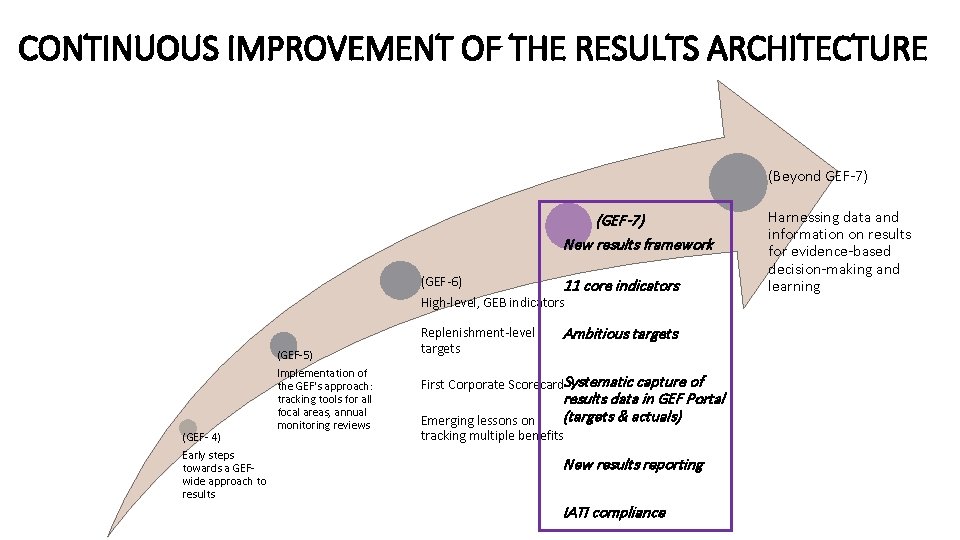
CONTINUOUS IMPROVEMENT OF THE RESULTS ARCHITECTURE (Beyond GEF-7) (GEF-7) New results framework (GEF-6) 11 core indicators High-level, GEB indicators (GEF- 4) Early steps towards a GEFwide approach to results (GEF-5) Implementation of the GEF's approach: tracking tools for all focal areas, annual monitoring reviews Replenishment-level targets Ambitious targets First Corporate Scorecard. Systematic capture of results data in GEF Portal (targets & actuals) Emerging lessons on tracking multiple benefits New results reporting IATI compliance Harnessing data and information on results for evidence-based decision-making and learning
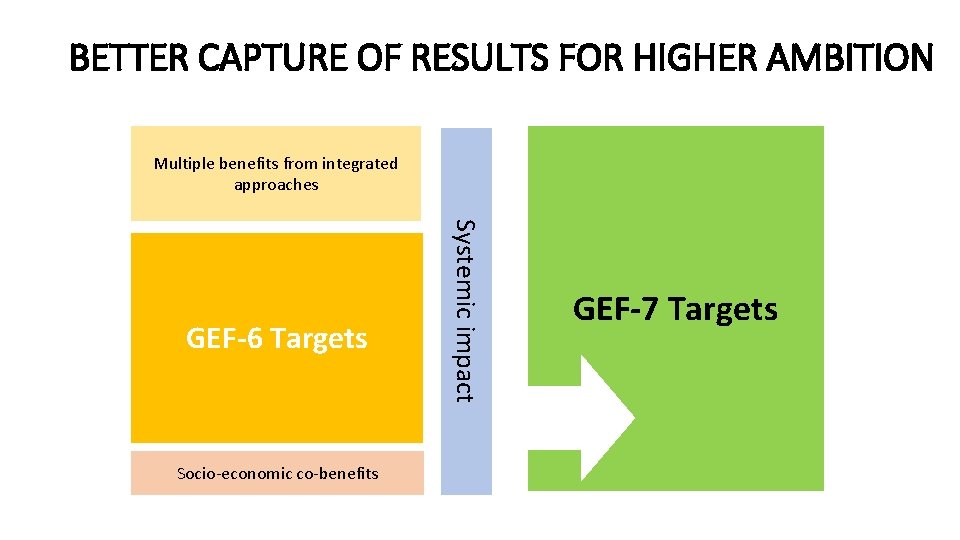
BETTER CAPTURE OF RESULTS FOR HIGHER AMBITION Multiple benefits from integrated approaches Socio-economic co-benefits Systemic impact GEF-6 Targets GEF-7 Targets
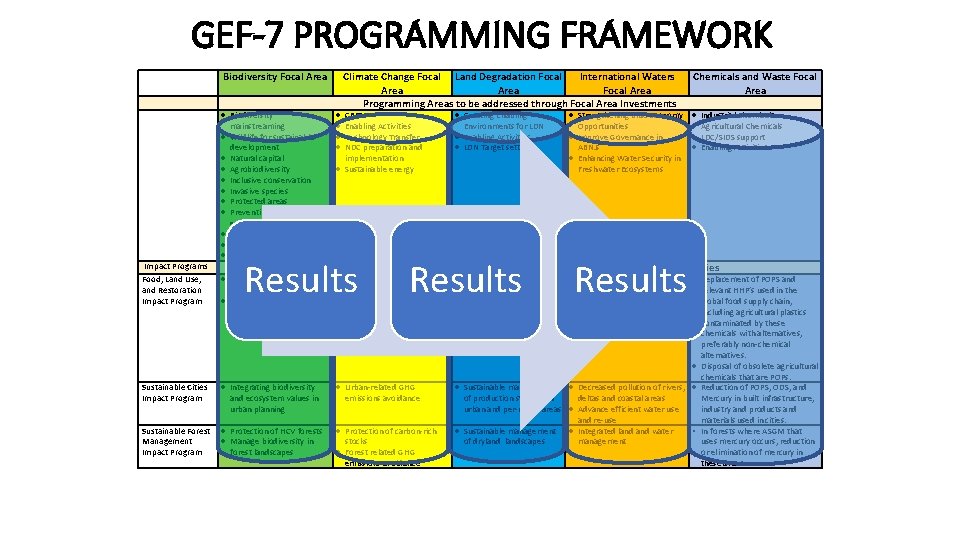
GEF-7 FRAMEWORK GEF 7 PROGRAMMING Programming Framework Biodiversity Focal Area Biodiversity Impact Programs Food, Land Use, and Restoration Impact Program Sustainable Cities Impact Program mainstreaming Wildlife for sustainable development Natural capital Agrobiodiversity Inclusive conservation Invasive species Protected areas Preventing species extinction Biosafety ABS Enabling Activities Climate Change Focal Land Degradation Focal International Waters Area Focal Area Programming Areas to be addressed through Focal Area Investments CBIT Enabling Activities Technology Transfer NDC preparation and implementation Sustainable energy Results Manage biodiversity in Creating Enabling Environments for LDN Enabling Activities LDN Target setting Results Chemicals and Waste Focal Area Strengthening Blue Economy Opportunities Improve Governance in ABNJs Enhancing Water Security in Industrial Chemicals Agricultural Chemicals LDC/SIDS support Enabling Activities Freshwater Ecosystems Results Objectives to be addressed through Impact Programs aligned with convention priorities production landscapes Harnessing biodiversity for sustainable agriculture Integrating biodiversity and ecosystem values in urban planning Sustainable Forest Protection of HCV forests Management Manage biodiversity in Impact Program forest landscapes Land-based and value chain Sustainable land GHG mitigation (sequestration and avoidance) Urban-related GHG emissions avoidance Protection of carbon-rich stocks Forest related GHG emissions avoidance Integrated land water management Diversification of crop and Prevention of nutrient livestock systems pollution Restoration of degraded production landscapes Replacement of POPS and relevant HHP’s used in the global food supply chain, including agricultural plastics contaminated by these chemicals with alternatives, preferably non-chemical alternatives. Disposal of obsolete agricultural chemicals that are POPs. Sustainable management Decreased pollution of rivers, Reduction of POPS, ODS, and of production systems in deltas and coastal areas Mercury in built infrastructure, urban and per-urban areas Advance efficient water use industry and products and re-use materials used in cities. Sustainable management Integrated land water • In forests where ASGM that of drylandscapes management uses mercury occurs, reduction or elimination of mercury in these areas. 4
HOW WILL WE CAPTURE THE BENEFITS? • The new Results Architecture introduces 11 core indicators and associated sub-indicators that span all 5 focal areas • These will enable: • Enhanced availability, accessibility and timeliness of data on results • High-quality monitoring and reporting • Simplification of reporting across the Partnership • Gender results and socio-economic co-benefits
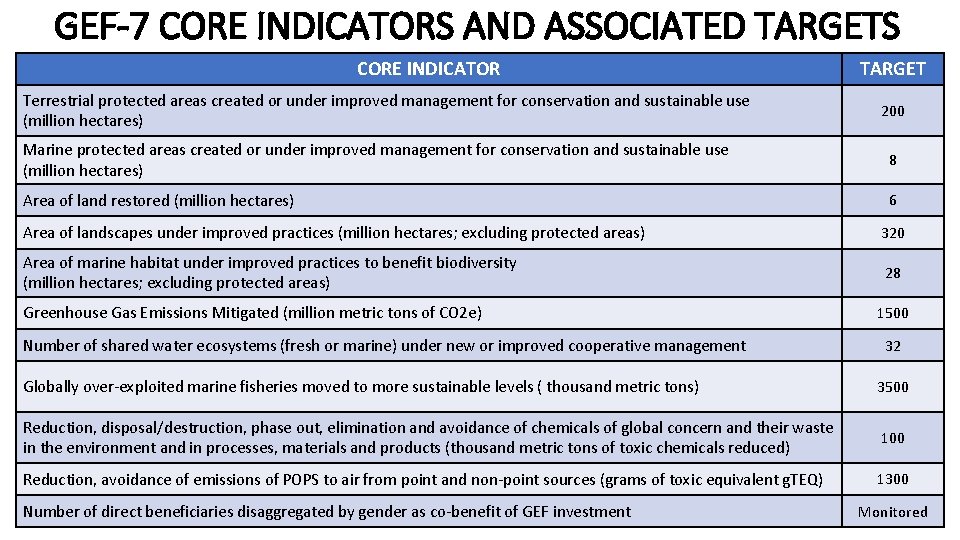
GEF-7 CORE INDICATORS AND ASSOCIATED TARGETS CORE INDICATOR Terrestrial protected areas created or under improved management for conservation and sustainable use (million hectares) TARGET 200 Marine protected areas created or under improved management for conservation and sustainable use (million hectares) 8 Area of land restored (million hectares) 6 Area of landscapes under improved practices (million hectares; excluding protected areas) 320 Area of marine habitat under improved practices to benefit biodiversity (million hectares; excluding protected areas) 28 Greenhouse Gas Emissions Mitigated (million metric tons of CO 2 e) Number of shared water ecosystems (fresh or marine) under new or improved cooperative management 1500 32 Globally over-exploited marine fisheries moved to more sustainable levels ( thousand metric tons) 3500 Reduction, disposal/destruction, phase out, elimination and avoidance of chemicals of global concern and their waste in the environment and in processes, materials and products (thousand metric tons of toxic chemicals reduced) 100 Reduction, avoidance of emissions of POPS to air from point and non-point sources (grams of toxic equivalent g. TEQ) 1300 Number of direct beneficiaries disaggregated by gender as co-benefit of GEF investment Monitored
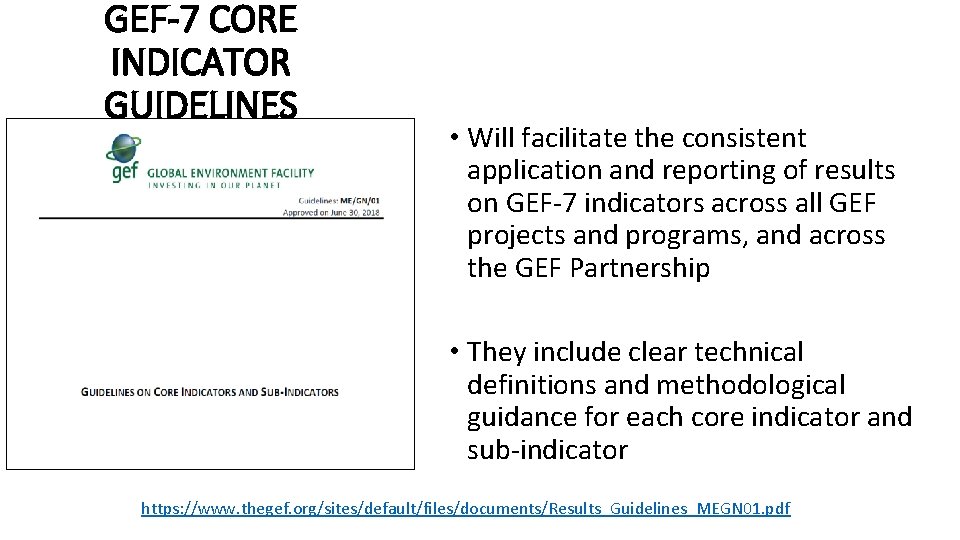
GEF-7 CORE INDICATOR GUIDELINES • Will facilitate the consistent application and reporting of results on GEF-7 indicators across all GEF projects and programs, and across the GEF Partnership • They include clear technical definitions and methodological guidance for each core indicator and sub-indicator https: //www. thegef. org/sites/default/files/documents/Results_Guidelines_MEGN 01. pdf
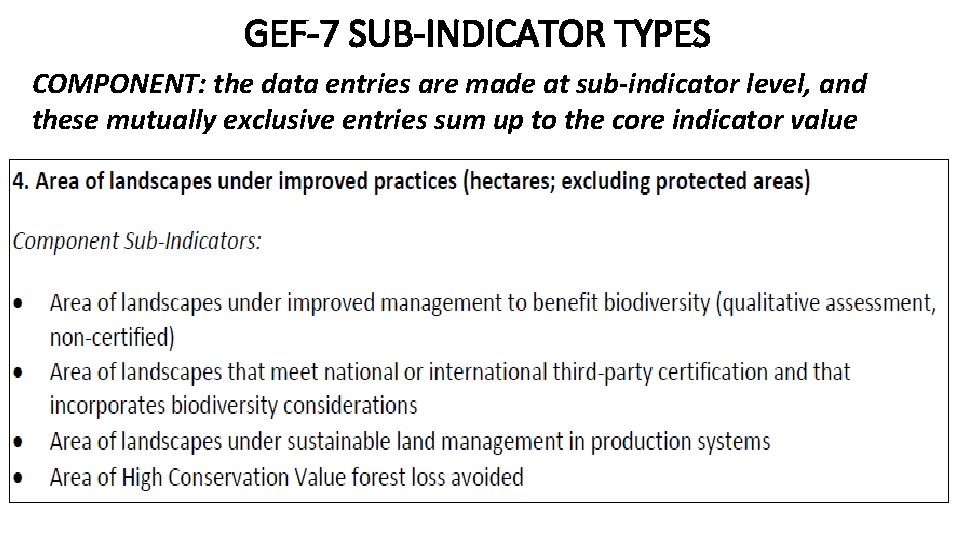
GEF-7 SUB-INDICATOR TYPES COMPONENT: the data entries are made at sub-indicator level, and these mutually exclusive entries sum up to the core indicator value
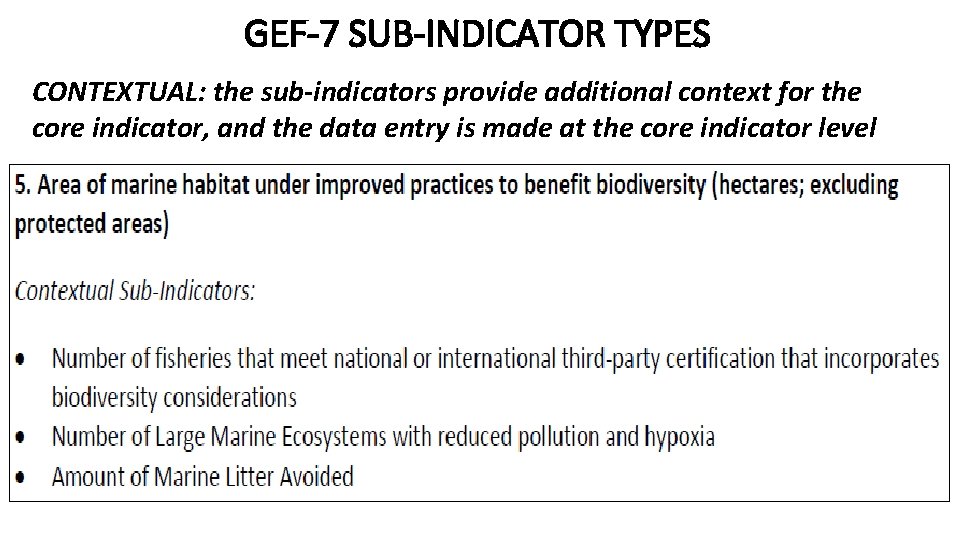
GEF-7 SUB-INDICATOR TYPES CONTEXTUAL: the sub-indicators provide additional context for the core indicator, and the data entry is made at the core indicator level
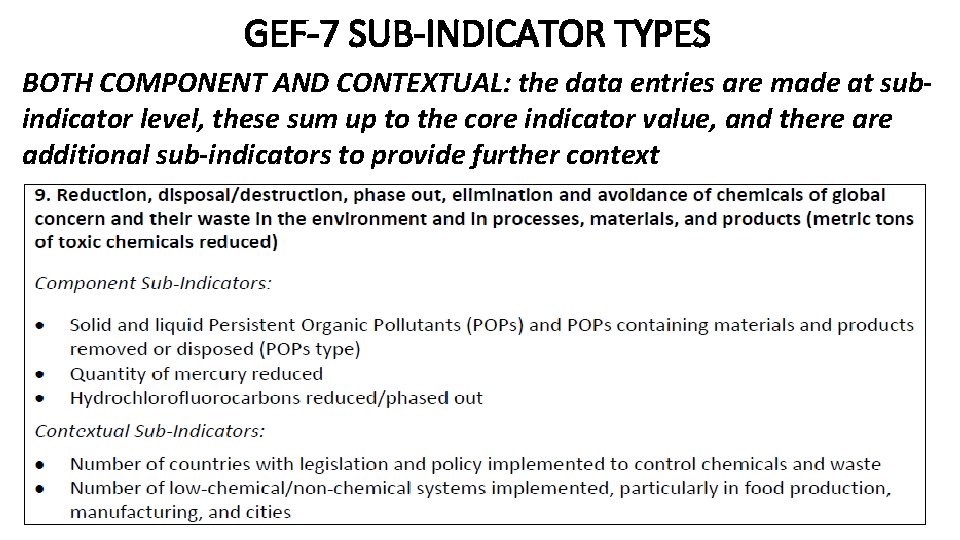
GEF-7 SUB-INDICATOR TYPES BOTH COMPONENT AND CONTEXTUAL: the data entries are made at subindicator level, these sum up to the core indicator value, and there additional sub-indicators to provide further context
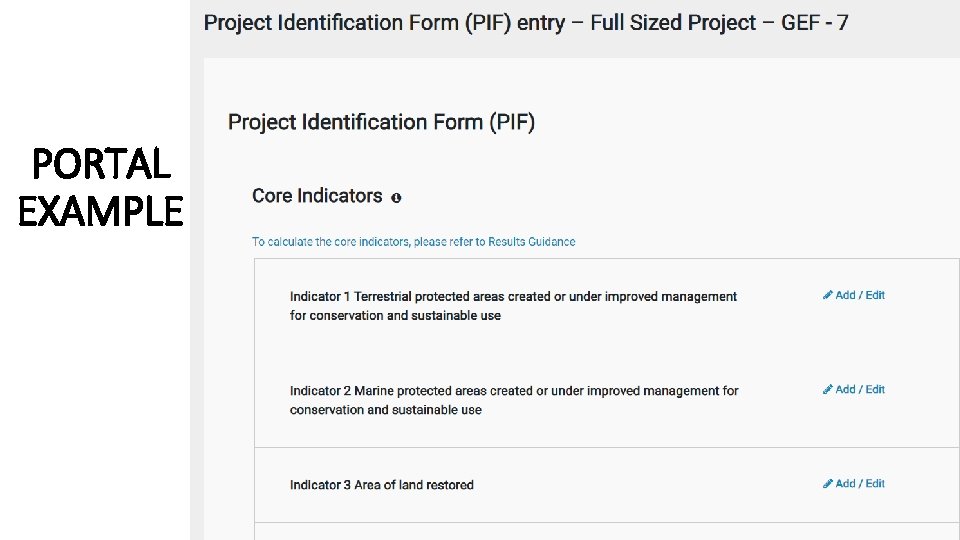
PORTAL EXAMPLE
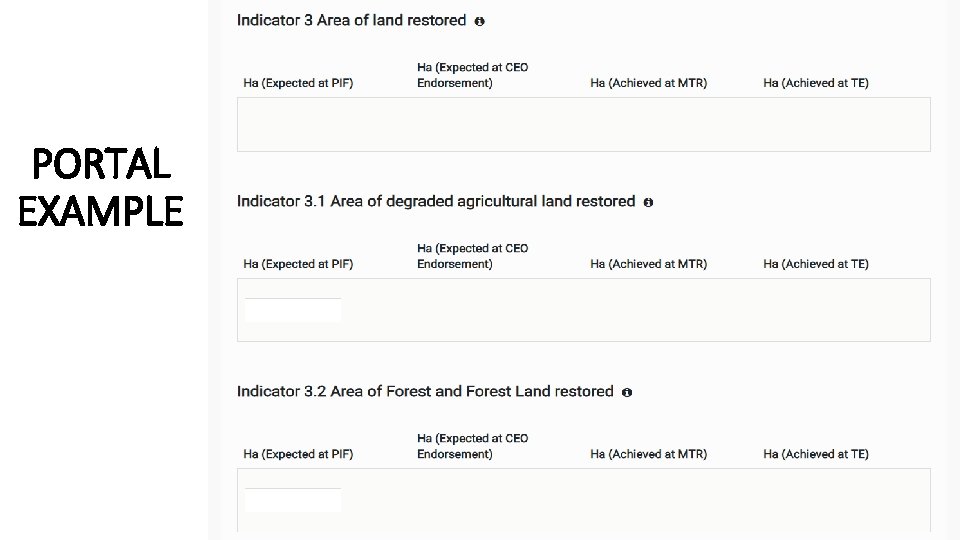
PORTAL EXAMPLE
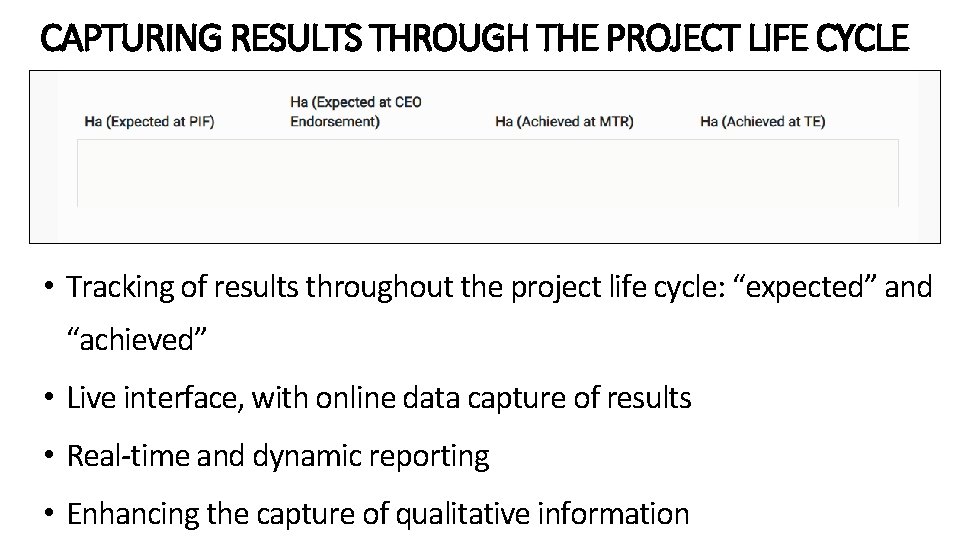
CAPTURING RESULTS THROUGH THE PROJECT LIFE CYCLE • Tracking of results throughout the project life cycle: “expected” and “achieved” • Live interface, with online data capture of results • Real-time and dynamic reporting • Enhancing the capture of qualitative information
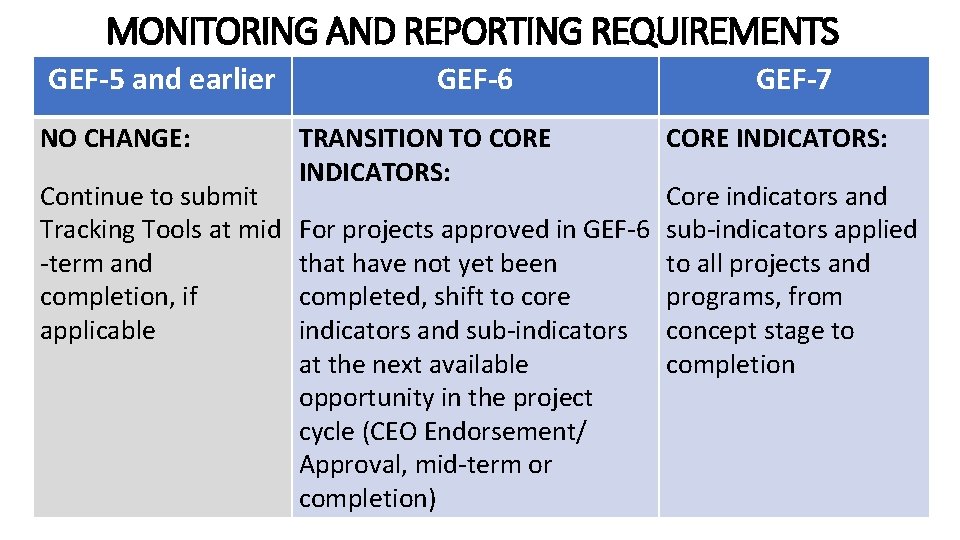
MONITORING AND REPORTING REQUIREMENTS GEF-5 and earlier NO CHANGE: Continue to submit Tracking Tools at mid -term and completion, if applicable GEF-6 TRANSITION TO CORE INDICATORS: GEF-7 CORE INDICATORS: Core indicators and For projects approved in GEF-6 sub-indicators applied that have not yet been to all projects and completed, shift to core programs, from indicators and sub-indicators concept stage to at the next available completion opportunity in the project cycle (CEO Endorsement/ Approval, mid-term or completion)
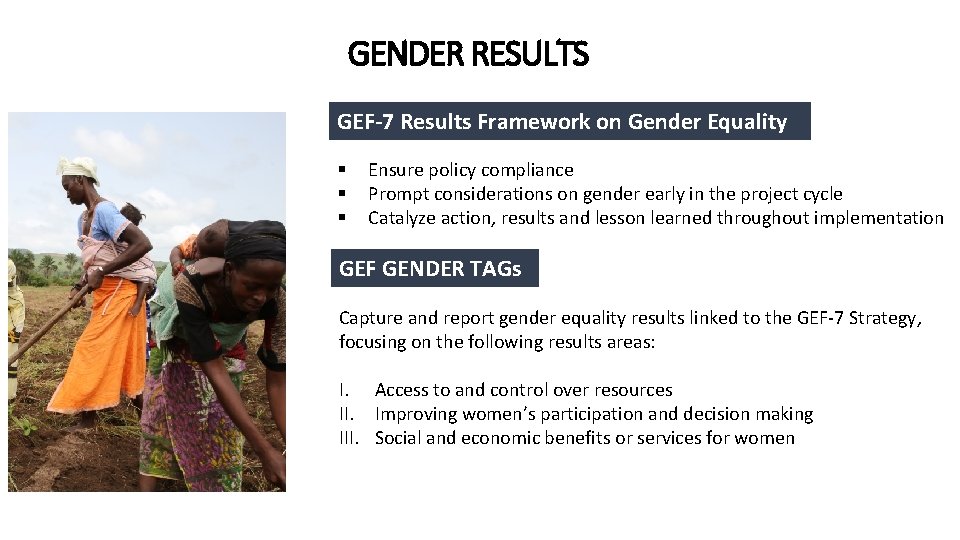
GENDER RESULTS GEF-7 Results Framework on Gender Equality § § § Ensure policy compliance Prompt considerations on gender early in the project cycle Catalyze action, results and lesson learned throughout implementation GEF GENDER TAGs Capture and report gender equality results linked to the GEF-7 Strategy, focusing on the following results areas: I. Access to and control over resources II. Improving women’s participation and decision making III. Social and economic benefits or services for women
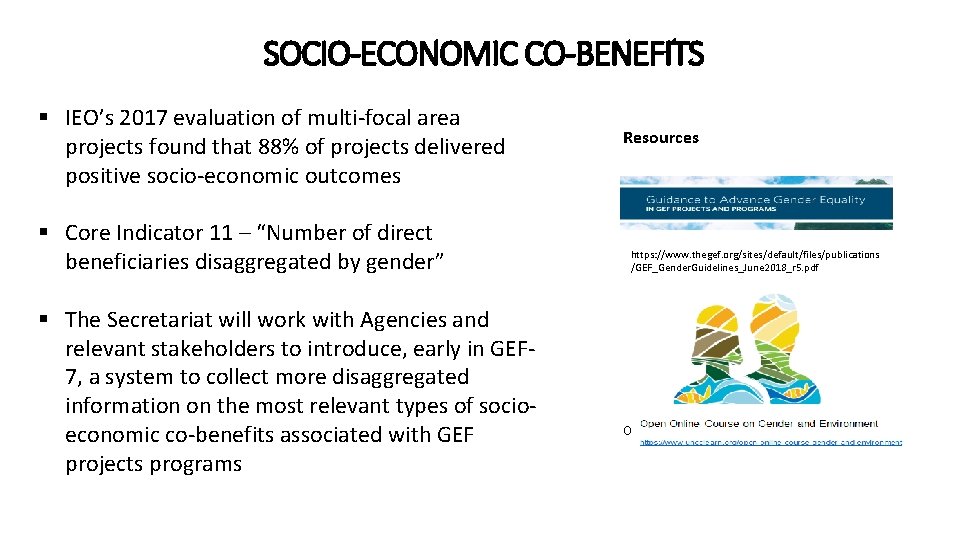
SOCIO-ECONOMIC CO-BENEFITS § IEO’s 2017 evaluation of multi-focal area projects found that 88% of projects delivered positive socio-economic outcomes § Core Indicator 11 – “Number of direct beneficiaries disaggregated by gender” § The Secretariat will work with Agencies and relevant stakeholders to introduce, early in GEF 7, a system to collect more disaggregated information on the most relevant types of socioeconomic co-benefits associated with GEF projects programs Resources https: //www. thegef. org/sites/default/files/publications /GEF_Gender. Guidelines_June 2018_r 5. pdf Open Online Course on Gender and Environment
NEXT STEPS • Tracking/reporting of progress to targets through the GEF Portal is live and undergoing continuous improvements • Revised reporting, monitoring and analyses • 2010 M&E Policy is being updated and presented for Council consideration in the spring of 2019 • The capture of disaggregated information on gender results and socio-economic cobenefits • The IP rollout is underway • Managing approvals for greater results
THANK YOU!