
The Future Tense Espaol 5 The Future Tense

- Slides: 35
The Future Tense Español 5
The Future Tense l. You can express the future tense in Spanish in three ways. l. One way is using the present tense with a time expression. l. El tren sale a las dos.
The Future Tense l. Another way is by using ir + a + infinitive. l. Este sábado voy a reciclar todas las botellas.
The Future Tense l. A third way is to use the future tense. Actually conjugate the verb with the corresponding endings. l. In the future tense, all verbs have the same endings. For most verbs, attach the endings to the infinitive.
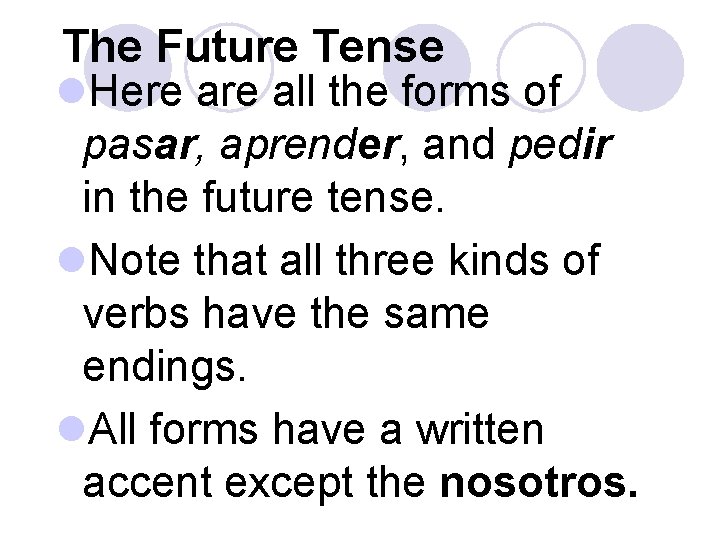
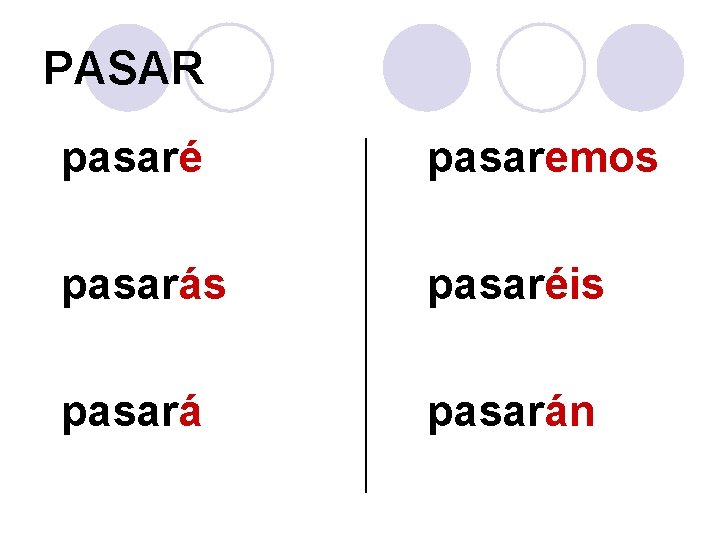
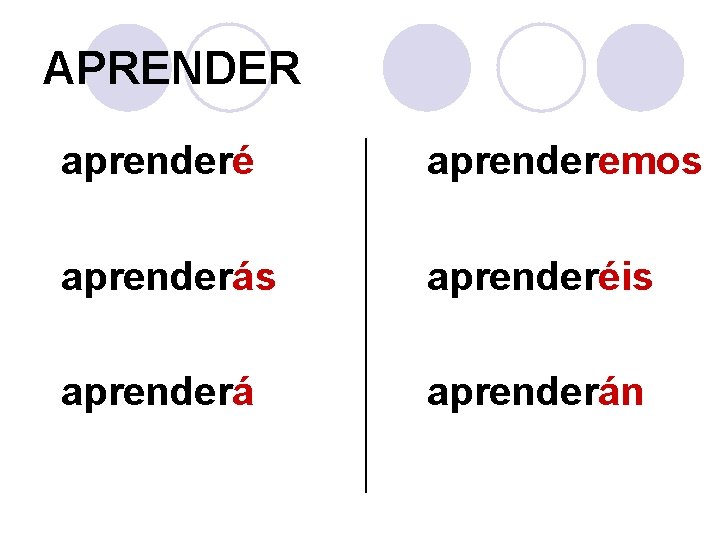
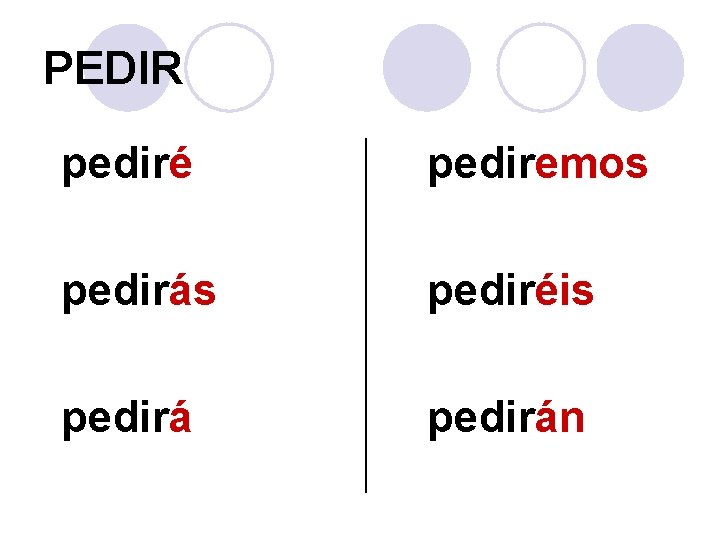
The Future Tense l. Here all the forms of pasar, aprender, and pedir in the future tense. l. Note that all three kinds of verbs have the same endings. l. All forms have a written accent except the nosotros.
PASAR pasaré pasaremos pasarás pasaréis pasarán
APRENDER aprenderé aprenderemos aprenderás aprenderéis aprenderán
PEDIR pediré pediremos pedirás pediréis pedirán
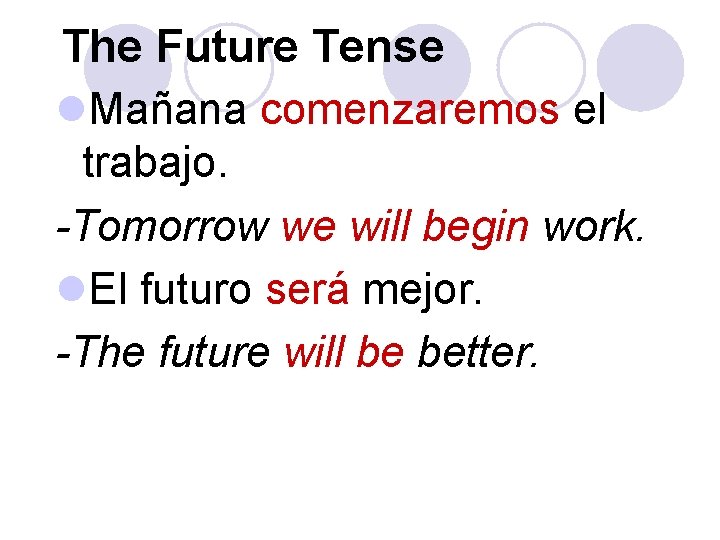
The Future Tense l. Mañana comenzaremos el trabajo. -Tomorrow we will begin work. l. El futuro será mejor. -The future will be better.
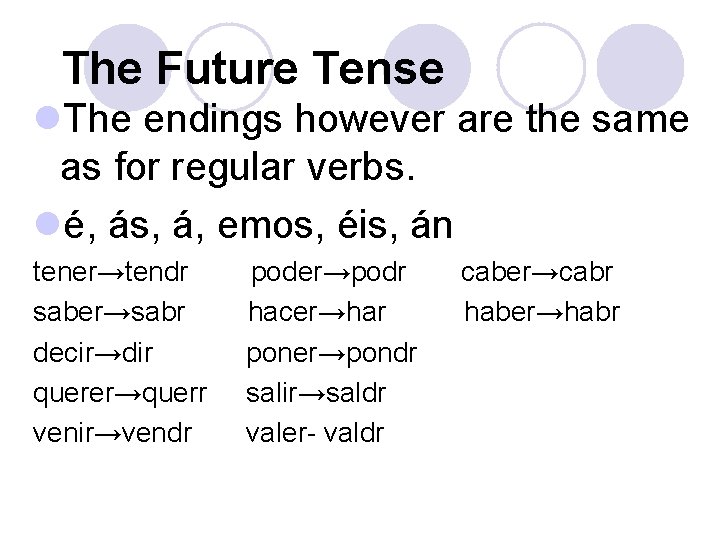
The Future Tense l. The endings however are the same as for regular verbs. lé, ás, á, emos, éis, án tener→tendr saber→sabr decir→dir querer→querr venir→vendr poder→podr hacer→har poner→pondr salir→saldr valer- valdr caber→cabr haber→habr
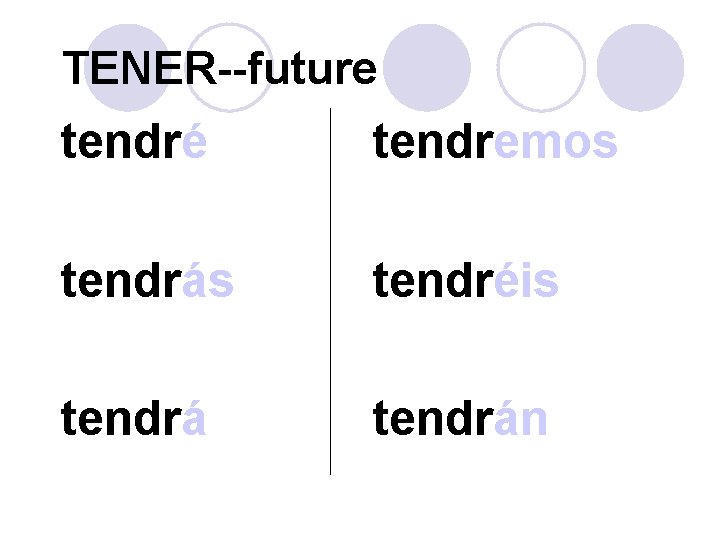
TENER--future tendré tendremos tendrás tendréis tendrán
PODER--future podré podremos podrás podréis podrán
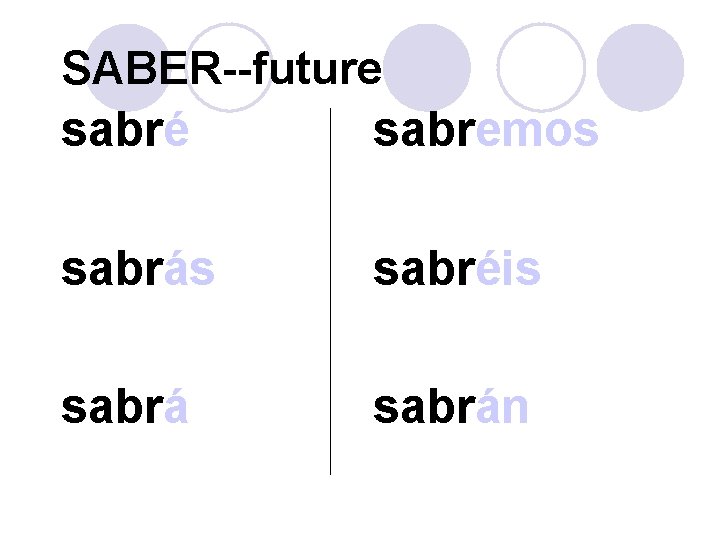
SABER--future sabré sabremos sabrás sabréis sabrán
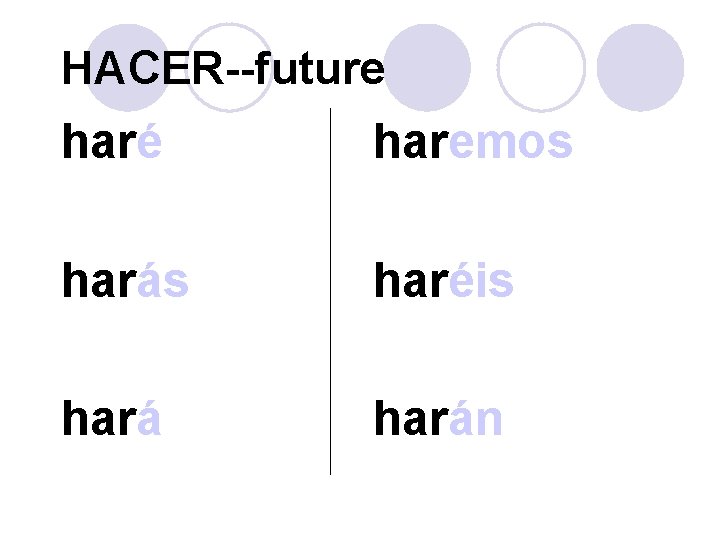
HACER--future haré haremos harás haréis harán
Future **The future tense is often translated into English as SHALL or WILL and expresses future actions or conditions.
The Future Tense l. See if you can translate these sentences.
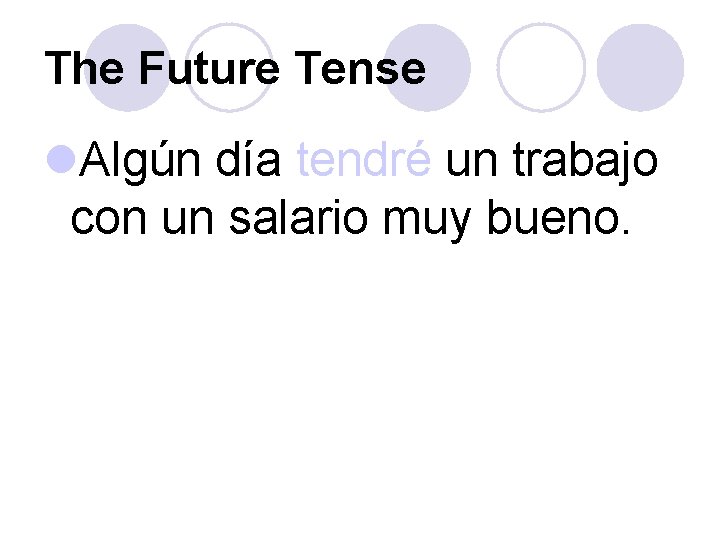
The Future Tense l. Algún día tendré un trabajo con un salario muy bueno.
The Future Tense l. En el futuro podremos usar el internet para seguir más carreras.
The Future Tense l¿Sabrás hablar más de dos idiomas en el futuro?
The Future Tense l. Remember HABER? l. Here are the forms you have learned so far: l. Hay, había, and hubo. l. There is/are, there used to be, there was.
The Future Tense l. There is a future tense form of HABER: l. Habrá l. It means: there will be
The Future Tense l. Habrá muchas oportunidades para usar el español en mi carrera.
The Future Tense l. The future is often used with si + a verb in the present tense. l. Si viajas al espacio, ¿tendrás que comer comida especial? l. Note* the use of the future gives certainty. They are not contrary to the fact like when we use conditional
The future is also used to express wonder or probability l In a question , to wonder about the present or future. ¡¿Llegará Pepe a clase? l In a statement to express speculation or guess about the present. ¡Pepe tendrá quince años. l Note* that the conditional expressed speculations, wondering, guessing about the PAST!
The Future of Probability l. In Spanish, you use the future tense to express uncertainty or probability in the present and future. l The English equivalents in these cases are: l I wonder l It’s probably l It must be
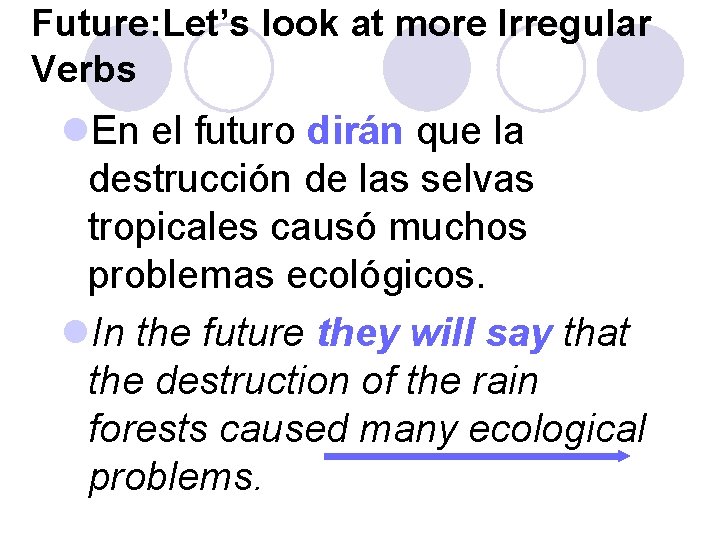
Future: Let’s look at more Irregular Verbs l. En el futuro dirán que la destrucción de las selvas tropicales causó muchos problemas ecológicos. l. In the future they will say that the destruction of the rain forests caused many ecological problems.
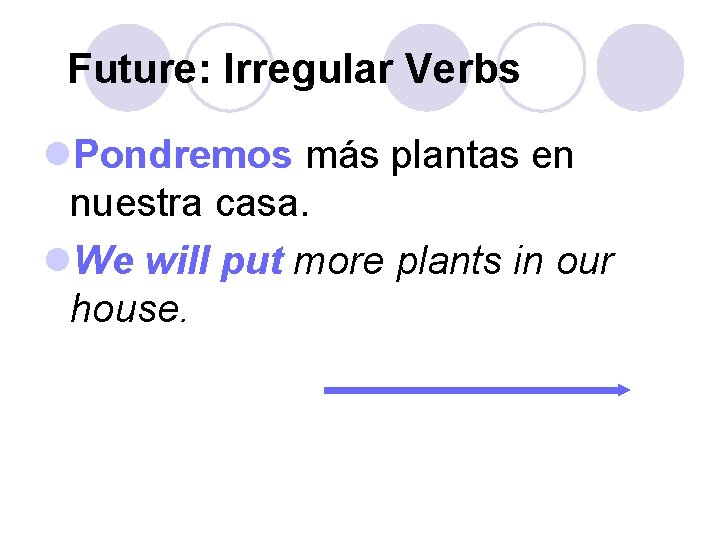
Future: Irregular Verbs l. Pondremos más plantas en nuestra casa. l. We will put more plants in our house.
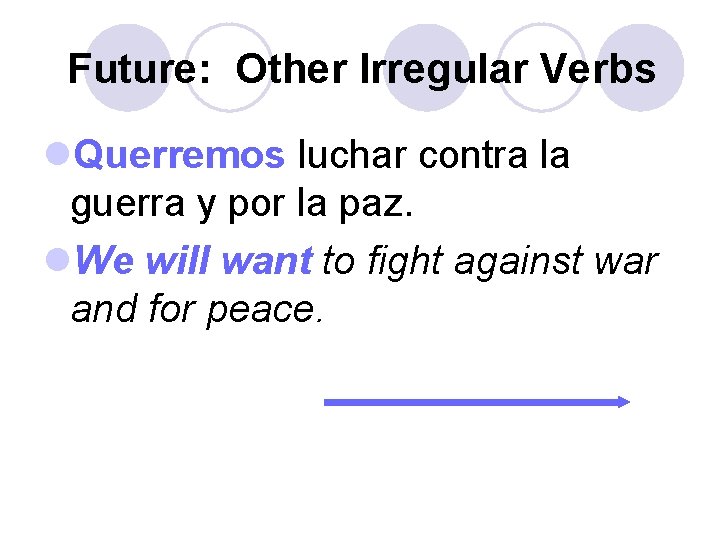
Future: Other Irregular Verbs l. Querremos luchar contra la guerra y por la paz. l. We will want to fight against war and for peace.
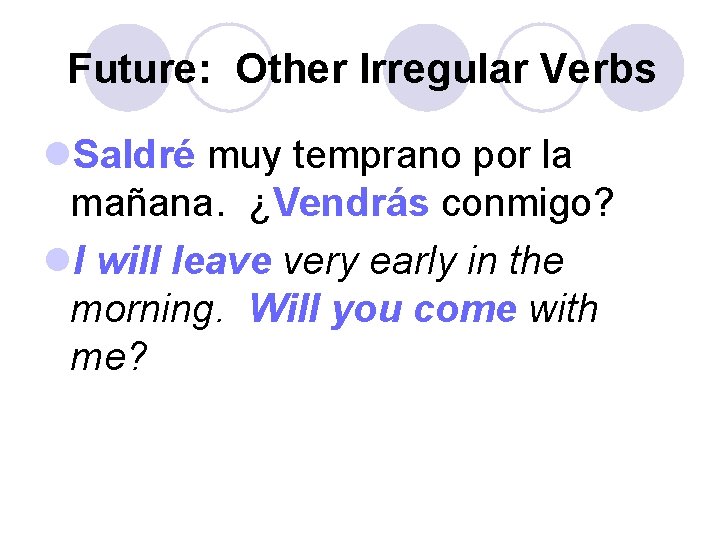
Future: Other Irregular Verbs l. Saldré muy temprano por la mañana. ¿Vendrás conmigo? l. I will leave very early in the morning. Will you come with me?
The Future Perfect l Yes, there is a future perfect too l Use the present perfect tense to express what will have happened by a certain time. l To form the future perfect, use the future of the verb haber with the past participle of the verb.
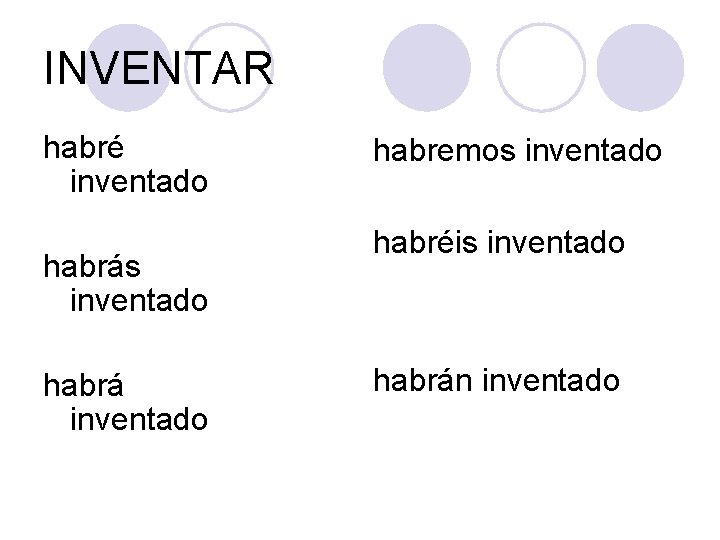
INVENTAR habré inventado habrás inventado habrá inventado habremos inventado habréis inventado habrán inventado
The Future Perfect l. Para el año 2050 los científicos habrán descubierto otras fuentes de energía. l. By 2050, scientist will have discovered other energy sources.
The Future Perfect l. The future perfect tense is often used with dentro de + time. l. Dentro de cinco años, habremos aprendido mucho sobre la genética. l. In five years, we will have learned a lot about genetics.
The Future Perfect l. You also use the future perfect tense to speculate about something that may have happened in the past. (like the conditional)
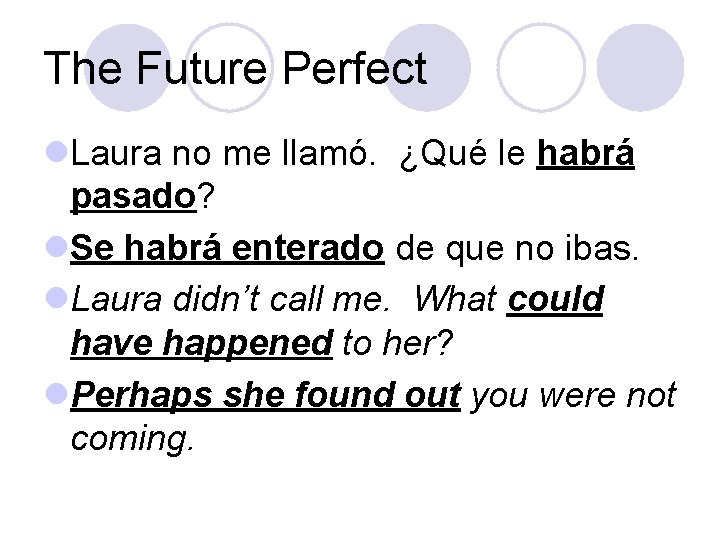
The Future Perfect l. Laura no me llamó. ¿Qué le habrá pasado? l. Se habrá enterado de que no ibas. l. Laura didn’t call me. What could have happened to her? l. Perhaps she found out you were not coming.