
The Future of US Fisheries Historical backgroundJoanna Life
The Future of US Fisheries • • • Historical background—Joanna Life of a Fisherman—Meghan Fisheries Management—Steve Specific Species Management—Leigh Aquaculture—Zach Future of NC Fisheries—Drew
Fisheries Going…Gone Joanna Krohn
Fish Facts • 500 mya • Nourishment: provides 16% of protein to the World’s populations • Provide food, work, culture • Uses: -Menhaden used to make glue -puffer fish for asthma
Fishing Industry • Employs millions • In North Carolina: -reliant on Industry for tourism, commercial or recreational fisheries, and military activity -5, 500 commercial fisherman -9, 000 RCGL -2 million recreational anglers
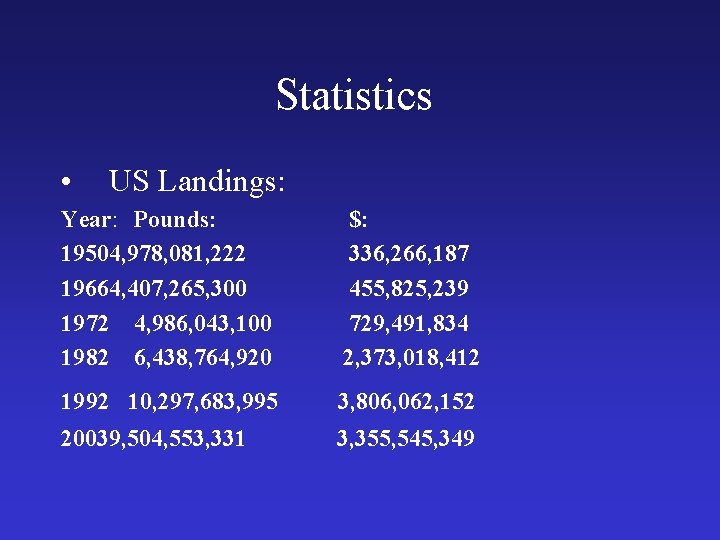
Statistics • US Landings: Year: Pounds: 19504, 978, 081, 222 19664, 407, 265, 300 1972 4, 986, 043, 100 1982 6, 438, 764, 920 $: 336, 266, 187 455, 825, 239 729, 491, 834 2, 373, 018, 412 1992 10, 297, 683, 995 20039, 504, 553, 331 3, 806, 062, 152 3, 355, 545, 349
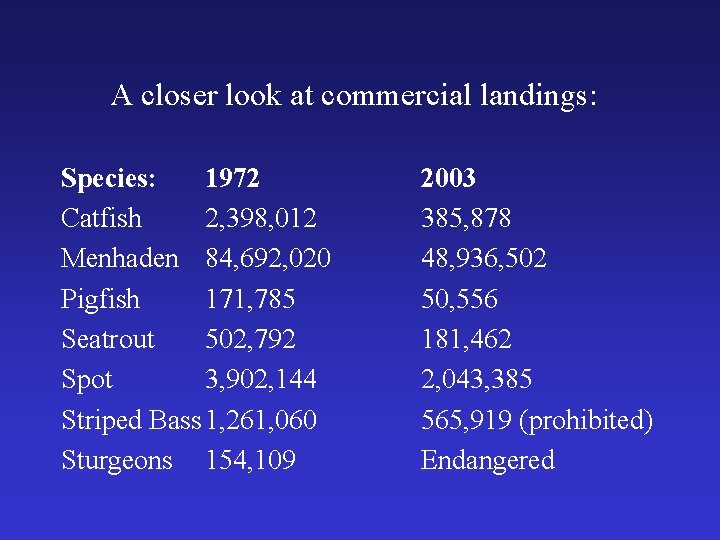
A closer look at commercial landings: Species: 1972 Catfish 2, 398, 012 Menhaden 84, 692, 020 Pigfish 171, 785 Seatrout 502, 792 Spot 3, 902, 144 Striped Bass 1, 261, 060 Sturgeons 154, 109 2003 385, 878 48, 936, 502 50, 556 181, 462 2, 043, 385 565, 919 (prohibited) Endangered
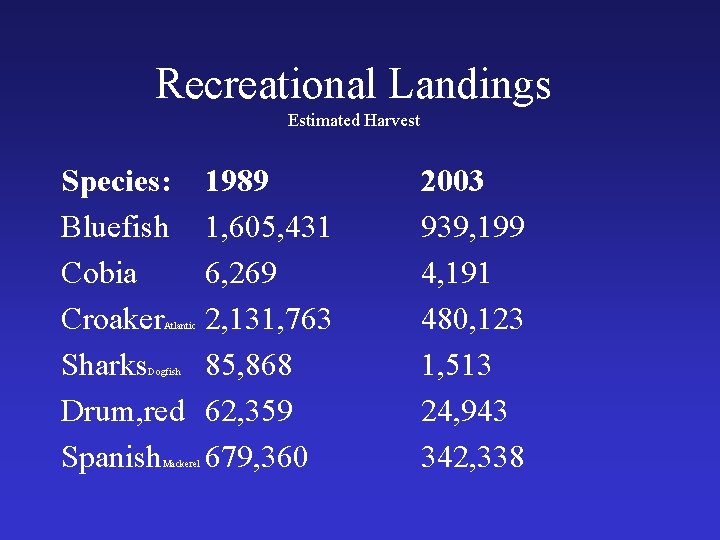
Recreational Landings Estimated Harvest Species: Bluefish Cobia Croaker Sharks Drum, red Spanish Atlantic Dogfish Mackerel 1989 1, 605, 431 6, 269 2, 131, 763 85, 868 62, 359 679, 360 2003 939, 199 4, 191 480, 123 1, 513 24, 943 342, 338
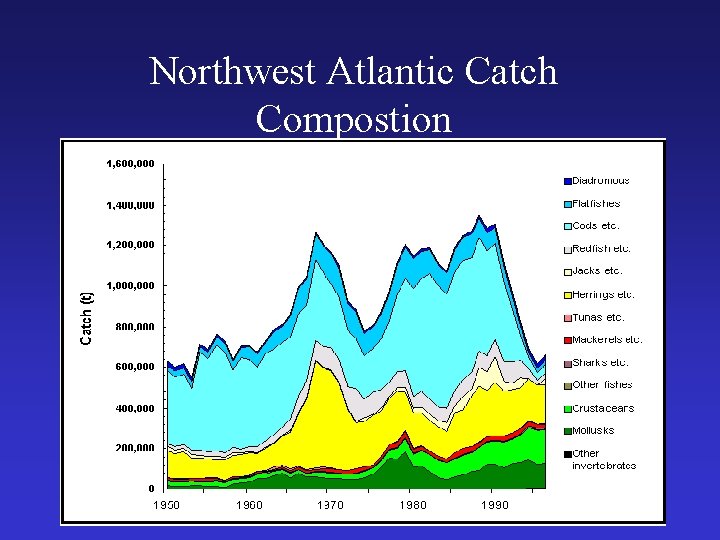
Northwest Atlantic Catch Compostion
Who’s the culprit? • Pollution (Dioxins-paper mills, Mercury, PCBs) • Oceanic temperature rise • Overfishing: 25 -30% fish pop. Overfished -government aid->providing low interest loans for boat building, currently yields 3. 5 -4 million commercial fishing boats • Trawling: 50% of continental shelf -Bycatch->kills innocent by-swimmers -long-liners->wiping out swordfish & others -“ghost nets”->killing dolphins, birds, turtles, & sharks *also destroys our coral reefs that help protect fish populations & provide habitat
Modern Fishing • • Spotter planes help boats pursue schools Dynamite and cyanide Aquaculture Restrictions in size, season, quantity etc. -big fish are the sexually mature • Advanced technology for temperature and depth sensors(Military sonar), as well as sturdier winches and cables, & more powerful engines * 60 tonnes of fish in 20 minutes!
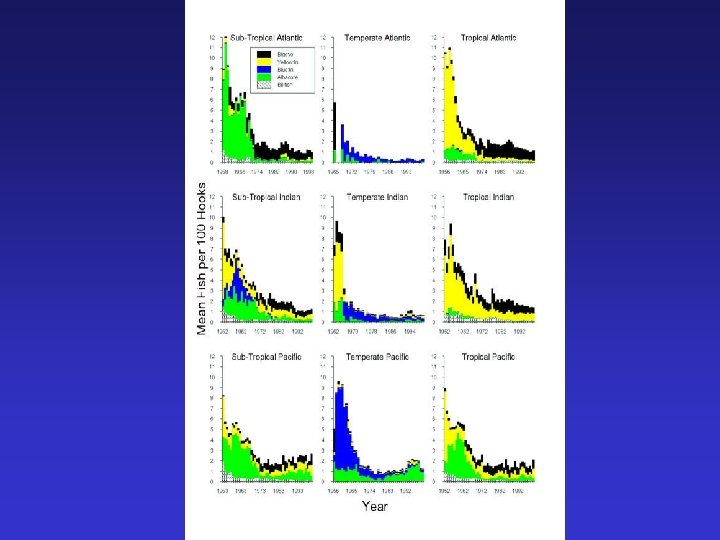
Jellyfish sandwich anyone? • North Atlantic has one-sixth the high quality “table fish”(ie Cod, Tuna) that it posessed in 1900’s • In the 1960’s 21 lbs person, now 7 lbs! • Price of seafood has risen 20 -fold since 1950 • Sturgeon population decreased 90% in last 20 years
It doesn’t take a Dodo bird to figure out… That the world’s oceans are headed for complete collapse, quite possibly by the year 2010.

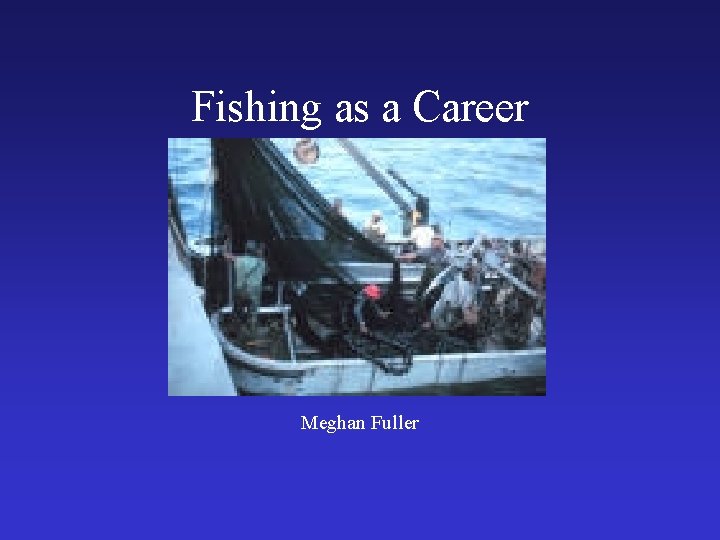
Fishing as a Career Meghan Fuller
Pros of a Fishing Lifestyle 1) Seasonal Job a) Fish migration daily to annual, and distances from a few meters to thousands of kilometers b) Change in water temperature (seasonal migration), to mate/spawn, or to for feeding patterns c) Classifications of migratory marine fish a) Anadromous ex: Salmon b) Oceanodromous ex: Swordfish, Tuna
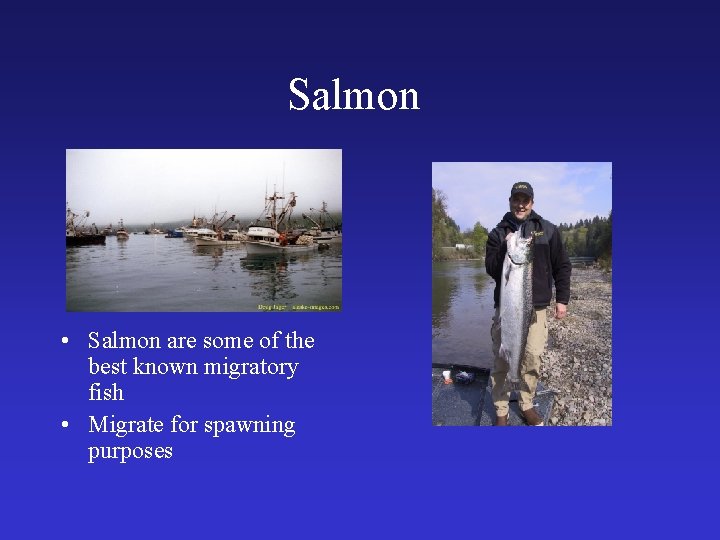
Salmon • Salmon are some of the best known migratory fish • Migrate for spawning purposes
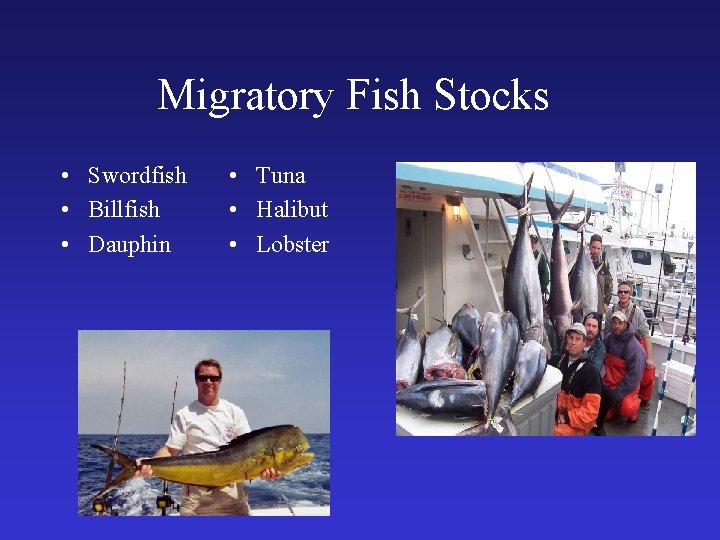
Migratory Fish Stocks • Swordfish • Billfish • Dauphin • Tuna • Halibut • Lobster

Swordfish Distribution
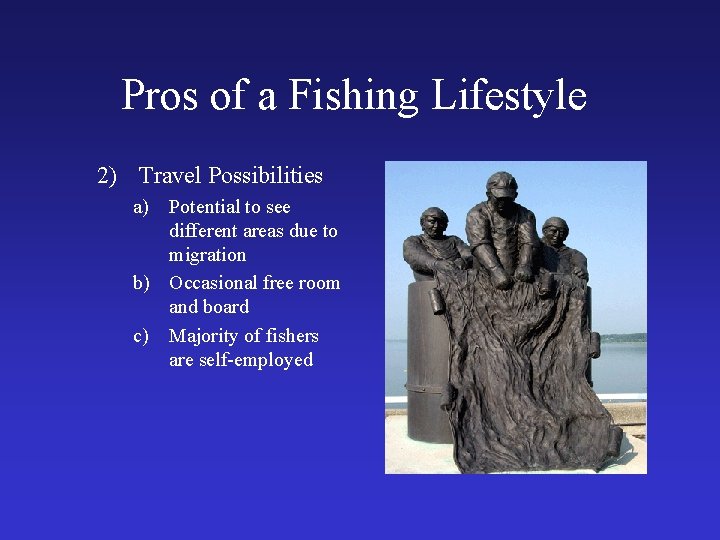
Pros of a Fishing Lifestyle 2) Travel Possibilities a) Potential to see different areas due to migration b) Occasional free room and board c) Majority of fishers are self-employed
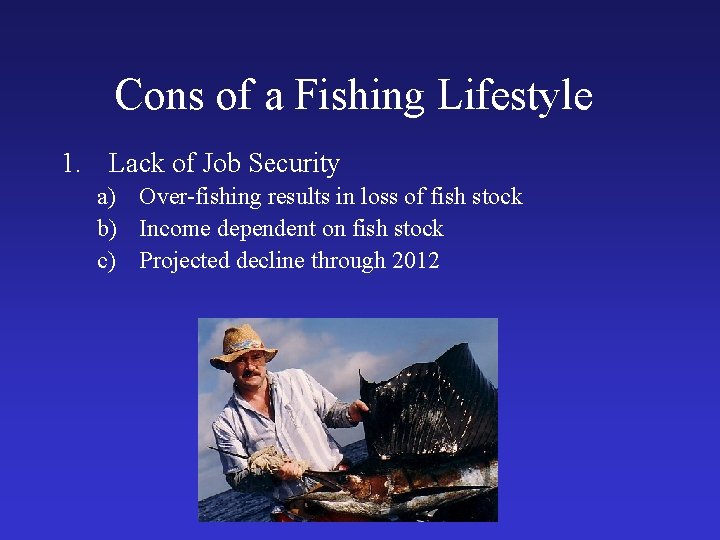
Cons of a Fishing Lifestyle 1. Lack of Job Security a) Over-fishing results in loss of fish stock b) Income dependent on fish stock c) Projected decline through 2012
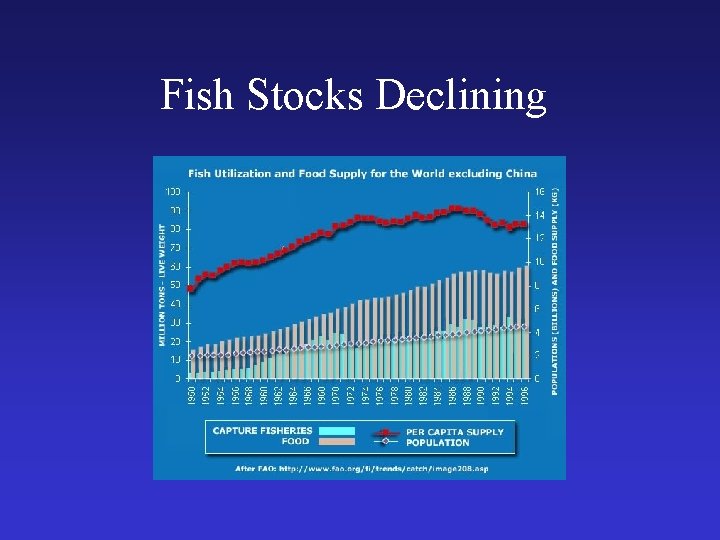
Fish Stocks Declining
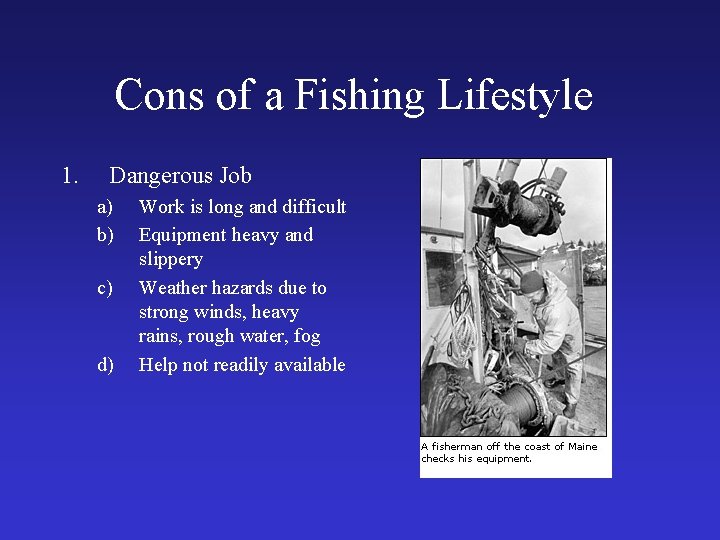
Cons of a Fishing Lifestyle 1. Dangerous Job a) b) c) d) Work is long and difficult Equipment heavy and slippery Weather hazards due to strong winds, heavy rains, rough water, fog Help not readily available
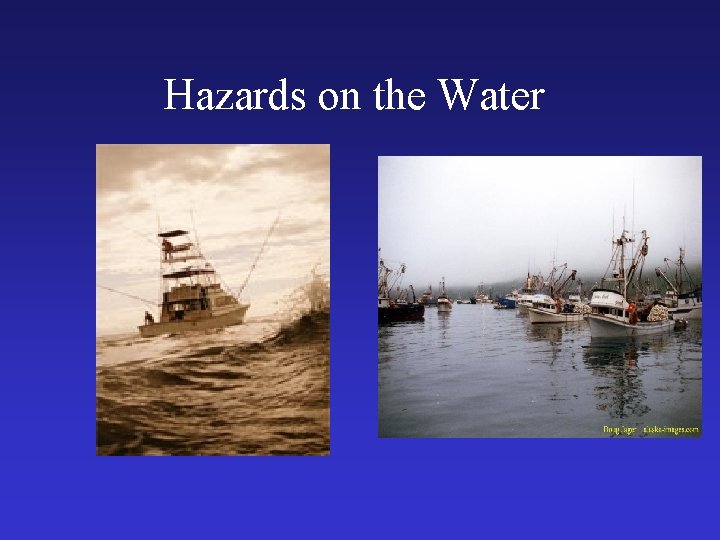
Hazards on the Water
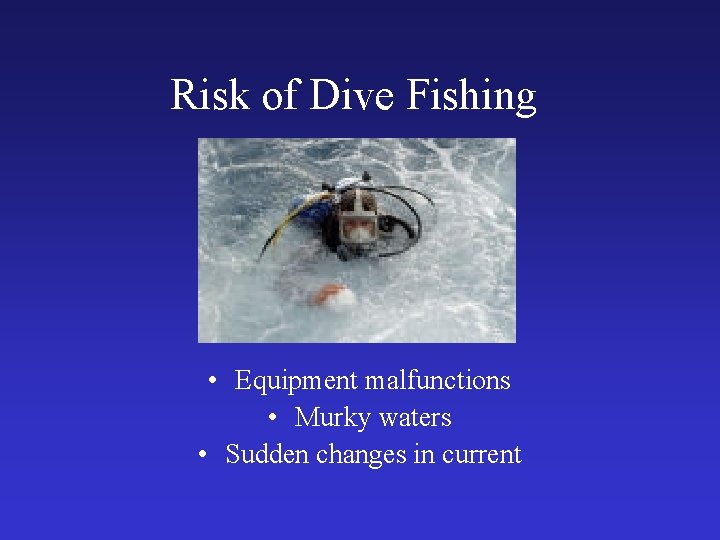
Risk of Dive Fishing • Equipment malfunctions • Murky waters • Sudden changes in current

Fisheries Management Steve Artabane How are Fisheries Managed? Who is Responsible for Management?
History of Fisheries Management • Magnuson Fishery Conservation and Management Act of 1976 • Congressionally Mandated • Renamed Magnuson-Stevens Fishery Conservation and Management Act 1996 • Sustainable Fisheries Act 1996 amended • Establishes 8 Regional Management Councils to govern fisheries
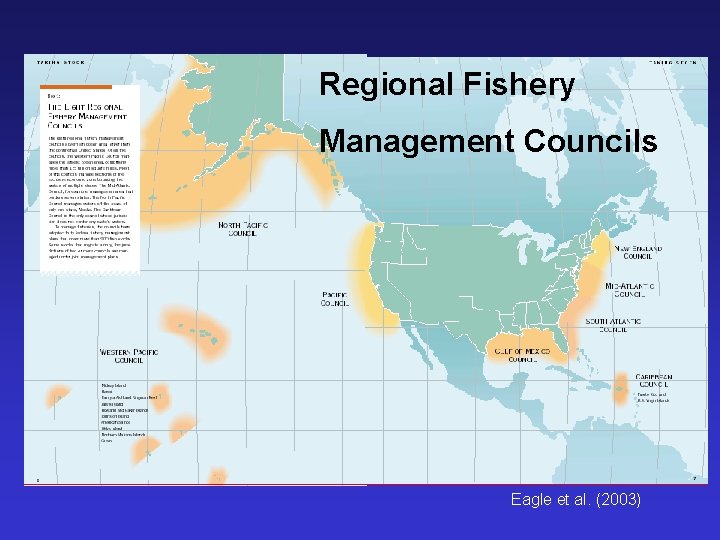
Regional Fishery Management Councils Eagle et al. (2003)
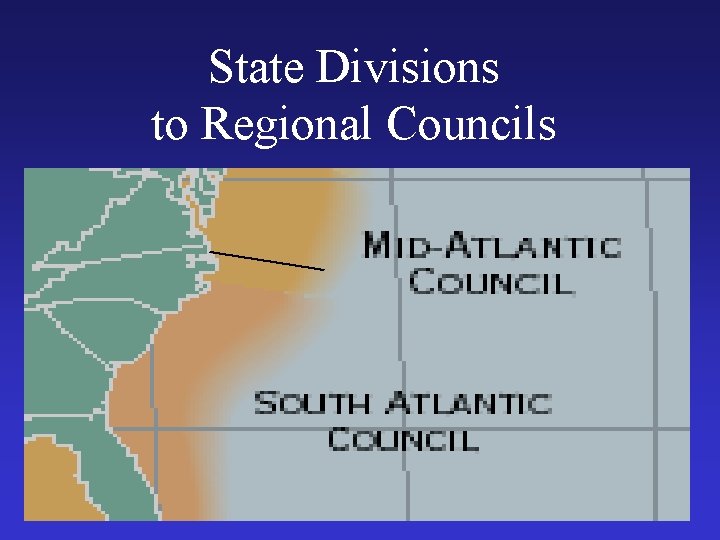
State Divisions to Regional Councils
Regional Management Councils • Establish Fishery Management Plans – Determine amount of Fishing Effort – Numbers of Participants – Amount of Catch – Gear Restrictions – Assess Maximum Sustainable Yield or Optimal Yield – Take account for Communities impacted
Individual Fisherman Restrictions • Permits • Days at Sea – VMS System for Scallop Boats – Crew Limits • Individual Limits • Restricted/Closed Areas • Gear Restrictions – Mesh Sizes
South Atlantic Regional Fisheries Management Council • • NOAA • State Obligatory Seats US State Dept. • At Large Seats US F&WS NC Div Marine Fish. 16 Total Members South Carolina DNR Georgia DNR Florida Fish and Wildlife South Atlantic Council Sub-Committees
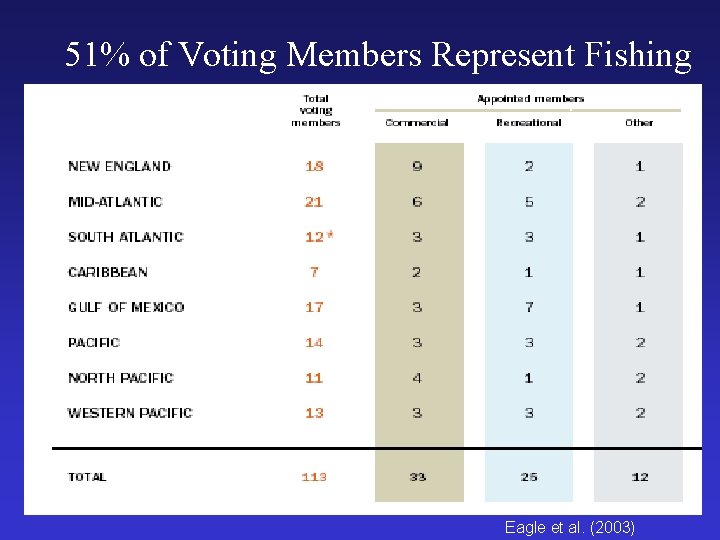
51% of Voting Members Represent Fishing Eagle et al. (2003)
Essential Fish Habitat • Fisheries managers are responsible for determining if EFH exists • Congress defined EFH as "those waters and substrate necessary to fish for spawning, breeding, feeding, or growth to maturity" (16 U. S. C. 1802(10)). (from NOAA) • This can is difficult to Determine • Easy for Salmon, can be hard for Highly Migratory Species like Tuna
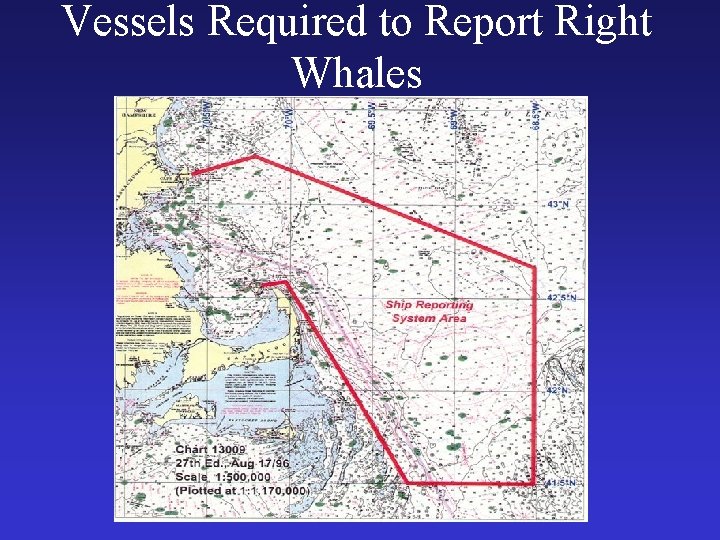
Vessels Required to Report Right Whales
Role of National Marine Fisheries Service • Scientific Data Collection • NEFSC Conducts – Fall, Spring, Winter Bottom Trawls – Summer Scallop Surveys – Ocean Quahog and Surf Clam Surveys – Ecosystem Monitoring – Whale Surveys • Using Same Methods Year After Year
Role of US Coast Guard • Fisheries Law Enforcement • Responsible for Boarding Fishing Vessels and Checking for evidence of: – Safety Infractions – Illegal Activities – Permit Violations • USCG Personnel will check permits, check cargo, measure and inspect gear, and measure, ID and count fish
Role of NOAA • NOAA General Counsel prosecutes violators • On judgment of USCG, catch can be seized • Vessel is escorted to port • NOAA attorneys bring Owner, Captain and/or Permit Holder to Trial • National Observer Program
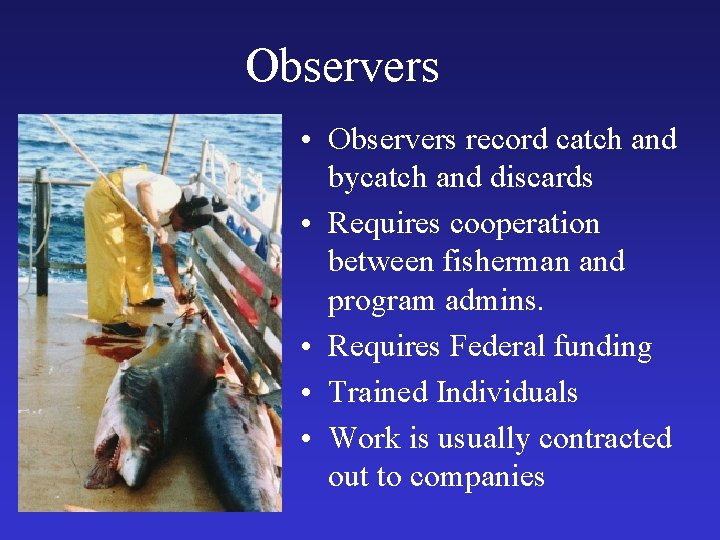
Observers • Observers record catch and bycatch and discards • Requires cooperation between fisherman and program admins. • Requires Federal funding • Trained Individuals • Work is usually contracted out to companies

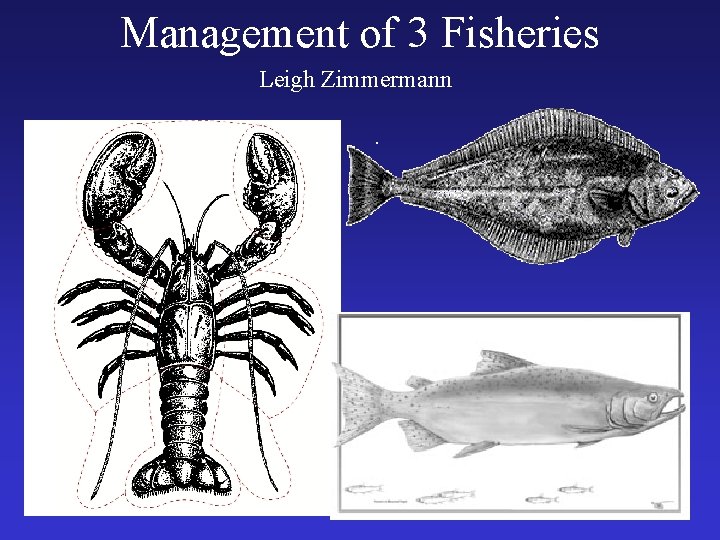
Management of 3 Fisheries Leigh Zimmermann
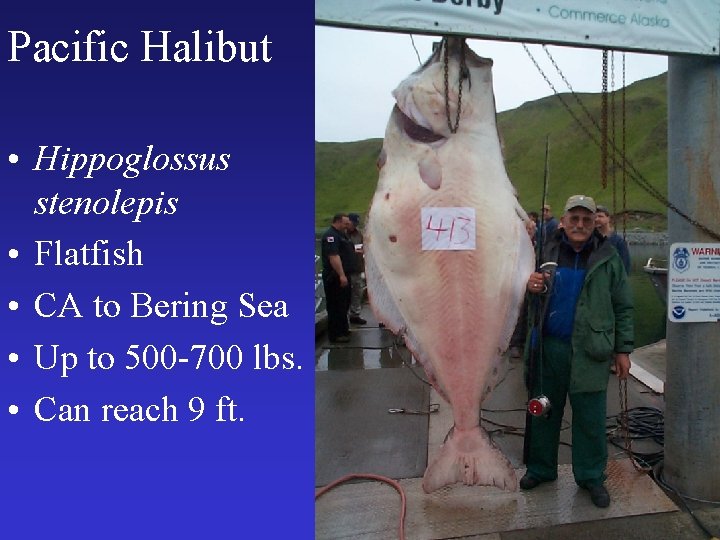
Pacific Halibut • Hippoglossus stenolepis • Flatfish • CA to Bering Sea • Up to 500 -700 lbs. • Can reach 9 ft.
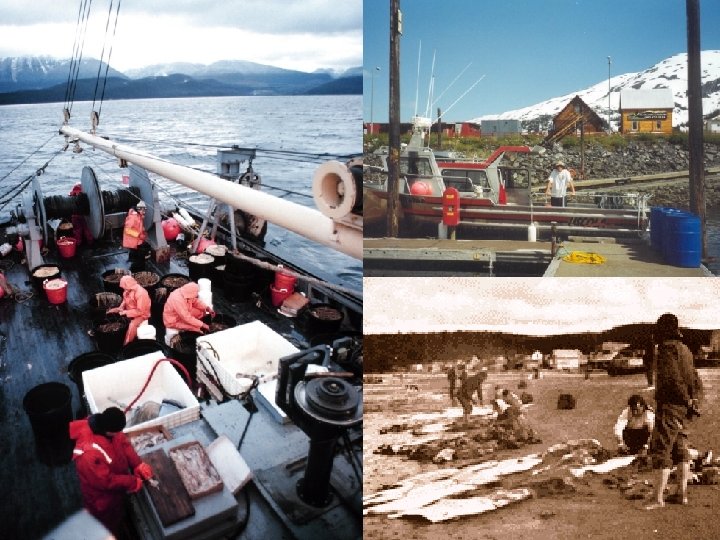
IPHC • International Pacific Halibut Commission • 1924 • IFQ • Derby system • User groups
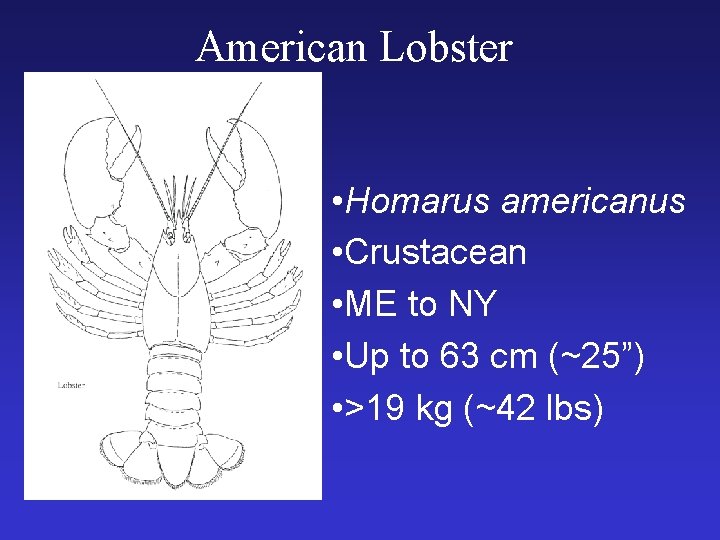
American Lobster • Homarus americanus • Crustacean • ME to NY • Up to 63 cm (~25”) • >19 kg (~42 lbs)
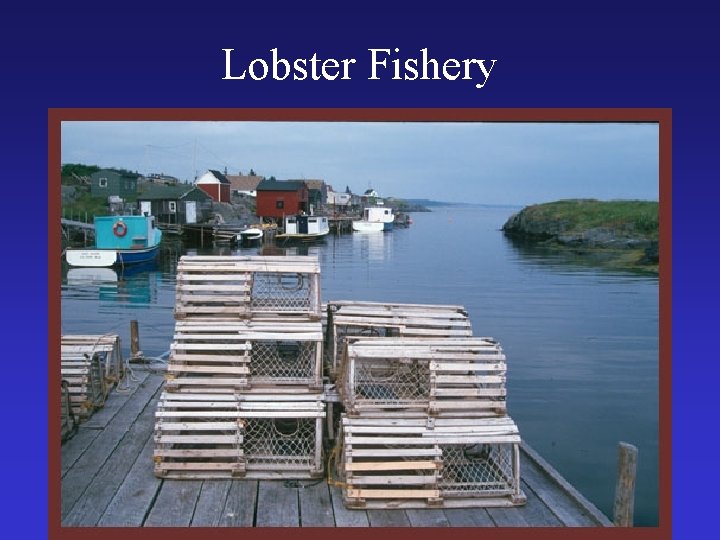
Lobster Fishery
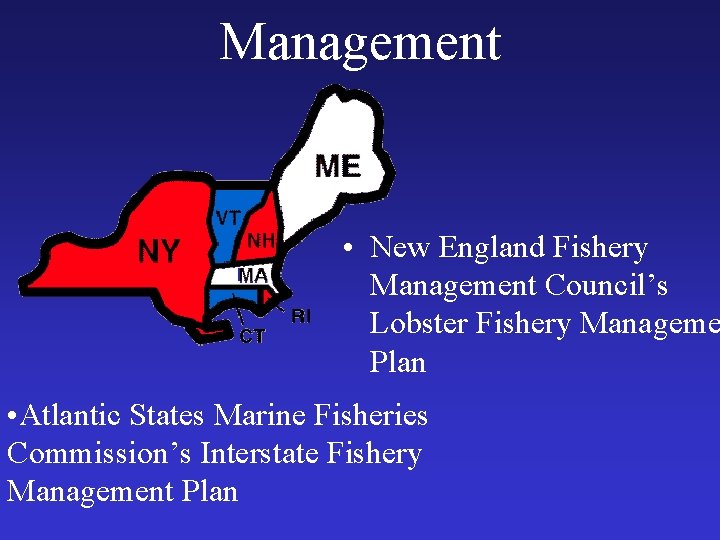
Management • New England Fishery Management Council’s Lobster Fishery Manageme Plan • Atlantic States Marine Fisheries Commission’s Interstate Fishery Management Plan
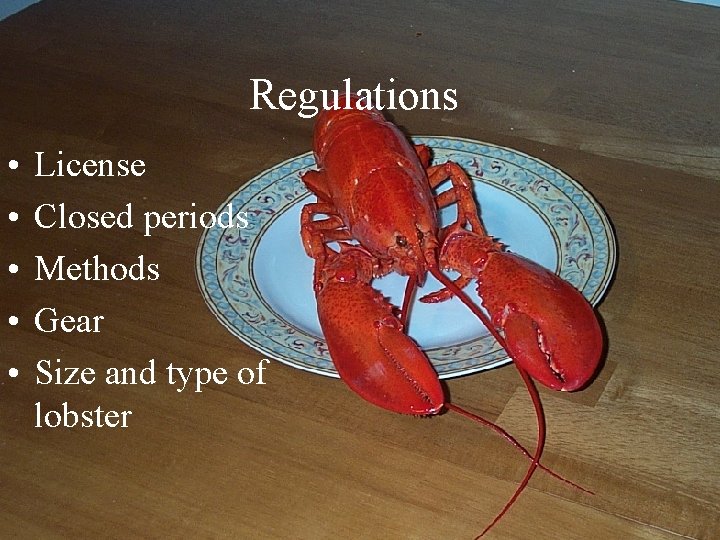
Regulations • • • License Closed periods Methods Gear Size and type of lobster
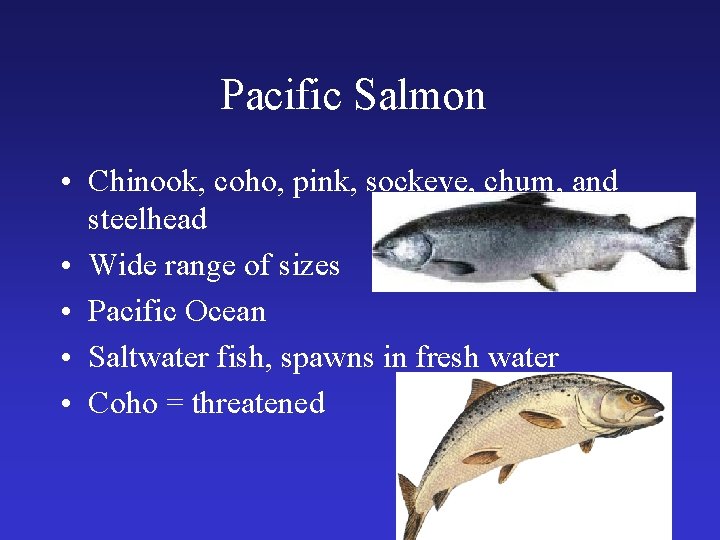
Pacific Salmon • Chinook, coho, pink, sockeye, chum, and steelhead • Wide range of sizes • Pacific Ocean • Saltwater fish, spawns in fresh water • Coho = threatened
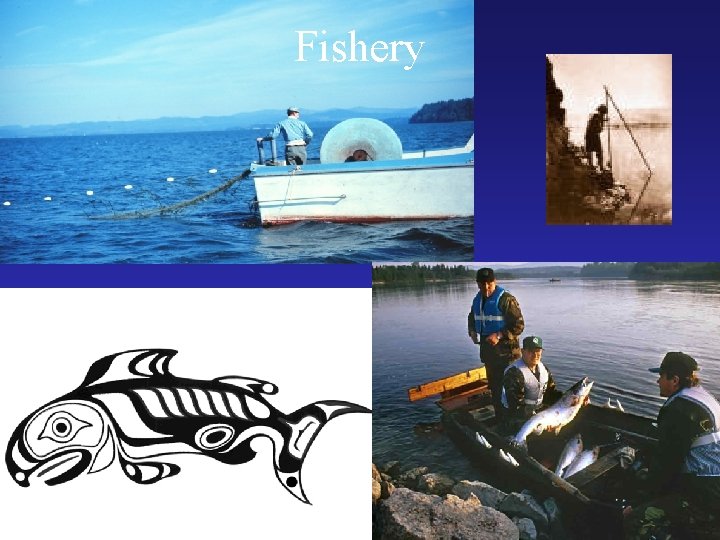
Fishery
Management • • • Pacific Salmon Treaty Alaska EEZ Season length Quotas Bag limits Salmon Technical Team

Aquaculture Reducing Stress On Collapsing Fisheries Zachary Fink
Introduction What is Aquaculture?
Aquaculture - Form of agriculture that involves the propagation, cultivation, and marketing of aquatic animals and plants in a controlled environment. • In principle, very similar to traditional earthen agriculture. • Difference is technique and management
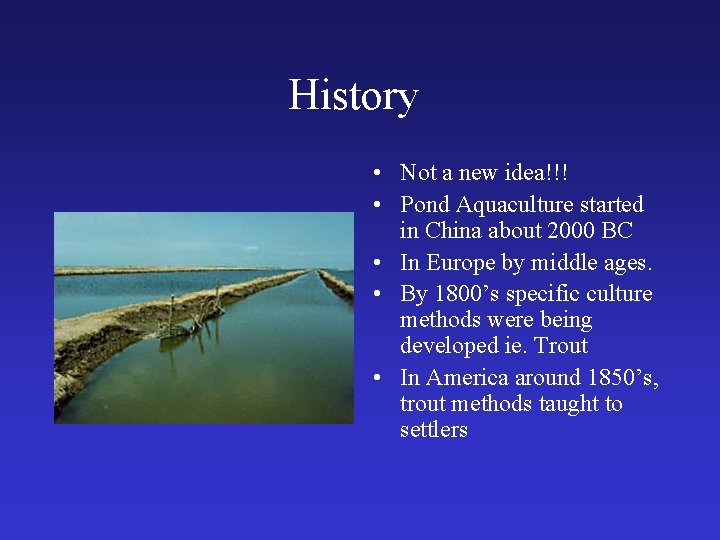
History • Not a new idea!!! • Pond Aquaculture started in China about 2000 BC • In Europe by middle ages. • By 1800’s specific culture methods were being developed ie. Trout • In America around 1850’s, trout methods taught to settlers
History • Not too important throughout most of world history • Many early attempts at fish cultivation unsuccessful • However, currently growing in importance by leaps and bounds
Why The Delay? Capture VS Culture • Simple economics -Cheaper and easier to capture than to grow -Due to sheer abundance • Technology -Advancements continually occurred in fishing but not so with aquaculture • Result -Over fishing leads to fishery collapse and the need for aquaculture advancements
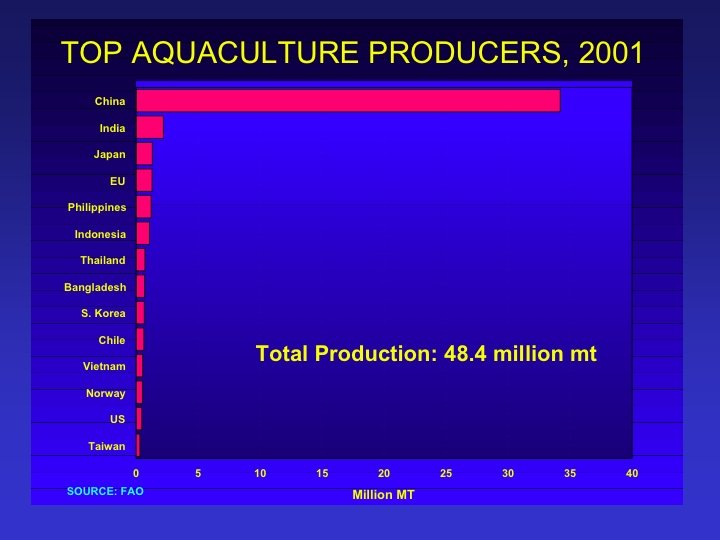
Aquaculture Now • • Fastest growing food production industry. Average growth 10% per year 1/3 of all seafood consumed comes from aquaculture Aquaculture growth currently more rapid than traditional agriculture and commercial fishing • Trend- Aquaculture is beginning to replace commercial fishing
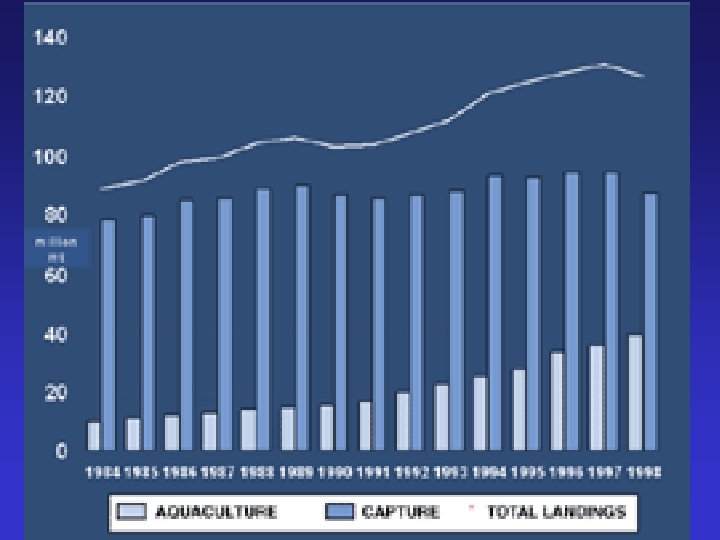

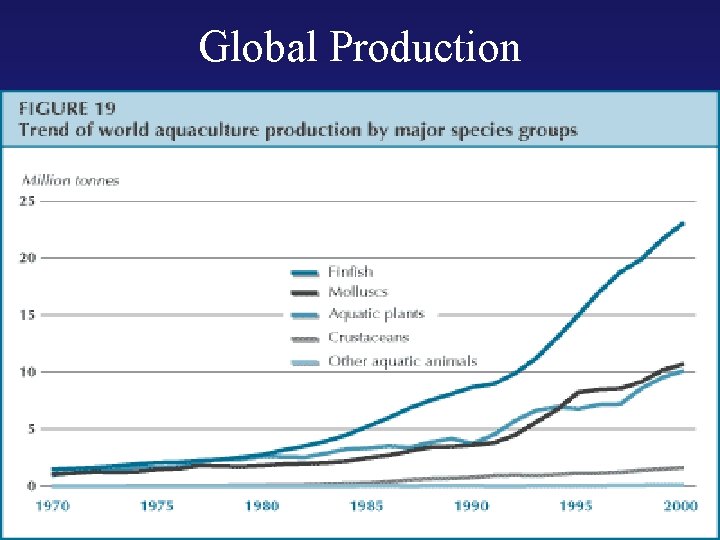
Global Production
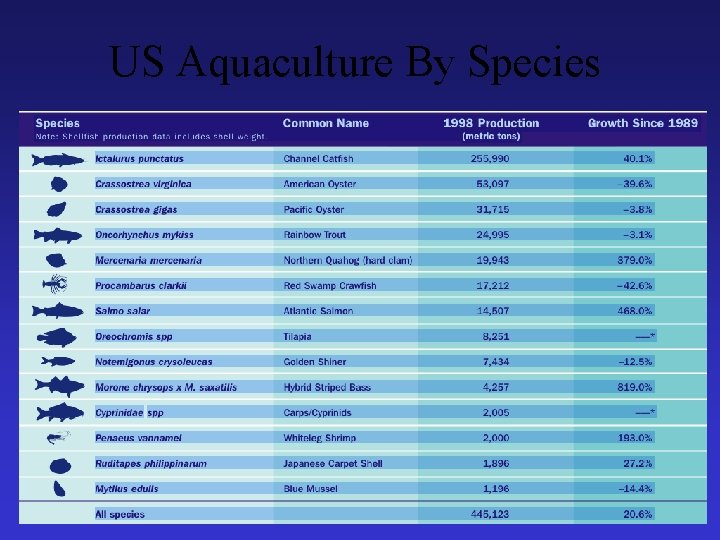
US Aquaculture By Species
How its Done
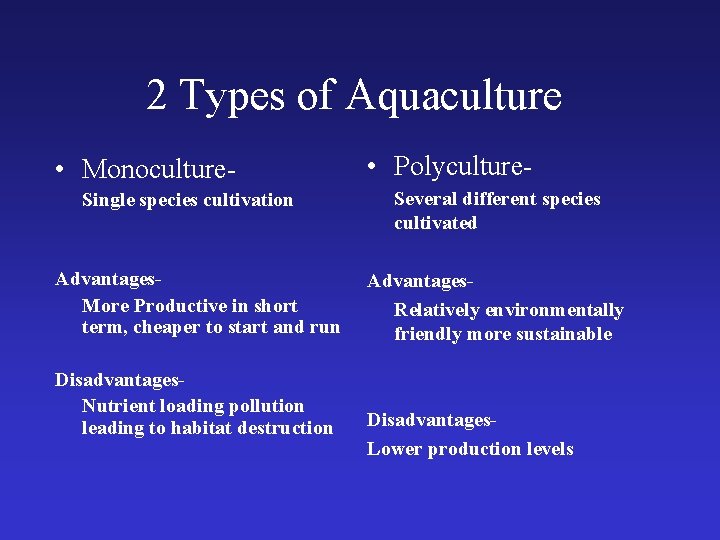
2 Types of Aquaculture • Monoculture. Single species cultivation Advantages. More Productive in short term, cheaper to start and run Disadvantages. Nutrient loading pollution leading to habitat destruction • Polyculture. Several different species cultivated Advantages. Relatively environmentally friendly more sustainable Disadvantages. Lower production levels
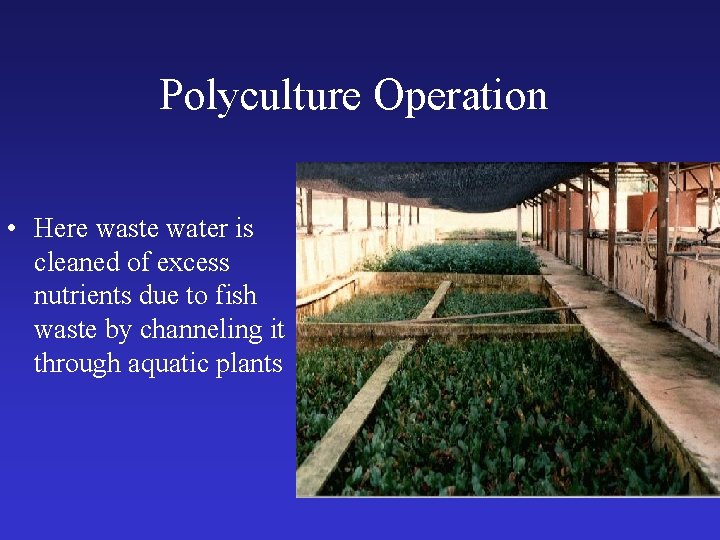
Polyculture Operation • Here waste water is cleaned of excess nutrients due to fish waste by channeling it through aquatic plants
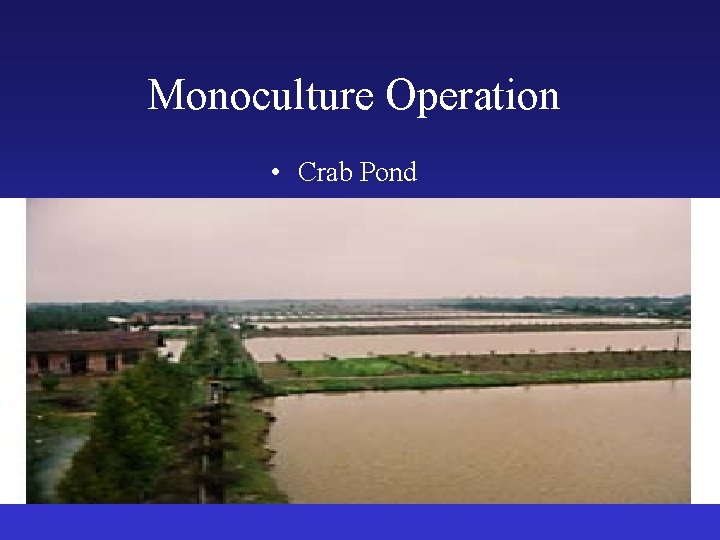
Monoculture Operation • Crab Pond
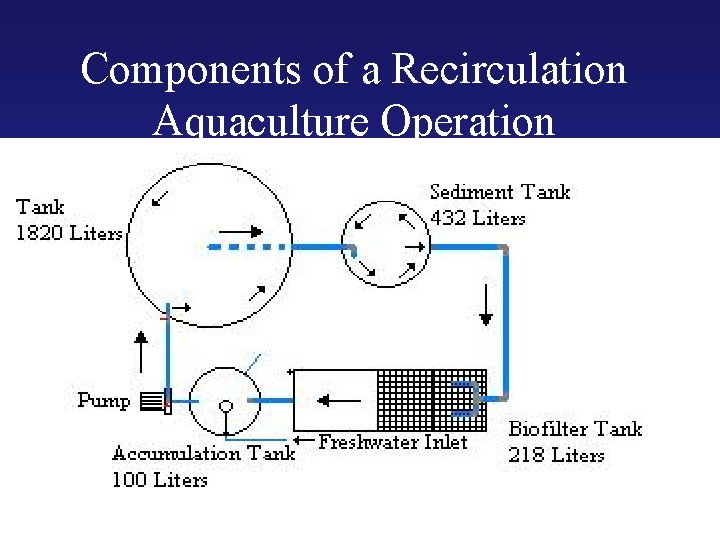
Components of a Recirculation Aquaculture Operation
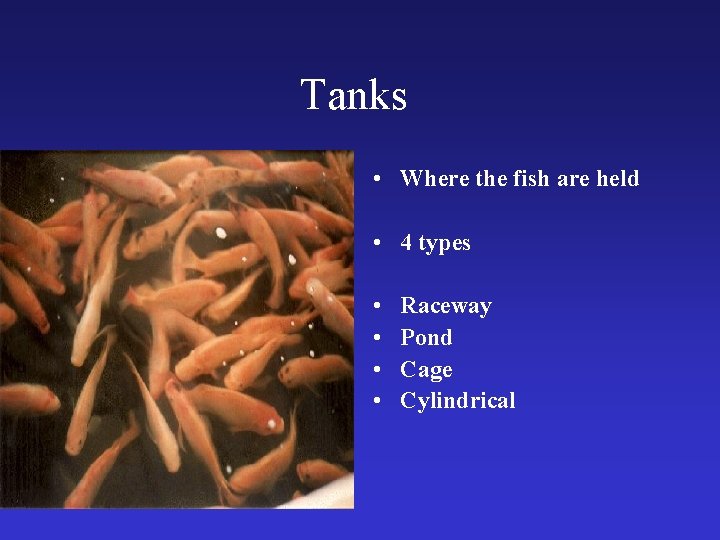
Tanks • Where the fish are held • 4 types • • Raceway Pond Cage Cylindrical
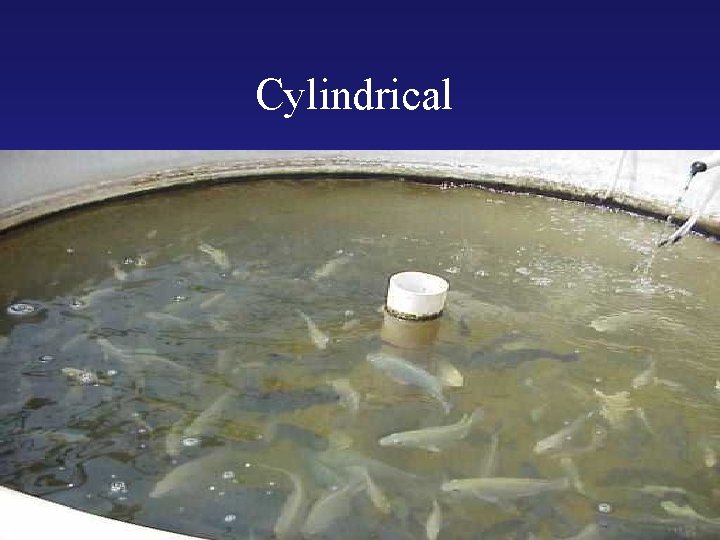
Cylindrical
Cylindrical • Constructed of any non-corrosive, environmentally friendly substance, usually fiberglass, concrete or steel. • Advantages- Self-cleaning -Water naturally flows about the outside of the tank, forcing solids into the center drain -High production Disadvantages-Filter cleaning and fish extraction both cumbersome due to cylindrical shape -Costly to maintain due to necessary filters, pumps and aeration devices
Cylindrical Tanks-Additional Components • Closed system aquaculture, Most advanced expensive, productive and environmentally friendly • Can include gene therapy, breeding faster growing fish • Pumps- Required for circulation throughout system and for aeration to increase dissolved O 2 • Biofilters- needed to remove dissolved waste (ammonia and nitrite) • Additional holding tanks for H 2 O as it goes through various stages of treatment
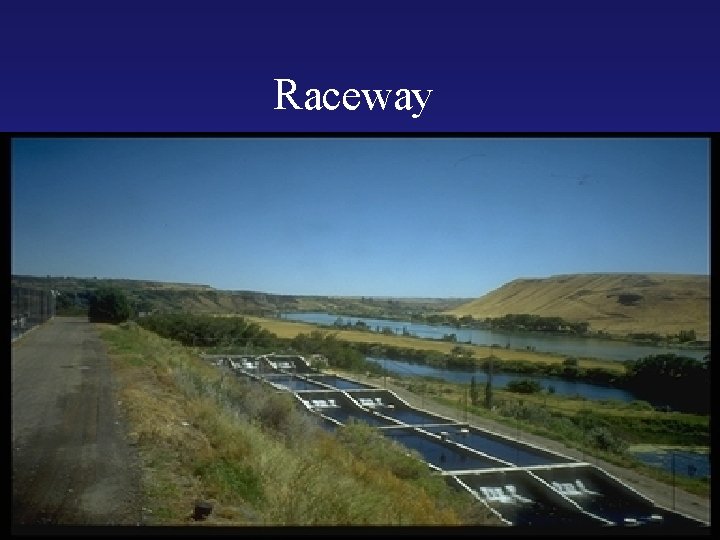
Raceway
Raceway • Advantages – Made of simple materials, bricks, poured concrete, require little specialized labor, easy to expand. Built with a slight incline – Water transfer highly efficient, water continually flows in and out of system – Screens can be placed anywhere along raceway, dividing a single unit into two or more
Raceways: Optional Components • Curved Bottom- Traps solids for easier extraction by vacuum • Aeration pumps- Adding O 2 increases ability to support more fish with less water, also serves to concentrate solid waste in specific areas (between pump outlets)
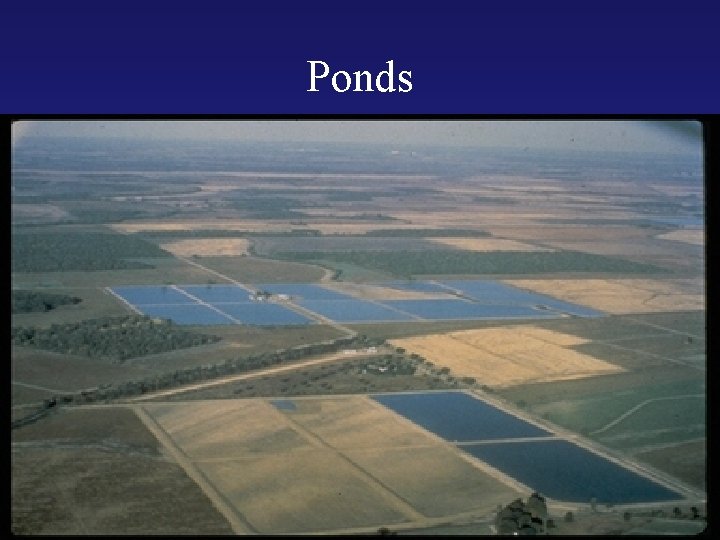
Ponds
Ponds • Advantages – Easiest to construct and manage – Very productive in short term Disadvantages -Poor water quality -Often unsustainable -Environmental degradation during construction, continual build up of waste -Requires periodic draining
Ponds: Optional Components • Wastewater pond- Nutrient rich water can be pumped/transferred to a holding pond for treatment. Typically treatment involves polyculture- nutrient rich water used for irrigation of crops.
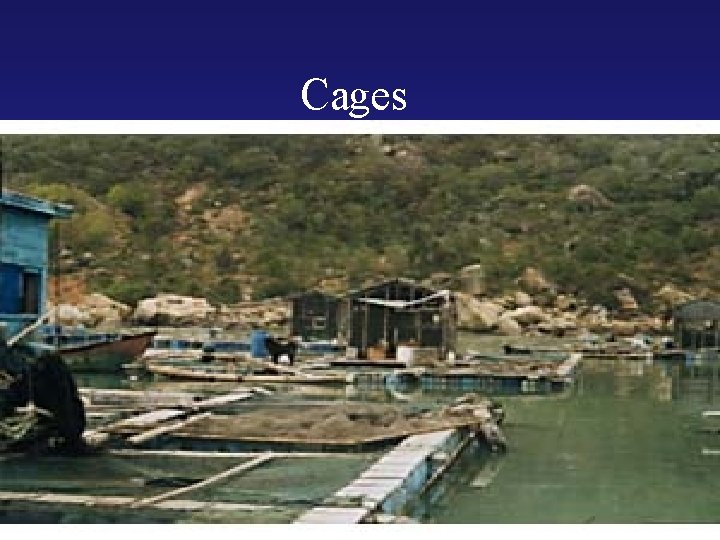
Cages
Cages /4 Types • Fixed- Soft netting attached to posts anchored in a lake or river. – Cheap and easy, but requires soft bottom and shallow water Floating- Buoyant collar supports soft netting -Any size or shape, mobile Submersible- Depth variable due to variable buoyancy -Poor weather conditions are overcome by lowering to calmer waters Submerged- Anchored in riverbed -Takes advantage of naturally flowing water, but costlier and difficult to extract fish at depth
Downfalls of Cages • Problem- Completely integrated with natural environment • Main problem of aquaculture, water quality degradation spreads into natural environment
Aquaculture Overall Pros/Cons/Issues
Pros • Recent trends in production suggest that Aquaculture has a vast potential for alleviating over fishing • The status of global fisheries dictates that commercial fishermen will continue to struggle. Aquaculture presents job opportunities. • Natural fisheries stock enhancement? !? !?
Cons… • Environmental degradation – Effluent stimulates harmful bacteria – Construction of ponds often destroys environment • State of the art facilities are expensive and currently are the only systems with little environmental impact • Possibility for invasive species escaping to natural environment • Bioaccumulation • Potential transformation of coastal zone
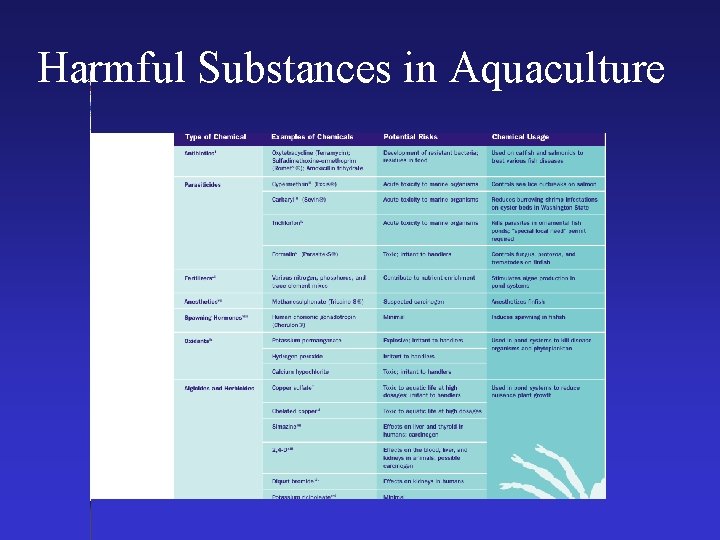
Harmful Substances in Aquaculture
What is Needed • Research and development!!!! • Policy – No framework exists for utilization of the EEZ for aquaculture – Designated sites needed – Who owns it, who can set up operations, government leasing? – No framework exists for enforcement of these future policies
Future Developments • Aquaculture / Agriculture Comparison – Expect evolution of aquaculture to mimic that of traditional agriculture – Essentially same process- Create it, Raise it, Sell it, Eat it – But methods for increasing production differ greatly – Aquaculture needs its own unique technological advancements
Final Note • • Demand is the mother of invention People want to eat fish People will continue to eat fish Environmentally smart applications of new technologies will repair the damage we have done to the world’s fisheries

The Future of NC Fisheries Management By Drew Thorndyke
Fish and Shellfish Resources Are Not Inexhaustible. • Coastal Habitat Protection Plan (CHPP) – NC General Assembly passed the Fisheries Reform act in 1997 – To protect and enhance habitats supporting coastal fisheries – CRC, *DMF, EMC
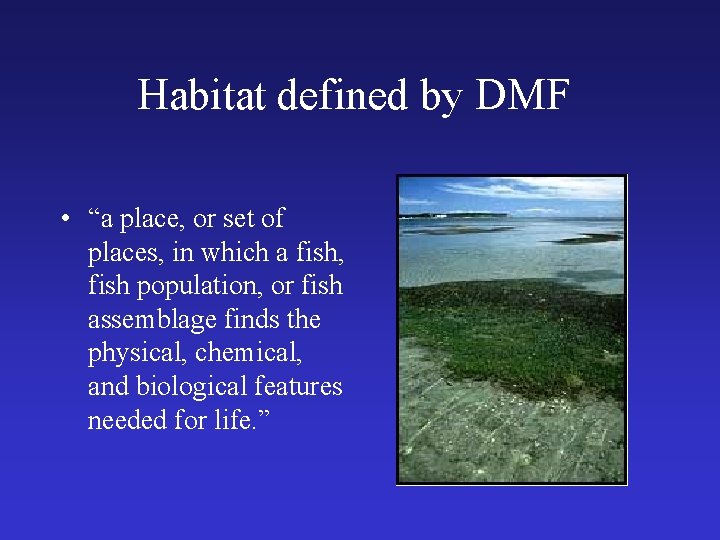
Habitat defined by DMF • “a place, or set of places, in which a fish, fish population, or fish assemblage finds the physical, chemical, and biological features needed for life. ”
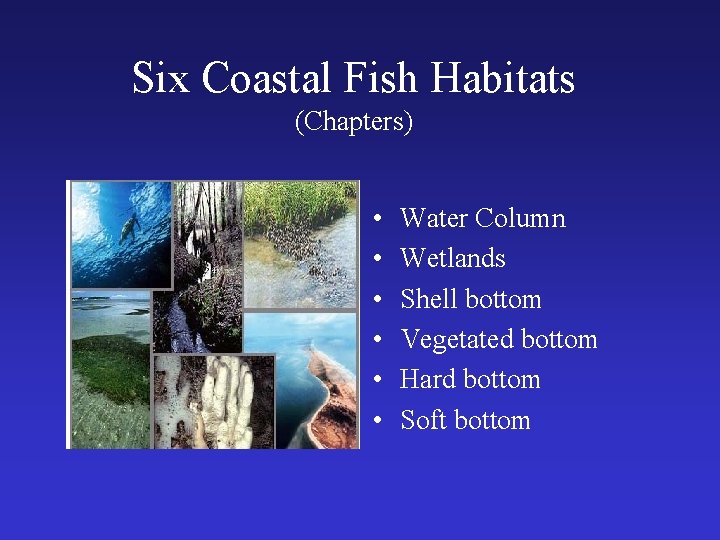
Six Coastal Fish Habitats (Chapters) • • • Water Column Wetlands Shell bottom Vegetated bottom Hard bottom Soft bottom
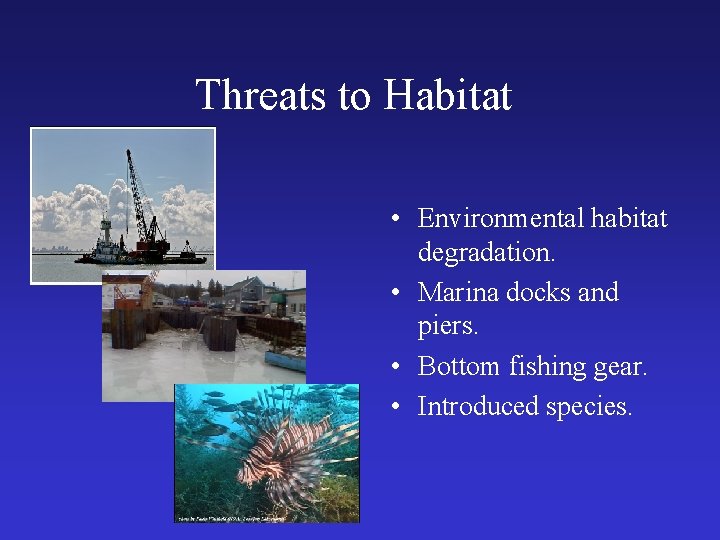
Threats to Habitat • Environmental habitat degradation. • Marina docks and piers. • Bottom fishing gear. • Introduced species.
Goals of CHPP. • Goal 1. To improve effectiveness of existing rules – Educate public about reasons for management measures – Increase water quality, physical habitat, and resource monitoring
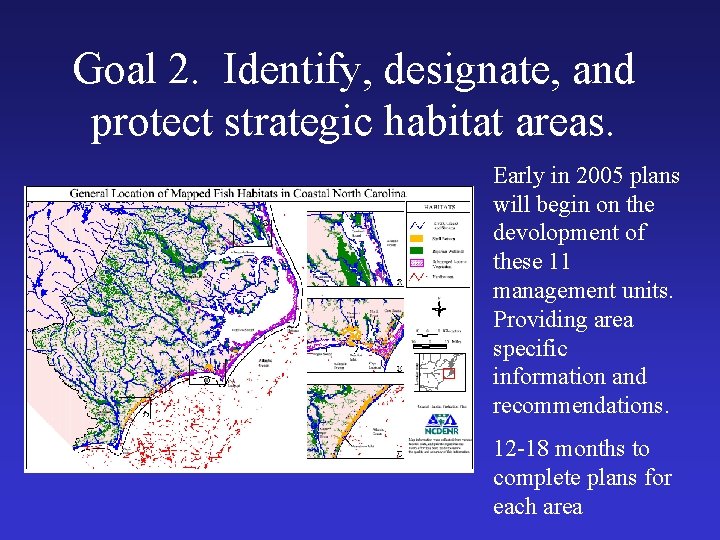
Goal 2. Identify, designate, and protect strategic habitat areas. Early in 2005 plans will begin on the devolopment of these 11 management units. Providing area specific information and recommendations. 12 -18 months to complete plans for each area
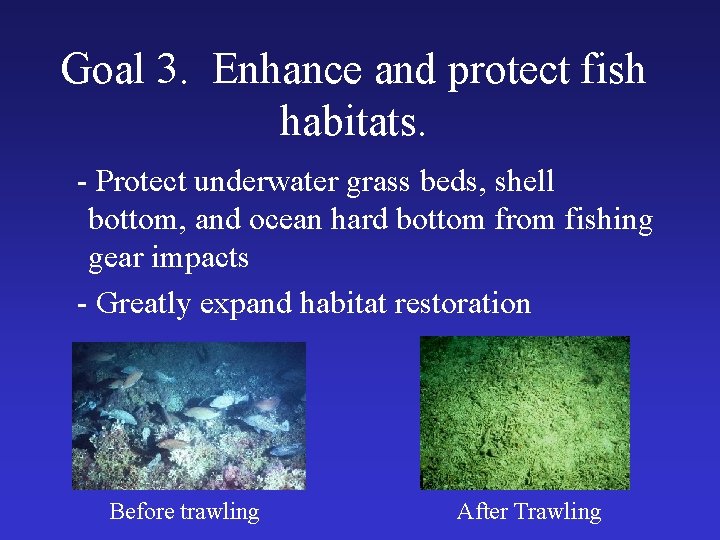
Goal 3. Enhance and protect fish habitats. - Protect underwater grass beds, shell bottom, and ocean hard bottom from fishing gear impacts - Greatly expand habitat restoration Before trawling After Trawling
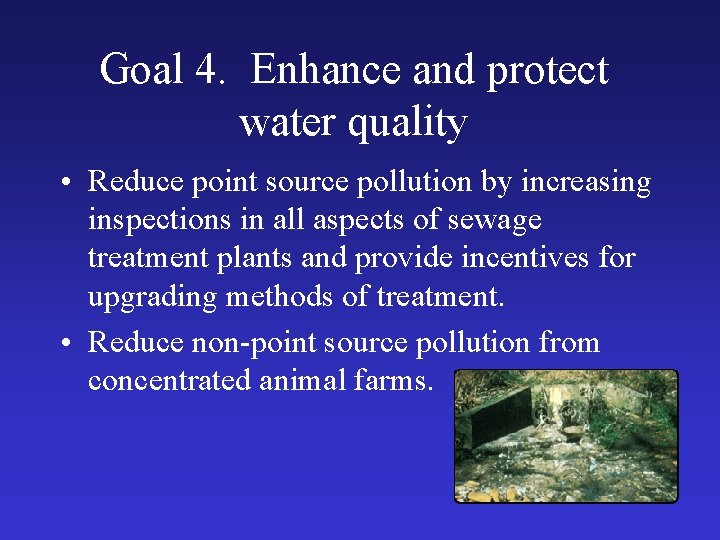
Goal 4. Enhance and protect water quality • Reduce point source pollution by increasing inspections in all aspects of sewage treatment plants and provide incentives for upgrading methods of treatment. • Reduce non-point source pollution from concentrated animal farms.
To Learn How to become a part of the CHPP process • • Go to www. ncfisheries. net Send an email to chpps@ncmail. net. Call 800 -682 -2632 Attend regional CHPP meeting to express your opinions.
The Future of NC fisheries will be greatly affected by the CHPP • This is a major step in the right direction. Hopefully it will truly support science based fishery management so that we can rebuild our declining fish and shellfish populations for the future.
- Slides: 102