
The Future of Pumping Henry Anhalt DO CDE


- Slides: 51
The Future of Pumping Henry Anhalt, DO, CDE Director, Pediatric Endocrinology and Diabetes Saint Barnabas Medical Center Livingston, NJ
`In the past we had a light that flickered, in the present, a light that flames, and in the future we will have a light that shines over all the land the sea’ Winston Churchill
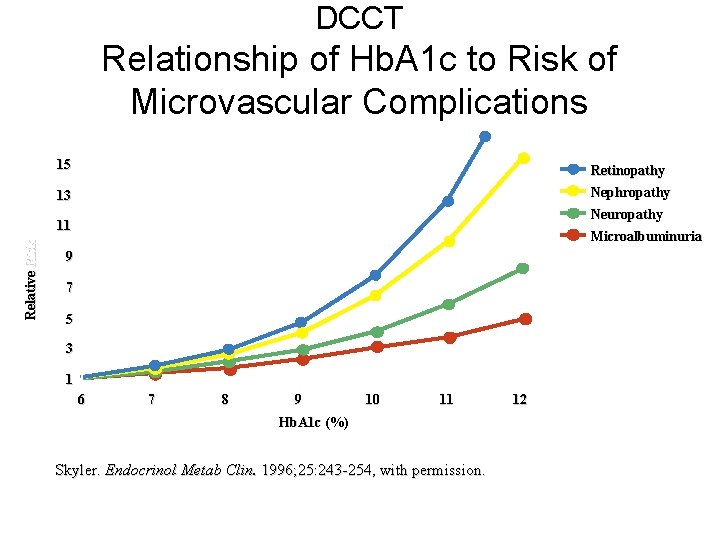
DCCT Relationship of Hb. A 1 c to Risk of Microvascular Complications 15 Retinopathy 13 Nephropathy Neuropathy Relative Risk 11 Microalbuminuria 9 7 5 3 1 6 7 8 9 10 11 Hb. A 1 c (%) Skyler. Endocrinol Metab Clin. 1996; 25: 243 -254, with permission. 12
Limitations/Challenges to Better Glycemic Control • A 1 c’centric • Hypoglycemic Risk • Glucose excursions above and below what the Hb. A 1 c average represents may be more important than Hb. A 1 c • Inadequate Postprandial Glucose Control • Weight Gain
Obstacles in Glycemic Control • Invasive glucose monitoring devicesowie!!!!! • Limited availability of reliable continuous glucose monitoring • Lack of alternate routes of insulin delivery.
Alternate Site Glucose Testing (Forearm, Thighs, Abdomen vs. Fingers) • Rubbing/exercising/suction does not uniformly increase the blood flow but glucose values may be better correlated to fingers. • At extremes of glucose values fingerstick testing is mandatory for confirmation. • Rapid changes in glucose values, fingers are the best
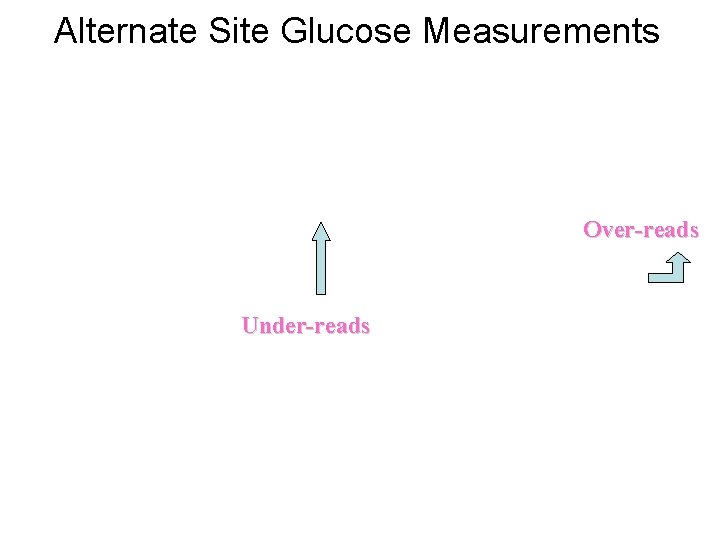
Alternate Site Glucose Measurements Over-reads Under-reads
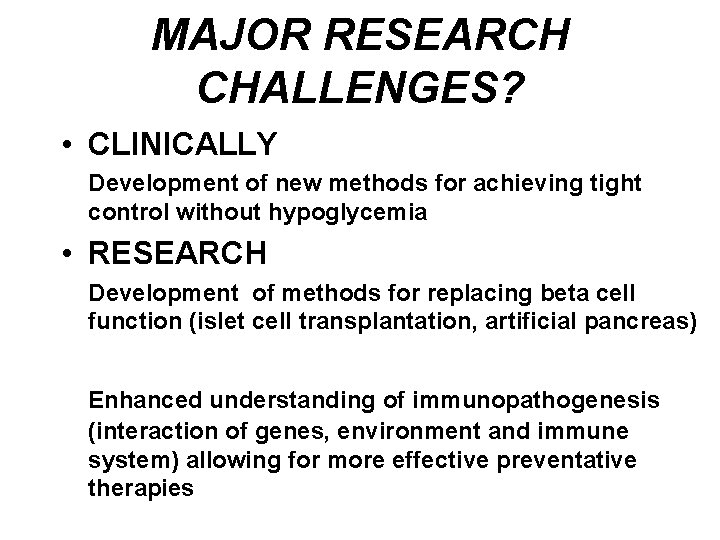
MAJOR RESEARCH CHALLENGES? • CLINICALLY Development of new methods for achieving tight control without hypoglycemia • RESEARCH Development of methods for replacing beta cell function (islet cell transplantation, artificial pancreas) Enhanced understanding of immunopathogenesis (interaction of genes, environment and immune system) allowing for more effective preventative therapies
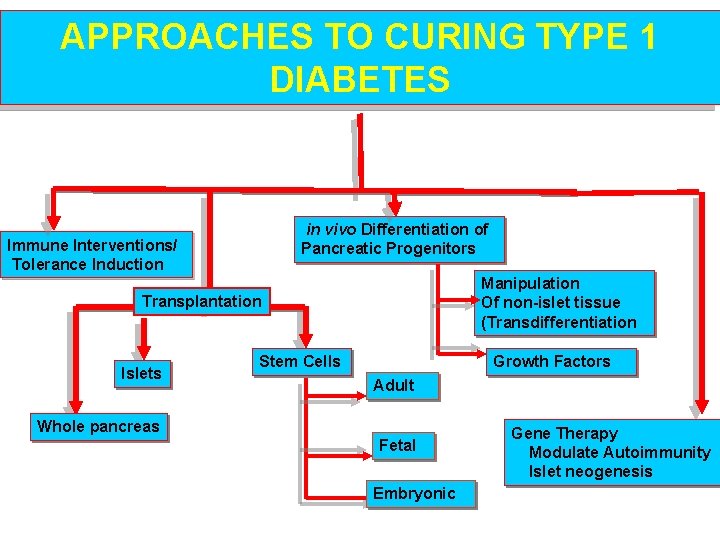
APPROACHES TO CURING TYPE 1 DIABETES in vivo Differentiation of Pancreatic Progenitors Immune Interventions/ Tolerance Induction Manipulation Of non-islet tissue (Transdifferentiation Transplantation Islets Stem Cells Growth Factors Adult Whole pancreas Fetal Embryonic Gene Therapy Modulate Autoimmunity Islet neogenesis
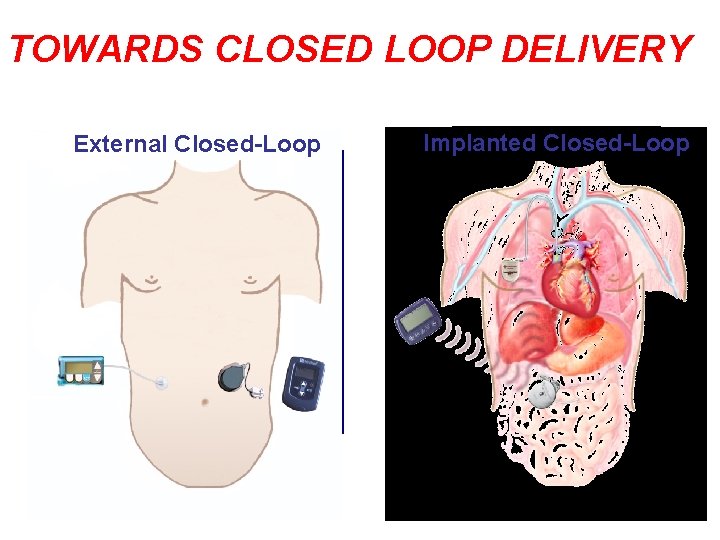
TOWARDS CLOSED LOOP DELIVERY External Closed-Loop Implanted Closed-Loop
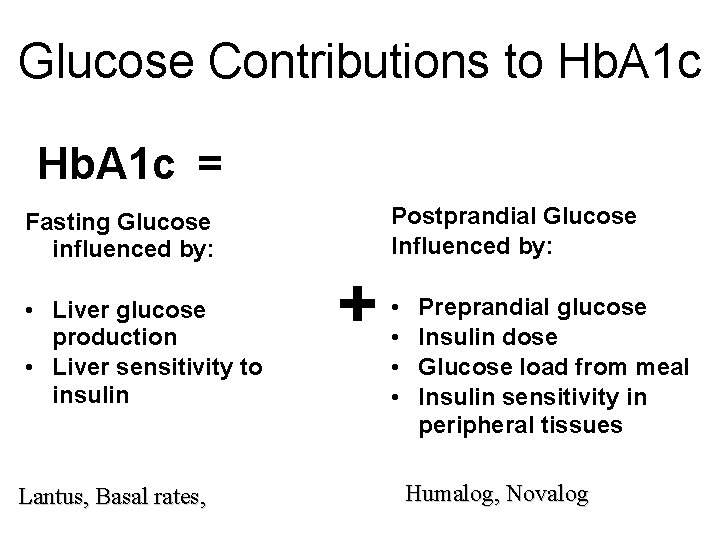
Glucose Contributions to Hb. A 1 c = Postprandial Glucose Influenced by: Fasting Glucose influenced by: • Liver glucose production • Liver sensitivity to insulin Lantus, Basal rates, + • • Preprandial glucose Insulin dose Glucose load from meal Insulin sensitivity in peripheral tissues Humalog, Novalog
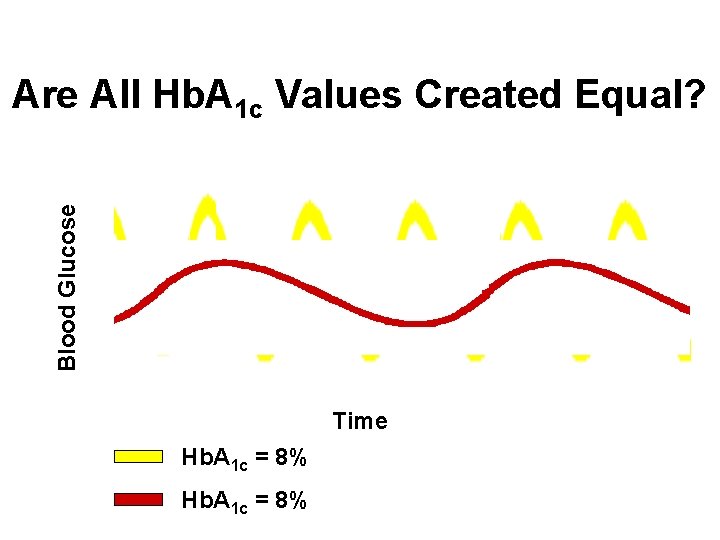
Blood Glucose Are All Hb. A 1 c Values Created Equal? Time Hb. A 1 c = 8%
Lesser Known Outcomes from the DCCT The DCCT Research Group stated Hb. A 1 c is not the entire answer to glycemic control. “The Average Hb. A 1 c is not the most complete expression of the degree of glycemia and the risk of complications may be more highly dependent on the excursions or influenced by counterregulatory hormonal responses to hypoglycemia. ” Diabetes 44: 968 -983, 1995
Actual writing on Hospital charts: Top Ten 1. She has no rigors or shaking chills, but her husband states she was very hot in bed last night. 2. Patient has chest pain if she lies on her left side for over a year. 3. On the second day the knee was better, and on the third day it disappeared. 4. The patient is tearful and crying constantly. She also appears to be depressed. 5. The patient has been depressed since she began seeing me in 1993.
Why do we need Glucose Sensors?
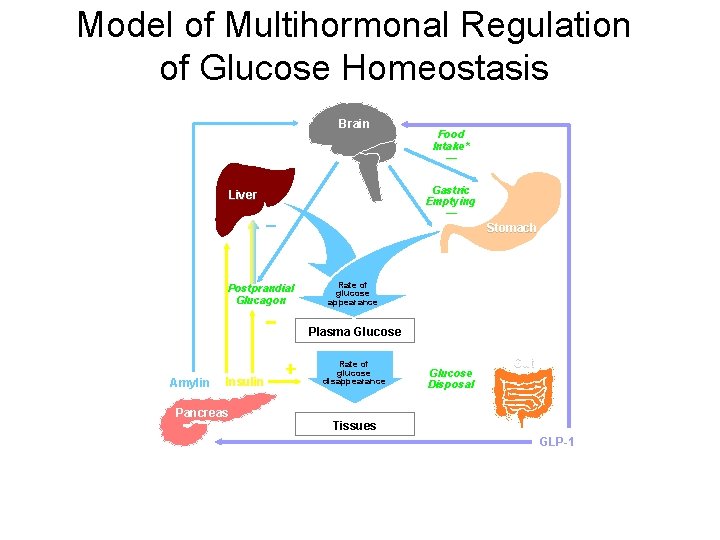
Model of Multihormonal Regulation of Glucose Homeostasis Brain Food Intake* — Gastric Emptying — Liver Stomach Postprandial Glucagon Rate of glucose appearance Plasma Glucose Amylin Insulin Pancreas Rate of glucose disappearance Glucose Disposal Gut Tissues GLP-1 Model derived from animal studies *Inferred satiety effect GLP-1 central effect on glucose homeostasis is inferred from animal studies
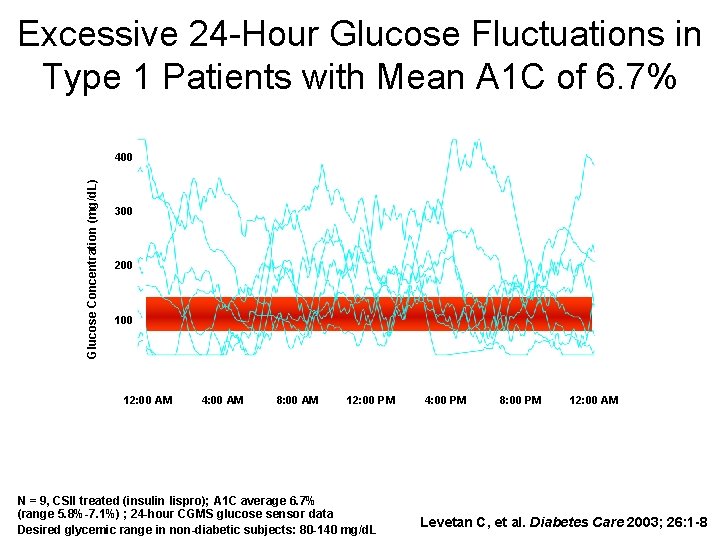
Excessive 24 -Hour Glucose Fluctuations in Type 1 Patients with Mean A 1 C of 6. 7% Glucose Concentration (mg/d. L) 400 300 200 12: 00 AM 4: 00 AM 8: 00 AM 12: 00 PM N = 9, CSII treated (insulin lispro); A 1 C average 6. 7% (range 5. 8%-7. 1%) ; 24 -hour CGMS glucose sensor data Desired glycemic range in non-diabetic subjects: 80 -140 mg/d. L 4: 00 PM 8: 00 PM 12: 00 AM Levetan C, et al. Diabetes Care 2003; 26: 1 -8
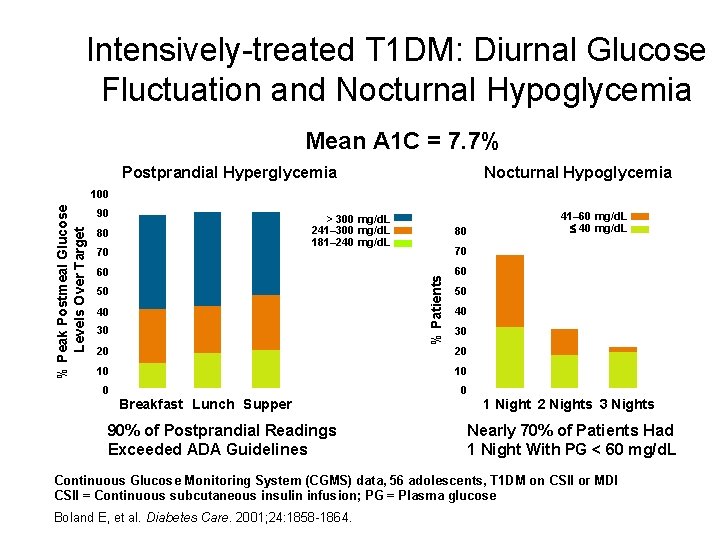
Intensively-treated T 1 DM: Diurnal Glucose Fluctuation and Nocturnal Hypoglycemia Mean A 1 C = 7. 7% Postprandial Hyperglycemia Nocturnal Hypoglycemia 90 > 300 mg/d. L 241– 300 mg/d. L 181– 240 mg/d. L 80 70 60 80 50 40 30 20 60 50 40 30 20 10 10 0 0 Breakfast Lunch Supper 90% of Postprandial Readings Exceeded ADA Guidelines 41– 60 mg/d. L 40 mg/d. L 70 % Patients % Peak Postmeal Glucose Levels Over Target 100 1 Night 2 Nights 3 Nights Nearly 70% of Patients Had 1 Night With PG < 60 mg/d. L Continuous Glucose Monitoring System (CGMS) data, 56 adolescents, T 1 DM on CSII or MDI CSII = Continuous subcutaneous insulin infusion; PG = Plasma glucose Boland E, et al. Diabetes Care. 2001; 24: 1858 -1864.
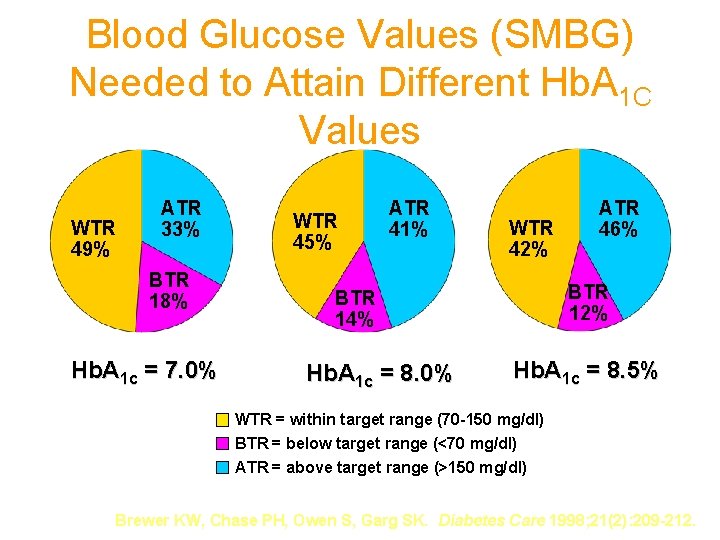
Blood Glucose Values (SMBG) Needed to Attain Different Hb. A 1 C Values WTR 49% ATR 33% BTR 18% Hb. A 1 c = 7. 0% WTR 45% ATR 41% WTR 42% BTR 14% Hb. A 1 c = 8. 0% ATR 46% Hb. A 1 c = 8. 5% WTR = within target range (70 -150 mg/dl) BTR = below target range (<70 mg/dl) ATR = above target range (>150 mg/dl) Brewer KW, Chase PH, Owen S, Garg SK. Diabetes Care 1998; 21(2): 209 -212.
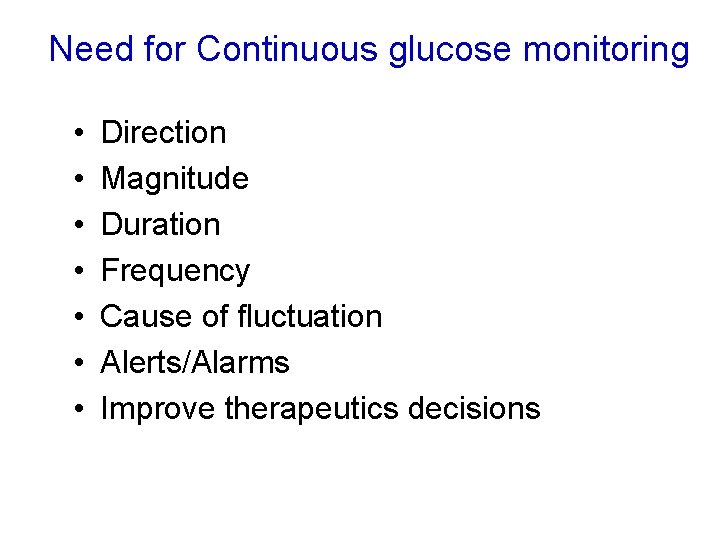
Need for Continuous glucose monitoring • • Direction Magnitude Duration Frequency Cause of fluctuation Alerts/Alarms Improve therapeutics decisions
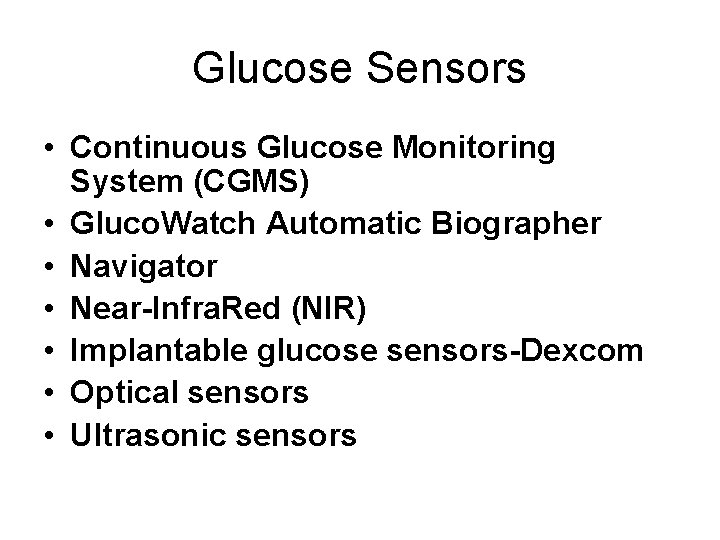
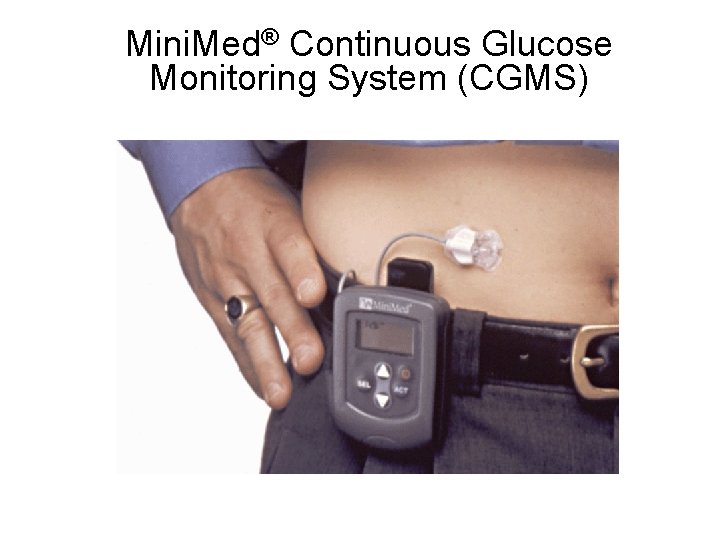
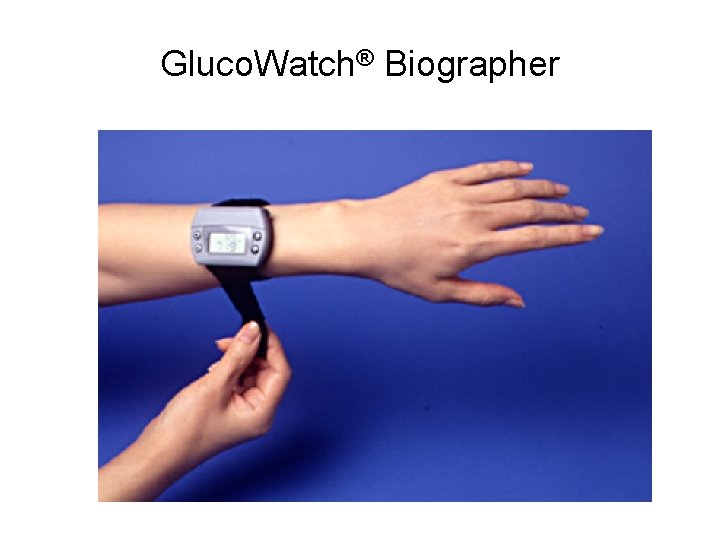
Glucose Sensors • Continuous Glucose Monitoring System (CGMS) • Gluco. Watch Automatic Biographer • Navigator • Near-Infra. Red (NIR) • Implantable glucose sensors-Dexcom • Optical sensors • Ultrasonic sensors
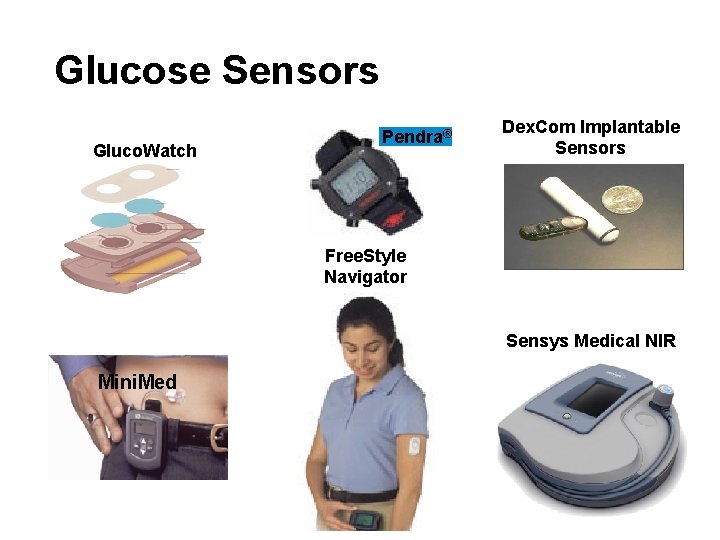
Glucose Sensors Gluco. Watch Pendra® Dex. Com Implantable Sensors Free. Style Navigator Sensys Medical NIR Mini. Med
Mini. Med® Continuous Glucose Monitoring System (CGMS)
Gluco. Watch® Biographer
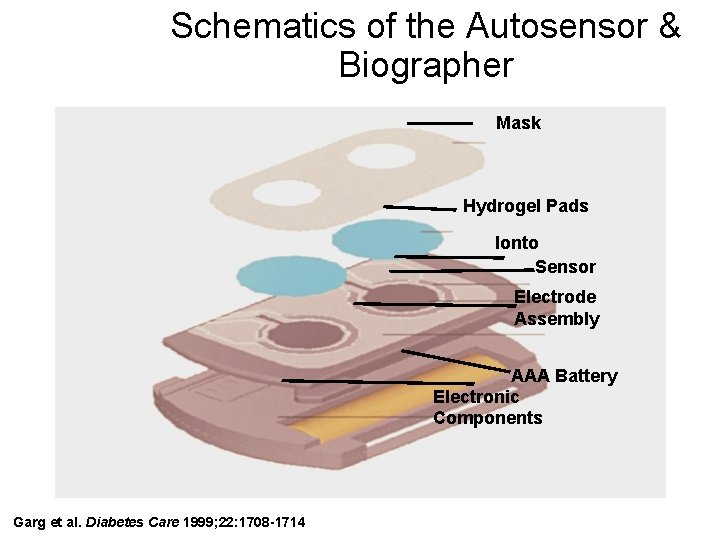
Schematics of the Autosensor & Biographer Mask Hydrogel Pads Ionto Sensor Electrode Assembly AAA Battery Electronic Components Garg et al. Diabetes Care 1999; 22: 1708 -1714
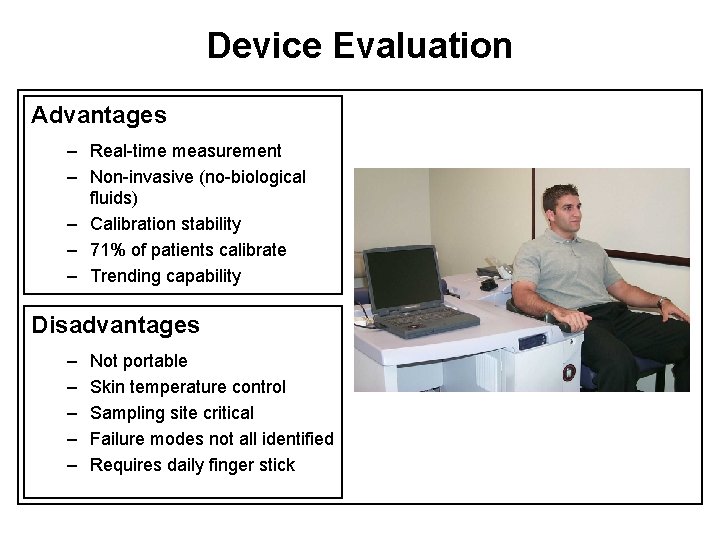
Device Evaluation Advantages – Real-time measurement – Non-invasive (no-biological fluids) – Calibration stability – 71% of patients calibrate – Trending capability Disadvantages – – – Not portable Skin temperature control Sampling site critical Failure modes not all identified Requires daily finger stick
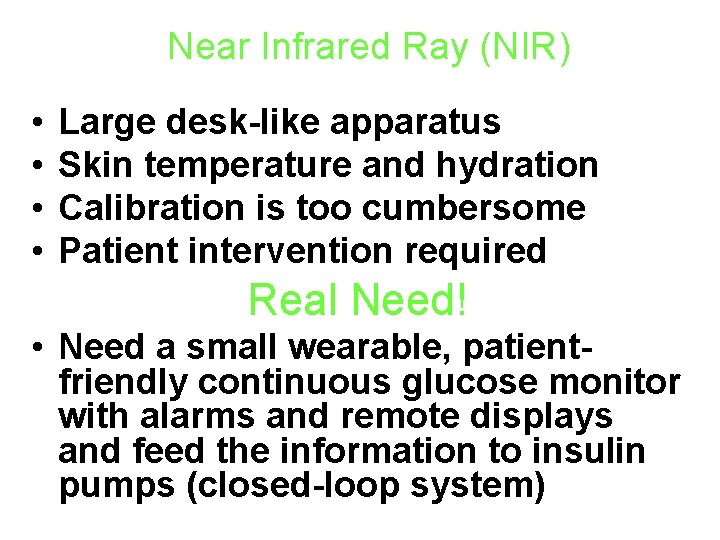
Near Infrared Ray (NIR) • • Large desk-like apparatus Skin temperature and hydration Calibration is too cumbersome Patient intervention required Real Need! • Need a small wearable, patientfriendly continuous glucose monitor with alarms and remote displays and feed the information to insulin pumps (closed-loop system)
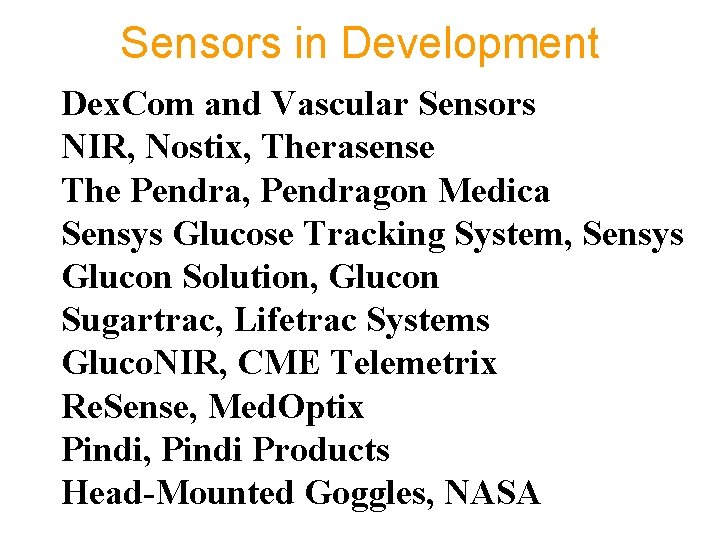
Sensors in Development Dex. Com and Vascular Sensors NIR, Nostix, Therasense The Pendra, Pendragon Medica Sensys Glucose Tracking System, Sensys Glucon Solution, Glucon Sugartrac, Lifetrac Systems Gluco. NIR, CME Telemetrix Re. Sense, Med. Optix Pindi, Pindi Products Head-Mounted Goggles, NASA
Role of Frequent Glucose Monitoring
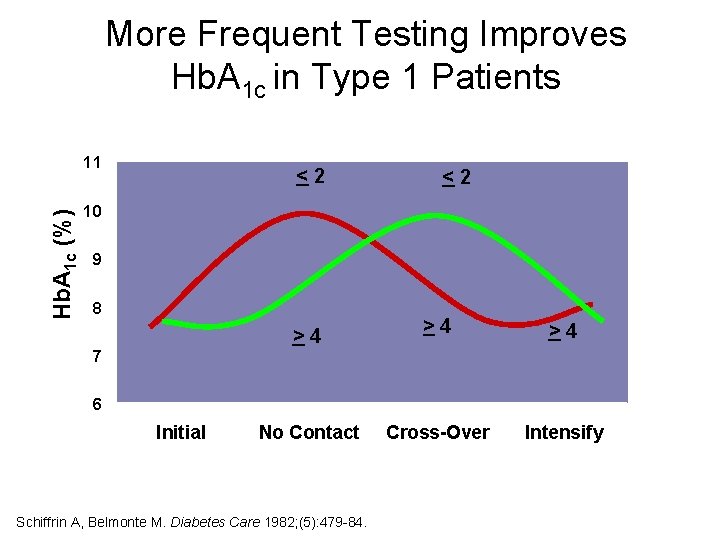
More Frequent Testing Improves Hb. A 1 c in Type 1 Patients Hb. A 1 c (%) 11 <2 <2 10 9 8 >4 7 >4 >4 Cross-Over Intensify 6 Initial No Contact Schiffrin A, Belmonte M. Diabetes Care 1982; (5): 479 -84.
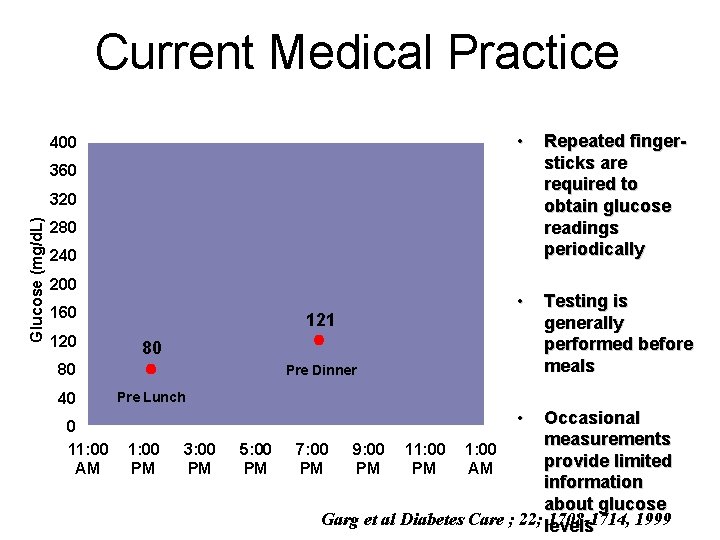
Current Medical Practice 400 • Repeated fingersticks are required to obtain glucose readings periodically • Testing is generally performed before meals 360 Glucose (mg/d. L) 320 280 240 200 160 121 80 80 40 0 11: 00 AM Pre Dinner Pre Lunch • 1: 00 PM 3: 00 PM 5: 00 PM Occasional measurements 7: 00 9: 00 11: 00 provide limited PM PM PM AM information about glucose Garg et al Diabetes Care ; 22; levels 1708 -1714, 1999
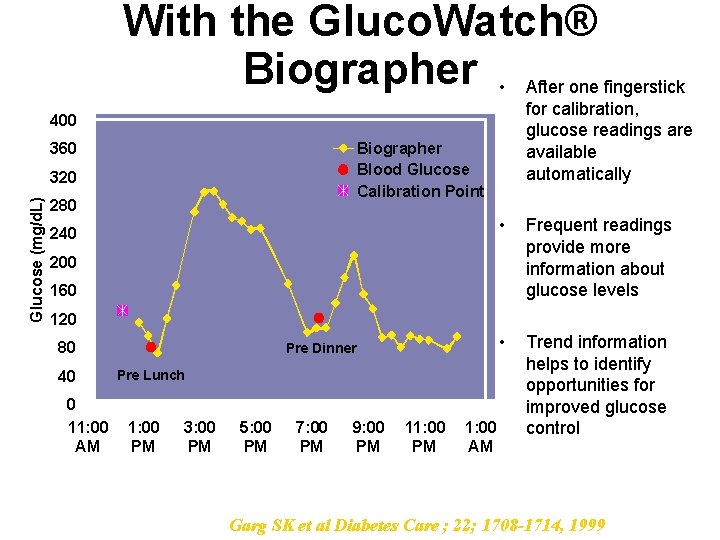
With the Gluco. Watch® Biographer • After one fingerstick for calibration, glucose readings are available automatically 400 360 Biographer Blood Glucose Calibration Point Glucose (mg/d. L) 320 280 240 • Frequent readings provide more information about glucose levels • Trend information helps to identify opportunities for improved glucose control 200 160 120 80 40 0 11: 00 AM Pre Dinner Pre Lunch 1: 00 PM 3: 00 PM 5: 00 PM 7: 00 PM 9: 00 PM 11: 00 PM 1: 00 AM Garg SK et al Diabetes Care ; 22; 1708 -1714, 1999
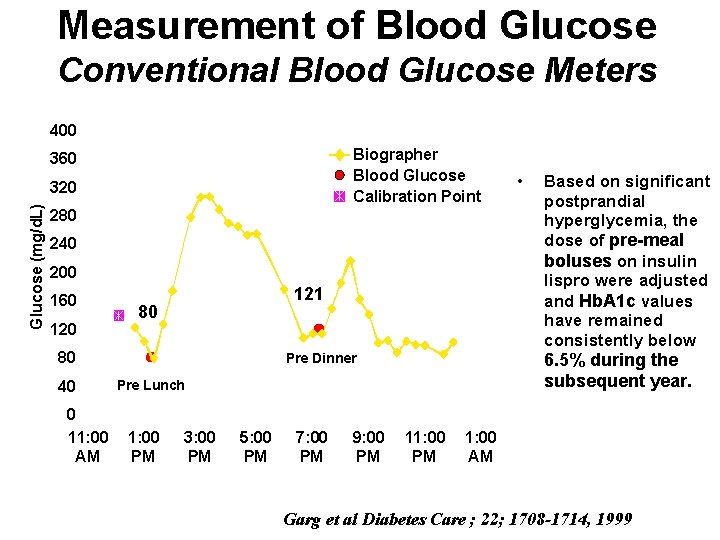
Measurement of Blood Glucose Conventional Blood Glucose Meters 400 Biographer Blood Glucose Calibration Point 360 Glucose (mg/d. L) 320 280 240 200 160 121 80 80 40 0 11: 00 AM Pre Lunch 3: 00 PM 5: 00 PM 7: 00 PM 9: 00 PM Based on significant postprandial hyperglycemia, the dose of pre-meal boluses on insulin lispro were adjusted and Hb. A 1 c values have remained consistently below 6. 5% during the subsequent year. Pre Dinner 1: 00 PM • 11: 00 PM 1: 00 AM Garg et al Diabetes Care ; 22; 1708 -1714, 1999
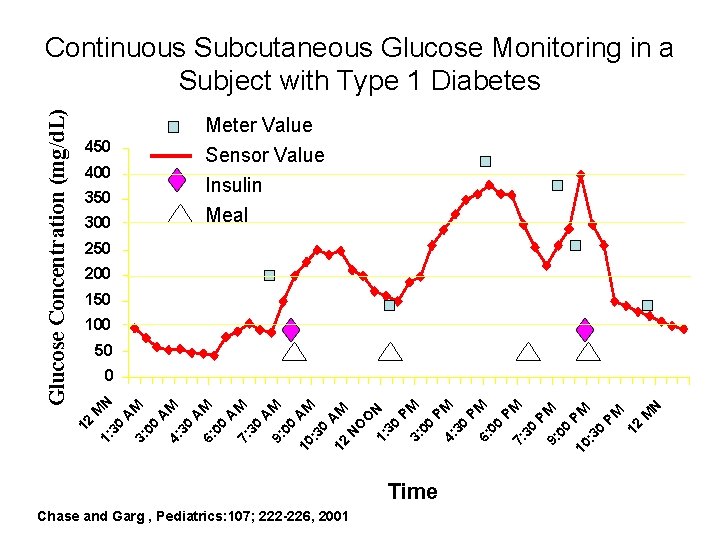
Meter Value Sensor Value Insulin Meal 450 400 350 300 250 200 150 100 50 1: N 30 P 3: M 00 P 4: M 30 P 6: M 00 PM 7: 30 P 9: M 00 10 PM : 3 0 PM 12 M N O O N 12 30 A M M A 0 10 : 9: 0 0 A M M 0 A 7: 3 M A 0 6: 0 M A 4: 3 0 A 3: 0 0 1: 3 12 M N 0 M Glucose Concentration (mg/d. L) Continuous Subcutaneous Glucose Monitoring in a Subject with Type 1 Diabetes Time Chase and Garg , Pediatrics: 107; 222 -226, 2001
Technical Aspects of Continuous Glucose Monitoring • Interstitial vs. Blood glucose –reported Lag of few seconds to 15 minutes • High frequency of measurements • Signal Stability –Quick and over time • Calibration Issues • Duration of Sensor application
Limitations with Current Technologies • SMBG – Solitary Data points with no trend information • CGMS – No real time feedback, 4 T/day calibration – Unreliable data, size of the needle • Gluco. Watch - Prospective data but too many skips, 12 hr. sensor - Skin irritation, Sweating, Temperature changes * Hb. A 1 c and Fructosamine Assay – Purely retrospective – No immediate Feedback
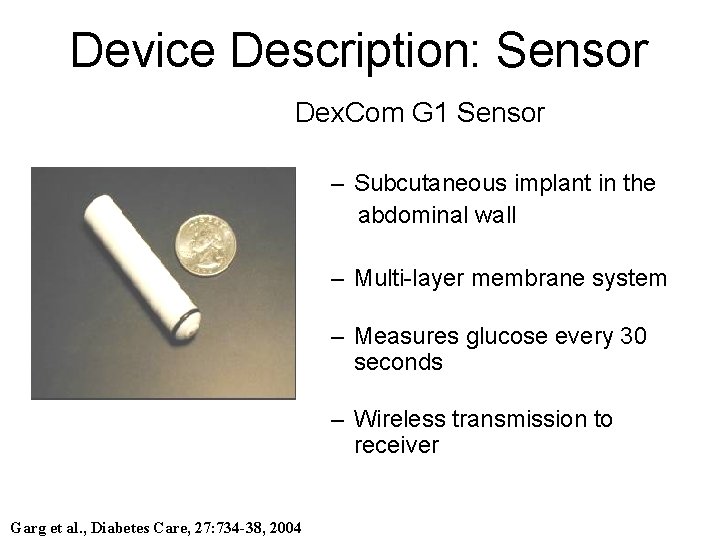
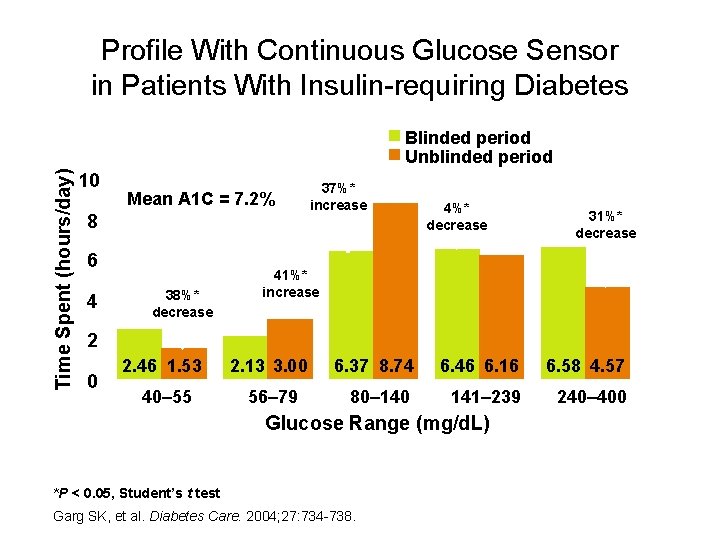
Device Description: Sensor Dex. Com G 1 Sensor – Subcutaneous implant in the abdominal wall – Multi-layer membrane system – Measures glucose every 30 seconds – Wireless transmission to receiver Garg et al. , Diabetes Care, 27: 734 -38, 2004
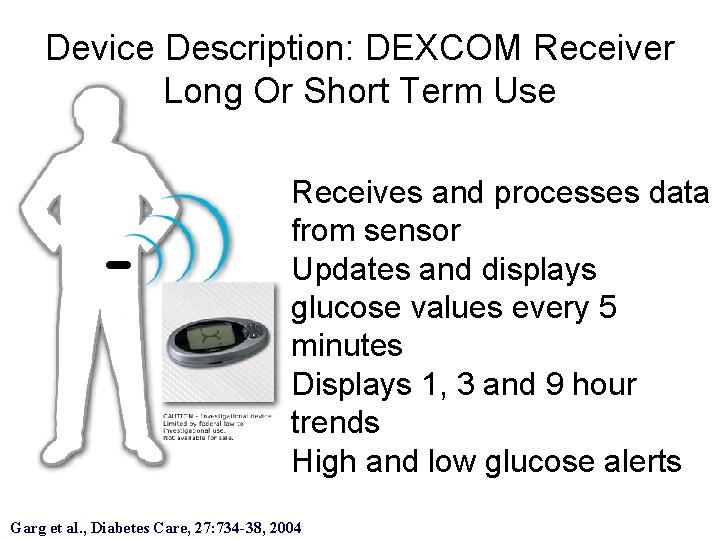
Device Description: DEXCOM Receiver Long Or Short Term Use Receives and processes data from sensor Updates and displays glucose values every 5 minutes Displays 1, 3 and 9 hour trends High and low glucose alerts Garg et al. , Diabetes Care, 27: 734 -38, 2004
Profile With Continuous Glucose Sensor in Patients With Insulin-requiring Diabetes Time Spent (hours/day) Blinded period Unblinded period 10 Mean A 1 C = 7. 2% 8 6 4 38%* decrease 37%* increase 4%* decrease 31%* decrease 41%* increase 2 0 2. 46 1. 53 2. 13 3. 00 40– 55 56– 79 6. 37 8. 74 6. 46 6. 16 6. 58 4. 57 80– 140 141– 239 240– 400 Glucose Range (mg/d. L) *P < 0. 05, Student’s t test Garg SK, et al. Diabetes Care. 2004; 27: 734 -738.
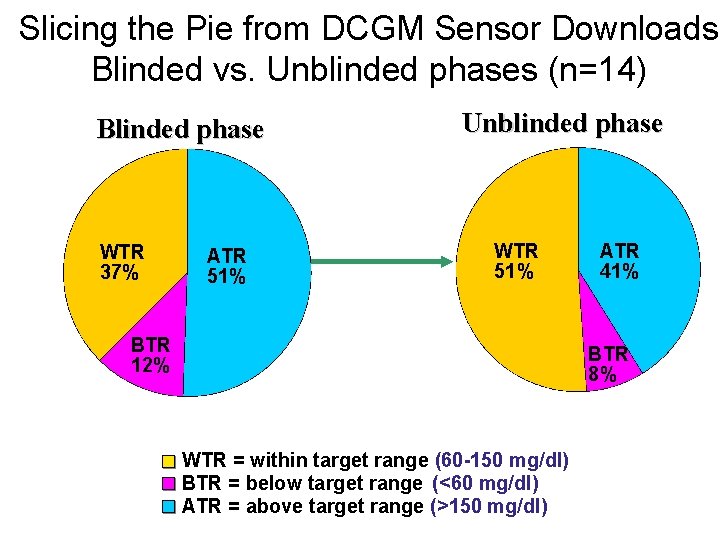
Slicing the Pie from DCGM Sensor Downloads Blinded vs. Unblinded phases (n=14) Blinded phase WTR 37% ATR 51% Unblinded phase WTR 51% BTR 12% ATR 41% BTR 8% WTR = within target range (60 -150 mg/dl) BTR = below target range (<60 mg/dl) ATR = above target range (>150 mg/dl)
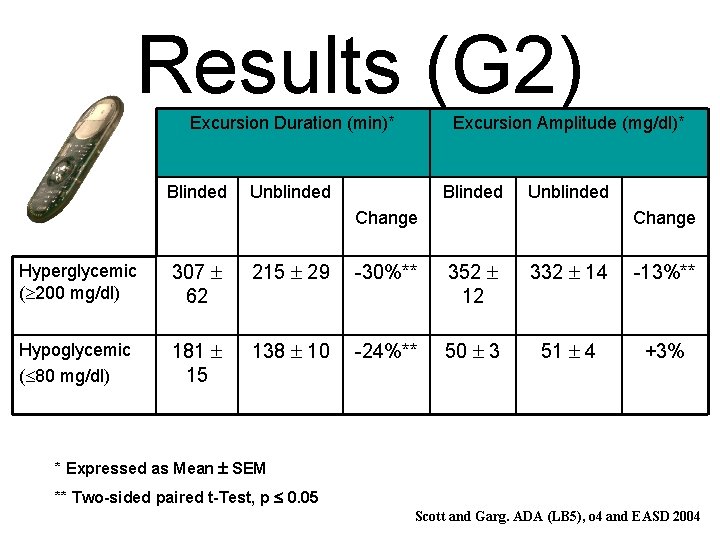
Results (G 2) Excursion Duration (min)* Blinded Excursion Amplitude (mg/dl)* Unblinded Blinded Unblinded Change Hyperglycemic ( 200 mg/dl) 307 62 215 29 -30%** 352 12 332 14 -13%** Hypoglycemic ( 80 mg/dl) 181 15 138 10 -24%** 50 3 51 4 +3% * Expressed as Mean SEM ** Two-sided paired t-Test, p 0. 05 Scott and Garg. ADA (LB 5), o 4 and EASD 2004
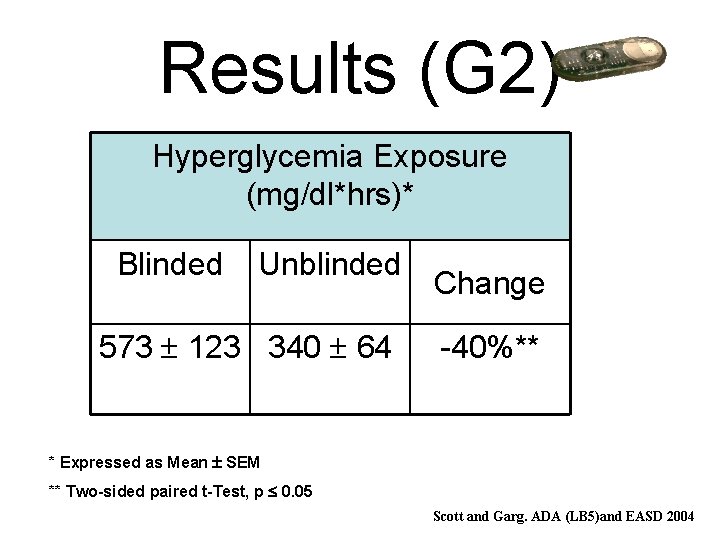
Results (G 2) Hyperglycemia Exposure (mg/dl*hrs)* Blinded Unblinded 573 123 340 64 Change -40%** * Expressed as Mean SEM ** Two-sided paired t-Test, p 0. 05 Scott and Garg. ADA (LB 5)and EASD 2004
Closing the Loop: The Artificial Pancreas • Accurate, reliable continuous glucose monitoring systems, in progress • Algorithms to incorporate glucose trend data into proper dose adjustments • External or internal insulin pump systems
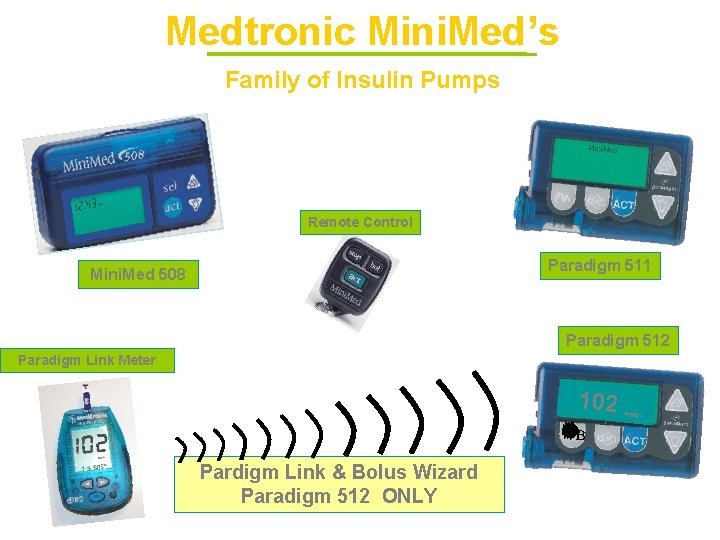
Medtronic Mini. Med’s Family of Insulin Pumps Remote Control Paradigm 511 Mini. Med 508 Paradigm 512 Paradigm Link Meter 102 B Pardigm Link & Bolus Wizard Paradigm 512 ONLY mg/d. L
Actual writing on Hospital charts: Top Ten (cont. ) 6. Discharge status: Alive but without my permission. 7. Healthy appearing decrepit 69 year old male, mentally alert but forgetful. 8. Patient has left white blood cells at another hospital. 9. The patient has no previous history of suicides. 10. The patient refused autopsy.
Until the Cure-The Realities: • Learn to manage glucose TRENDS rather than isolated numbers • Minimize the moodiness associated with wide glucose excursions • Understand glucose profiles over extended time • Improve implementation of new regimens • Knowledge and acceptance of inaccuracies and data interpretation
Conclusions • Continuous glucose monitoring promises the goal of normalization of blood sugars while minimizing risk of hypoglycemia • The result of full implementation will be normal Hb. A 1 c with further reduction in complications of diabetes • A closed loop, artificial pancreas either externally or internally based is now on the horizon
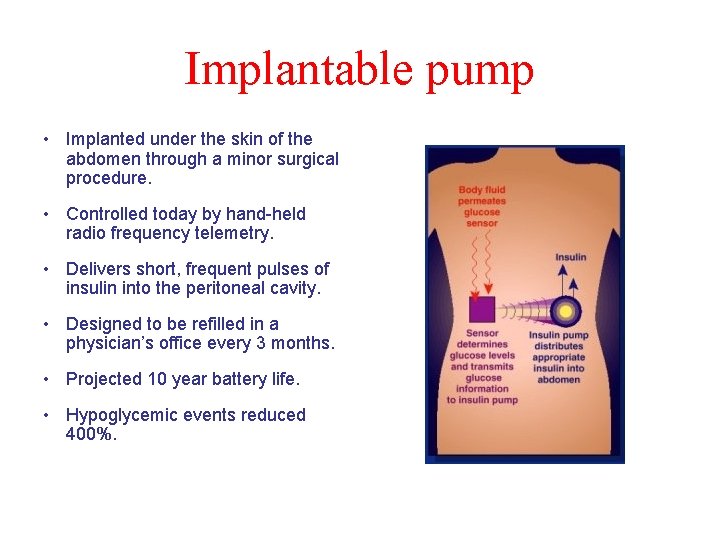
Implantable pump • Implanted under the skin of the abdomen through a minor surgical procedure. • Controlled today by hand-held radio frequency telemetry. • Delivers short, frequent pulses of insulin into the peritoneal cavity. • Designed to be refilled in a physician’s office every 3 months. • Projected 10 year battery life. • Hypoglycemic events reduced 400%.
Out-takes from a Web Blog Of RT User “Now, I never look at a single reading. I check my NOW number and then quickly scroll back in time using the down arrow button. Five minutes per click. I usually glance at half an hour…I think about what I’m looking at. Direction? Is the BG going up or down? Or is it fairly stable? Speed I’m not always so good at, because that takes mental mathematics, which is my weak spot. That said I can get a rough idea of how fast things are moving. ”
THE RUB Even if the continuous sensors are refined, reimbursement for the devices as well as for providers’ time to help analyze data remains a problem. As things now stand, relatively few doctors and nurses have the time or expertise to assess the log records of individual glucose readings.
Predictions are difficult - particularly when you’re talking about the future! Casey Stengel Adapted from Niels Bohr - Nobel Prize (Physics) 1922