
The Future of Neuroscience New Opportunities for Research
- Slides: 42
The Future of Neuroscience: New Opportunities for Research New Opportunities for Society Gerry S. Oxford, Ph. D. Paul & Carole Stark Neurosciences Research Institute Indiana University School of Medicine Indianapolis, Indiana
Why Study the Brain? Scientific / Cultural Perspective • Over 40% of the human genome is related to the brain • 70 -80% of the ATP synthesized serves to maintain cell membrane potentials that are the foundation of excitability • It is the one organ that fundamentally defines what is “human” in all of us. . . the need to understand “self”.
Why Study the Brain? Clinical / Societal Perspective • 50 million Americans have a permanent neurological disability. • 4 million older Americans suffer from Alzheimer’s Disease at a cost of $100 billion/year. • 2 million Americans suffer from schizophrenia • 500, 000 Americans suffer from Parkinson’s Disease • Substance abuse, obesity, eating disorders, etc.
A Brief History of Neuroscience • “Brain Science” has been around for centuries, but has largely been observational and phenomenological, rarely mechanistic. • Contributions to progress from various classical, but largely independent research disciplines • Emergence of neuroscience as a separate field inherently and fundamentally multidisciplinary. – (1965) Harvard Neurobiology Department – Stephen Kuffler – (1966) UNC Neurobiology Curriculum – (1970) Society for Neuroscience formed – now 34, 000 members (sfn. org) • 95% of all existing literature with the term “brain”, “neuron”, or “neurotransmitter” published since 1985. • 1990 s: The Decade of the Brain - presidential proclamation • How far have we come? Where are we going?
1990 s - Decade of the Brain • A concept developed by neuroscientists and implemented by a presidential proclamation by George Bush on July 25, 1989 citing. . . – The need for public awareness and support of brain science – The dawn of a new era of discovery in brain research – The justifiable hope of individuals stricken with neurological and mental disorders • How far have we come? Where are we going?
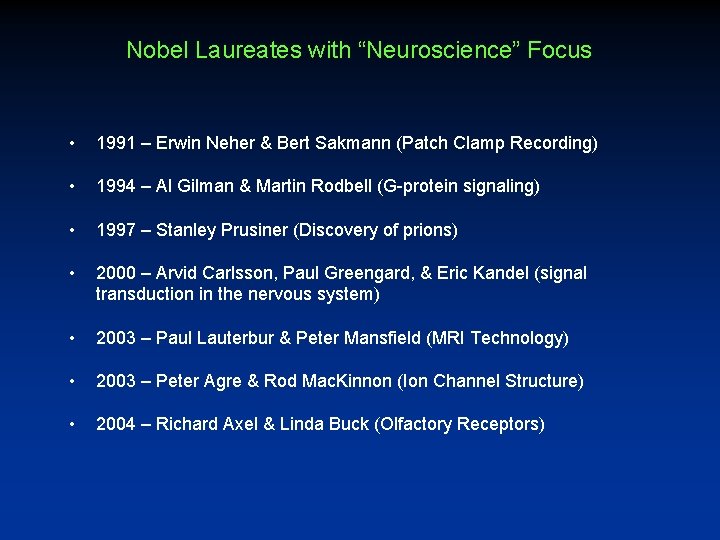
Nobel Laureates with “Neuroscience” Focus • 1991 – Erwin Neher & Bert Sakmann (Patch Clamp Recording) • 1994 – Al Gilman & Martin Rodbell (G-protein signaling) • 1997 – Stanley Prusiner (Discovery of prions) • 2000 – Arvid Carlsson, Paul Greengard, & Eric Kandel (signal transduction in the nervous system) • 2003 – Paul Lauterbur & Peter Mansfield (MRI Technology) • 2003 – Peter Agre & Rod Mac. Kinnon (Ion Channel Structure) • 2004 – Richard Axel & Linda Buck (Olfactory Receptors)
Technological Advances Fueling the Rebirth of Neuroscience • The rapid pace of neuroscience research and advancement of knowledge reflects both a manpower surge and. . . • New and improved technologies – Molecular biology – Molecular genetics – In vivo imaging methods (PET, f. MRI, MR spectroscopy, DTI) – Cellular imaging (confocal microscopy, indicator dyes) – Cellular recording (brain slice & patch clamp techniques) – Cellular stimulation (channel-rhodopsins and caged glutamate) – Computational and neuroengineering
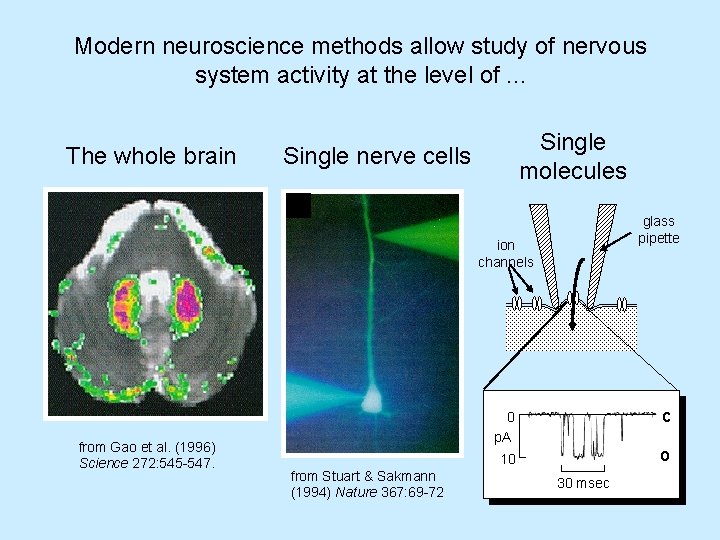
Modern neuroscience methods allow study of nervous system activity at the level of. . . The whole brain Single molecules Single nerve cells glass pipette ion channels from Gao et al. (1996) Science 272: 545 -547. from Stuart & Sakmann (1994) Nature 367: 69 -72 0 p. A c 10 o 30 msec
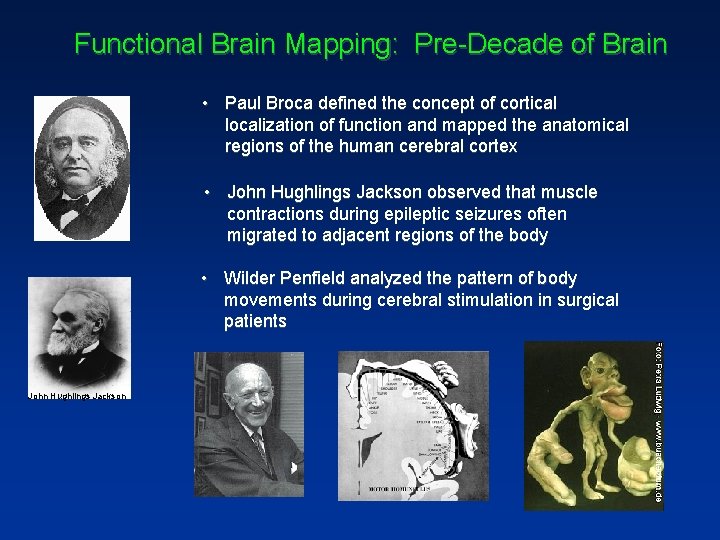
Functional Brain Mapping: Pre-Decade of Brain • Paul Broca defined the concept of cortical localization of function and mapped the anatomical regions of the human cerebral cortex • John Hughlings Jackson observed that muscle contractions during epileptic seizures often migrated to adjacent regions of the body • Wilder Penfield analyzed the pattern of body movements during cerebral stimulation in surgical patients John Hughlings Jackson
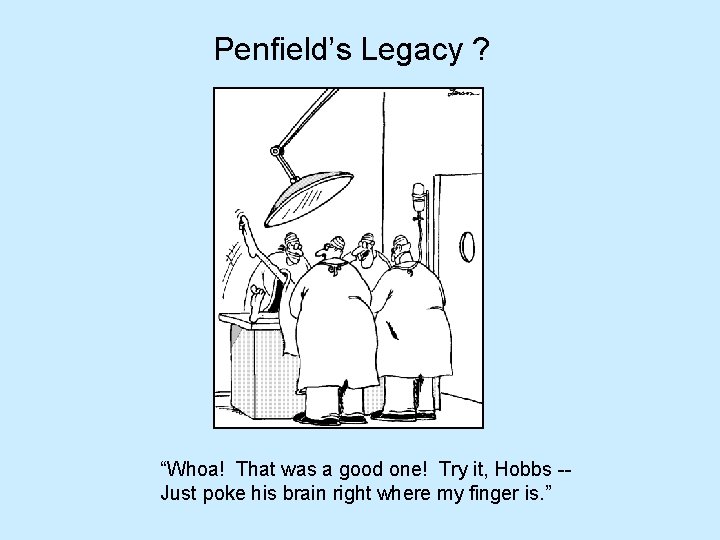
Penfield’s Legacy ? “Whoa! That was a good one! Try it, Hobbs -Just poke his brain right where my finger is. ”
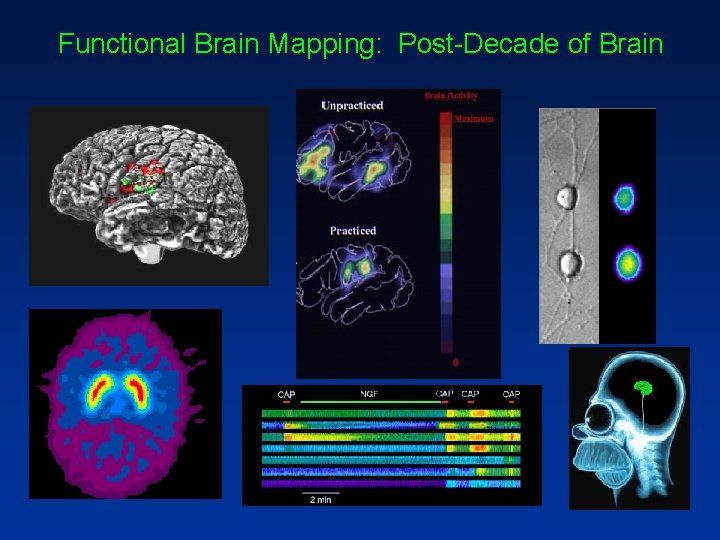
Functional Brain Mapping: Post-Decade of Brain
Modern Brain Research: A Process of Discovery and Re-examination • New horizons of knowledge – – Gene families of important neuronal molecules Common biochemical signals for substance abusing behaviors Signals underlying the creation and storage of memories Distributed organization of cognitive function • Teaching old dogmas new tricks – – Glial cells play larger roles than support and nutrition Dendrites are not passive observers in synaptic signaling Adult nerve cells, given proper care, can repair and recover Neurotransmitter receptors are more elusive targets than previously suspected
Decade of the Brain: Where are We Now? • Human Genome Project - but other genomes may be as important (rat, mice, Fugu, C. elegans) • New technologies (genomics/proteomics, cellular and non-invasive whole brain imaging, neural networks/robotics, single channel electrophysiology) • Answers are not as simple as originally thought (complex multigenetic disorders – schizophrenia, Parkinson’s) or the absence of understanding of how or what gene products do (Huntingtin). • To progress, genetic information must be translated into animal and non-animal models of disease for developing safe, rational therapies. This is hard! • “Translational research” is key. Often defined as unidirectional “bench-tobedside”, but information flow in the other direction is just as important.
Decade of the Brain: Some Greatest Hits? or “So that’s how it works!!” • Ion Channel Research: Advanced electrophysiological recording meets X-ray crystallography • Pain: A Holy Grail Discovered • Synaptic Plasticity: Common signaling turned on its Hebb • Glial Cells: Not just silent partners. • Sleep: A chance to learn? • Neurotransmitter Receptors: Partnerships in signaling
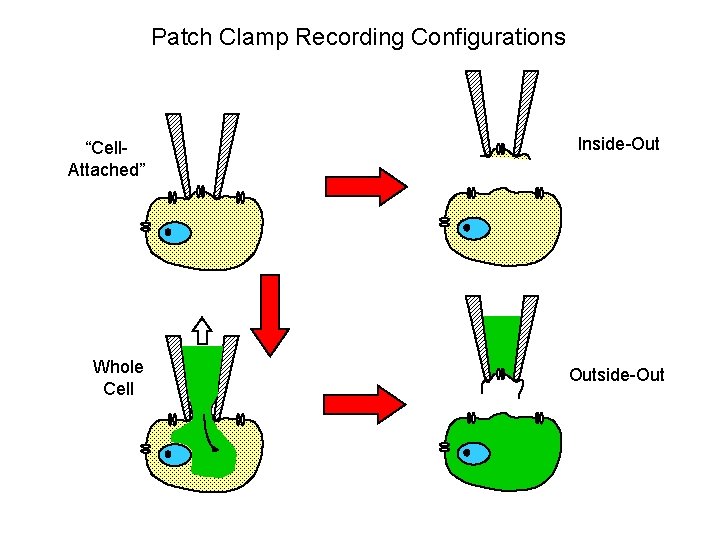
Patch Clamp Recording Configurations “Cell. Attached” Inside-Out Whole Cell Outside-Out
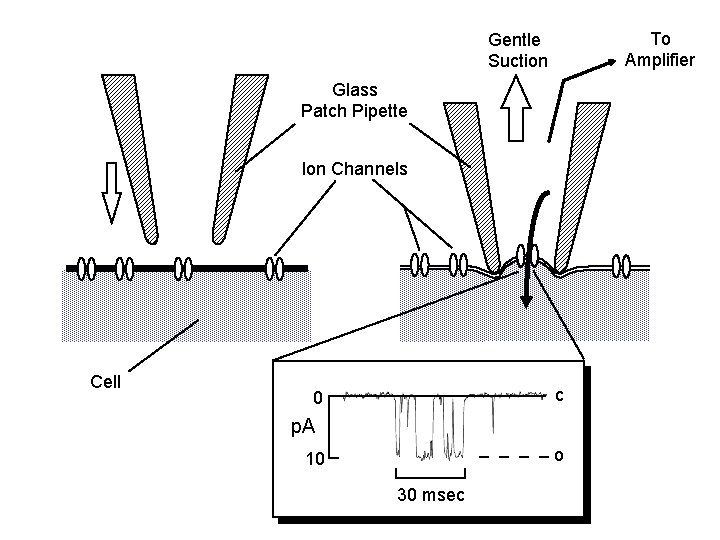
To Amplifier Gentle Suction Glass Patch Pipette Ion Channels Cell c 0 p. A _ _o 10 30 msec
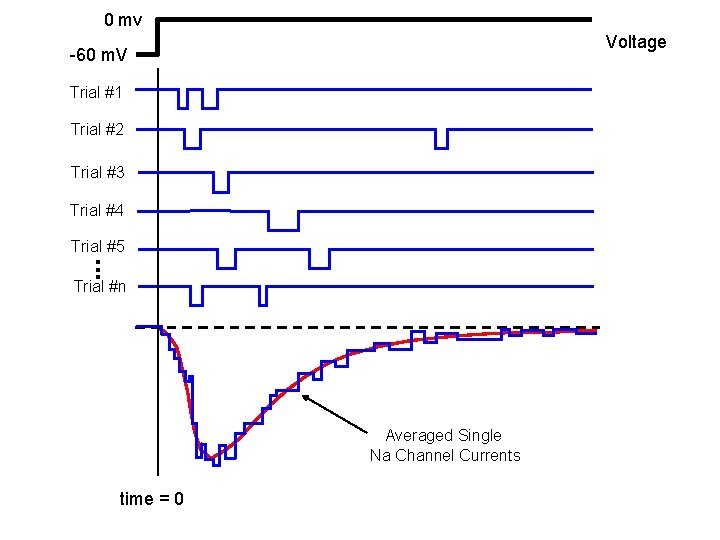
0 mv Voltage -60 m. V Trial #1 Trial #2 Trial #3 Trial #4 . . Trial #5 Trial #n Averaged Single Na Channel Currents time = 0
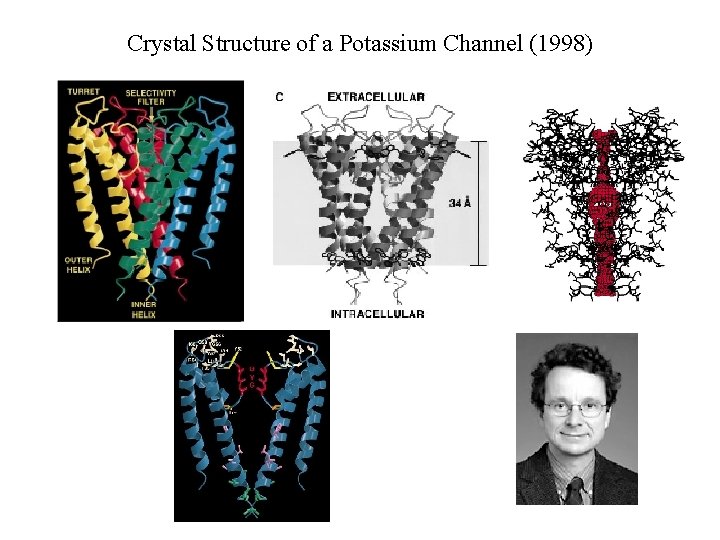
Crystal Structure of a Potassium Channel (1998)
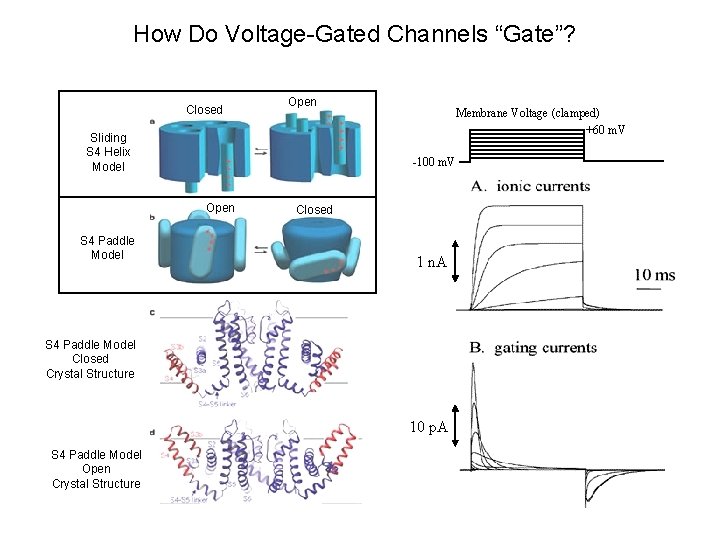
How Do Voltage-Gated Channels “Gate”? Closed Open Sliding S 4 Helix Model -100 m. V Open S 4 Paddle Model Membrane Voltage (clamped) +60 m. V Closed 1 n. A S 4 Paddle Model Closed Crystal Structure 10 p. A S 4 Paddle Model Open Crystal Structure
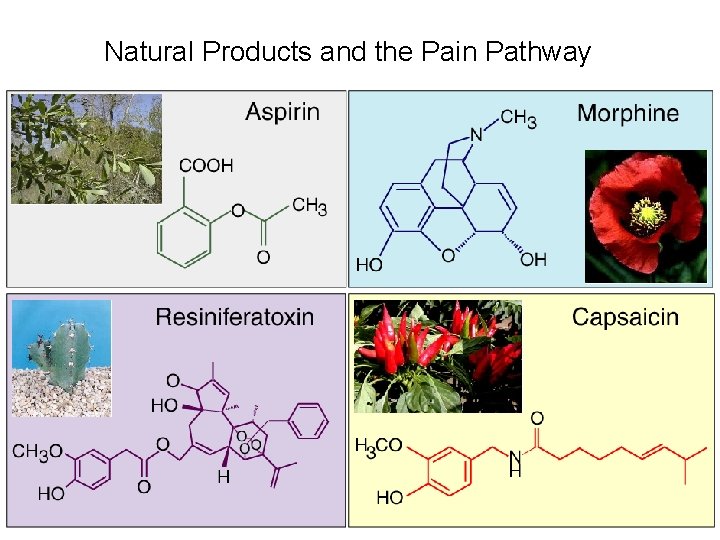
Natural Products and the Pain Pathway
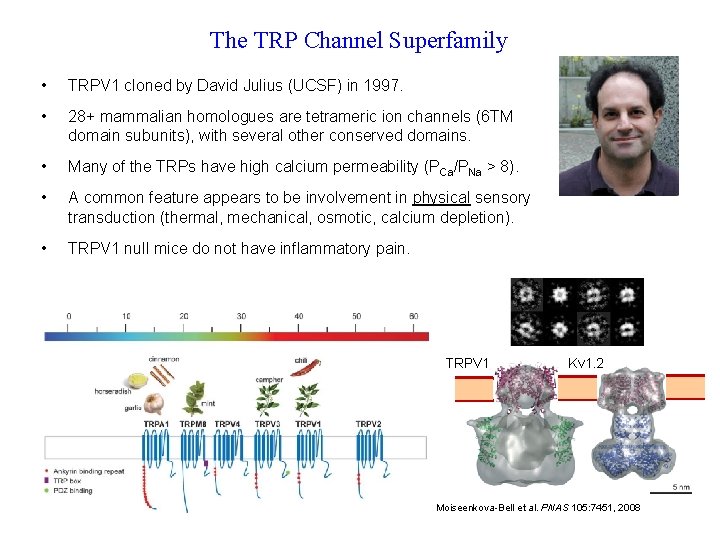
The TRP Channel Superfamily • TRPV 1 cloned by David Julius (UCSF) in 1997. • 28+ mammalian homologues are tetrameric ion channels (6 TM domain subunits), with several other conserved domains. • Many of the TRPs have high calcium permeability (PCa/PNa > 8). • A common feature appears to be involvement in physical sensory transduction (thermal, mechanical, osmotic, calcium depletion). • TRPV 1 null mice do not have inflammatory pain. TRPV 1 Kv 1. 2 Moiseenkova-Bell et al. PNAS 105: 7451, 2008
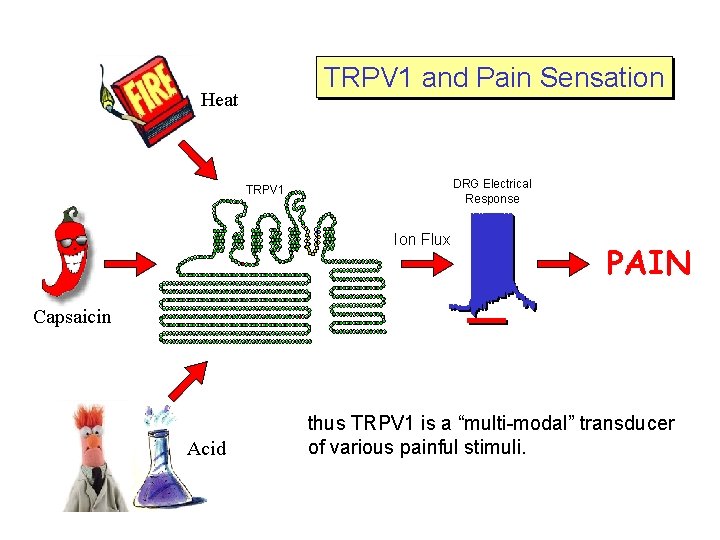
TRPV 1 and Pain Sensation Heat DRG Electrical Response TRPV 1 Ion Flux PAIN Capsaicin Acid thus TRPV 1 is a “multi-modal” transducer of various painful stimuli.
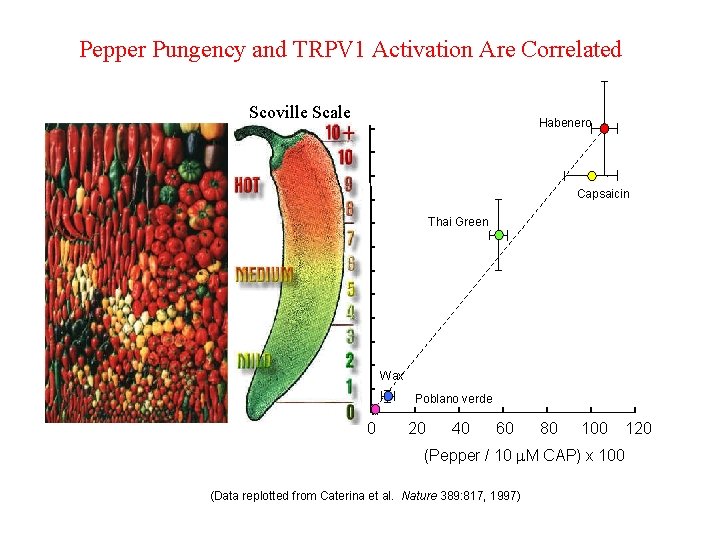
Pepper Pungency and TRPV 1 Activation Are Correlated Scoville Scale Habenero Capsaicin Thai Green Wax Poblano verde 0 20 40 60 80 100 (Pepper / 10 M CAP) x 100 (Data replotted from Caterina et al. Nature 389: 817, 1997) 120
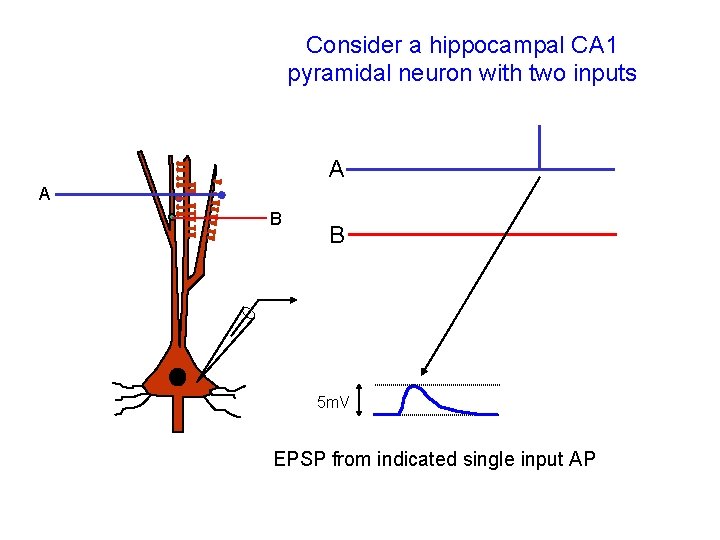
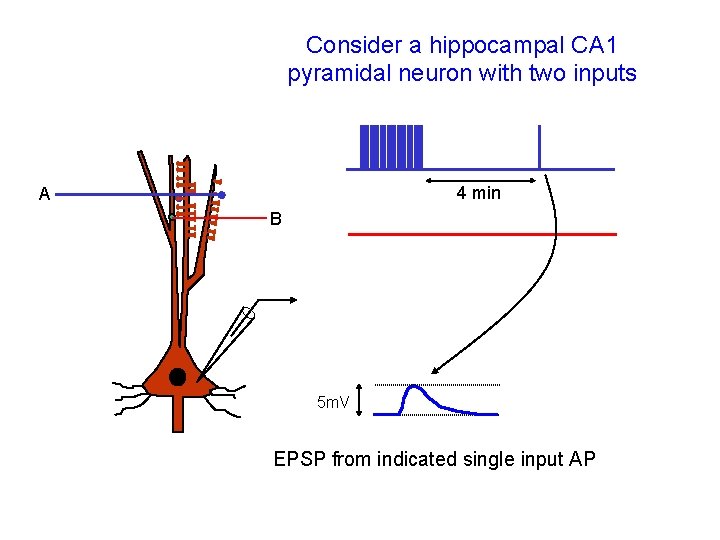
Consider a hippocampal CA 1 pyramidal neuron with two inputs A A B B 5 m. V EPSP from indicated single input AP
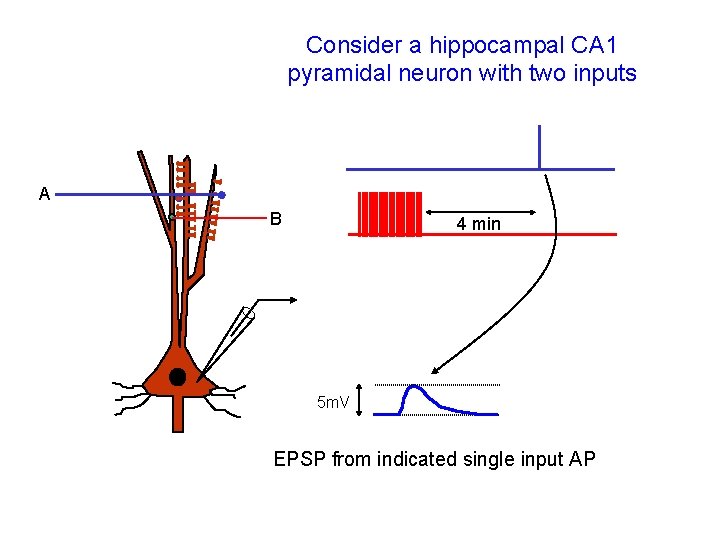
Consider a hippocampal CA 1 pyramidal neuron with two inputs 4 min A B 5 m. V EPSP from indicated single input AP
Consider a hippocampal CA 1 pyramidal neuron with two inputs A B 4 min 5 m. V EPSP from indicated single input AP
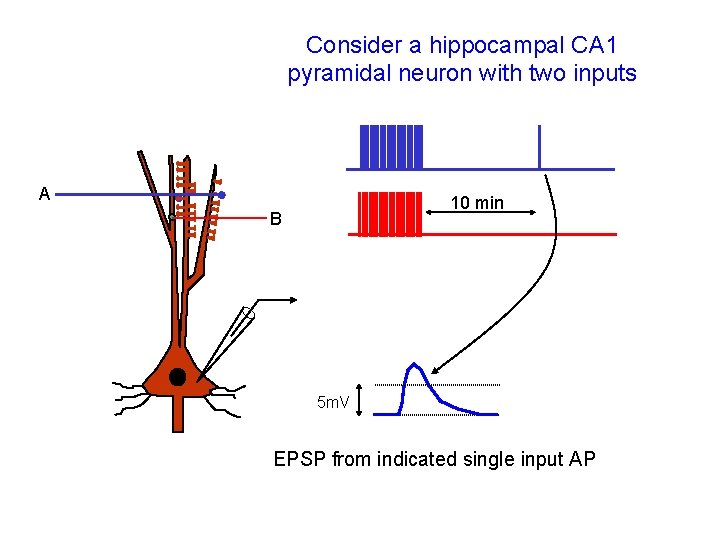
Consider a hippocampal CA 1 pyramidal neuron with two inputs A 10 min B 5 m. V EPSP from indicated single input AP
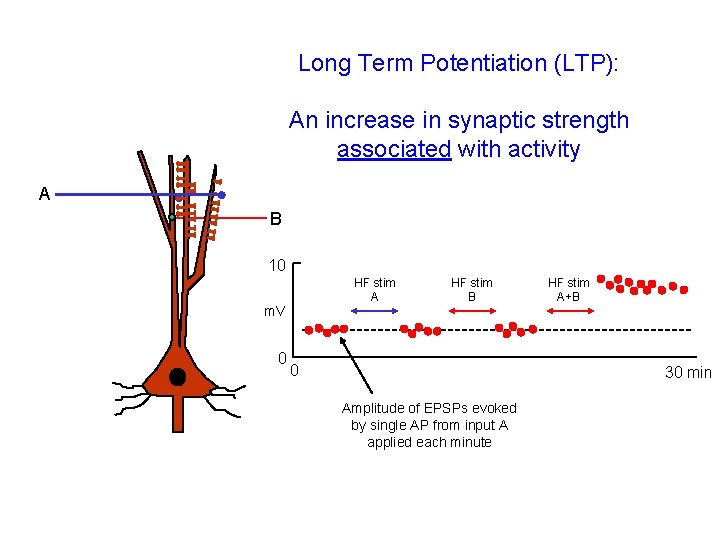
Long Term Potentiation (LTP): An increase in synaptic strength associated with activity A B 10 HF stim A m. V 0 HF stim B 0 HF stim A+B 30 min Amplitude of EPSPs evoked by single AP from input A applied each minute
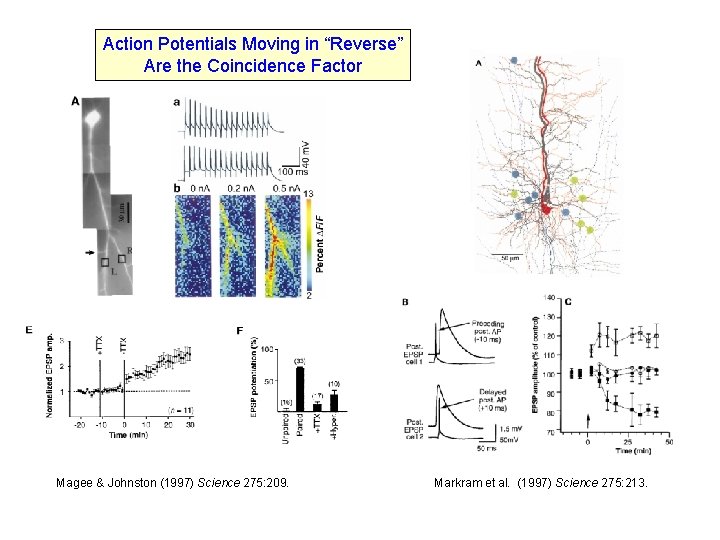
Action Potentials Moving in “Reverse” Are the Coincidence Factor Magee & Johnston (1997) Science 275: 209. Markram et al. (1997) Science 275: 213.
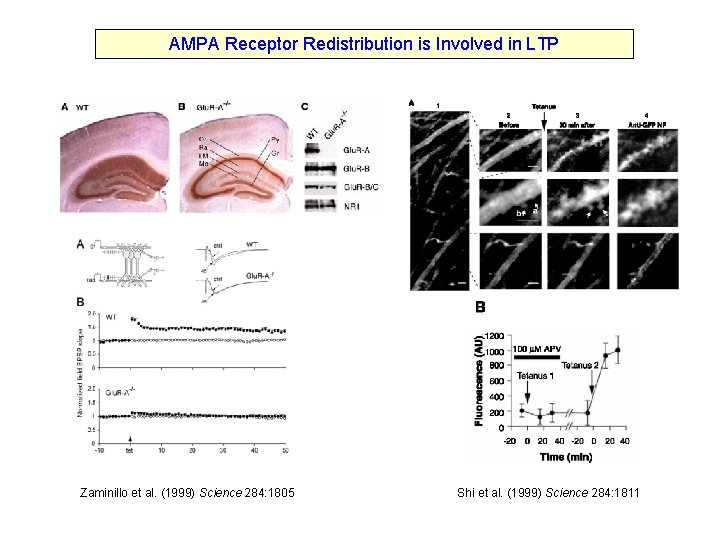
AMPA Receptor Redistribution is Involved in LTP Zaminillo et al. (1999) Science 284: 1805 Shi et al. (1999) Science 284: 1811
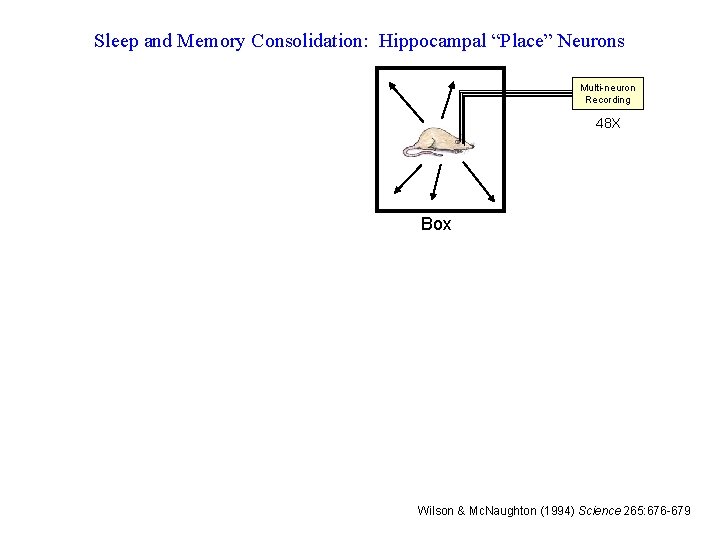
Sleep and Memory Consolidation: Hippocampal “Place” Neurons Multi-neuron Recording 48 X Box Wilson & Mc. Naughton (1994) Science 265: 676 -679
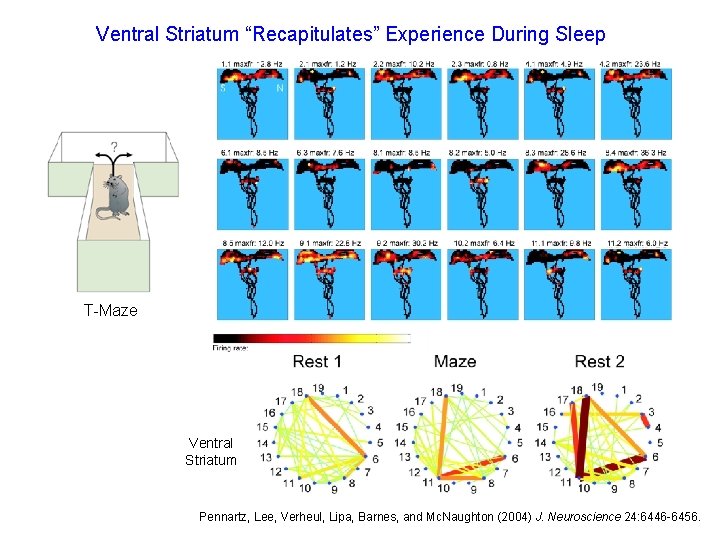
Ventral Striatum “Recapitulates” Experience During Sleep T-Maze Ventral Striatum Pennartz, Lee, Verheul, Lipa, Barnes, and Mc. Naughton (2004) J. Neuroscience 24: 6446 -6456.
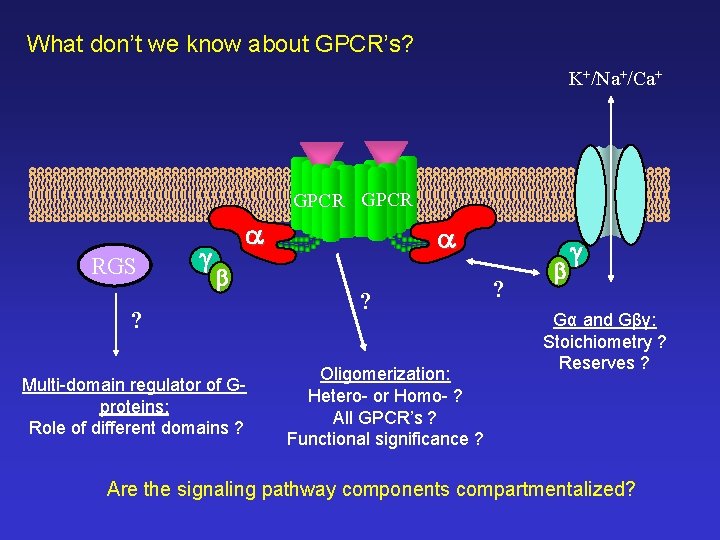
What don’t we know about GPCR’s? K+/Na+/Ca+ GPCR RGS ? Multi-domain regulator of Gproteins: Role of different domains ? ? Oligomerization: Hetero- or Homo- ? All GPCR’s ? Functional significance ? ? Gα and Gβγ: Stoichiometry ? Reserves ? Are the signaling pathway components compartmentalized?
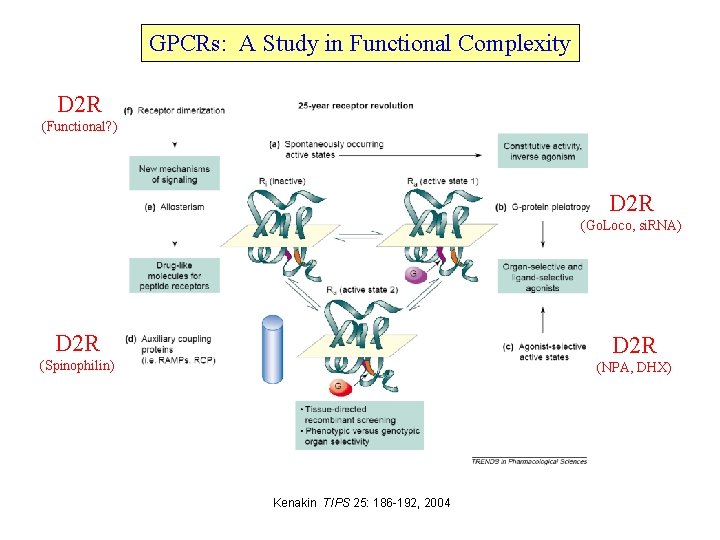
GPCRs: A Study in Functional Complexity D 2 R (Functional? ) D 2 R (Go. Loco, si. RNA) D 2 R (Spinophilin) (NPA, DHX) Kenakin TIPS 25: 186 -192, 2004
From Molecules to Minds: Challenges for the 21 st Century A National Academy of Sciences Workshop July 2008 • Grand Challenge 1: How does the human brain work and produce mental activity? • Grand Challenge 2: Nature versus Nurture: How does the interplay of biology and experience shape our brains and make us who we are? • Grand Challenge 3: How do we keep our brains healthy? How do we protect, restore, or enhance the functioning of our brains as we age? From Molecules to Minds: Challenges for the 21 st Century: Workshop Summary http: //www. nap. edu/catalog/12220. html
From Molecules to Minds: Challenges for the 21 st Century A National Academy of Sciences Workshop • Grand Challenge 1: How does the human brain work and produce mental activity? • Mapping the brain • • Technical Advance - the “Brainbow”, color coding neuronal types • Technical Advance - the neuronal “light switch”, activating neurons with light • Technical Challenge - spatial and temporal resolution (f. MRI, PET, arrays) Neural networks • Scaling: too big or too small? • Resolution: fine cellular detail or the basics of signaling? • Bias: intuition from psychology or a more agnostic approach to learning?
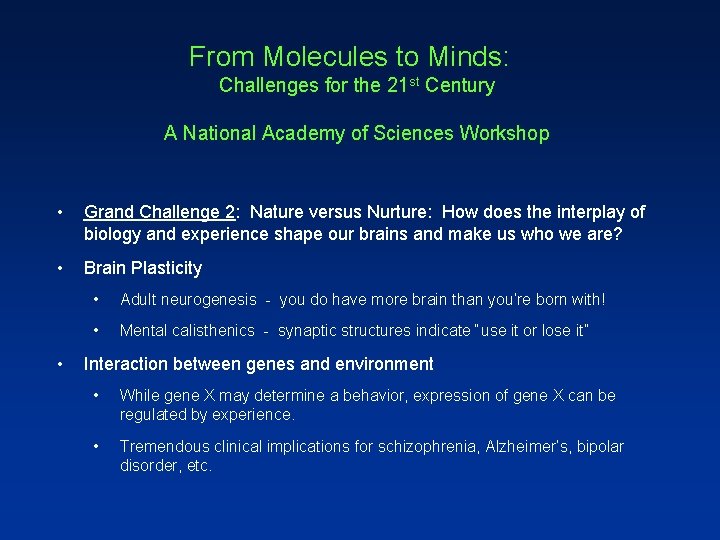
From Molecules to Minds: Challenges for the 21 st Century A National Academy of Sciences Workshop • Grand Challenge 2: Nature versus Nurture: How does the interplay of biology and experience shape our brains and make us who we are? • Brain Plasticity • • Adult neurogenesis - you do have more brain than you’re born with! • Mental calisthenics - synaptic structures indicate “use it or lose it” Interaction between genes and environment • While gene X may determine a behavior, expression of gene X can be regulated by experience. • Tremendous clinical implications for schizophrenia, Alzheimer’s, bipolar disorder, etc.
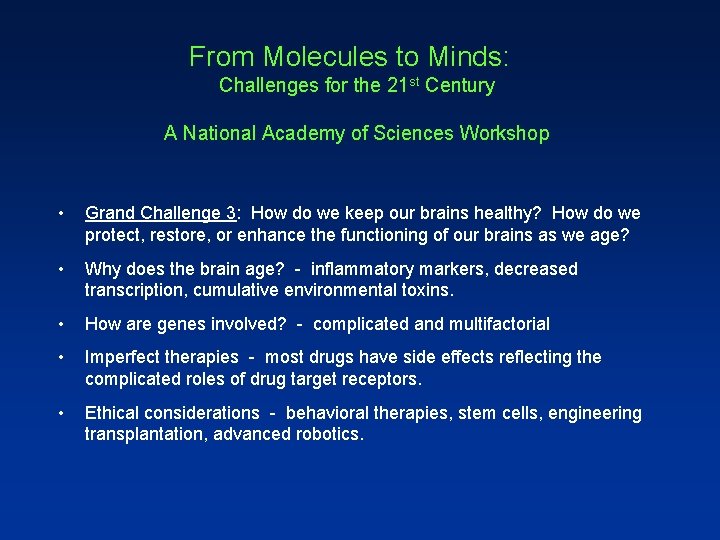
From Molecules to Minds: Challenges for the 21 st Century A National Academy of Sciences Workshop • Grand Challenge 3: How do we keep our brains healthy? How do we protect, restore, or enhance the functioning of our brains as we age? • Why does the brain age? - inflammatory markers, decreased transcription, cumulative environmental toxins. • How are genes involved? - complicated and multifactorial • Imperfect therapies - most drugs have side effects reflecting the complicated roles of drug target receptors. • Ethical considerations - behavioral therapies, stem cells, engineering transplantation, advanced robotics.
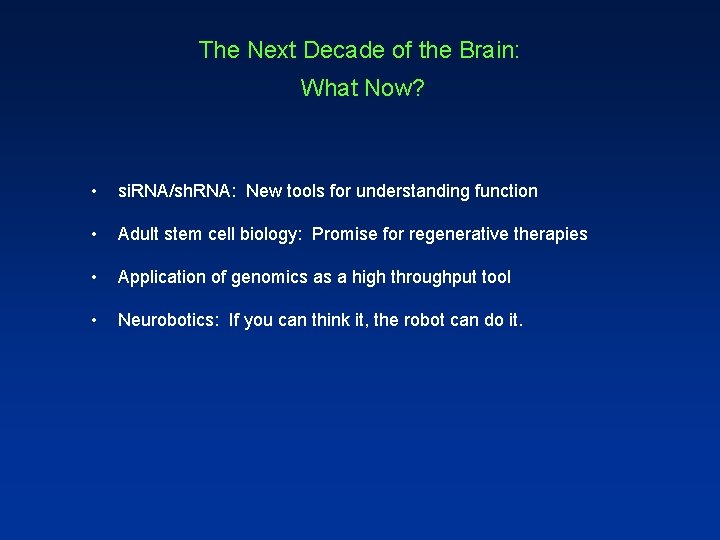
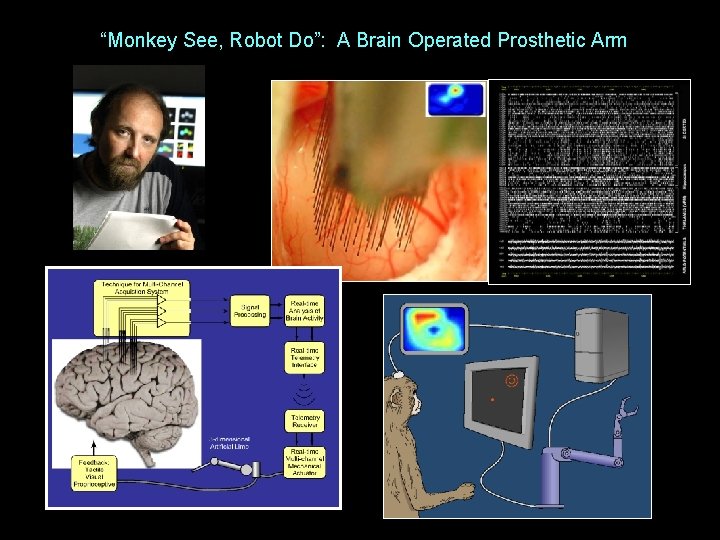
The Next Decade of the Brain: What Now? • si. RNA/sh. RNA: New tools for understanding function • Adult stem cell biology: Promise for regenerative therapies • Application of genomics as a high throughput tool • Neurobotics: If you can think it, the robot can do it.
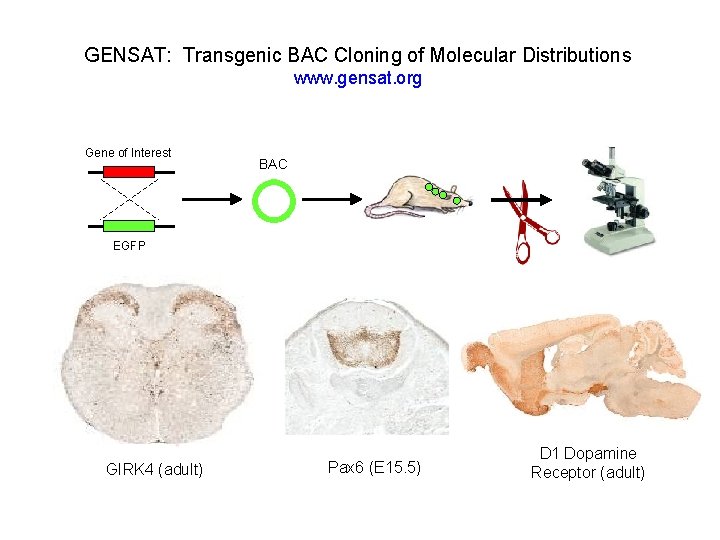
GENSAT: Transgenic BAC Cloning of Molecular Distributions www. gensat. org Gene of Interest BAC EGFP GIRK 4 (adult) Pax 6 (E 15. 5) D 1 Dopamine Receptor (adult)
“Monkey See, Robot Do”: A Brain Operated Prosthetic Arm
Thank You for Your Attention ! “Dr. Oxford, May I be excused? My brain is full. ”