
THE FUTURE OF LIGHT MEASUREMENT Casper Gammel Viso
- Slides: 21
THE FUTURE OF LIGHT MEASUREMENT Casper Gammel Viso Systems Denmark
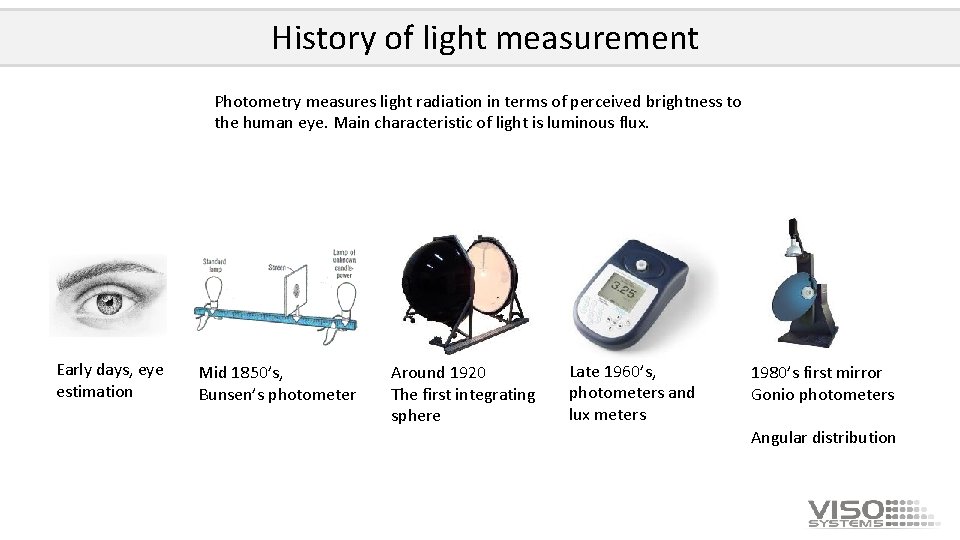
History of light measurement Photometry measures light radiation in terms of perceived brightness to the human eye. Main characteristic of light is luminous flux. Early days, eye estimation Mid 1850’s, Bunsen’s photometer Around 1920 The first integrating sphere Late 1960’s, photometers and lux meters 1980’s first mirror Gonio photometers Angular distribution
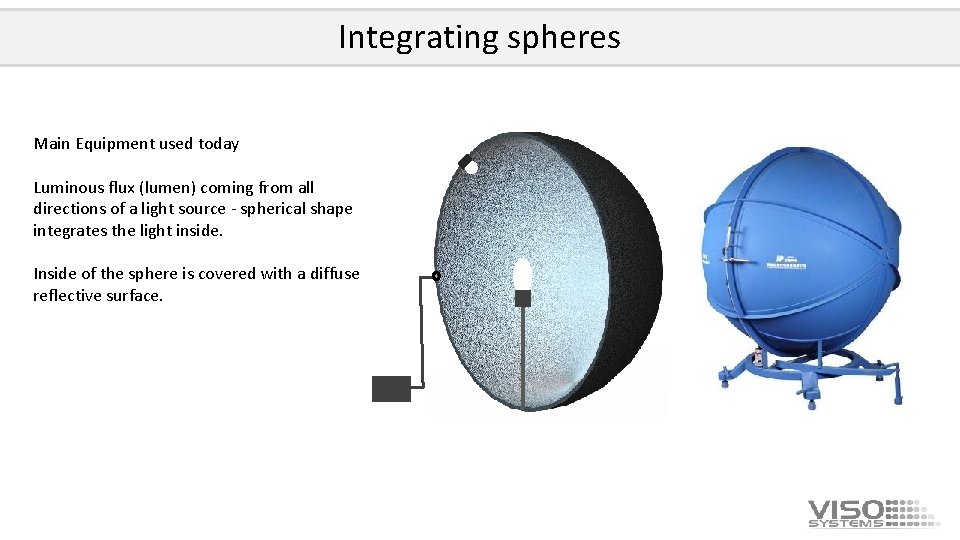
Integrating spheres Main Equipment used today Luminous flux (lumen) coming from all directions of a light source - spherical shape integrates the light inside. Inside of the sphere is covered with a diffuse reflective surface.
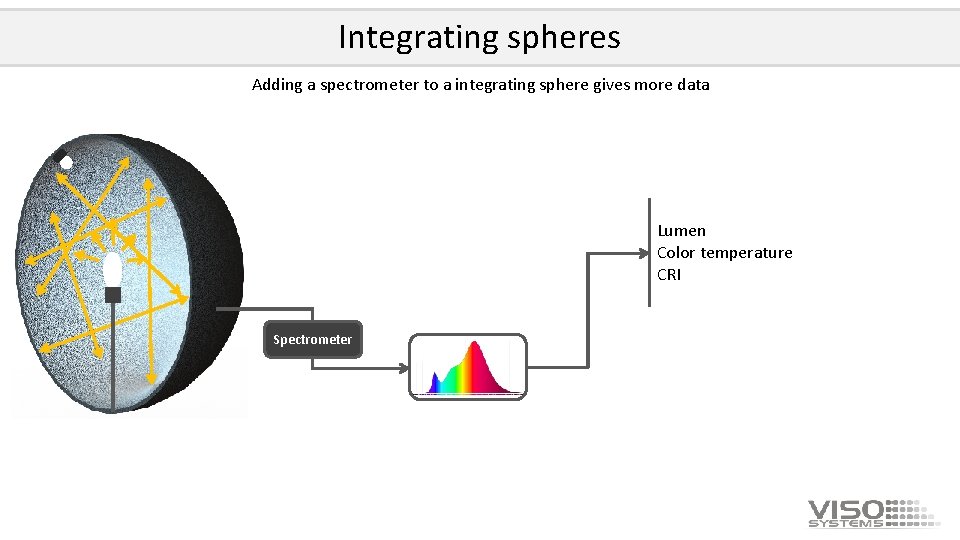
Integrating spheres Adding a spectrometer to a integrating sphere gives more data Lumen Color temperature CRI Spectrometer
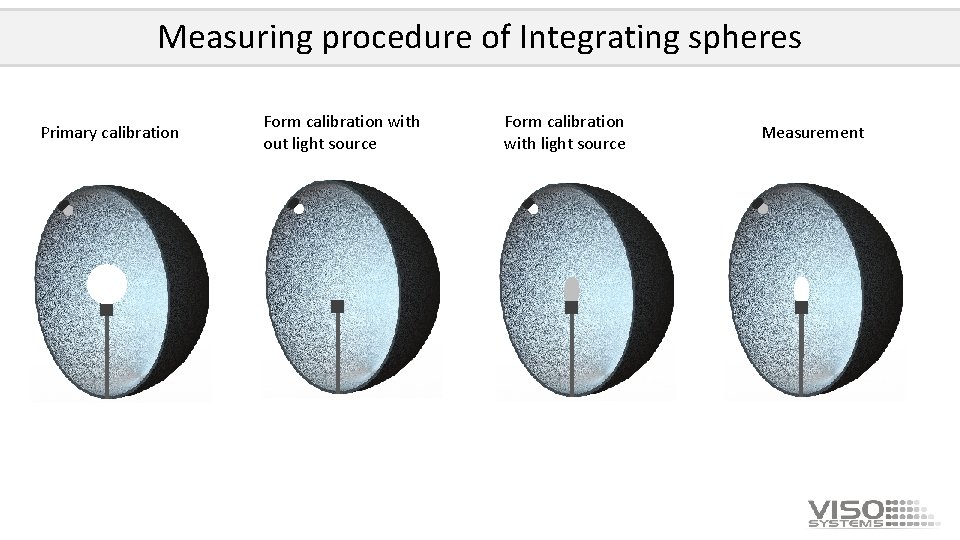
Measuring procedure of Integrating spheres Primary calibration Form calibration with out light source Form calibration with light source Measurement
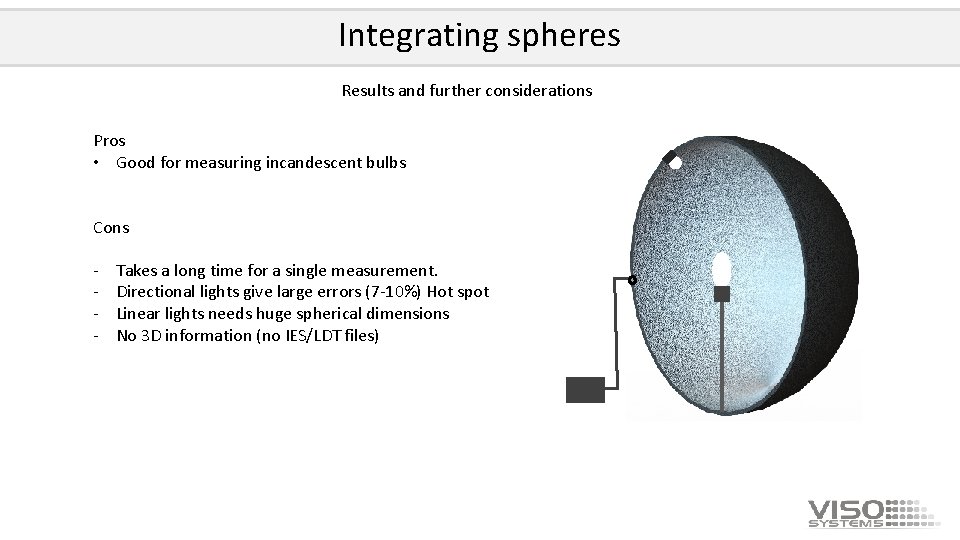
Integrating spheres Results and further considerations Pros • Good for measuring incandescent bulbs Cons - Takes a long time for a single measurement. Directional lights give large errors (7 -10%) Hot spot Linear lights needs huge spherical dimensions No 3 D information (no IES/LDT files)
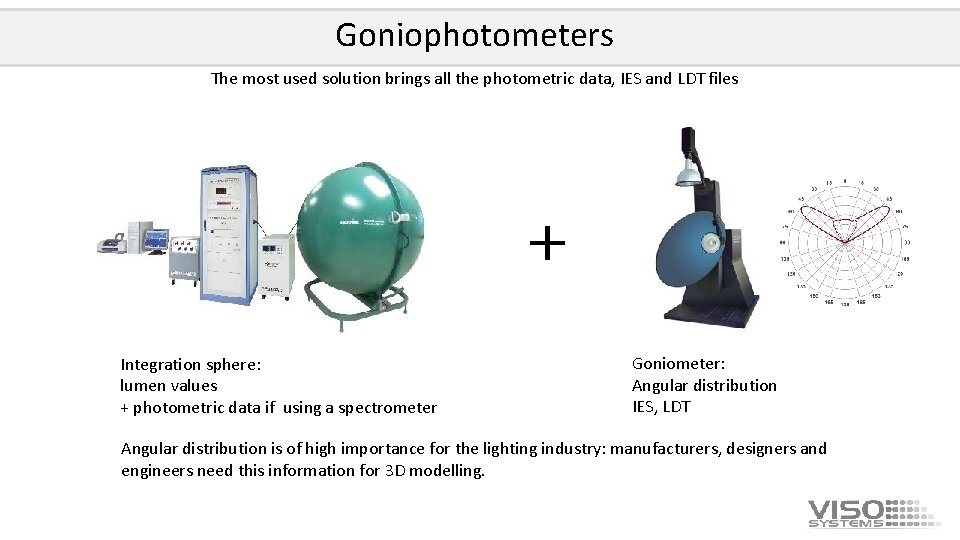
Goniophotometers The most used solution brings all the photometric data, IES and LDT files Integration sphere: lumen values + photometric data if using a spectrometer Goniometer: Angular distribution IES, LDT Angular distribution is of high importance for the lighting industry: manufacturers, designers and engineers need this information for 3 D modelling.
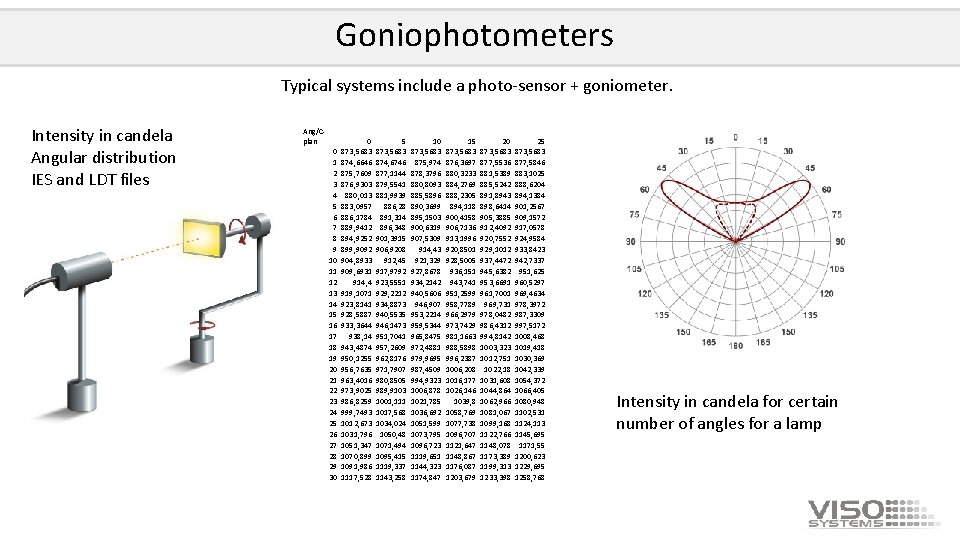
Goniophotometers Typical systems include a photo-sensor + goniometer. Intensity in candela Angular distribution IES and LDT files Ang/Cplan 0 1 2 3 4 5 6 7 8 9 10 11 12 13 14 15 16 17 18 19 20 21 22 23 24 25 26 27 28 29 30 0 873, 5683 874, 6646 875, 7609 876, 9303 880, 013 883, 0957 886, 1784 889, 9412 894, 9252 899, 9092 904, 8933 909, 6931 914, 4 919, 1071 923, 8141 928, 5887 933, 3644 938, 14 943, 4874 950, 1255 956, 7635 963, 4016 973, 9025 986, 8259 999, 7493 1012, 673 1031, 796 1051, 347 1070, 899 1091, 986 1117, 528 5 873, 5683 874, 6746 877, 1144 879, 5541 881, 9939 886, 28 891, 314 896, 348 901, 3915 906, 9208 912, 45 917, 9792 923, 5551 929, 2212 934, 8873 940, 5535 946, 1473 951, 7041 957, 2609 962, 8176 971, 7907 980, 8505 989, 9103 1001, 111 1017, 568 1034, 024 1050, 48 1071, 494 1095, 415 1119, 337 1143, 258 10 873, 5683 875, 974 878, 3796 880, 8093 885, 5896 890, 3699 895, 1503 900, 6319 907, 5309 914, 43 921, 329 927, 8678 934, 2142 940, 5606 946, 907 953, 2214 959, 5344 965, 8475 972, 4881 979, 9695 987, 4509 994, 9323 1006, 878 1021, 785 1036, 692 1051, 599 1073, 795 1096, 723 1119, 651 1144, 323 1174, 847 15 873, 5683 876, 3697 880, 3233 884, 2769 888, 2305 894, 118 900, 4158 906, 7136 913, 1996 920, 8501 928, 5005 936, 151 943, 741 951, 2599 958, 7789 966, 2979 973, 7429 981, 1663 988, 5898 996, 2387 1006, 208 1016, 177 1026, 146 1039, 8 1058, 769 1077, 738 1096, 707 1121, 647 1148, 867 1176, 087 1203, 679 20 873, 5683 877, 5536 881, 5389 885, 5242 891, 8943 898, 6414 905, 3885 912, 4092 920, 7552 929, 1012 937, 4472 945, 6382 953, 6691 961, 7001 969, 731 978, 0482 986, 4312 994, 8142 1003, 323 1012, 751 1022, 18 1031, 608 1044, 864 1062, 966 1081, 067 1099, 168 1122, 766 1148, 078 1173, 389 1199, 313 1233, 398 25 873, 5683 877, 5846 883, 1025 888, 6204 894, 1384 901, 2567 909, 1572 917, 0578 924, 9584 933, 8423 942, 7337 951, 625 960, 5297 969, 4634 978, 3972 987, 3309 997, 5172 1008, 468 1019, 418 1030, 369 1042, 339 1054, 372 1066, 405 1080, 948 1102, 531 1124, 113 1145, 695 1171, 55 1200, 623 1229, 695 1258, 768 Intensity in candela for certain number of angles for a lamp
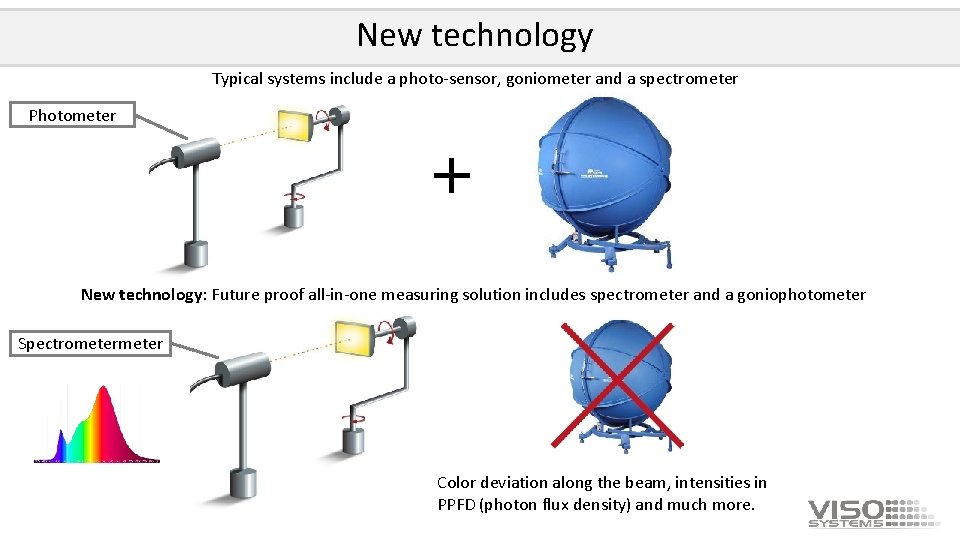
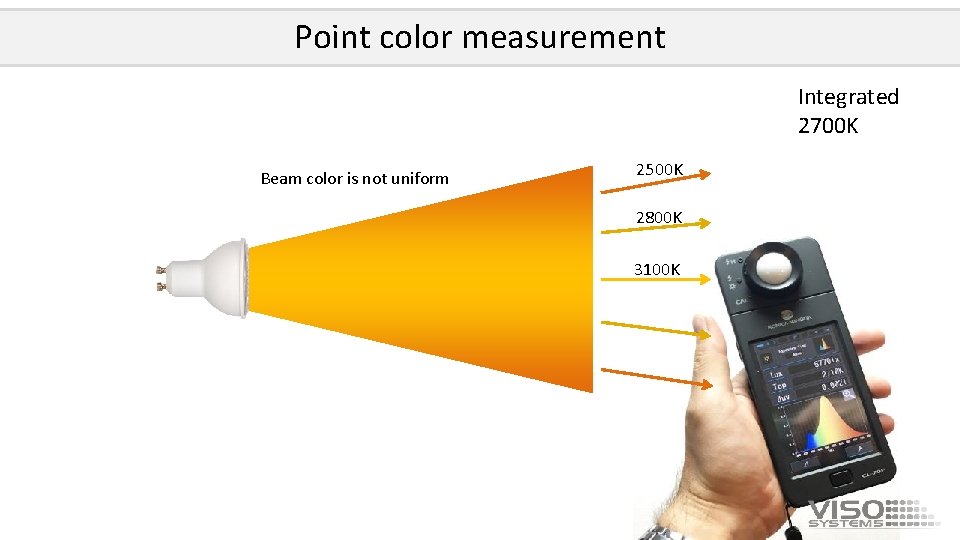
New technology Typical systems include a photo-sensor, goniometer and a spectrometer Photometer New technology: Future proof all-in-one measuring solution includes spectrometer and a goniophotometer Spectrometer Color deviation along the beam, intensities in PPFD (photon flux density) and much more.
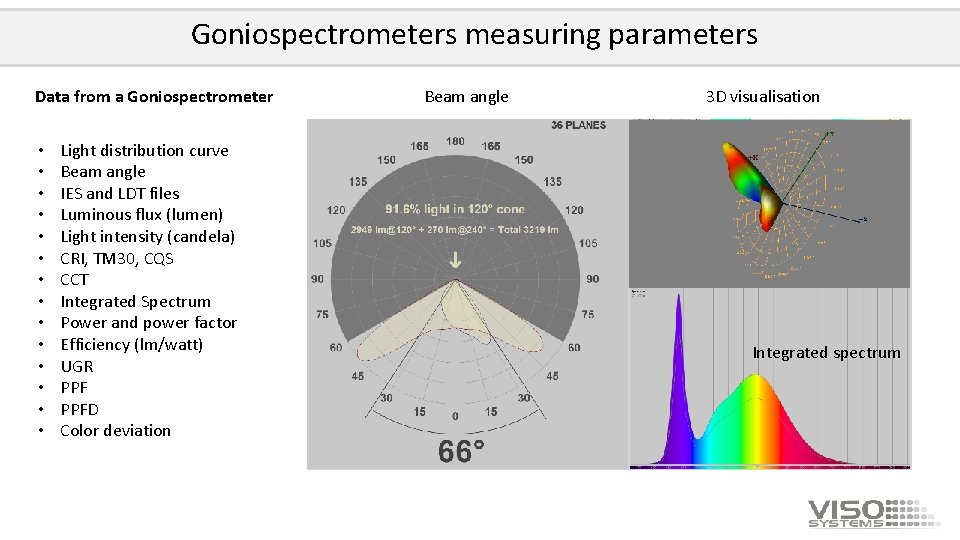
Goniospectrometers measuring parameters Data from a Goniospectrometer • • • • Light distribution curve Beam angle IES and LDT files Luminous flux (lumen) Light intensity (candela) CRI, TM 30, CQS CCT Integrated Spectrum Power and power factor Efficiency (lm/watt) UGR PPFD Color deviation Beam angle 3 D visualisation Integrated spectrum
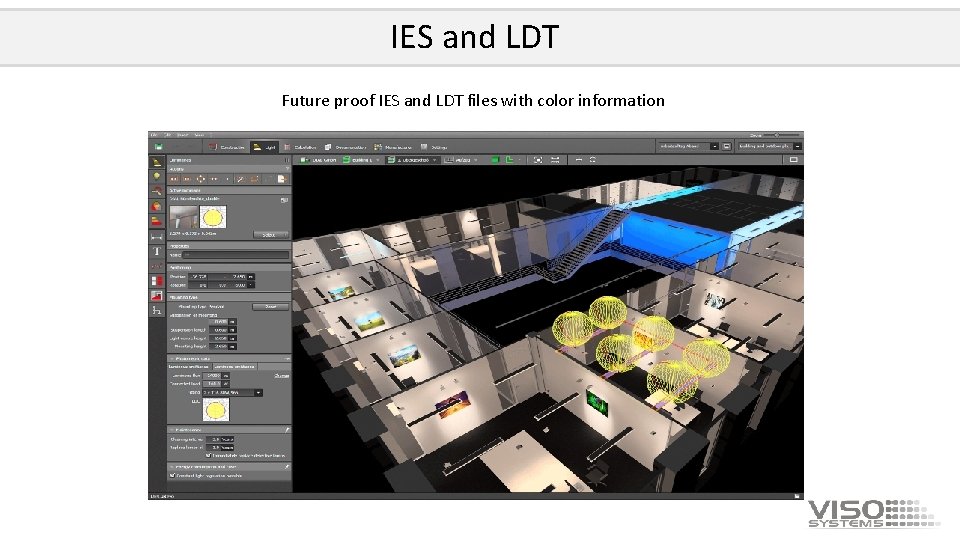
IES and LDT Future proof IES and LDT files with color information
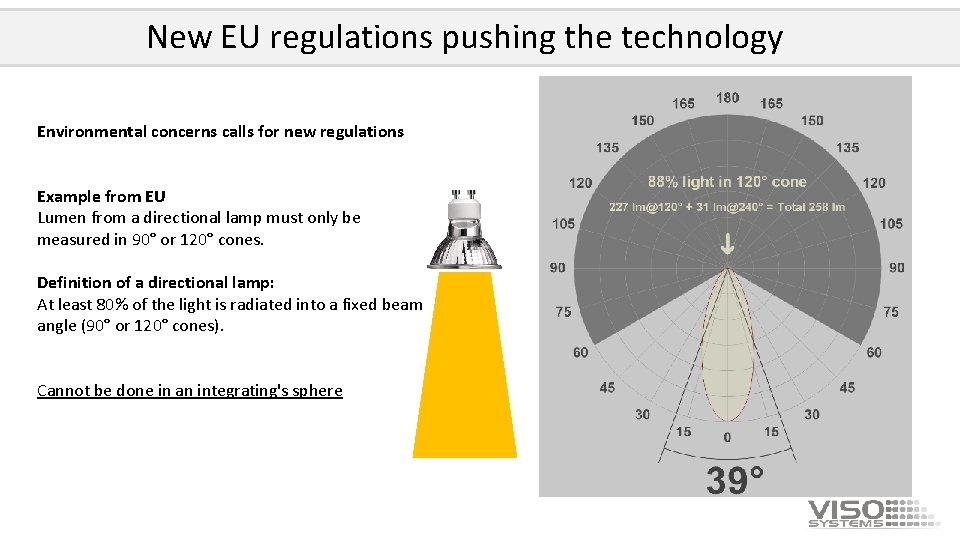
New EU regulations pushing the technology Environmental concerns calls for new regulations Example from EU Lumen from a directional lamp must only be measured in 90° or 120° cones. Definition of a directional lamp: At least 80% of the light is radiated into a fixed beam angle (90° or 120° cones). Cannot be done in an integrating's sphere
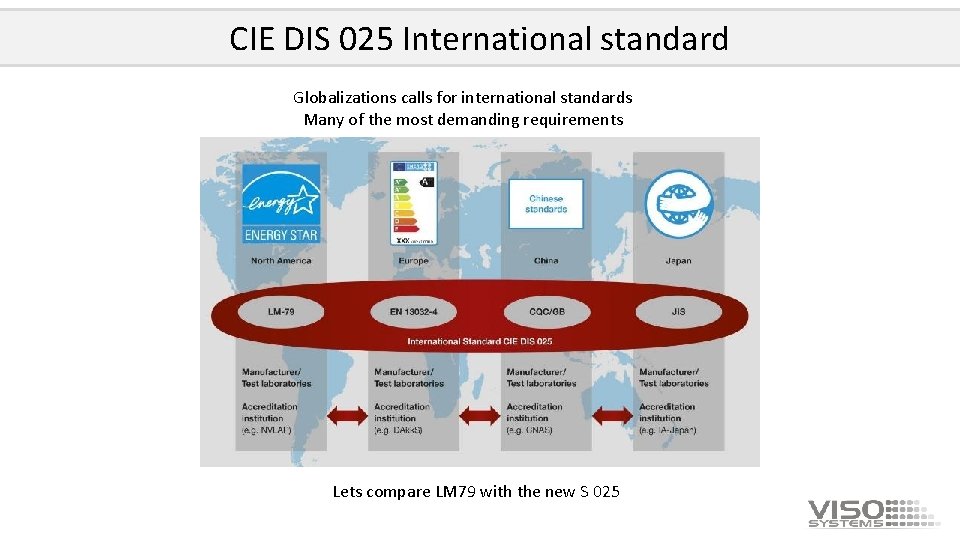
CIE DIS 025 International standard Globalizations calls for international standards Many of the most demanding requirements Lets compare LM 79 with the new S 025
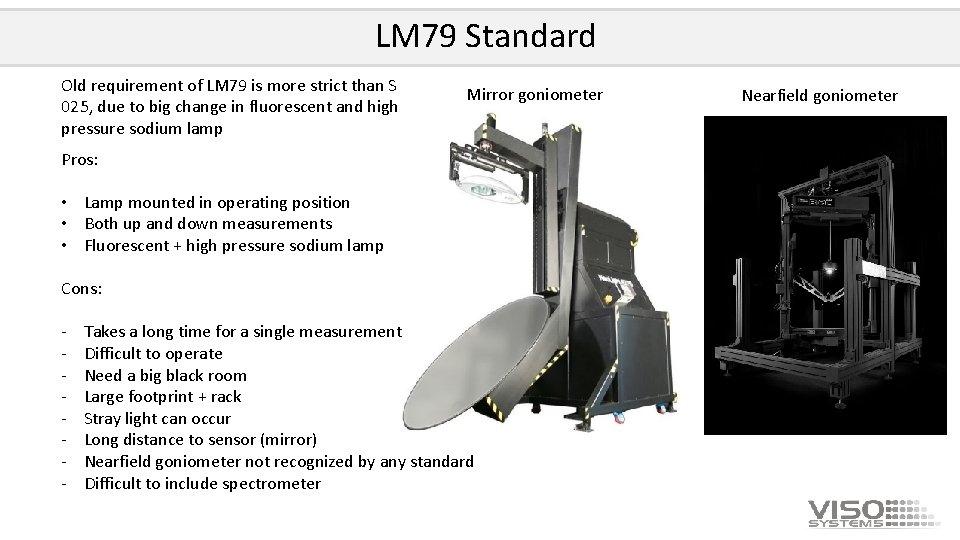
LM 79 Standard Old requirement of LM 79 is more strict than S 025, due to big change in fluorescent and high pressure sodium lamp Mirror goniometer Pros: • Lamp mounted in operating position • Both up and down measurements • Fluorescent + high pressure sodium lamp Cons: - Takes a long time for a single measurement Difficult to operate Need a big black room Large footprint + rack Stray light can occur Long distance to sensor (mirror) Nearfield goniometer not recognized by any standard Difficult to include spectrometer Nearfield goniometer
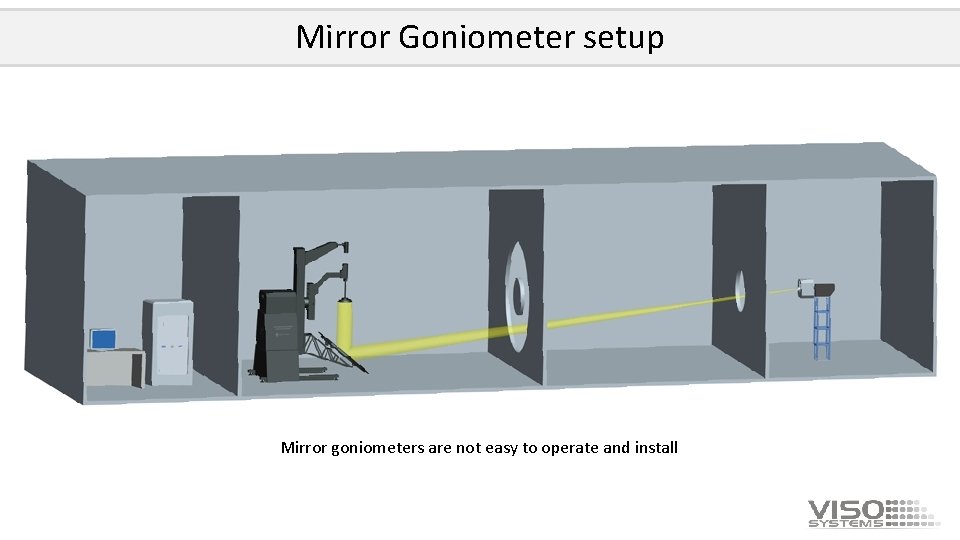
Mirror Goniometer setup Mirror goniometers are not easy to operate and install
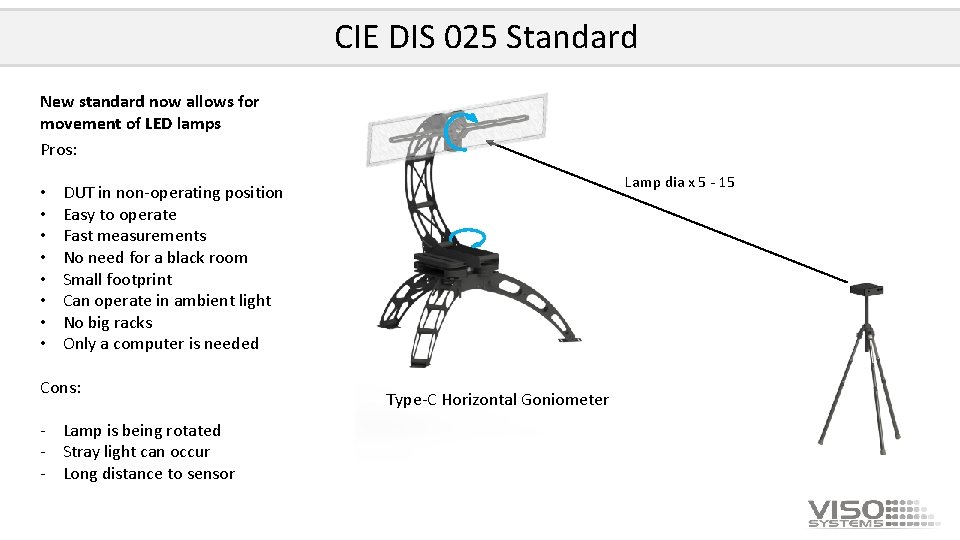
CIE DIS 025 Standard New standard now allows for movement of LED lamps Pros: • • Lamp dia x 5 - 15 DUT in non-operating position Easy to operate Fast measurements No need for a black room Small footprint Can operate in ambient light No big racks Only a computer is needed Cons: - Lamp is being rotated - Stray light can occur - Long distance to sensor Type-C Horizontal Goniometer
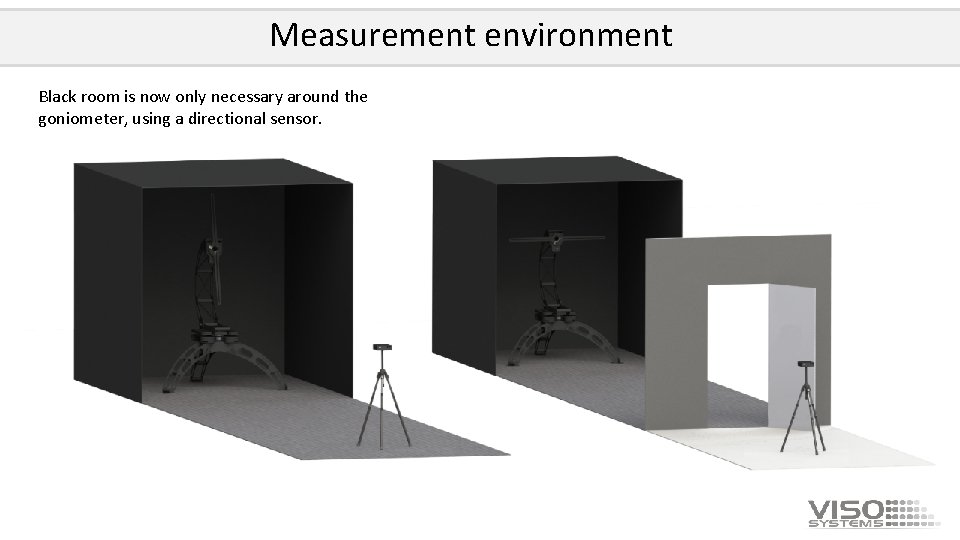
Measurement environment Black room is now only necessary around the goniometer, using a directional sensor.
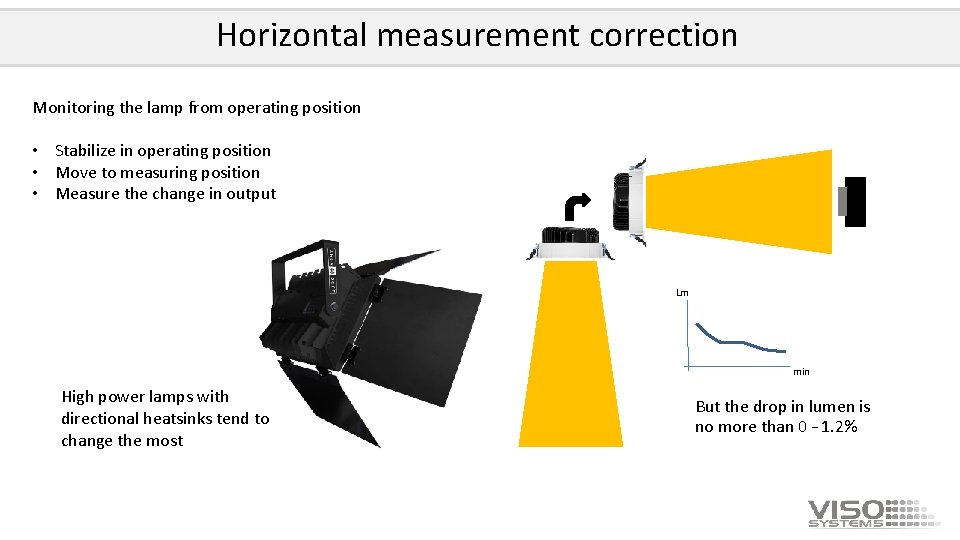
Horizontal measurement correction Monitoring the lamp from operating position • Stabilize in operating position • Move to measuring position • Measure the change in output Lm min High power lamps with directional heatsinks tend to change the most But the drop in lumen is no more than 0 – 1. 2%
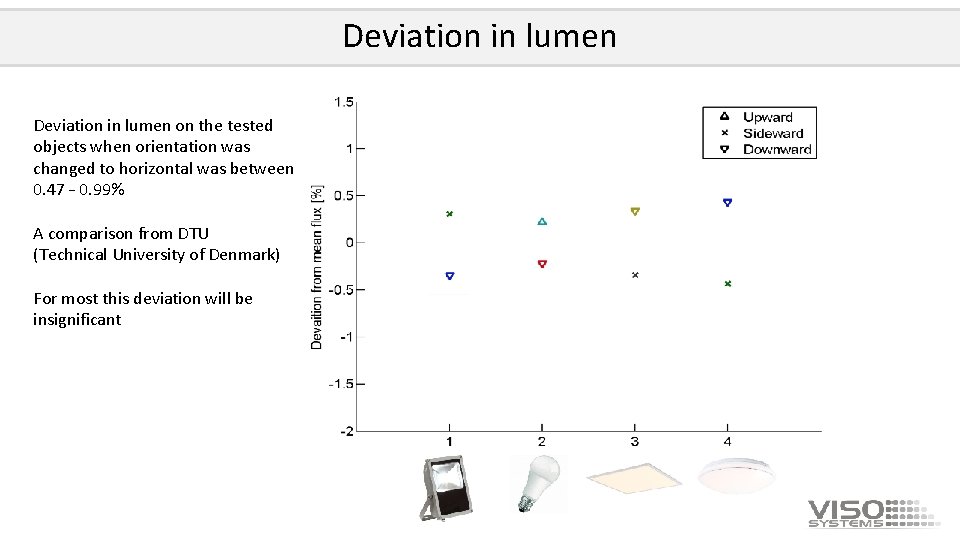
Deviation in lumen on the tested objects when orientation was changed to horizontal was between 0. 47 – 0. 99% A comparison from DTU (Technical University of Denmark) For most this deviation will be insignificant
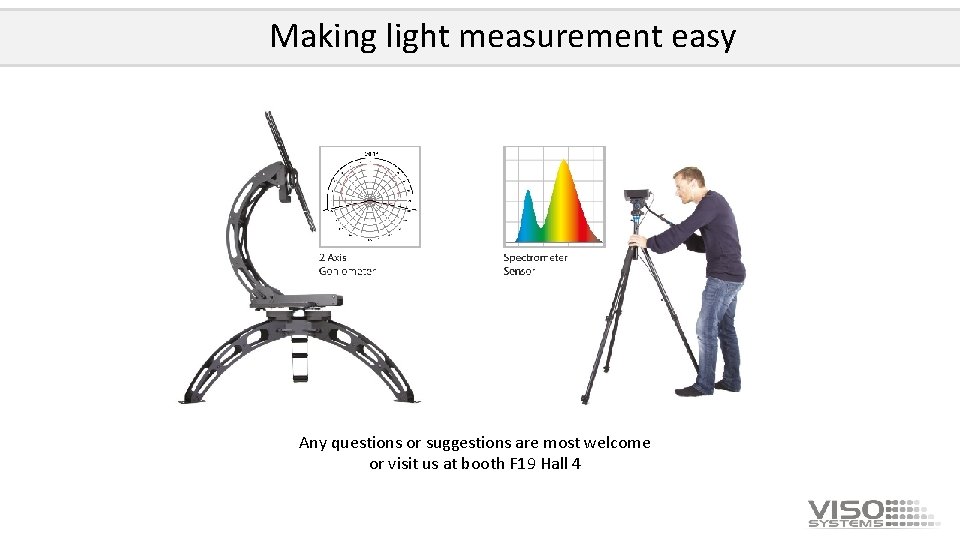
Making light measurement easy Any questions or suggestions are most welcome or visit us at booth F 19 Hall 4
Point color measurement Integrated 2700 K Beam color is not uniform 2500 K 2800 K 3100 K