
The Future of Infrared Surface Brightness Fluctuation Distance
The Future of Infrared Surface Brightness Fluctuation Distance Measurements Joseph Jensen, Utah Valley University John Blakeslee, Herzberg Astrophysics July 4, 2016
Why do we need to measure accurate distances? Understanding the systematic limitations of distance measurement techniques is key to solving many problems in cosmology and astrophysics. u Measure supermassive black hole masses in early-type galaxies. u Understand possible biases in the type Ia supernovae distance scale. u Help resolve the tension between CMB model-based Ho and the locally-calibrated distance ladder.
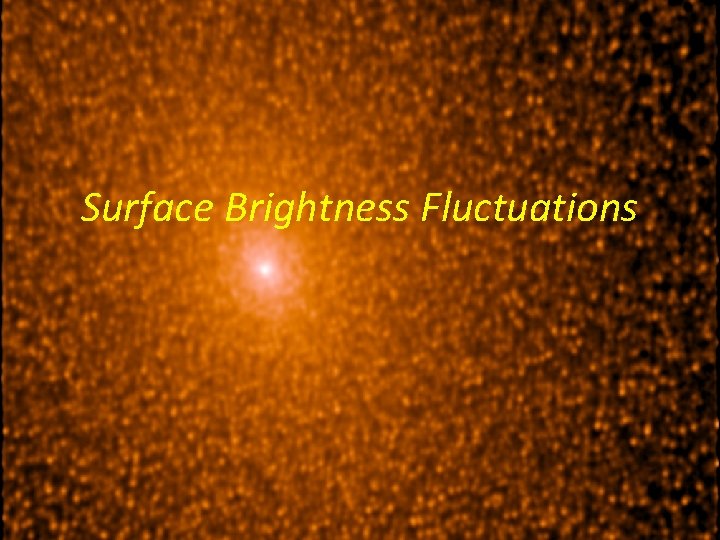
Surface Brightness Fluctuations
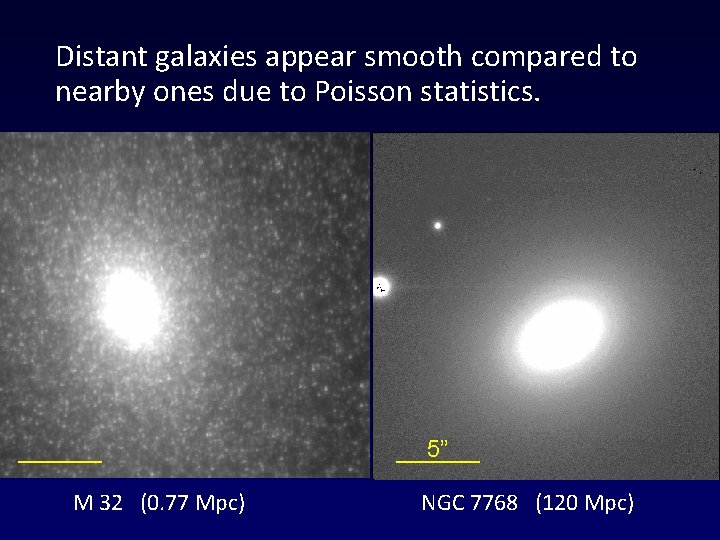
Distant galaxies appear smooth compared to nearby ones due to Poisson statistics. 5” M 32 (0. 77 Mpc) NGC 7768 (120 Mpc)
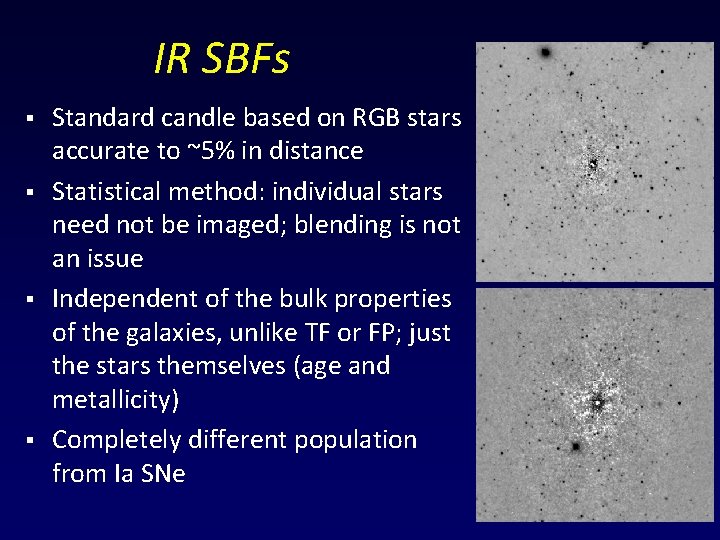
IR SBFs § § Standard candle based on RGB stars accurate to ~5% in distance Statistical method: individual stars need not be imaged; blending is not an issue Independent of the bulk properties of the galaxies, unlike TF or FP; just the stars themselves (age and metallicity) Completely different population from Ia SNe
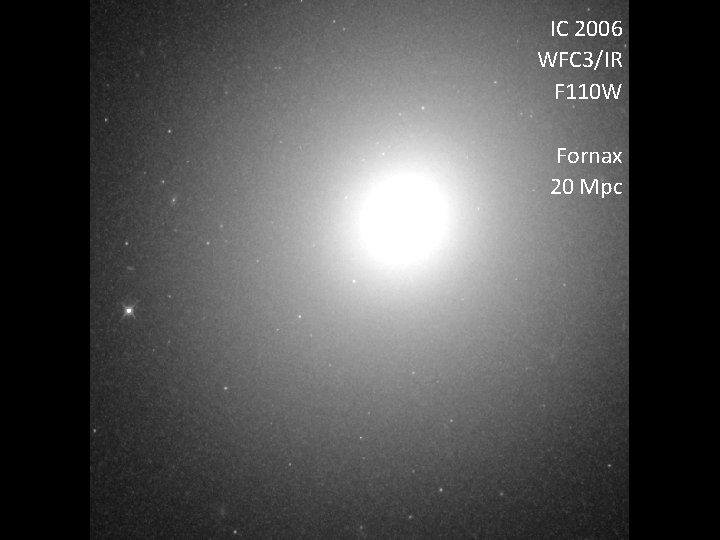
IC 2006 WFC 3/IR F 110 W Fornax 20 Mpc
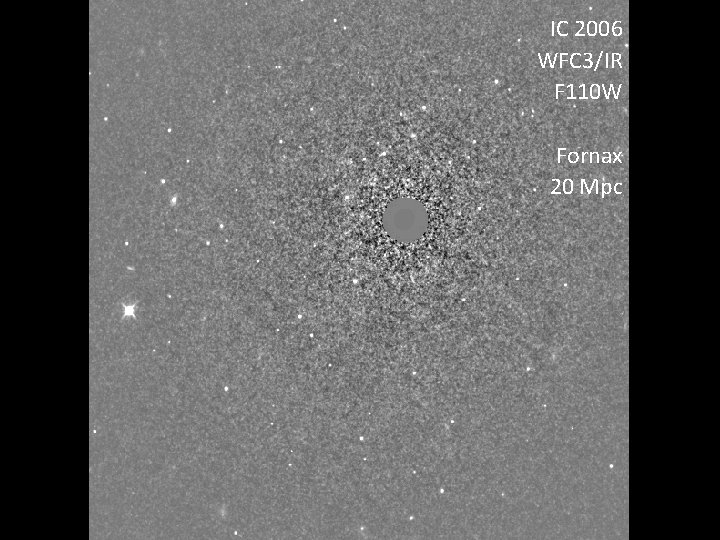
IC 2006 WFC 3/IR F 110 W Fornax 20 Mpc
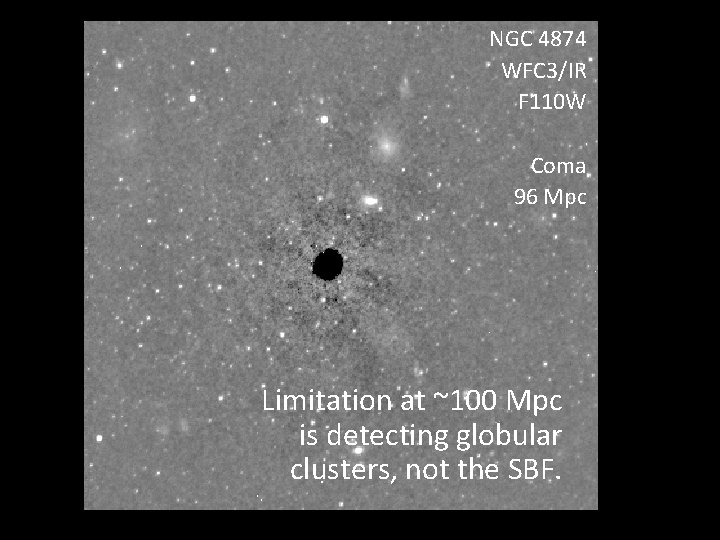
NGC 4874 WFC 3/IR F 110 W Coma 96 Mpc Limitation at ~100 Mpc is detecting globular clusters, not the SBF.
Advantages of IR SBF Distances § SBFs are much more luminous in the NIR § Dominated by luminous RGB stars Increased contrast with contaminating globular clusters and background galaxies § Image quality is better in the near-IR § Dust extinction is much lower than in the optical § Comparable accuracy to Sne, but more efficient BUT… § IR SBF are sensitive to young populations and AGB stars, so we avoid the bluest ones § Depends on the Cepheid calibration (for now) §
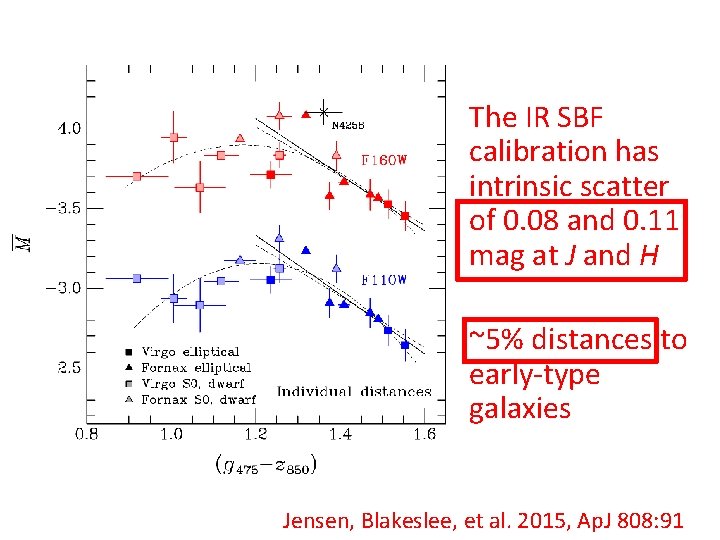
The IR SBF calibration has intrinsic scatter of 0. 08 and 0. 11 mag at J and H ~5% distances to early-type galaxies Jensen, Blakeslee, et al. 2015, Ap. J 808: 91
Jensen, Blakeslee, et al. 2015, Ap. J 808: 91
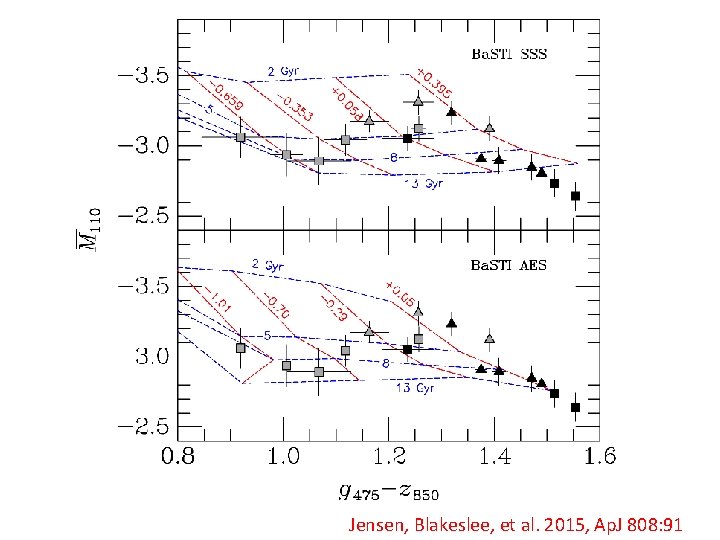
Jensen, Blakeslee, et al. 2015, Ap. J 808: 91
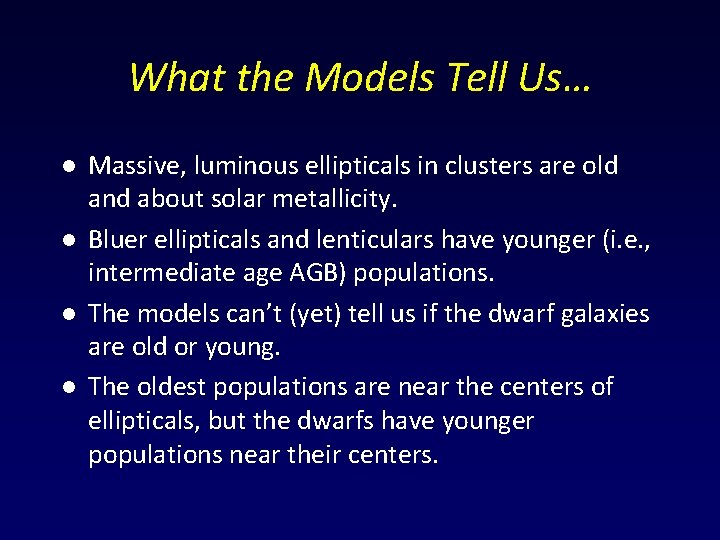
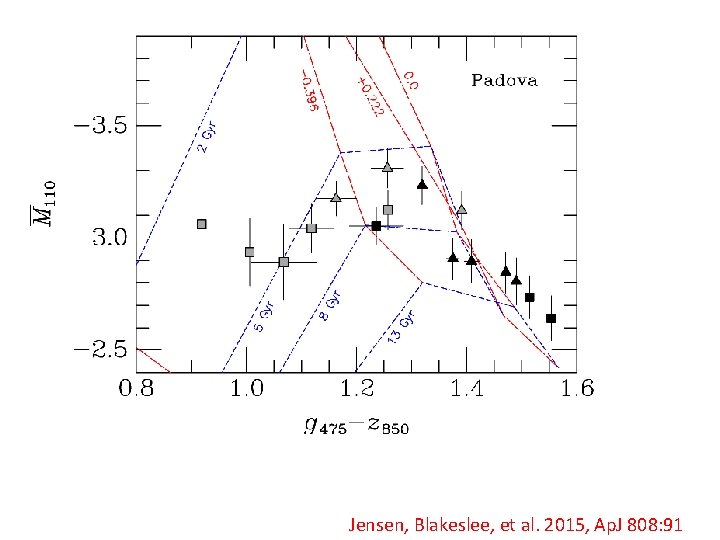
What the Models Tell Us… l l Massive, luminous ellipticals in clusters are old and about solar metallicity. Bluer ellipticals and lenticulars have younger (i. e. , intermediate age AGB) populations. The models can’t (yet) tell us if the dwarf galaxies are old or young. The oldest populations are near the centers of ellipticals, but the dwarfs have younger populations near their centers.
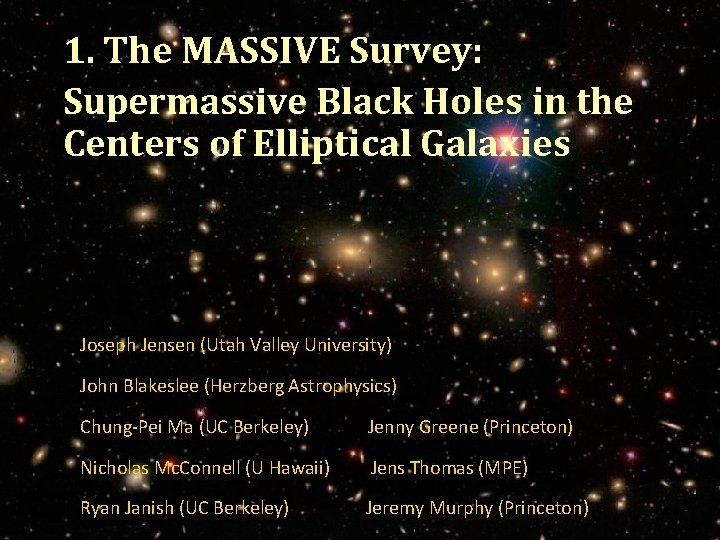
1. The MASSIVE Survey: Supermassive Black Holes in the Centers of Elliptical Galaxies Joseph Jensen (Utah Valley University) John Blakeslee (Herzberg Astrophysics) Chung-Pei Ma (UC Berkeley) Jenny Greene (Princeton) Nicholas Mc. Connell (U Hawaii) Jens Thomas (MPE) Ryan Janish (UC Berkeley) Jeremy Murphy (Princeton)u 1 5
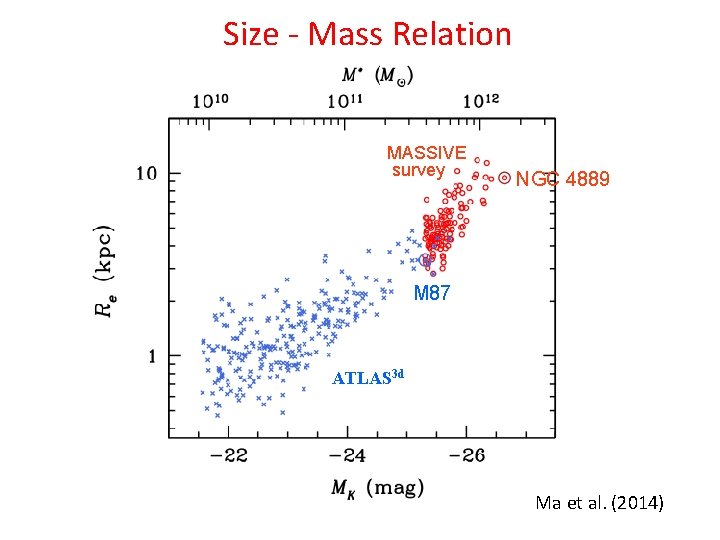
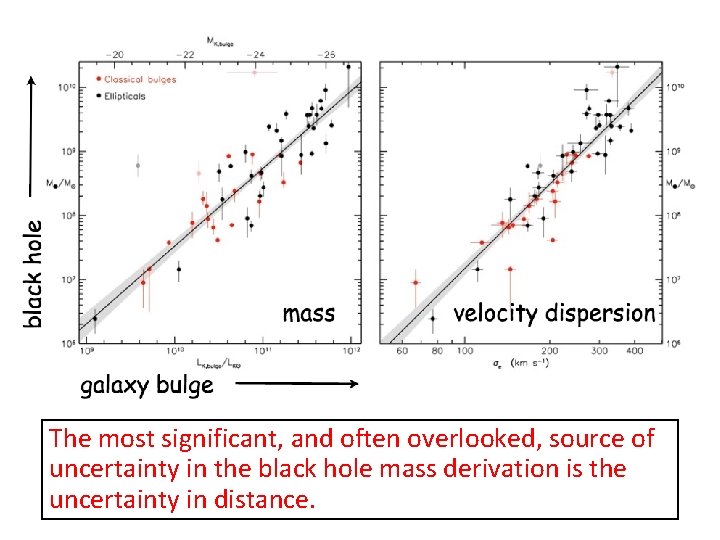
The MASSIVE Survey Early-type galaxies are… - hosts of the most massive black holes; - quiescent counterparts of high-z luminous quasars; - descendants of z~2 massive, compact galaxies; - sites of varying/bottom-heavy stellar initial mass functions
Size - Mass Relation MASSIVE survey NGC 4889 M 87 ATLAS 3 d Ma et al. (2014)
The most significant, and often overlooked, source of uncertainty in the black hole mass derivation is the uncertainty in distance.
Applying IR SBF to MASSIVE Galaxies u. SDSS images of some MASSIVE galaxies
Applying IR SBF to MASSIVE Galaxies u. SDSS images of some MASSIVE galaxies 25/34 galaxies have been observed so far.
2. Testing for Bias in the Type Ia SN Distance Scale Peter Milne (Arizona) Peter Garnavich (Notre Dame) Peter Brown (Texas A&M) Joseph Jensen (UVU) John Blakeslee (Herzberg)
2. Testing for Bias in the Type Ia SN Distance Scale l l “Tension” between CMB model-dependent Ho and that derived from Cepheid-calibrated SN distances in the nearby universe. SWIFT has revealed that Ia SNe vary in UV color and luminosity.
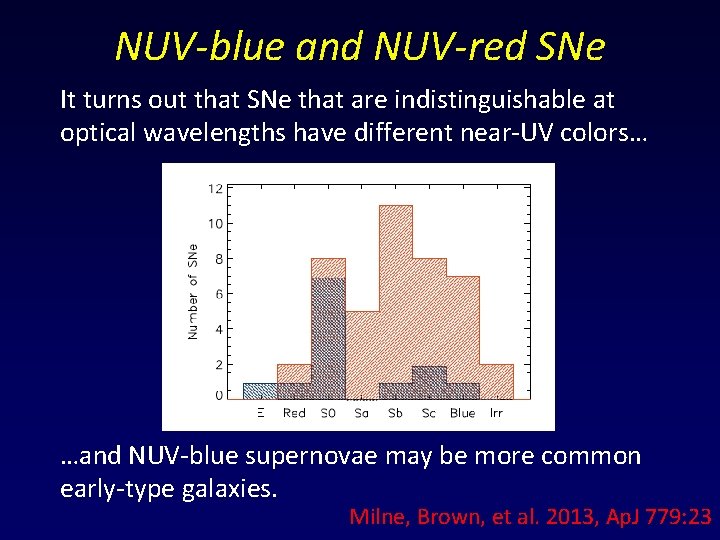
NUV-blue and NUV-red SNe It turns out that SNe that are indistinguishable at optical wavelengths have different near-UV colors… …and NUV-blue supernovae may be more common early-type galaxies. Milne, Brown, et al. 2013, Ap. J 779: 23
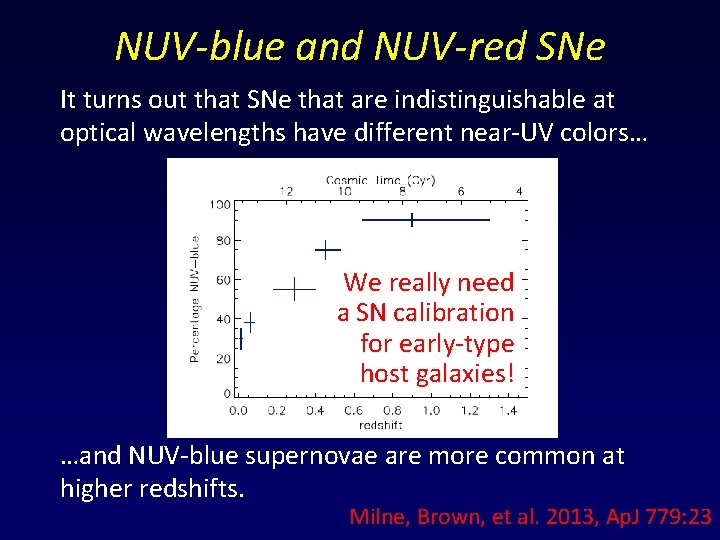
NUV-blue and NUV-red SNe It turns out that SNe that are indistinguishable at optical wavelengths have different near-UV colors… We really need a SN calibration for early-type host galaxies! …and NUV-blue supernovae are more common at higher redshifts. Milne, Brown, et al. 2013, Ap. J 779: 23

3. IR SBFs with Adaptive Optics l SBF measurements rely on photometric PSF fitting in Fourier space (so the sharper the image, the better) l Temporal and spatial variations of the PSF in AO images have limited the usefulness of AO SBF measurements to-date
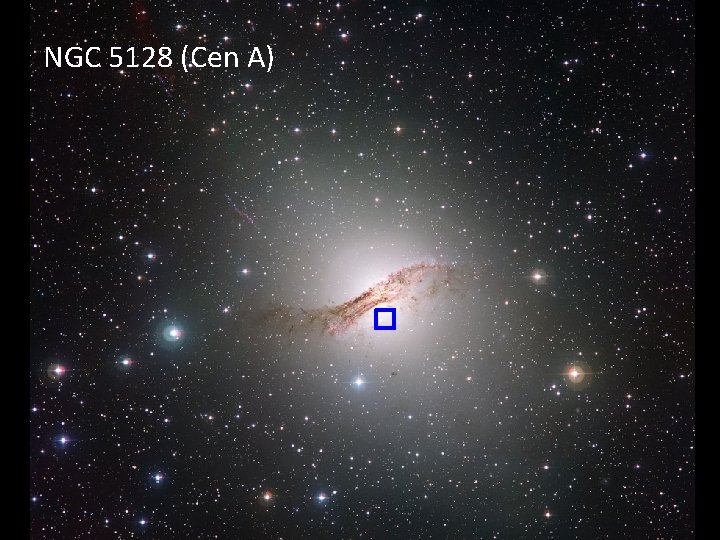
NGC 5128 (Cen A)
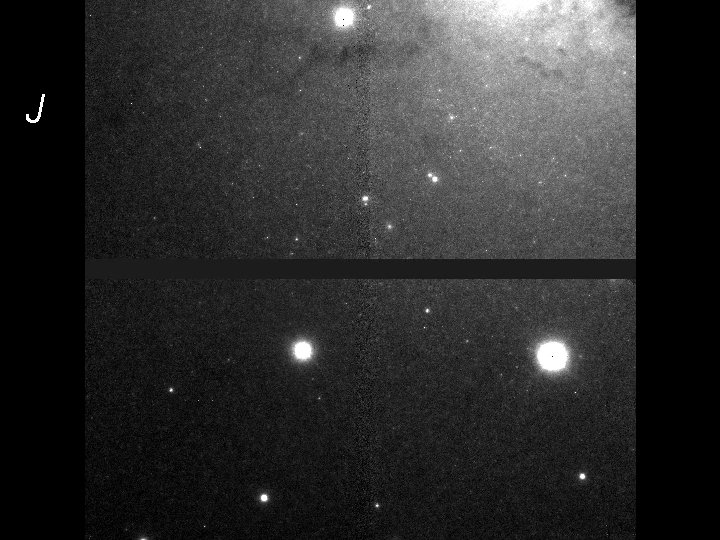
J
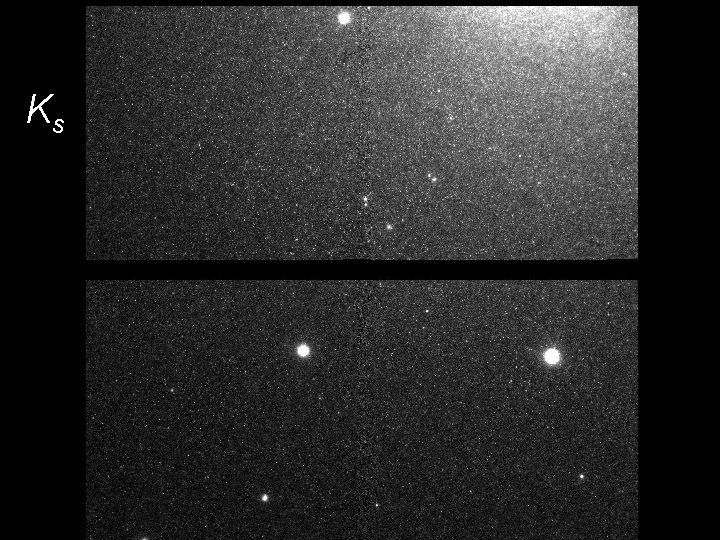
Ks
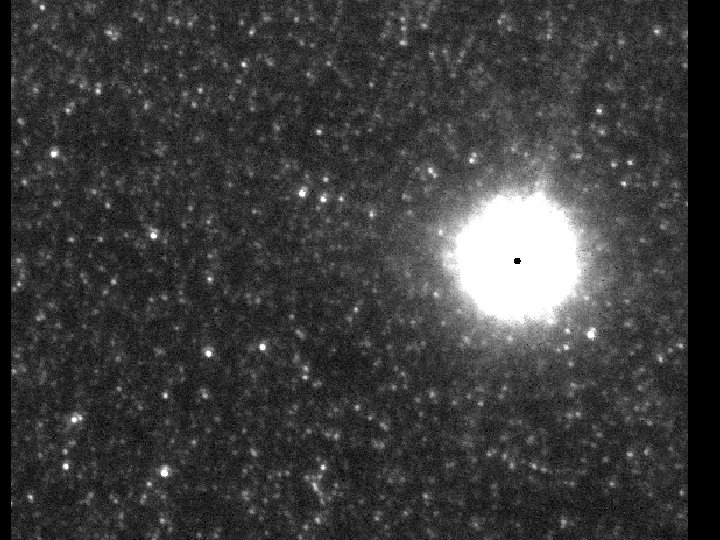
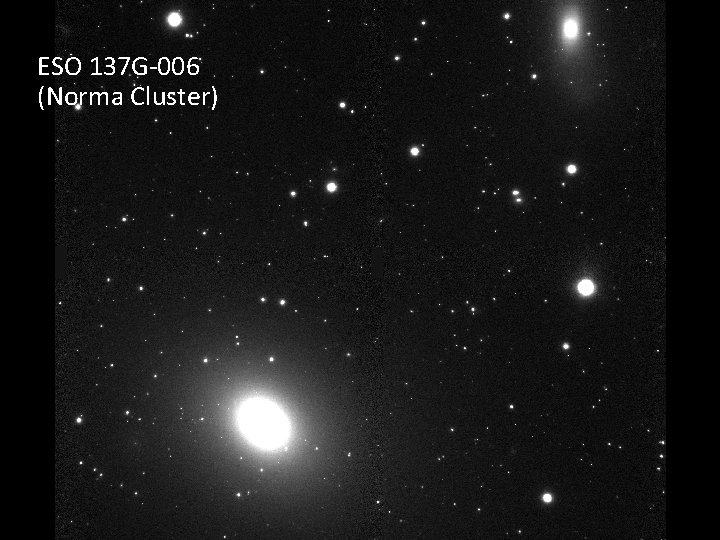
ESO 137 G-006 (Norma Cluster)
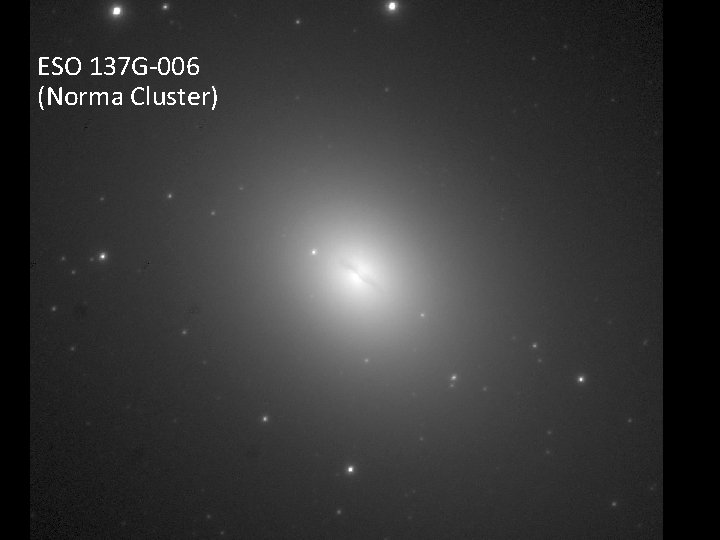
ESO 137 G-006 (Norma Cluster)
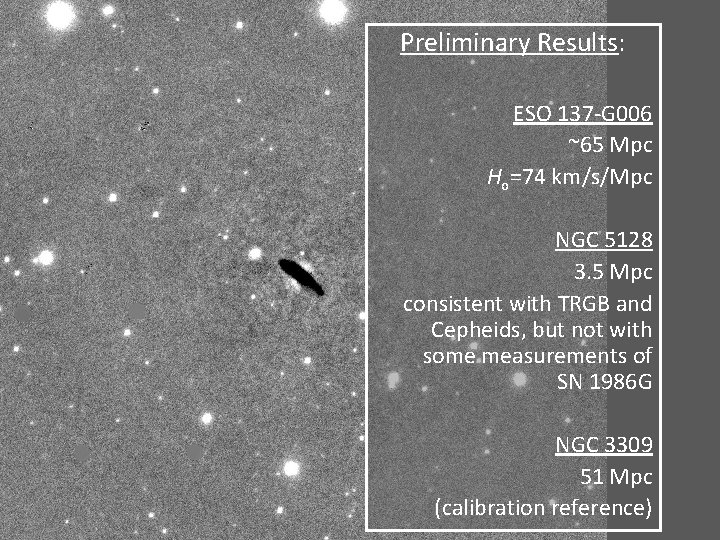
Preliminary Results: ESO 137 -G 006 ~65 Mpc Ho=74 km/s/Mpc NGC 5128 3. 5 Mpc consistent with TRGB and Cepheids, but not with some measurements of SN 1986 G NGC 3309 51 Mpc (calibration reference)
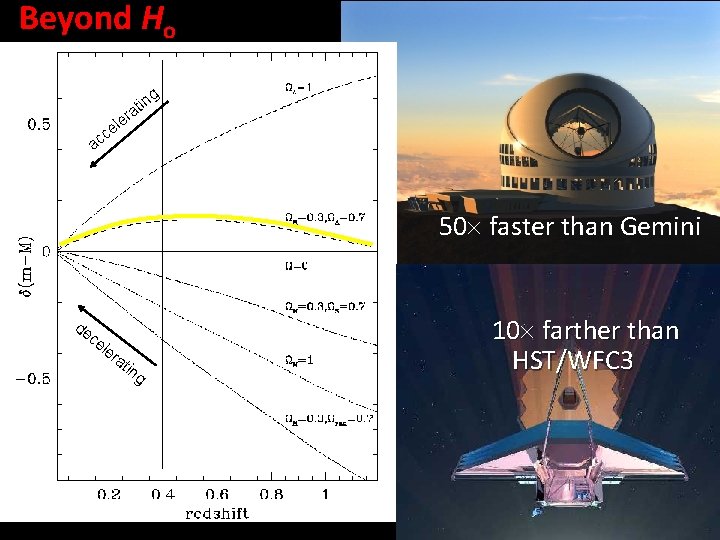
Beyond Ho in at g r le ce ac 50 faster than Gemini de ce le r at in g 10 farther than HST/WFC 3
Summary l By this time next year we will have 70+ homogeneous, high-accuracy HST IR SBF distances to galaxies all over the sky, many of them at ~50 -80 Mpc. l JWST and the next generation of groundbased telescopes with MCAO will extend the range of the SBF technique to cosmologically interesting distances.
- Slides: 35