
THE FUTURE OF EDUCATION IN THE DIGITAL WORLD
- Slides: 7
THE FUTURE OF EDUCATION IN THE DIGITAL WORLD ENGL 118
FROM LAST TIME— HACKING TEACHING
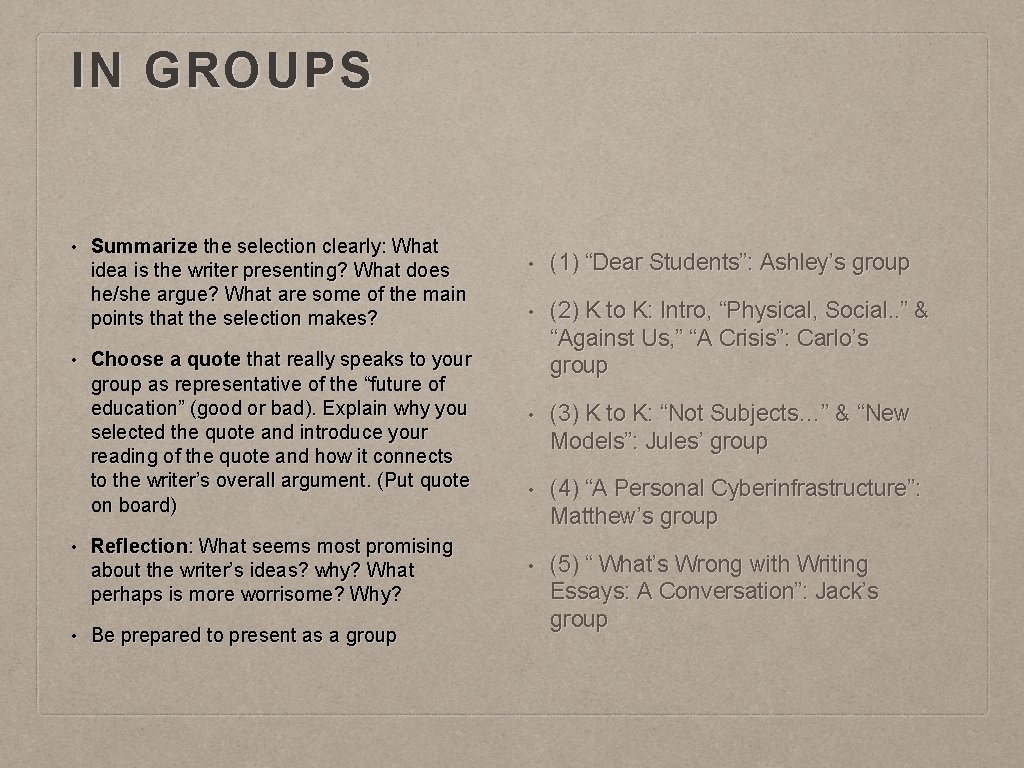
IN GROUPS • • Summarize the selection clearly: What idea is the writer presenting? What does he/she argue? What are some of the main points that the selection makes? Choose a quote that really speaks to your group as representative of the “future of education” (good or bad). Explain why you selected the quote and introduce your reading of the quote and how it connects to the writer’s overall argument. (Put quote on board) • Reflection: What seems most promising about the writer’s ideas? why? What perhaps is more worrisome? Why? • Be prepared to present as a group • (1) “Dear Students”: Ashley’s group • (2) K to K: Intro, “Physical, Social. . ” & “Against Us, ” “A Crisis”: Carlo’s group • (3) K to K: “Not Subjects…” & “New Models”: Jules’ group • (4) “A Personal Cyberinfrastructure”: Matthew’s group • (5) “ What’s Wrong with Writing Essays: A Conversation”: Jack’s group
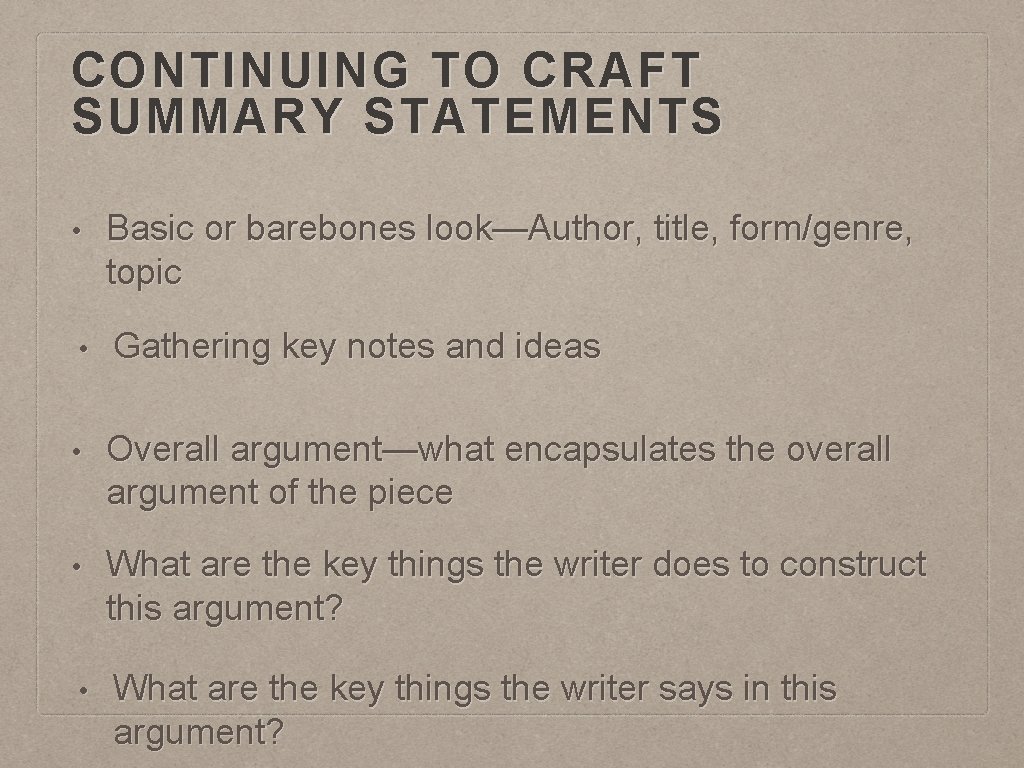
CONTINUING TO CRAFT SUMMARY STATEMENTS • Basic or barebones look—Author, title, form/genre, topic • Gathering key notes and ideas • Overall argument—what encapsulates the overall argument of the piece • What are the key things the writer does to construct this argument? • What are the key things the writer says in this argument?
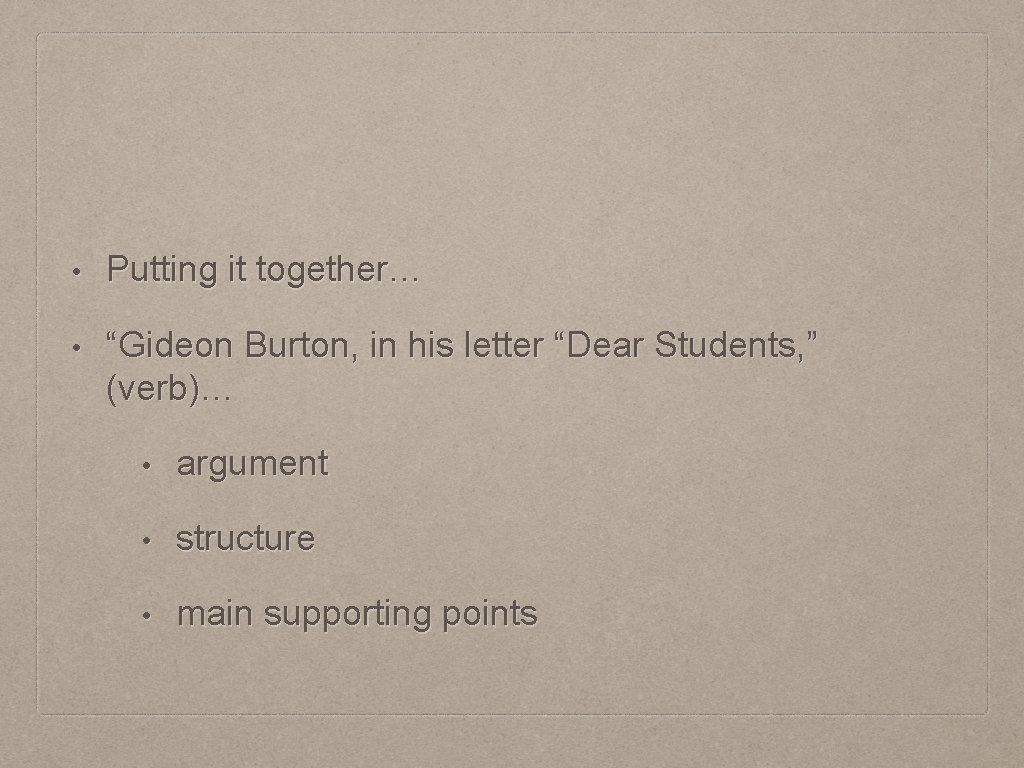
• Putting it together… • “Gideon Burton, in his letter “Dear Students, ” (verb)… • argument • structure • main supporting points
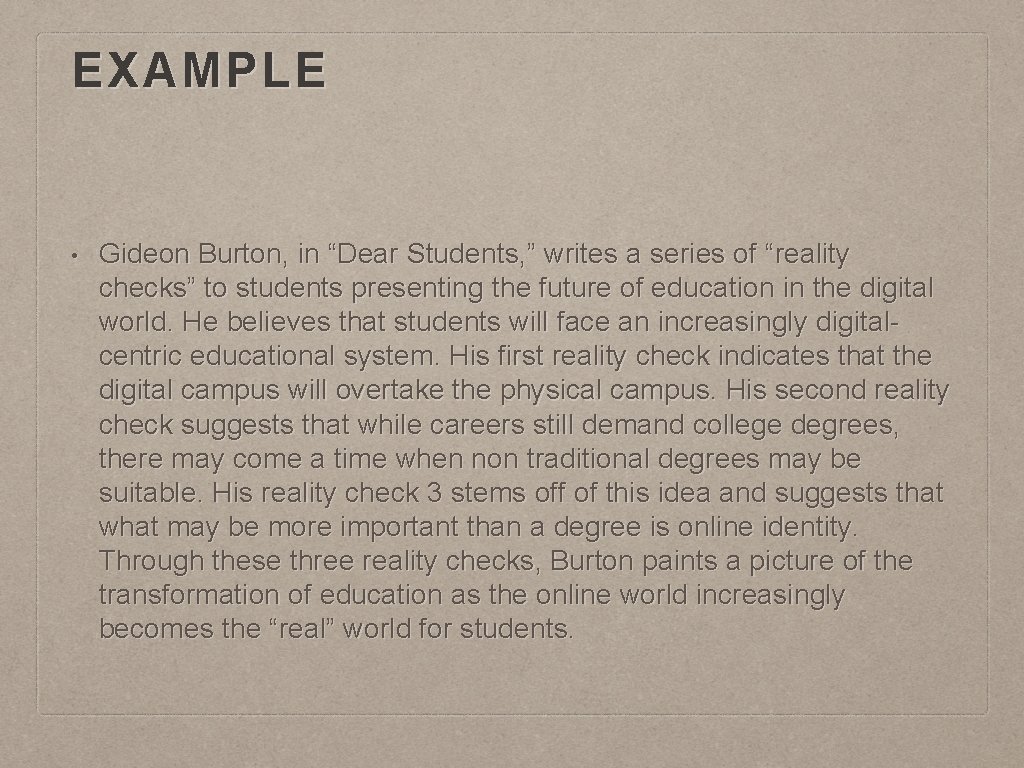
EXAMPLE • Gideon Burton, in “Dear Students, ” writes a series of “reality checks” to students presenting the future of education in the digital world. He believes that students will face an increasingly digitalcentric educational system. His first reality check indicates that the digital campus will overtake the physical campus. His second reality check suggests that while careers still demand college degrees, there may come a time when non traditional degrees may be suitable. His reality check 3 stems off of this idea and suggests that what may be more important than a degree is online identity. Through these three reality checks, Burton paints a picture of the transformation of education as the online world increasingly becomes the “real” world for students.
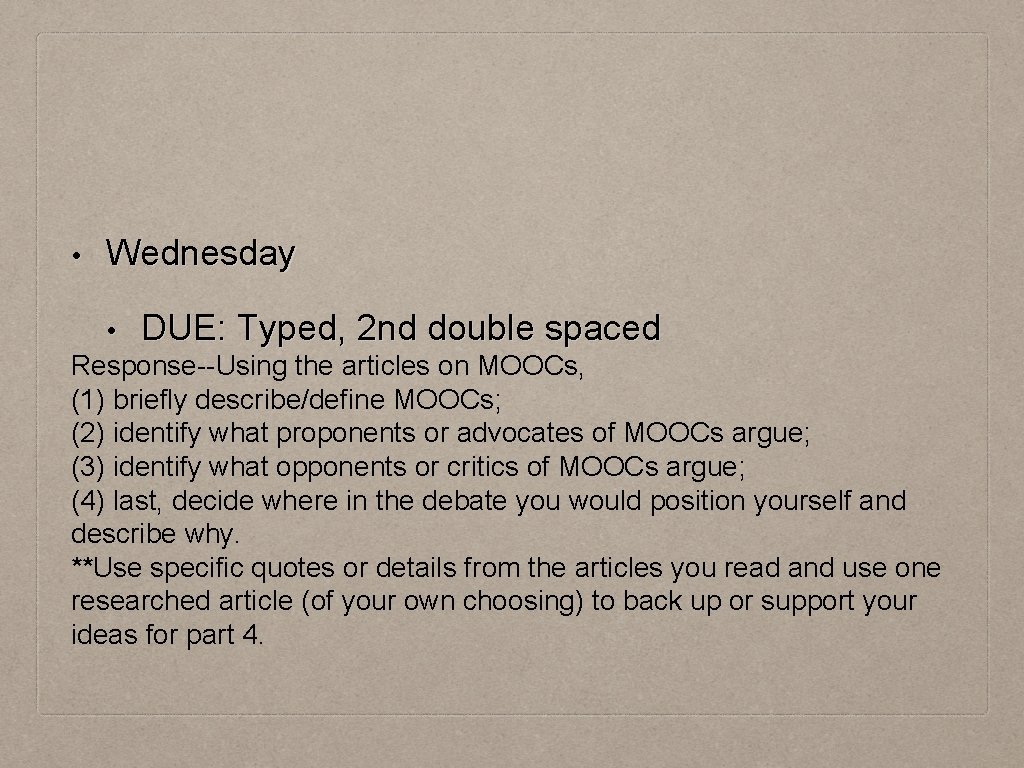
• Wednesday • DUE: Typed, 2 nd double spaced Response--Using the articles on MOOCs, (1) briefly describe/define MOOCs; (2) identify what proponents or advocates of MOOCs argue; (3) identify what opponents or critics of MOOCs argue; (4) last, decide where in the debate you would position yourself and describe why. **Use specific quotes or details from the articles you read and use one researched article (of your own choosing) to back up or support your ideas for part 4.