
The Future of AI and Work Miles Brundage
The Future of AI and Work Miles Brundage School for the Future of Innovation in Society Arizona State University
Overview • • • Overview of societal issues raised by AI Theories of technological unemployment AI as work improver AI as work reducer What to do? Slide 2
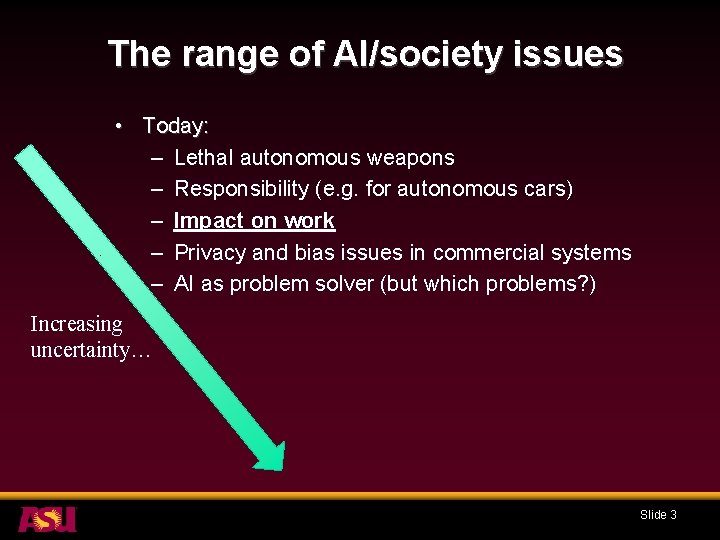
The range of AI/society issues • Today: – Lethal autonomous weapons – Responsibility (e. g. for autonomous cars) – Impact on work – Privacy and bias issues in commercial systems – AI as problem solver (but which problems? ) Increasing uncertainty… Slide 3
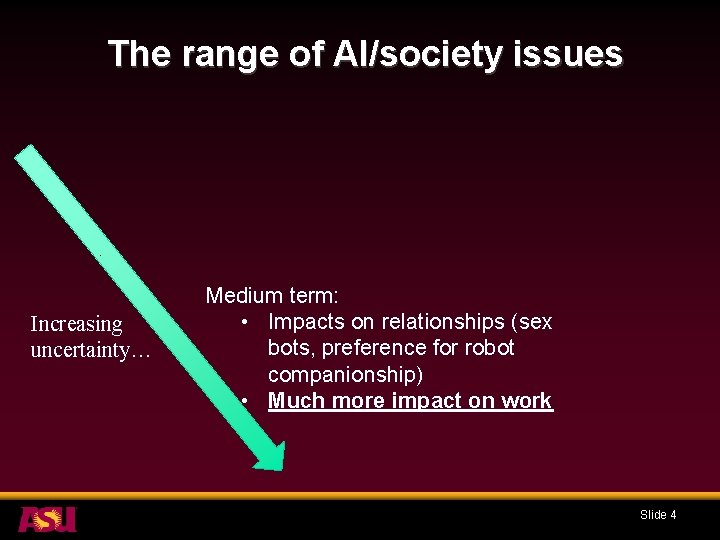
The range of AI/society issues Increasing uncertainty… Medium term: • Impacts on relationships (sex bots, preference for robot companionship) • Much more impact on work Slide 4
The range of AI/society issues Increasing uncertainty… Long term: • The control problem (Bostrom 2014) • Leisure society introduces new issues Slide 5
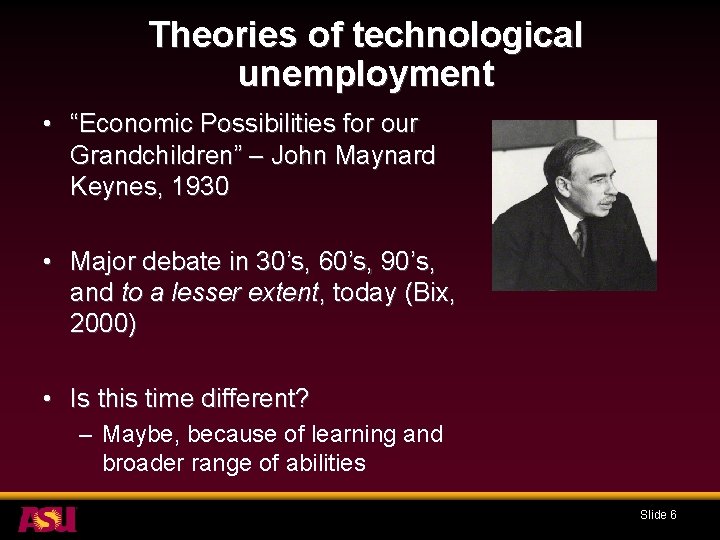
Theories of technological unemployment • “Economic Possibilities for our Grandchildren” – John Maynard Keynes, 1930 • Major debate in 30’s, 60’s, 90’s, and to a lesser extent, today (Bix, 2000) • Is this time different? – Maybe, because of learning and broader range of abilities Slide 6
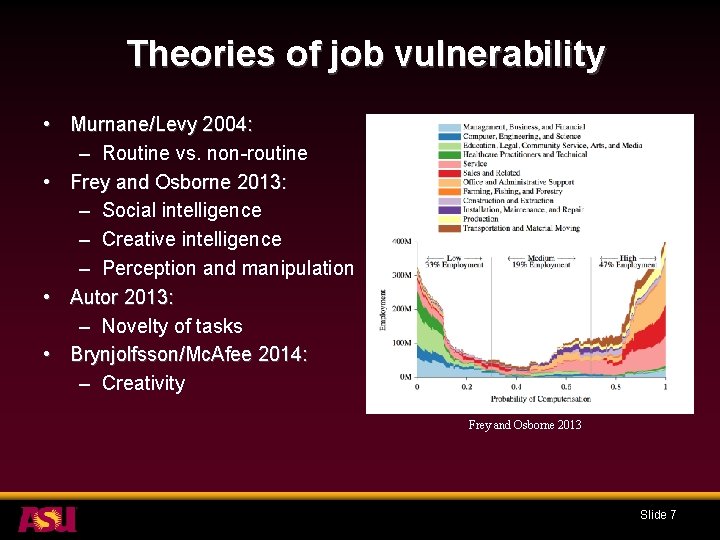
Theories of job vulnerability • Murnane/Levy 2004: – Routine vs. non-routine • Frey and Osborne 2013: – Social intelligence – Creative intelligence – Perception and manipulation • Autor 2013: – Novelty of tasks • Brynjolfsson/Mc. Afee 2014: – Creativity Frey and Osborne 2013 Slide 7
Theories of job vulnerability: synthesis • The safest jobs seem to be non-routine, social, and creative, and involve perception, manipulation, and the performance of novel tasks. • Also, more highly paid jobs, all things being equal, can be more profitably automated, as can jobs done by many people. • Many international/regional implications… Slide 8
AI as work improver • A common view (e. g. Brynjolfsson and Mc. Afee 2014): – Robots and AI will do the dull, dirty, and dangerous tasks – Humans will do the challenging, novel, and safe tasks • Issues with this: – Technical issues – Incentive issues – Identity issues Slide 9
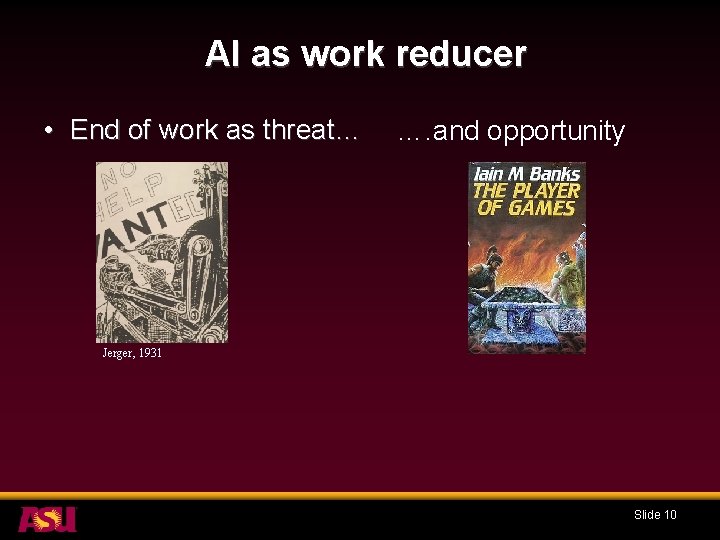
AI as work reducer • End of work as threat… …. and opportunity Jerger, 1931 Slide 10
AI as work reducer • How soon might substantial impacts occur? – Technical considerations – Commercialization and human capital considerations – Consumer preference considerations – Policy considerations Slide 11
What to do? Aim for robustness • Research on technology forecasting, understanding ethical/political/economic issues, AI safety/transparency, etc. • Targeted funding for grand challenges • Building expertise/capacity in governments at all levels • Development of codes of conduct (e. g. EPSRC principles in the UK, ongoing work by major technology companies and IEEE) • Gradually rising basic income as economic productivity increases to enable greater choice in work/leisure split, less pressure to take bad jobs Slide 12

Thanks! Slide 13
- Slides: 13