
The Fungus Kingdom Chapter 5 The Fungus Kingdom

- Slides: 21
The Fungus Kingdom Chapter 5
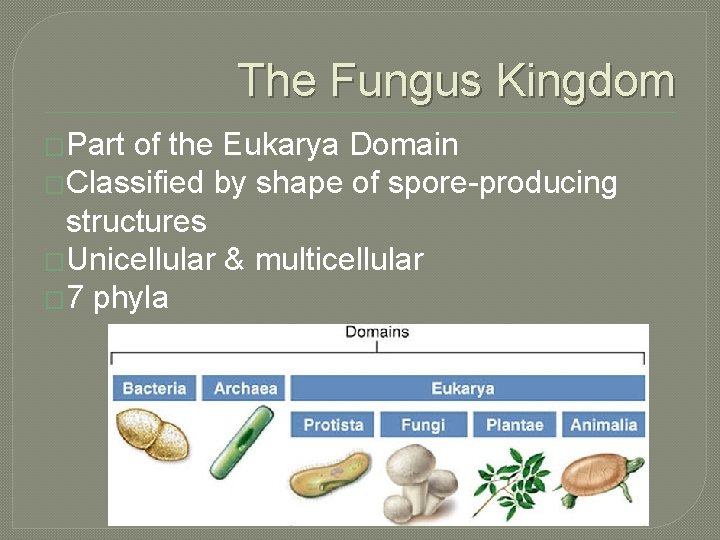
The Fungus Kingdom �Part of the Eukarya Domain �Classified by shape of spore-producing structures �Unicellular & multicellular � 7 phyla
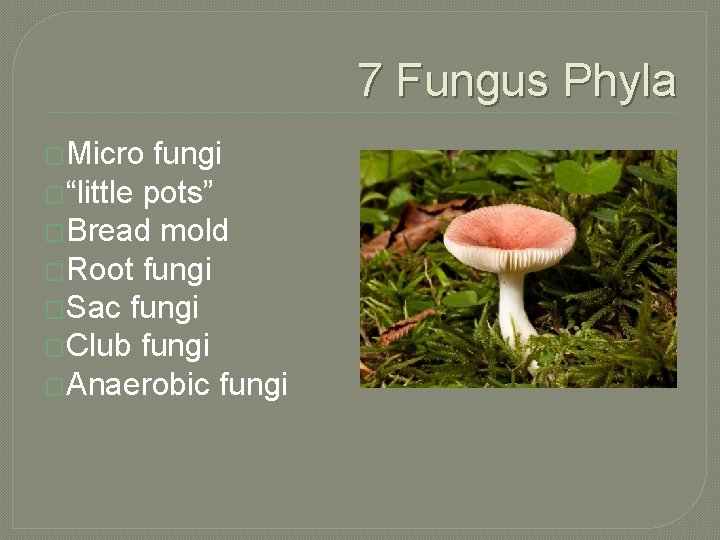
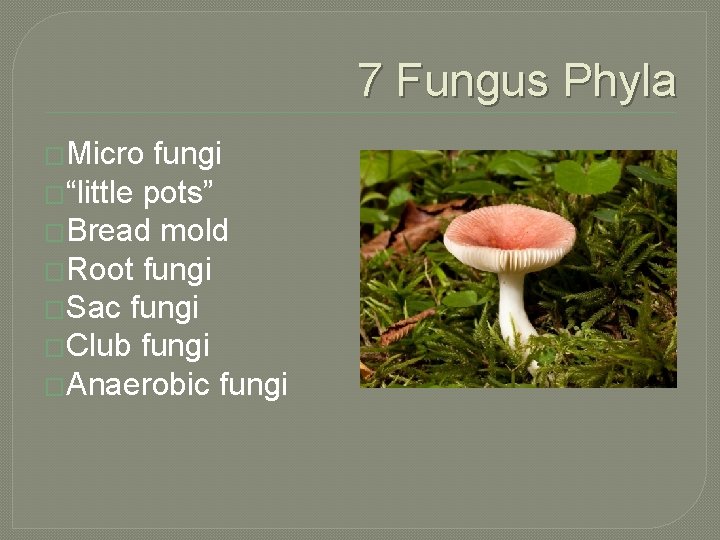
7 Fungus Phyla �Micro fungi �“little pots” �Bread mold �Root fungi �Sac fungi �Club fungi �Anaerobic fungi
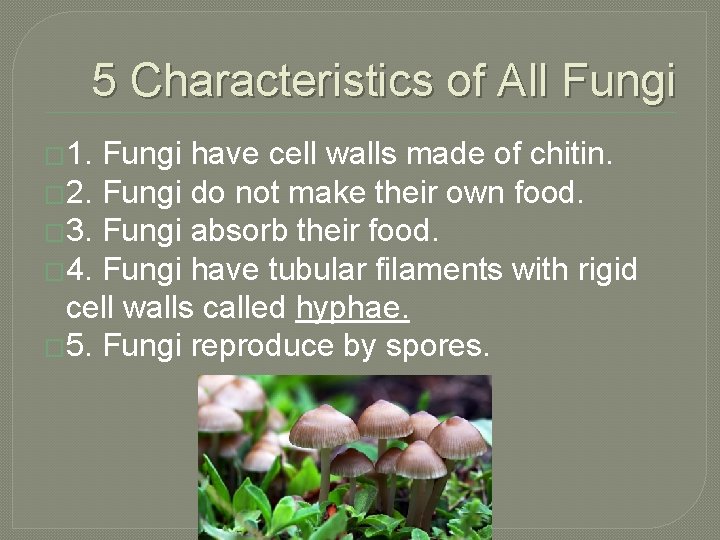
5 Characteristics of All Fungi � 1. Fungi have cell walls made of chitin. � 2. Fungi do not make their own food. � 3. Fungi absorb their food. � 4. Fungi have tubular filaments with rigid cell walls called hyphae. � 5. Fungi reproduce by spores.
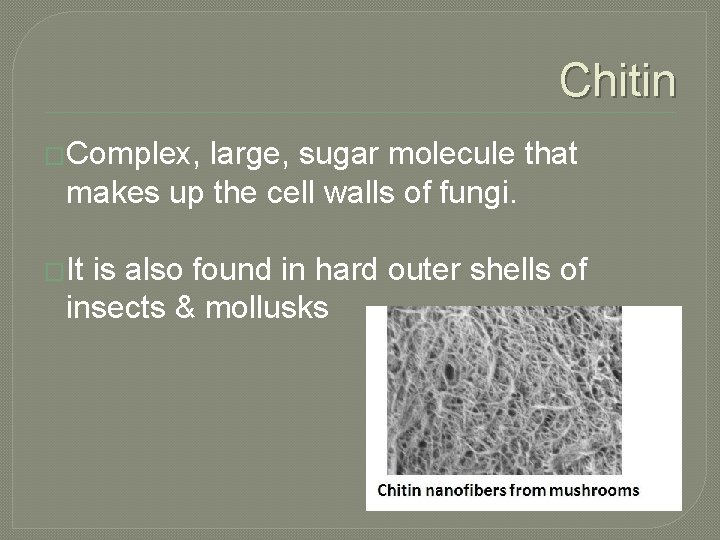
Chitin �Complex, large, sugar molecule that makes up the cell walls of fungi. �It is also found in hard outer shells of insects & mollusks
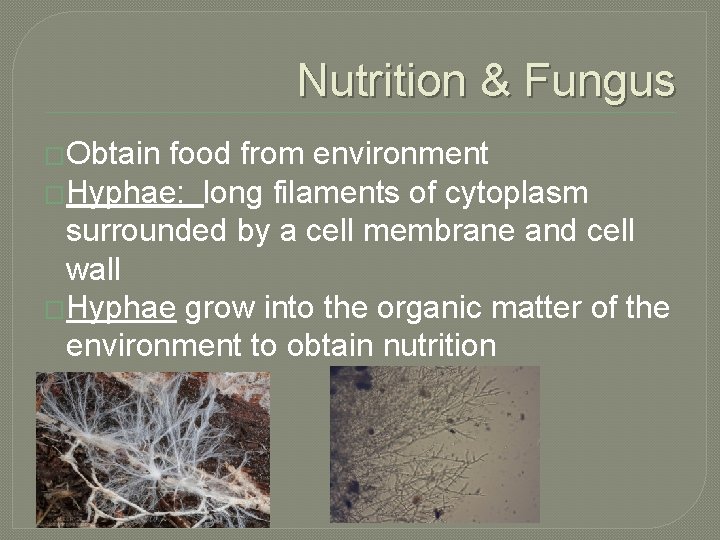
Nutrition & Fungus �Obtain food from environment �Hyphae: long filaments of cytoplasm surrounded by a cell membrane and cell wall �Hyphae grow into the organic matter of the environment to obtain nutrition
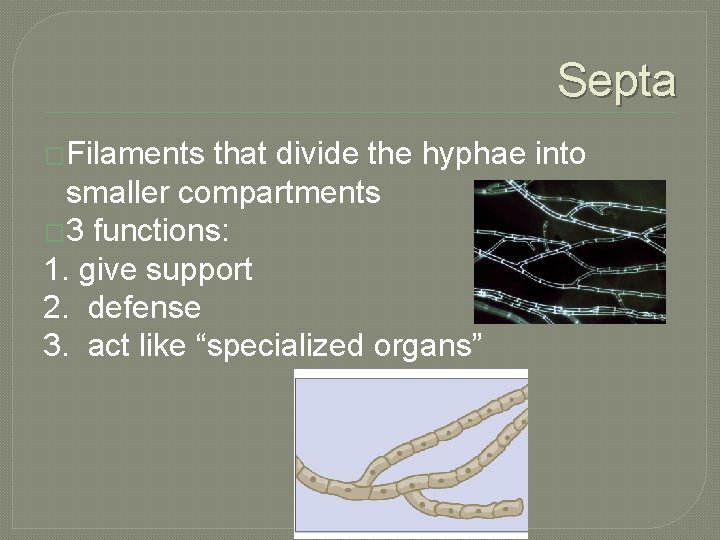
Septa �Filaments that divide the hyphae into smaller compartments � 3 functions: 1. give support 2. defense 3. act like “specialized organs”
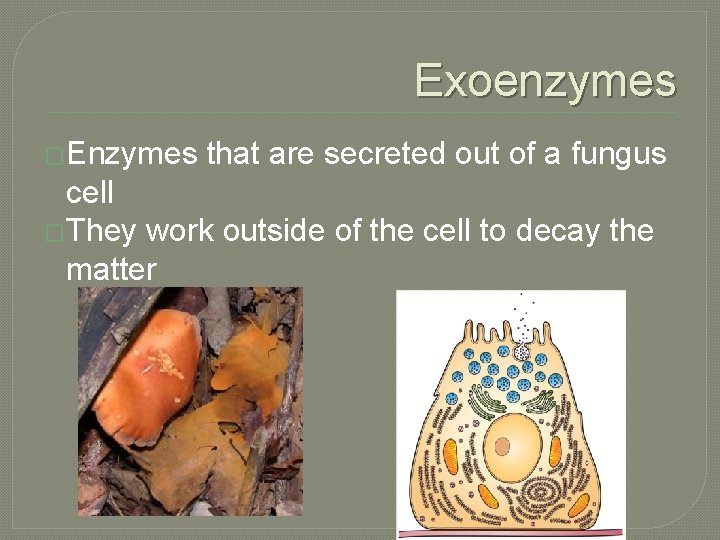
Exoenzymes �Enzymes that are secreted out of a fungus cell �They work outside of the cell to decay the matter
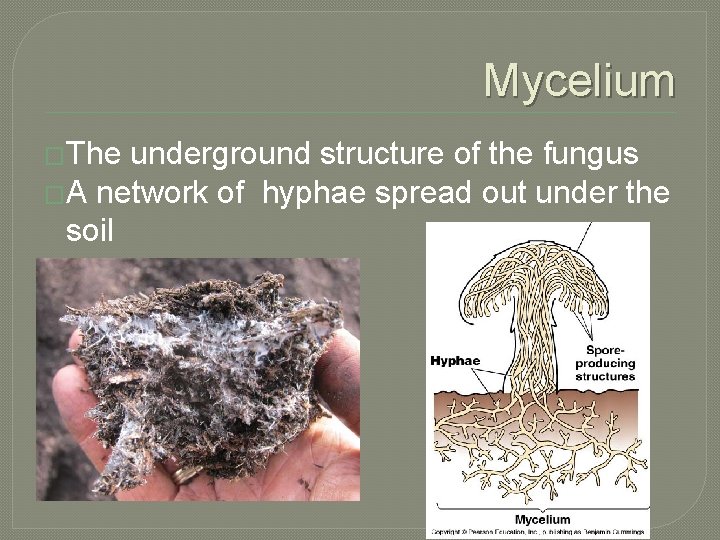
Mycelium �The underground structure of the fungus �A network of hyphae spread out under the soil
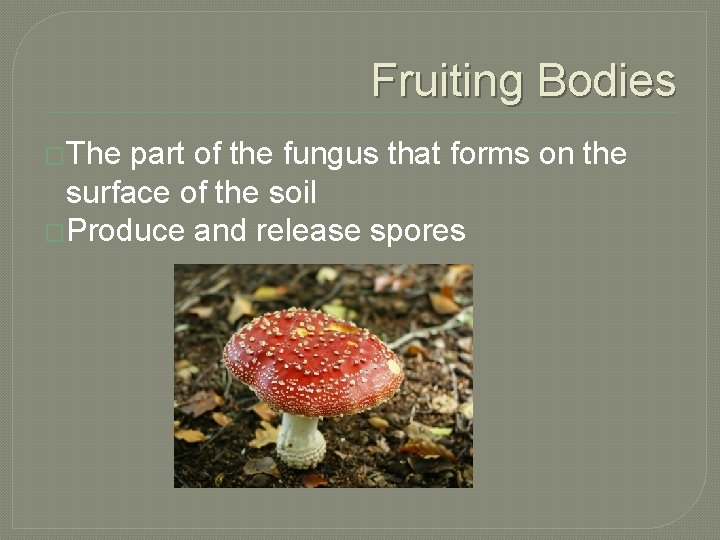
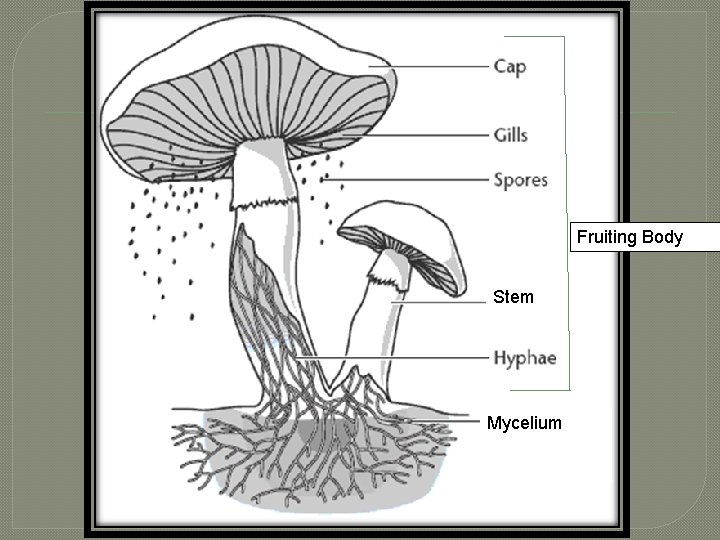
Fruiting Bodies �The part of the fungus that forms on the surface of the soil �Produce and release spores
Fruiting Body Stem Mycelium
7 Fungus Phyla �Micro fungi �“little pots” �Bread mold �Root fungi �Sac fungi �Club fungi �Anaerobic fungi
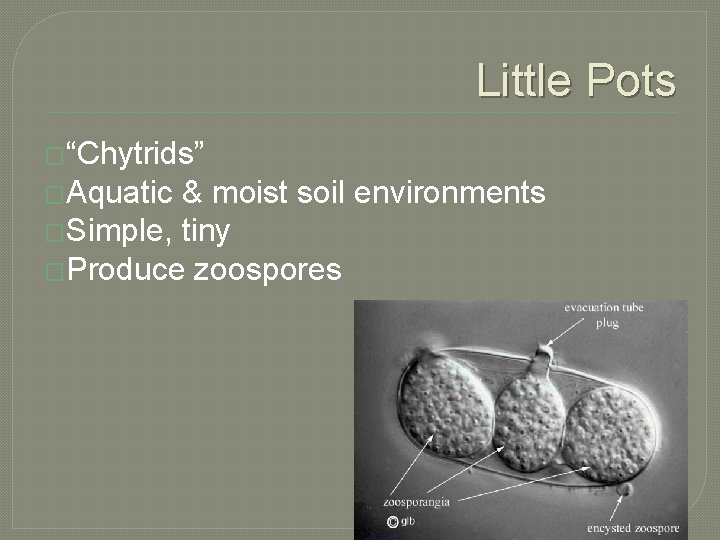
Little Pots �“Chytrids” �Aquatic & moist soil environments �Simple, tiny �Produce zoospores
Bread Molds �“mini” mushrooms �Live on food, land, soil, and decaying matter
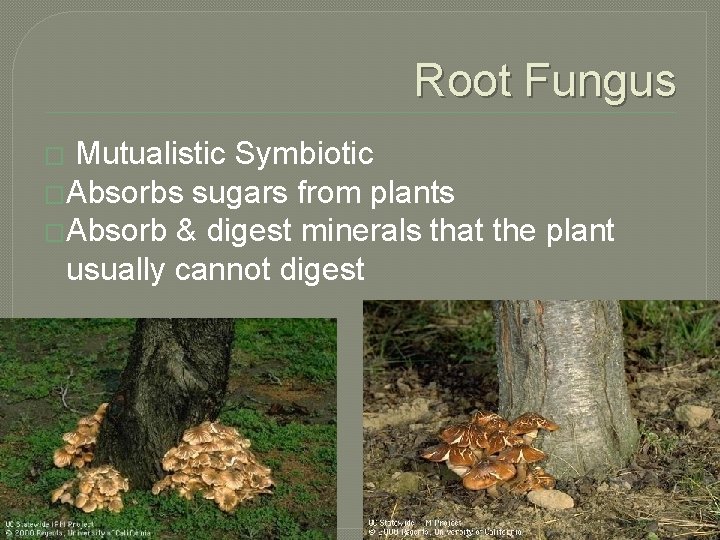
Root Fungus Mutualistic Symbiotic �Absorbs sugars from plants �Absorb & digest minerals that the plant usually cannot digest �
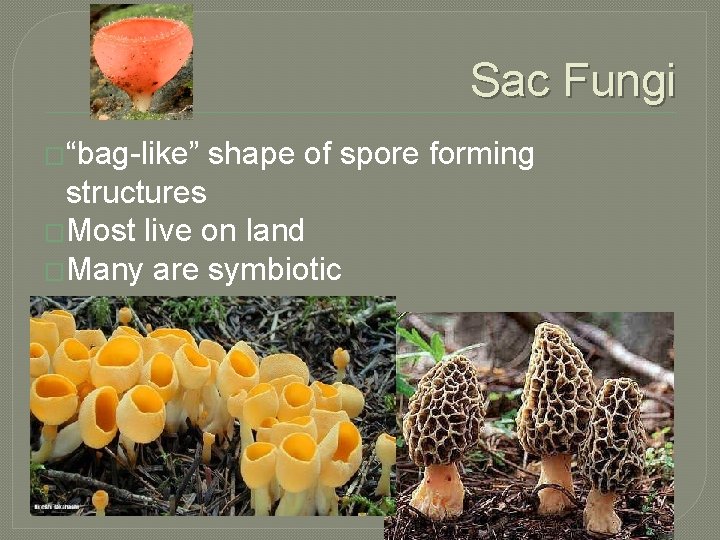
Sac Fungi �“bag-like” shape of spore forming structures �Most live on land �Many are symbiotic
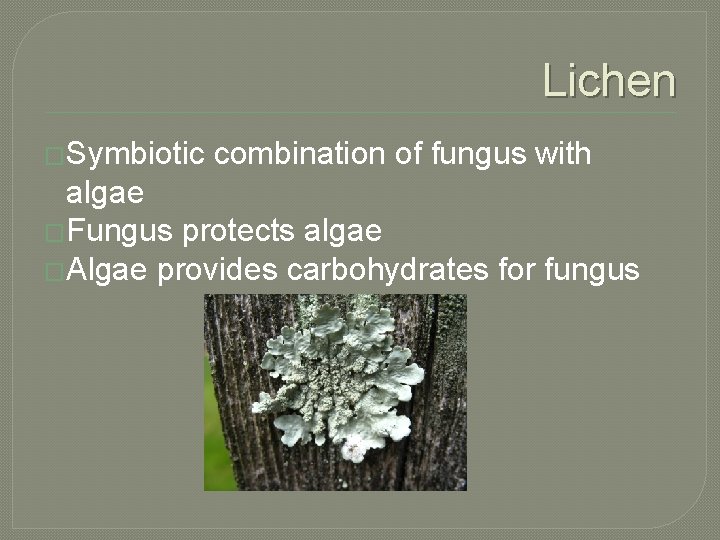
Lichen �Symbiotic combination of fungus with algae �Fungus protects algae �Algae provides carbohydrates for fungus
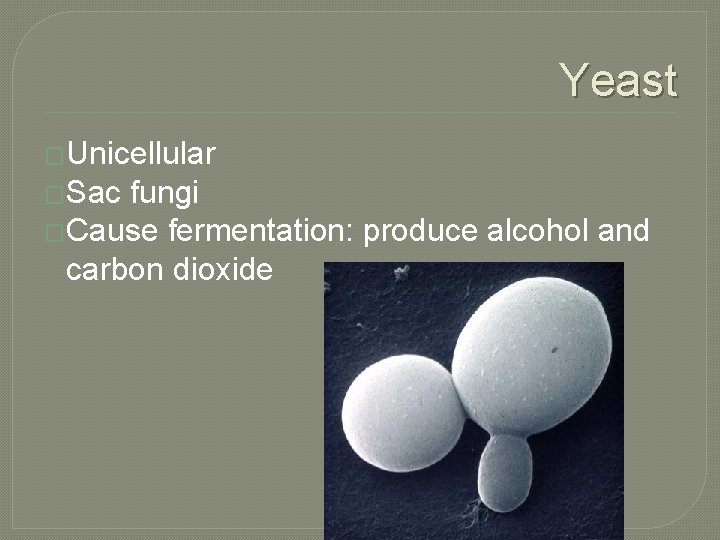
Yeast �Unicellular �Sac fungi �Cause fermentation: produce alcohol and carbon dioxide
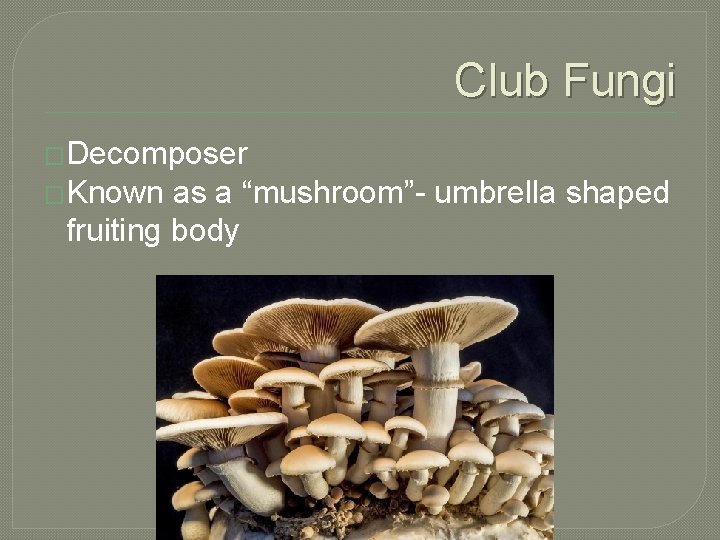
Club Fungi �Decomposer �Known as a “mushroom”- umbrella shaped fruiting body
Micro Fungi �Smallest �parasites
Anaerobic Fungi �In digestive system �No oxygen