
THE FUNDAMENTAL THEOREM OF CALCULUS The Fundamental Theorem







- Slides: 32
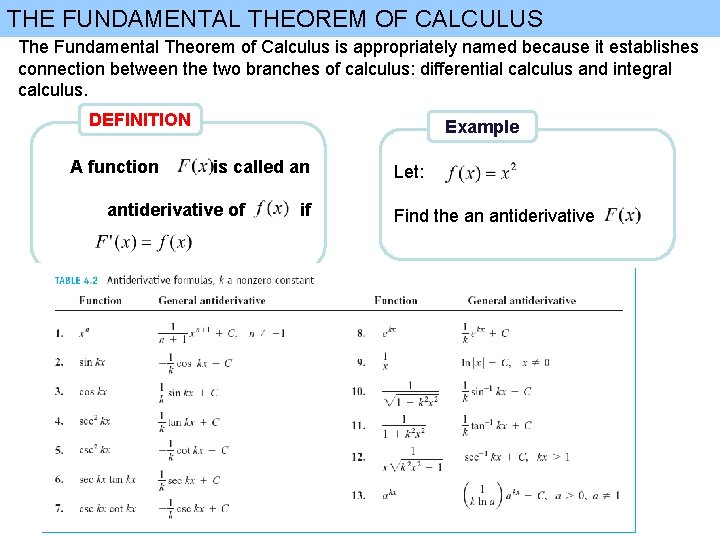
THE FUNDAMENTAL THEOREM OF CALCULUS The Fundamental Theorem of Calculus is appropriately named because it establishes connection between the two branches of calculus: differential calculus and integral calculus. DEFINITION A function Example is called an antiderivative of if Let: Find the an antiderivative
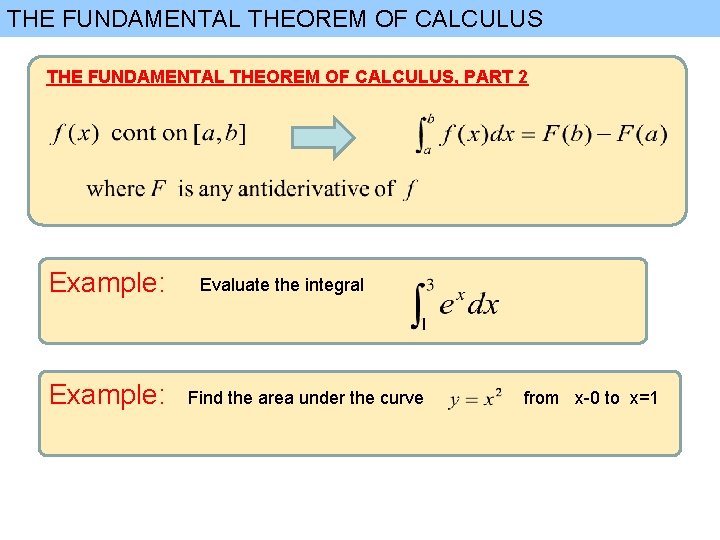
THE FUNDAMENTAL THEOREM OF CALCULUS, PART 2 Example: Evaluate the integral Find the area under the curve from x-0 to x=1
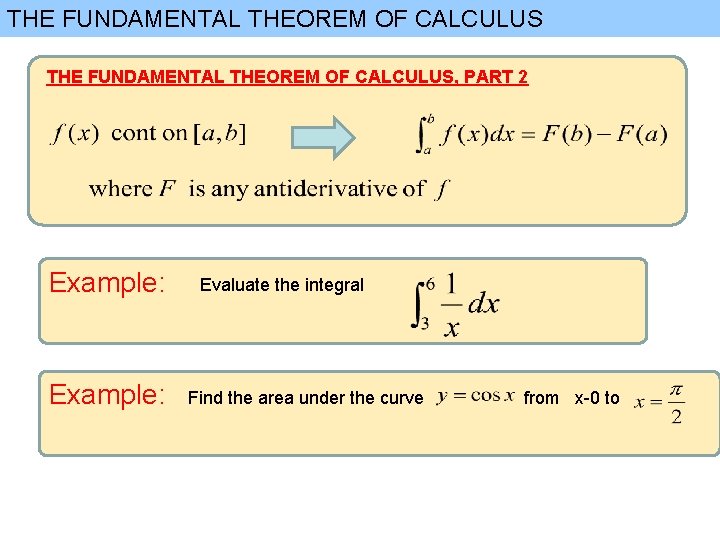
THE FUNDAMENTAL THEOREM OF CALCULUS, PART 2 Example: Evaluate the integral Find the area under the curve from x-0 to
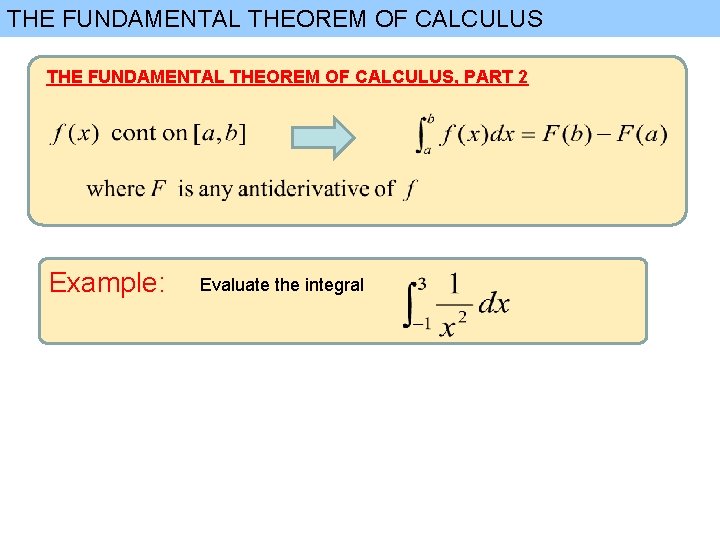
THE FUNDAMENTAL THEOREM OF CALCULUS, PART 2 Example: Evaluate the integral
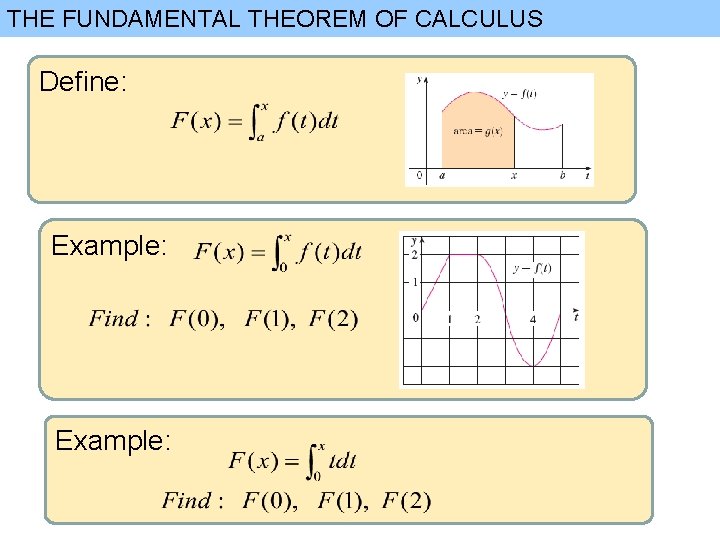
THE FUNDAMENTAL THEOREM OF CALCULUS Define: Example:
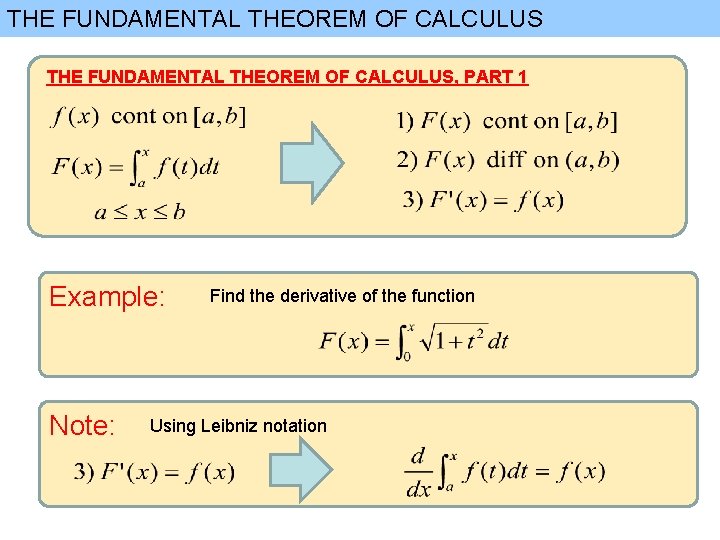
THE FUNDAMENTAL THEOREM OF CALCULUS, PART 1 Example: Note: Find the derivative of the function Using Leibniz notation
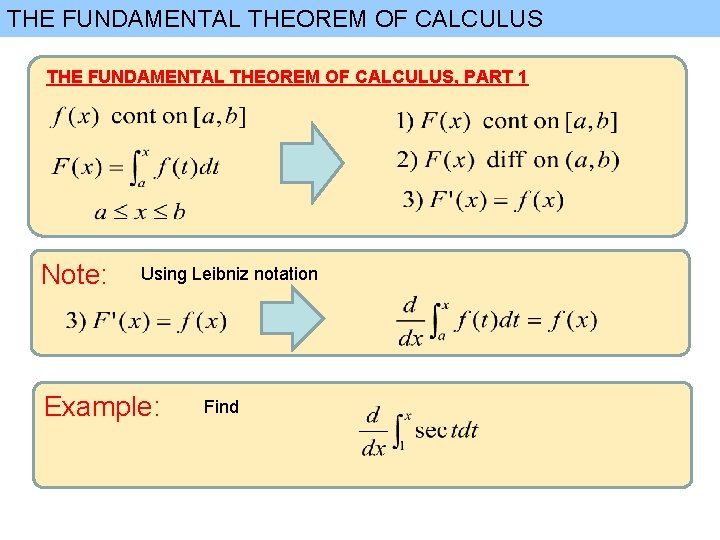
THE FUNDAMENTAL THEOREM OF CALCULUS, PART 1 Note: Using Leibniz notation Example: Find
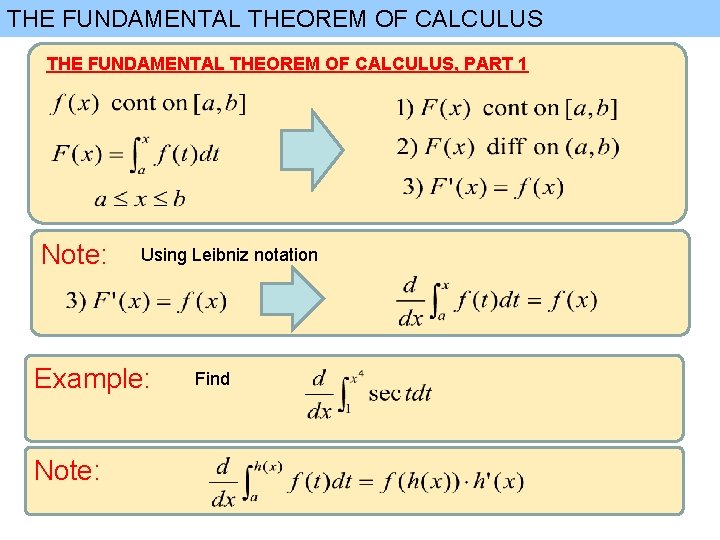
THE FUNDAMENTAL THEOREM OF CALCULUS, PART 1 Note: Using Leibniz notation Example: Note: Find
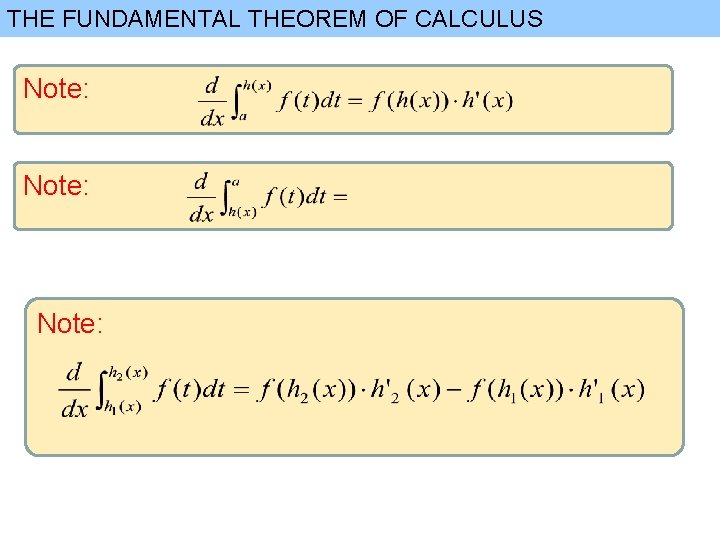
THE FUNDAMENTAL THEOREM OF CALCULUS Note:
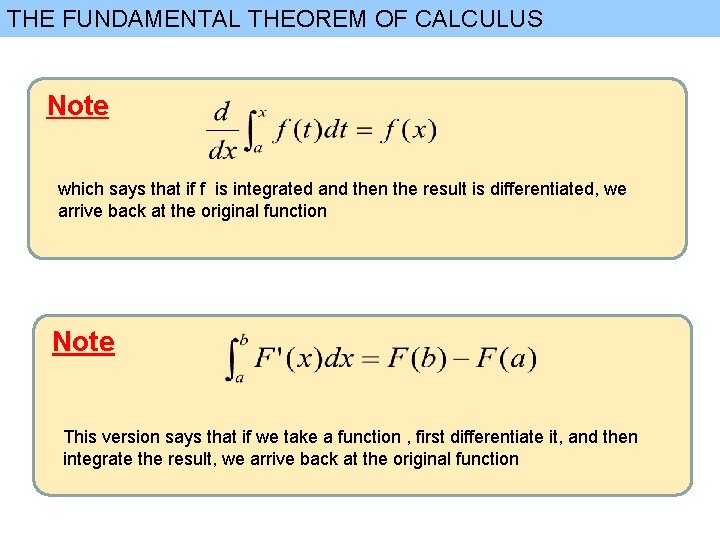
THE FUNDAMENTAL THEOREM OF CALCULUS Note which says that if f is integrated and then the result is differentiated, we arrive back at the original function Note This version says that if we take a function , first differentiate it, and then integrate the result, we arrive back at the original function
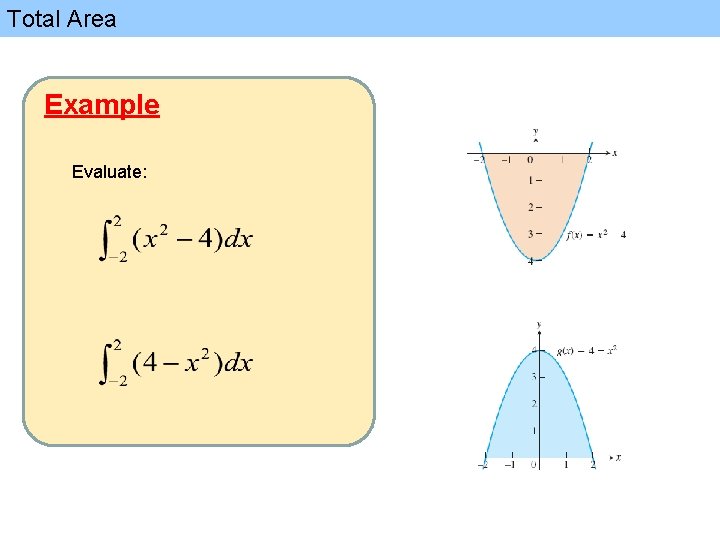
Total Area Example Evaluate:
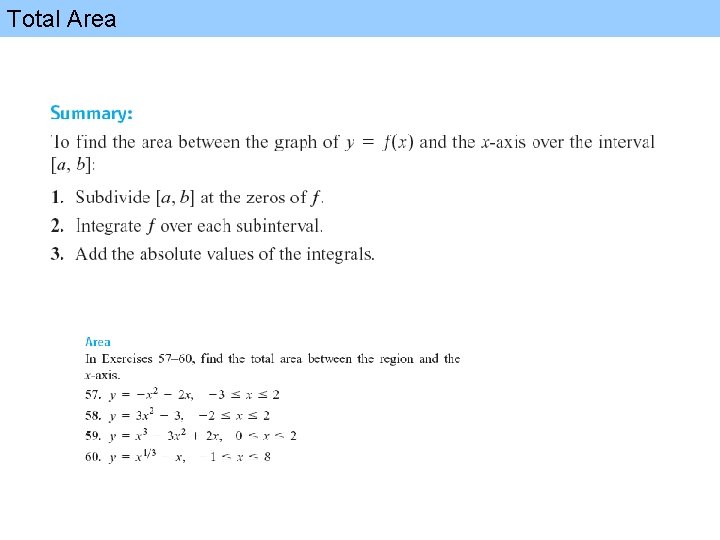
Total Area
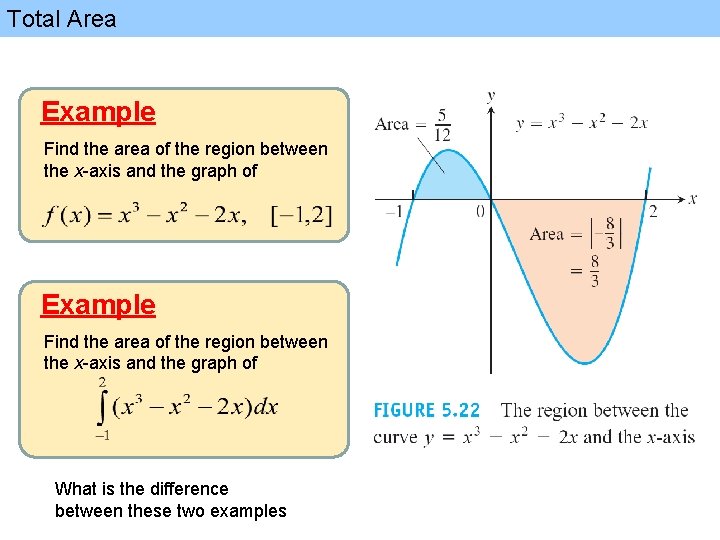
Total Area Example Find the area of the region between the x-axis and the graph of What is the difference between these two examples
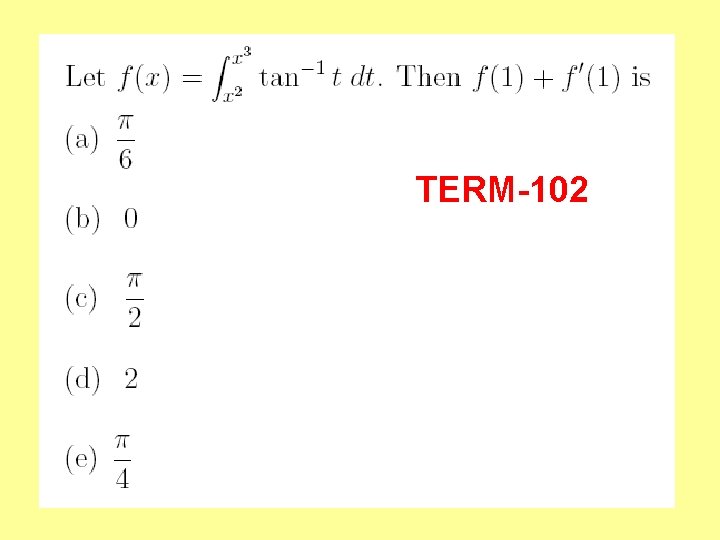
TERM-102
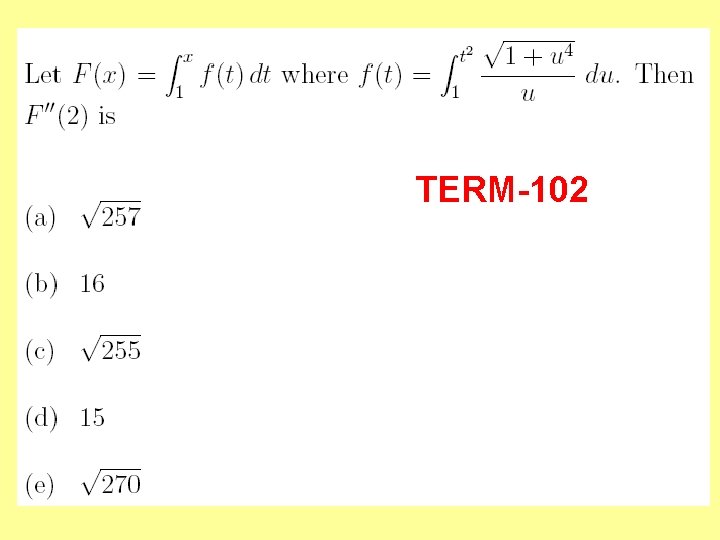
TERM-102
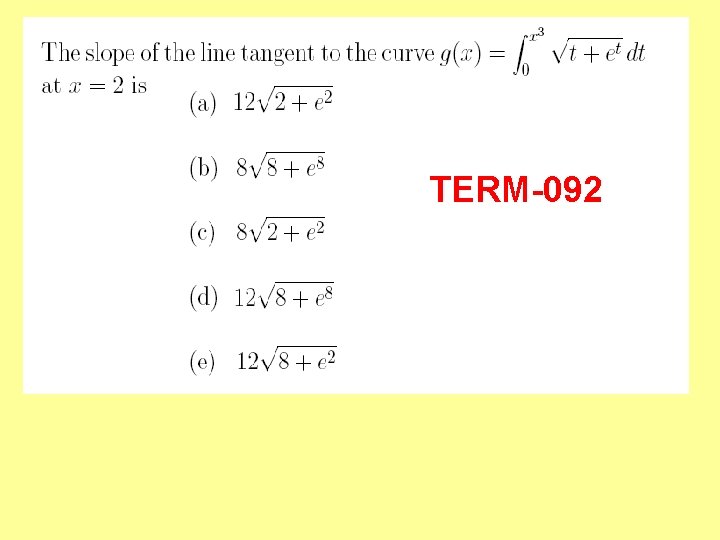
TERM-092
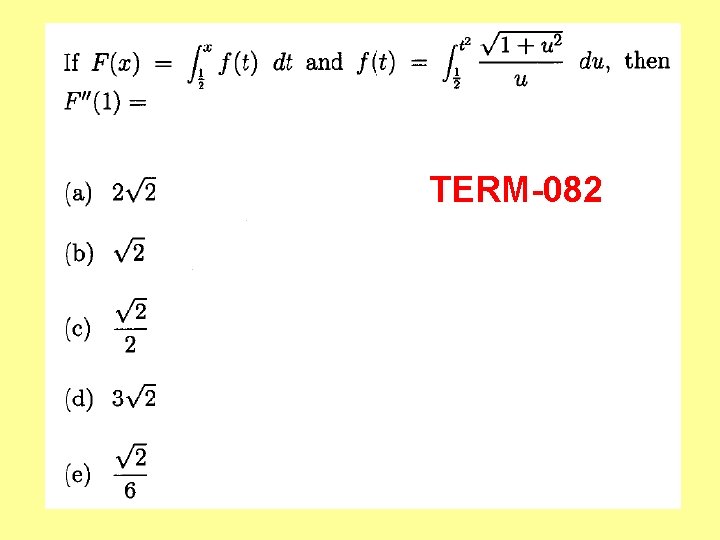
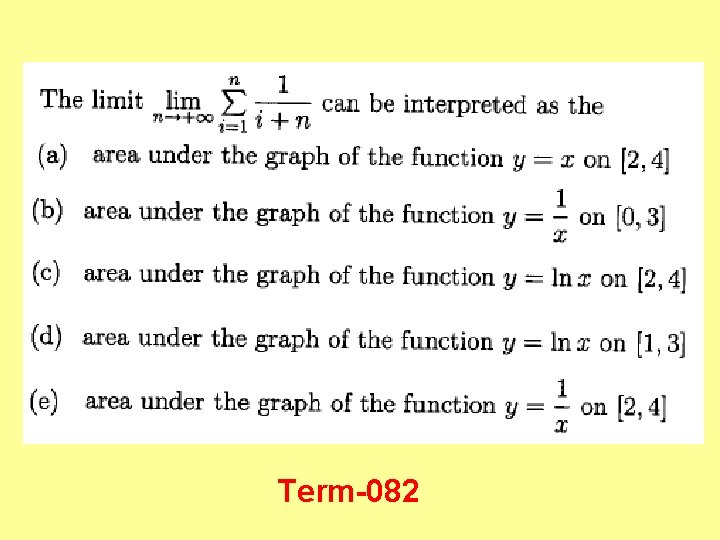
TERM-082
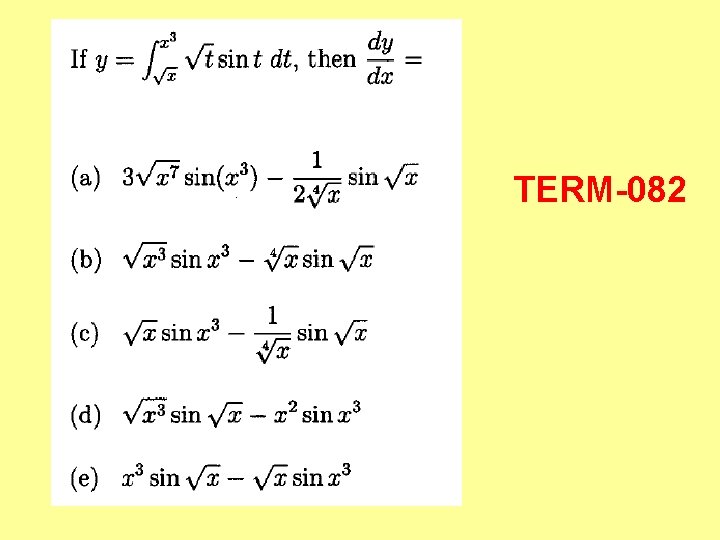
TERM-082
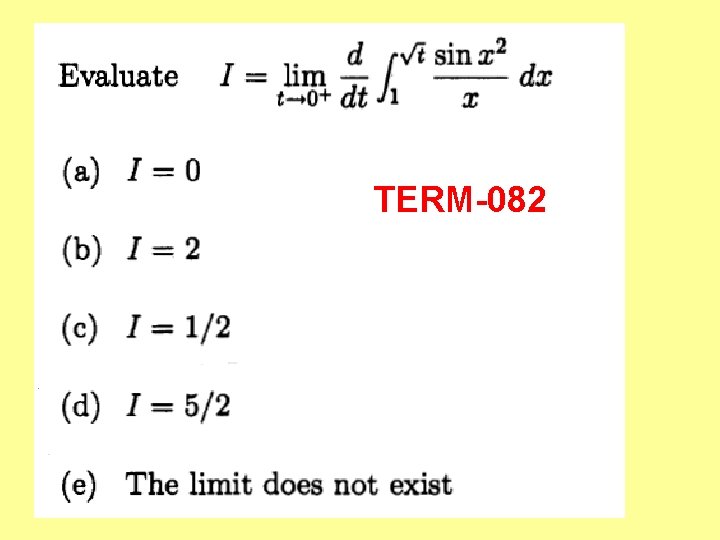
TERM-082
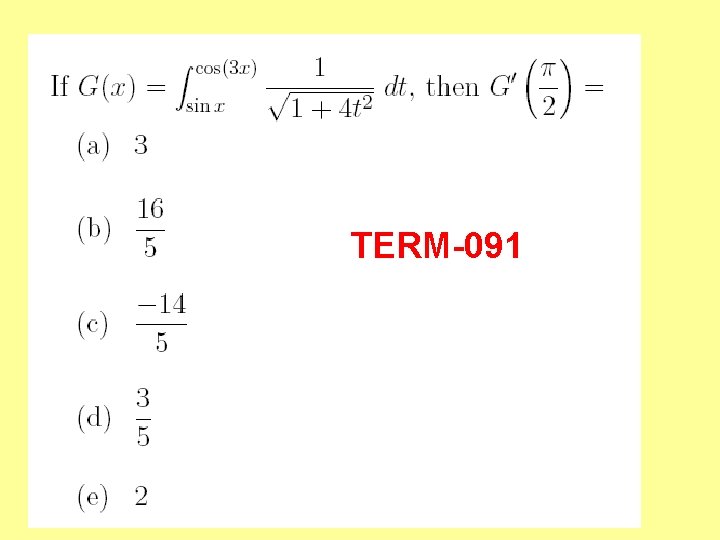
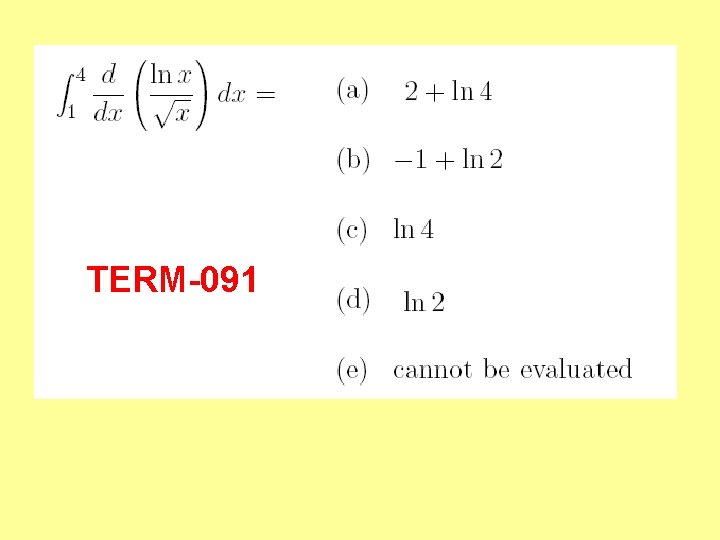
TERM-091
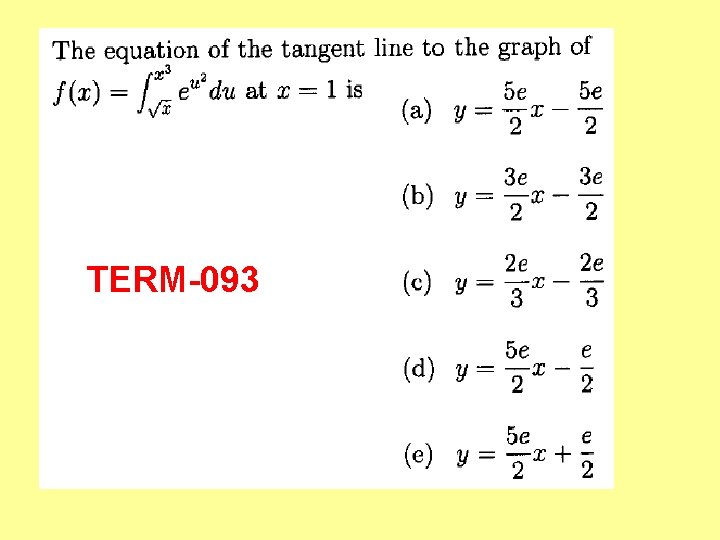
TERM-093
TERM-091
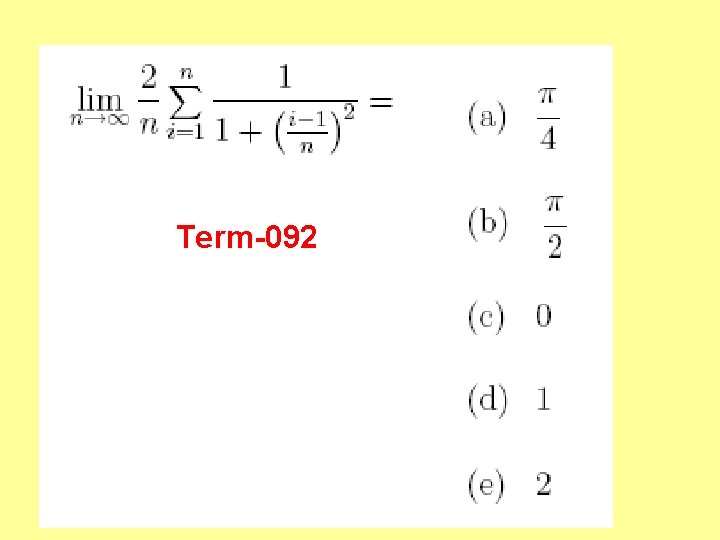
Term-092
Term-082