
The Function of Riparian Reserves for Terrestrial Species

- Slides: 20
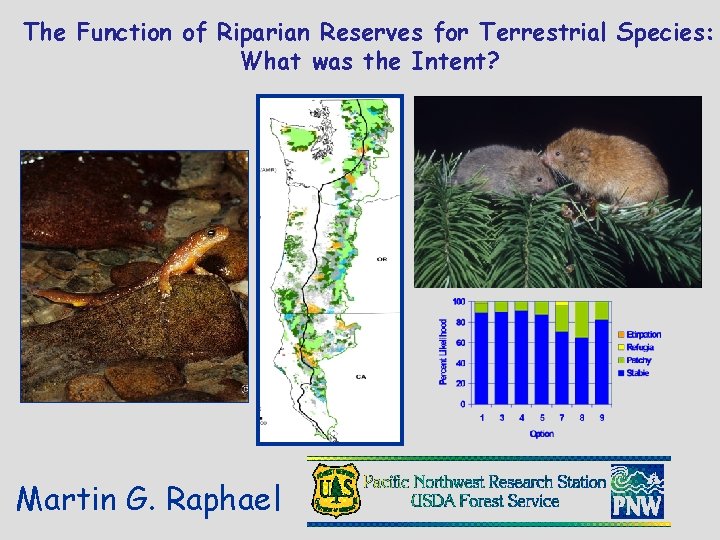
The Function of Riparian Reserves for Terrestrial Species: What was the Intent? Martin G. Raphael
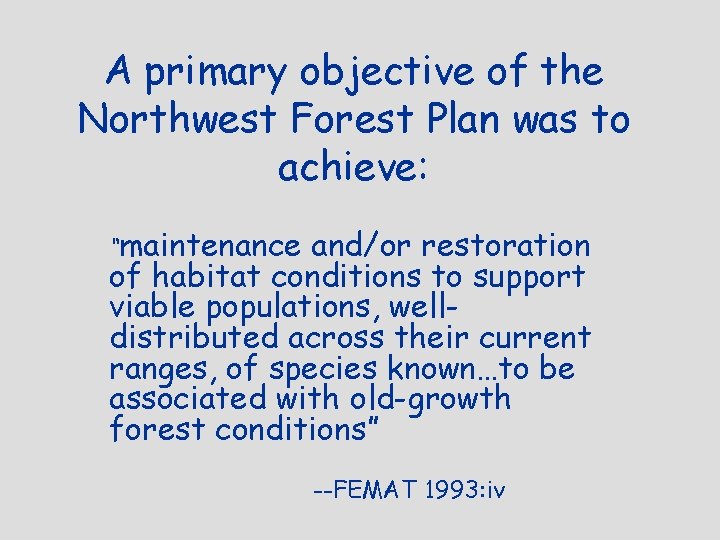
A primary objective of the Northwest Forest Plan was to achieve: “maintenance and/or restoration of habitat conditions to support viable populations, welldistributed across their current ranges, of species known…to be associated with old-growth forest conditions” --FEMAT 1993: iv
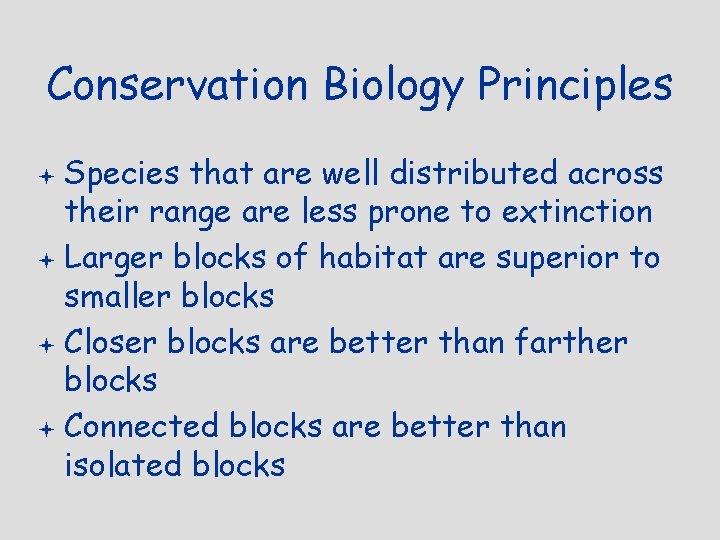
Conservation Biology Principles Species that are well distributed across their range are less prone to extinction ª Larger blocks of habitat are superior to smaller blocks ª Closer blocks are better than farther blocks ª Connected blocks are better than isolated blocks ª
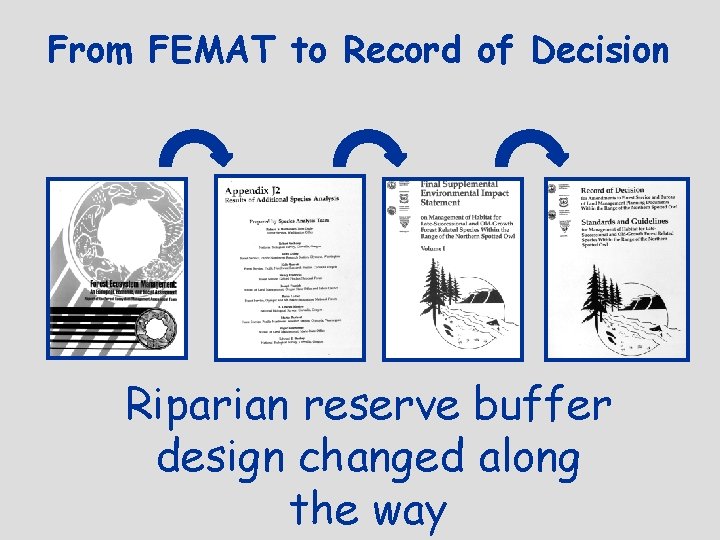
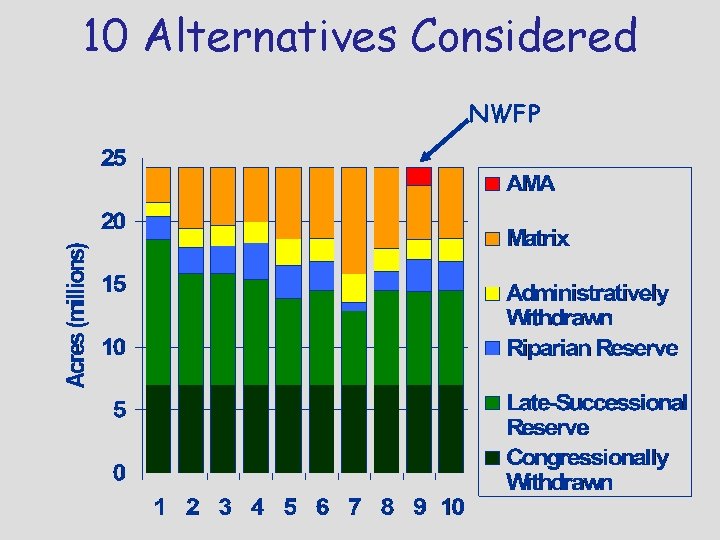
From FEMAT to Record of Decision Riparian reserve buffer design changed along the way
10 Alternatives Considered NWFP
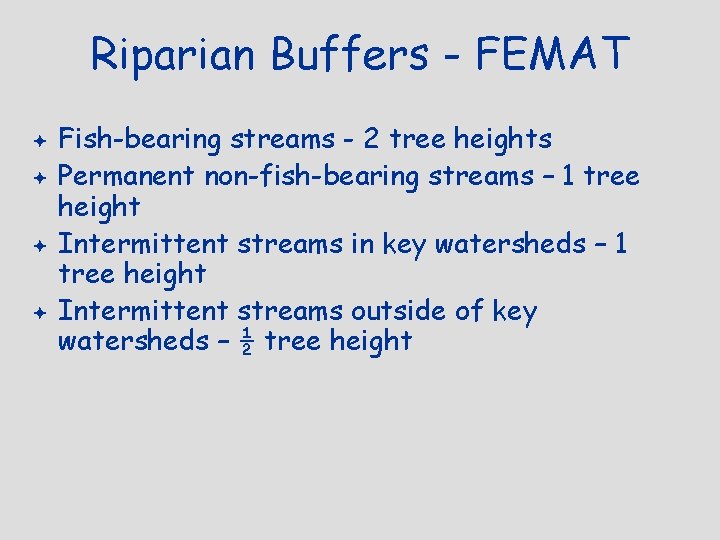
Riparian Buffers - FEMAT ª ª Fish-bearing streams - 2 tree heights Permanent non-fish-bearing streams – 1 tree height Intermittent streams in key watersheds – 1 tree height Intermittent streams outside of key watersheds – ½ tree height
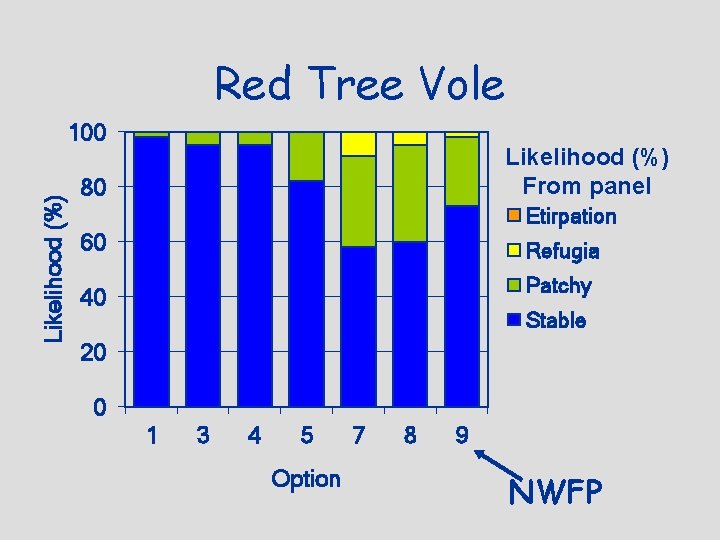
Assessment Panel Describe options ª Explain outcome rating scale ª ª 4 outcomes ranging from likely extirpation to stable and well-distributed over next 100 years Score alternatives ª Discuss and revise scores ª Summarize as average among panelists ª Discuss contributions from non-federal land & cumulative effects from other threats ª
Red Tree Vole Likelihood (%) 100 Likelihood (%) From panel 80 Etirpation 60 Refugia 40 Patchy Stable 20 0 1 3 4 5 Option 7 8 9 NWFP
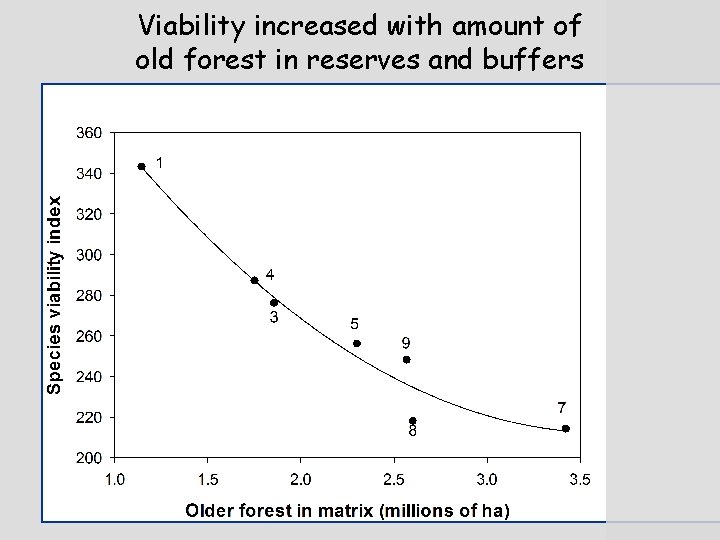
Viability increased with amount of old forest in reserves and buffers
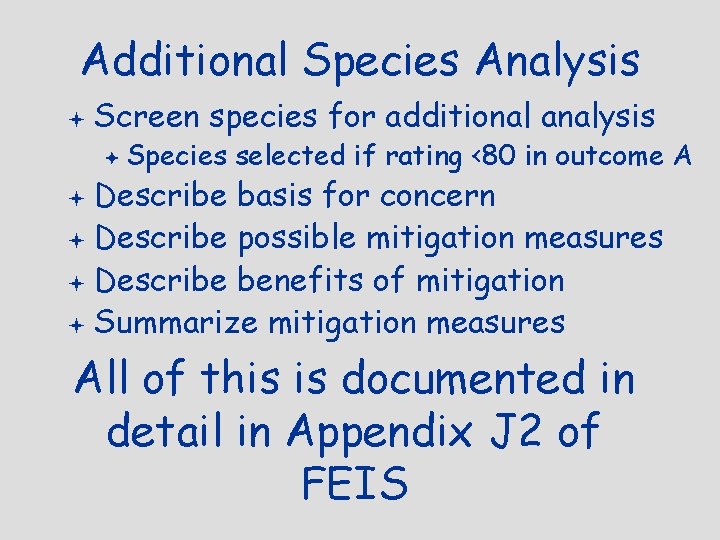
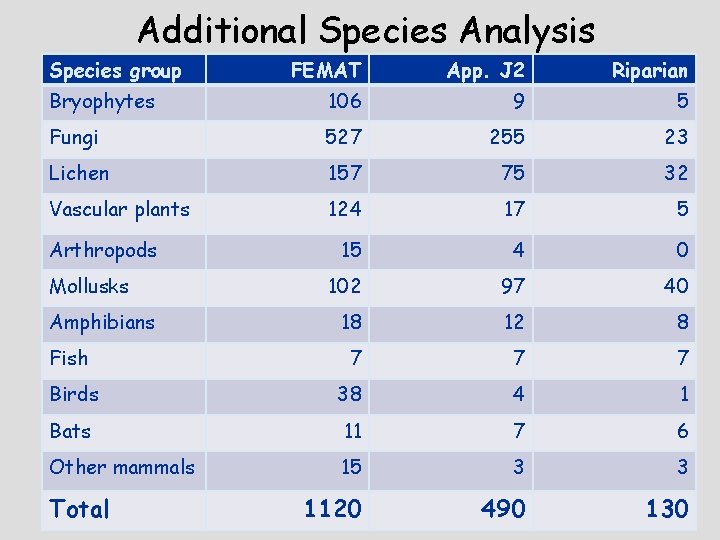
Additional Species Analysis ª Screen species for additional analysis ª Species selected if rating <80 in outcome A Describe basis for concern ª Describe possible mitigation measures ª Describe benefits of mitigation ª Summarize mitigation measures ª All of this is documented in detail in Appendix J 2 of FEIS
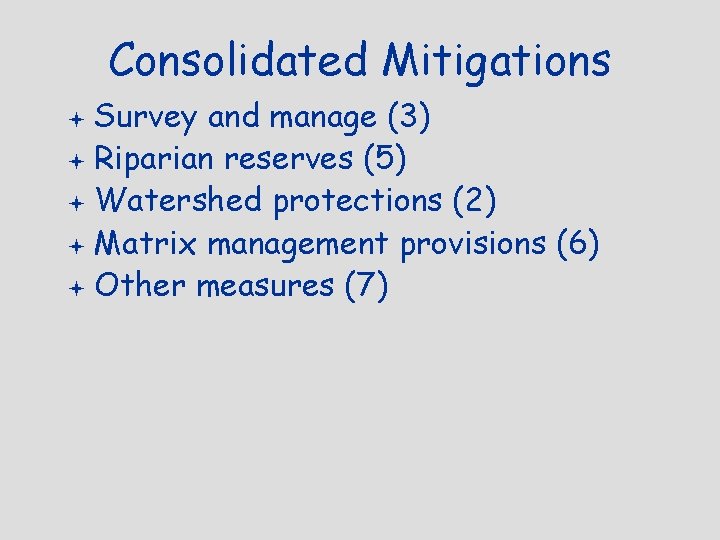
Consolidated Mitigations Survey and manage (3) ª Riparian reserves (5) ª Watershed protections (2) ª Matrix management provisions (6) ª Other measures (7) ª
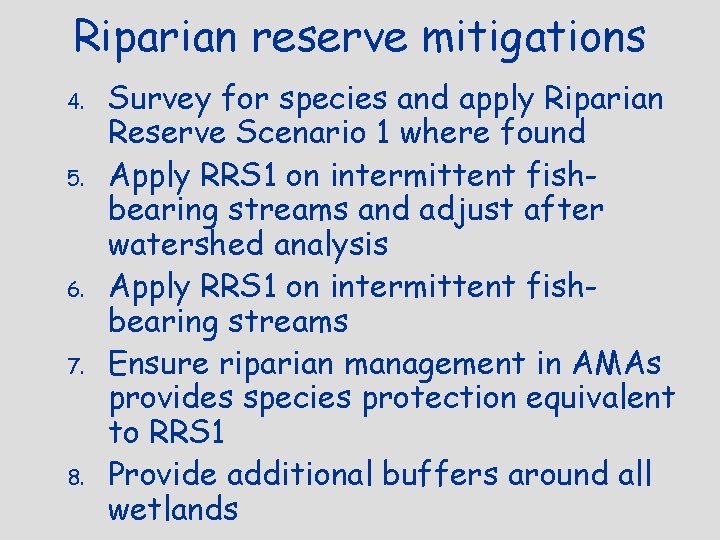
Riparian reserve mitigations 4. 5. 6. 7. 8. Survey for species and apply Riparian Reserve Scenario 1 where found Apply RRS 1 on intermittent fishbearing streams and adjust after watershed analysis Apply RRS 1 on intermittent fishbearing streams Ensure riparian management in AMAs provides species protection equivalent to RRS 1 Provide additional buffers around all wetlands
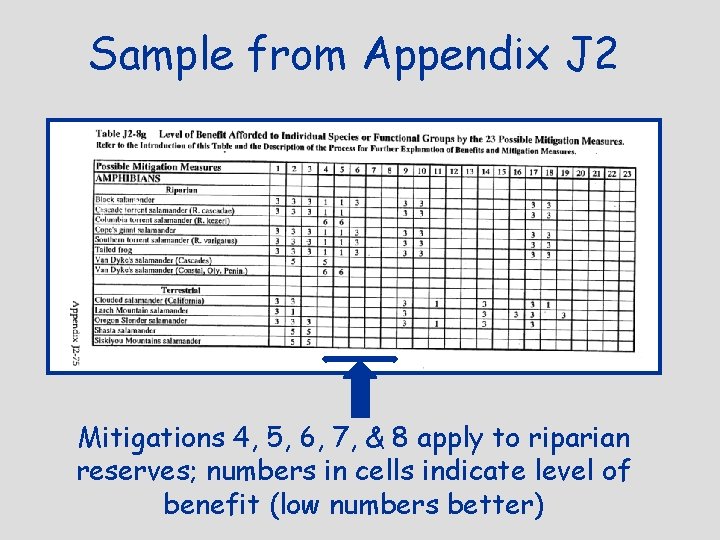
Sample from Appendix J 2 Mitigations 4, 5, 6, 7, & 8 apply to riparian reserves; numbers in cells indicate level of benefit (low numbers better)
Additional Species Analysis Species group FEMAT App. J 2 Riparian Bryophytes 106 9 5 Fungi 527 255 23 Lichen 157 75 32 Vascular plants 124 17 5 15 4 0 102 97 40 18 12 8 7 7 7 Birds 38 4 1 Bats 11 7 6 Other mammals 15 3 3 1120 490 130 Arthropods Mollusks Amphibians Fish Total
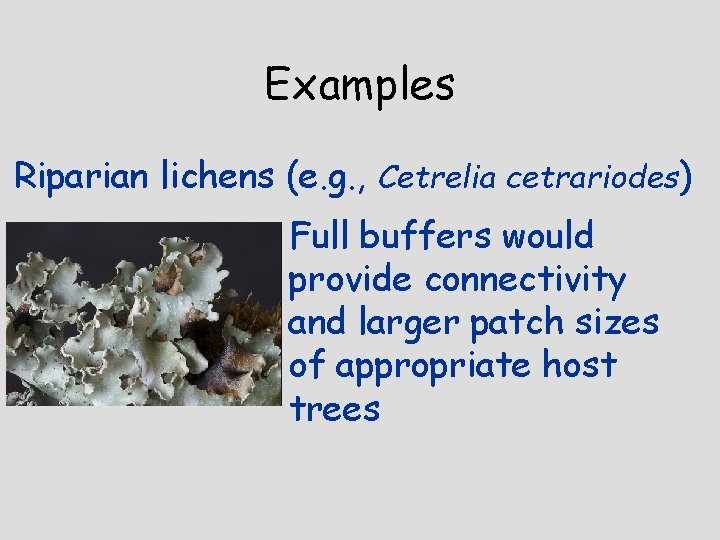
Examples Riparian lichens (e. g. , Cetrelia cetrariodes) Full buffers would provide connectivity and larger patch sizes of appropriate host trees
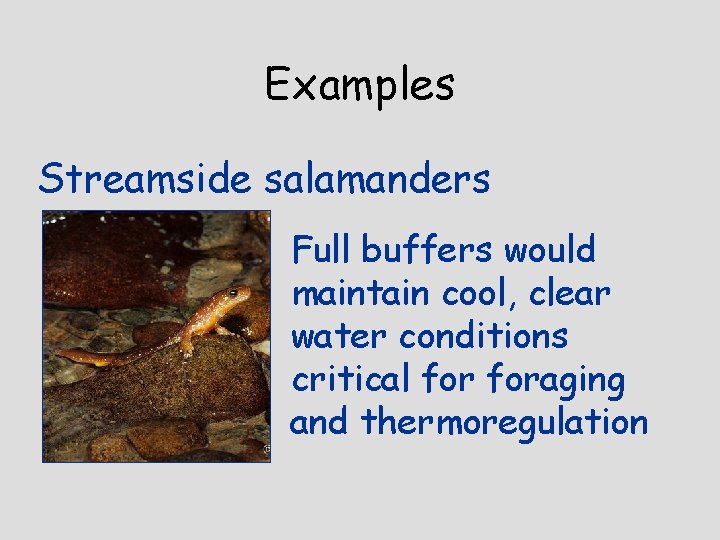
Examples Streamside salamanders Full buffers would maintain cool, clear water conditions critical foraging and thermoregulation
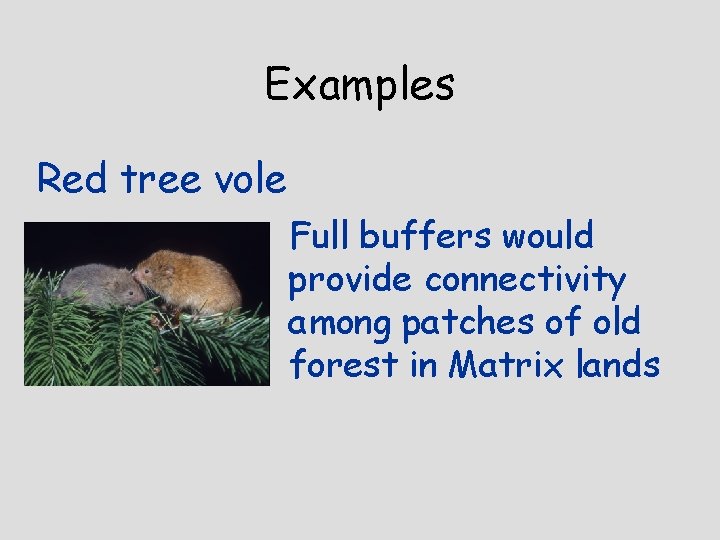
Examples Red tree vole Full buffers would provide connectivity among patches of old forest in Matrix lands
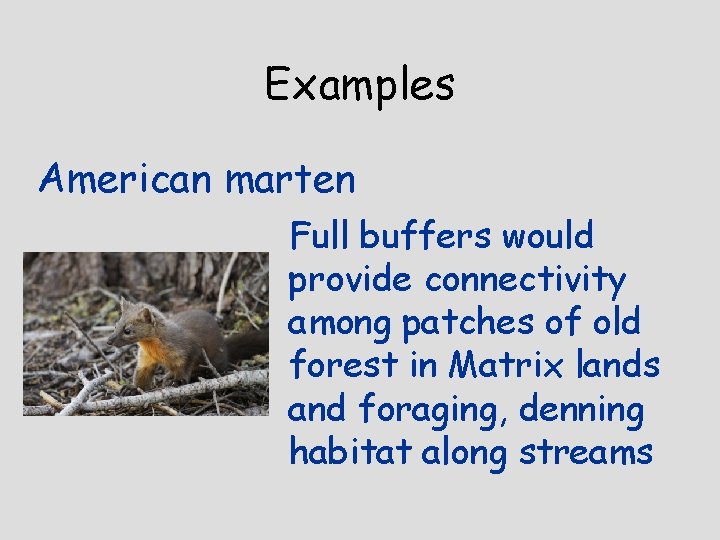
Examples American marten Full buffers would provide connectivity among patches of old forest in Matrix lands and foraging, denning habitat along streams
Final Decision Once the list of proposed mitigations was presented to EIS team, a decision was made to implement Riparian Reserve Scenario 1 on all streams as this option captured most benefit. This was then made part of the Record of Decision for the plan.
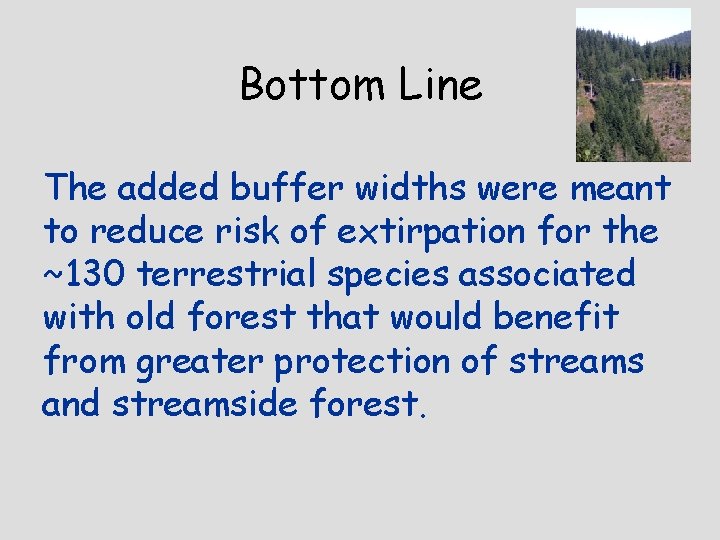
Bottom Line The added buffer widths were meant to reduce risk of extirpation for the ~130 terrestrial species associated with old forest that would benefit from greater protection of streams and streamside forest.