
THE FRENCH REVOLUTION The Three Estates in PreRevolutionary

- Slides: 15
THE FRENCH REVOLUTION The Three Estates in Pre-Revolutionary France The French Aristocracy were among the wealthiest individuals in all of Europe. They controlled vast tracts of land, huge amounts of money, and had power that was unchecked…
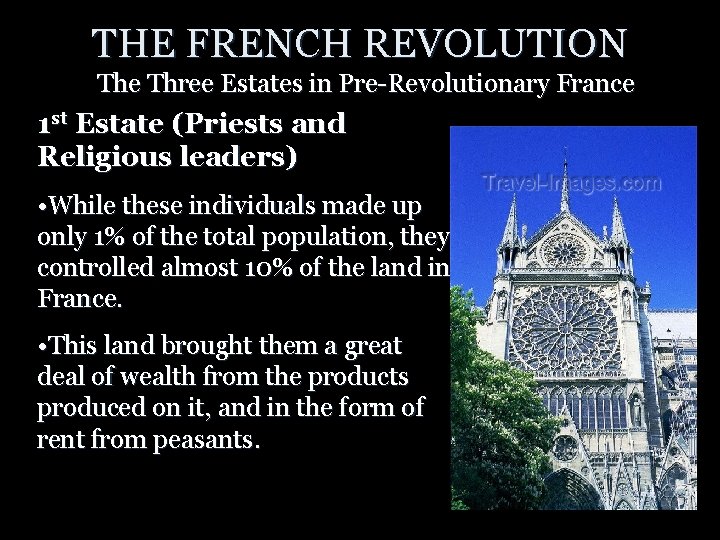
THE FRENCH REVOLUTION The Three Estates in Pre-Revolutionary France 1 st Estate (Priests and Religious leaders) • While these individuals made up only 1% of the total population, they controlled almost 10% of the land in France. • This land brought them a great deal of wealth from the products produced on it, and in the form of rent from peasants.
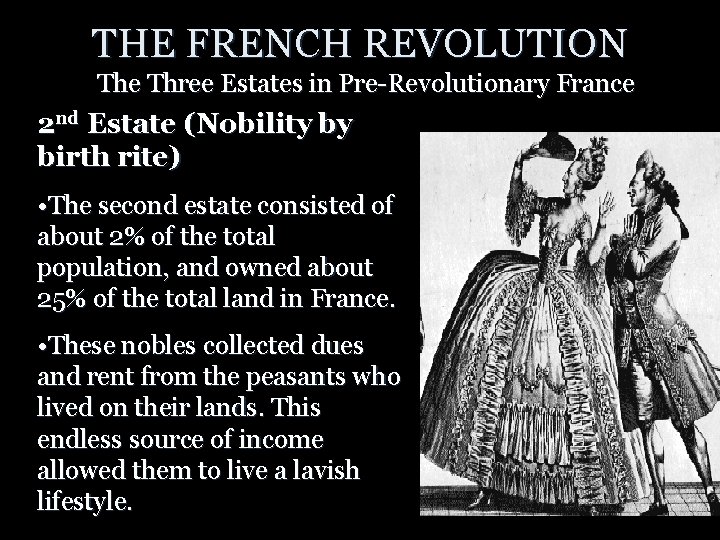
THE FRENCH REVOLUTION The Three Estates in Pre-Revolutionary France 2 nd Estate (Nobility by birth rite) • The second estate consisted of about 2% of the total population, and owned about 25% of the total land in France. • These nobles collected dues and rent from the peasants who lived on their lands. This endless source of income allowed them to live a lavish lifestyle.
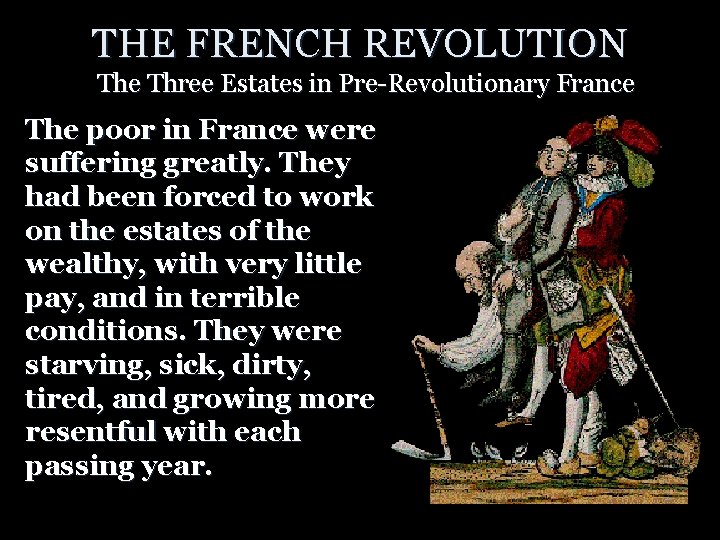
THE FRENCH REVOLUTION The Three Estates in Pre-Revolutionary France The poor in France were suffering greatly. They had been forced to work on the estates of the wealthy, with very little pay, and in terrible conditions. They were starving, sick, dirty, tired, and growing more resentful with each passing year.
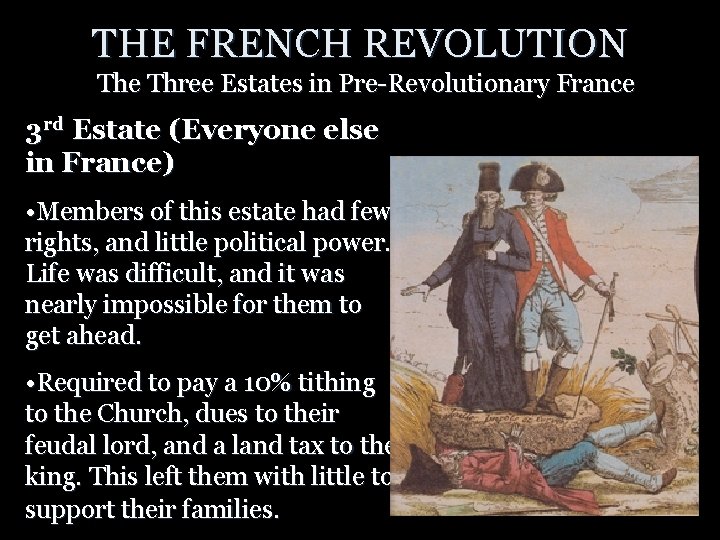
THE FRENCH REVOLUTION The Three Estates in Pre-Revolutionary France 3 rd Estate (Everyone else in France) • Members of this estate had few rights, and little political power. Life was difficult, and it was nearly impossible for them to get ahead. • Required to pay a 10% tithing to the Church, dues to their feudal lord, and a land tax to the king. This left them with little to support their families.
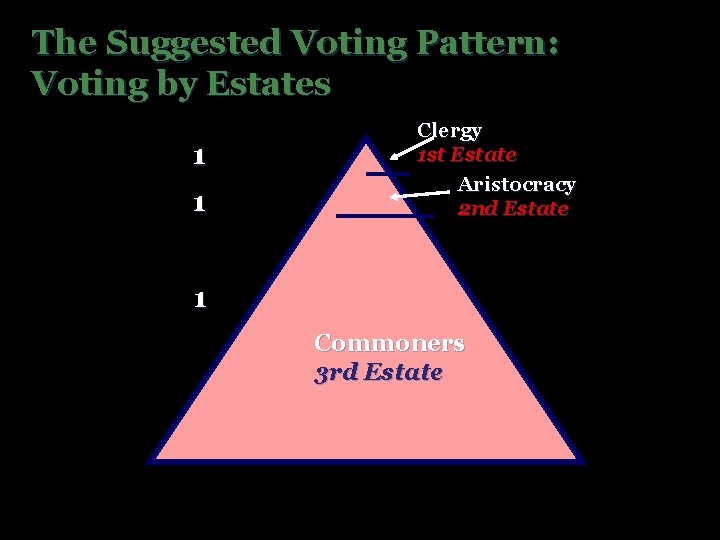
The Suggested Voting Pattern: Voting by Estates 1 1 Clergy 1 st Estate Aristocracy 2 nd Estate 1 Commoners 3 rd Estate
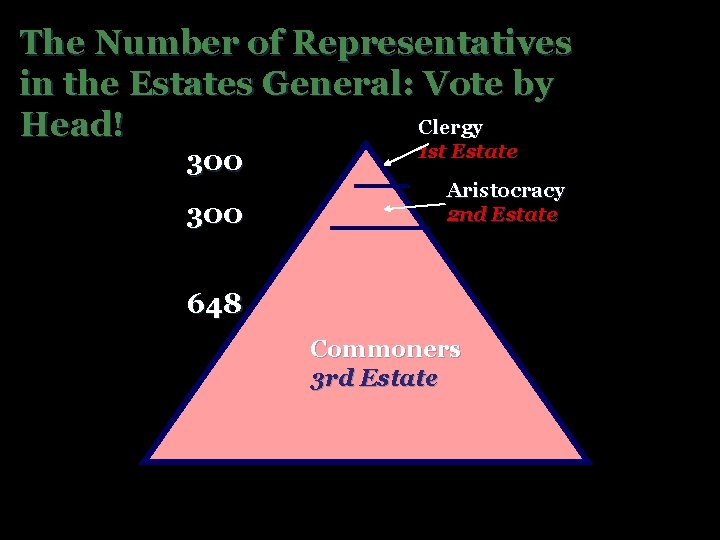
The Number of Representatives in the Estates General: Vote by Clergy Head! 300 1 st Estate Aristocracy 2 nd Estate 648 Commoners 3 rd Estate
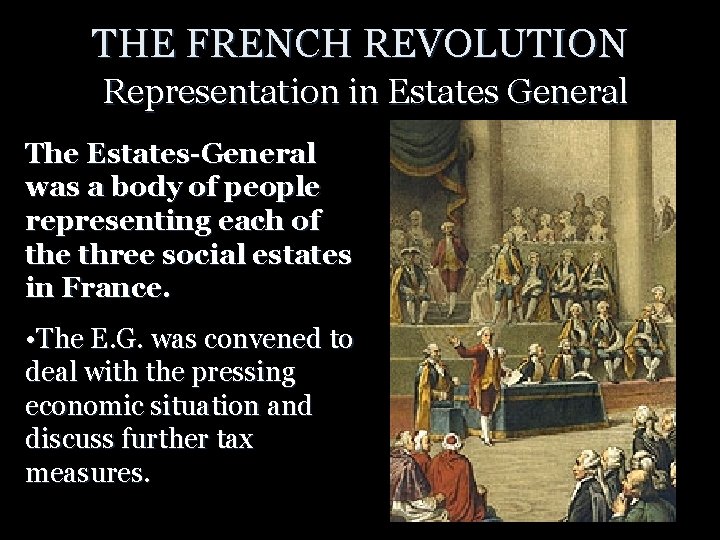
THE FRENCH REVOLUTION Representation in Estates General The Estates-General was a body of people representing each of the three social estates in France. • The E. G. was convened to deal with the pressing economic situation and discuss further tax measures.
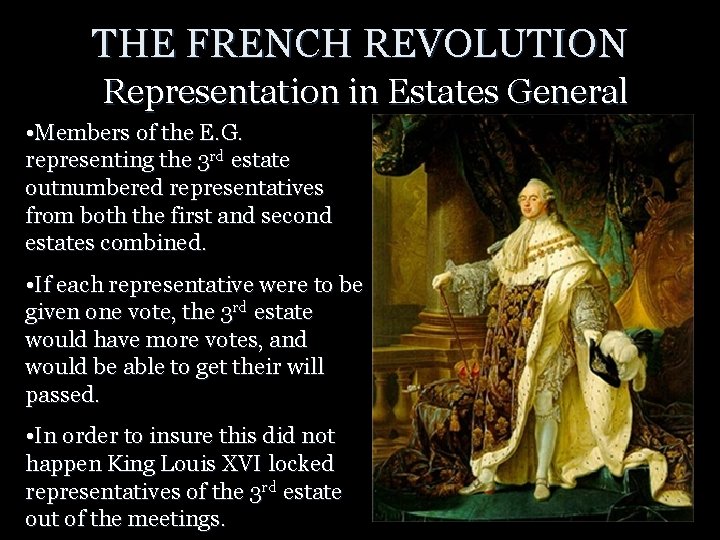
THE FRENCH REVOLUTION Representation in Estates General • Members of the E. G. representing the 3 rd estate outnumbered representatives from both the first and second estates combined. • If each representative were to be given one vote, the 3 rd estate would have more votes, and would be able to get their will passed. • In order to insure this did not happen King Louis XVI locked representatives of the 3 rd estate out of the meetings.
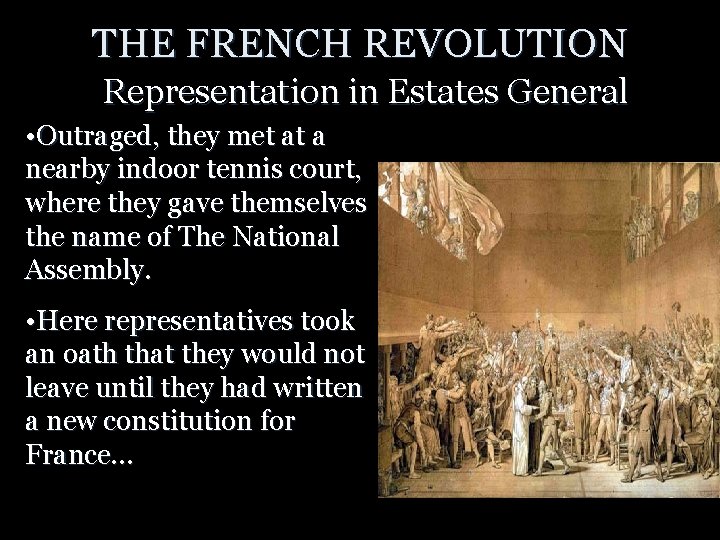
THE FRENCH REVOLUTION Representation in Estates General • Outraged, they met at a nearby indoor tennis court, where they gave themselves the name of The National Assembly. • Here representatives took an oath that they would not leave until they had written a new constitution for France…
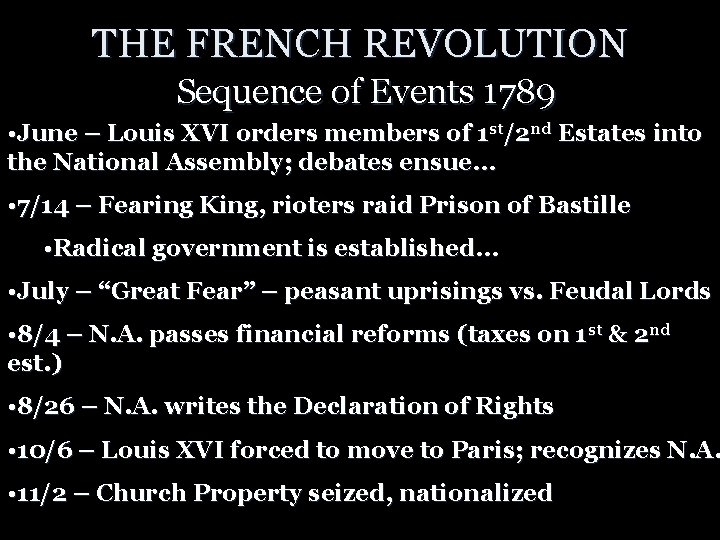
THE FRENCH REVOLUTION Sequence of Events 1789 • June – Louis XVI orders members of 1 st/2 nd Estates into the National Assembly; debates ensue… • 7/14 – Fearing King, rioters raid Prison of Bastille • Radical government is established… • July – “Great Fear” – peasant uprisings vs. Feudal Lords • 8/4 – N. A. passes financial reforms (taxes on 1 st & 2 nd est. ) • 8/26 – N. A. writes the Declaration of Rights • 10/6 – Louis XVI forced to move to Paris; recognizes N. A. • 11/2 – Church Property seized, nationalized
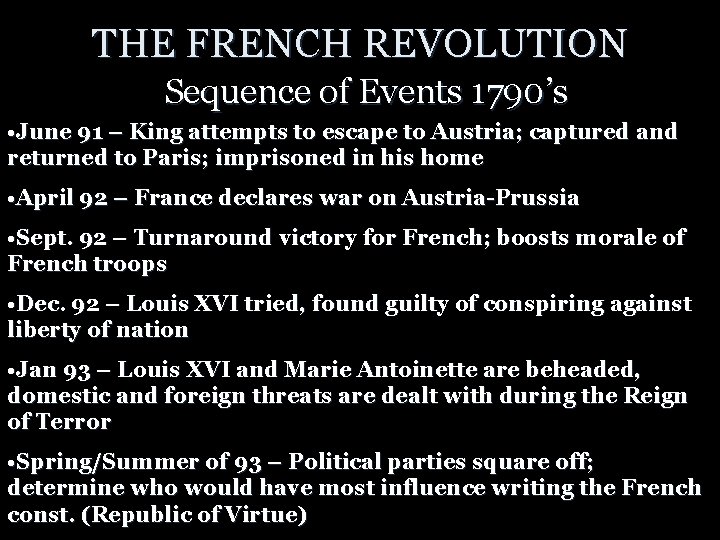
THE FRENCH REVOLUTION Sequence of Events 1790’s • June 91 – King attempts to escape to Austria; captured and returned to Paris; imprisoned in his home • April 92 – France declares war on Austria-Prussia • Sept. 92 – Turnaround victory for French; boosts morale of French troops • Dec. 92 – Louis XVI tried, found guilty of conspiring against liberty of nation • Jan 93 – Louis XVI and Marie Antoinette are beheaded, domestic and foreign threats are dealt with during the Reign of Terror • Spring/Summer of 93 – Political parties square off; determine who would have most influence writing the French const. (Republic of Virtue)
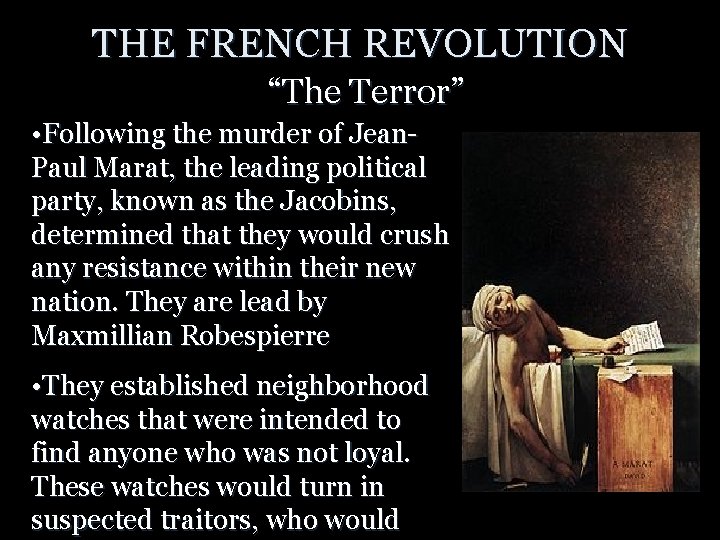
THE FRENCH REVOLUTION “The Terror” • Following the murder of Jean. Paul Marat, the leading political party, known as the Jacobins, determined that they would crush any resistance within their new nation. They are lead by Maxmillian Robespierre • They established neighborhood watches that were intended to find anyone who was not loyal. These watches would turn in suspected traitors, who would
Guillotine – New equitable way to deal with dissenters and threats. • • • FUN FACTS Total weight of a guillotine is about 1278 lbs The guillotine metal blade weighs about 88. 2 lbs The height of guillotine posts average about 14 feet The falling blade has a rate of speed of about 21 feet/second Just the actual beheading takes 2/100 of a second The time for the guillotine blade to fall down to where it stops takes 70 th of a second http: //www. youtube. com/watch? v=VPQQe. KVQVC 0&safety_mode=true&persist_safety_mode=1&safe=active
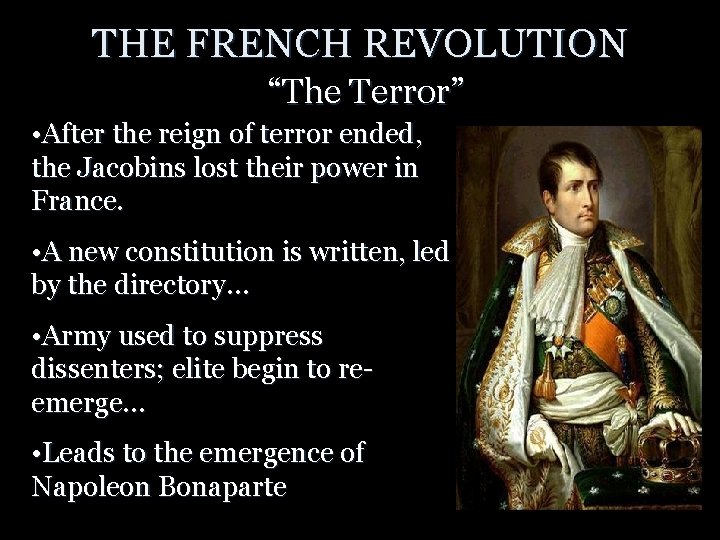
THE FRENCH REVOLUTION “The Terror” • After the reign of terror ended, the Jacobins lost their power in France. • A new constitution is written, led by the directory… • Army used to suppress dissenters; elite begin to reemerge… • Leads to the emergence of Napoleon Bonaparte