
The French Revolution The French Monarchy 1775 1793

- Slides: 27
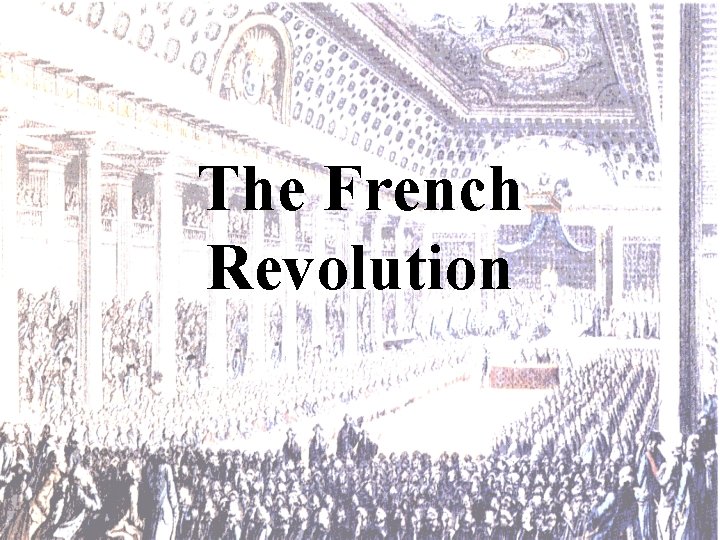
The French Revolution
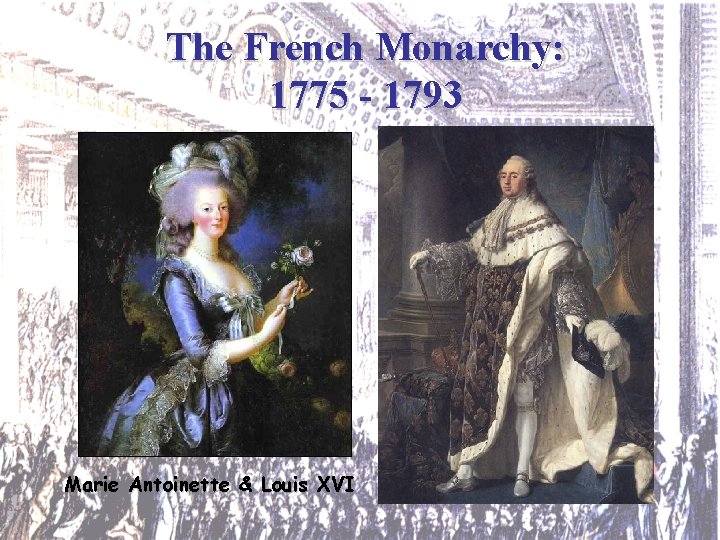
The French Monarchy: 1775 - 1793 Marie Antoinette & Louis XVI
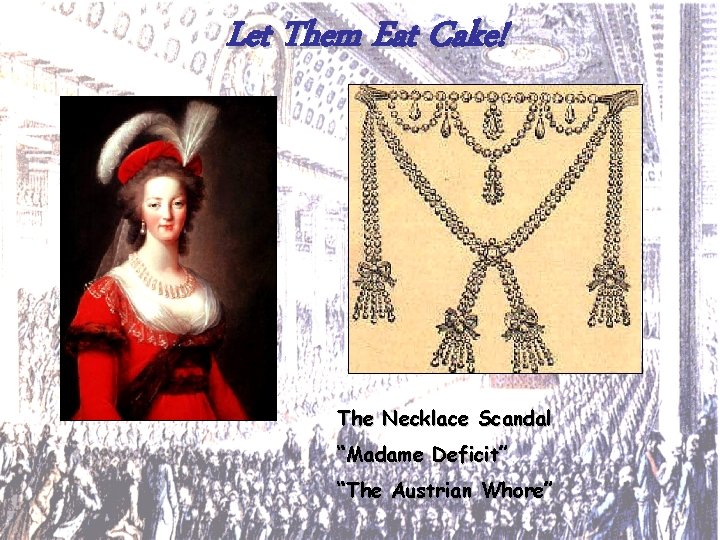
Let Them Eat Cake! The Necklace Scandal “Madame Deficit” “The Austrian Whore”
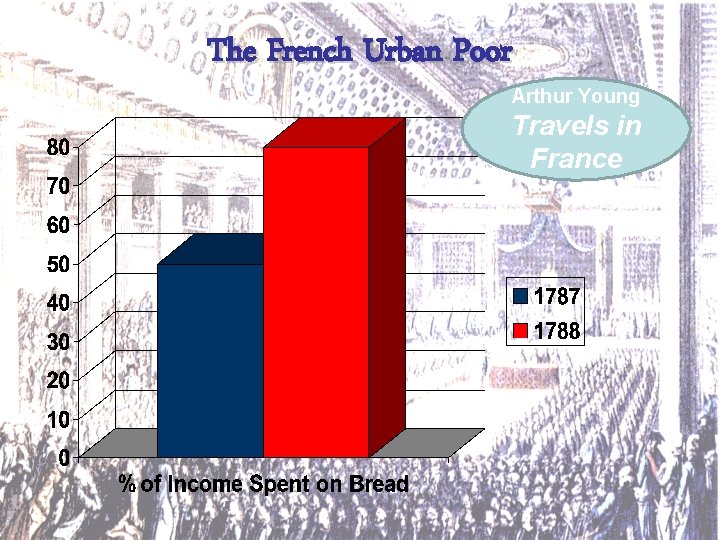
The French Urban Poor Arthur Young Travels in France
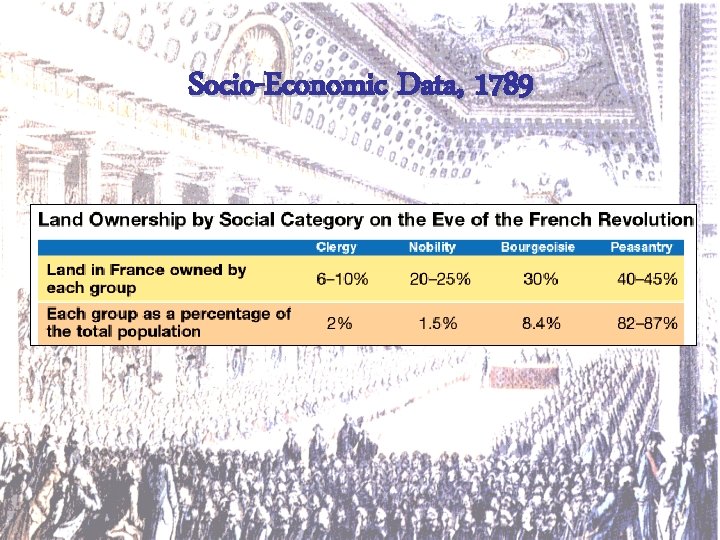
Socio-Economic Data, 1789
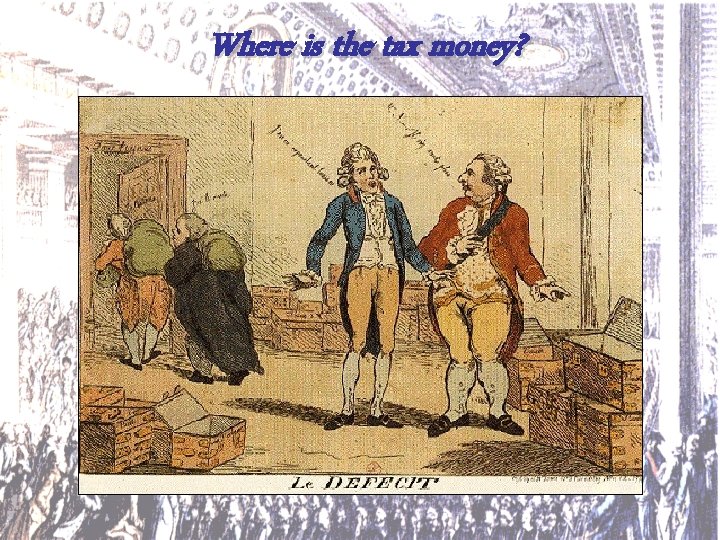
Where is the tax money?
Lettres de Cachet The French king could warrant imprisonment or death in a signed letter under his seal. A carte-blanche warrant. Cardinal Fleury issued 80, 000 during the reign of Louis XV! Eliminated in 1790.
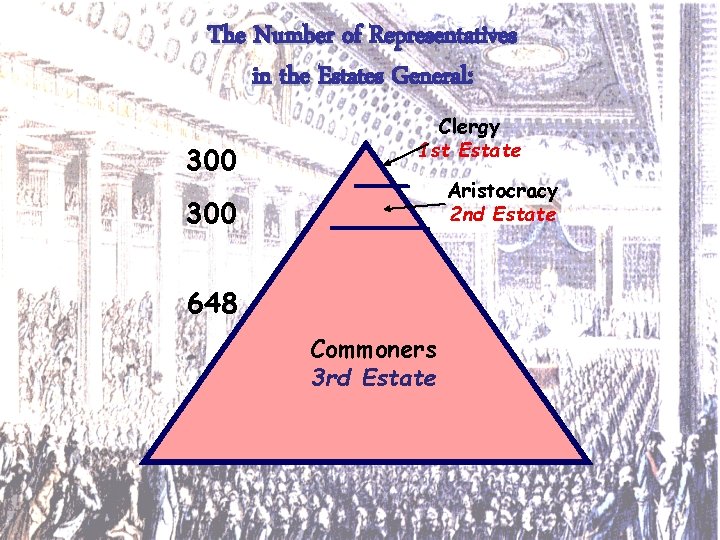
The Number of Representatives in the Estates General: 300 Clergy 1 st Estate Aristocracy 2 nd Estate 300 648 Commoners 3 rd Estate
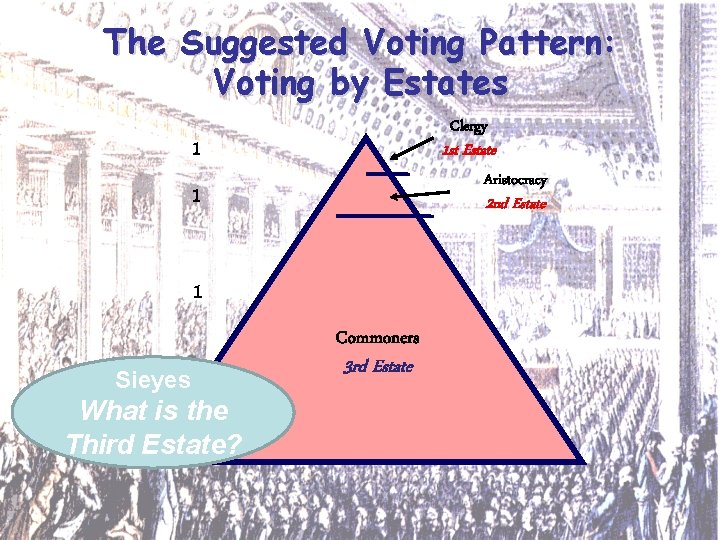
The Suggested Voting Pattern: Voting by Estates Clergy 1 1 st Estate Aristocracy 1 2 nd Estate 1 Commoners Sieyes What is the Third Estate? 3 rd Estate
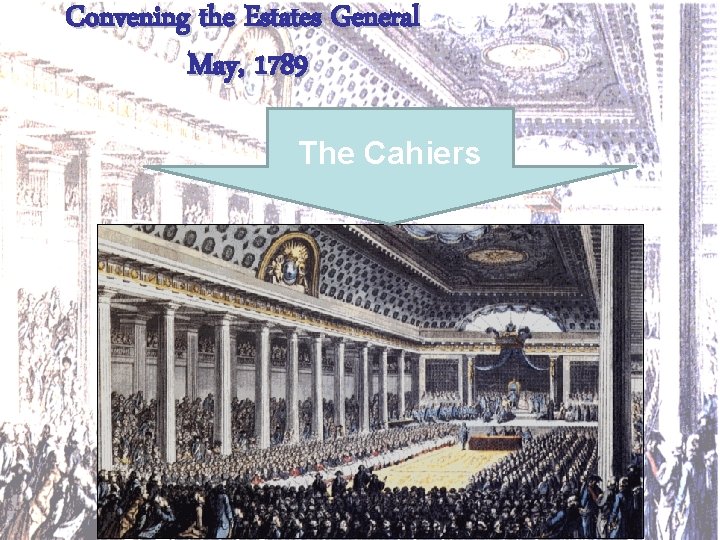
Convening the Estates General May, 1789 The Cahiers
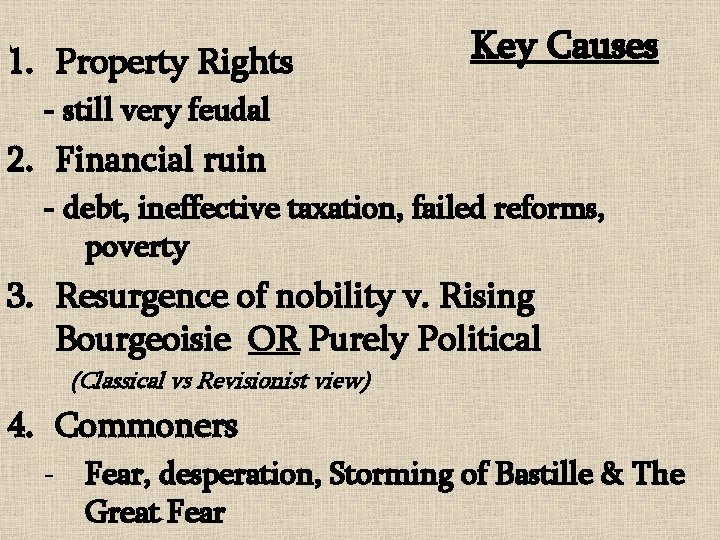
1. Property Rights Key Causes - still very feudal 2. Financial ruin - debt, ineffective taxation, failed reforms, poverty 3. Resurgence of nobility v. Rising Bourgeoisie OR Purely Political (Classical vs Revisionist view) 4. Commoners - Fear, desperation, Storming of Bastille & The Great Fear
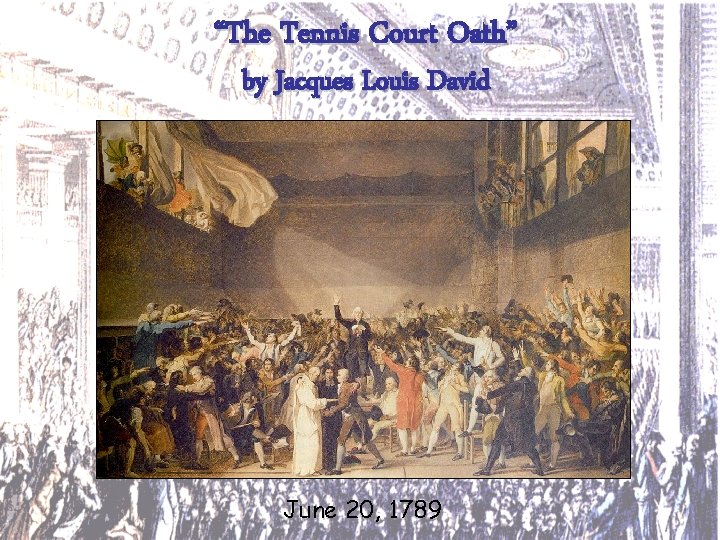
“The Tennis Court Oath” by Jacques Louis David June 20, 1789
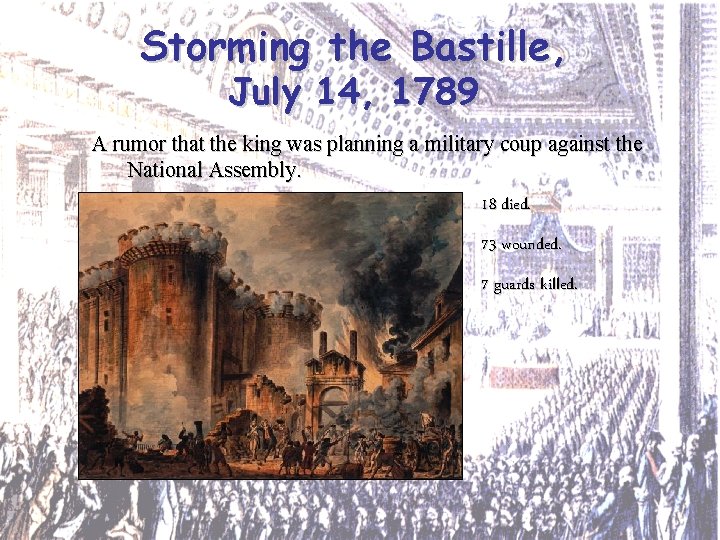
Storming the Bastille, July 14, 1789 A rumor that the king was planning a military coup against the National Assembly. 18 died. 73 wounded. 7 guards killed.
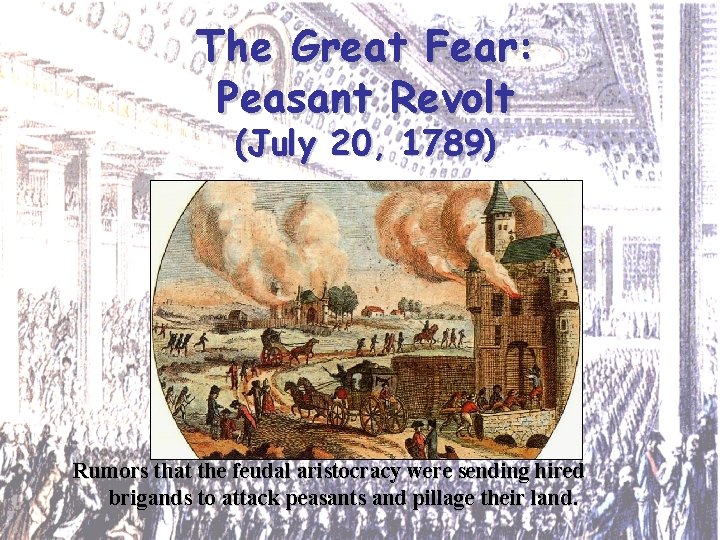
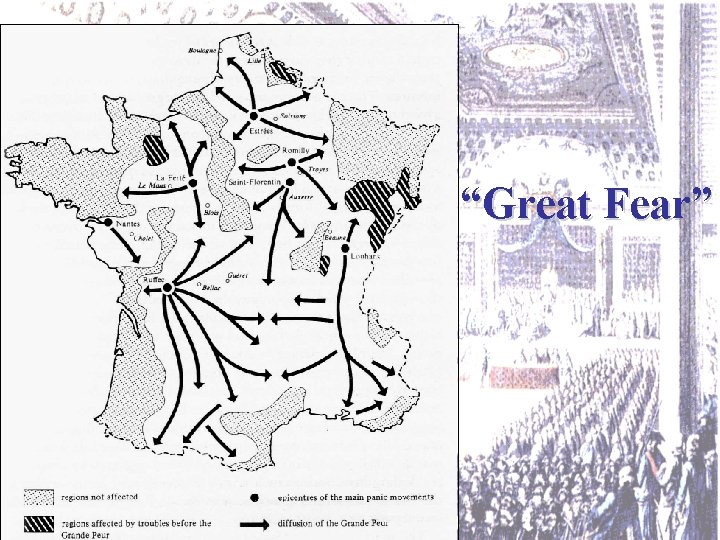
The Great Fear: Peasant Revolt (July 20, 1789) Rumors that the feudal aristocracy were sending hired brigands to attack peasants and pillage their land.
“Great Fear”
The First Phase Moderate Constituent Assembly 1789 -1791
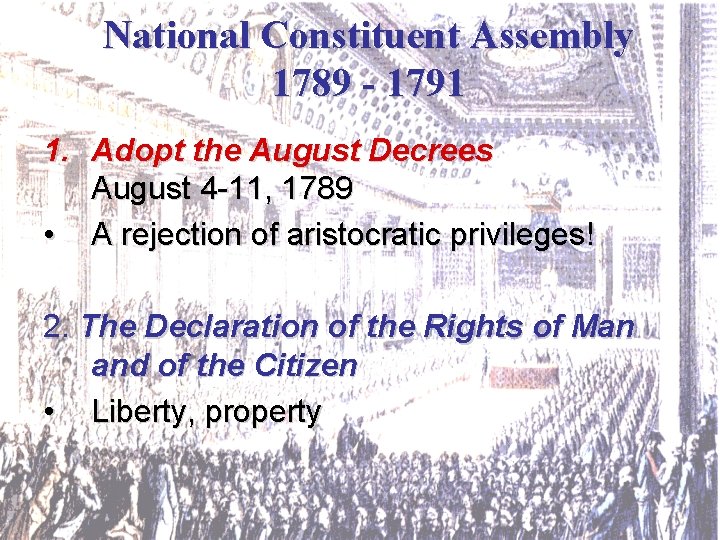
National Constituent Assembly 1789 - 1791 1. Adopt the August Decrees August 4 -11, 1789 • A rejection of aristocratic privileges! 2. The Declaration of the Rights of Man and of the Citizen • Liberty, property
Garnering Peaceful Support
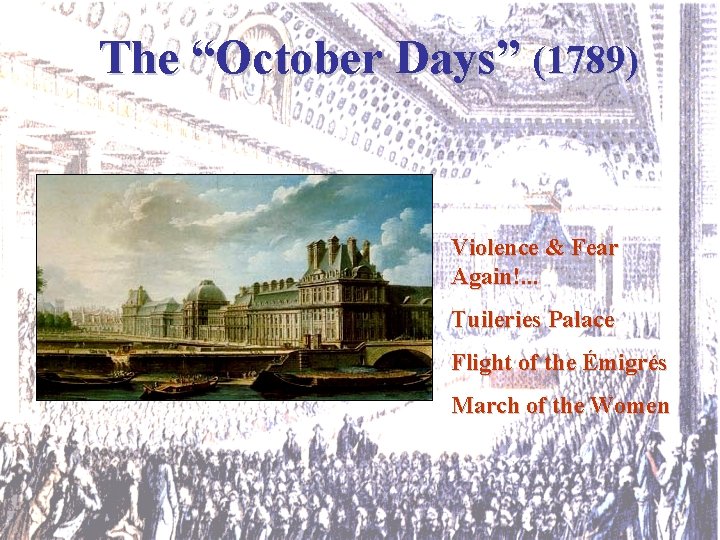
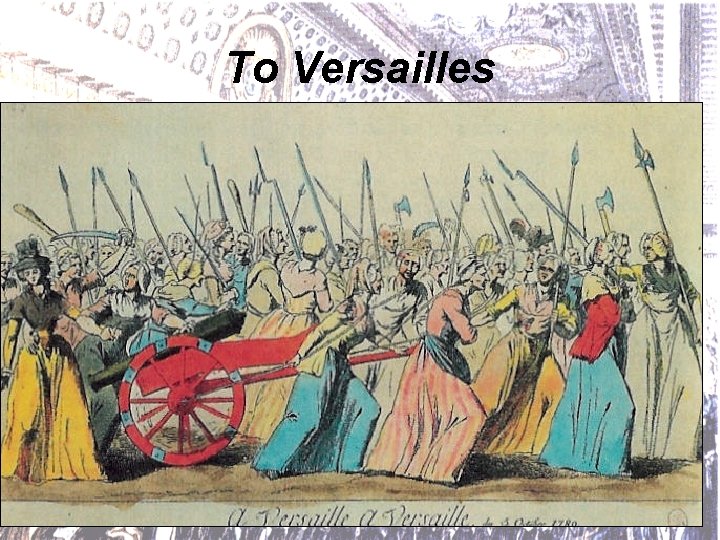
The “October Days” (1789) Violence & Fear Again!. . . Tuileries Palace Flight of the Émigrés March of the Women
To Versailles
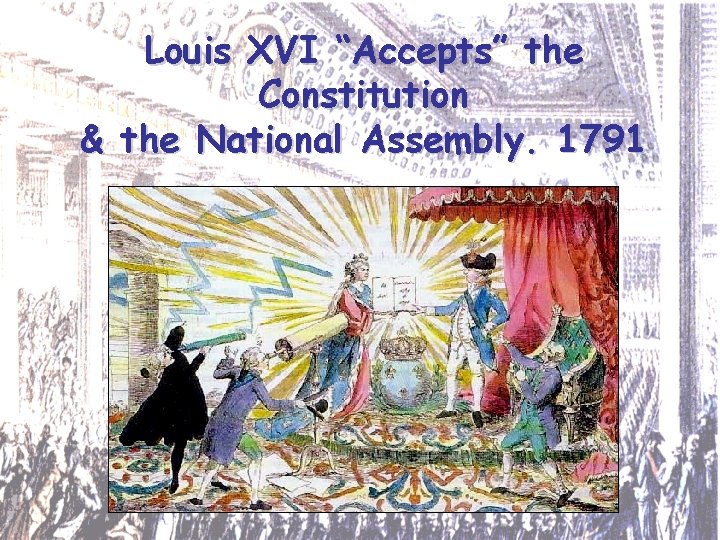
Louis XVI “Accepts” the Constitution & the National Assembly. 1791
Would it be correct to say that the French Revolution did not truly get underway until two years after its beginning?
French Constitution of 1791 A Bourgeois Government
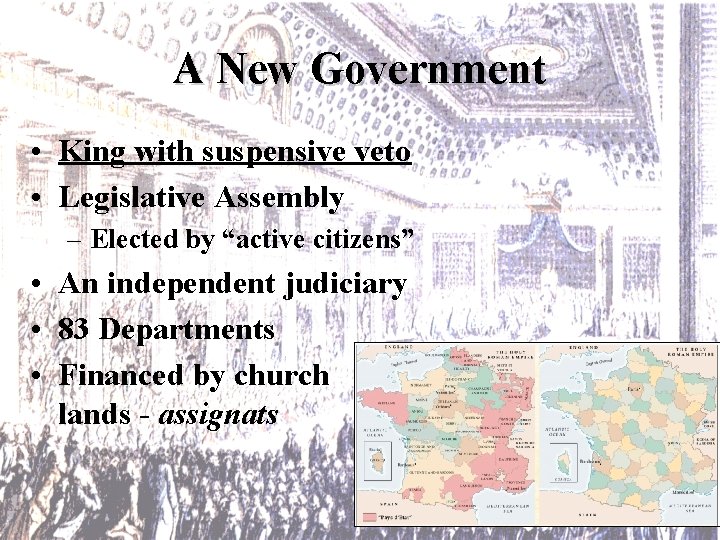
A New Government • King with suspensive veto • Legislative Assembly – Elected by “active citizens” • An independent judiciary • 83 Departments • Financed by church lands - assignats
Relationship with the Church Revolution is anti-clerical! Begins the long relationship between the Church and Conservative forces
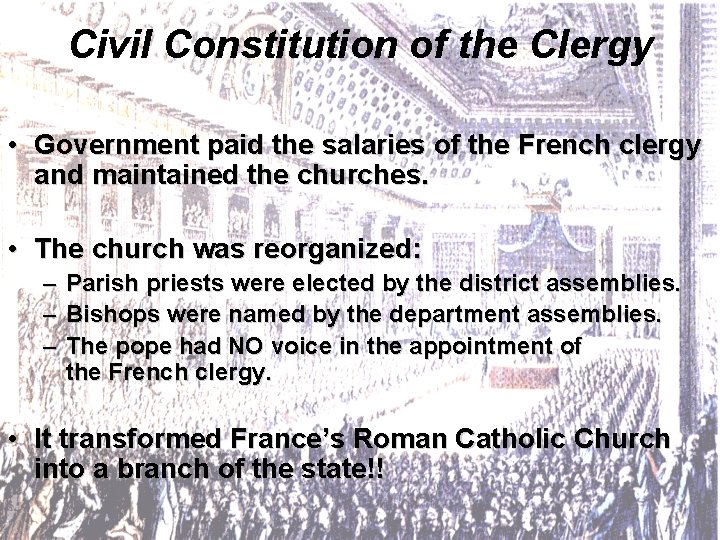
Civil Constitution of the Clergy • Government paid the salaries of the French clergy and maintained the churches. • The church was reorganized: – Parish priests were elected by the district assemblies. – Bishops were named by the department assemblies. – The pope had NO voice in the appointment of the French clergy. • It transformed France’s Roman Catholic Church into a branch of the state!!
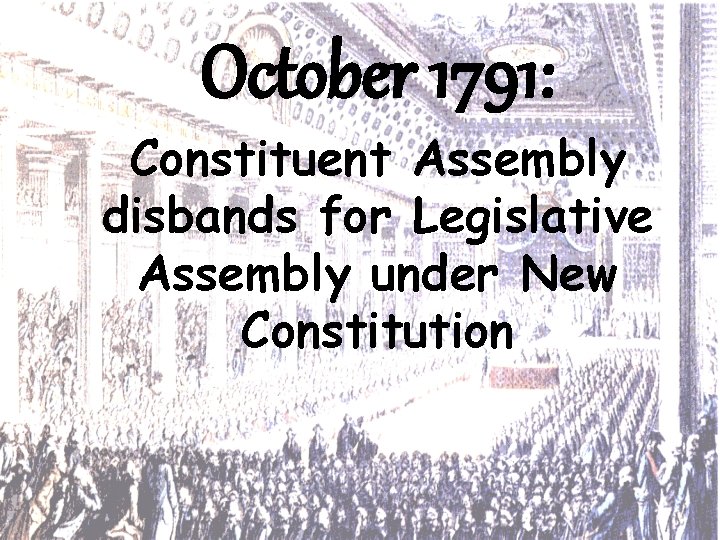
October 1791: Constituent Assembly disbands for Legislative Assembly under New Constitution