
The French Revolution Stages II III Radical Phase
- Slides: 42
The French Revolution Stages II & III “Radical Phase”
Do Now In your packet on page 2 answer the 1 st Question What were the factors that led to the French Revolution?
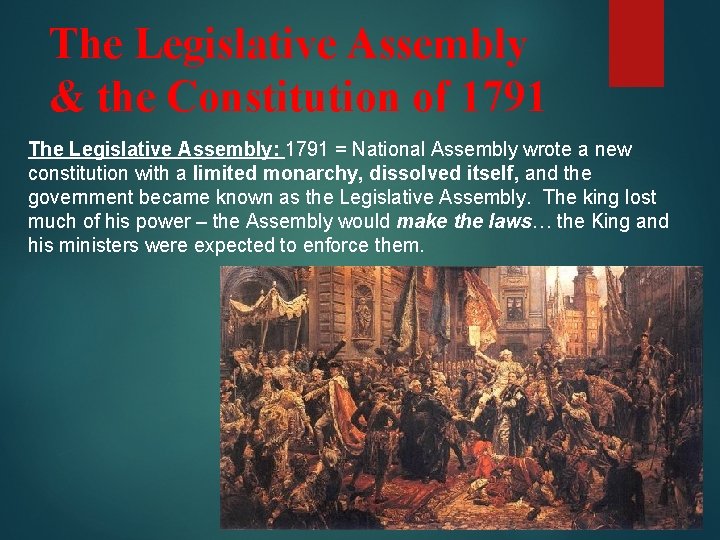
The Legislative Assembly & the Constitution of 1791 The Legislative Assembly: 1791 = National Assembly wrote a new constitution with a limited monarchy, dissolved itself, and the government became known as the Legislative Assembly. The king lost much of his power – the Assembly would make the laws… the King and his ministers were expected to enforce them.
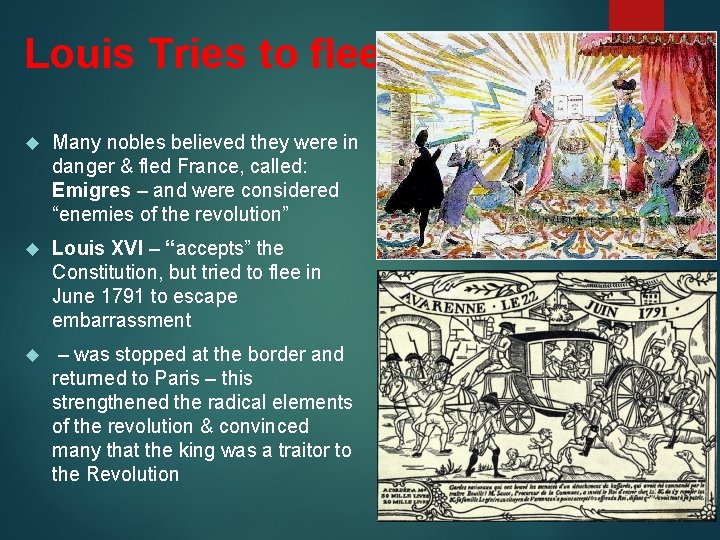
Louis Tries to flee Many nobles believed they were in danger & fled France, called: Emigres – and were considered “enemies of the revolution” Louis XVI – “accepts” the Constitution, but tried to flee in June 1791 to escape embarrassment – was stopped at the border and returned to Paris – this strengthened the radical elements of the revolution & convinced many that the king was a traitor to the Revolution
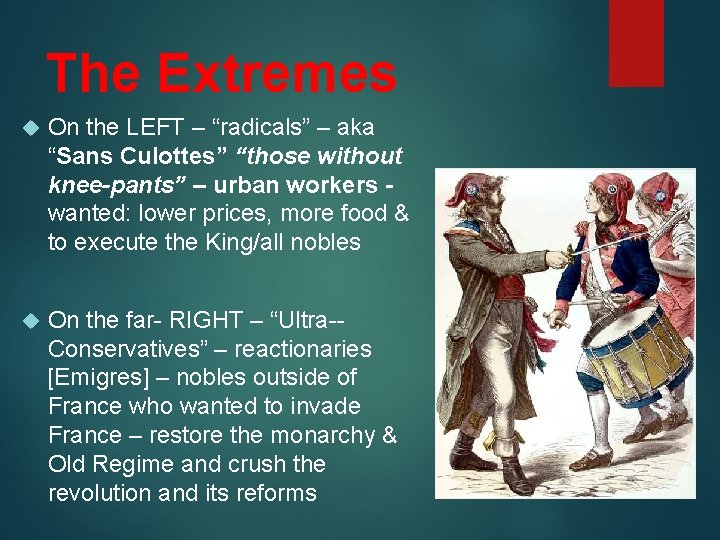
The Extremes On the LEFT – “radicals” – aka “Sans Culottes” “those without knee-pants” – urban workers wanted: lower prices, more food & to execute the King/all nobles On the far- RIGHT – “Ultra-Conservatives” – reactionaries [Emigres] – nobles outside of France who wanted to invade France – restore the monarchy & Old Regime and crush the revolution and its reforms
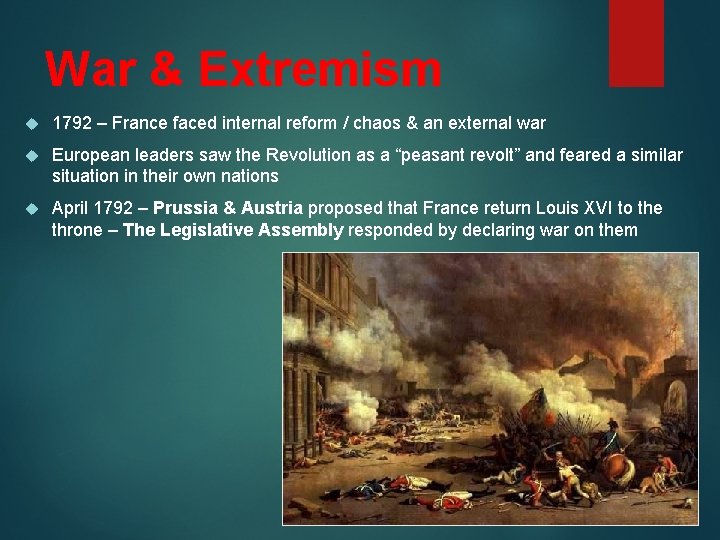
War & Extremism 1792 – France faced internal reform / chaos & an external war European leaders saw the Revolution as a “peasant revolt” and feared a similar situation in their own nations April 1792 – Prussia & Austria proposed that France return Louis XVI to the throne – The Legislative Assembly responded by declaring war on them
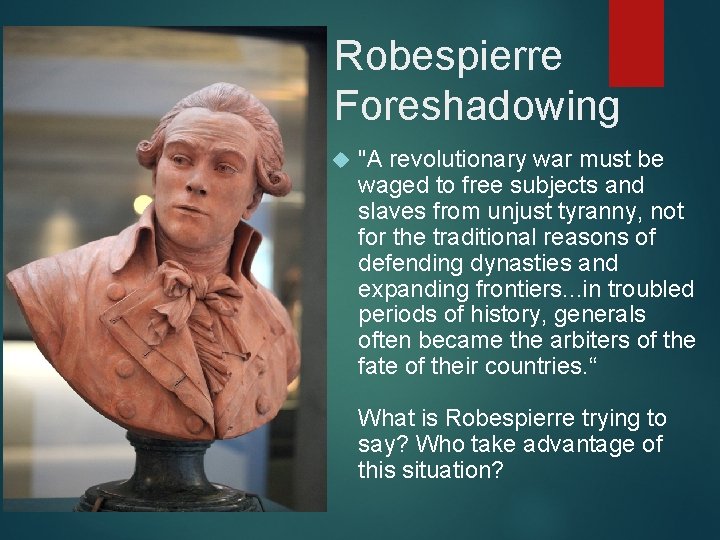
Robespierre Foreshadowing "A revolutionary war must be waged to free subjects and slaves from unjust tyranny, not for the traditional reasons of defending dynasties and expanding frontiers. . . in troubled periods of history, generals often became the arbiters of the fate of their countries. “ What is Robespierre trying to say? Who take advantage of this situation?
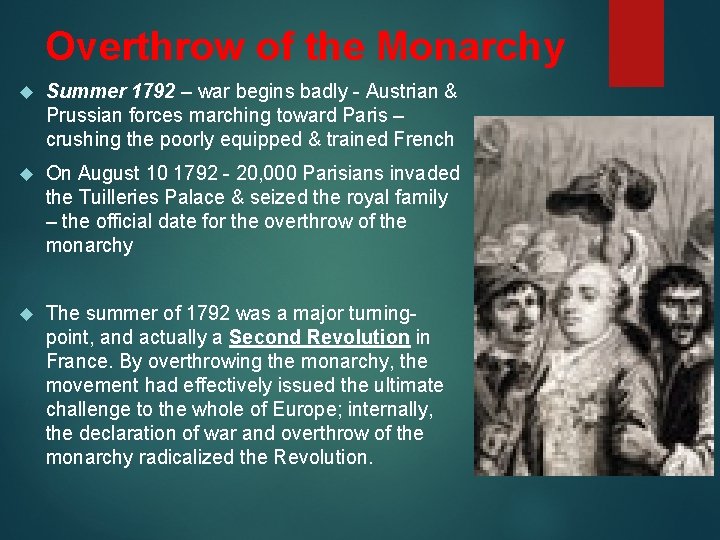
Overthrow of the Monarchy Summer 1792 – war begins badly - Austrian & Prussian forces marching toward Paris – crushing the poorly equipped & trained French On August 10 1792 - 20, 000 Parisians invaded the Tuilleries Palace & seized the royal family – the official date for the overthrow of the monarchy The summer of 1792 was a major turningpoint, and actually a Second Revolution in France. By overthrowing the monarchy, the movement had effectively issued the ultimate challenge to the whole of Europe; internally, the declaration of war and overthrow of the monarchy radicalized the Revolution.
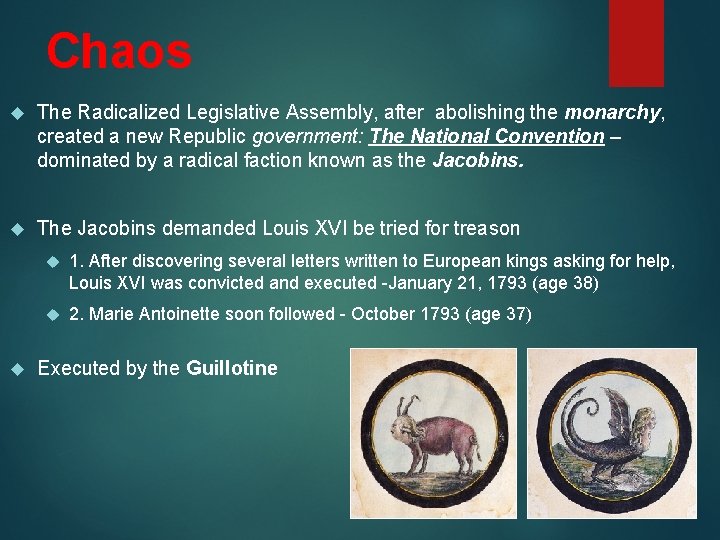
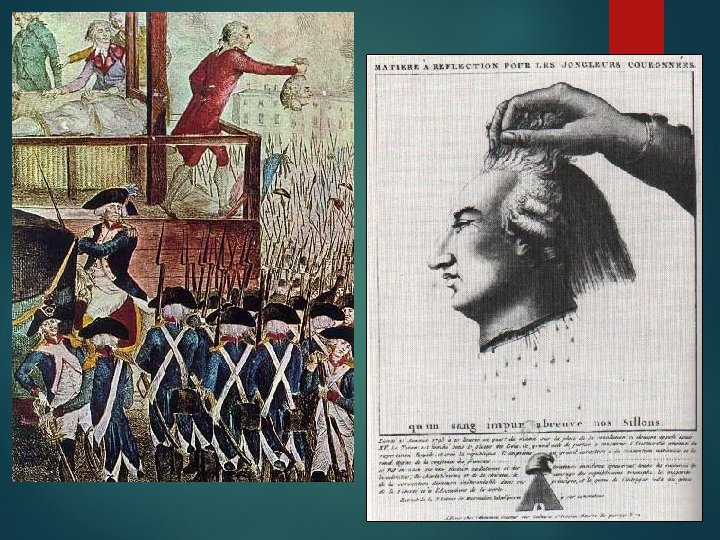
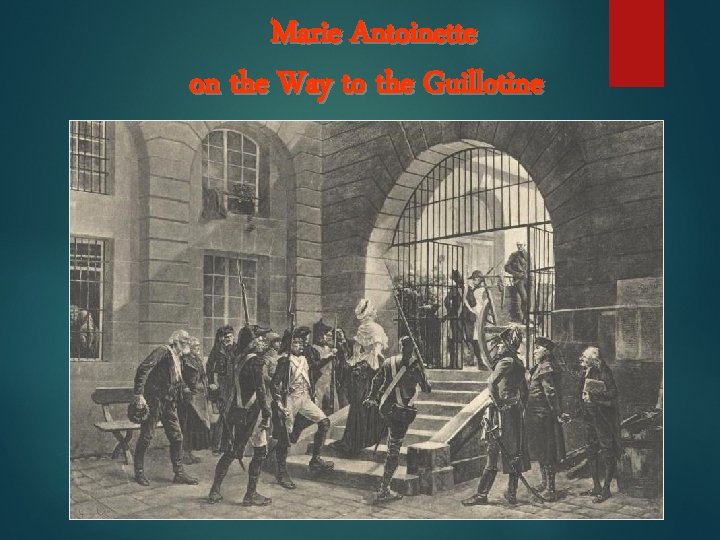
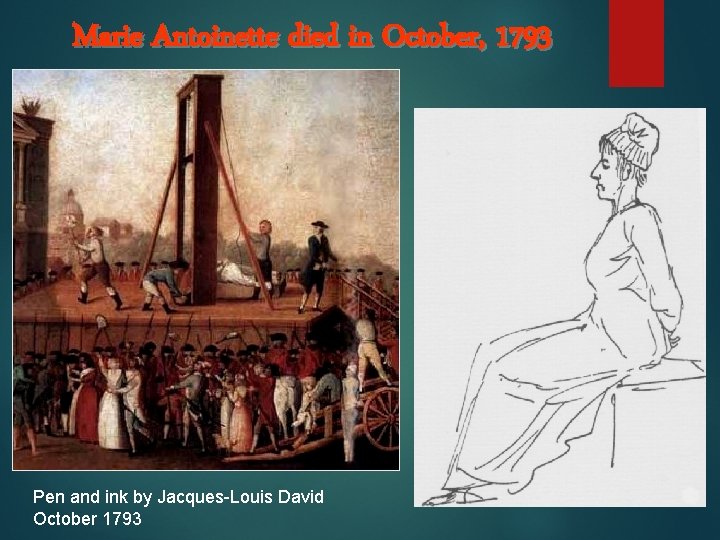
Chaos The Radicalized Legislative Assembly, after abolishing the monarchy, created a new Republic government: The National Convention – dominated by a radical faction known as the Jacobins. The Jacobins demanded Louis XVI be tried for treason 1. After discovering several letters written to European kings asking for help, Louis XVI was convicted and executed -January 21, 1793 (age 38) 2. Marie Antoinette soon followed - October 1793 (age 37) Executed by the Guillotine
Marie Antoinette on the Way to the Guillotine
Marie Antoinette died in October, 1793 Pen and ink by Jacques-Louis David October 1793
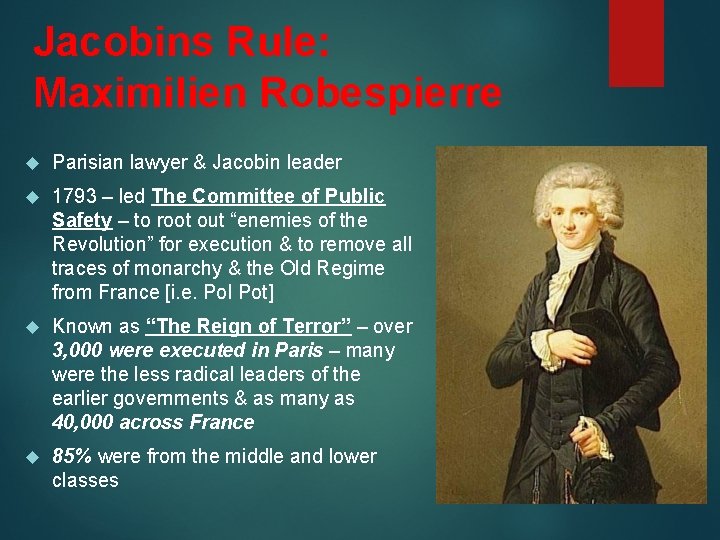
Jacobins Rule: Maximilien Robespierre Parisian lawyer & Jacobin leader 1793 – led The Committee of Public Safety – to root out “enemies of the Revolution” for execution & to remove all traces of monarchy & the Old Regime from France [i. e. Pol Pot] Known as “The Reign of Terror” – over 3, 000 were executed in Paris – many were the less radical leaders of the earlier governments & as many as 40, 000 across France 85% were from the middle and lower classes
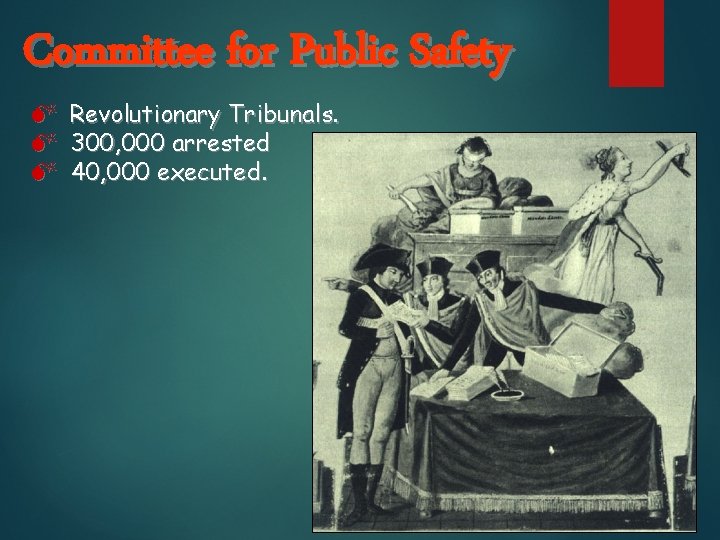
Committee for Public Safety M M M Revolutionary Tribunals. 300, 000 arrested 40, 000 executed.
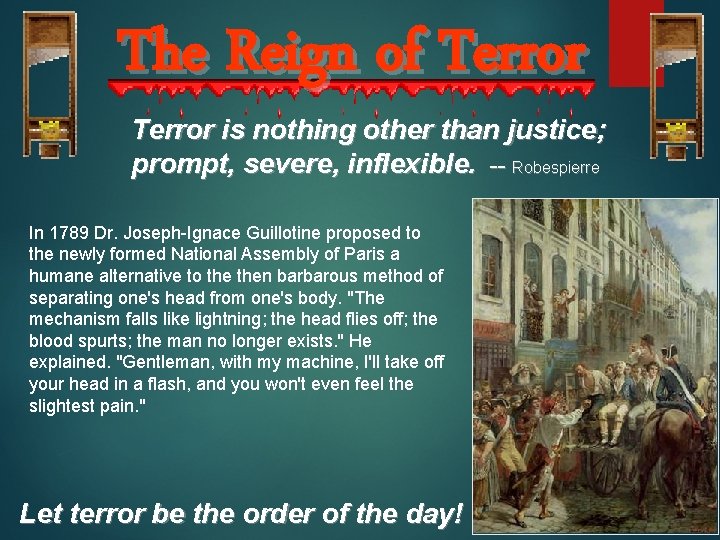
The Reign of Terror is nothing other than justice; prompt, severe, inflexible. -- Robespierre In 1789 Dr. Joseph-Ignace Guillotine proposed to the newly formed National Assembly of Paris a humane alternative to then barbarous method of separating one's head from one's body. "The mechanism falls like lightning; the head flies off; the blood spurts; the man no longer exists. " He explained. "Gentleman, with my machine, I'll take off your head in a flash, and you won't even feel the slightest pain. " Let terror be the order of the day!
The Guillotine: An “Enlightenment Tool”? “Oh, thou charming guillotine, You shorten kings and queens; By your influence divine, We have re-conquered our rights. Come to aid of the Country And let your superb instrument Become forever permanent To destroy the impious sect. Sharpen your razor for Pitt and his agents Fill your divine sack with heads of tyrants. ”
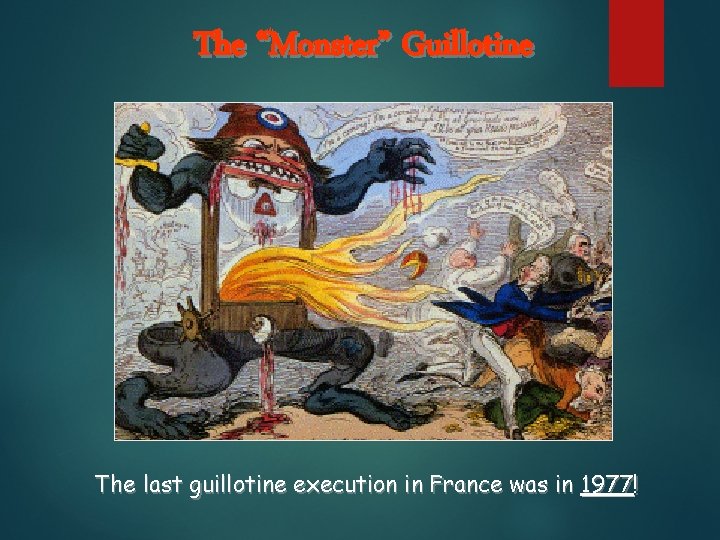
The “Monster” Guillotine The last guillotine execution in France was in 1977!
Nobility and commoners, intellectuals, politicians and prostitutes, all were liable to be executed on little or no grounds; suspicion of "crimes against liberty" was enough to earn one an appointment with "Madame Guillotine" or "The National Razor". Popular entertainment, eventually began to draw smaller and smaller crowds Eventually, the National Convention had enough of the Terror, partially fearing for their own lives, and turned against Maximilien Robespierre
Republic of Virtue National Convention had a dechristianization policy This order was built on reason. The new order was called the Republic of Virtue-a democratic republic of good citizens. The titles “citizen” and “citizeness” replaced “mister” and “madame. ” The word saint was removed from street names and churches were closed. The cathedral of Notre Dame was rededicated as a “temple of reason. ”
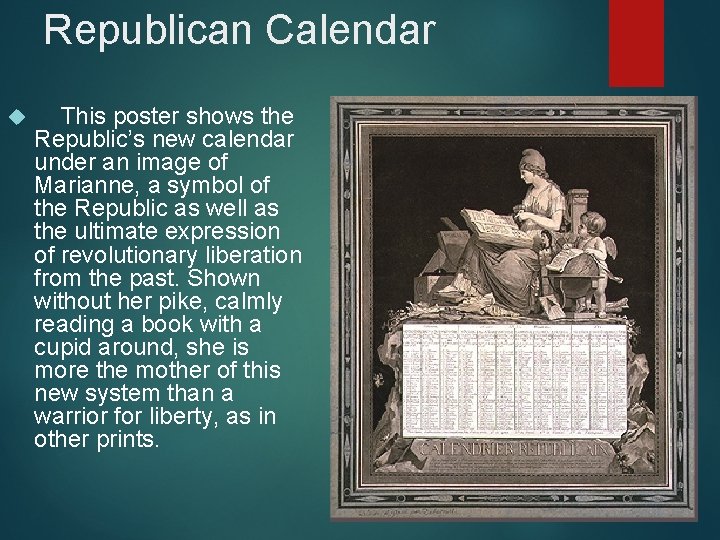
De. Christianization A new calendar was adopted. Years were numbered from September 22, 1792, the first day of the French Republic, and not from Christ’s birth. The calendar contained 12 months with each month having three weeks of 10 days, with the tenth day a day of rest. This practice eliminated Sundays. No days of worship or religious holidays.
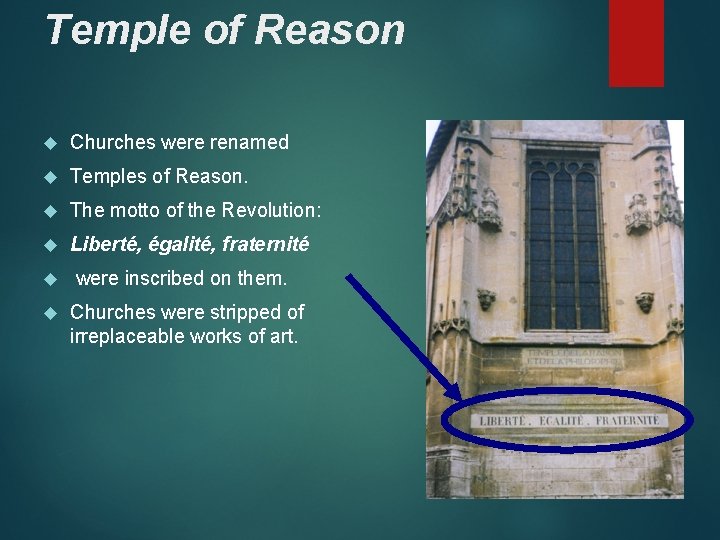
Temple of Reason Churches were renamed Temples of Reason. The motto of the Revolution: Liberté, égalité, fraternité were inscribed on them. Churches were stripped of irreplaceable works of art.
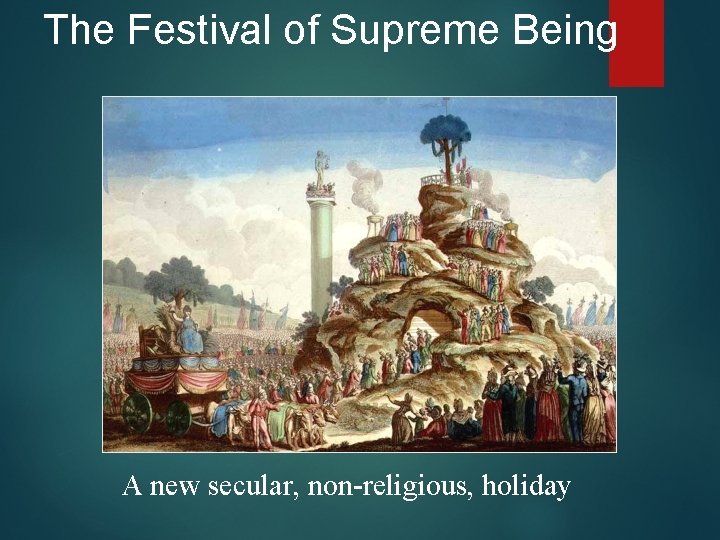
The Festival of Supreme Being A new secular, non-religious, holiday
Republican Calendar This poster shows the Republic’s new calendar under an image of Marianne, a symbol of the Republic as well as the ultimate expression of revolutionary liberation from the past. Shown without her pike, calmly reading a book with a cupid around, she is more the mother of this new system than a warrior for liberty, as in other prints.
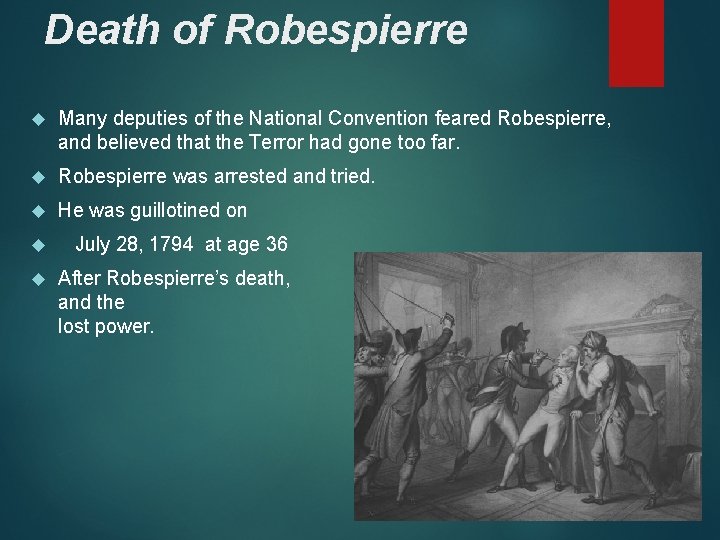
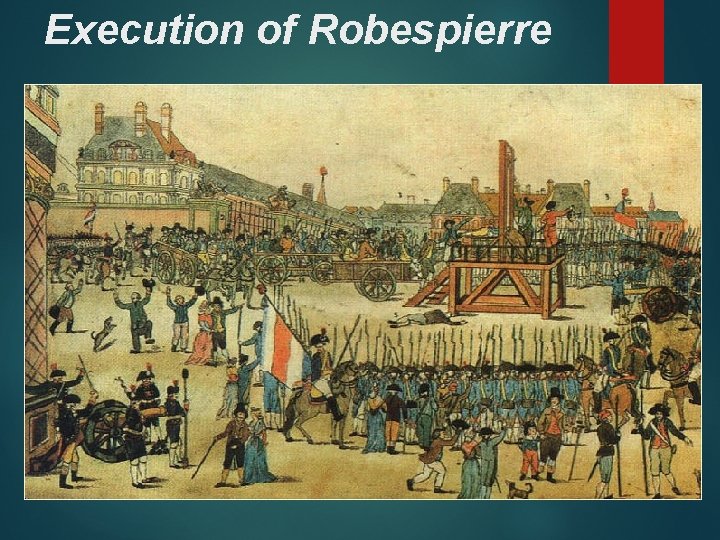
Death of Robespierre Many deputies of the National Convention feared Robespierre, and believed that the Terror had gone too far. Robespierre was arrested and tried. He was guillotined on July 28, 1794 at age 36 After Robespierre’s death, and the lost power. the Terror ended, more radical members
Execution of Robespierre
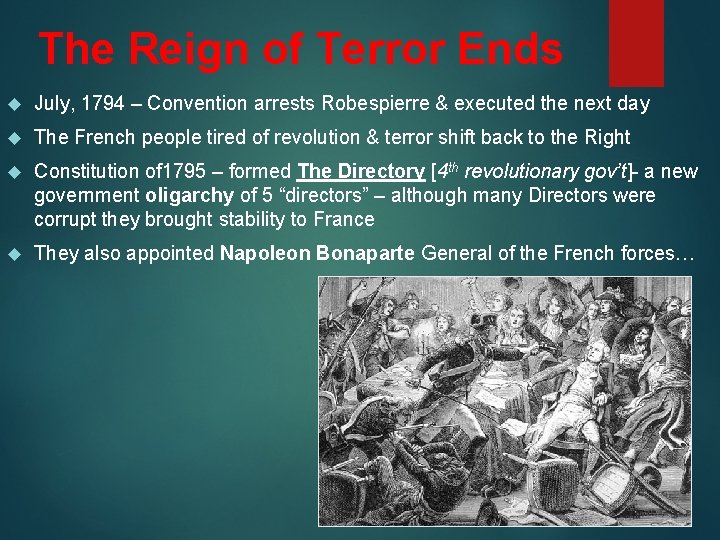
The Reign of Terror Ends July, 1794 – Convention arrests Robespierre & executed the next day The French people tired of revolution & terror shift back to the Right Constitution of 1795 – formed The Directory [4 th revolutionary gov’t]- a new government oligarchy of 5 “directors” – although many Directors were corrupt they brought stability to France They also appointed Napoleon Bonaparte General of the French forces…
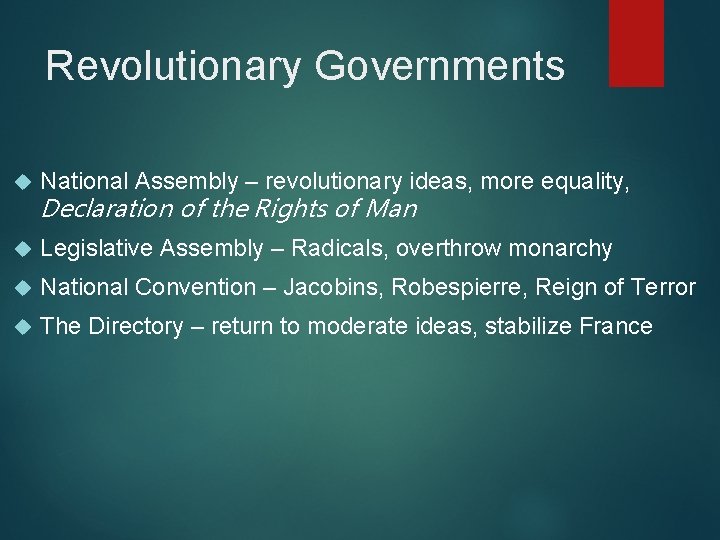
Revolutionary Governments National Assembly – revolutionary ideas, more equality, Legislative Assembly – Radicals, overthrow monarchy National Convention – Jacobins, Robespierre, Reign of Terror The Directory – return to moderate ideas, stabilize France Declaration of the Rights of Man
How did the relationship between the French people and the king change in the early stages of the Revolution?
How did Robespierre Justify the Reign of Terror?
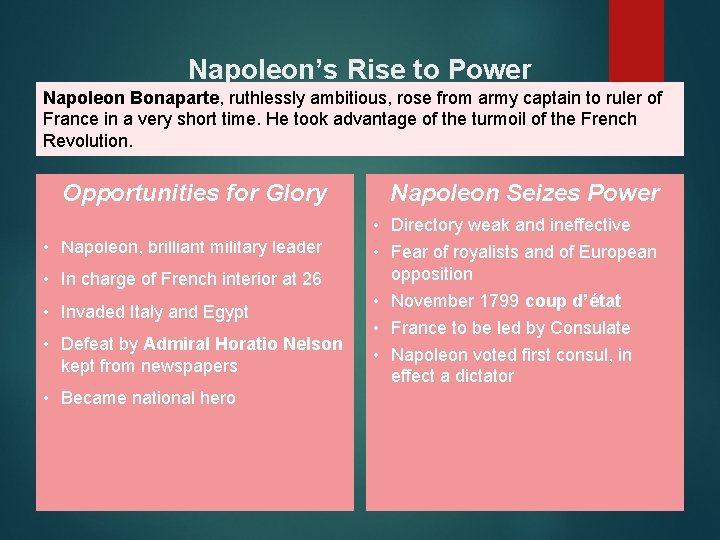
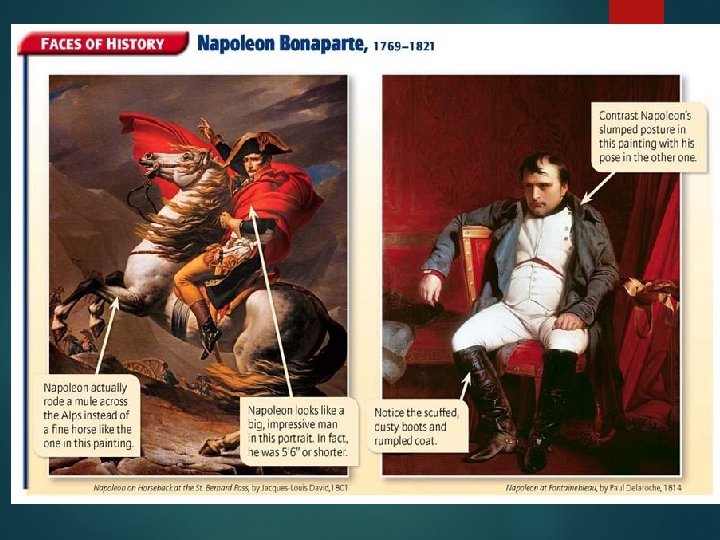
Napoleon’s Rise to Power Napoleon Bonaparte, ruthlessly ambitious, rose from army captain to ruler of France in a very short time. He took advantage of the turmoil of the French Revolution. Opportunities for Glory • Napoleon, brilliant military leader • In charge of French interior at 26 • Invaded Italy and Egypt • Defeat by Admiral Horatio Nelson kept from newspapers • Became national hero Napoleon Seizes Power • Directory weak and ineffective • Fear of royalists and of European opposition • November 1799 coup d’état • France to be led by Consulate • Napoleon voted first consul, in effect a dictator
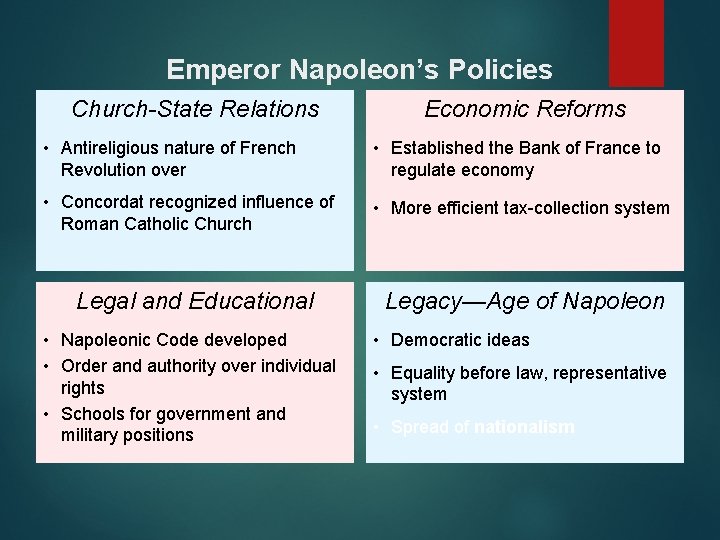
Emperor Napoleon’s Policies Church-State Relations Economic Reforms • Antireligious nature of French Revolution over • Established the Bank of France to regulate economy • Concordat recognized influence of Roman Catholic Church • More efficient tax-collection system Legal and Educational • Napoleonic Code developed • Order and authority over individual rights • Schools for government and military positions Legacy—Age of Napoleon • Democratic ideas • Equality before law, representative system • Spread of nationalism
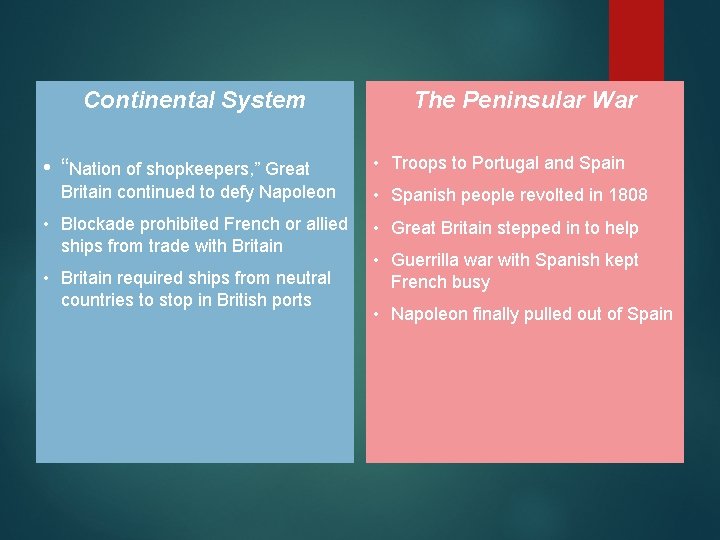
Continental System • “Nation of shopkeepers, ” Great The Peninsular War • Troops to Portugal and Spain Britain continued to defy Napoleon • Spanish people revolted in 1808 • Blockade prohibited French or allied ships from trade with Britain • Great Britain stepped in to help • Britain required ships from neutral countries to stop in British ports • Guerrilla war with Spanish kept French busy • Napoleon finally pulled out of Spain
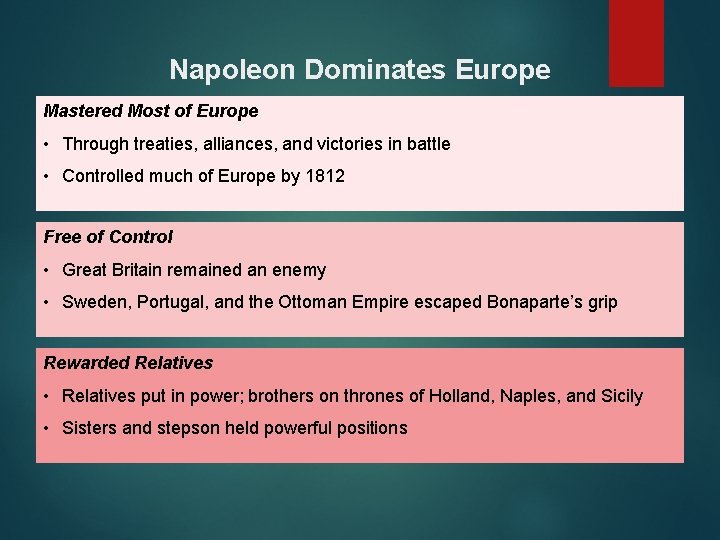
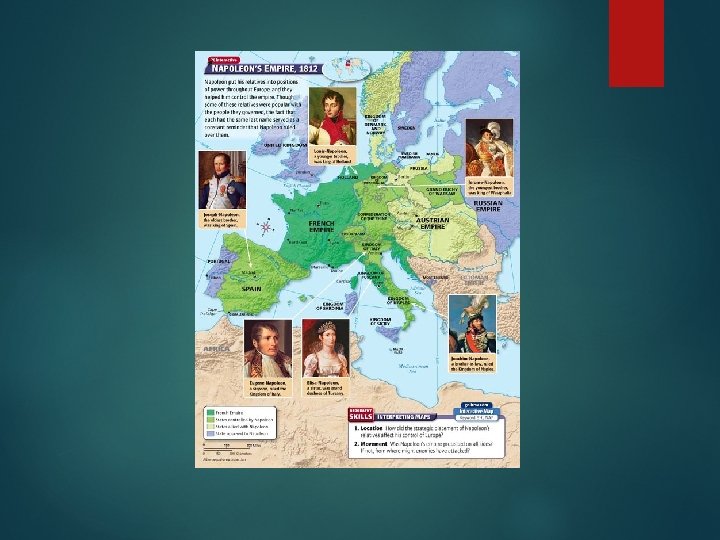
Napoleon Dominates Europe Mastered Most of Europe • Through treaties, alliances, and victories in battle • Controlled much of Europe by 1812 Free of Control • Great Britain remained an enemy • Sweden, Portugal, and the Ottoman Empire escaped Bonaparte’s grip Rewarded Relatives • Relatives put in power; brothers on thrones of Holland, Naples, and Sicily • Sisters and stepson held powerful positions
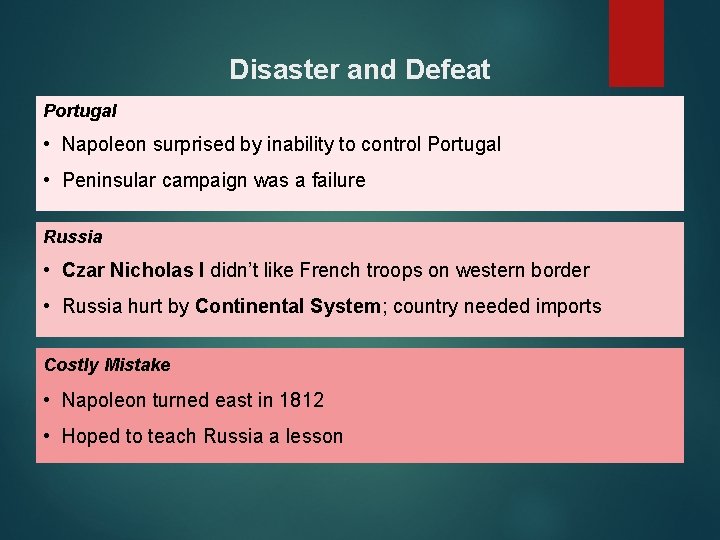
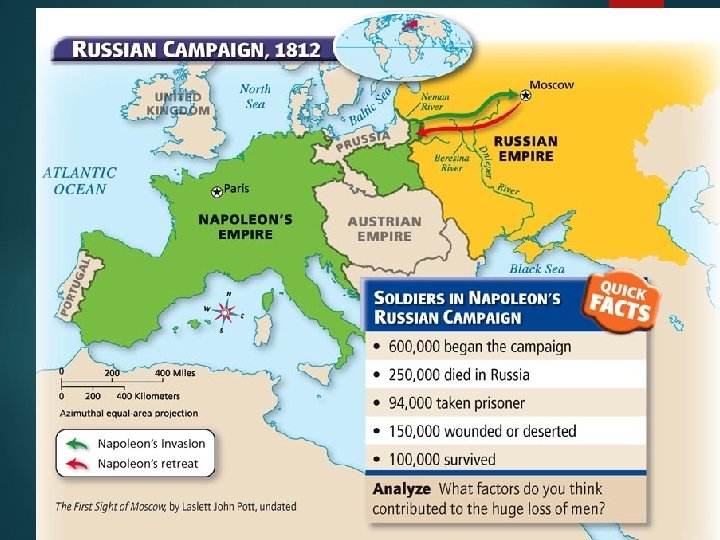
Disaster and Defeat Portugal • Napoleon surprised by inability to control Portugal • Peninsular campaign was a failure Russia • Czar Nicholas I didn’t like French troops on western border • Russia hurt by Continental System; country needed imports Costly Mistake • Napoleon turned east in 1812 • Hoped to teach Russia a lesson
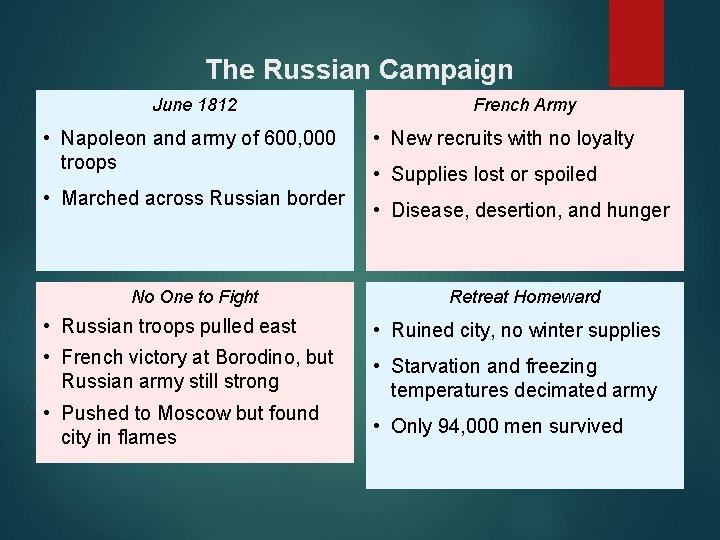
The Russian Campaign June 1812 • Napoleon and army of 600, 000 troops • Marched across Russian border No One to Fight French Army • New recruits with no loyalty • Supplies lost or spoiled • Disease, desertion, and hunger Retreat Homeward • Russian troops pulled east • Ruined city, no winter supplies • French victory at Borodino, but Russian army still strong • Starvation and freezing temperatures decimated army • Pushed to Moscow but found city in flames • Only 94, 000 men survived
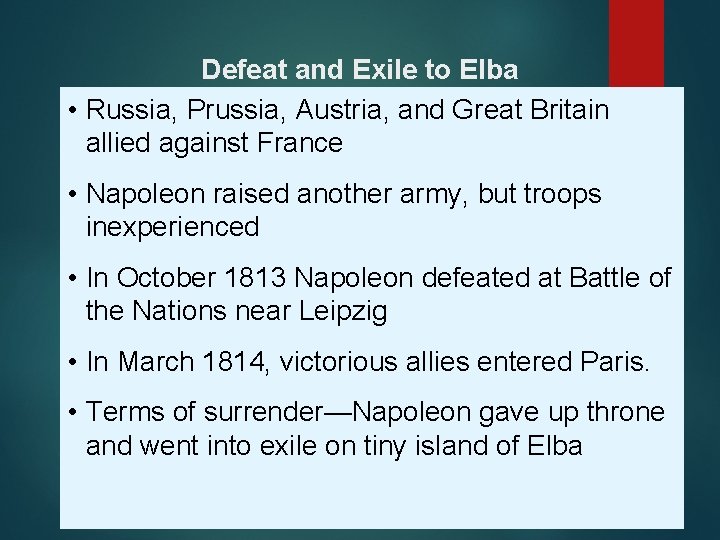
Defeat and Exile to Elba • Russia, Prussia, Austria, and Great Britain allied against France • Napoleon raised another army, but troops inexperienced • In October 1813 Napoleon defeated at Battle of the Nations near Leipzig • In March 1814, victorious allies entered Paris. • Terms of surrender—Napoleon gave up throne and went into exile on tiny island of Elba
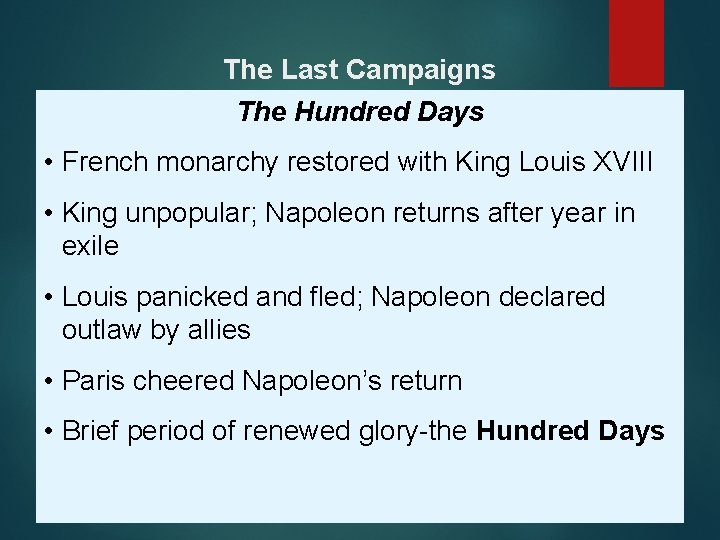
The Last Campaigns The Hundred Days • French monarchy restored with King Louis XVIII • King unpopular; Napoleon returns after year in exile • Louis panicked and fled; Napoleon declared outlaw by allies • Paris cheered Napoleon’s return • Brief period of renewed glory-the Hundred Days
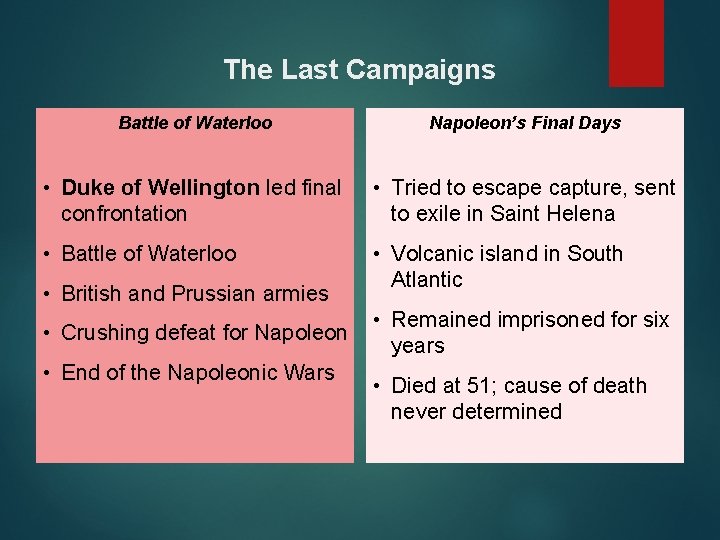
The Last Campaigns Battle of Waterloo Napoleon’s Final Days • Duke of Wellington led final confrontation • Tried to escape capture, sent to exile in Saint Helena • Battle of Waterloo • Volcanic island in South Atlantic • British and Prussian armies • Crushing defeat for Napoleon • End of the Napoleonic Wars • Remained imprisoned for six years • Died at 51; cause of death never determined